
How to Order Hunan Dishes: A Guide to Classic Specialties

Hunan cuisine, called Xiang cuisine in Hunan Province itself, is one of China's eight great cuisines, known for rich but measured heat, careful cooking and letting the main ingredient show. Still, in traditional Hunan cooking only about 20% of dishes add chili while cooking to build a strong heat, and some have no chili at all. When you order, look at three things first: the main ingredient, how hot it is, and how it is eaten. The rest of this guide follows that order.
| Item | Info |
|---|---|
| Cuisine status | Hunan cuisine, also called Xiang cuisine, is one of China's eight great cuisines, known for rich but measured heat, careful cooking and letting the main ingredient show |
| Heat | Lots of fresh chili, scallion and garlic give a dry hot or plain hot taste, unlike Sichuan's numbing hot; only about 20% of traditional dishes add chili to build a strong heat |
| Flavor types | 33 basic flavor types for hot dishes, including sour-hot, salty-sour, hot-salty, cured aroma, fermented black bean aroma, sauce-hot, salty-fresh, stinky aroma, Xiang braise and fermented aroma |
| How to eat | Dishes are shared; chopped chili fish head comes to the table hot and everyone takes from it; chili fried pork goes with plain white rice |
| Can you adjust the heat | Stinky tofu vendors in Changsha often adjust the heat to what a customer can take, but chili itself is part of the Changsha version |
| Where to eat | the Huogongdian main branch on Bozi Street, the Bozi Street and Taiping Old Street area of the Wuyi business district, and Super Wenheyou |
How is Hunan heat different from Sichuan heat?
Hunan heat and Sichuan heat are not the same road: Hunan cooking is known for a dry hot or plain hot flavor built on heavy use of fresh chili, scallion and garlic, while Sichuan's label is numbing hot. Hunan hot dishes have 33 basic flavor types, including sour-hot, salty-sour, hot-salty, cured aroma, black bean aroma, sauce-hot, salty-fresh, stinky aroma, Xiang braise and fermented aroma, and you will often see these words on a menu.
Among Hunan seasonings, fermented black beans are a fine one, usually made by fermenting small black beans, and Liuyang black beans are the best known. Farmhouse stir-fried pork uses just pork belly, green chili and fermented black beans.
Tip: Chopped chili, also called duolazi or jar chili, is made from facing-heaven chilies and salt; it tastes hot, fresh and salty, runs strong, and can be eaten straight. When you order chopped chili fish head, this is what steams together with the fish head.
On the menu: the main ingredient and heat of these Hunan dishes
Putting the dish name, main ingredient and heat in one table is faster than guessing from the name on the menu.
| Dish | Main ingredients | Heat, flavor or method |
|---|---|---|
| Chili fried pork | pork, chili | hot, warms you and opens the appetite |
| Chopped chili fish head | head of a large fish, chopped chili | hot, on the salty-fresh side; the version made in Xiangtan, Hunan, is the most famous |
| Mao's braised pork | pork, dried green beans | colored with cooked caramel, no soy sauce |
| Changsha stinky tofu | dried stinky tofu, chopped chili | fragrant and hot; the dried tofu is mostly black-skinned |
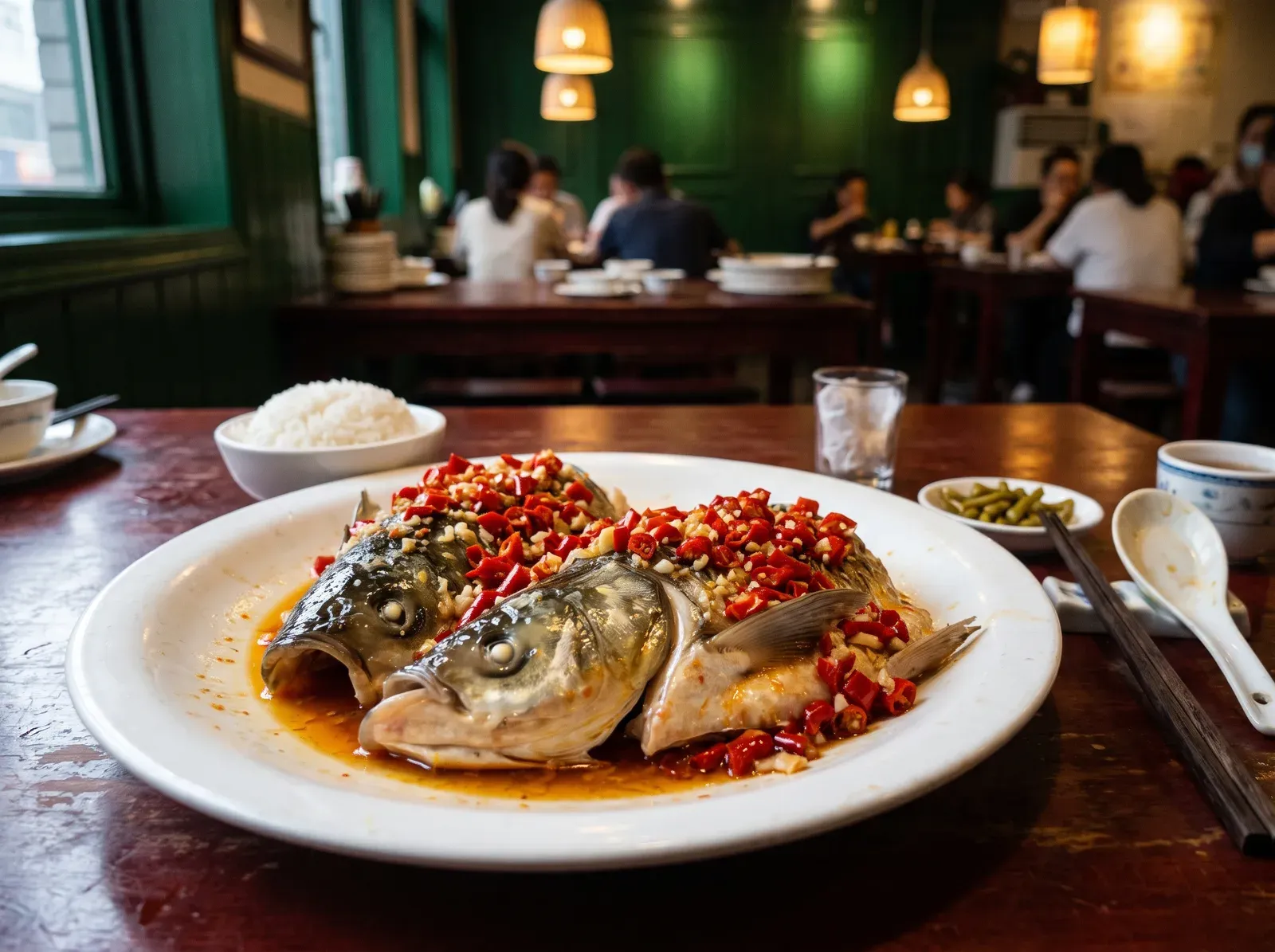
Chopped chili fish head usually comes to the table hot and is shared; diners take meat from around the head and from the cheek, and the cheek is considered the best part. It is a signature dish of the cuisine, a large fish head steamed with chopped chili.
Chili fried pork is pork stir-fried with chili, hot in taste, warming and appetite-opening, and a common stir-fry across the country. It is most often eaten with plain white rice, to balance the heat and soak up the sauce, and is usually not ordered as a dish to eat on its own.
Authentic Mao's braised pork does not use soy sauce for color, but cooked caramel. Hunan cooks like to braise it with dried green beans, and once soaked they match the pork, soft with a little chew.
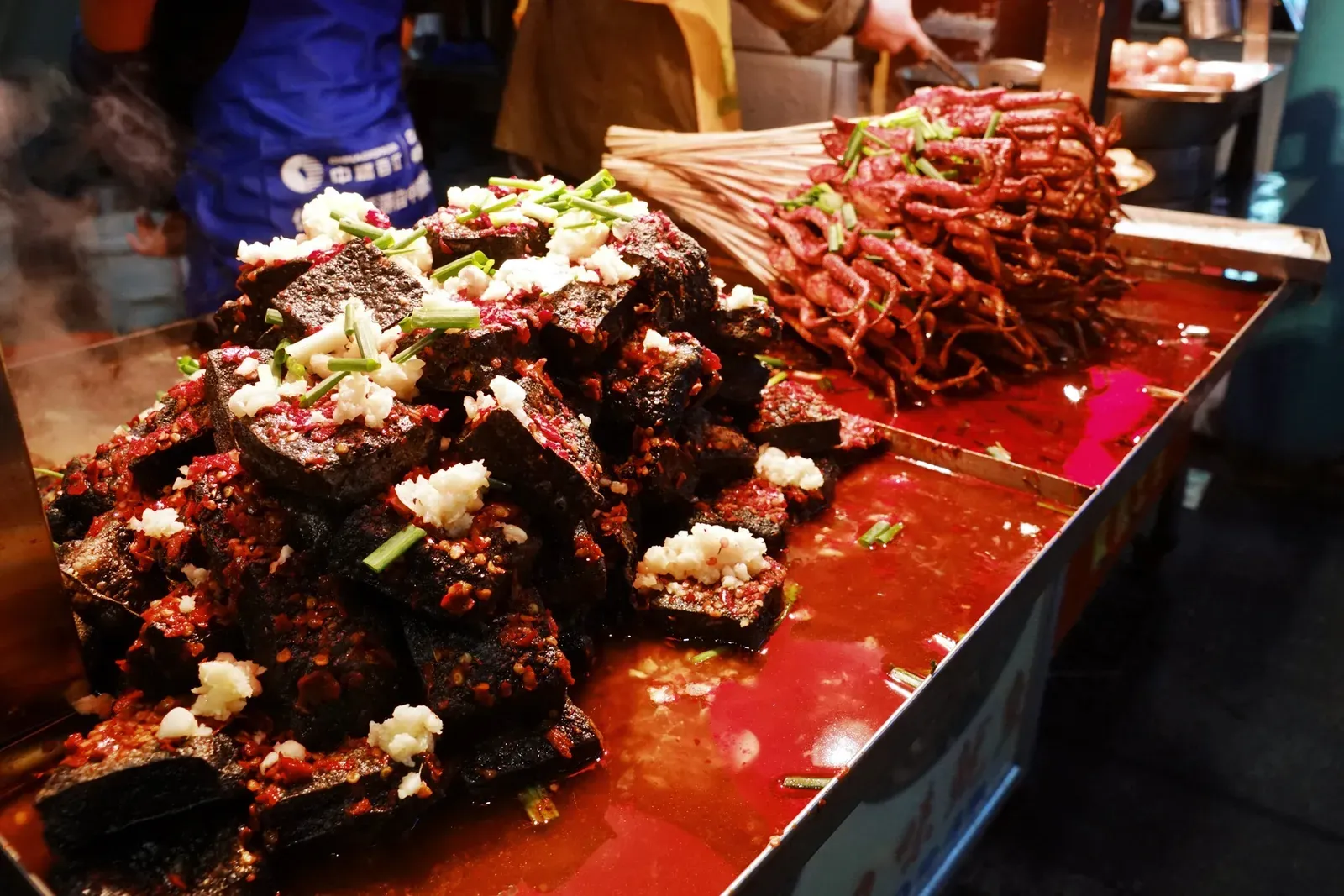
Changsha's dried stinky tofu comes in a yellow-skin type and a black-skin type, black being more common. Changsha stinky tofu always comes with chopped chili, fragrant and hot, and the stinky tofu at Huogongdian's snack stalls is the official representative. It is sold mainly as street food in busy markets, in small portions, eaten with chopsticks or often on a bamboo skewer.
Eating with a group: how to build the table and in what order
When a group eats Hunan food, the dishes are shared, so several people order several dishes and divide them. At a formal Hunan banquet the order is set, from sunflower seeds and peanuts all the way to fruit.
| Order | What comes |
|---|---|
| 1 | sunflower seeds, peanuts and other snacks first |
| 2 | then eight meat dishes and eight vegetable dishes |
| 3 | then four simple stir-fries |
| 4 | then eight large dishes to go with liquor |
| 5 | then four dishes meant to go with rice, such as sour beans stir-fried with minced pork, and stir-fried greens |
| 6 | then four kinds of dim sum |
| 7 | fruit last, four plates |
What if you cannot eat chili at all, and you are in Changsha?
Some Hunan dishes use no chili at all, or add it only for aroma, so if you worry about heat, start from that group. In summer a Hunan meal often opens with cold dishes or a cold meat platter with chili; in winter hot pot is popular, and the mandarin duck pot divides the pot into a hot side and a mild side.
Among sweet snacks, tangyou baba is a sweet snack from Xiangtan, chewy glutinous rice balls coated in caramel syrup; congyou baba is most often fried fresh at morning markets, eaten from your hand, and often served with rice noodles or soup.
Tip: When you order stinky tofu on a Changsha street, you can ask the vendor to adjust the heat to what you can take, and they usually will; chili is still part of the Changsha version.
What to eat for breakfast, main meals and late-night snacks
Changsha rice noodles come stir-fried or in soup, seasoned with plenty of chili; the traditional rice noodle in Changde, Hunan, is the round noodle. A day of eating can roughly follow this order.
| Time of day | What to eat | How and where |
|---|---|---|
| Breakfast | Changde beef rice noodles | mostly breakfast or lunch, common in small family noodle shops, made to order and served hot |
| Breakfast | congyou baba | most often fried fresh at morning markets, and vendors treat it as a quick breakfast you eat from your hand |
| Lunch, dinner | chopped chili fish head with chili fried pork | dishes are shared, and chili fried pork goes with plain white rice |
| Late night | Changsha stinky tofu | street food in busy markets, busiest at late-night stalls, small portions, eaten with chopsticks or on a bamboo skewer |
| To finish | tangyou baba | a sweet snack from Xiangtan, chewy glutinous rice balls coated in caramel syrup |
Where to try many Hunan snacks at once in Changsha
To try many Hunan snacks at once, start with the Huogongdian main branch on Bozi Street: its Xiang-style snacks grew out of temple fair snacks, and the menu is split into traditional morning tea, local snacks and traditional Hunan dishes. Our Changsha travel guide covers Orange Isle, Yuelu Academy and food too, and you can read them together (https://unclepandatravel.com/destinations/changsha).
Tip: The Huogongdian main branch on Bozi Street is at 127 Bozi Street, Tianxin District, Changsha; phone 0731-85814228.
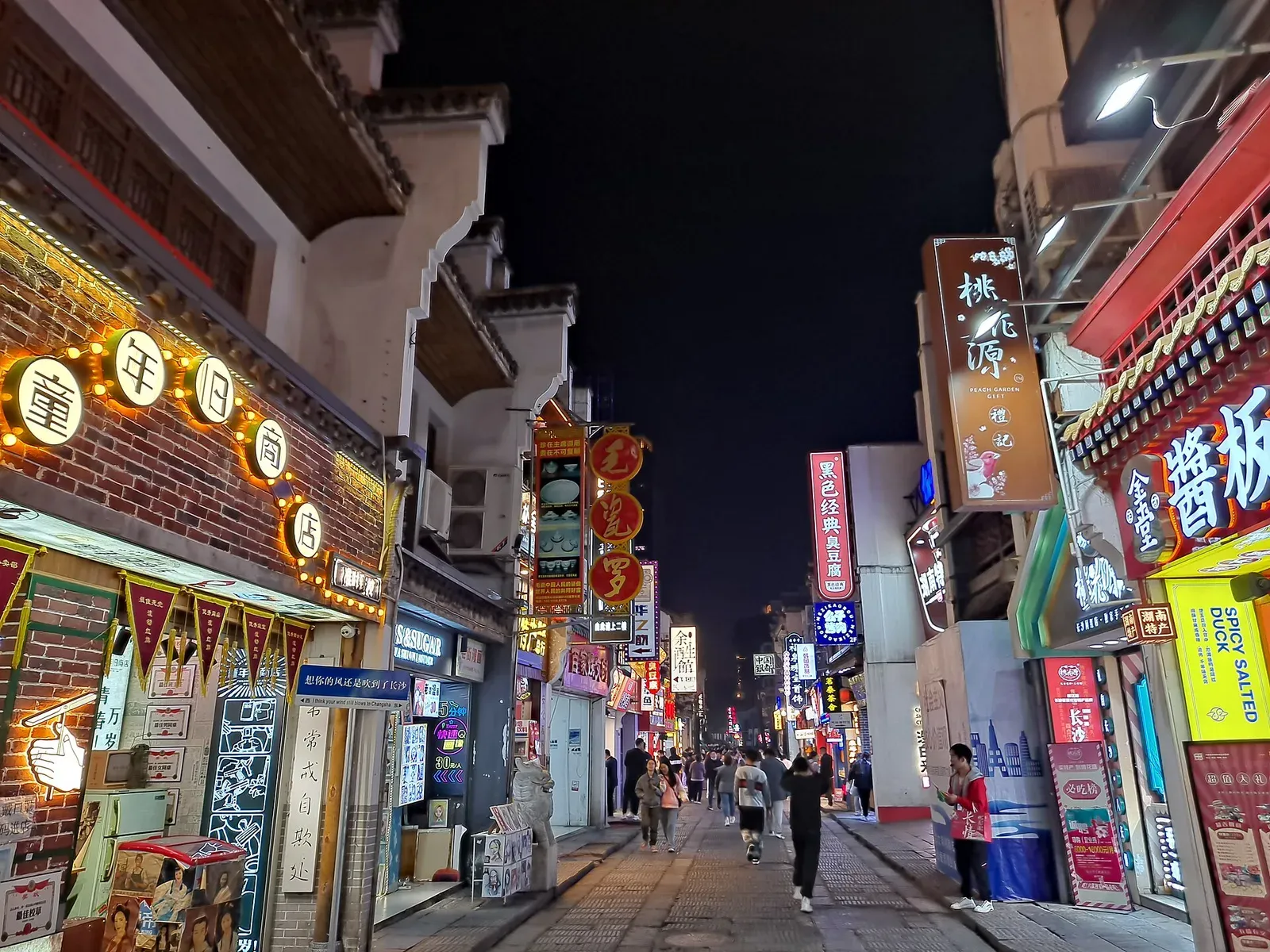
Bozi Street, Taiping Old Street, Huangxing South Road pedestrian street and the bar-heavy Jiefang West all sit in Changsha's Wuyi business district. Changsha IFS and Hisense Plaza are also here, so you can walk around the area right after eating.
In 2018 Wenheyou upgraded its Changsha Hisense Plaza store into Super Wenheyou; its brands include Wenheyou Lobster House, Wenheyou Old Changsha Big Sausage and Wenheyou Old Changsha Stinky Tofu.
How is Hunan food in Changsha different from Zhangjiajie?
Hunan cooking splits into two branches: the Xiang River branch around Changsha, with signature dishes such as chili fried pork and Changsha stinky tofu; and the western Hunan branch around Zhangjiajie, shaped by minority cooking and fond of cured pork, sour pork and pickled vegetables.
The Xiang River branch also includes official's household cooking; famous dishes include the Zu'an family, among them Zu'an shark fin and Zu'an tofu.
If you travel from Changsha on to Zhangjiajie, the menus change with the region: around Changsha order more chili fried pork and stinky tofu, and around Zhangjiajie more cured pork, sour pork and pickled vegetables.
What do first-timers most often get wrong?
The most common mistake is taking American Chinese food for local Hunan cooking: General Tso's chicken is a sweet-hot American Chinese dish; it carries Zuo Zongtang's name but has no real link to him, and is most likely a descendant of a simple Hunan chicken dish. Orange chicken is American Chinese too, developed from General Tso's chicken and sweeter than the original.
| Easy to get wrong | What it actually is |
|---|---|
| Taking General Tso's chicken for local Hunan food | It is a sweet-hot American Chinese dish; it carries Zuo Zongtang's name but has no real link to him |
| Thinking orange chicken is a Hunan dish | Orange chicken developed from General Tso's chicken and is sweeter than the original |
| Thinking Changsha stinky tofu is yellow | Changsha's dried stinky tofu comes in a yellow-skin and a black-skin type, black more common, and always comes with chopped chili |
| Ordering one chopped chili fish head for one person | It comes to the table hot and is shared, with meat taken from around the head and the cheek |
| Expecting Mao's braised pork to be soy-sauce brown | The authentic version uses cooked caramel, not soy sauce, for color |
| Treating chili fried pork as a dish on its own | It is most often eaten with plain white rice, to balance the heat and soak up the sauce |
Which situations change how you order?
Season matters: in summer a meal often opens with cold dishes or a cold meat platter with chili, and in winter it turns to hot pot, with the pot split into a hot side and a mild side. Occasion matters: a banquet moves through snacks, meat and vegetables, stir-fries, large dishes, rice dishes, dim sum and fruit, while ordering a few dishes yourself does not need those courses.
Place matters: around Changsha it is chili fried pork and stinky tofu, while around Zhangjiajie, with minority influence, cured pork, sour pork and pickled vegetables are common. People matter: if someone cannot eat chili, pick from the dishes with no chili or with chili only for aroma.
Sources
Changsha - Wikipedia
Hunan cuisine - Wikipedia
Hunan cuisine (Xiang cuisine) - Wikipedia
Chili fried pork - Wikipedia
Chopped chili fish head - Wikipedia
Braised pork - Wikipedia
Stinky tofu - Wikipedia
Rice noodles - Wikipedia
Wenheyou - Wikipedia
Sources checked on Nov 18, 2026
FAQ
Are all Hunan dishes very hot?
No. In traditional Hunan cooking only about 20% of dishes add chili while cooking to build a strong heat, and some have no chili at all or use it only for aroma.
Is General Tso's chicken a Hunan dish?
No. It is a sweet-hot American Chinese dish; it carries Zuo Zongtang's name but has no real link to him, and is most likely a descendant of a simple Hunan chicken dish. Orange chicken developed from it and is sweeter.
Why is chili fried pork eaten with rice?
It is most often eaten with plain white rice, to balance the heat and soak up the sauce, and is usually not ordered as a dish to eat on its own.
How is Changsha stinky tofu different from stinky tofu elsewhere?
Changsha's dried stinky tofu comes in a yellow-skin and a black-skin type, black being more common, always with chopped chili, fragrant and hot, and the stinky tofu at Huogongdian's snack stalls is the official representative.
How are Hunan rice noodles different?
Changsha rice noodles come stir-fried or in soup, seasoned with plenty of chili; the traditional rice noodle in Changde, Hunan, is the round noodle, and Changde beef rice noodles are mostly breakfast or lunch.