How Visitors Experience Chinese Opera: A Practical Guide
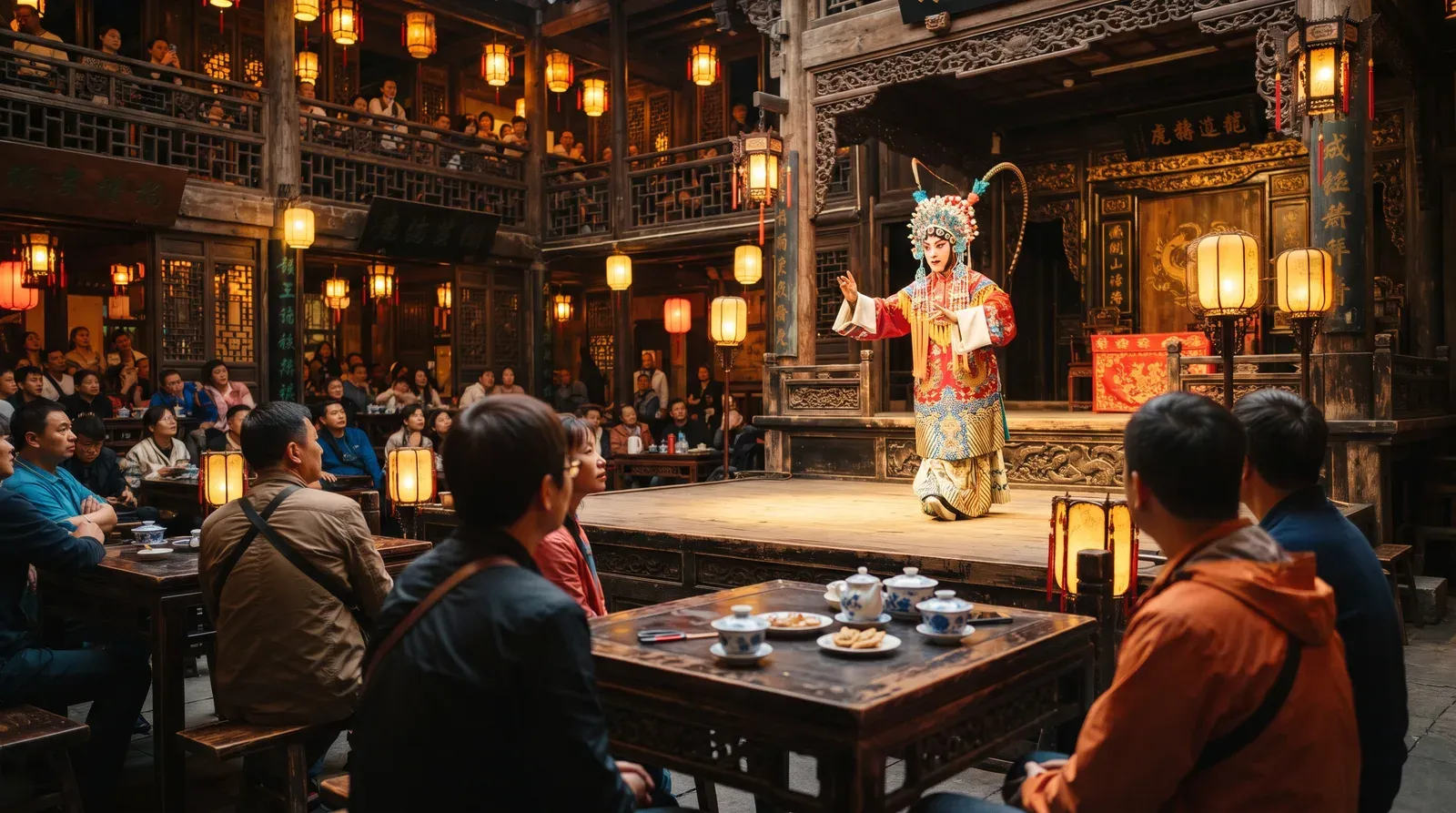
You do not need to understand Chinese to enjoy Chinese opera. The performances rely heavily on stylized gestures, symbolic face makeup, and movement to tell the story. For example, Peking opera, which fully matured around 1845, often features short excerpt scenes (zhezixi) highlighting key dramatic moments. In historic cities like Beijing, Chengdu, and Suzhou, first-time visitors can easily appreciate the visual and musical art of the stage.
| Item | Information |
|---|---|
| Recommended stay | 3 to 4 days for Beijing (suggested by travel guides), 2 to 3 days for Chengdu (Uncle Panda Travel destination guide) |
| Recommended months | Spring in Beijing (March to May), March to June and September to November in Chengdu |
| Representative historic theatres and museums | Zhengyici Peking Opera House and Huguang Guild Hall in Beijing, Liyuan Theatre at Qianmen Jianguo Hotel, China Kunqu Opera Museum in Suzhou |
| Opening hours and admission | China Kunqu Opera Museum is open free from Tuesday to Sunday (tickets required for the weekly Kunqu special performances), Qianmen Pedestrian Street is open free |
| Accompaniment format | Civil orchestra strings and winds accompany singing, while military percussion accompanies combat; Sichuan opera gaoqiang features a cappella singing without string or wind accompaniment |
How can you follow Chinese opera through painted faces and stage movement?
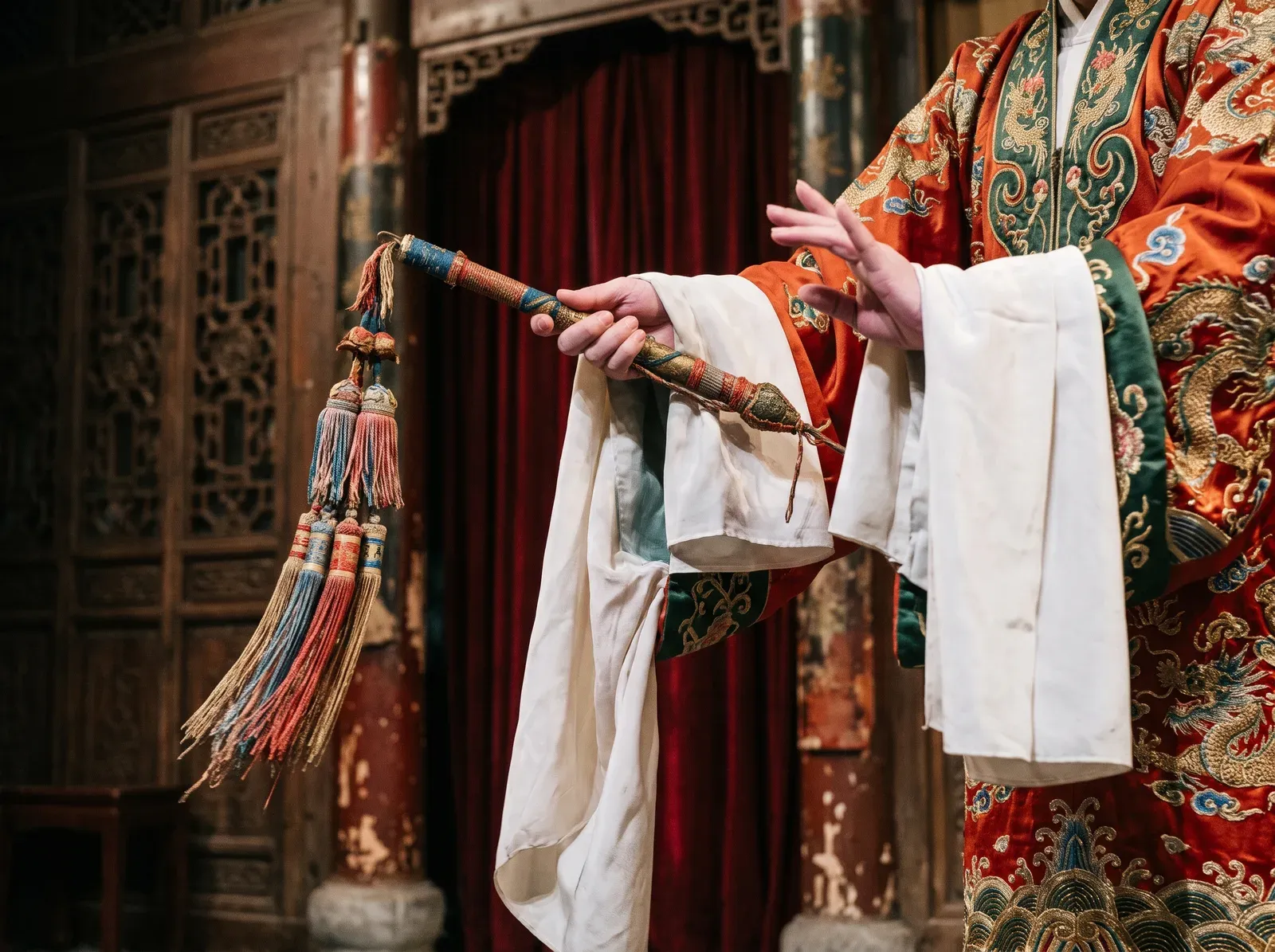
The performances rely on mime and symbolic gestures rather than realistic sets. Actors use established postures, steps, and hand movements to show riding a horse with a decorated crop, rowing a boat, or pushing open an imaginary door. Beside the stage, musicians follow every move closely. The civil ensemble plays string and wind instruments to accompany singing, while the military percussion section, led by the bangu drum, uses gongs and cymbals to accent martial arts and leaps.
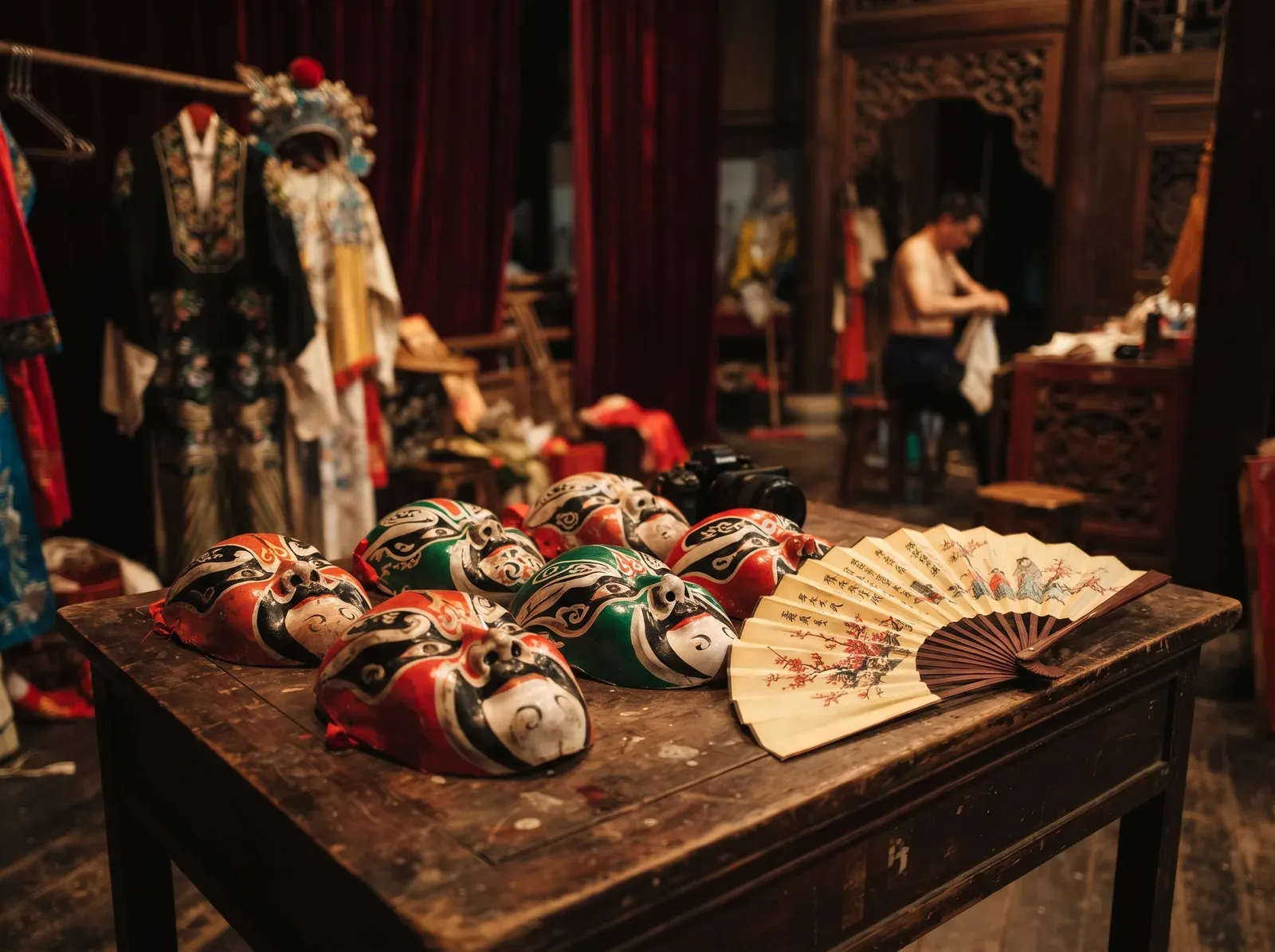
Roles in Peking opera fall into four main categories: Sheng (male roles), Dan (female roles), Jing (painted face roles for powerful or rough men), and Chou (clowns). The Jing category splits into three main types: Tongchui Jing, who focus on singing; Jiazi Jing, who emphasize physical acting; and Wu Jing, who specialize in martial arts and acrobatic combat. Chou characters wear a distinct white patch over the bridge of the nose, resembling a small piece of tofu, which can signal sly cunning or sharp, lighthearted wit.
Dan roles include Qingyi (dignified women), Huadan (vivacious young women), Daomadan (female warriors fighting on horseback), Wudan (agile acrobatic heroines), Laodan (elderly women), and Caidan (comic females). Historically, Peking opera began on September 25, 1790, when the Four Anhui Troupes arrived in Beijing to celebrate the Qianlong Emperor's 80th birthday, later blending with Hubei Han tones and other vocal styles. If you prefer fast flips and intense stage combat, pick excerpts featuring Wu Jing or Wu Dan. If you want lyrical, dignified singing, choose a play led by a Qingyi character.
| Mask color | Symbolic traits |
|---|---|
| Red | Loyalty, bravery, and righteousness |
| Black | Uprightness and frankness |
| White | Treachery and craftiness |
| Blue | Fierce bravery and volatility |
| Yellow | Scheming and ferocity |
| Purple | Composure, loyalty, and filial piety |
| Green | Tenacity and chivalry |
| Gold and silver | Deities, buddhas, spirits, or demons |
Where can you see Peking opera in Beijing's historic theaters?
Beijing has historic theaters alongside modern stages suited for international visitors. In 1990, Qianmen Jianguo Hotel teamed up with the Jingju Theater Company of Beijing to open Liyuan Theatre on its first floor. It stages evening highlights specifically for travelers from abroad. Huguang Guild Hall, built in 1807, was known as one of the four great guild hall theaters in Beijing alongside Zhengyici. Decorated in red, green, and gold, the hall features vintage wooden tables and stone paved floors, as well as a small permanent museum on opera history.
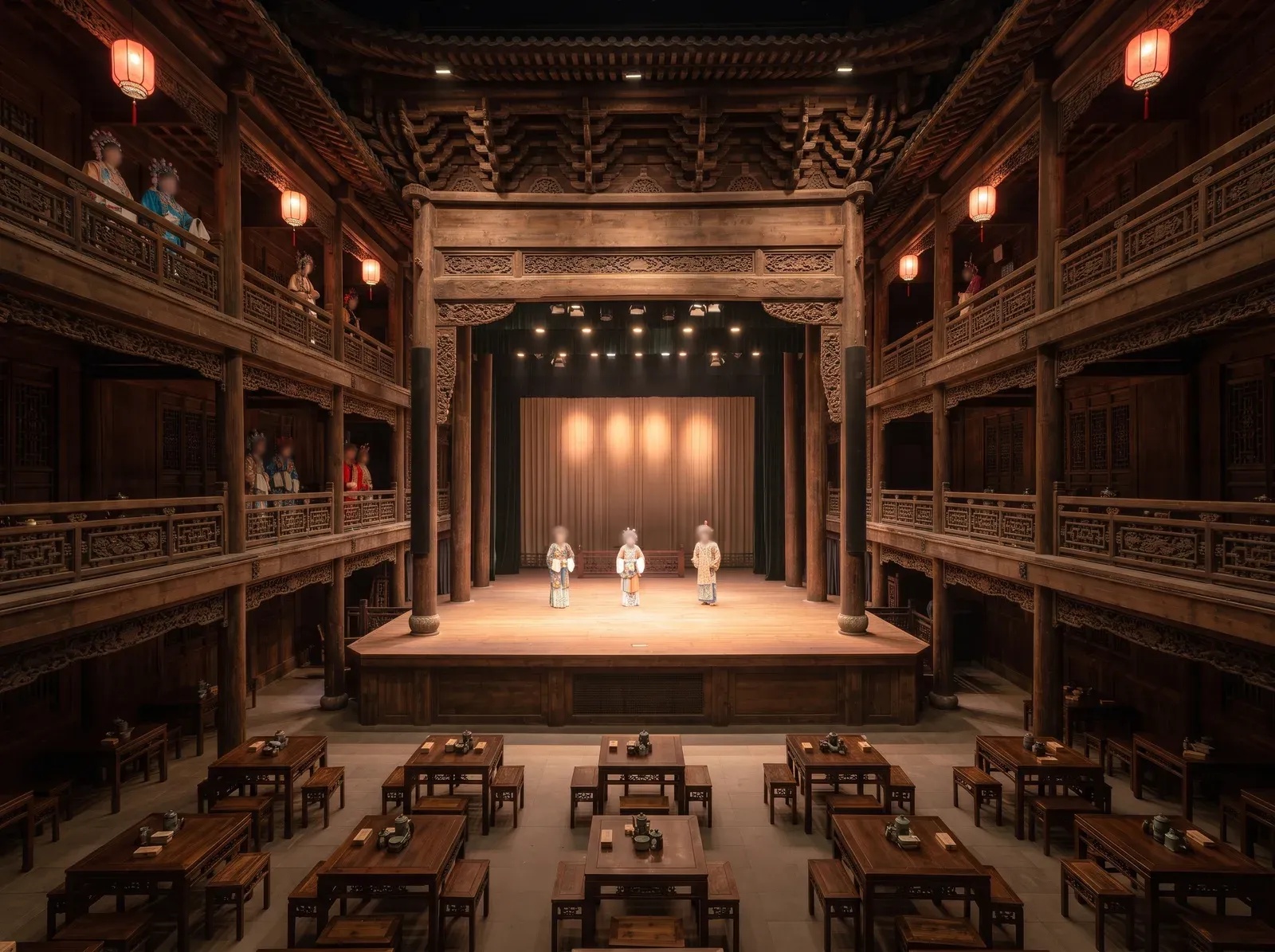
Zhengyici Peking Opera House was expanded and completed in 1712. It is the only fully preserved all-wood historic theater in Beijing. The space features a three-sided open stage, two levels of open balconies, and pit seating for around 200 guests. Master Mei Lanfang was the first Chinese artist to take Peking opera overseas, leading tours across Japan, the United States, and Europe, where he befriended Charlie Chaplin and Bertolt Brecht. His classic signature plays include The Drunken Concubine, Farewell My Concubine, Heavenly Maiden Scattering Flowers, The Cosmic Sword, Regrets of Life and Death, and Mu Guiying Takes Command, which remain popular choices for international audiences today.
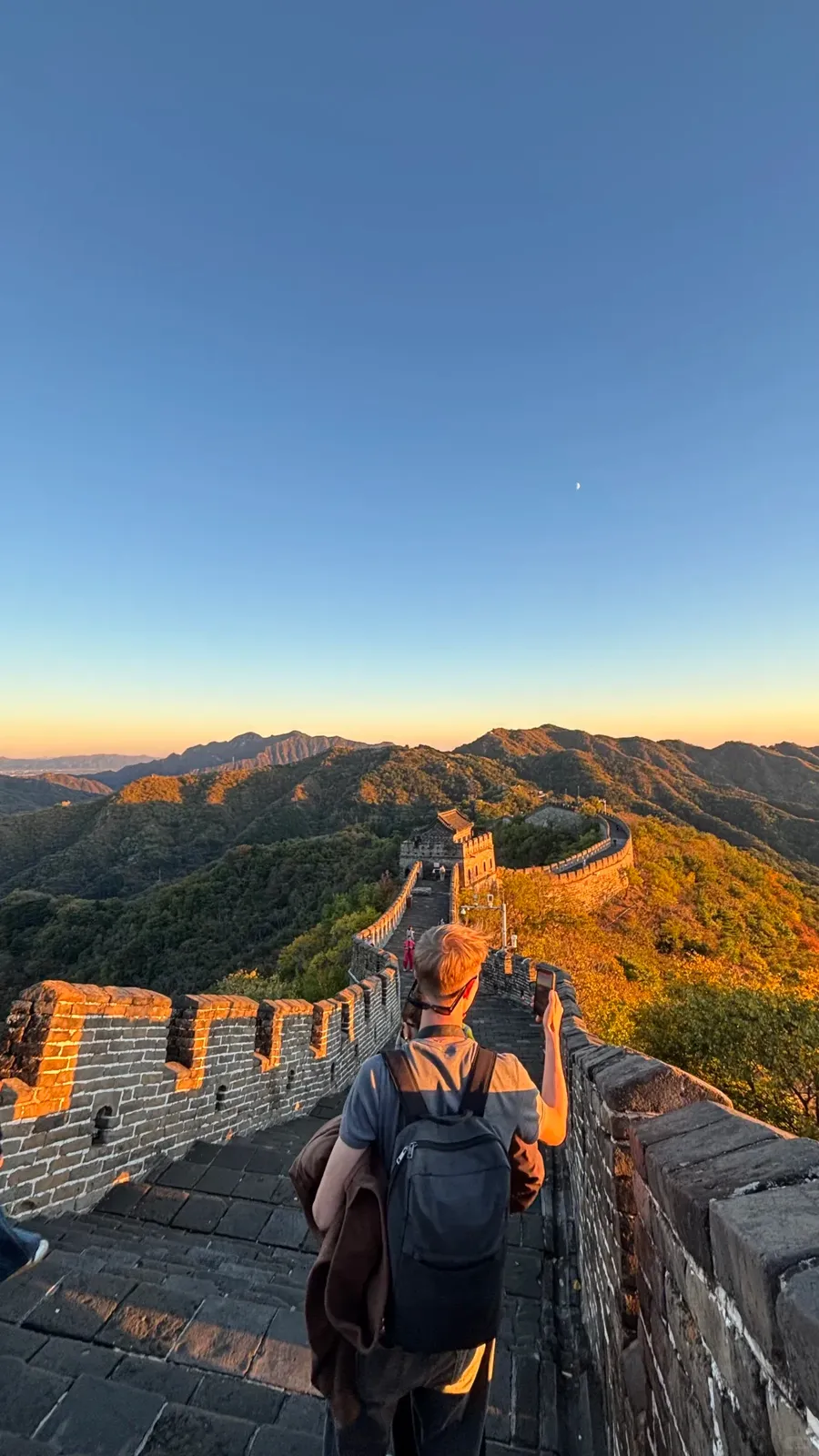
Some travel guides note that the Forbidden City in Beijing, built between 1406 and 1420, is an essential imperial site, and mild spring weather from March to May makes exploration pleasant, with 3 to 4 days recommended to explore the main sights. If you want the original feel of a Qing dynasty wooden theater with an intimate room, Zhengyici is a fitting spot. If you want both an opera museum and an evening performance, Huguang Guild Hall offers a well-rounded visit.
| Theatre and venue | Year founded or completed | Architecture and location | Performance and facility highlights |
|---|---|---|---|
| Liyuan Theatre at Qianmen Jianguo Hotel | Founded in 1990 | Located on the 1st floor of Qianmen Jianguo Hotel | Partners with the Jingju Theater Company of Beijing to stage opera excerpts, mainly offering evening shows for overseas visitors |
| Beijing Huguang Guild Hall | First built in 1807 | Decorated in red, green, and gold tones, equipped with classic wooden tables, chairs, and flagstone floors | Hosted many famous Peking opera masters; houses a small permanent opera museum inside |
| Beijing Zhengyici Peking Opera House | Expansion completed in 1712 | Pure wood historic theatre with an open three-sided stage, two levels of open boxes, and a ground-floor pit (holding about 200 spectators) | Beijing's only well-preserved pure timber historic theatre, historically ranked among the city's four major folk guild theatres |
Tip: To reach Qianmen pedestrian street and nearby theaters, take Metro Line 2 or Line 8 to Qianmen Station (前门站). The section between Zhengyangmen and Zhushikou is a pedestrian street with free entry. Beijing subway fare gates accept overseas Mastercard and Visa cards, as well as domestic and international UnionPay QuickPass cards. You can also pick up a Beijing Pass at airport arrivals, set up a transit QR code in Alipay, or buy tickets at station machines and counters.
How can you experience teahouse culture and face-changing in Chengdu?
Sichuan opera took shape around 1700, blending five vocal traditions: Gaoqiang, Kunqu, Huqin, Tanxi, and southern Sichuan Lantern Opera. Chengdu is its historic center. Gaoqiang is the most distinctive vocal style. It features a cappella singing with no strings or winds, guided only by hardwood clappers and drumbeats. A supporting chorus (bangqiang) sings from offstage to set the mood, describe the scene, reveal a character's inner thoughts, or provide third-person commentary.
Face-changing (bian lian) is the hallmark technique of Sichuan opera. Dressed in vibrant costumes, performers change colorful masks in the blink of an eye to fast drumbeats, masked by the flick of a fan, a shake of the head, or a sweep of a sleeve. The craft relies on four core methods: pulling masks (che lian), wiping paint (mo lian), blowing powder (chui lian), and subtle facial contortions (gui lian), along with beard manipulation. According to Uncle Panda Travel, 2 to 3 days work well for Chengdu, with the best months being March to June and September to November to see pandas, relax in tea gardens, and taste local food.
| Technique | Method and Materials | Stage Action and Visual Effect |
|---|---|---|
| Pulling masks (Che lian) | Multiple silk masks are tied with threads and anchored in hidden costume seams | Pulled off one after another during dance movements to reveal new expressions instantly |
| Wiping paint (Mo lian) | Greasepaint is applied to the forehead, eyebrows, or nose beforehand | Spread across the face with a swift hand movement to change color in a split second |
| Blowing powder (Chui lian) | Uses metallic gold, silver, or black ink powder | The performer leans close to a hidden box on the floor and blows, coating the face in powder |
| Face contortion and stunts | Includes grimacing (gui lian) and beard flips (ran kou) | Uses rapid facial muscle shifts or beard movements to build tension to fast drumbeats |
Tip: Beside watching a performance, you can stroll down Jinli (锦里), a 550-meter street restored by the Chengdu Wuhou Shrine Museum as part of its folk culture area. The street features snacks like Zhangfei beef, sandapao rice cakes, and pork intestine noodles, alongside folk crafts such as clay figurines, sugar painting, and paper cutting.
Where can you hear the refined melodies of Kunqu in Suzhou?
UNESCO proclaimed Kunqu among the first Masterpieces of the Oral and Intangible Heritage of Humanity in 2001, formally inscribing it on the Representative List of the Intangible Cultural Heritage of Humanity in 2008. Originating from Kunshan melodies near Suzhou, it is known for delicate, flowing vocal tunes called shuimodiao and is honored as the mother of Chinese operas. Classic works include The Peony Pavilion by Ming dynasty playwright Tang Xianzu, alongside The Palace of Eternal Life by Hong Sheng and The Peach Blossom Fan by Kong Shangren from the Qing dynasty. Performances are usually staged as selected excerpt scenes.
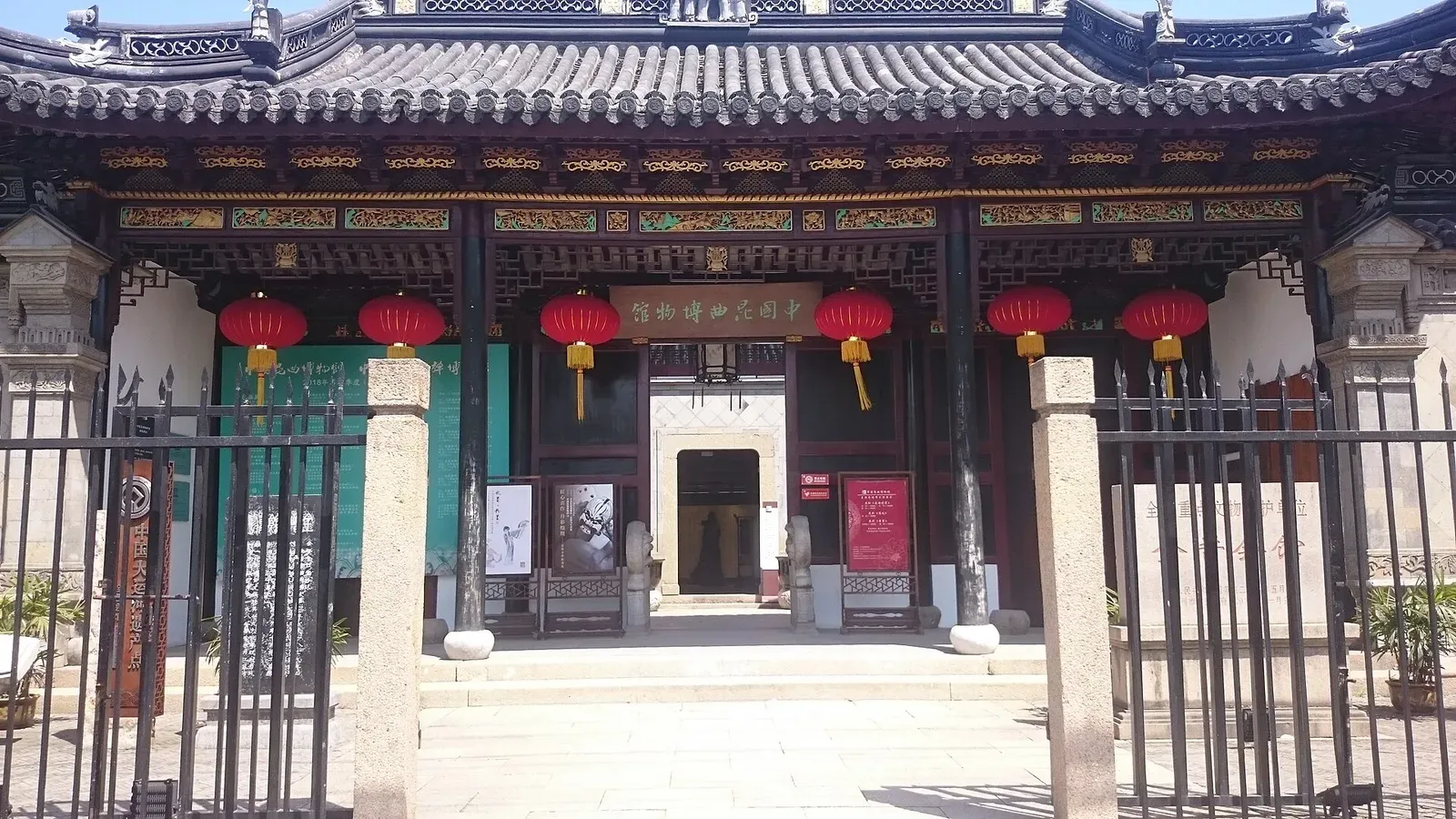
To explore the art in Suzhou, visit the China Kunqu Opera Museum (Suzhou Opera Museum), located inside the historic Quanjin Guild Hall at 14 Zhongzhangjia Lane in Pingjiang Subdistrict. It is the only public professional museum in China dedicated to Kunqu. The museum preserves artifacts tracing the history of the art form and allows visitors to experience a classic guild hall stage setting.
Tip: China Kunqu Opera Museum opens Tuesday through Sunday with free general admission. The museum holds regular weekly Kunqu special performances; if you wish to watch these traditional excerpt scenes, you need to buy separate tickets on site.
What do first-time visitors often misunderstand about Chinese opera?
First-time visitors often assume that understanding Chinese dialogue is necessary to enjoy the show. In reality, tourist-friendly theaters focus on action-packed martial arts scenes and highlights where stylized movement conveys the story clearly. Mask colors immediately reveal character traits: red marks loyalty and courage, white signals treachery, and black stands for integrity. You can follow the plot without translation.
Another common mistake is mixing up musical arrangements and vocal traditions. In Peking opera, the orchestra divides strictly into civil musicians playing strings and winds for songs, and military percussionists playing drums and gongs for fight scenes. In contrast, Sichuan opera's Gaoqiang uses no strings or wind instruments at all, relying solely on clappers, drums, and choral singing. Face-changing is also not a single trick, but a suite of skills including pulling masks, wiping paint, and blowing powder.
Sources
How to Buy Tickets
Beijing Life on the Subway
Qianmen Street (Qian Men Station)
Jinli - Wikipedia
Cities & sights in China · Uncle Panda Travel
Peking opera - Wikipedia
Chinese opera - Wikipedia
Jing role - Wikipedia
Dan role - Wikipedia
Chou role - Wikipedia
Mei Lanfang - Wikipedia
Qianmen Hotel - Wikipedia
Huguang Guild Hall - Wikipedia
Zhengyici - Wikipedia
Sichuan opera - Wikipedia
Bian lian - Wikipedia
Bian lian - Wikipedia
Kunqu - Wikipedia
Suzhou Opera Museum - Wikipedia
Sources verified on November 17, 2026
FAQ
Can you enjoy Chinese opera without speaking any Chinese?
Yes. The performances rely on stylized physical movements and painted faces to tell the story. For instance, holding a decorated whip symbolizes riding a horse, while rowing and opening doors have fixed mime gestures. Red makeup marks loyalty and courage, while white signals cunning. Shows arranged for international visitors usually highlight dynamic excerpt scenes rich in visual action.
How do Sichuan opera performers change masks so quickly?
Face-changing relies on techniques like pulling masks, wiping paint, blowing powder, and facial grimacing. In mask-pulling, multiple silk masks are tied with hidden threads and pulled away one by one during dance movements. In powder-blowing, the actor leans close to a hidden powder box on the floor and blows gold, silver, or black powder onto the face.
Should you choose Liyuan Theatre or a historic hall for Peking opera in Beijing?
Liyuan Theatre, opened in 1990 on the first floor of Qianmen Jianguo Hotel, caters to overseas visitors with concise evening excerpts. Zhengyici Peking Opera House and Huguang Guild Hall are two-century-old guild hall stages. Zhengyici is an all-wood theater with a three-sided stage and room for around 200 guests, offering an intimate, historic atmosphere.
Where can you see Kunqu in Suzhou, and do you need tickets?
Visit the China Kunqu Opera Museum inside Quanjin Guild Hall at 14 Zhongzhangjia Lane in Pingjiang Subdistrict, the only public museum in China dedicated to Kunqu. The museum is open Tuesday through Sunday with free general admission. It hosts weekly Kunqu performances; attending these excerpt shows requires purchasing a separate ticket on site.
How do you get to the historic opera theaters around Qianmen in Beijing?
Take Metro Line 2 or Line 8 to Qianmen Station (前门站). Fare gates on the Beijing subway accept overseas Mastercard and Visa cards, as well as UnionPay QuickPass cards. You can also buy a Beijing Pass at airport arrivals or use a transit QR code in Alipay.