
Famous Chinese Mountains: Highest Peaks and Highlights
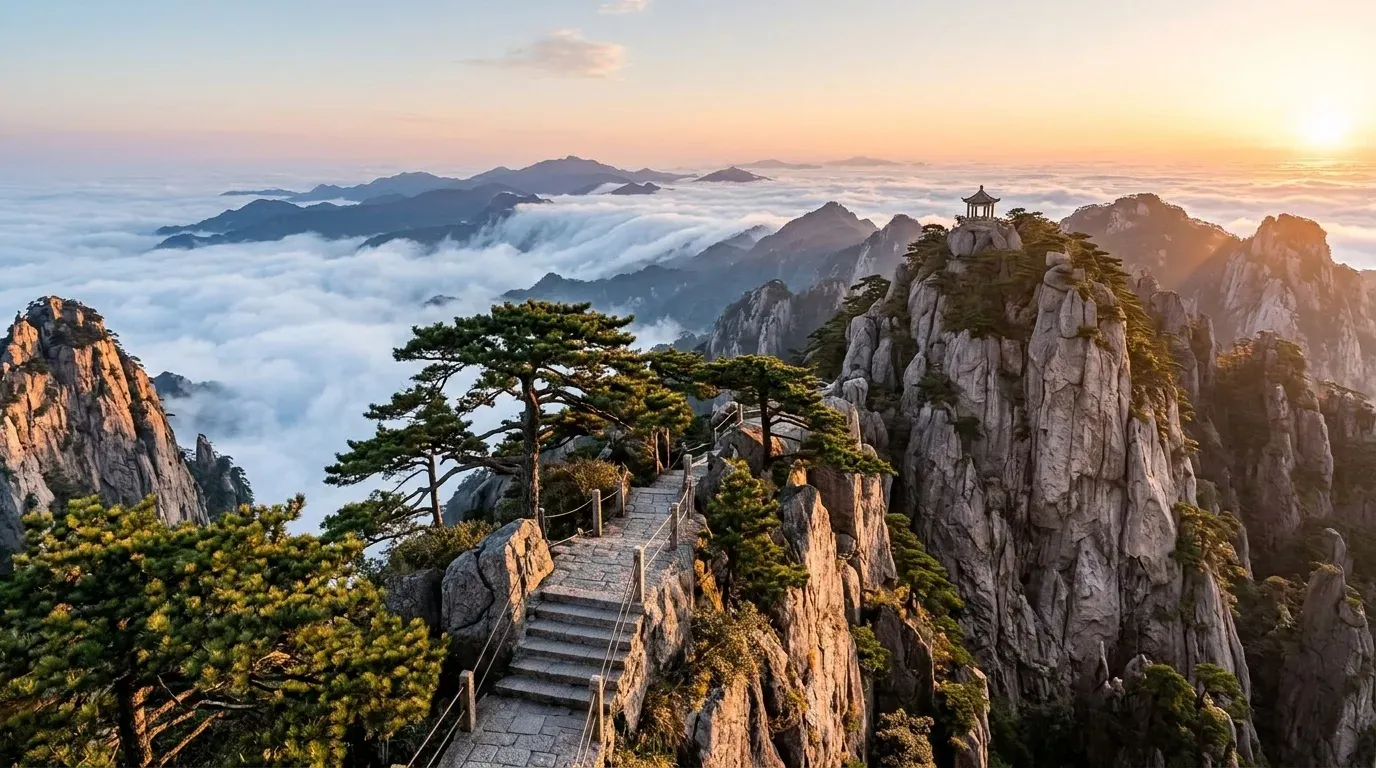
The tallest mountain in China is Mount Everest on the border of Tibet and Nepal, with an elevation of 8,848.86 meters. Among famous Chinese mountains, Mount Shishapangma in Tibet reaches 8,013 meters and stands entirely within China as an 8,000-meter peak. Beyond extreme snow peaks, the country also features prominent mountains with striking landforms and cultural heritage, such as Mount Huangshan, Mount Taishan, and Mount Hua.
What is the highest mountain in China, and which high peaks stand entirely within its borders?
According to survey data, the highest mountain in the world and China is Mount Everest on the border between Tibet and Nepal, with its main summit reaching 8,848.86 meters. The 8,000-meter peak located entirely within China is Mount Shishapangma in Tibet, at an elevation of 8,013 meters. Mount Gongga, the highest peak in Sichuan Province, reaches 7,556 meters at its main summit and is the easternmost independent peak over 7,000 meters in the world.
Which Chinese mountains have the most striking scenery?
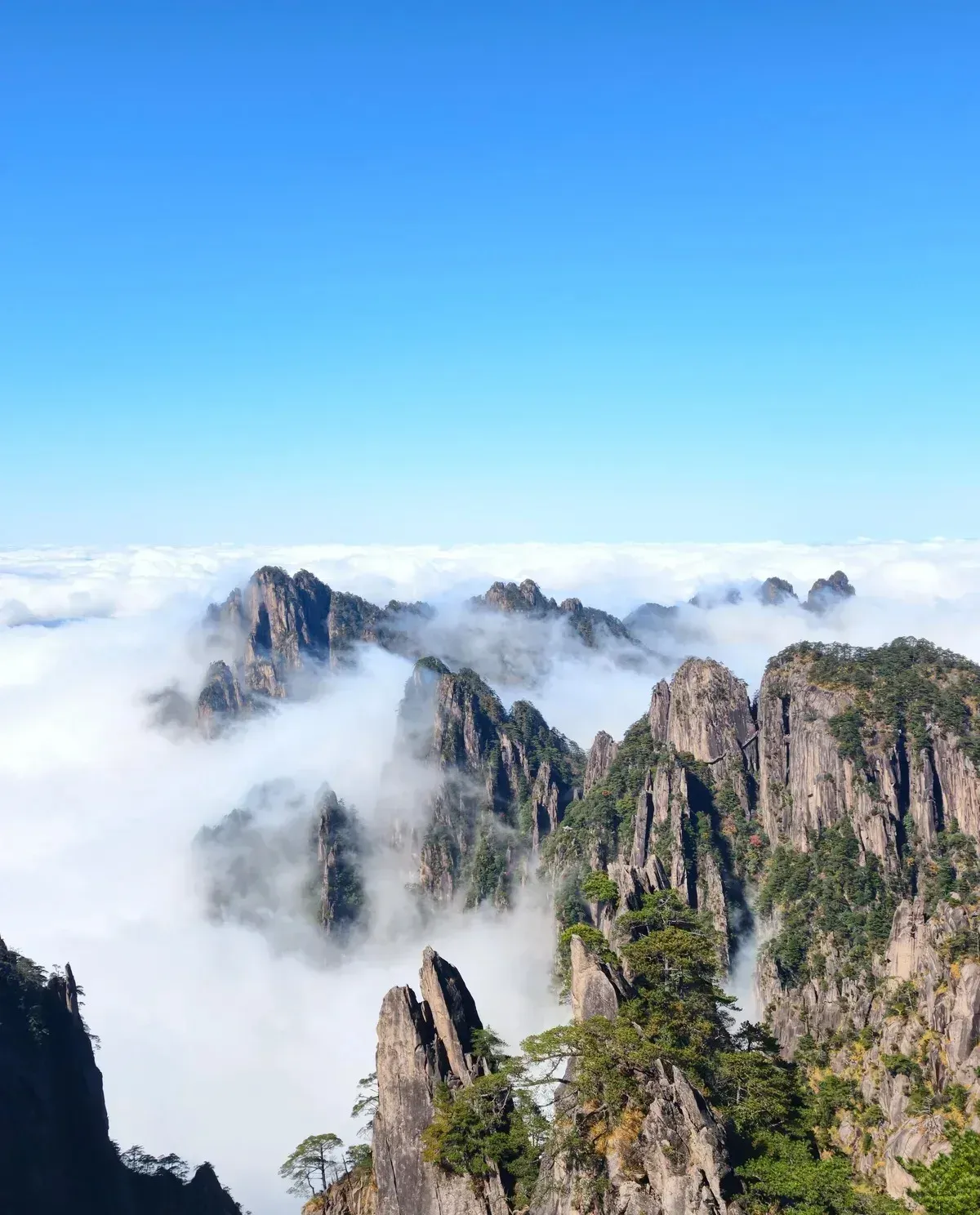
Mount Huangshan in Anhui has 77 peaks above 1,000 meters, with its highest point, Lianhua Peak, reaching 1,864 meters. Designated by UNESCO as a World Cultural and Natural Heritage site, it is known for granite peak forests, unusual rock formations, and seas of clouds.
Mount Hua in Shaanxi is the Western Mountain among the traditional Five Great Mountains and has five main peaks. Its highest peak, South Peak (Luoyan Peak), reaches 2,154.9 meters, with steep vertical cliffs across the mountain.
Wulingyuan in Hunan is the core scenic area of Zhangjiajie, covering over 26,000 hectares. It contains more than 3,000 towering quartz sandstone pillars, most of which rise over 200 meters.
Which mountains make up the Five Great Mountains of China?
The geographic and cultural concept of China's Five Great Mountains developed during the Warring States period and was officially established during the reign of Emperor Wu of Han. The Five Great Mountains comprise Mount Taishan in the east, Mount Hua in the west, Mount Hengshan in the south, Mount Hengshan in the north, and Mount Songshan in the center.
Mount Taishan in Shandong covers 25,000 hectares, with its main peak rising 1,545 meters above the surrounding plain, regarded as a symbol of ancient Chinese civilization and belief. The traditional trail to the summit has 6,660 stone steps, with 11 gates, 14 archways, 14 pavilions, and 4 kiosks along the route.
What are the Four Sacred Buddhist Mountains and Daoist mountains of China?
The Four Sacred Buddhist Mountains of China include Mount Wutai in Shanxi, Mount Emei in Sichuan, Mount Jiuhua in Anhui, and Mount Putuo in Zhejiang. Mount Wutai is named for its five flat, treeless peaks, serves as the highest peak in northern China, and is dedicated to Manjusri. Mount Jiuhua is dedicated to Ksitigarbha, and Mount Putuo is dedicated to Guanyin.
Mount Emei in Sichuan is dedicated to Samantabhadra, where the first Buddhist temple in China was built in the 1st century AD. In the 8th century AD, the 71-meter Leshan Giant Buddha was carved out of a hillside at the confluence of three rivers in Sichuan, making it the largest carved stone Buddha in the world.
Mount Wudang in Hubei has a main summit at 1,612 meters and is one of the four famous Daoist mountains in China. It is also the birthplace of traditional Tai Chi and preserves a large collection of Daoist architectural complexes.
Comparison of Notable Chinese Mountains: Heights and Key Sights
| Mountain or Site | Province | Elevation or Height | Geographic and Cultural Features |
|---|---|---|---|
| Mount Everest | Tibet (border with Nepal) | 8,848.86 meters | Highest peak in the world and China, extreme snow peak |
| Mount Shishapangma | Tibet | 8,013 meters | 8,000-meter peak located entirely within China |
| Mount Gongga | Sichuan | Main summit at 7,556 meters | Highest peak in Sichuan, easternmost independent peak over 7,000 meters in the world |
| Mount Hua | Shaanxi | South Peak at 2,154.9 meters | Western Mountain of the Five Great Mountains, five main peaks |
| Mount Huangshan | Anhui | Lianhua Peak at 1,864 meters | 77 peaks above 1,000 meters, World Cultural and Natural Heritage site |
| Mount Wudang | Hubei | Main summit at 1,612 meters | One of the four famous Daoist mountains, birthplace of Tai Chi |
| Mount Taishan | Shandong | Main summit at 1,545 meters | Eastern Mountain of the Five Great Mountains, 25,000 hectares, 6,660 steps on trail |
| Mount Wutai | Shanxi | Highest peak in northern China | Buddhist sacred mountain dedicated to Manjusri, five flat treeless peaks |
| Wulingyuan | Hunan | Most pillars rise over 200 meters | Over 26,000 hectares, more than 3,000 quartz sandstone pillars |
| Leshan Giant Buddha | Sichuan | Statue height of 71 meters | Carved in the 8th century AD at the confluence of three rivers, world's largest stone Buddha |
What Should You Know Before Visiting Mountains in China?
Extreme summits and scenic mountains in central and eastern China differ fundamentally in their visiting conditions. Mount Everest, Mount Shishapangma, and the main summit of Mount Gongga all stand above 7,000 meters, requiring specialized high-altitude preparation. In contrast, mountains like Huangshan and Taishan are standard scenic areas with built footpaths.
Hiking to the top of historical mountains requires assessing personal fitness for stair climbing. Mount Taishan, for instance, features 6,660 stone steps on its traditional trail, and continuous climbing places heavy demands on knees and physical endurance.
The Five Great Mountains and sacred religious mountains reflect historical and cultural significance rather than elevation rankings alone. Mountains such as Mount Hengshan, Mount Hengshan in Shanxi, Mount Songshan, Mount Jiuhua, and Mount Putuo each carry specific historical status, so travelers should distinguish between geographic extremes and cultural sacred peaks.
Sources
Mount Everest - Wikipedia
List of mountains in China - Wikipedia
Mount Huangshan - UNESCO World Heritage Centre
Mount Taishan - UNESCO World Heritage Centre
Mount Hua - Wikipedia
Wulingyuan Scenic and Historic Interest Area - UNESCO World Heritage Centre
Mount Emei Scenic Area, including Leshan Giant Buddha Scenic Area - UNESCO World Heritage Centre
Mount Wutai - UNESCO World Heritage Centre
Sacred Mountains of China - Wikipedia
Sources verified on November 6, 2026
FAQ
What is the highest mountain in China?
Mount Everest is the highest peak in China and the world, standing at 8,848.86 meters on the border of Tibet and Nepal. The highest peak located entirely within China is Mount Shishapangma in Tibet, at an elevation of 8,013 meters.
Which peaks make up the Five Great Mountains and the Four Sacred Buddhist Mountains of China?
The Five Great Mountains, established during the reign of Emperor Wu of Han, include Mount Taishan in the east, Mount Hua in the west, Mount Hengshan in the south, Mount Hengshan in the north, and Mount Songshan in the center. The traditional Four Sacred Buddhist Mountains include Mount Wutai in Shanxi (dedicated to Manjusri), Mount Emei in Sichuan (dedicated to Samantabhadra), Mount Jiuhua in Anhui (dedicated to Ksitigarbha), and Mount Putuo in Zhejiang (dedicated to Guanyin).
How many steps are there on the hiking route up Mount Taishan?
The traditional trail to the summit of Mount Taishan features 6,660 stone steps, reaching a main peak elevation of 1,545 meters. Along the path stand 11 gates, 14 archways, 14 pavilions, and 4 kiosks.
What is the landscape difference between Mount Huangshan and Wulingyuan?
Mount Huangshan is known for granite peaks, unusual rock formations, and seas of clouds, with 77 peaks above 1,000 meters and its highest point, Lianhua Peak, reaching 1,864 meters. Wulingyuan in Hunan features a quartz sandstone pillar landscape with over 3,000 towering pillars, most rising above 200 meters.