How to Visit the Dujiangyan Irrigation System
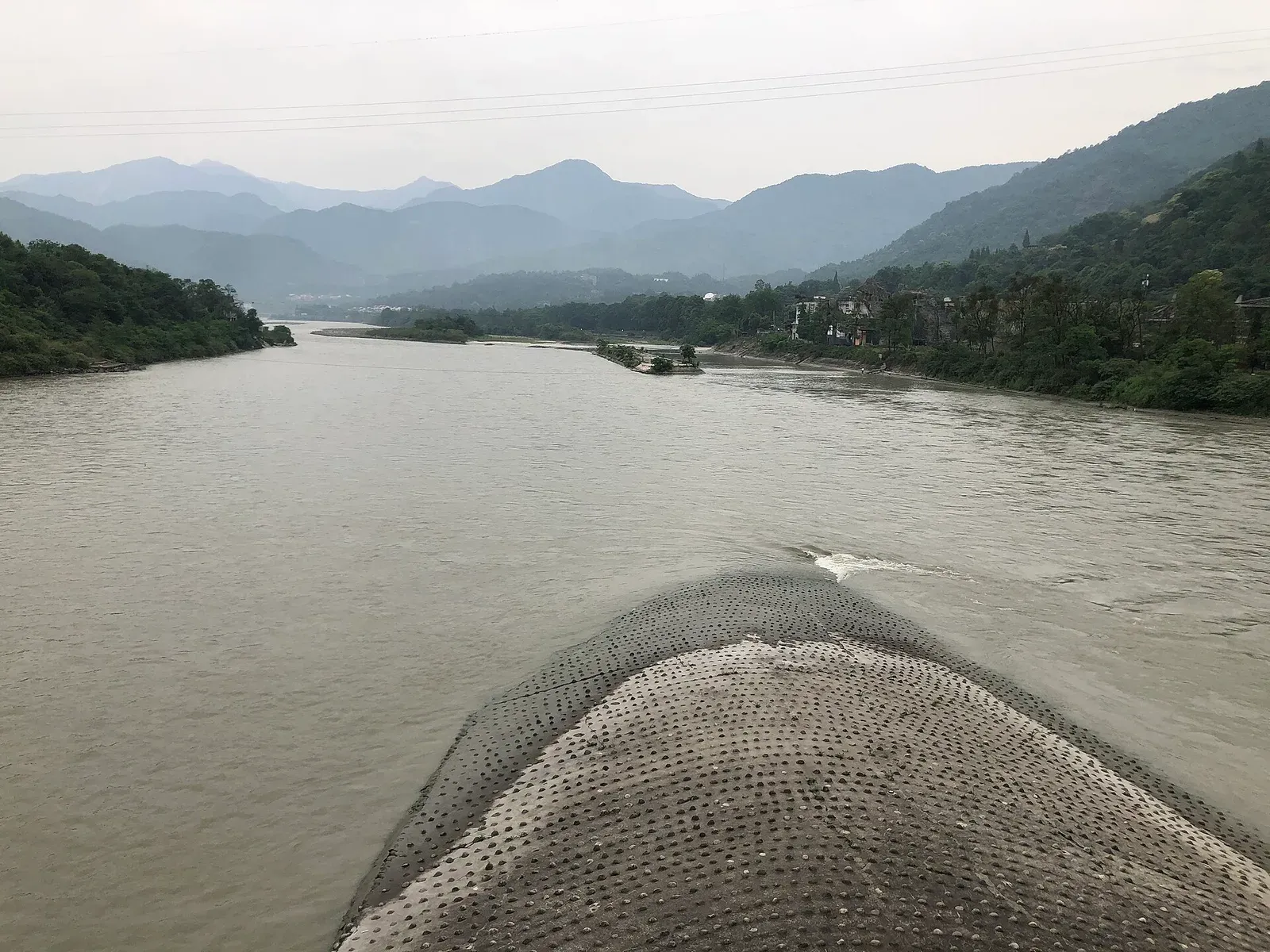
Photo: 星星 / Wikimedia Commons, CC BY-SA 4.0
A standard visit to the Dujiangyan irrigation system takes about 3 hours, and standard adult tickets cost 80 RMB per person. Built between 256 BC and 251 BC and still working without a dam today, it lets you follow the Inner River channel to see the water diversion and sand discharge layout of the three main sections: Baopingkou, Feishayan, and Yuzui.
| Item | Practical details |
|---|---|
| Suggested visit duration | About 3 hours according to official park signage |
| Adult admission | 80 RMB per person |
| Opening hours (Mar 1 to Dec 31) | 8:00 to 18:00 (ticket sales for the day end at 17:30) |
| Opening hours (Jan 1 to Feb 28) | 8:00 to 17:00 (ticket sales for the day end at 17:00) |
| Main arrival station | Lidui Park Station on the Chengguan Railway (10-minute walk from the exit to South Gate) |
| Key engineering highlights | Baopingkou, Feishayan, and Yuzui water divide |
How to Get from Chengdu to Dujiangyan: Which Train Station Should You Pick?
To travel from downtown Chengdu, transfer to the Chengguan Railway at Xipu Station on Chengdu Metro Line 2 or Line 6. Xipu Station allows direct cross-platform transfers between the subway and the railway without repeated security checks. If you head to the core engineering area, get off at Lidui Park Station. The fastest train from Xipu to Lidui Park takes 23 minutes and costs 10 RMB. Leave through Exit D, cross the Yangtianwo Panda Square, and walk 10 minutes along the Tianfu Greenway to reach the scenic area's South Gate.
If you take a Chengguan Line train to Dujiangyan Station instead, the fastest trip from Xipu takes 18 minutes, but you need to transfer to Bus 4, 6, or 9 outside the station to reach the scenic area. If you arrive in Chengdu by air, you can take Metro Line 10 from Shuangliu International Airport and transfer to Line 7 and Line 2 to reach Xipu Station (about 62 minutes by metro). From Tianfu International Airport, take Metro Line 18 and transfer to Line 1 and Line 2 to Xipu Station (about 90 minutes by metro), then transfer to an intercity train for a 20 to 30-minute ride to the site. Drivers can park at parking lots P2 or P3 of the scenic area, or Nanqiaofang parking lots 1 or 2, and walk 5 to 10 minutes from the parking lot to the scenic area.
Tip: The Lidui Park branch of the Chengguan Railway has three underground stations: Yingbin Road, Li Bing Square, and Lidui Park. Select Lidui Park Station as your final destination when buying tickets so you avoid having to take a city bus after getting off.
| Departure point or travel method | Route and transfers | Travel time and fare |
|---|---|---|
| Along Chengdu Metro lines (toward Lidui Park Station) | Cross-platform transfer at Xipu Station to the Chengguan line, exit from Exit D, and walk along Tianfu Greenway directly to the South Gate of the scenic area | Fastest train from Xipu takes 23 minutes (10 yuan fare), followed by a 10-minute walk after exiting |
| Along Chengdu Metro lines (toward Dujiangyan Station) | Cross-platform transfer at Xipu Station to the Chengguan line, then transfer to Bus 4, 6, or 9 upon exiting | Fastest train from Xipu takes 18 minutes (10 yuan fare) |
| Chengdu Shuangliu International Airport | Metro Line 10 to Line 7 to Line 2 to Xipu, then transfer to the bullet train | About 62 minutes by metro and about 20 to 30 minutes by bullet train |
| Chengdu Tianfu International Airport | Metro Line 18 to Line 1 to Line 2 to Xipu, then transfer to the bullet train | About 90 minutes by metro and about 20 to 30 minutes by bullet train |
| Driving | Park at the scenic area's P2 or P3 parking lot, or Nanqiaofang No. 1 or No. 2 parking lot | Walk 5 to 10 minutes from the parking lot to the scenic area |
What Is the Recommended One-Way Walking Route Through the Site?
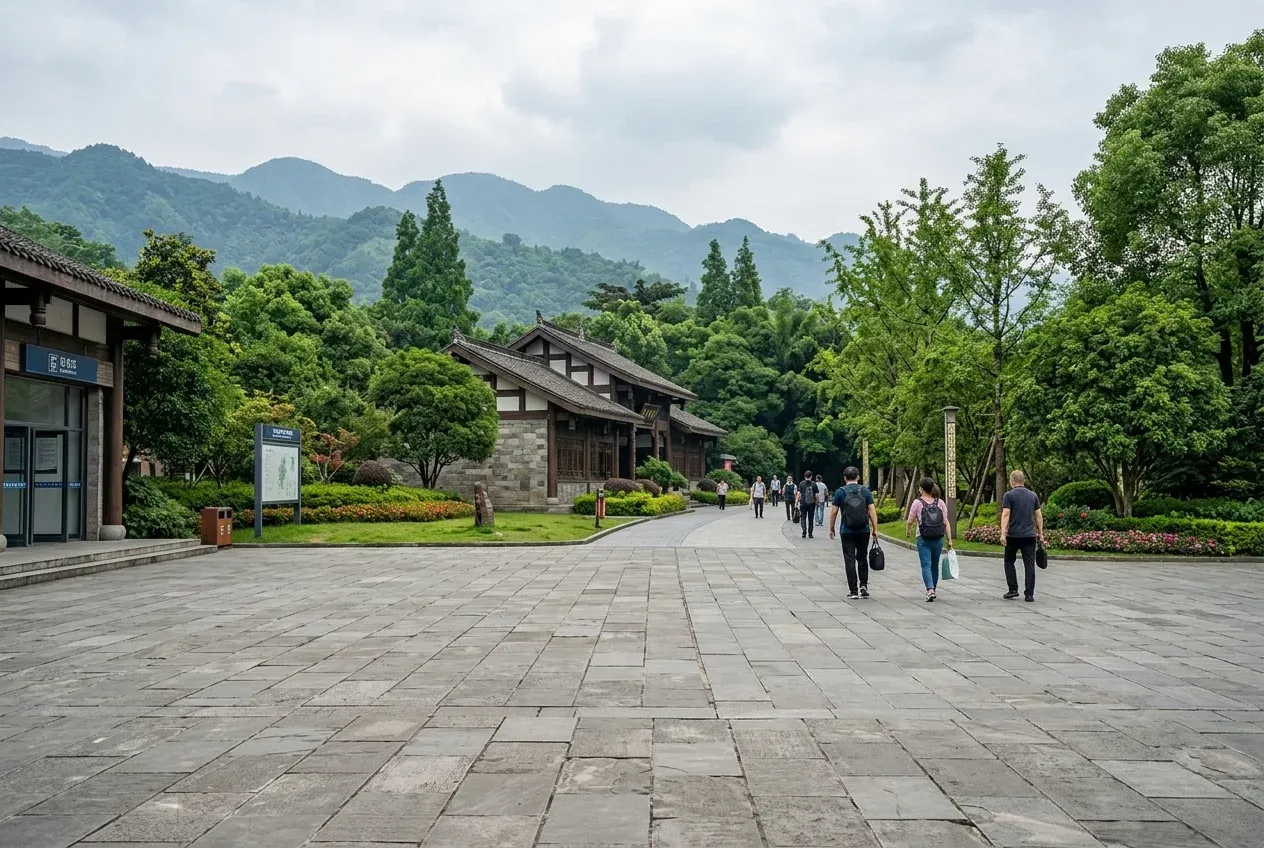
A continuous one-way route through the site works well: enter through the Lidui Park gate, pass Qingxi Garden and Yangong Dao, and reach Fulong Temple to look down at Baopingkou. Next, follow the river embankment past Feishayan and the Yuzui water divide, cross the river on the Anlan Suspension Bridge to Erwang Temple, leave along Songmao Ancient Road past Yulei Pass to exit the park, and stroll into West Street of Guanxian Ancient Town. This route follows the natural terrain without backtracking.
The admission ticket does not include optional in-park services such as sightseeing shuttle carts, the Buyunlang escalator, or in-person guides. Shuttle carts only run between the Stele Pavilion and Yuzui, with the boarding stop at the pavilion. If you want to save energy for the hilly trails later in the walk, you can take a shuttle cart from the Stele Pavilion straight to Yuzui. If you prefer to view the Inner River embankment structures up close, you can walk the flat paved path the entire way.
| Tour sequence | Route stop |
|---|---|
| Stop 1 | Enter the scenic area through the Lidui Park gate, passing Qingxi Garden and Yangong Dao |
| Stop 2 | Fulong Temple (Baopingkou) |
| Stop 3 | Feishayan |
| Stop 4 | Yuzui (direct sightseeing carts available from Stele Pavilion) |
| Stop 5 | Anlan Suspension Bridge and Erwang Temple |
| Stop 6 | Exit the scenic area via Songmao Ancient Road (Yulei Pass) to West Street in Guanxian Ancient Town |
How Do Yuzui, Feishayan, and Baopingkou Work Together?
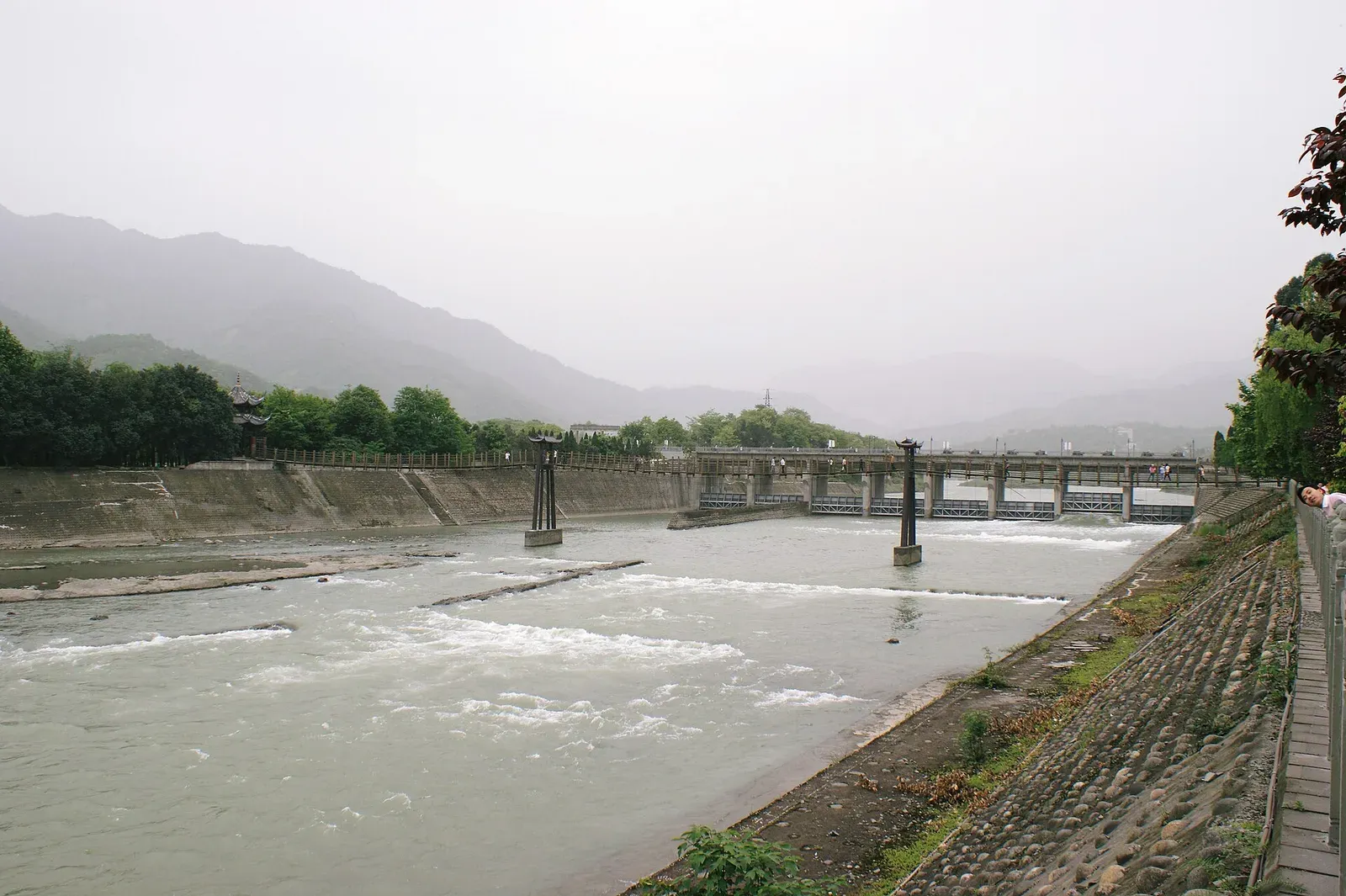
The ancient water conservation project was inscribed on the UNESCO World Heritage List in 2000. Its core engineering principle is dam-free diversion through three interconnected components. At the front, the Yuzui water divide sits in the middle of the Min River, separating the flow into the Inner River and Outer River. During the spring planting season when river runoff is lower, Yuzui directs 40 percent of the water into the Outer River and 60 percent into the Inner River for Chengdu Plain irrigation. During summer and autumn flood peaks, it discharges 60 percent into the Outer River and keeps 40 percent in the Inner River, automatically balancing water levels.
Located 710 meters down the Jingang Dike, Feishayan is a spillway 240 meters wide, with its crest sitting 2 meters above the riverbed. When the Inner River surges, centrifugal force pushes excess water and heavy silt across the spillway into the Outer River, keeping the Inner River from silting up. The final control point, Baopingkou, is a channel chiseled through bedrock. The gorge is 36 meters long, 18.8 meters high, 28.9 meters wide at the top, and 14.3 meters wide at the bottom. This bottleneck shape acts as a regulator for the volume of water entering the plain. Today, the system continues to serve 8 cities and 41 counties, districts, and county-level cities across Sichuan, irrigating 668,700 hectares of farmland.
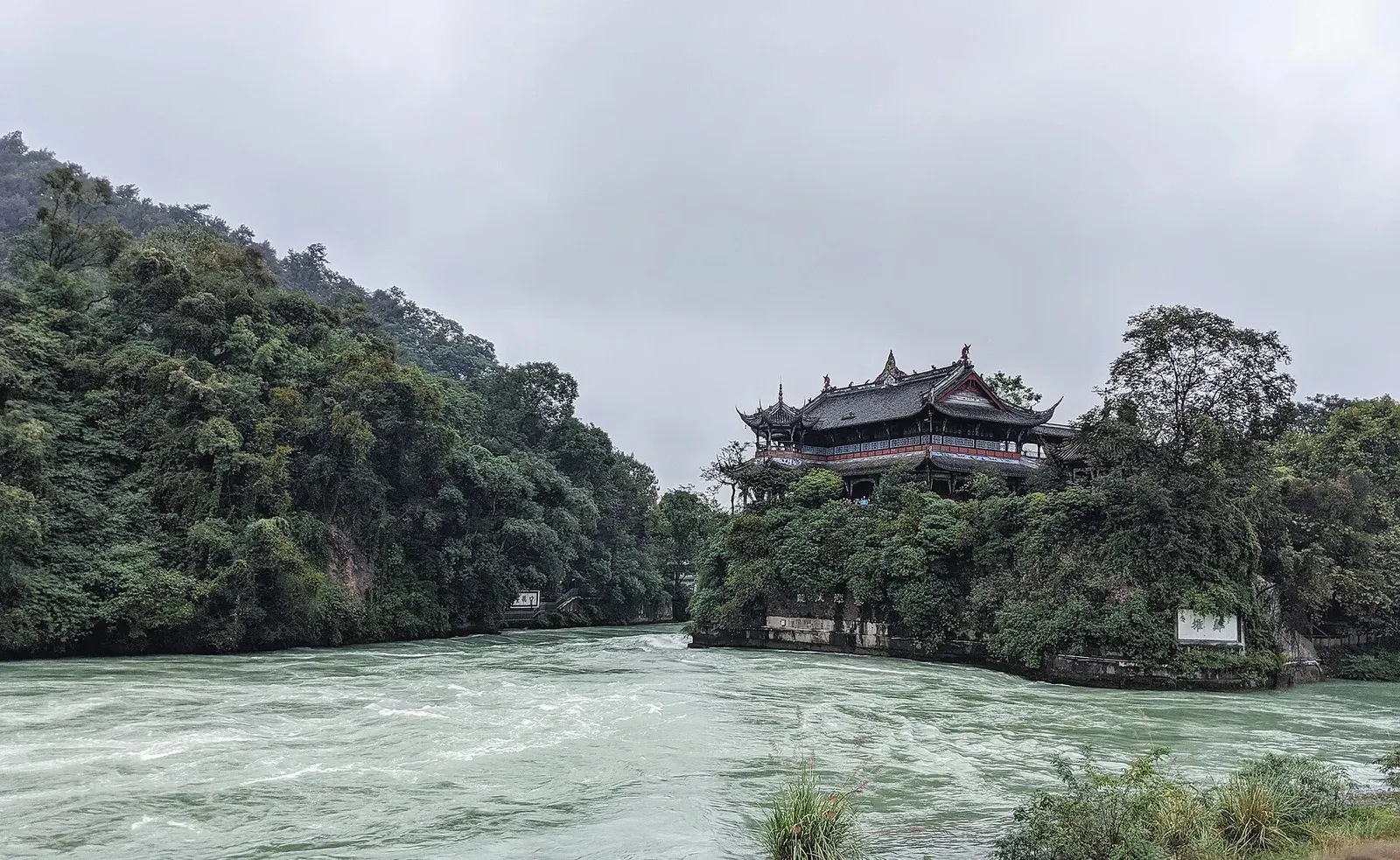
Historical sites around the engineering works are also notable. The main hall of Fulong Temple displays a stone statue of Li Bing recovered from the riverbed in 1974. Carved in 168 during the first year of the Jianning era of the Eastern Han dynasty, it stands 2.9 meters tall and weighs 4.5 metric tons. The Anlan Suspension Bridge spans over 500 meters across the Min River, with wooden floor planks and cable railings. On the hillside, Erwang Temple is a Qing dynasty timber complex covering 10,072 square meters, built to step up the mountain slopes rather than along a traditional north-south axis.
Ticket Prices and Booking: How Do International Travelers Enter?
Ticket discounts at the scenic area vary by visitor group: minors aged over 6 and up to 18, as well as full-time undergraduate students and below, receive half-price admission at 40 RMB per person with a student ID. Children aged 6 and under or 1.3 meters and shorter, along with seniors aged 65 and above, enter free. Active military personnel, retired military cadres, non-commissioned officers, people with disabilities, and journalists also enter free with valid credentials; see the table below for adult full-price tickets and other specific fees.
Among international travelers, only full-time undergraduate students and below qualify for half-price admission with valid student identification; all other international visitors purchase full-price tickets. When booking, select your passport or foreign permanent resident ID card to register your details, then present your original document at a staffed lane for verification upon entry. During busy holidays, the park recommends booking 3 to 7 days in advance through official WeChat channels such as "青城山都江堰" or "悦游都江堰", or via major travel platforms.
Tip: Tickets are valid for a single entry on the booked visit date. If unused, refund requests need to be submitted through My Orders in the official WeChat account before 23:59 on the day after the booked visit date, after which the booking system automatically cancels and finalizes the ticket without refund.
| Ticket type | Price |
|---|---|
| Adult ticket | 80 yuan/person |
| Student ticket (for visitors aged 6 to 18 or full-time undergraduate students and below, purchased with a student ID) | 40 yuan/person |
| Children aged 6 and under or 1.3 meters and shorter | Free |
| Seniors aged 65 and above | Free |
| People with disabilities, active military personnel, retired military cadres and non-commissioned officers, journalists, and others with valid ID | Free |
When Can You See the Water Releasing Festival and the Blue Tears Light Show?
Chengdu experiences its most pleasant weather from March to June and from September to November, while July and August bring hot, humid days and frequent downpours. To witness the signature traditional ceremony, plan your visit around Qingming in the traditional lunar calendar. The local Water Releasing Festival was added to China's first national intangible cultural heritage list in 2006. Its central ritual involves cutting the bamboo ropes of the macha tripods at Yuzui, releasing water from the Outer River into the newly cleared Inner River. In 2026, the ceremony opened on April 3, following ancient rites from river patrol announcements and altar preparations to solemn offerings and rope cutting, while onlookers cheered and followed the rushing head of water for good fortune.
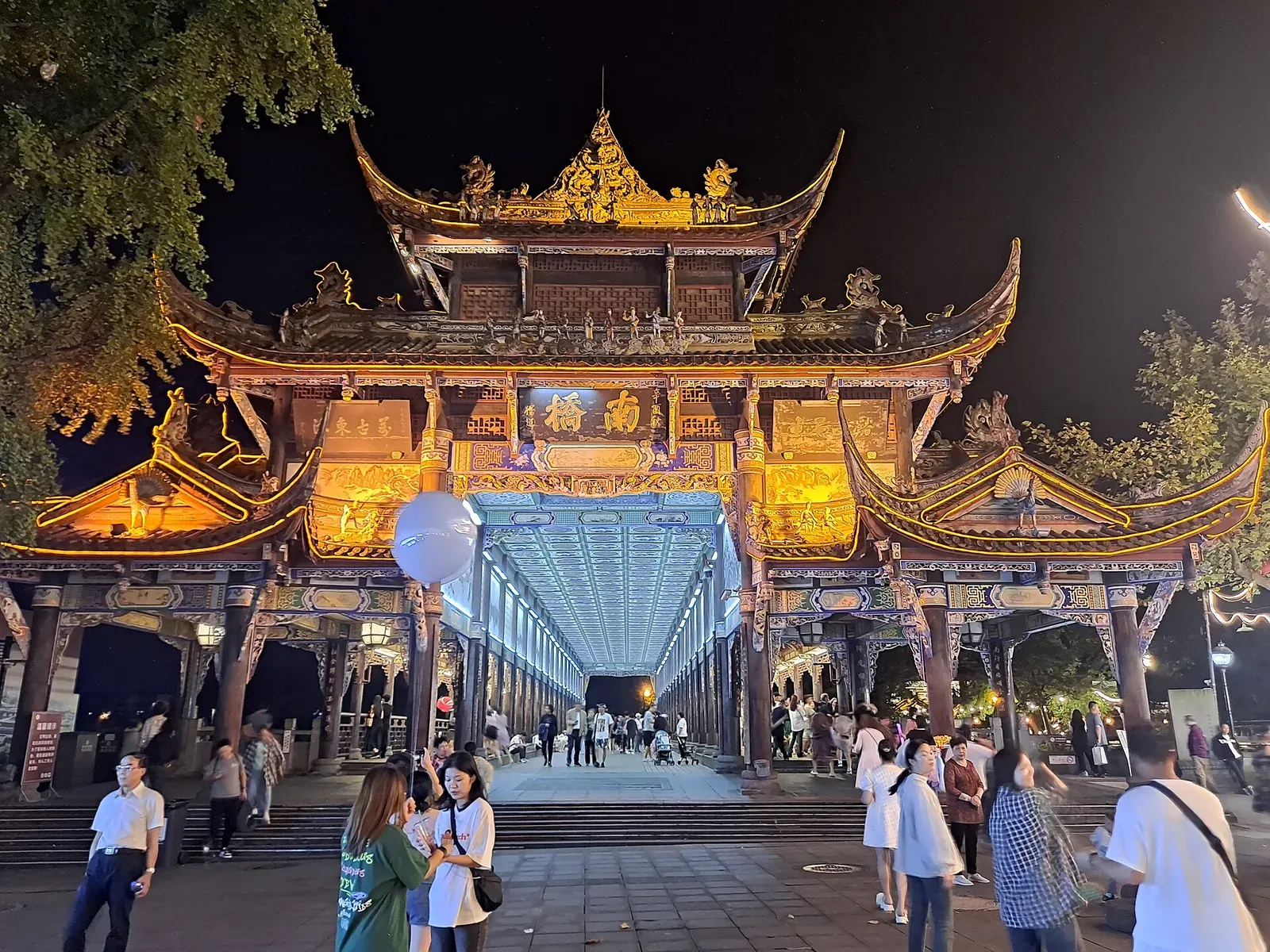
Even on regular days, evening remains a popular viewing window. According to Chengdu Railway Station, decorative lights on the South Bridge turn on gradually every day at 19:30. Illumination reflecting on the surging river creates the blue-green water effect known locally as Blue Tears. The bridge exit leads straight into West Street in Guanxian Ancient Town, where lanes are lined with traditional western Sichuan snacks such as iced fermented glutinous rice, handmade cold noodles, spiced rabbit head, intestine noodles, and tender tofu pudding rice.
Can You Combine the Water Project with Mount Qingcheng and Panda Valley in One Day?
Mount Qingcheng is only 10 kilometers from the irrigation system and about 68 kilometers west of central Chengdu. Both spots connect within an hour by car or high-speed rail, making them easy to combine into a single-day dual World Heritage itinerary. If you travel with children or want to see giant pandas, the Field Research Center for Giant Panda Reintroduction (Panda Valley), part of the Chengdu Research Base of Giant Panda Breeding, is located within the same municipality. In addition, driving 25 minutes from the core area brings you to Black Stone Forest, a stream-wading spot favored by locals.
If you have just one day and focus on historical engineering and forests, spend the morning touring the three main water structures, head to Mount Qingcheng in the afternoon, and return to South Bridge for evening views. If you are traveling with seniors and children, visit Panda Valley in the morning to see pandas in training, take an easy afternoon walk around the irrigation works, and spend the night in town. The Mount Qingcheng area also works well for a weekend hot spring escape in winter.
| Combined itinerary | Morning schedule | Afternoon and evening schedule |
|---|---|---|
| Full irrigation day tour | Visit Lidui Park, Fulong Temple, Baopingkou, and Feishayan to Yuzui | Tour Anlan Suspension Bridge and Erwang Temple, then watch the "Blue Tears" illuminate at South Bridge at 19:30 |
| Irrigation & Mount Qingcheng day tour | Tour the Dujiangyan irrigation system (officially marked as taking about 3 hours) | Head to Mount Qingcheng, 10 km from the irrigation project, for sightseeing |
| Irrigation & Panda Valley day tour | Head to the panda reintroduction center (Panda Valley) | Tour the water project, exit via South Bridge to West Street in Guanxian Ancient Town to sample local snacks |
What Common Mistakes Do First-Time Visitors Make at the Site?
Many first-time visitors choose the wrong terminus station: the Chengguan Line's mainline terminates at Dujiangyan Station or Mount Qingcheng Station, whereas the station closest to the core irrigation area is Lidui Park Station on the branch line. If you buy the wrong ticket and arrive at that mainline station, you will need to take a connecting public bus outside the station. If you get off at Lidui Park Station, you can walk directly to the South Gate of the scenic area along the greenway.
Another common misunderstanding is what the entrance ticket covers. General admission to the scenic area does not include commercial or paid services inside the grounds, such as sightseeing carts, the Buyunlang escalator, or tour guide services. In addition, international travelers should purchase tickets using a passport or foreigner residence permit and enter through the manual check lane. Unused tickets must be canceled and refunded under "My Orders" on the park's official WeChat account before 23:59 on the day after the visit date; past that time, the system will automatically write them off.
| Common misunderstandings | Actual rules and what to do |
|---|---|
| Misconception 1: Taking the bullet train to Dujiangyan Station to reach the core irrigation area | It is better to get off at Lidui Park Station, exit, and walk 10 minutes directly to the South Gate of the scenic area (exit from Exit D via the Yangtianwo Panda Plaza) |
| Misconception 2: General admission covers all transportation and activities in the scenic area | General admission does not include sightseeing carts, the Buyunlang escalator, or tour guide services, and the sightseeing cart only runs from the Stele Pavilion to Yuzui |
| Misconception 3: International visitors can swipe passports directly at the turnstiles | International visitors should purchase tickets using a passport or foreigner residence permit and enter through the manual check lane |
| Misconception 4: Unused tickets will be refunded automatically | Unused tickets must be canceled and refunded under "My Orders" on the park's official WeChat account before 23:59 on the day after the visit date; after that time, the system will automatically write them off |
Sources
Chengdu · Uncle Panda Travel
Chinese Wikipedia entry on the irrigation works
Chinese Wikipedia entry on Chengdu
Chinese Wikipedia entry on Mount Qingcheng
Chinese Wikipedia entry on Chengdu Research Base of Giant Panda Breeding
Chinese Wikipedia entry on the Chengguan Railway
Chinese Wikipedia entry on the county-level city
English Wikipedia entry on the county-level city
Mount Qingcheng and the Dujiangyan Irrigation System - UNESCO
Water Releasing Festival - China Intangible Cultural Heritage Network
Water Releasing Festival: Millennial Water Management Heritage - Xinhua Net
All sources verified on Nov 18, 2026
FAQ
How much time should you budget for a standard visit?
Park authorities recommend budgeting about 3 hours. Following the classic one-way route through Lidui Park, Baopingkou, Feishayan, the Yuzui water divide, and Anlan Suspension Bridge, a half-day visit is generally sufficient to explore all three primary engineering works.
How do international travelers buy admission tickets?
International visitors can book through official WeChat accounts (青城山都江堰) or major online travel platforms by entering passport or foreign permanent resident ID details. Except for full-time undergraduate students and below who qualify for half-price tickets with valid student ID, international travelers need standard adult tickets and enter through a staffed ticket check lane.
Which high-speed train station should you choose for the core scenic area?
Book tickets to Lidui Park Station. It is an underground stop on the Lidui Park branch of the Chengguan Railway, and walking along the Tianfu Greenway takes just 10 minutes to reach South Gate. If you get off at Dujiangyan Station instead, you will need to transfer to Bus 4, 6, or 9.
What time do the Blue Tears evening lights turn on at South Bridge?
The decorative night lights on South Bridge turn on gradually every day at 19:30, casting blue and green hues across the rushing water. The bridge gets busy once lit, and the exit leads straight into West Street of Guanxian Ancient Town for local snacks.