
Dragon Dance and Dragon Boat Racing: Origins and Customs
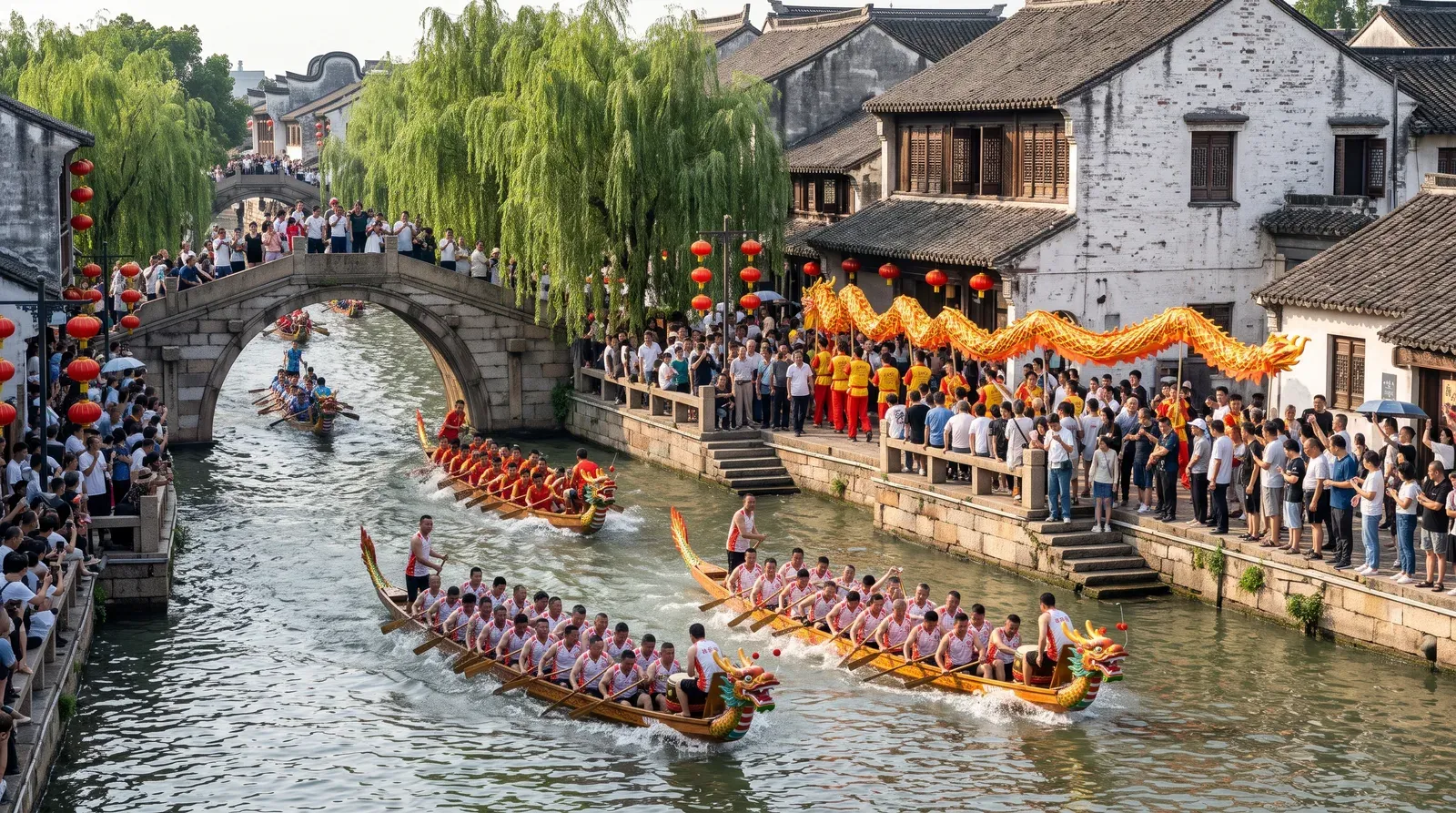
Chinese dragon dance and dragon boat racing are traditional folk activities. As early as the Shang dynasty, oracle bone inscriptions recorded groups of people sacrificing to dragons to pray for rain, and 39 dragon dance items are now listed on the national representative intangible cultural heritage list. Dragon boat racing settled on the fifth day of the fifth lunar month during the Tang dynasty, and China's State Physical Culture and Sports Commission recognized it as an official sport in May 1984.
What are the traditional origins and performance stages of the dragon dance?
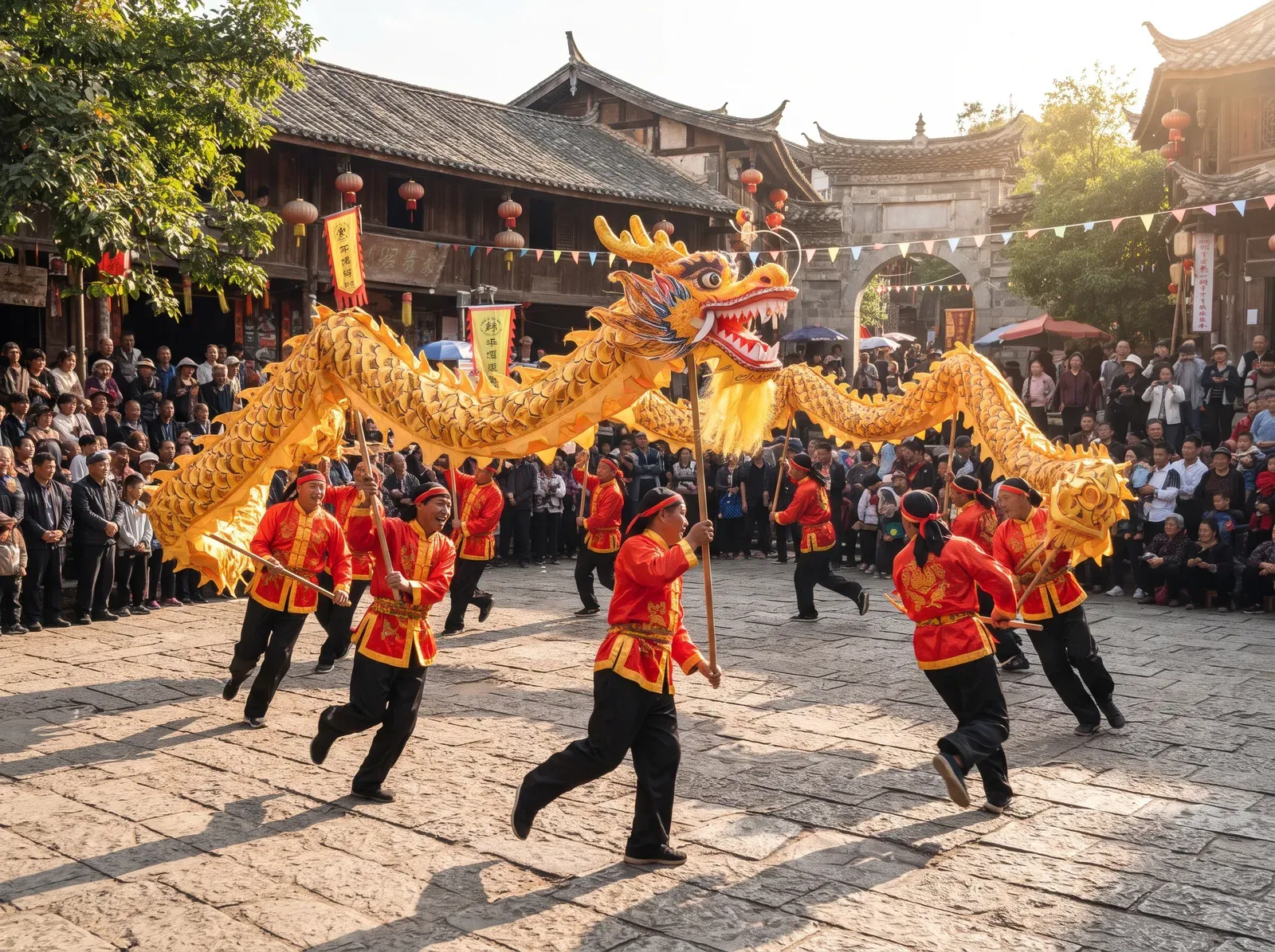
Shang oracle bone inscriptions already contained records of multiple people praying to dragons for rain, and Dong Zhongshu recorded dragon dancing for rain in "Chunqiu Fanlu" (Luxuriant Dew of the Spring and Autumn Annals) during the Han dynasty. On China's national intangible cultural heritage list, dragon dance falls under the traditional dance category (project code III-4) with 39 registered items, with Guangdong and Zhejiang each having more than 8 listed items.
Dragon dance props are divided by material into dozens of types, including cloth, straw, paper, bamboo, and fire dragons. Colors include yellow, white, blue-green, red, and black, with the yellow dragon considered the most noble.
The traditional performance usually strictly follows four stages: inviting the dragon, bringing out the dragon, dancing the dragon, and sending off the dragon. Southern dragon dances connect closely with clan culture, centered on coiling, wrapping, flipping, and threading movements, excelling at tight turns and rolls within narrow town spaces.
What are the traditional origins and racing rules of dragon boating?
Three main accounts explain the origins of the Duanwu dragon boat races: commemorating Qu Yuan, honoring Wu Zixu, and ancient totem rituals to ward off disasters and pray for health during floods and plagues. Folk boat races across China had no unified date before the Tang dynasty, taking place in the fourth or eighth lunar month, before settling on the fifth day of the fifth lunar month during the Tang era.
Water racing forms the core of dragon boat events, surrounded by rituals before launching, the races themselves, and post-race celebrations. During the Five Dynasties period, officials hung colorful silk atop bamboo poles at the finish line, and winners grabbing the silk was called "duobiao" (seizing the banner), which became the origin of the modern Chinese sports term for winning a championship.
Most regions determine the winner by the shortest time over an equal distance. Some places, such as Luodian in Shanghai and Wuchang in Zhejiang, judge victory by skill and presentation, including paddle synchronization, steering posture, and rhythm. In May 1984, the State Physical Culture and Sports Commission recognized dragon boat racing as an official sport, and the first national Qu Yuan Cup dragon boat race took place in Foshan, Guangdong in September of that year.
What are key historical milestones for dragon dance and dragon boat racing?
| Historical period or year | Folk activity | Historical record and custom rules |
|---|---|---|
| Shang dynasty | Dragon dance | Oracle bones record groups sacrificing to dragons for rain |
| Han dynasty | Dragon dance | Dong Zhongshu's "Chunqiu Fanlu" clearly records dragon dancing for rain |
| Before Tang dynasty | Dragon boat racing | Boat races had no unified date, occurring in the fourth or eighth lunar month |
| Tang dynasty | Dragon boat racing | Races settled on the fifth day of the fifth lunar month during Duanwu |
| Five Dynasties period | Dragon boat racing | Officials hung colored silk on poles at the finish line, and grabbing it was called duobiao |
| Ming dynasty | Dragon boat racing | Foshan Diejiao curve dragon boat racing began in the Ming dynasty |
| May 1984 | Dragon boat racing | State Physical Culture and Sports Commission listed boat racing as an official sport |
| September 1984 | Dragon boat racing | First national Qu Yuan Cup dragon boat race was held in Foshan, Guangdong |
| 2017 | Dragon boat racing | Foshan Diejiao curve dragon boat racing was listed as Foshan municipal intangible cultural heritage |
What rituals accompany dragon boat customs in the Canton region?
Cantonese dragon boat customs include a complete sequence of traditional rituals: awakening the dragon by excavating the boat from river mud, dotting the eyes, offering prayers, gathering on the water, and sharing dragon boat feasts. Villages practice customs of issuing invitations and visiting each other, where one village invites and neighboring brother villages row over to attend, sustaining centuries of clan and village ties.
Foshan's Yanbu Old Dragon and Guangzhou's Pantang dragon boat formed a ritual kinship bond, with Yanbu as the godfather and Pantang as the godson, maintaining mutual visits for more than 400 years. Water villages like Liede in Guangzhou host large dragon boat feasts in front of ancestral halls after river gatherings, reaching hundreds of tables and thousands of diners.
What unique rules govern Foshan Diejiao curve dragon boat racing?
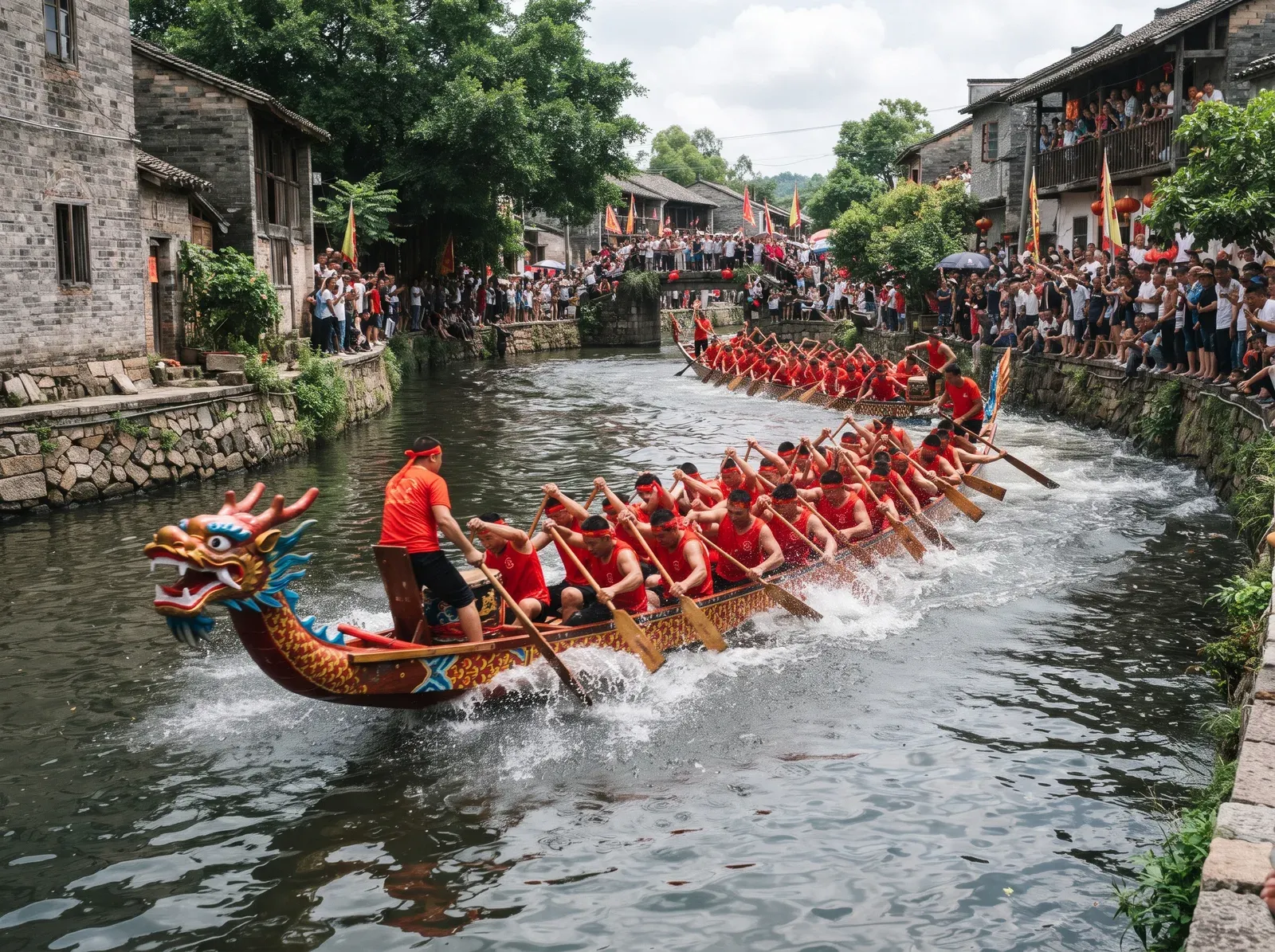
Foshan's Diejiao curve dragon boat racing began in the Ming dynasty and was listed as Foshan municipal intangible cultural heritage in 2017. The races are divided into four course sections: S-curve, C-curve, L-curve, and straightaway, driven by the local motto, "Better to crash than row slow."
Diejiao dragon boats measure over 25 meters long and carry more than 40 crew members, with materials evolving from ironwood and teak to fir. During curve racing, two to three steersmen at the bow and stern coordinate together to drift through the bends.
Under what context do traditional folk beliefs apply?
Dragon dancing for rain and ancient Duanwu rituals to ward off disease and disaster reflect traditional folk beliefs rather than scientific evidence. Winning criteria for dragon boat racing also vary across regions: most places reward the shortest race time, while areas such as Luodian in Shanghai and Wuchang in Zhejiang judge by technique and spectacle, including paddling precision, steering posture, and coordination.
Sources
National Intangible Cultural Heritage Representative Project: Dragon Dance - China Intangible Cultural Heritage
Dragon Dance - Wikipedia
Hundreds of Boats Compete: Duanwu Dragon Boat Racing Customs - China Intangible Cultural Heritage
Dragon Boat - National Ethnic Affairs Commission
Dragon Boat Gatherings, Feasts, and Folk Activities: Guangzhou Districts Celebrate Duanwu - Guangzhou Municipal People's Government
Diejiao Dragon Boat Culture - Baidu Baike
Sources verified on November 7, 2026
FAQ
What is the earliest written record of dragon dancing for rain?
As early as the Shang dynasty, oracle bone inscriptions recorded groups of people sacrificing to dragons for rain, and Dong Zhongshu recorded dragon dancing for rain in "Chunqiu Fanlu" during the Han dynasty.
Where does the term "duobiao" in dragon boat racing come from?
During the Five Dynasties period, officials hung colorful silk atop bamboo poles at the finish line, and winners grabbing the silk was called "duobiao," which became the origin of the modern sports term for winning a championship.
What is the relationship between Foshan's Yanbu Old Dragon and Guangzhou's Pantang dragon boat?
Foshan's Yanbu Old Dragon and Guangzhou's Pantang dragon boat formed a ritual kinship bond, with Yanbu as the godfather and Pantang as the godson, maintaining mutual visits for more than 400 years.
In what order are traditional Cantonese dragon boat rituals conducted?
Cantonese dragon boat rituals proceed in order through awakening the boat from river mud, dotting the eyes, offering prayers, gathering on the water, and sharing the feast.
What racing zones are featured in Foshan's Diejiao curve dragon boat races?
Foshan Diejiao curve dragon boat racing features four course sections: S-curve, C-curve, L-curve, and straightaway, using boats over 25 meters long that carry more than 40 crew members.