
Chinese Signs for Prosperity: Traditional Lucky Symbols and Motifs
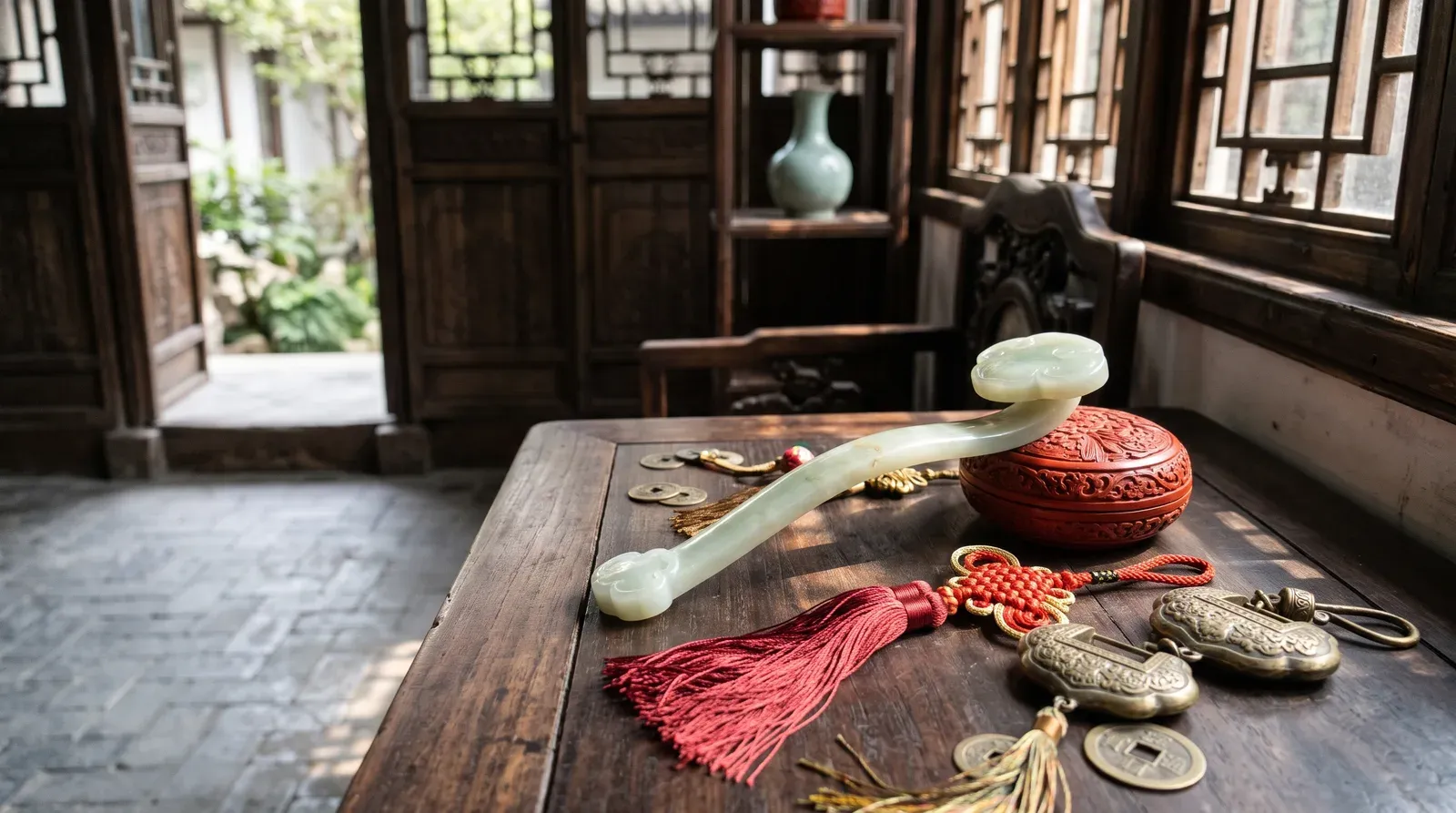
In traditional Chinese culture, chinese lucky symbols for good fortune and wealth span Chinese characters, mythical beasts, craft objects, and lucky numbers. Pasting the Fu character during the Spring Festival as a popular chinese sign for prosperity dates back at least to the Song Dynasty (960 to 1279). Beyond Fu, people widely use fish because it sounds like surplus, the number 8 because it sounds like prosperity, the wealth-drawing pixiu, the three-legged money toad, and Qing Dynasty five-emperor coins to represent abundance and wealth.
Which Characters Represent Good Fortune and Prosperity in Chinese Culture?
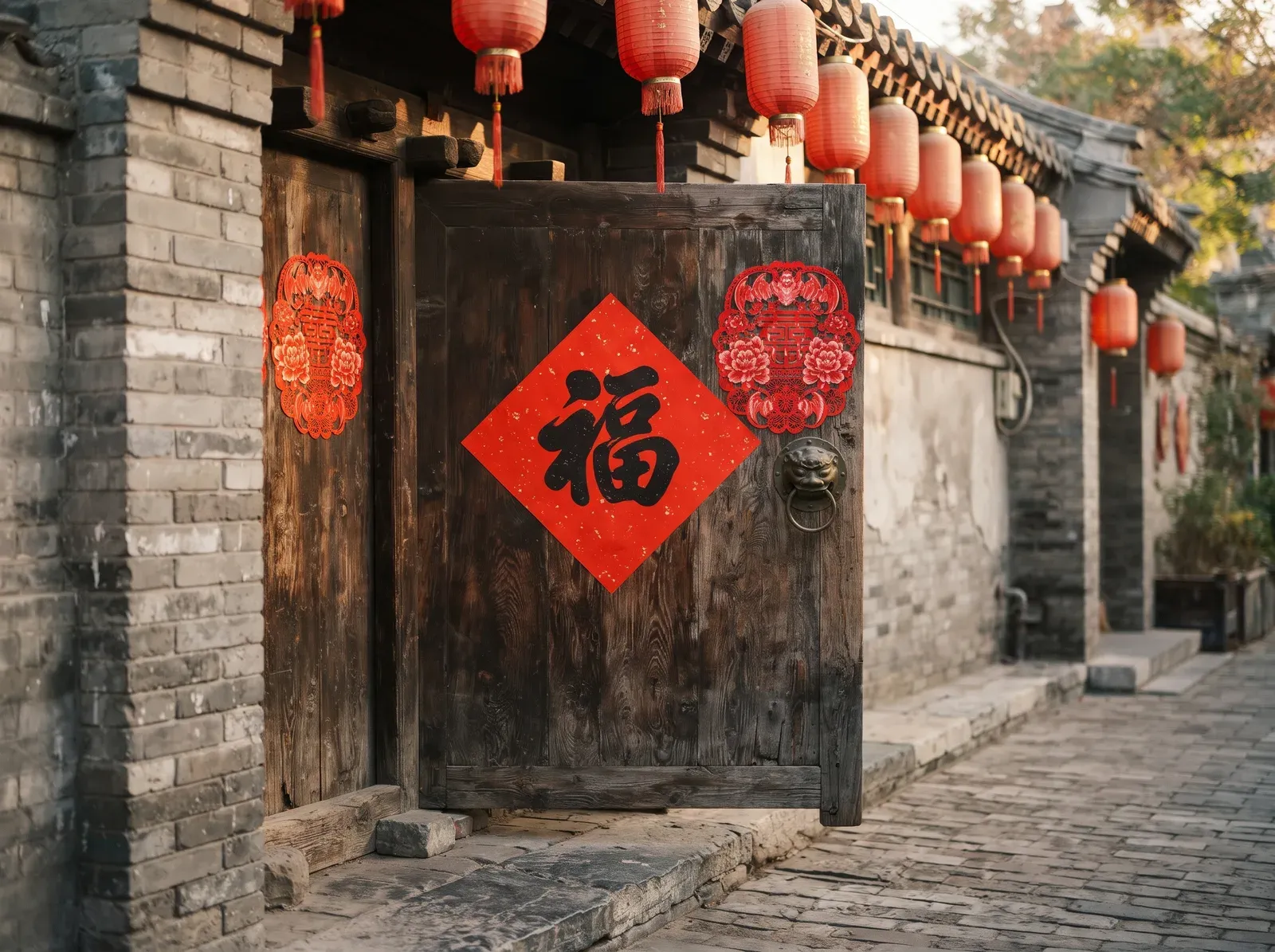
The character Fu (fú) stands for good luck or blessing in Chinese. It appears not only as written script, but also as visual puns in art. The practice of hanging Fu during the Spring Festival is widespread and dates back at least to the Song Dynasty (960 to 1279).
Fu is often pasted upside down on red diamond-shaped paper. In almost all Chinese dialects, the word for upside down (dào) sounds like the word for arrive (dào), meaning that blessing has arrived.
The character Lu originally referred to an official salary. Because of this, the Star God of Lu is seen as the deity over prosperity, official rank, and prestige, often depicted holding a ruyi scepter. The character Cai stands for wealth in traditional designs, while the character Shuangxi (double happiness) symbolizes doubled celebration and marital joy in folk art.
Which Animals and Mythical Beasts Symbolize Wealth and Good Fortune?
In Chinese mythology and traditional motifs, a single fish (yú) sounds like surplus (yú), symbolizing wealth and abundance throughout the year. The motif of a carp leaping over the dragon gate traditionally represents passing imperial examinations and achieving career success. Bats are also among the most common auspicious symbols. Because the word for bat (fú) sounds like blessing (fú), designs featuring five bats represent the arrival of five blessings.
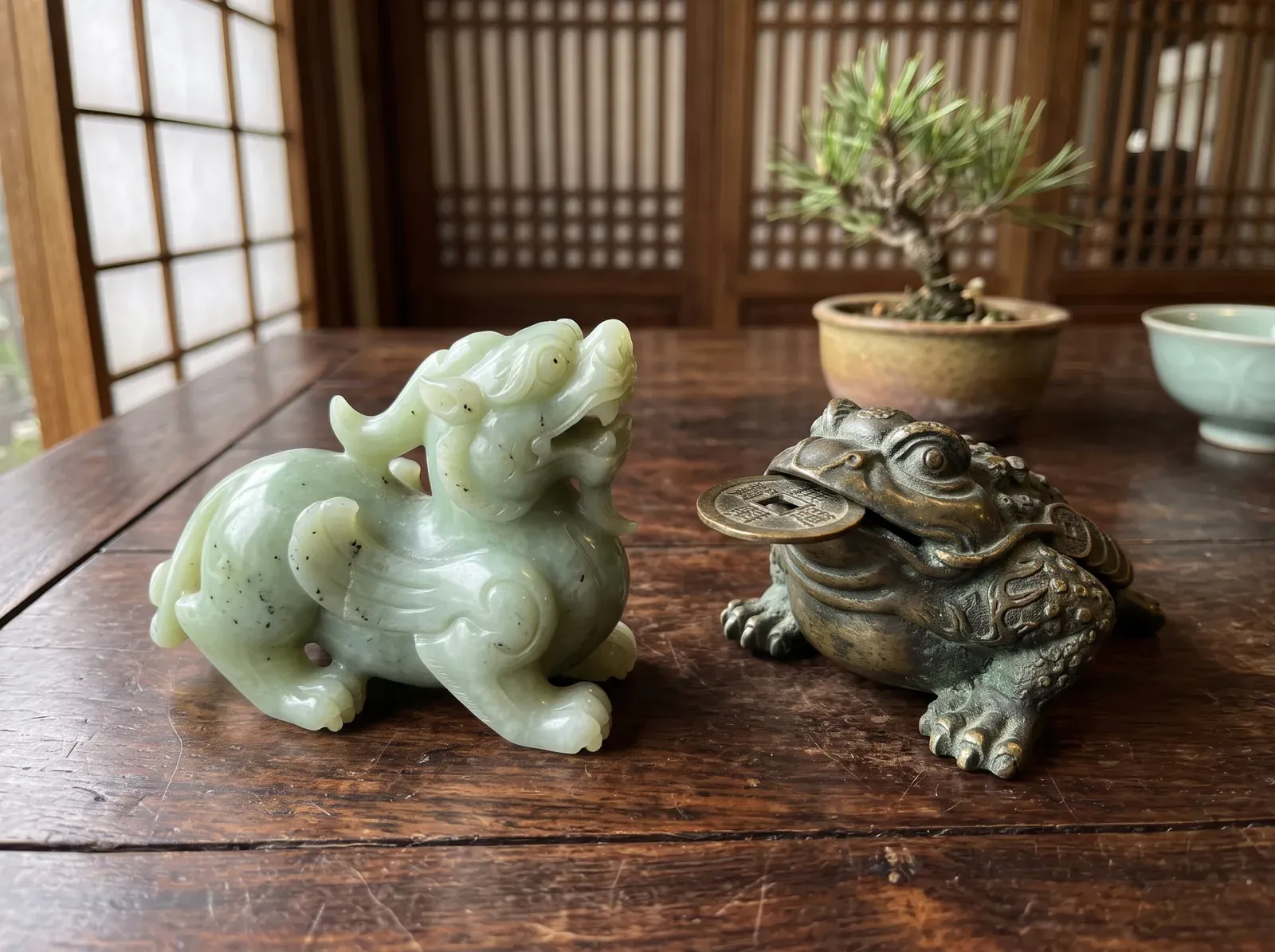
The three-legged money toad is a popular Feng Shui charm for prosperity and attracting wealth. Its typical design features red eyes, flared nostrils, and a single hind leg, making three legs in total. It sits on a pile of traditional copper coins with a coin in its mouth, and its back often carries markings shaped like seven stars. In Han folklore, the toad is linked to the Daoist immortal Liu Haichan and regarded as his mythical animal companion and mount.
The mythical beast pixiu is traditionally believed to hold the power to draw wealth from all directions, especially to help ward off bad luck during one's zodiac birth year or unlucky periods. Traditionally, pixiu were divided by their horns: the two-horned female was called bixie, and the single-horned male was called tianlu. It has a dragon head, a lion body, and wings. Folk legend says the Jade Emperor punished the pixiu by sealing its anus, leaving it able to swallow gold, silver, and jewels without expelling them, making it an emblem of attracting and keeping wealth. Historically, males had one horn and females had two, though modern depictions more commonly show a single horn.
Which Plants and Traditional Crafts Are Used for Blessings and Wealth?
The peony is known as the flower of wealth and honor. Closely tied to the imperial court, it symbolizes high official rank, noble status, and rich prosperity.
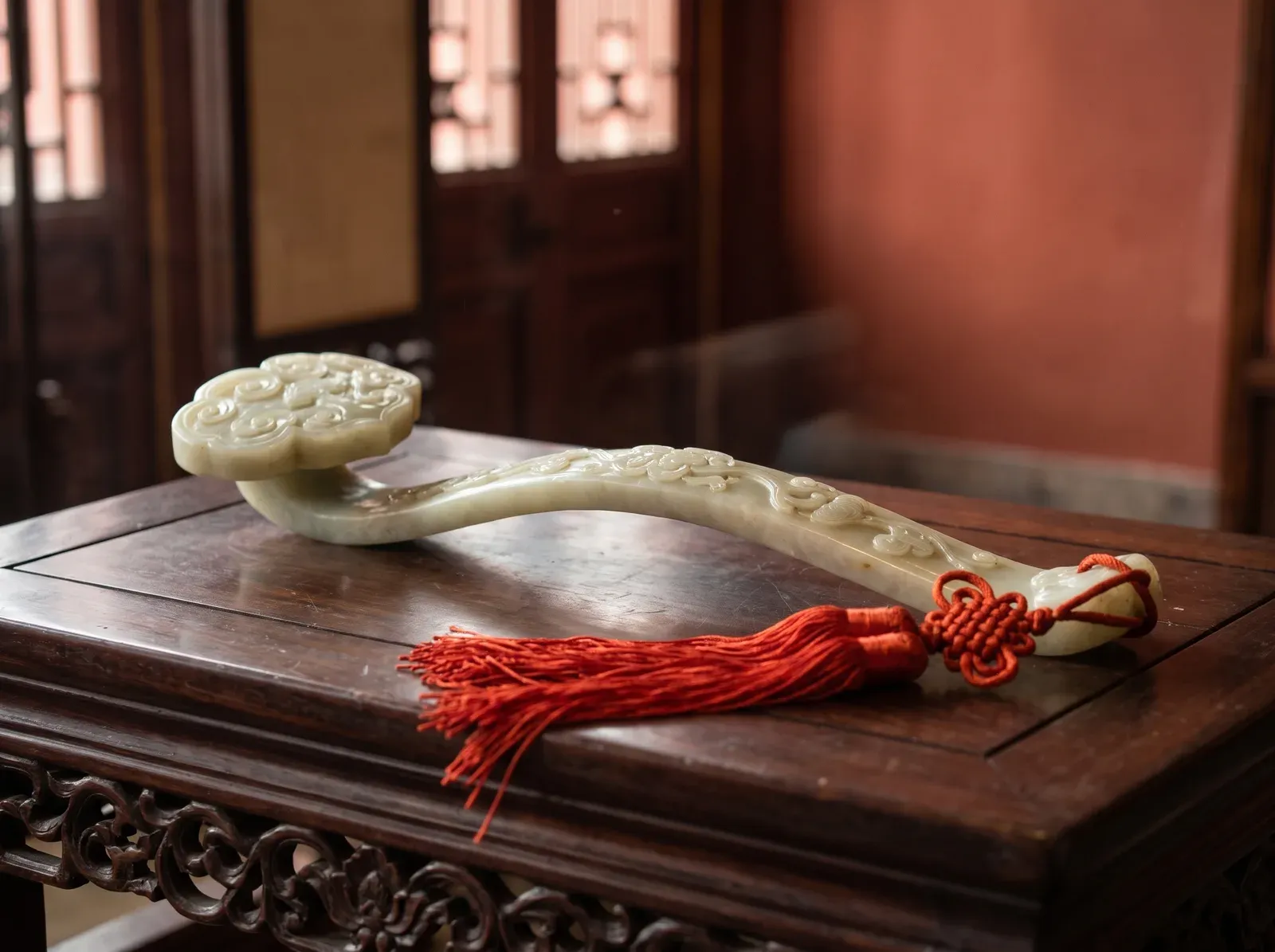
The ruyi is a curved object used as a ritual tool in Buddhism and as a folk charm symbolizing authority and good fortune. Traditional ruyi handles have an S-shaped curve, with heads shaped like a fist, a cloud, or a lingzhi mushroom. The Palace Museum in Beijing preserves nearly 3,000 ruyi scepters crafted from gold, silver, jade, ivory, coral, and other materials. Depictions of the God of Wealth often show him holding a ruyi, which symbolizes fulfillment of all wishes and the gathering of wealth in Feng Shui and decorative art.
Chinese knots are usually woven from a single silk cord into various shapes, each carrying symbolic meaning, with red being the most common color for good luck. The endless knot comes from the Eight Auspicious Symbols of Buddhism and is the most iconic Chinese knot, representing continuous fortune and lasting prosperity. Silk paintings excavated from the Mawangdui Han tombs (206 BC to 9 AD) feature double coin knot patterns formed by intertwined dragons, showing an ancient knotting motif.
Auspicious coins, known as numismatic charms or huaqian, originated during the Western Han Dynasty. They evolved from Ban Liang and Wu Zhu coins and were used for blessings, warding off evil, Feng Shui, and folk rituals rather than as circulating currency. Qing Dynasty five-emperor coins string together copper coins from the reigns of Shunzhi, Kangxi, Yongzheng, Qianlong, and Jiaqing. Folk tradition holds that they attract wealth and protect against misfortune.
Why Do Numbers 8 and 6 Represent Wealth and Smooth Success in Chinese Culture?
The number 8 (bā) is regarded as the luckiest wealth number in Chinese culture because it sounds close to fā, meaning to prosper or get rich. The opening ceremony of the 2008 Beijing Summer Olympics was deliberately scheduled for August 8, 2008, at 8:08:08 pm Beijing Time to symbolize good fortune and prosperity.
The number 6 (liù) sounds like smooth (liū) in Mandarin and sounds like salary and joy in Cantonese. It is widely considered an auspicious number for smooth business and daily life.
Reference Table of Traditional Chinese Auspicious Symbols
| Category | Auspicious Symbol | Key Historical Period or Number | Core Meaning and Cultural Basis |
|---|---|---|---|
| Chinese Characters | Fu (fú) | Song Dynasty (960 to 1279) pasting tradition | Sounds like blessing has arrived, appearing as text and imagery |
| Chinese Characters | Lu, Cai, Shuangxi | Star God of Lu often holds a ruyi | Lu means official salary for rank, Cai means wealth, and Shuangxi marks doubled wedding joy |
| Animals | Fish (yú) | Carp leaping over the dragon gate motif | Sounds like surplus for yearly abundance, leaping gate marks exam and career success |
| Animals | Bat (fú) | Five bats forming the Five Blessings motif | Sounds like blessing (fú), five bats symbolize the arrival of five blessings |
| Mythical Beasts | Three-legged money toad | 3 legs, red eyes, often 7 star spots on back | Holds coin on coin pile, mount of Daoist immortal Liu Haichan, represents prosperity and wealth |
| Mythical Beasts | Pixiu | Dragon head, lion body, wings; historic single-horned tianlu and two-horned bixie | Punished by Jade Emperor with sealed anus to swallow without expelling, gathers wealth and wards off bad luck |
| Plants | Peony | Known as flower of wealth and honor | Closely tied to imperial court, symbolizes high rank, noble status, and rich prosperity |
| Objects | Ruyi | Nearly 3,000 pieces in Palace Museum in Beijing | S-curved handle, Buddhist ritual tool and folk talisman, held by God of Wealth for wish fulfillment |
| Objects | Chinese knot | Double coin knot from Mawangdui Han tombs (206 BC to 9 AD) | Woven from single cord, endless knot from Eight Buddhist Symbols marks continuous fortune |
| Objects | Five-emperor coins | Qing reigns of Shunzhi, Kangxi, Yongzheng, Qianlong, and Jiaqing (5 reigns) | Charm coins derived from Han Ban Liang and Wu Zhu, strung to draw wealth and ward off evil |
| Numbers | Number 8 | 2008 opening ceremony on August 8 at 8:08:08 pm | Sounds like fā (prosper), most auspicious wealth number in folk tradition |
| Numbers | Number 6 | Sounds like smooth in Mandarin, salary and joy in Cantonese | Symbolizes smooth business and unobstructed progress |
What Cultural Context Helps in Understanding These Symbols?
These auspicious symbols and lucky numbers belong to folk culture and traditional beliefs. They express hopes for a good life rather than serving as deterministic rules of fate.
Different motifs evolved over historical eras. For example, pixiu historically had one horn for males and two for females, whereas modern figures more commonly show a single horn.
Sources
Fu (character) - Wikipedia
Sanxing (deities) - Wikipedia
List of Chinese symbols, designs, and art motifs - Wikipedia
Jin Chan - Wikipedia
Pixiu - Wikipedia
Ruyi (scepter) - Wikipedia
Chinese knotting - Wikipedia
Chinese numerology - Wikipedia
Chinese numismatic charm - Wikipedia
Sources verified on November 8, 2026
FAQ
Why do people paste the character Fu upside down during Spring Festival?
In almost all Chinese dialects, the word for upside down sounds like the word for arrive. Pasting Fu upside down on a red diamond paper signifies that blessing has arrived. This tradition is widespread and dates back at least to the Song Dynasty (960 to 1279).
Why are bats considered auspicious in China when they often evoke fear in the West?
The Chinese word for bat sounds identical to the word for blessing (fú), making bats one of the most common good luck motifs in China. Folk art often groups five bats together to represent five blessings arriving at the door.
What is the standard appearance of the three-legged money toad in traditional Feng Shui?
The typical money toad has red eyes, flared nostrils, and three legs in total with a single rear leg. It sits upon a pile of traditional copper coins holding a coin in its mouth, often with seven-star markings on its back. Legend describes it as the mythical companion and mount of the Daoist immortal Liu Haichan.
Why is the mythical pixiu viewed as an emblem of attracting and keeping wealth?
Folk legend says the Jade Emperor punished the pixiu by sealing its anus, allowing it to swallow gold and jewels without ever expelling them. Historically, single-horned males were called tianlu and two-horned females were called bixie. People believe it draws wealth from all directions and wards off misfortune during unlucky years.
Which five emperors are represented by the Qing Dynasty five-emperor coins?
Five-emperor coins are strung from copper cash minted under the Qing emperors Shunzhi, Kangxi, Yongzheng, Qianlong, and Jiaqing. Continuing the Western Han tradition of using numismatic charms for rituals, folk belief holds that they bring wealth and ward off evil.
Why was number 8 chosen for the opening time of the 2008 Beijing Olympics?
The pronunciation of 8 (bā) sounds close to fā, which means wealth and prosperity, making it the most auspicious number for riches in Chinese culture. The opening ceremony of the Beijing Summer Olympics was deliberately set for August 8, 2008, at 8:08:08 pm Beijing Time to symbolize good fortune and prosperity.