
Chinese Lion Dancers: Northern vs Southern Lion Dance Guide
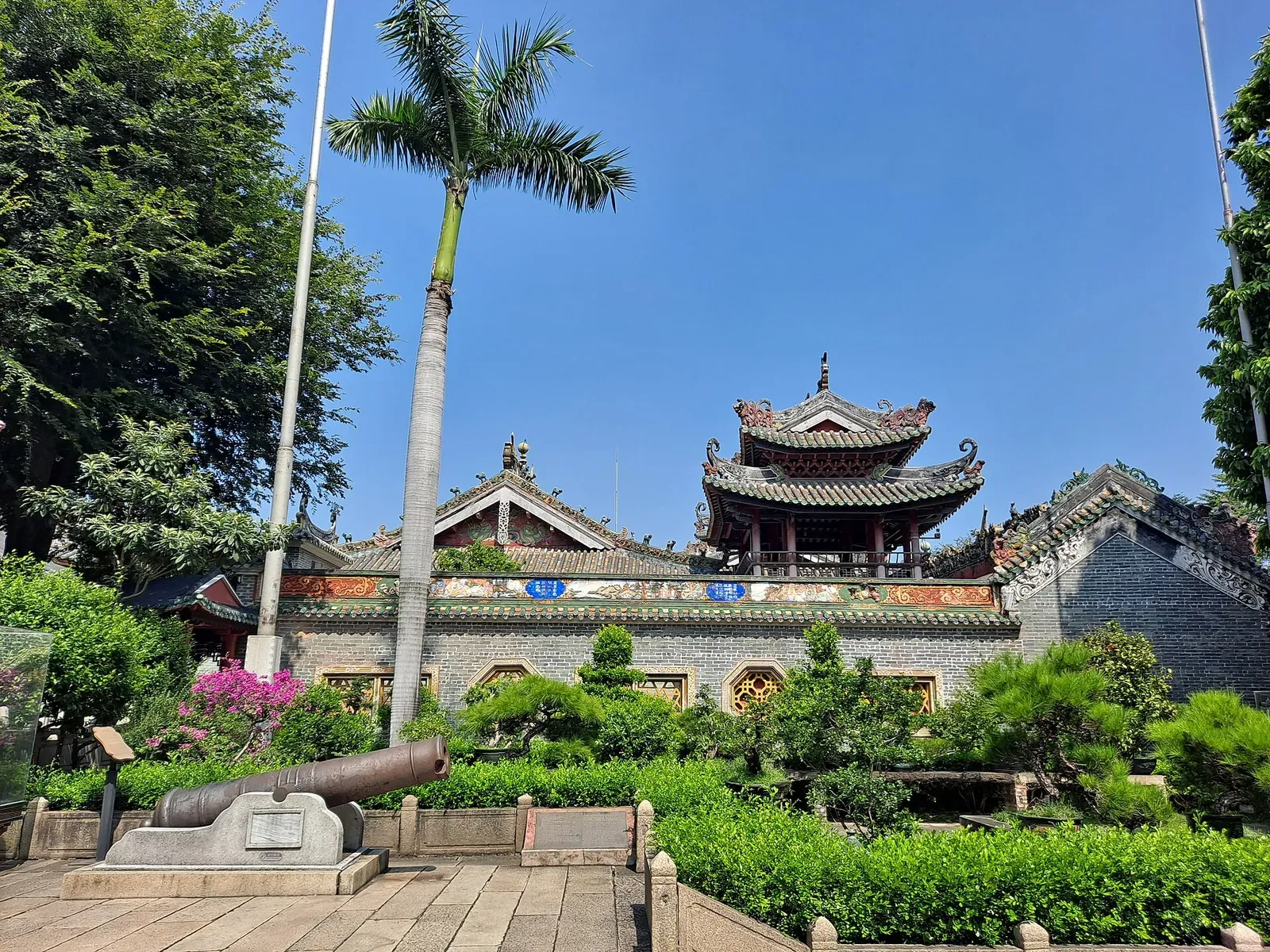
Photo: 钉钉 / Wikimedia Commons, CC BY-SA 4.0
Chinese lion dance is a major traditional performance art of the Han people. Usually, two Chinese lion dancers cooperate to operate one lion costume, handling the head and the tail while mimicking the lion's movements to the beat of gongs and drums. It frequently appears during Chinese New Year, business openings, and major festivals to ward off evil and welcome good fortune. The tradition splits into two main branches: the Northern Lion in northern China and the Southern Lion (Xingshi) from Lingnan. Each has its own distinct heritage in physical design, accompanying instruments, movement style, and folk customs.
| Comparison | Key Features |
|---|---|
| Main traditions | Two main systems: Northern Lion in the north and Southern Lion (Xingshi) in the south |
| Performance format | Two performers cooperate to operate one lion costume (dividing the head and tail) |
| Festive occasions | Chinese New Year, business openings, and major festivals to ward off evil and welcome good fortune |
| Representative styles | The Northern school is represented by Xushui lion dance in Hebei; the Southern school splits into Foshan and Heshan styles |
| Landmark to watch live | Foshan Ancestral Temple in Guangdong (housing Wong Fei-hung Memorial Hall, Ip Man Tong, and Wanfu Stage) |
| Nearby transit | Connected by the Guangfo Metro Line and the west extension of Guangzhou Metro Line 7, with convenient highway access |
Where Did the Chinese Lion Dance Originate?
Lions are not native to China. Starting in the Han Dynasty, real lions arrived in the Central Plains as tribute from the Western Regions. By the Northern Wei period of the Northern and Southern Dynasties, people from the Western Regions began mimicking lion movements in theatrical entertainment. During the Northern Zhou Dynasty, performers from Xiliang further evolved this into lion dancing, which gradually spread across the Central Plains and surrounding regions alongside the spread of Buddhism.
Over a long evolution, lion dance became woven into Chinese folk festival customs. Today, mainstream Han lion dancing is widely practiced across mainland China, Hong Kong, Taiwan, and Chinese communities in Southeast Asia, forming the two major systems of Northern and Southern lions. If you prefer high-difficulty acrobatics like rolling on elevated tables, balancing on rolling balls, and somersaults, Northern lion dance is typical. If you prefer delicate eye-blinking and ear-wiggling, Southern martial stances, and the greens-plucking ritual, Southern lion dance is the natural choice.
How Do Northern and Southern Chinese Lion Dancers Differ?
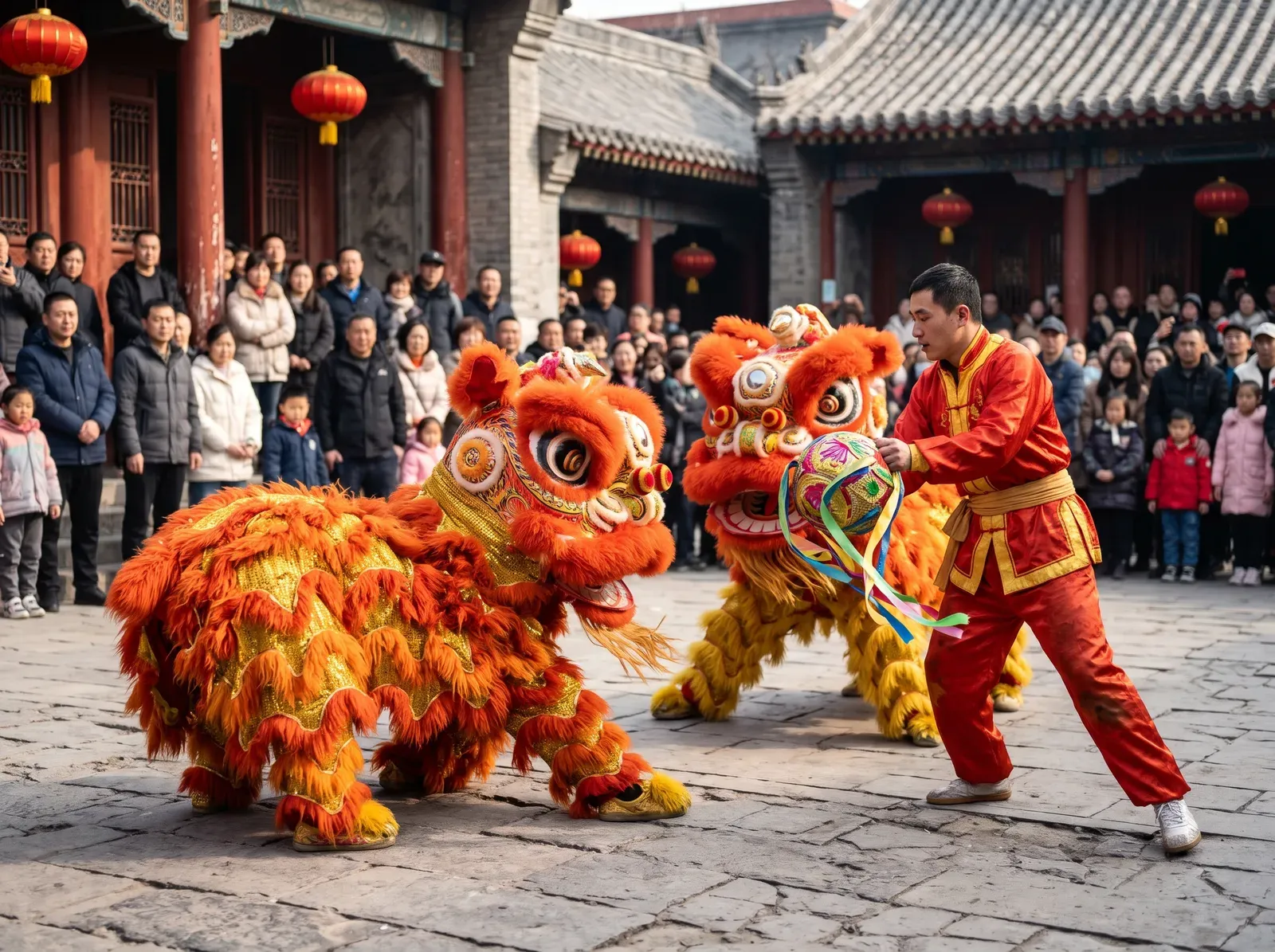
Northern lion heads are mostly made of wood or fiberglass, with the body covered in golden-yellow or orange-red long hair. Northern lions usually appear in male-female pairs. A red knot on the head marks a male lion, while a green knot marks a female, sometimes joined by small cub lions playing together. Northern lion dance excels at martial acrobatics. A lion leader holding an embroidered ball with ribbons leads the way, accompanied by Beijing cymbals, gongs, and drums, performing demanding tricks like pouncing, rolling, crossing plum blossom posts, leaping across tables, and balancing on rolling balls.
According to the National Intangible Cultural Heritage list, the Xushui lion dance in Hebei is famous for high-table acrobatics, plum blossom posts, crossing bridges on rolling balls, and somersault dismounts. In 2006, it was inscribed on the first National Intangible Cultural Heritage list as a classic example of Northern martial lion skills.
The Southern Lion, also known as Xingshi or Cantonese Lion, took shape during the Jiaqing reign of the Qing Dynasty. Martial arts masters in Foshan and Heshan, Guangdong, blended traditional lion dance with Southern Fist martial arts and Cantonese opera facial makeup. Southern Lion excels at civil and expressive performance, emphasizing solid low stances and expressive facial details such as blinking, twitching ears, scratching, shaking fur, and grooming.
| Dimension | Northern Lion Dance (Northern Lion) | Southern Lion Dance (Southern Lion / Xingshi) |
|---|---|---|
| Origin | Evolved from Western Regions performances in the Han and Wei dynasties, represented by Hebei Xushui lion dance | Developed by martial arts masters in Foshan and Heshan, Guangdong during the Jiaqing reign of the Qing Dynasty |
| Appearance and fur | Body covered in golden-yellow or orange-red long hair, with a red knot (male) or green knot (female) on the head | Painted with Cantonese opera patterns, a single horn on top, with mechanically movable eyes, ears, and mouth |
| Costume materials | Heads are mostly made of wood or fiberglass | Traditionally framed with bamboo strips covered in gauze paper, modern versions use aluminum frames |
| Instruments | Accompanied by Beijing cymbals, Beijing gongs, and Beijing drums | Accompanied by the rhythm of gongs and drums |
| Lead performer | Guided by a lion leader holding an embroidered ball with ribbons | Traditionally teased and guided by the Big Head Buddha holding a palm-leaf fan |
| Performance style | Known for martial acrobatics, performing pounces, rolls, table leaps, and ball balancing | Known for expressive civil performance, focusing on Southern martial stances, blinking, and fur shaking |
What Styles and Action Routines Define Guangdong Xingshi?
The Southern Lion has a single horn on its head, and its eyelids, mouth, and ears can move mechanically. In form, it mainly divides into two styles: the Foshan style with a broad, imposing forehead, and the Heshan style (duck-billed lion) with a flat, protruding mouth. The Heshan style was founded by Feng Gengzhang from Heshan, Guangdong. After studying Foshan lion skills in his early years, he observed the agile movements of cats to adapt the head design and footwork, creating the lively and nimble Heshan lion.
In craftsmanship, traditional Southern Lion heads are framed with bamboo strips, pasted with gauze paper, painted in Cantonese opera motifs, and decorated with animal fur. Modern modified lion heads also use lighter aluminum frames and new reflective materials, making the head lighter and more agile to operate.
Traditional Southern Lion performances are often led by the Big Head Buddha holding a palm-leaf fan. The routine includes a set of anthropomorphic movements in sequence: rising stance, normal state, hesitant advance, careful inspection, startled leap, leaving the cave, displaying might, and crossing the mountain. The entire sequence portrays the lion from waking up to moving forward with power.
In Xingshi culture, lions used for funerals follow special rules and are called filial lions or Ma Chao lions. The body and head are predominantly white, and team members wear white clothes and white pants. During the performance, they bow their heads and kneel-walk to show respect to the deceased, and they must never hold their heads high or celebrate.
Why Do Southern Lions Pluck the Greens and Leap on High Poles?
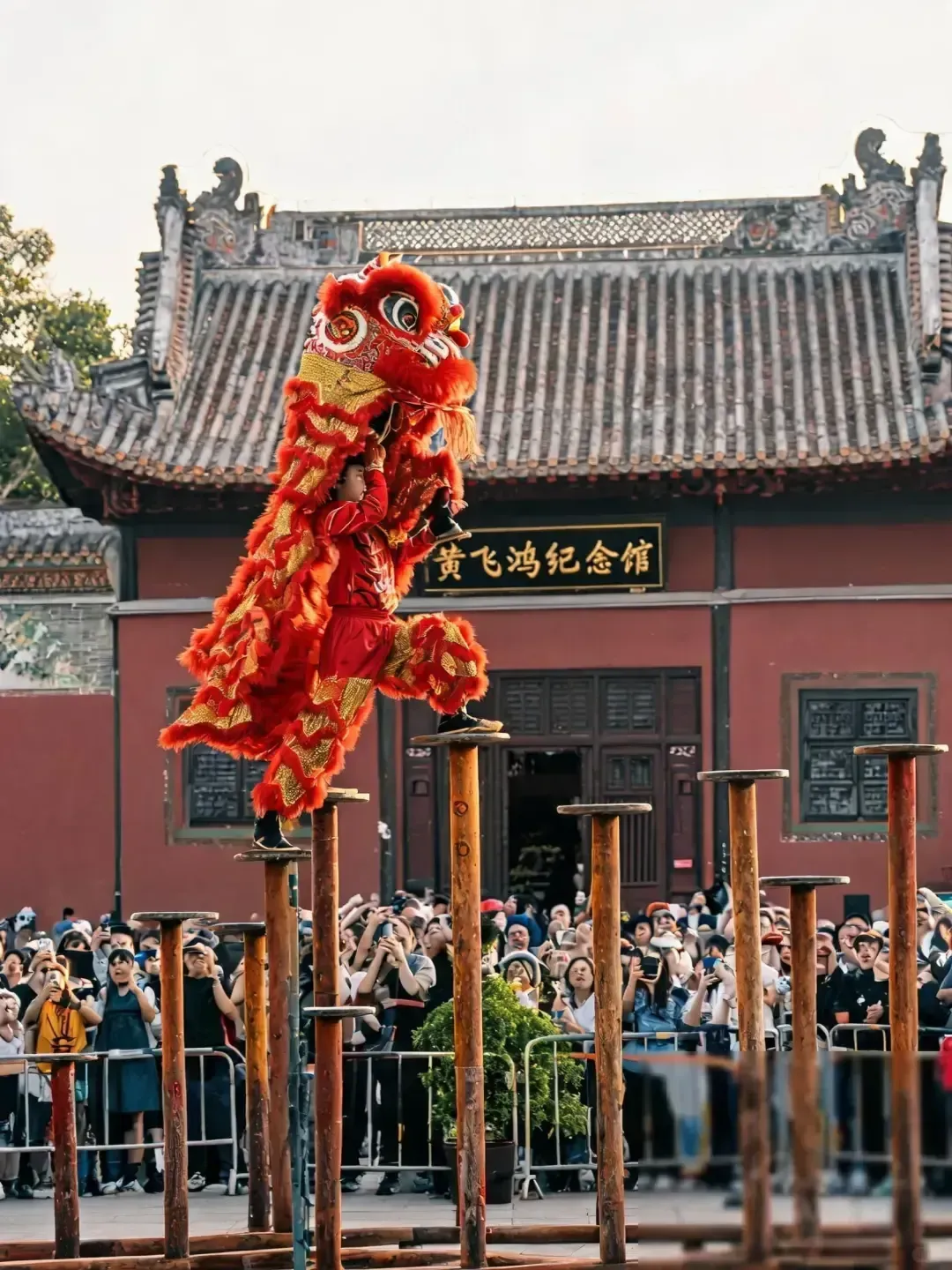
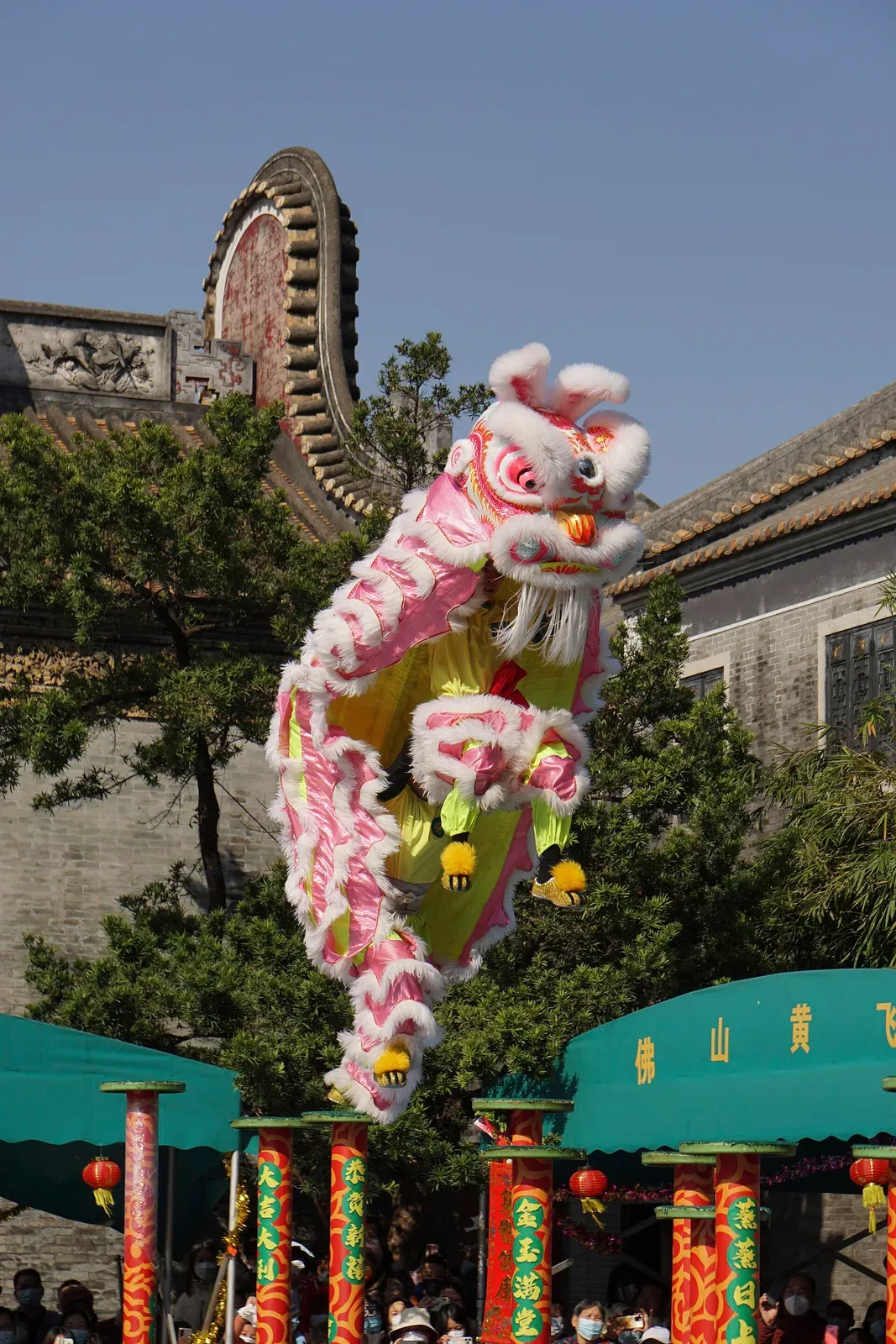
The highlight of a Southern Lion performance is plucking the greens (caiqing). This ritual is divided into ground greens, hung outside homes and shops, and high greens, retrieved by climbing tables, chairs, or plum blossom posts. Amid the rumble of gongs and drums, the lion emerges from its cave, hesitates before the hanging vegetables, inspects them up and down, and then suddenly leaps to swallow the lettuce and red envelope. After chewing the greens inside its mouth, it spits them out toward the audience in greeting.
In early folk tradition, plucking the greens (caiqing) was said to sound like treading on the Qing, a hidden reference to restoring the Ming Dynasty. In modern folklore, lettuce sounds like generating wealth in Cantonese, symbolizing vitality, good fortune, and prosperous business. When spectators see the lion spit out shredded lettuce leaves, they treat it as an auspicious sign.
Modern Southern Lion competition divides mainly into high pole (plum blossom post) lion dance and traditional lion dance. Competitors must perform aerial leaps and technical stunts on posts of varying heights. Famous international events include the biennial Genting World Lion Dance Championship in Malaysia, which has promoted the sport and its spread across the world.
How to Plan Your First Visit to Watch Lion Dancing in Foshan?
Foshan, Guangdong, is one of the birthplaces of the Southern Lion. Foshan Ancestral Temple in Chancheng District was built during the Yuanfeng reign of the Northern Song Dynasty. It is a Daoist temple dedicated to the Northern Emperor (Xuantian Shangdi), covering 32,000 square meters. The grounds house the Wong Fei-hung Memorial Hall and Ip Man Tong. Among its structures, Wanfu Stage, built in the 15th year of the Shunzhi reign of the Qing Dynasty, is an expansive, well-preserved ancient stage in Lingnan, and a classic spot to watch traditional lion dancing. Lingnan Hung Kuen master Wong Fei-hung was born in Foshan Town, Nanhai County, Guangdong. Skilled in both martial arts and lion dance, he earned folk titles like the Lion King and the Guangzhou Lion King.
For transport, Guangzhou and Foshan are linked by the Guangfo Metro Line and the west extension of Guangzhou Metro Line 7, making public transit transfers smooth. If you travel by car, driving from downtown Guangzhou to Chancheng Ancestral Temple in Foshan or Shunde takes about 1 hour each way (around 50 kilometers).
On our Guangzhou & Foshan 3-Day Private Tour: Old Town & Lion Dance itinerary, the route covers Guangzhou Xiguan, Shamian Island, Canton Tower and a Pearl River night cruise, Shunde Qinghui Garden and Huagai Road food street, and the Foshan Ancestral Temple lion dance performance. On our Guangzhou, Shunde & Foshan 5-Day Private Tour: Lingnan Food itinerary, Day 1 visits Guangzhou Xiguan old streets, Shamian Island, and Canton Tower with a Pearl River cruise; Day 2 visits Shunde Qinghui Garden, Huagai Road food street, and Shunfeng Mountain Park; Day 3 heads to Foshan Nanfeng Ancient Kiln and the Ancestral Temple lion dance; Day 4 visits Guangzhou Yuexiu Park, the Nanyue King Museum, and Chen Clan Ancestral Hall; and Day 5 includes free time in the city with an airport transfer. Transfers between stops are handled by private car with your driver, keeping the pace relaxed.
| Itinerary Option | Days | Lion Dance and Cultural Highlights | Travel Time Reference |
|---|---|---|---|
| Guangzhou-Foshan 3-day private tour | 3 days | Guangzhou Xiguan and Canton Tower, Shunde Qinghui Garden, Foshan Ancestral Temple lion dance | Driving between Guangzhou and Shunde or Foshan takes about 1 hour each way (around 50 km) |
| Guangzhou-Foshan-Shunde 5-day tour | 5 days | Shamian, Shunde old food street, Foshan Nanfeng Ancient Kiln and Ancestral Temple lion dance, Guangzhou Chen Clan Ancestral Hall | Connected by Guangfo Metro Line and the west extension of Guangzhou Metro Line 7, private car takes about 1 hour each way |
Tip: Foshan Ancestral Temple holds regular lion dance performances at Wanfu Stage and the martial arts arena of Wong Fei-hung Memorial Hall. Arrive early to secure a good spot so you can clearly see the blinking eyes and footwork up close.
Sources
Guangzhou & Foshan 3-Day Private Tour: Old Town & Lion Dance
Guangzhou, Shunde & Foshan 5-Day Private Tour: Lingnan Food
Foshan Ancestral Temple - Wikipedia
Lion Dance - Wikipedia
Lion dance - Wikipedia
Foshan Guide: Ancestral Temple, Shunde Food & Tour Ideas
Wong Fei-hung - Wikipedia
Sources checked on November 17, 2026
FAQ
When is the Chinese lion dance usually performed?
The lion dance is usually performed by two people operating one costume to the beat of gongs and drums, mimicking the movements of a lion. It is common during Chinese New Year, business openings, and major celebrations to ward off evil and welcome good fortune.
What is the most visible difference between Northern and Southern lions?
Northern lions have bodies covered in golden-yellow or orange-red long hair, with a red knot on the male head and a green knot on the female head. Southern lions have a single horn on top, faces painted like Cantonese opera masks, and mechanically movable eyelids, mouths, and ears.
Why do Southern lions eat lettuce and spit it out during caiqing?
In Cantonese, lettuce sounds like generating wealth. The lion swallows the lettuce and red envelope, chews them, and spits the shredded leaves toward the audience as a greeting, which people regard as a wish for vitality, wealth, and thriving business.
What are the customs around filial lions in Southern lion culture?
Also known as Ma Chao lions, filial lions are used exclusively for funerals. The head and body are mostly white, and performers wear white clothes and pants. During the performance, they bow their heads and kneel-walk to pay respects to the deceased, and they must never hold their heads high or celebrate.
Is it convenient to visit Foshan Ancestral Temple from Guangzhou for a lion dance?
Guangzhou and Foshan are linked by the Guangfo Metro Line and the west extension of Guangzhou Metro Line 7. If driving from downtown Guangzhou to Chancheng Ancestral Temple or Shunde, the trip takes about 1 hour each way (around 50 kilometers).