
Chinese Kung Fu Styles and Martial Arts Experiences
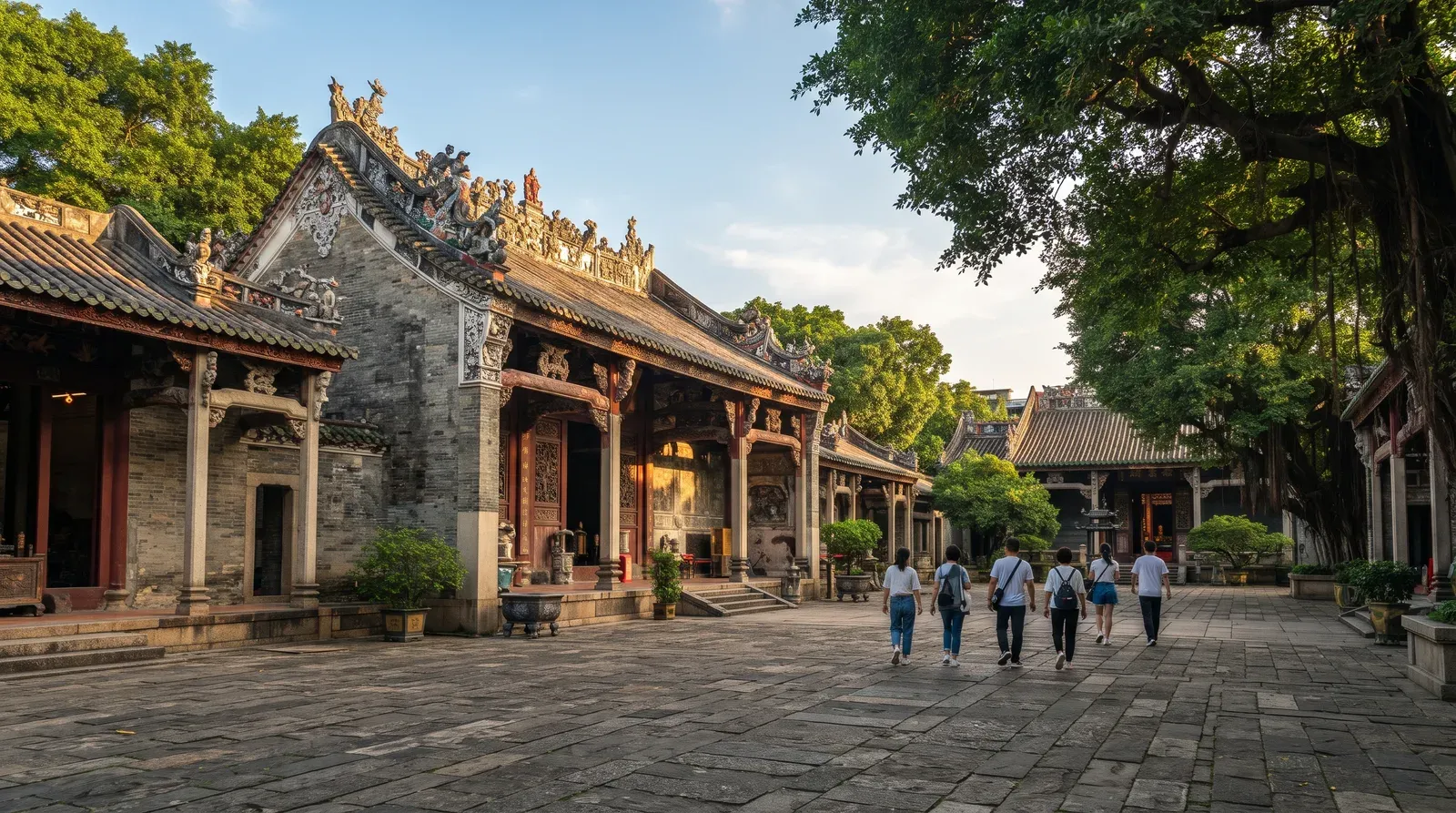
If you want to see kung fu martial arts in China and learn a few moves yourself, most trips are built around two places: Shaolin Temple in Dengfeng, Henan, and Foshan in Guangdong. Shaolin Temple was founded in 495 AD. Give the main compound and the Pagoda Forest at least 4 to 5 hours, then add 2 hours for the kung fu show at the martial arts hall. Foshan is the only city in China to hold the title City of Chinese Martial Arts, and the martial arts and lion dance shows at the Ancestral Temple run at set times every day.
| Item | Information |
|---|---|
| Shaolin kung fu show | Shaolin Temple, Dengfeng, Henan; the show fee at the martial arts hall is included in the ticket |
| Southern lion dance | Foshan Ancestral Temple, Chancheng; martial arts and lion dance shows run on fixed slots daily, cancelled in rain |
| Time needed at Shaolin | At least 4 to 5 hours; add 2 hours if you also watch the kung fu show |
| Learning kung fu in Foshan | More than 200 wing chun schools; the Wong Fei-hung Lion Dance and Martial Arts Museum runs a lion dance and martial arts camp for students |
| Guangzhou to Foshan | About 1 hour by car one way (about 50 km), or the Guangfo metro line |
How many kinds of Chinese kung fu are there?
In Chinese, kung fu means any skill gained through study or practice, and traditional Chinese martial arts are just one kind. By training method, people often split it into internal styles, which focus on the use of qi, and external styles, which focus on muscle and cardio fitness. By region, there are northern fists and southern fists.
| Classification | Content | Notes |
|---|---|---|
| By training method | Internal styles, external styles | Internal styles focus on the use of qi; external styles on muscle and cardio fitness |
| By region | Northern fists, southern fists | Another common way of sorting |
| By today's system | Wushu, organized into performance and full-contact competition | Since the 1950s |
| Groups that pushed systematic training | Central Guoshu Institute (1928), Chin Woo Athletic Association (1910, founded by Huo Yuanjia) | Both are representative bodies |
If you only fit one into your trip, go to Dengfeng for the temple and the kung fu the monks practice, and to Foshan for the schools, the lion heads and the sparring.
How do you get to Shaolin Temple from Zhengzhou or Luoyang?
From Zhengzhou you can take a bus or a taxi to Shaolin Temple, and from Luoyang there are also coaches to Dengfeng.
| Way | Route | Time | Cost |
|---|---|---|---|
| Bus | Zhengzhou Central Bus Station to Dengfeng | 2 hours | 30 yuan |
| Taxi | Zhengzhou city center to Shaolin Temple or a Dengfeng hotel | About 1.5 hours | About 200 to 400 yuan |
| Bus | Luoyang Long-Distance Bus Station to Dengfeng | 2 hours | 25 yuan |
Shaolin Temple is about 48 km southeast of Luoyang and about 72 km southwest of Zhengzhou.
Tip: The coach drops you at Dengfeng Station, and you still need local bus 8 to the scenic area gate or your hotel, so leave separate time for that leg.
What should you see first inside Shaolin Temple?
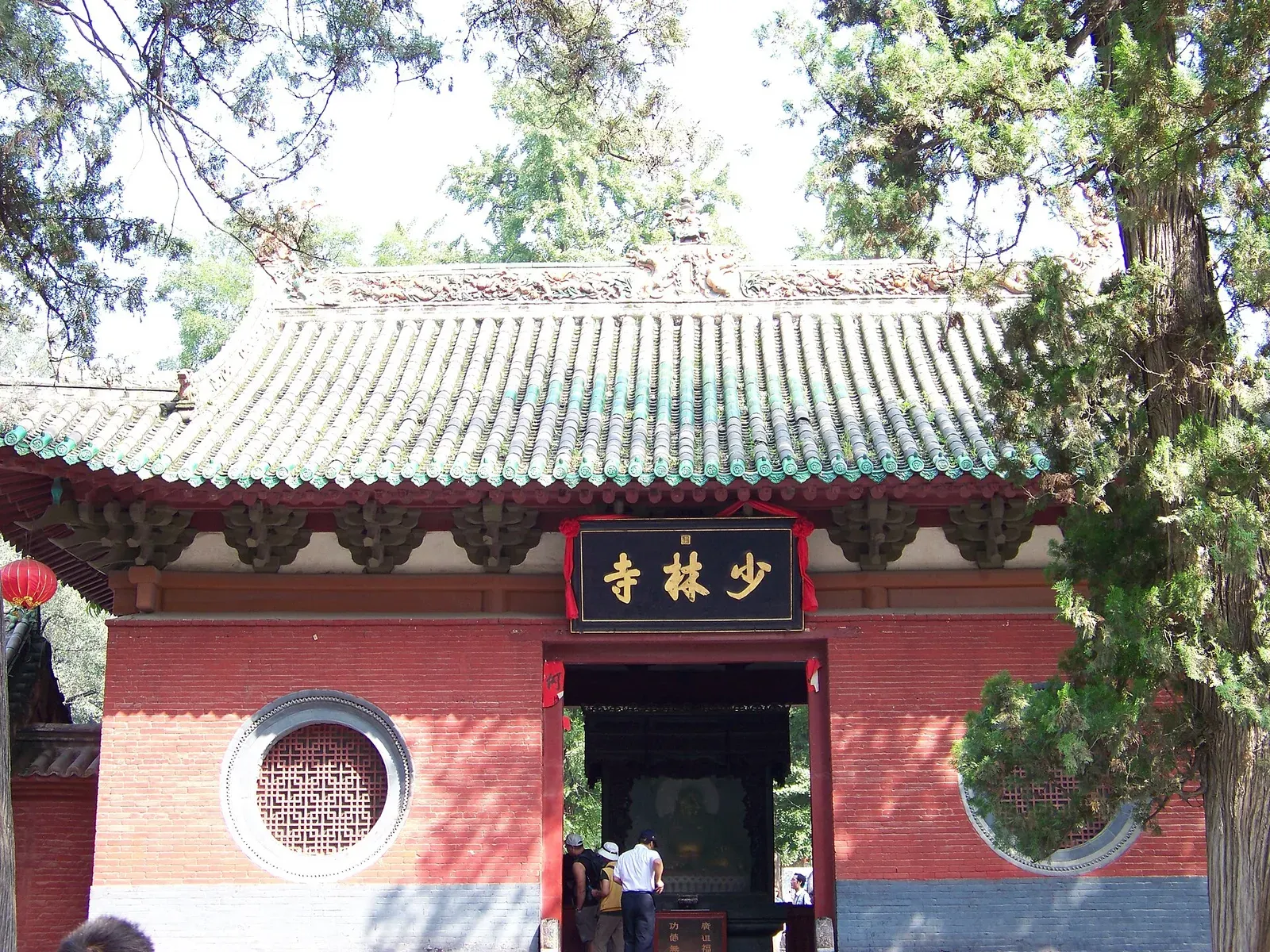
Shaolin Temple is the birthplace of Chan (Zen) Buddhism in China and the place where Shaolin kung fu started and has been passed down. The temple and the Pagoda Forest were listed as a UNESCO World Heritage Site in 2010, as part of the Historic Monuments of Dengfeng in the Centre of Heaven and Earth.
The Thousand Buddha Hall is the largest hall still standing in the temple. Its brick floor holds 48 foot pits about 20 cm deep, left by warrior monks practicing there. Staff fighting is the skill Shaolin monks are best known for.
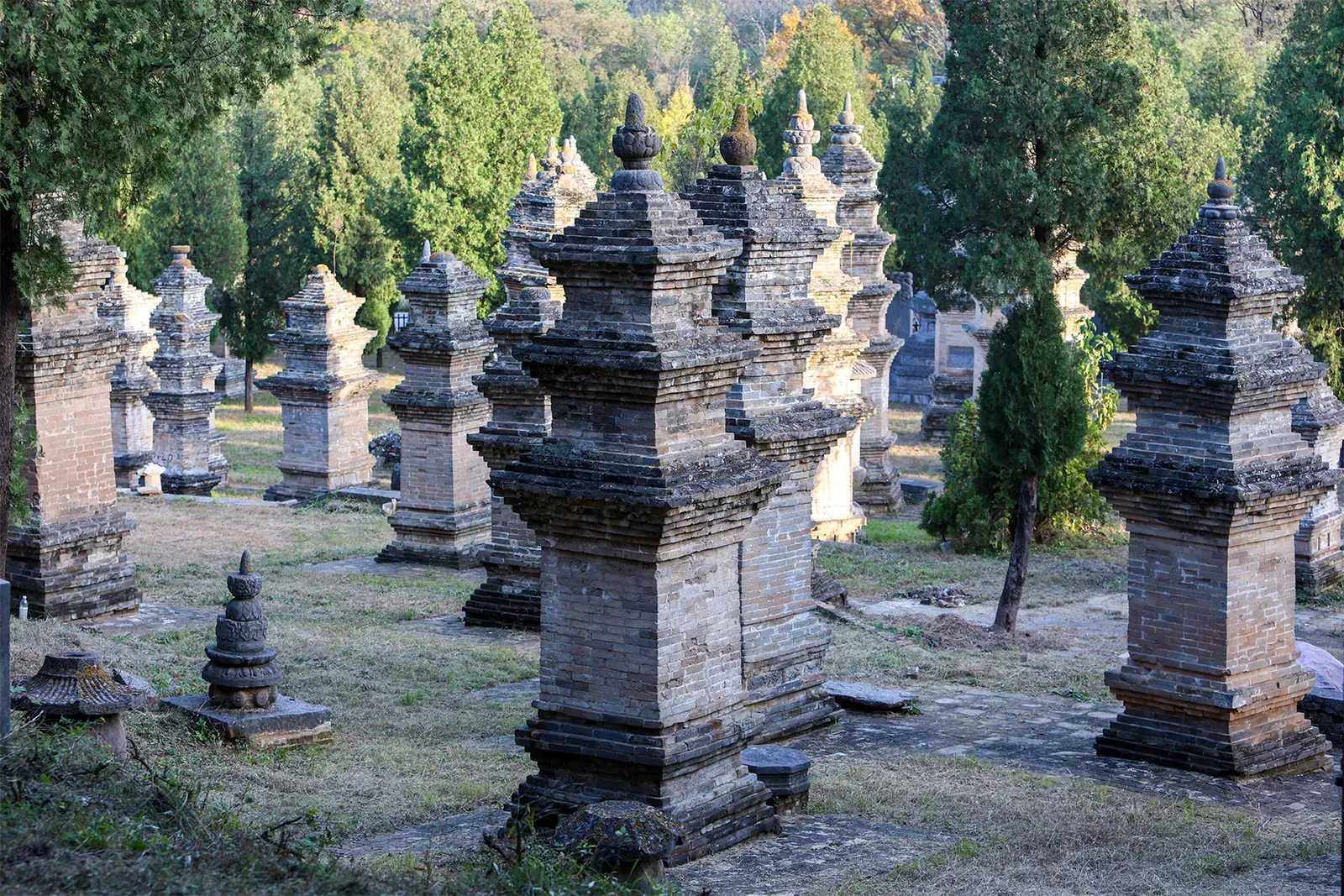
The Pagoda Forest sits on the slope southwest of the main compound, covers nearly 20,000 sq m and holds 246 ancient or Buddhist pagodas from the Tang, Song, Jin, Yuan, Ming and Qing dynasties. It is the largest surviving group of ancient pagodas in China.
Tip: The temple's vegetarian restaurant is called Huanxi Di (Land of Joy), and it is a good place to eat after walking the main compound.
Where can you see the kung fu show, and what times are they?
The Shaolin kung fu show is at the Shaolin Temple Martial Arts Hall, about 700 m east of the temple. Each show runs 30 minutes, the day's slots are posted at the hall itself, and the fee is included in your ticket.
One visitor wrote in a review that the walk from the scenic area entrance to the temple takes about 20 minutes, and that you can rent a shuttle cart at the entrance if you would rather not walk. Arrive 20 minutes before the show as well.
Is one day enough for Sanhuangzhai or Bodhidharma Cave?
Put the main compound, the Pagoda Forest and the show into one day, and only then do you have time left to consider Sanhuangzhai or Bodhidharma Cave.
Bodhidharma Cave (Damodong) needs no ticket, but you climb more than 1,200 stone steps, about 1 to 2 hours one way up.
| Cable car | One way | Round trip |
|---|---|---|
| Shaolin cable car | 35 yuan | 60 yuan |
| Sanhuangzhai cable car | 70 yuan | 100 yuan |
If you are fit and want to walk Sanhuangzhai, follow what the guides describe and set off from the cable car before 1 pm. With older family members or kids along, spend the day on the main compound, the Pagoda Forest and the show.
How many lion dance and martial arts shows does Foshan Ancestral Temple run a day?
Foshan Ancestral Temple is open daily 8:30-18:00, with ticket checks ending at 17:30. The martial arts and lion dance shows run three times a day and pause in rain.
| Time | What to see | Where |
|---|---|---|
| 8:30-18:00 (last ticket check 17:30) | Ancestral Temple historic buildings, Wong Fei-hung Memorial Hall, Ip Man Hall, Wanfu Stage | Foshan Ancestral Temple, Chancheng |
| 10:00-10:40 | Martial arts and lion dance show | Ancestral Temple |
| 14:15-14:55 | Martial arts and lion dance show | Ancestral Temple |
| 15:30-16:10 | Martial arts and lion dance show | Ancestral Temple |
| Saturdays, Sundays, and the 1st and 15th of each lunar month, 13:30-15:30 | Cantonese opera and music on Wanfu Stage | Wanfu Stage |
The Ancestral Temple museum is made up of the historic buildings, the Confucius Temple, the Wong Fei-hung Memorial Hall and the Ip Man Hall, covering 32,000 sq m. Wanfu Stage is one of the finely preserved old opera stages in Lingnan.
If you only have half a day, pick the 10:00 show, then see the Wong Fei-hung Memorial Hall and the Ip Man Hall. For Cantonese opera, come on a Saturday, a Sunday, or the 1st or 15th of a lunar month.
What is a southern lion's head, and what is cai qing?
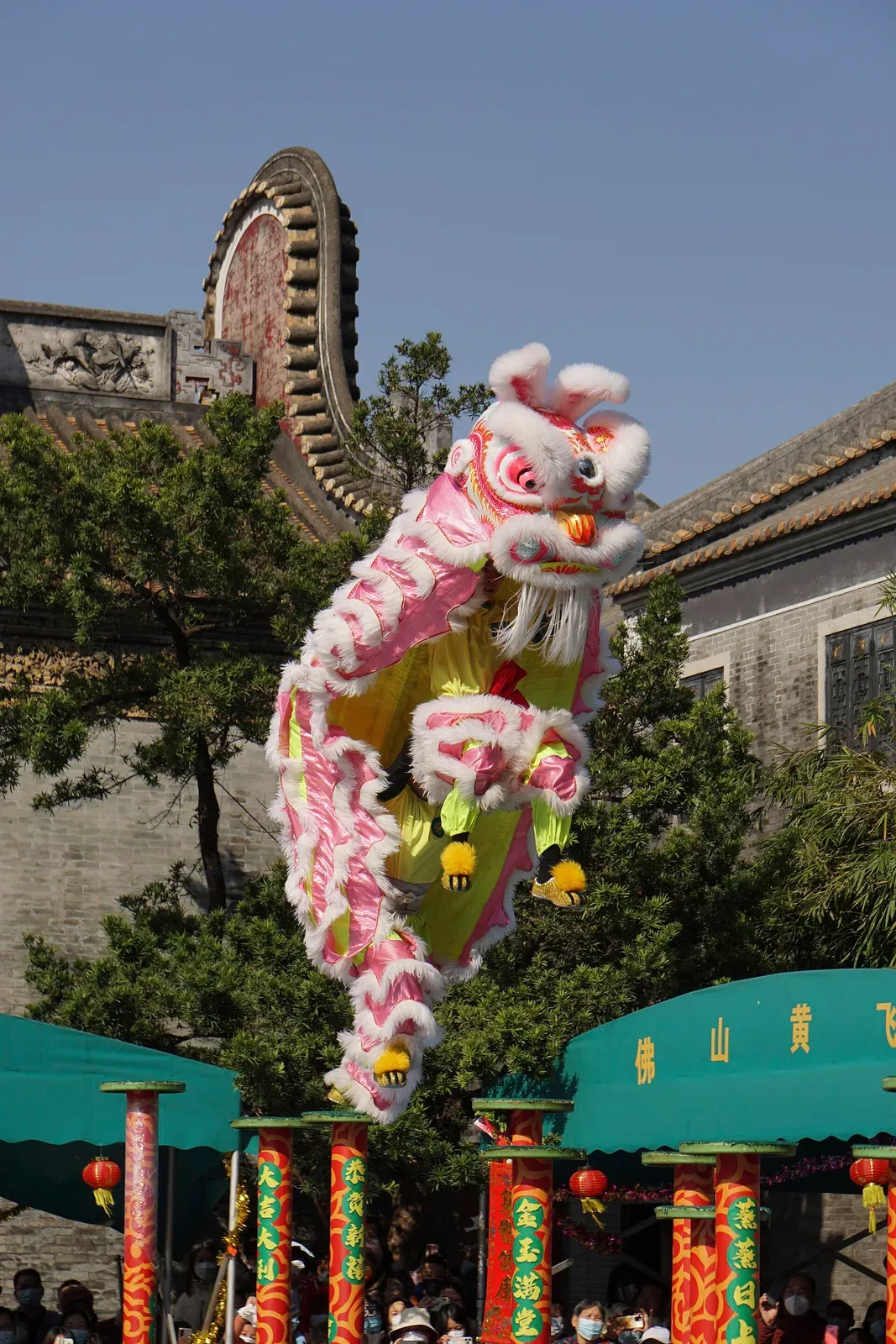
Han Chinese lion dance falls into two main systems, northern lion and southern lion. The southern lion, also called the awakening lion or Guangdong lion, was created in the Jiaqing years of the Qing dynasty, when martial artists in Foshan and Heshan combined traditional lion dance with southern fist fighting and Cantonese opera face painting.
The lion head has a single horn on top, and its eyelids, mouth and ears all move. There are two shapes: the Foshan lion with a broad forehead, and the Heshan lion with a flat, duck-like mouth. Traditional heads use a bamboo frame covered with gauze paper, and lighter aluminum frames are used now as well.
Cai qing (plucking the greens) comes in two forms: greens hung above a doorway, and greens reached by climbing on tables, chairs or plum blossom poles. The lion tests and hesitates in front of the greens, leaps up, swallows the lettuce and red packet, chews and spits them out, then greets the crowd.
Wong Fei-hung, the famous Hung Kuen master from Lingnan, was born in Foshan town in Nanhai County and was skilled in both martial arts and lion dance. Folk tradition calls him the Lion King.
Where can you see wing chun and Hung Kuen in Foshan?
Wing chun is a southern Chinese kung fu style built on close-range empty-hand fighting. The punches are fast and direct, and the idea is to take and stick to the opponent's center line. The system includes three empty-hand forms, two weapons forms (the six-and-a-half-point pole and the eight-slash knives), plus one wooden dummy set.
Wing chun has at least 8 branches, and the Ip Man and Yuen Kay-shan lines are the most widely spread. In 1949 Ip Man brought wing chun from the mainland to Hong Kong and from there to the world. His most famous student was Bruce Lee.
Wong Fei-hung, Ip Man and other famous martial artists were all born in Foshan, and Choy Lee Fut, Hung Kuen and wing chun also come from the city. In June 2021, Foshan wing chun was added to the fifth national list of intangible cultural heritage items as an extension item.
| Place | Location | Size | What to see |
|---|---|---|---|
| Ip Man Hall | Inside Foshan Ancestral Temple | More than 800 sq m, 8 sections | The first exhibition hall in China on the Ip Man wing chun line |
| Ip Man Memorial Hall | Lianxing Village, Luocun, Shishan Town, Nanhai District | 800 sq m, opened January 2012 | Every Sunday morning, masters from the Nanhai High-tech Zone Wing Chun Association give a wing chun demonstration |
| Wong Fei-hung Lion Dance and Martial Arts Museum | Lucun Village at the foot of Xiqiao Mountain, Nanhai District, on the site of the Wong family ancestral hall | Includes Wong Fei-hung's former home, Baozhi Lin Hall and Baicao Hall | Regular lion dance and martial arts shows; allow 2 to 3 hours |
With half a day, the Ip Man Hall and the Wong Fei-hung Memorial Hall inside the Ancestral Temple cover it in one stop. For a closer look at wing chun, head out to the Ip Man Memorial Hall in Nanhai and the Wong Fei-hung Lion Dance and Martial Arts Museum below Xiqiao Mountain.
Want to train a little? How do you choose a camp or a school?
Foshan has more than 200 wing chun schools and over 10,000 formal disciples. Guo's Wing Chun School, Weizhi Wing Chun School, Yao Cai Yao Qi Wing Chun School and Yuen Kay-shan Wing Chun Hall are four city-level bases for passing on intangible heritage.
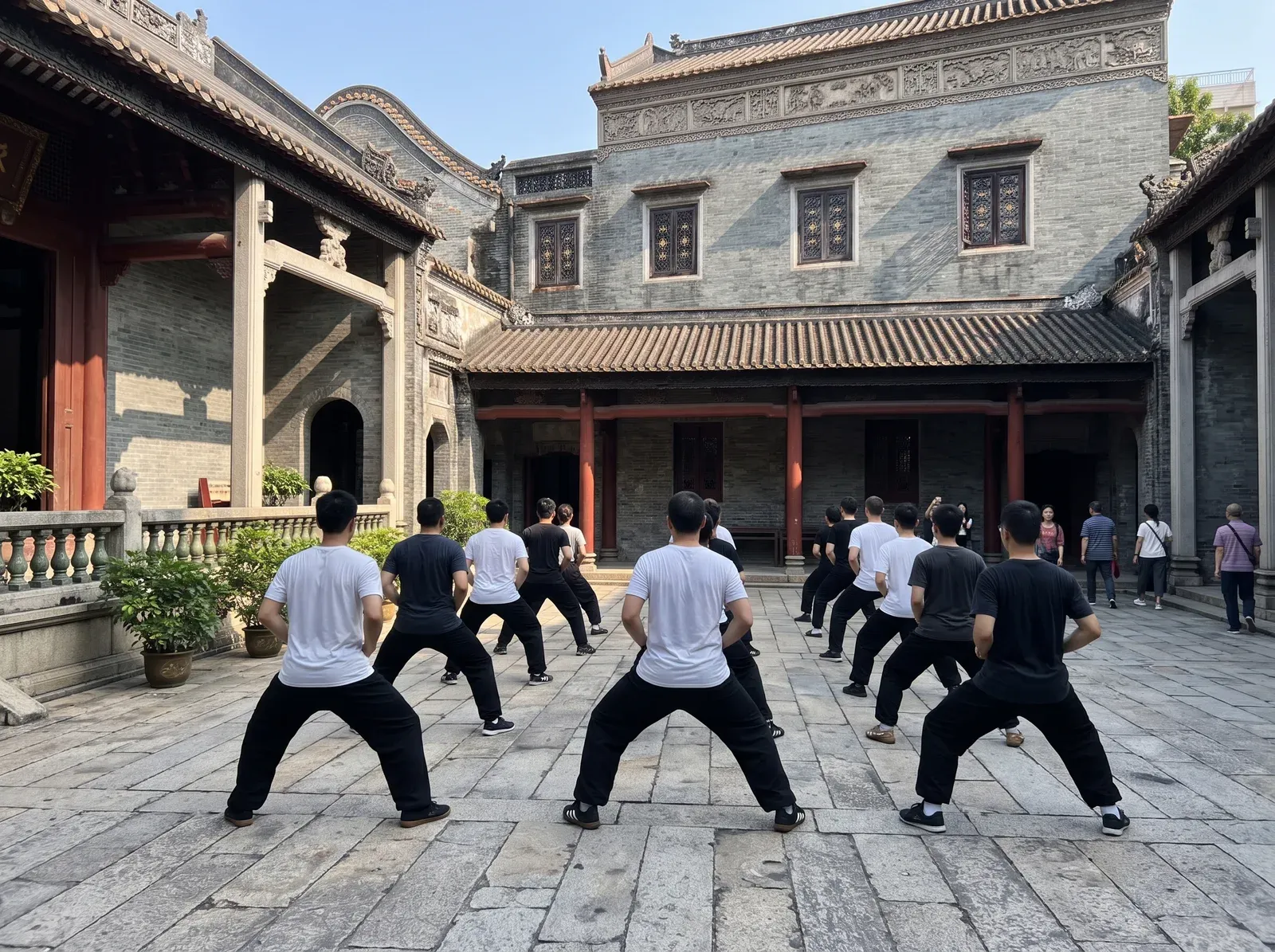
For a short course aimed at kids, look at the camp at the Wong Fei-hung Lion Dance and Martial Arts Museum in Xiqiao. The session from November 11 to 13, 2026 takes students aged 6 to 15 at 298 yuan per person, including lunch, tuition and materials.
| Time | Plan |
|---|---|
| 9:00-11:30 | Martial arts class, starting with basics such as horse stance |
| 11:30-14:00 | Lunch and rest |
| 14:00-16:30 | Dragon dance and lion dance practice |
| 8:30-9:00, 17:00-17:30 | Drop-off and pick-up times |
| Afternoon of day three | Closing and outdoor activities |
The camp enrolls by age. Adults who want to train basics should go straight to a wing chun school in Foshan. 43 primary and secondary schools in Foshan already teach wing chun in after-school classes, and Foshan University lists wing chun as a required physical education course.
Tip: To sign up, call 0757-86896989, add the WeChat account of the Foshan Wong Fei-hung Lion Dance and Martial Arts Museum, or ask in person. The camp opens with 20 students.
How do you fit Shaolin and Foshan into 3 or 5 days?
Shaolin Temple is in Dengfeng, Henan, and Foshan is in Guangdong. Give each a full day, with one intercity transfer in between.
On our Guangzhou & Foshan 3-Day Private Tour: Old Town & Lion Dance, three days cover Guangzhou's Xiguan quarter, Shamian Island, Canton Tower and a Pearl River night cruise, Qinghui Garden and the Huagai Road food street in Shunde, and the lion dance show at Foshan Ancestral Temple.
| Plan | How to arrange it |
|---|---|
| 3 days, in and out of Guangzhou | Xiguan, Shamian, Canton Tower and the Pearl River night cruise in Guangzhou; Qinghui Garden and Huagai Road food street in Shunde; the lion dance at Foshan Ancestral Temple (this is how our Guangzhou & Foshan 3-Day Private Tour: Old Town & Lion Dance runs) |
| Shaolin in one day | Give the main compound and the Pagoda Forest at least 4 to 5 hours, then add 2 hours for the kung fu show |
Guangzhou and Foshan are linked by the Guangfo metro line and the western extension of Guangzhou metro line 7. Driving from central Guangzhou to Foshan Ancestral Temple in Chancheng or to Shunde takes about 1 hour one way (about 50 km).
With only 3 days, pick one place: in and out of Zhengzhou means Dengfeng, and in and out of Guangzhou means the time goes to Foshan.
When should you go, and could you miss a show?
The Shaolin Temple Martial Arts Hall posts its kung fu show times only on the day, so check at the hall on the day you visit. Foshan's lion dance shows start at fixed times.
| Item | Zhengzhou figures |
|---|---|
| Average annual temperature | 15.4°C |
| Average January temperature | 1.0°C |
| Average July temperature | 27.8°C |
| Frost-free period | About 220 days on average |
Tip: The Shaolin scenic area opens at 8:00. Once inside, go first to the martial arts hall to check that day's show schedule, then plan the order for the main compound and the Pagoda Forest.
What do first-time visitors most often get wrong?
| Easy to get wrong | What to do |
|---|---|
| Thinking the kung fu show is inside the temple | It is at the Shaolin Temple Martial Arts Hall about 700 m east of the temple, not in the temple grounds |
| Thinking show times can be booked ahead | Slots are posted at the hall on the day |
| Thinking you can enter the Ancestral Temple any time | Ticket checks end at 17:30, and the last lion dance is 15:30-16:10 |
| Thinking Foshan's martial arts halls are all in one place | Ip Man Hall is inside the Ancestral Temple, the Ip Man Memorial Hall is in Luocun, Shishan Town, Nanhai, and the Wong Fei-hung Lion Dance and Martial Arts Museum is below Xiqiao Mountain in Nanhai |
| Thinking Bodhidharma Cave needs a ticket | It is free, but you climb more than 1,200 stone steps |
| Thinking kids can join the camp any time | It takes ages 6 to 15 and opens with 20 students |
If you want to fit the lion dance at the Ancestral Temple, the Ip Man Hall and the Wong Fei-hung Lion Dance and Martial Arts Museum into two days in Foshan, look at our 3-day Guangzhou and Foshan itinerary. Your travel designer can adjust the dates and pace to your own schedule. For city information on the Foshan leg, see our Foshan guide (https://unclepandatravel.com/destinations/foshan).
Sources
Guangzhou & Foshan 3-Day Private Tour: Old Town & Lion Dance
Foshan Ancestral Temple - Wikipedia, the free encyclopedia
Shaolin Monastery - Wikipedia
Dengfeng - Wikipedia
Zhengzhou - Wikipedia
Shaolin Temple - Wikipedia (in Chinese)
Lion dance - Wikipedia (in Chinese)
Lion dance - Wikipedia
Foshan Guide: Ancestral Temple, Shunde Food & Tour Ideas
Wong Fei-hung - Wikipedia (in Chinese)
Chinese martial arts - Wikipedia
Wing Chun - Wikipedia
Hung Sing Memorial Hall | Civics and Learning
Foshan wing chun: a martial world that never disappeared - China Intangible Cultural Heritage Network
Sources checked on 2026-11-18
FAQ
Do I need a separate ticket for the Shaolin kung fu show?
No. The show fee is included in the Shaolin Temple ticket, and the show is at the Shaolin Temple Martial Arts Hall about 700 m east of the temple.
What time do the lion dance shows start at Foshan Ancestral Temple?
There are three: 10:00-10:40, 14:15-14:55 and 15:30-16:10. They pause in rain, and ticket checks at the temple end at 17:30.
Can a foreign visitor with no experience join a kung fu class?
The camp for students aged 6 to 15 is at the Wong Fei-hung Lion Dance and Martial Arts Museum in Xiqiao, and it starts with basics such as horse stance. Adults can go straight to a wing chun school in Foshan.
What is the Zen Shaolin Music Ceremony like?
One viewer wrote that about 600 musicians, dancers, local villagers and warrior monks take part, and the audience sits on cushions around a stream.
Should I take kids to Shaolin or to Foshan to learn kung fu?
The Shaolin side is mainly the temple, the Pagoda Forest and the show at the martial arts hall. Basics training for kids is the camp run by the Wong Fei-hung Lion Dance and Martial Arts Museum in Foshan.