
Chinese Dragon: Its Symbolism and Western Differences
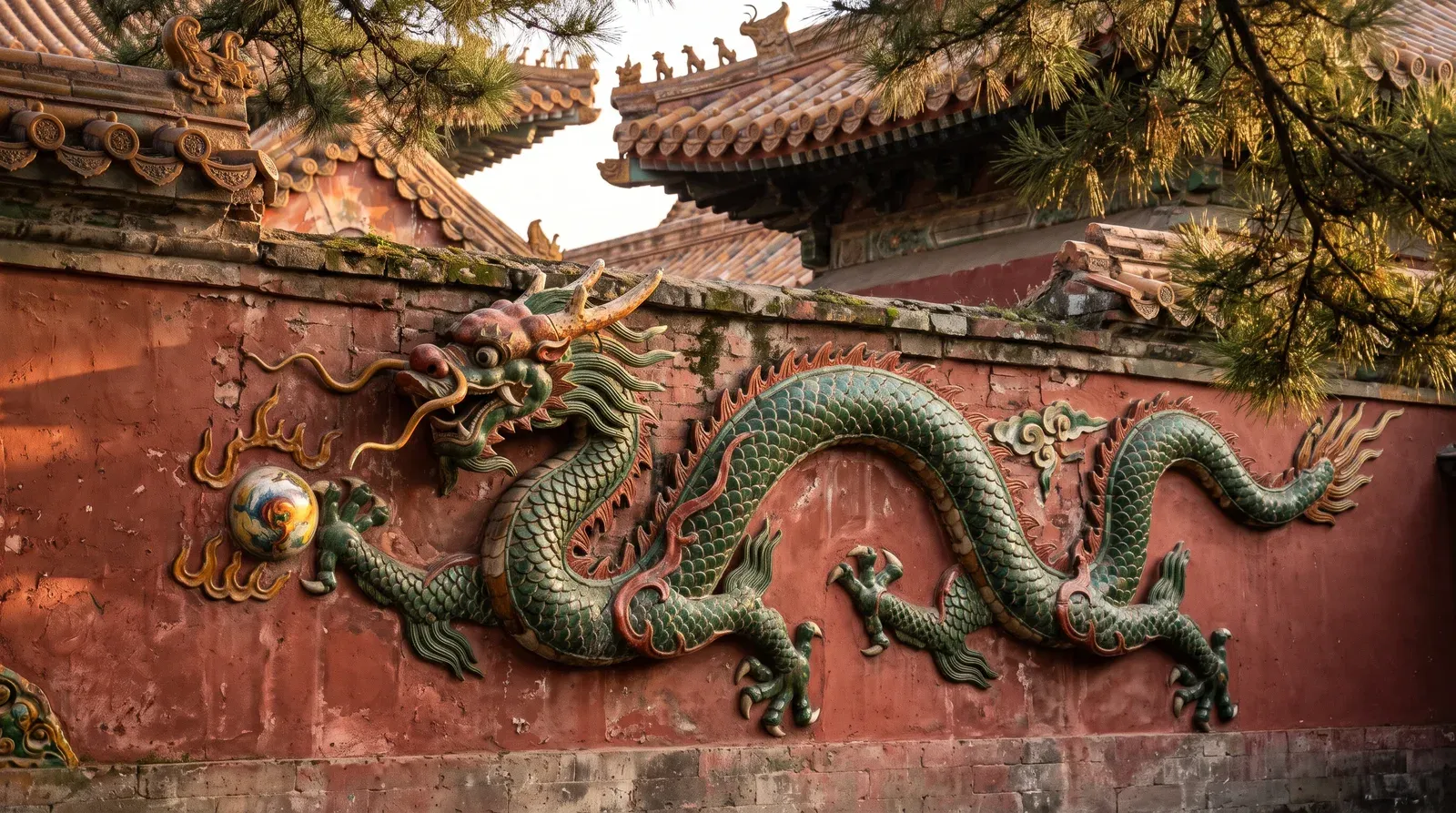
In traditional culture, the Chinese dragon embodies the yang principle in the yin-yang cosmology, representing heaven, movement, masculine power, and good fortune. It has served as an imperial symbol since ancient times and decorated the Qing dynasty flag until the Republic of China was founded in 1911. Unlike winged, fire-breathing medieval European dragons that stood for sin and paganism, the most common form of this creature features a serpentine body with four legs and no wings, personifying a natural force ruling the sky and atmosphere in Daoism.
How Do Chinese and Western Dragons Differ in Culture and Form?
Chinese dragons and European dragons hold contrasting cultural meanings and mythological roles. In European culture from the early Middle Ages onward, dragons were typically portrayed as massive, fire-breathing, scaled, and horned lizard-like creatures with leathery bat wings and strong tails. In Christian art and Germanic mythology, these beasts were aggressive hoarders of gold and treasure, exemplified by Fáfnir and the dragon in Beowulf. They occupied treasure-filled caves or castles and symbolized sin and paganism, often shown subdued beneath saints and martyrs or slain by questing heroes.
In East Asian mythology, by contrast, the creature is an auspicious spirit and rain deity that brings blessings. Although it rules the sky and atmosphere, it usually has no wings. It can take on various animal forms such as turtles and fish, though it is most commonly depicted with a four-legged serpentine body.
| Aspect | Chinese Dragon | European Dragon |
|---|---|---|
| Body Form | Serpentine body with four legs, sometimes appearing as a turtle or fish | Massive lizard-like body with scales, horns, and a strong tail |
| Wings | Usually wingless, ascending to heaven using the chimu bump on its head | Leathery bat-like wings |
| Natural Attributes | Rain deity and water spirit governing rainfall and weather | Aggressive fire-breathing creature |
| Cultural Symbolism | Auspicious spirit bringing blessings, symbolizing heaven, yang, prosperity, and good luck | Symbol of sin and paganism, greedy for gold and treasure |
| Mythological Role | Venerated by the public as Four Dragon Kings for rain, exclusive imperial symbol | Hoards caves or castles filled with treasure, slain by heroes in dragon-slaying quests |
What Do Dragons Represent in China?
In East Asian mythology, the dragon primarily represents supreme yang energy and sovereign imperial power. Within yin-yang cosmology, it stands for yang, signifying heaven, action, and masculine strength, and it has served as an exclusive imperial emblem throughout Chinese history. Until the Republic of China was founded in 1911, it decorated the Yellow Dragon flag of the Qing dynasty. In court protocol, the Yuan dynasty decreed that two-horned dragons with five claws were reserved exclusively for the emperor. The Ming and Qing dynasties likewise restricted five-clawed dragons to the emperor alone, while princes and nobles used four-clawed versions.
The dragon also serves as an auspicious emblem governing bodies of water, bringing harvests and timely weather. Chinese folk religion recognized the Four Dragon Kings who controlled water and rainfall: the Dragon Kings of the East Sea, South Sea, West Sea, and North Sea. Ancient communities closely connected the dragon with rain, and Han dynasty texts record early forms of dragon dances where people crafted dragon props and danced to pray for rain during droughts.
In many depictions, the dragon holds a flaming pearl beneath its chin or in its claws. In traditional culture, this flaming pearl symbolizes spiritual energy, wisdom, prosperity, power, immortality, thunder, or the moon.
What Are the Physical Features of the Chinese Dragon?
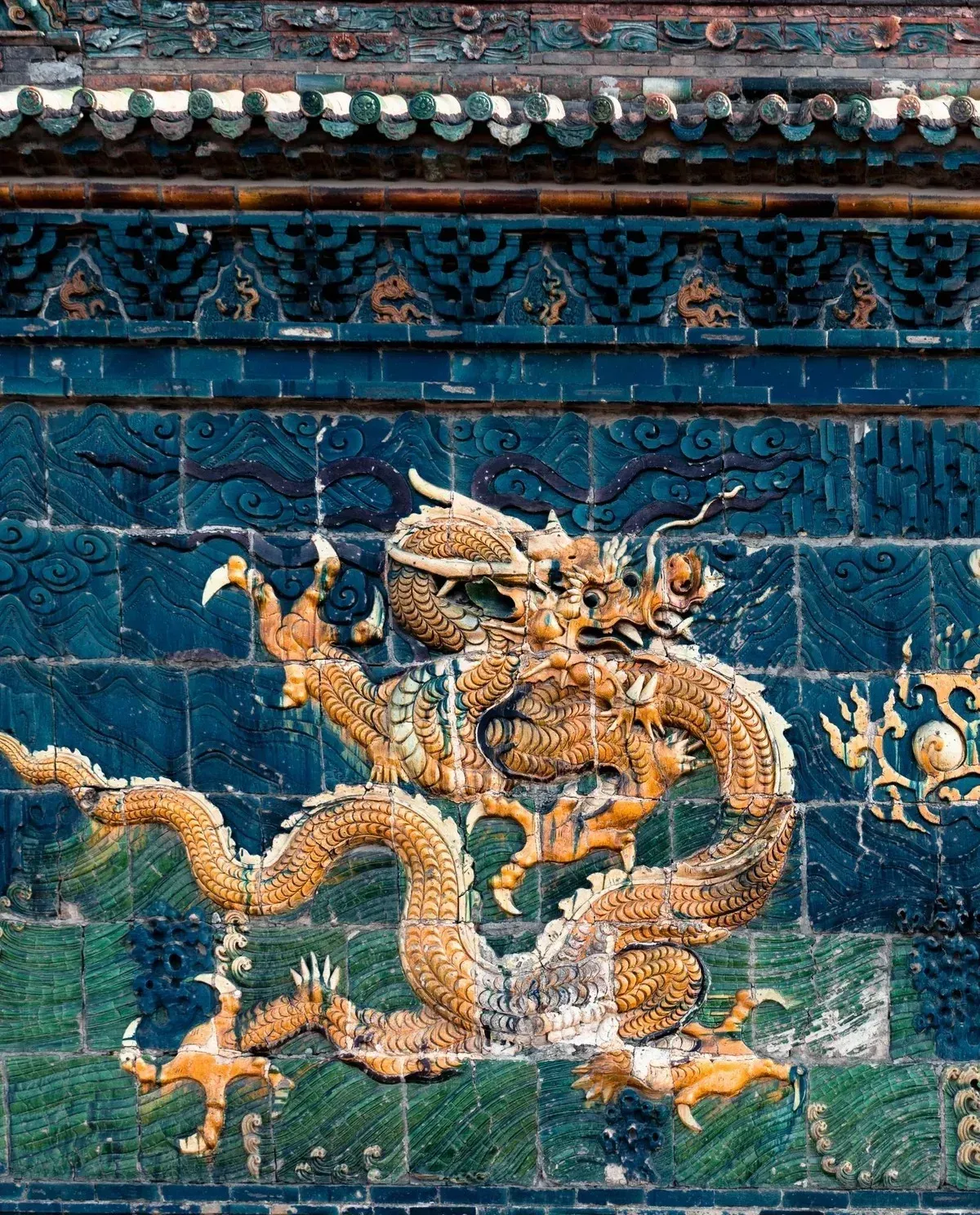
Han dynasty scholar Wang Fu recorded that the dragon possesses nine anatomical resemblances: antlers like a stag, a head like a camel, eyes like a demon, a neck like a snake, a belly like a clam, scales like a carp, claws like an eagle, paws like a tiger, and ears like an ox. Wang Fu also noted a bump atop its head called chimu; in myth, a dragon cannot ascend to the skies without this feature.
According to legend, the dragon has 117 scales in total, with 81 imbued with yang essence (nine times nine) and the remaining 36 with yin essence. In addition, the "nine sons of the dragon" refers to a group of mythical beasts in Chinese mythology used to decorate specific ancient architectural elements and ceremonial objects.
Which Ancient Nine-Dragon Walls and Dragon Traditions Are Famous in China?
Three famous ancient Nine-Dragon Walls survive in China, built during the Ming and Qing dynasties in front of imperial palaces and princely residences. The Beihai Park Nine-Dragon Wall in Beijing was built in 1756 and features relief dragons on both sides. The Forbidden City Nine-Dragon Wall in Beijing was built in 1771 in front of the Palace of Tranquil Longevity. The Datong Nine-Dragon Wall was built during the Ming dynasty in front of the Prince of Dai Mansion.
| Wall Name | Year or Dynasty Built | Location and Structural Features |
|---|---|---|
| Beihai Park Nine-Dragon Wall in Beijing | 1756 | Located in Beihai Park, featuring dragons on both sides |
| Forbidden City Nine-Dragon Wall in Beijing | 1771 | Located in front of the Palace of Tranquil Longevity in the Forbidden City, single-sided glazed wall |
| Datong Nine-Dragon Wall | Ming dynasty | Located in front of the Prince of Dai Mansion, single-sided glazed wall |
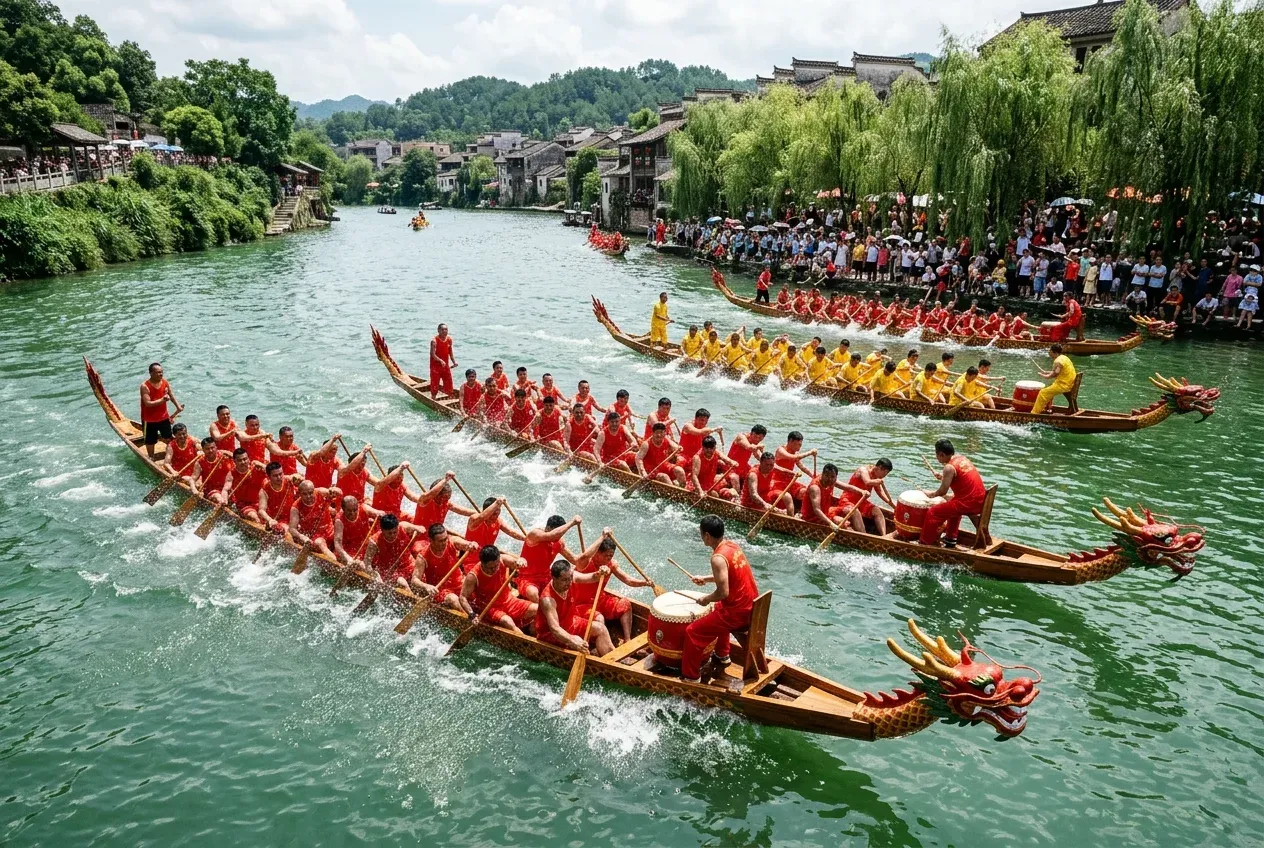
Dragon culture continues in traditional Chinese festivals and ceremonies today. The Dragon Boat Festival on the fifth day of the fifth lunar month combines blessings, summer health customs, and dragon boat racing. In September 2009, UNESCO inscribed it on the Representative List of the Intangible Cultural Heritage of Humanity, making it China's first traditional festival to receive this world-level status. Early dragon dances appear in Han dynasty texts, where people made dragon props to dance for rain during droughts. For standard competition dragon dances, the recommended dragon body length is 34 meters (110 feet), usually divided into 9 main sections spaced 35 centimeters apart, totaling 81 hoops along the entire body.
What Academic Theories and Contexts Surround the Chinese Dragon?
Scholars have proposed four credible theories regarding the biological prototype and origins of the creature: snakes, Chinese alligators, lightning worship, and nature worship. While it can take various forms such as turtles and fish, the four-legged serpentine body remains the most widespread image.
Culturally, the creature is a sacred spirit representing good fortune and rain. Details such as scale counts, ascending to heaven via the chimu bump, and Dragon Kings governing precipitation belong to East Asian mythology and folk traditions, and should not be viewed as scientific facts or grounds for personal fortune-telling.
Sources
Dragon | Description, Mythical Dragons, Types, & Facts | Britannica
Chinese dragon - Wikipedia
European dragon - Wikipedia
Nine sons of the dragon - Wikipedia
Nine-Dragon Wall - Wikipedia
Dragon Boat Festival - Wikipedia
Dragon dance - Wikipedia
Sources verified on November 5, 2026.
FAQ
Why can a Chinese dragon fly without wings?
According to Han dynasty scholar Wang Fu, although it lacks wings like European dragons, it has a bump called chimu on its head, and legend says it cannot ascend to heaven without this feature. East Asian mythology and Daoism also view the dragon as a personified natural force ruling the sky and atmosphere.
Do Chinese dragons breathe fire, and how are they linked to water?
In traditional culture, the creature does not breathe fire, but acts as a rain deity that brings prosperity and harmony. Chinese folk religion reveres the Four Dragon Kings of the East, South, West, and North Seas, who specifically govern water bodies and rainy weather.
What is the difference in claws between dragons used by emperors and nobles?
In the Yuan dynasty, two-horned dragons with five claws were reserved exclusively for the emperor, while four-clawed dragons were used by princes and nobles. The Ming and Qing dynasties also strictly restricted five-clawed dragons to the emperor alone.
When was the Dragon Boat Festival inscribed as world intangible cultural heritage?
The Dragon Boat Festival on the fifth day of the fifth lunar month was inscribed on UNESCO's Representative List of the Intangible Cultural Heritage of Humanity in September 2009, making it China's first traditional festival on the list.
