
Guangzhou Dim Sum Guide: How to Enjoy Cantonese Brunch
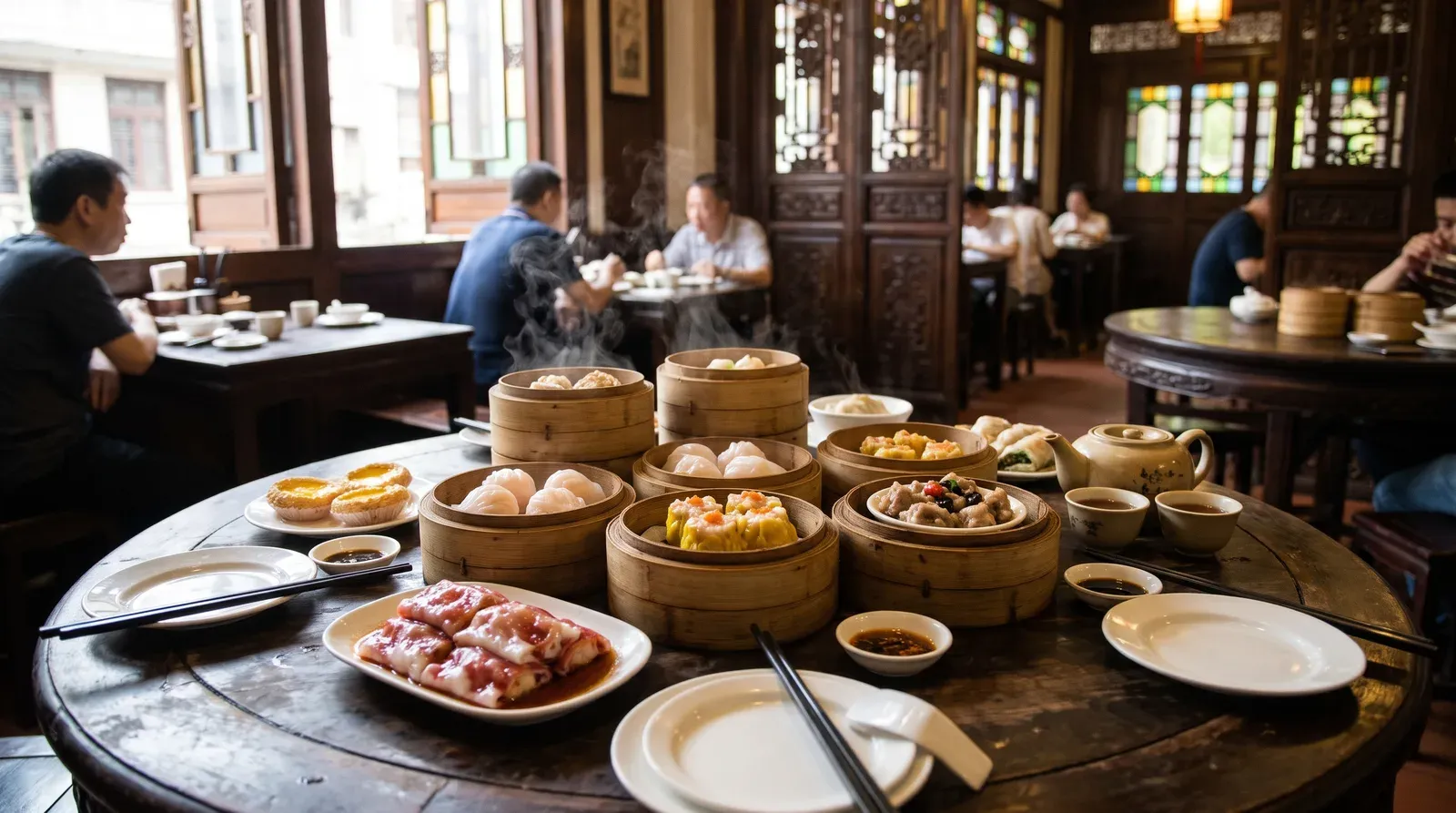
Cantonese brunch features more than 1,000 dim sum dishes originating from Guangdong Province alone, ranking first among Chinese regional cuisines in variety. Traditionally, this meal centers on the cultural idea of "one pot, two pieces" (yi zhong liang jian), where diners order a pot of hot tea with two delicate dim sum dishes to savor slowly. If you want a classic morning tea atmosphere, you can visit time-honored teahouses or garden restaurants, or enjoy dim sum at teahouses that stay open all day.
| Item | Details |
|---|---|
| Cultural concept | Diners order a pot of hot tea with two delicate dim sum dishes (one pot, two pieces) |
| Dim sum variety | Over 1,000 dishes originate from Guangdong Province alone (ranks first among Chinese regional cuisines) |
| Portion and ordering | Most dim sum comes with 3 to 4 pieces per basket, shared family-style, with 2 to 3 dishes per person enough to fill you up |
| Traditional tea hours | Covers morning tea, afternoon tea, late-night tea, lunch, and dinner (three teas and two meals) |
| Serving style | Pushed dim sum carts called out at tables, paper ordering cards, or QR code ordering steamed fresh to order |
What table manners should you follow at a Cantonese teahouse?
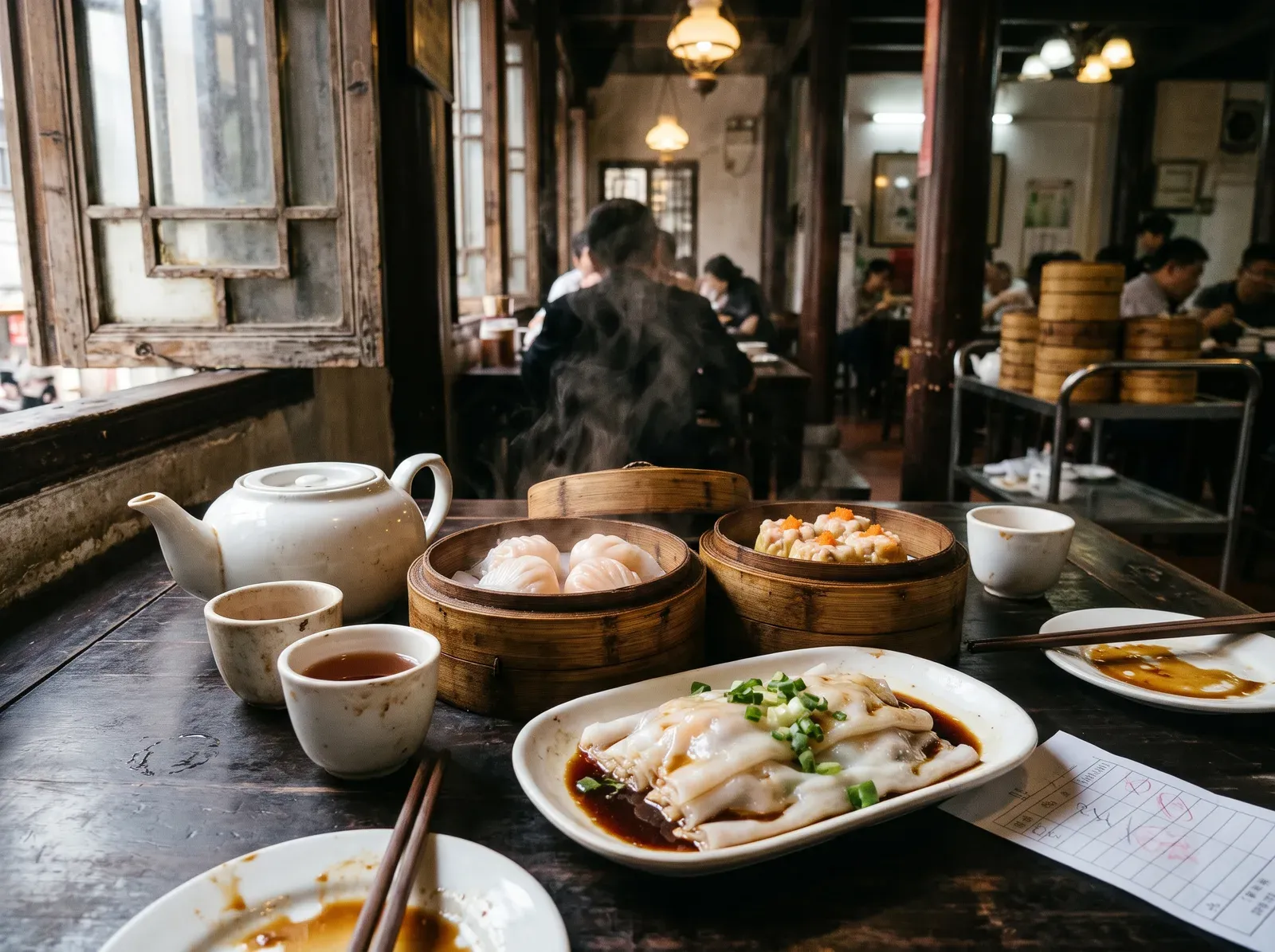
After sitting down, local diners usually rinse their cups and tableware with the first pour of hot tea. Tables generally have a large washing bowl or basin for discarding the rinse water. When pouring tea for others, fill the cup about 80 percent full, following the Cantonese saying, "Fill the tea eight-tenths to show respect, fill the wine to the brim to honor guests." When someone pours tea for you, tap the table lightly with the index and middle fingers of one hand to say thank you. This finger-tapping custom reportedly comes from an undercover journey by the Qianlong Emperor of the Qing dynasty.
When turning the lazy Susan turntable, wait for elders or guests of honor to take the first dish, and never spin the table while someone is reaching for dim sum. Pour tea for others before filling your own cup, and younger diners should serve elders first. If your teapot runs out of hot water, take the lid off or rest it tilted on the rim. The staff will see it and come over to refill it.
Tip: Never stick chopsticks upright into rice or buns when dining in Guangdong, as this resembles incense sticks placed for the deceased in traditional custom.
How do you order dim sum for Cantonese brunch?
Dim sum usually comes with 3 to 4 pieces per basket and is shared among everyone at the table. Ordering 2 to 3 dishes per person is typically enough to fill you up while letting you taste a good variety. Dim sum service began with staff pushing carts between tables and calling out dishes for diners to take directly. Today, most teahouses use paper stamp cards or QR codes so dishes are steamed to order and served fresh and hot. Teahouses traditionally price dim sum by tiers based on ingredients and culinary difficulty. As each dish arrives, the server stamps the matching tier on the table card, and the bill is totaled from those stamps.
Traditional Xiguan shrimp dumplings (har gow) are shaped like a crescent with a rounded belly and traditionally require thirteen and a half pleats. The skin is made from wheat starch, making it translucent and slightly chewy, wrapped around fresh shrimp, pork, and a small amount of savory broth. Originally called "Wufeng fresh shrimp dumplings", they originated in Shunde, Guangdong between 1920 and 1930 before spreading across teahouses in Guangzhou. Traditional Cantonese barbecue pork buns (char siu bao) are shaped like a tall birdcage with a wide base and a split top that only slightly reveals the filling. A basket usually holds 3 to 4 buns, whose soft, steamed dough cracks open to release the aroma of barbecue pork.

Cantonese egg tarts emerged during the 1920s wave of "weekly specialty dim sum" in Guangzhou restaurants, where pastry chefs combined repeatedly folded puff pastry with Chinese steamed egg custard. Rice noodle rolls (cheong fun) are steamed from rice batter into soft, translucent sheets rolled around fillings, commonly fresh shrimp, beef, barbecue pork, or crispy fried dough sticks known as zhaliang, then drizzled with cooked oil and seasoned soy sauce. Boat congee (tingzai zhou), which originated with the boat-dwelling water community in Xiguan, Liwan, features smooth, sweet congee cooked with sliced fish, fresh shrimp, lean pork, fried dough sticks, roasted peanuts, chopped scallions, pork skin, and shredded jellyfish.
| Dim sum dish | Origin or shape standard | Filling and cooking features |
|---|---|---|
| Xiguan shrimp dumplings | Originated in Shunde, Guangdong between 1920 and 1930 (Wufeng fresh shrimp dumplings) | Wheat starch skin is translucent and elastic with thirteen and a half pleats, wrapping fresh shrimp, pork, and light broth |
| Cantonese barbecue pork buns | Shaped like a tall birdcage with a wide base | Steamed dough cracks open with rich aroma, split at the top showing just a peek of filling, usually 3 to 4 per basket |
| Cantonese egg tarts | Created during the 1920s weekly specialty dim sum wave in Guangzhou restaurants | Repeatedly folded puff pastry combined with Chinese steamed egg custard |
| Cantonese rice noodle rolls | Steamed rice batter formed into tender translucent sheets rolled around fillings | Common varieties include fresh shrimp, beef, barbecue pork, and zhaliang (fried dough sticks), finished with cooked oil and seasoned soy sauce |
| Liwan boat congee | Originated among the water community in Xiguan, Liwan, Guangzhou | Smooth and naturally sweet congee base with sliced fish, fresh shrimp, lean pork, fried dough sticks, roasted peanuts, pork skin, and shredded jellyfish |
If you are allergic to seafood, you can choose beef rolls, barbecue pork rolls, or zhaliang with fried dough sticks when ordering rice noodle rolls. If you like balancing savory and sweet flavors, pair your meat buns with a plate of flaky Cantonese egg tarts made with repeatedly folded pastry.
What makes Guangzhou's famous teahouses different from each other?
Guangzhou Restaurant traces back to Guangzhou Big Restaurant founded in 1935. Its flagship branch sits at the intersection of Wenchang South Road and Shangxiajiu Pedestrian Street in Liwan District, long honored as "the first stop for eating in Guangzhou". After renovations turned it into a Cantonese culinary culture museum, the Wenchang flagship reopened on November 13, 2025. Historic brands including Guangzhou Restaurant, Tao Tao Ju, Lian Xiang Lou, and Panxi Restaurant all keep classic Cantonese egg tarts on their menus.
Located at 20 Dixipu Road on Shangxiajiu Pedestrian Street, the China Time-Honored Brand Tao Tao Ju was founded in 1880 during the sixth year of the Guangxu reign in the Qing dynasty. Its signboard was brushed by the Qing scholar Kang Youwei, expressing the joy of gathering over tea. Tao Tao Ju serves over 100 dim sum items daily, with signature classics such as Tao Tao royal shrimp dumplings, crab roe siu mai, honey-glazed barbecue pork buns, and twin egg tarts. Also on Dixipu Road in Liwan District, the century-old Lian Xiang Lou is praised as "the first house of lotus seed paste". Its lotus paste buns use lotus seeds from Hunan to create a brownish-red filling, available only during morning and lunch services.
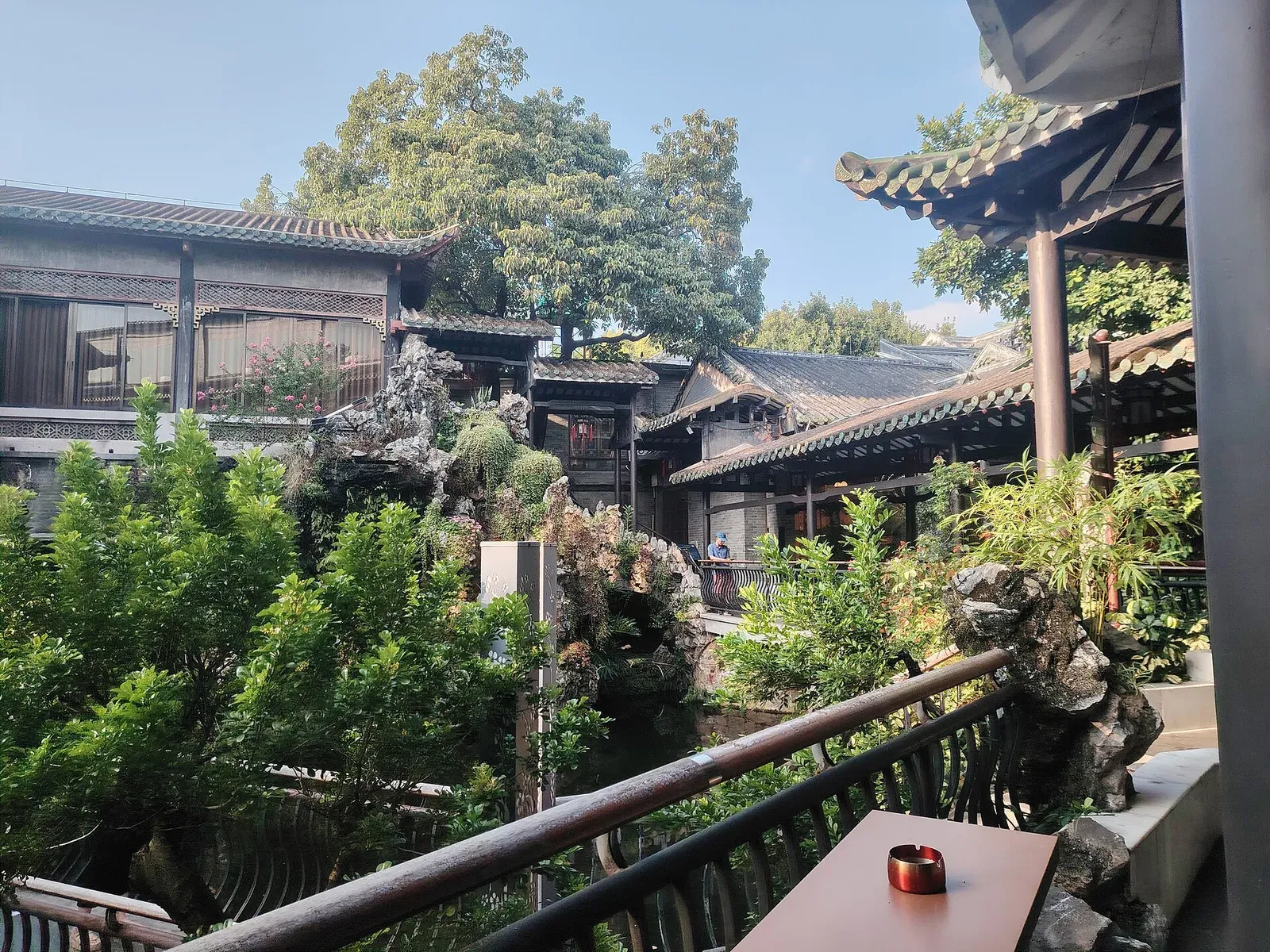
Panxi Restaurant sits along Longjin West Road in Xiguan, next to Liwan Lake. Its interior features walkways, pavilions, and dining boats built around the water. Signature dim sum includes water chestnut cake, shrimp dumplings, and Sister E's steamed dumplings (e jie fen guo). Together with Beiyuan Restaurant in Yuexiu District, founded in 1928, and Nanyuan Restaurant, it forms Guangzhou's three great garden restaurants. Located at the southern tip of Shamian Island overlooking the Baietan waters, the White Swan Hotel was among China's first five-star hotels, and its morning tea dining room is favored by diners from home and abroad. If you miss the traditional morning hours, the chain brand Dian Dou De moves past early morning restrictions by serving tea and dim sum all day and night, offering modern creations such as crispy red rice sausage rolls and Japanese wasabi salmon tarts.
| Teahouse | Address and location | Founding year or history | Signature dim sum and setting |
|---|---|---|---|
| Guangzhou Restaurant Wenchang Flagship | Corner of Wenchang South Road and Shangxiajiu Pedestrian Street, Liwan District | Traces to Guangzhou Big Restaurant founded in 1935 | Honored as the first stop for eating in Guangzhou, reopened November 13, 2025 as a Cantonese culinary culture museum |
| Tao Tao Ju Teahouse | 20 Dixipu Road, Shangxiajiu Pedestrian Street | Founded in 1880 (sixth year of the Guangxu reign in the Qing dynasty) | Signboard brushed by Kang Youwei, serves royal shrimp dumplings, crab roe siu mai, honey-glazed barbecue pork buns, and twin egg tarts |
| Lian Xiang Lou | Dixipu Road, Liwan District | Century-old historic teahouse | Known as the first house of lotus paste, uses Hunan lotus seeds for brownish-red lotus paste buns (morning and lunch only) |
| Panxi Restaurant | Longjin West Road in Xiguan, next to Liwan Lake | One of Guangzhou's three great garden restaurants | Walkways, pavilions, and dining boats set around water, with signature water chestnut cake, shrimp dumplings, and Sister E's steamed dumplings |
| Beiyuan Restaurant | Xiaobei Road, Yuexiu District | Founded in 1928 | First garden restaurant in Guangzhou, grouped with Panxi Restaurant and Nanyuan Restaurant as the three great garden restaurants |
| Dian Dou De | Chain brand | Open all day across morning, midday, and evening | Breaks traditional morning-only hours, serving modern dim sum like crispy red rice sausage rolls and Japanese wasabi salmon tarts |
| White Swan Hotel | Southern tip of Shamian Island, facing Baietan | Among China's first five-star hotels | Morning tea dining room overlooking the Baietan riverfront |
What is the best time of day for dim sum?
Cantonese dining culture includes the concept of "three teas and two meals", covering morning tea, afternoon tea, late-night tea, lunch, and dinner, with teahouses serving dim sum at various hours. On our Guangzhou & Foshan 3-Day Private Tour: Old Town & Lion Dance itinerary, the prime window to savor morning tea (dim sum like shrimp dumplings and siu mai) in Guangzhou is scheduled between 8:00 and 10:00 in the morning. Traditional teahouses draw longer queues on weekends, so arriving earlier is recommended.
If you prefer a quieter meal, try to avoid the weekend peak hours and arrive early in the morning at the older teahouses. If your daytime sightseeing schedule is packed, you can also head to all-day spots like Dian Dou De during afternoon tea or late-night tea to enjoy dim sum at your own pace.
Sources
Tao Tao Ju - Wikipedia
Guangzhou & Foshan 3-Day Private Tour: Old Town & Lion Dance
Dim sum - Wikipedia
Yum cha - Wikipedia
Guangzhou Restaurant - Wikipedia
Panxi Restaurant - Wikipedia
Lin Heung Tea House - Wikipedia
Beiyuan Restaurant - Wikipedia
Dian Dou De - Wikipedia
Har gow - Wikipedia
Cha siu bao - Wikipedia
Egg tart - Wikipedia
Rice noodle roll - Wikipedia
Boat congee - Wikipedia
White Swan Hotel - Wikipedia
Sources verified on November 19, 2026
FAQ
Why do people tap the table when someone pours tea?
According to tradition, the gesture dates back to an undercover trip by the Qianlong Emperor of the Qing dynasty. When someone fills your tea cup at a Cantonese teahouse, tapping the table with your index and middle fingers (or a single finger) shows gratitude. This is called the finger-tapping custom or koushouli.
How do you ask for more hot water in a teahouse?
If your teapot runs out of water, simply take the lid off or rest it tilted on the teapot rim. Staff will notice the open lid and come over to refill it with hot water, so you do not need to call out or wave your hand.
How many dim sum dishes should two people order?
Most dim sum comes with 3 to 4 pieces per basket and is meant for sharing. Ordering 2 to 3 dishes per person is usually enough to feel full while enjoying different flavors, making 4 to 6 dishes just right for two people.
What does the phrase 'one pot, two pieces' mean?
"One pot, two pieces" (yi zhong liang jian) is a traditional concept in Cantonese morning tea culture. It refers to a diner ordering a pot of hot tea along with two delicate dim sum dishes, savory or sweet, to enjoy at a leisurely pace.
Which teahouse is recommended for traditional garden architecture?
Consider Panxi Restaurant by Liwan Lake in Xiguan, where walkways, pavilions, and dining boats are arranged around the water. Another option is Beiyuan Restaurant in Yuexiu District, founded in 1928. Together with Nanyuan Restaurant, they are known as Guangzhou's three great garden restaurants.