
Zhangjiajie by Month: Rain, Fog, Red Leaves and Crowds
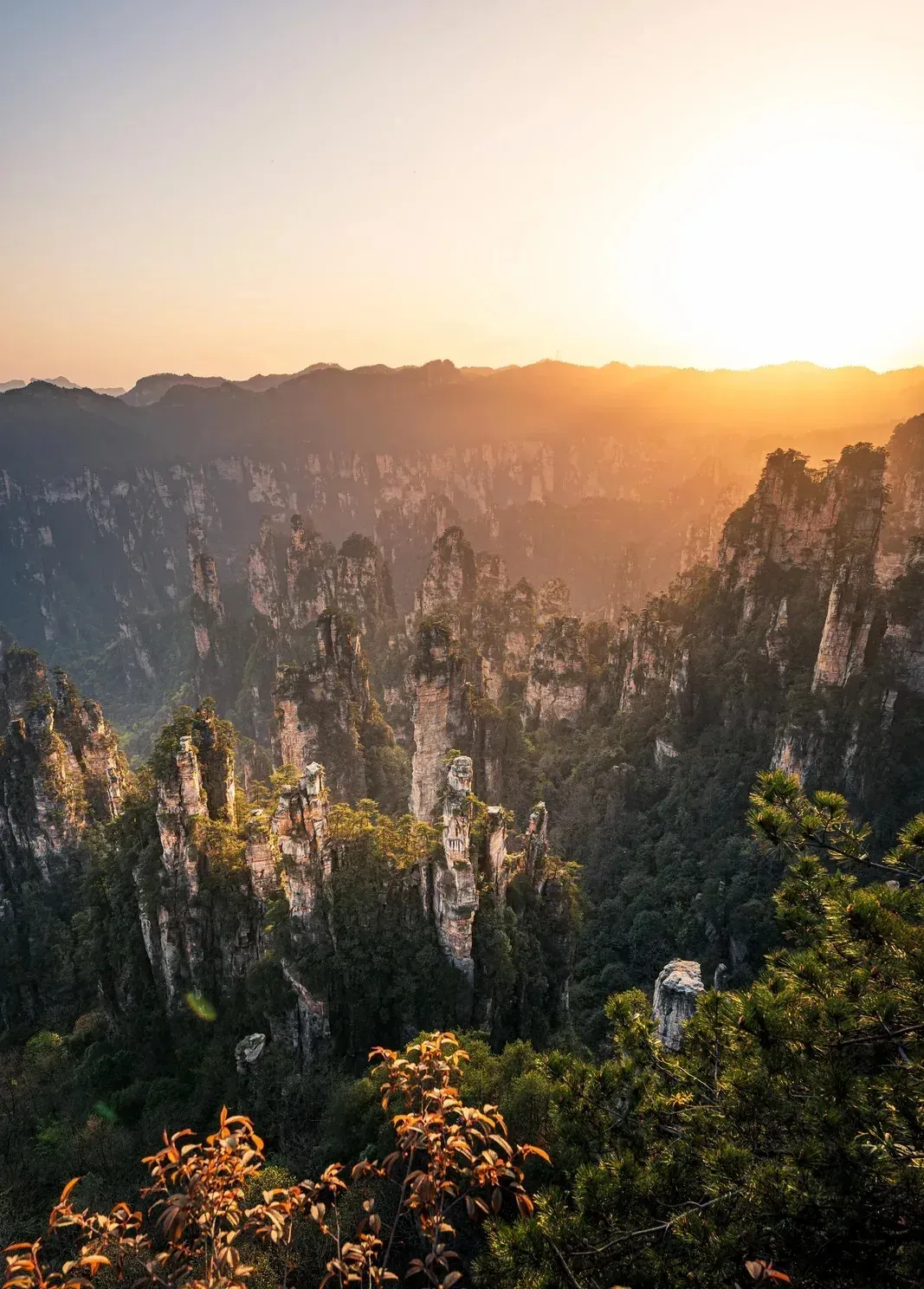
April and October are the classic months to visit Zhangjiajie, and spring and autumn are the best times to go. Statistics from the China Meteorological Data Service Centre show an average October high of 23.0°C, with rainfall dropping to 93.7 mm as autumn turns drier. Uncle Panda Travel suggests choosing April or October, and avoiding the statutory holiday peaks such as May Day and National Day.
When Is the Best Time to Visit Zhangjiajie: How Are Temperature and Rain Distributed?
Data from Weather China show that Zhangjiajie has a central subtropical humid monsoon climate, with an average annual temperature of about 16°C. The city averages 1,440 hours of sunshine per year, an annual rainfall of about 1,400 mm, and an average frost-free period between 216 and 269 days over the years.
For extreme temperatures, July is the hottest month with an average temperature of about 27°C, while January is the coldest with an average of about 4°C. Urban highs in summer can reach about 39°C, but mountain summits at an average elevation of about 1,000 meters remain around 30°C.
| Month or Climate Indicator | Official Value | Data Source |
|---|---|---|
| Annual average temperature | About 16°C | Weather China |
| Annual average precipitation | About 1,400 mm | Weather China |
| Multi-year average sunshine | 1,440 hours | Weather China |
| Multi-year average frost-free period | 216 to 269 days | Weather China |
| April average high | 22.7°C | China Meteorological Data Service Centre (1981 to 2010) |
| June average precipitation | 209.2 mm | China Meteorological Data Service Centre (1981 to 2010) |
| July average temperature and precipitation | Average temperature about 27°C, average high 33.1°C, average precipitation 233.3 mm | Weather China and China Meteorological Data Service Centre |
| August average high | 33.1°C | China Meteorological Data Service Centre (1981 to 2010) |
| September average high and precipitation | Average high 29.1°C, precipitation 91.9 mm | China Meteorological Data Service Centre (1981 to 2010) |
| October average high and precipitation | Average high 23.0°C, precipitation 93.7 mm | China Meteorological Data Service Centre (1981 to 2010) |
| November average high and precipitation | Average high 17.8°C, precipitation 65.7 mm | China Meteorological Data Service Centre (1981 to 2010) |
| December average precipitation | 28.7 mm | China Meteorological Data Service Centre (1981 to 2010) |
| January average temperature | About 4°C | Weather China |
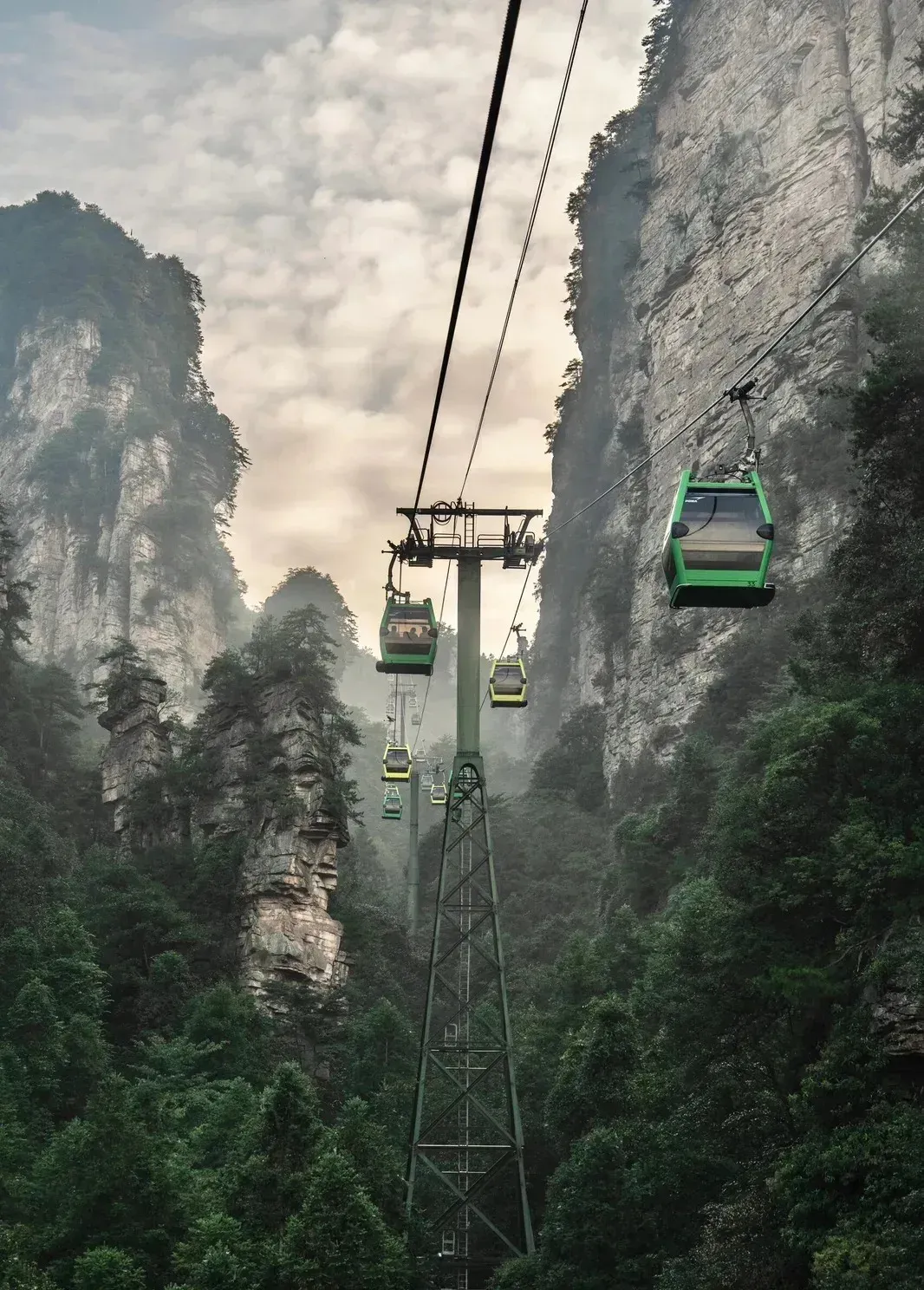
Which Months Offer the Best Chance to See Mist and Seas of Clouds in Zhangjiajie?
Late spring and summer bring concentrated rainfall, making wide expanses of rain and mist more likely. Statistics from the China Meteorological Data Service Centre show that Zhangjiajie's rainfall mainly concentrates from April to July, with average precipitation reaching 209.2 mm in June and 233.3 mm in July.
The UNESCO World Heritage Centre notes that more than 3,000 sandstone pillars in Wulingyuan, paired with ravines, streams, and broadleaf forests, are frequently enveloped in mist and clouds to form a distinctive natural aesthetic. Heavy fog can completely block views of the peaks. It is advisable to save Tianmen Mountain and Tianzi Mountain for clear days, and adjust the itinerary to valley walks like Golden Whip Stream or the Ten-Mile Gallery during thick fog.
When Is the Best Time for Autumn Weather and Foliage in Zhangjiajie?
Autumn from September to November brings noticeably less rain, making it suitable for mountain hiking. According to statistics from the China Meteorological Data Service Centre, Zhangjiajie receives 91.9 mm of rain in September, 93.7 mm in October, and only 65.7 mm in November, before dropping to a yearly low of 28.7 mm in December.
On temperatures, the average high is 29.1°C in September, 23.0°C in October and 17.8°C in November. Uncle Panda Travel suggests April and October as the classic months, with spring and autumn the best times of year for a trip.
How Can You Avoid Crowds and Long Lines in Zhangjiajie?
The key to avoiding crowds is staying away from statutory holidays and entering the park outside peak hours each day. Uncle Panda Travel suggests avoiding Chinese public holidays such as Labor Day (May 1 to 5) and National Day (October 1 to 7). Summer has more rain and the heaviest crowds.
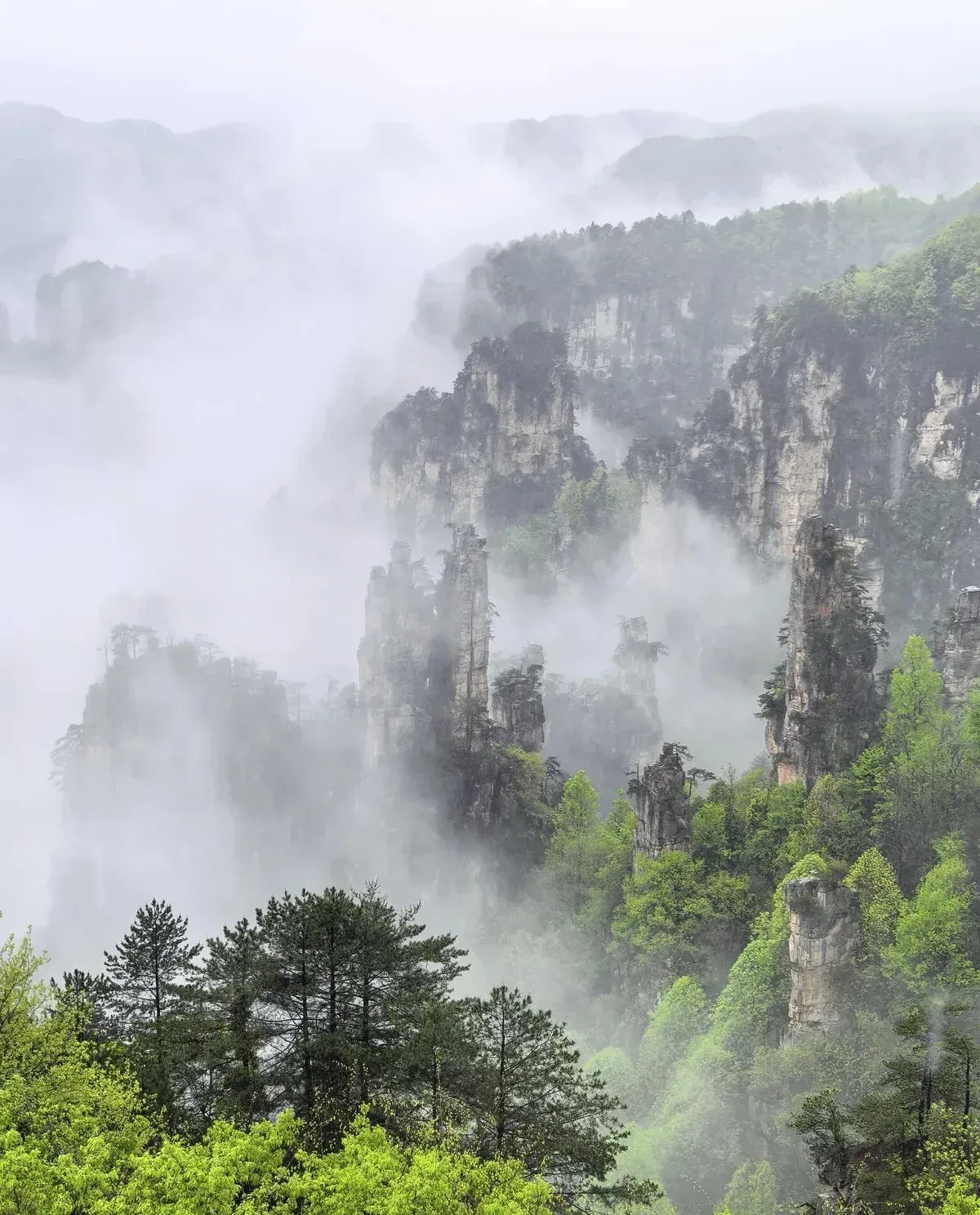
Within the park, lines for Bailong Elevator can reach 90 to 120 minutes on weekends and during the National Day Golden Week. Travelers are advised to visit before 8:30 a.m. or after 3:30 p.m. to avoid peak waits. Arriving around 8:00 a.m. also helps avoid large tour groups. Keep food and plastic bags tucked away out of sight to prevent wild macaques from snatching them.
How Big Is the Temperature Difference Between Zhangjiajie's Summits and the City?
Temperatures in Zhangjiajie's mountain areas are usually 5 to 10°C lower than in the urban center, creating a noticeable difference between the base and the peaks. Downtown Zhangjiajie sits at an average elevation of about 183 meters, while the scenic areas average around 1,000 meters, and Tianmen Mountain National Forest Park reaches an elevation of 1,518.6 meters at its highest point.
This elevation difference brings a clear cooling effect. Summer highs in the city can reach around 39°C, while summit temperatures usually hover around 30°C.
How Should You Plan If You Run into Heavy Fog or Rain?
Dense fog can completely block views of the peaks. Visitors are advised to save Tianmen Mountain and Tianzi Mountain for clear days. When facing heavy fog, you can shift your plans to valley floors like Golden Whip Stream or the Ten-Mile Gallery to avoid blocked sightlines up high.
Tickets for Zhangjiajie National Forest Park (Wulingyuan) require real-name passport reservation and remain valid for 4 days. Each entry requires booking a specific park gate and time slot. Zhangjiajie National Forest Park and Tianmen Mountain are two separate scenic zones with completely separate ticket sales. It is recommended to set aside at least one full day for the forest park, as its two core areas, Yuanjiajie and Tianzi Mountain, can easily fill an entire day of sightseeing.
Sources
Zhangjiajie · Uncle Panda Travel
Tianmen Mountain - Wikipedia
Zhangjiajie Climate Data - Weather China
Zhangjiajie - Wikipedia
Wulingyuan Scenic and Historic Interest Area - UNESCO World Heritage Centre
Sources verified on November 7, 2026.
FAQ
Which months have the most rainfall in Zhangjiajie?
Zhangjiajie's precipitation is concentrated mainly between April and July. June averages 209.2 mm of rainfall, July reaches 233.3 mm, and December sees the least rain at just 28.7 mm.
How many days are needed to visit Zhangjiajie National Forest Park?
It is recommended to set aside at least one full day to explore Zhangjiajie National Forest Park. Its two core areas, Yuanjiajie and Tianzi Mountain, easily fill a full day of touring, and park tickets remain valid for 4 days.
Do Zhangjiajie National Forest Park and Tianmen Mountain share the same ticket?
No, they do not share the same ticket. Zhangjiajie National Forest Park and Tianmen Mountain are two independent scenic areas, and their admission tickets are sold completely separately.
How can visitors protect themselves against wild macaques in Zhangjiajie?
Keep food and plastic bags safely packed away rather than holding them in your hands. This prevents items from attracting attention and being snatched by wild macaques inside the scenic area.