
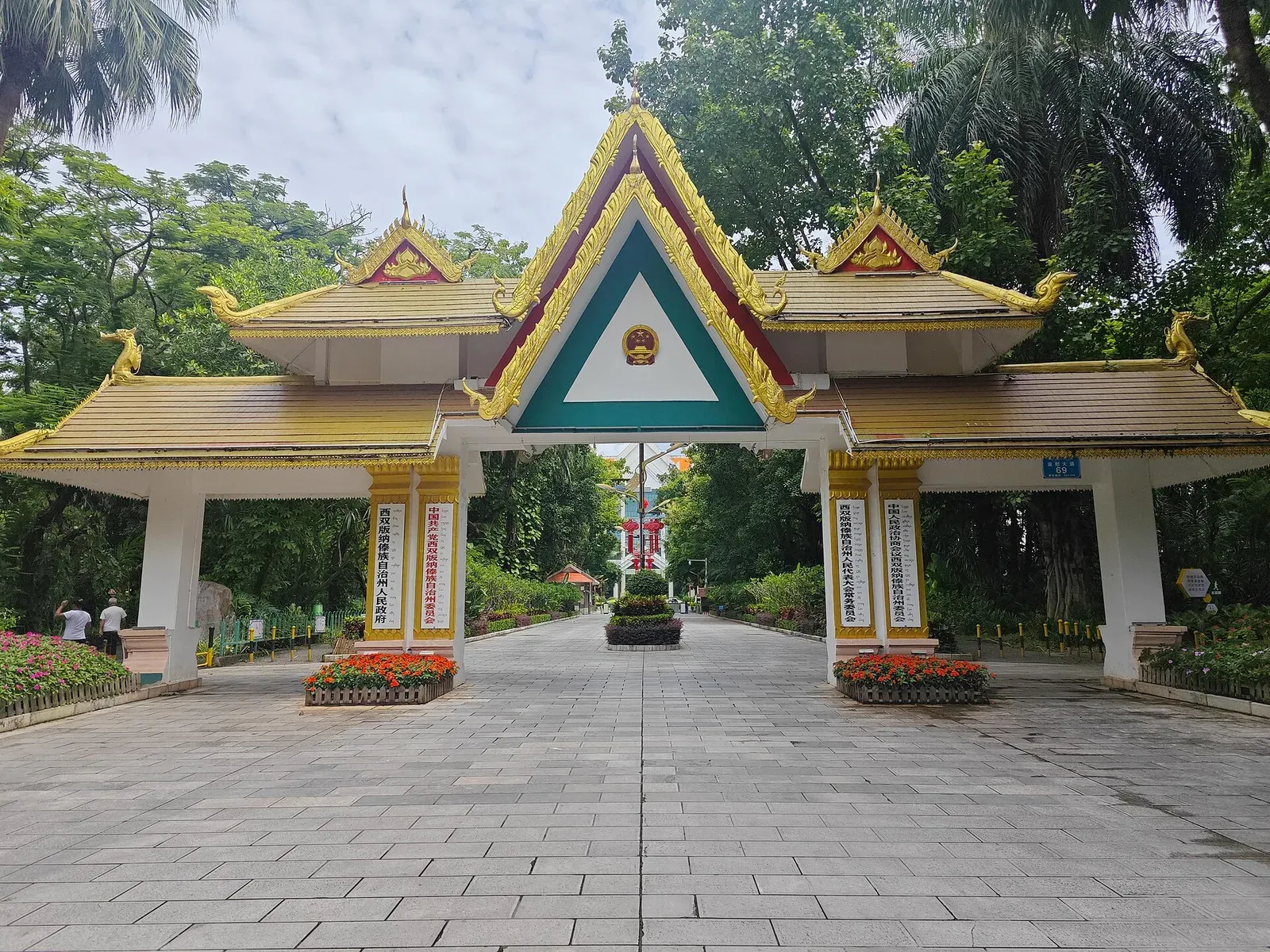
Xishuangbanna
Photo: Zhangzhugang / Wikimedia Commons, CC BY-SA 4.0
Located at the southern end of Yunnan, Xishuangbanna Dai Autonomous Prefecture covers 19,096 square kilometers with a permanent population of about 1.3014 million, centered on Jinghong City. Popularly known as Xishuangbanna, China, its name means 'twelve thousand rice fields' in the Tai Lue language, governing Jinghong City, Menghai County, and Mengla County. Compared to the high-plateau mountain roads of northwestern Yunnan, the terrain here is gentle and the climate mild, serving as a suitable destination to escape winter cold and experience tropical rainforest ecology. A trip across the prefecture is usually recommended to take 3 to 4 days.
Key points
A trip across Xishuangbanna city and the wider prefecture generally takes 3 to 4 days, with bullet trains from Kunming reaching Jinghong in 3 to 4 hours. The dry season from November to April is the best time to travel. Because sights like the botanical garden sit about 60 kilometers away, split your itinerary by area, and note that independent visitors cannot enter through the east gate.
Located at the southern end of Yunnan, Xishuangbanna Dai Autonomous Prefecture covers 19,096 square kilometers with a permanent population of about 1.3014 million, centered on Jinghong City. Popularly known as Xishuangbanna, China, its name means 'twelve thousand rice fields' in the Tai Lue language, governing Jinghong City, Menghai County, and Mengla County. Compared to the high-plateau mountain roads of northwestern Yunnan, the terrain here is gentle and the climate mild, serving as a suitable destination to escape winter cold and experience tropical rainforest ecology. A trip across the prefecture is usually recommended to take 3 to 4 days.
When is the right time to visit Xishuangbanna?
The region has no four distinct seasons, dividing instead into dry and wet seasons, with annual average temperatures ranging between 18.6°C and 22.9°C across the area. November through April is the dry season, bringing cool weather and little rain, with mornings often shrouded in light mist. May through October is the wet season, bringing abundant rainfall that keeps the tropical rainforest lush and dense. Every year from April 13 to 15 on the Gregorian calendar, the Dai New Year (Water Splashing Festival) takes place, featuring 3 days of traditional events like water splashing for blessings, dragon boat races, and releasing sky lanterns.
If you want to avoid humid, rainy weather, plan your visit between November and March. If you want to experience the large Water Splashing Festival celebrations in person, you will need to book your itinerary and accommodation for mid-April well in advance.
How to reach Xishuangbanna city and get around?
For arriving from outside, Xishuangbanna Gasa International Airport sits about 6 kilometers south of downtown Jinghong. High-speed trains on the China-Laos Railway run from Kunming, reaching Jinghong in about 3 to 4 hours one way, with daily cross-border trains running to and from Laos. Xishuangbanna is also one of 9 prefectures and cities in Yunnan covered by the 240-hour visa-free transit policy, and Mohan Railway Port within its borders is a qualifying entry port.
For getting around the city, taxi base fare starts at 7 yuan, covering the first 3 kilometers and a fuel surcharge. The urban area also operates airport shuttle buses, multiple regular bus routes, and dedicated tourist bus lines. Shared electric bikes and scooters available to rent line the streets, serving as the main way local residents and visitors travel around town.
Tip: Riding a shared electric bike along the Lancang River and around markets in downtown Jinghong is usually faster than taking a taxi, but be sure to wear a helmet before riding and follow parking zone rules.
What places are worth visiting in Xishuangbanna?
Xishuangbanna Tropical Botanical Garden of the Chinese Academy of Sciences covers more than 1,100 hectares, divided into a western section of about 300 hectares and an eastern section featuring limestone forest and valley rainforest. Located on Hulu Island in Menglun Town, Mengla County, it can be reached from Jinghong by taxi or coach bus, which takes about 1 hour. Walking through the whole garden on foot takes over 4 hours, so buying a ticket for the electric sightseeing shuttle is recommended, which reduces touring time to about 3 hours.
Wild Elephant Valley is located in Mengyang Town, Jinghong City. It is home to China's largest wild Asian elephant population, as well as a habitat for rare animals such as the green peafowl and black crested gibbon. An elevated wooden viewing walkway runs through the park. Travel guides suggest visiting in the early morning or late afternoon, which greatly improves your chances of seeing wild elephants from the walkway.
Gaozhuang Xishuangjing Night Market in Jinghong sits below the Grand Golden Pagoda on the east bank of the Lancang River, opening after 6:00 pm each evening. It brings together Dai-style barbecue, tropical fruit snacks, and travel photography in traditional Dai attire. After dark, lights illuminate the Grand Golden Pagoda, lending a lively local feel to the riverside market.
| Location | What It Is | Transport and Ticket Reference |
|---|---|---|
| Manting Park and General Buddhist Temple | Former royal garden of the Dai king with nearly 1,300 years of history, right next to the General Buddhist Temple | Located south of downtown, directly reachable by Bus Route 3; tickets cost about 50 yuan |
| Mengla Wangtianshu Scenic Area | Rainforest area featuring a 2.5-kilometer sky canopy suspension bridge hanging 36 meters high, with trees reaching up to 80 meters tall | Located in Mengla County; chartering a vehicle or having your driver take you there is recommended |
| Dai Minorities Park | Traditional Dai village cluster preserving local folk customs, hosting 3 scheduled water splashing events daily | Tickets cost about 45 yuan (about 68 yuan including the sightseeing cart) |
| Manzhang Village | Traditional village with about 500 years of history, offering slow-wheel pottery, Dai brocade weaving, and mulberry bark paper making | Intangible cultural heritage workshops generally cost 10 to 20 yuan each |
What do first-time visitors often get wrong in Xishuangbanna?
Rushing between distant sights: The prefecture covers an expansive area, and well-known attractions in Mengla County sit far from the capital of Jinghong (for example, the botanical garden is about 60 kilometers from downtown Jinghong). Traveling back and forth between counties in a single day wastes a lot of time on the road. Dividing downtown Jinghong, Mengyang Wild Elephant Valley, and Mengla eastern route sights into separate days is recommended.
Using the wrong botanical garden entrance: The west gate of the botanical garden opens from 8:00 to 18:00, and the suspension bridge entrance is open from 7:30 to 18:30. These two gates are the standard visitor entrances. The east gate is primarily used by staff vehicles and guests staying at hotels inside the grounds, so regular independent visitors cannot scan tickets and enter directly through the east gate.
Tip: When joining the scheduled water splashing at Dai Minorities Park (daily at 11:00, 13:30, and 15:30) or festival celebrations, prepare dark quick-drying clothes and non-slip shoes in advance, and note that local custom strictly forbids splashing water on the elderly, pregnant women, or small children.
Sources
Xishuangbanna Dai Autonomous Prefecture - Wikipedia
Xishuangbanna Dai Autonomous Prefecture - Wikipedia
Xishuangbanna Tropical Botanical Garden, Chinese Academy of Sciences
How to Get to Xishuangbanna Tropical Botanical Garden - Chinese Academy of Sciences
240-Hour Visa-Free Transit: Yunnan Ports and Stay Areas
Yunnan 10-Day Itinerary: Lugu Lake, Shaxi, or Xishuangbanna
Sources verified on November 17, 2026
Related travel tips
Replies 08:30–22:00 your time · Free to ask.