
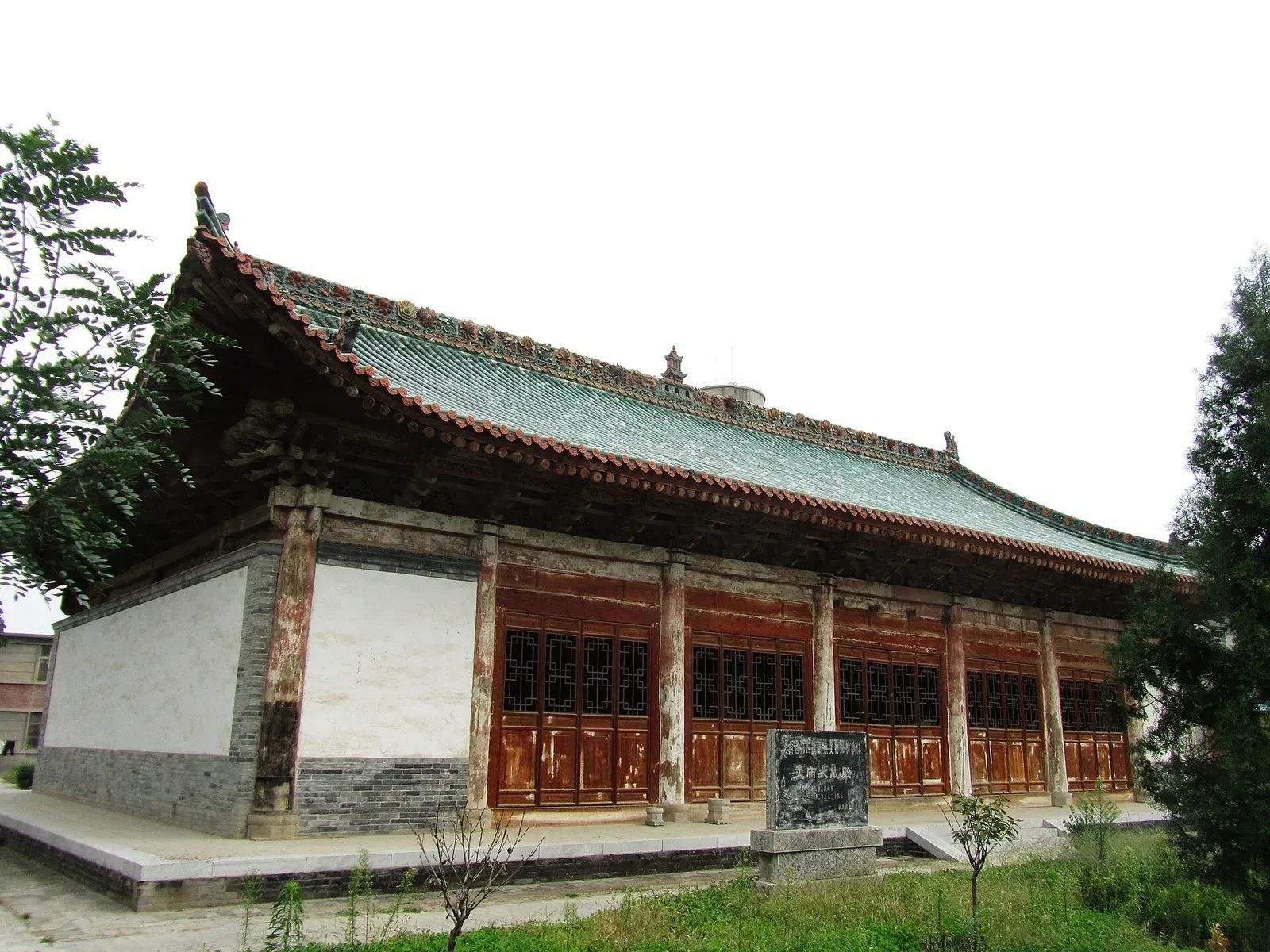
Weinan
Photo: 猫猫的日记本 / Wikimedia Commons, CC BY-SA 3.0
Weinan sits in eastern Shaanxi Province across the eastern Guanzhong Plain. Known as the eastern gateway of Shaanxi and a thoroughfare connecting eight provinces, it covers a total area of 13,031 square kilometers, with the municipal government based in Linwei District. The prefecture features the steep cliffs of Mount Hua and ancient ferry crossings along the Yellow River, making it an appealing stop for mountains and historic sites. A visit starting from Xi'an usually takes 2 to 3 days.
Key points
Visiting Weinan generally takes 2 to 3 days from Xi'an, with Mount Hua taking 5 to 6 hours to tour by cable car. Mount Hua tickets remain valid for 2 days and include admission to Xiyue Temple and the Xianyu Scenic Area. If you head straight to Mount Hua, book high-speed trains directly to Huashan North Railway Station to avoid detouring through the city center.
Weinan sits in eastern Shaanxi Province across the eastern Guanzhong Plain. Known as the eastern gateway of Shaanxi and a thoroughfare connecting eight provinces, it covers a total area of 13,031 square kilometers, with the municipal government based in Linwei District. The prefecture features the steep cliffs of Mount Hua and ancient ferry crossings along the Yellow River, making it an appealing stop for mountains and historic sites. A visit starting from Xi'an usually takes 2 to 3 days.
Which places are worth a dedicated visit?
Mount Hua rises south of Huayin City as the Western Peak of China's Five Great Mountains. The mountain has five peaks in total: South Peak (Luoyan) reaches the highest elevation at 2,154.9 meters, West Peak (Lianhua) stands at 2,082 meters, and North Peak (Yuntai) rises to 1,614.7 meters, all famous for sheer vertical cliffs.
Xiyue Temple is located on Yuemiao Subdistrict in Huayin City and served as the site for imperial sacrifices to Mount Hua throughout dynastic history. The surviving Ming and Qing architectural complex covers 186 mu. Its main structure, Haoling Hall, spans nine bays in width and five bays in depth on a grand scale.
The Sima Qian Shrine and Tomb stands in Zhichuan Town within Hancheng, a national historical and cultural city, set beside the ancient Xiayang Ferry on the west bank of the Yellow River. The central Hall of Offerings and the Resting Palace inside the shrine are both Song Dynasty structures, while the tomb of Sima Qian is a circular brick mound topped with an ancient cypress tree.
Tip: Weinan administers the county-level cities of Huayin and Hancheng, along with Linwei District, Huazhou District, and 7 counties: Tongguan, Dali, Heyang, Chengcheng, Pucheng, Baishui, and Fuping. Many more historical sites are spread across these surrounding counties.
| Location | Landscape Type and Highlights | County or City |
|---|---|---|
| Dangjia Village | An ancient village with 670 years of history laid out like a gourd, preserving over 100 Ming and Qing courtyard compounds | Xizhuang Town, Hancheng City |
| Qiachuan Wetland | A riverside hot-spring wetland along the Yellow River basin, featuring vast reed marshes and Virgin Spring | Heyang County |
| Tang Mausoleum Stone Sculptures | Cultural heritage sites including Emperor Ruizong's Qiaoling and Emperor Xuanzong's Tailing, in a region also known for crisp pears | Pucheng County |
How Should You Pace a Visit to Mount Hua?
According to Mount Hua visitor records, riding the cable cars to explore the summit usually takes 5 to 6 hours, which works well if you want a relaxed pace. Hiking across all five peaks generally takes 24 hours, suited for hikers with plenty of stamina.
If you plan to watch the sunrise from the summit, hotels on East Peak provide overnight stays. The West Gate of Mount Hua remains open 24 hours for hiking, while the East Gate opens from 07:00 to 19:00 during peak season.
Tip: Mount Hua tickets remain valid for 2 days and include admission to Xiyue Temple and the Xianyu Scenic Area at the base of the mountain, so you can set aside half a day after your descent to explore the sacrificial buildings.
How Do You Get There and Travel Locally?
Weinan has a convenient transport network. The urban area is served by Weinan Railway Station on the Longhai Railway and Weinan North Railway Station for high-speed trains, with the Weinan Weihe Grand Bridge on the Zhengzhou-Xi'an High-Speed Railway stretching 79,732 meters. In addition, Huayin City has Huashan North Railway Station, and Dali County is served by Dali Railway Station.
According to travel guides, the urban area of Weinan is moderate in size. Taxis have a base fare of 4 yuan for 2.5 kilometers, and a one-way trip within the city center usually costs around 10 yuan.
What Local Flavors Can You Taste in Weinan?
Weinan cuisine focuses primarily on Guanzhong wheaten dishes and meat. Traditional specialties include Shichen steamed buns, tofu paomo, Pucheng rafter-shaped steamed buns, water basin lamb soup (shuipen yangrou), and Dali braised pork shank. Having a fresh steamer of hot buns or a bowl of lamb soup early in the morning is a direct way to experience the local food culture.
For local produce, Hancheng produces Hancheng Dahongpao Sichuan pepper, recognized as a Chinese Geographical Indication product. Pucheng County is known as the home of crisp pears and fireworks, and both make distinctive souvenirs to bring back.
What Are Common Mistakes on a First Visit?
Tip: If you are traveling specifically to Mount Hua, book your high-speed train ticket to Huashan North Railway Station, where you can transfer directly up the mountain without detour through Weinan's city center; if you are visiting Dali, book directly to Dali Railway Station.
Another easily overlooked detail is the combined ticket benefit. Because Mount Hua tickets remain valid for 2 days and include Xiyue Temple, many visitors head straight home after hiking down, missing the sacrificial Ming and Qing architectural complex covering over 100 mu at the foot of the mountain.
Sources
Weinan - Wikipedia
Mount Hua - Wikipedia
Xiyue Temple - Wikipedia
Hancheng - Wikipedia
Dangjia Village - Wikipedia
Sima Qian Shrine and Tomb - Wikipedia
Pucheng County - Wikipedia
The above sources were verified on Nov 17, 2026
Related travel tips
Replies 08:30–22:00 your time · Free to ask.