
Tianjin
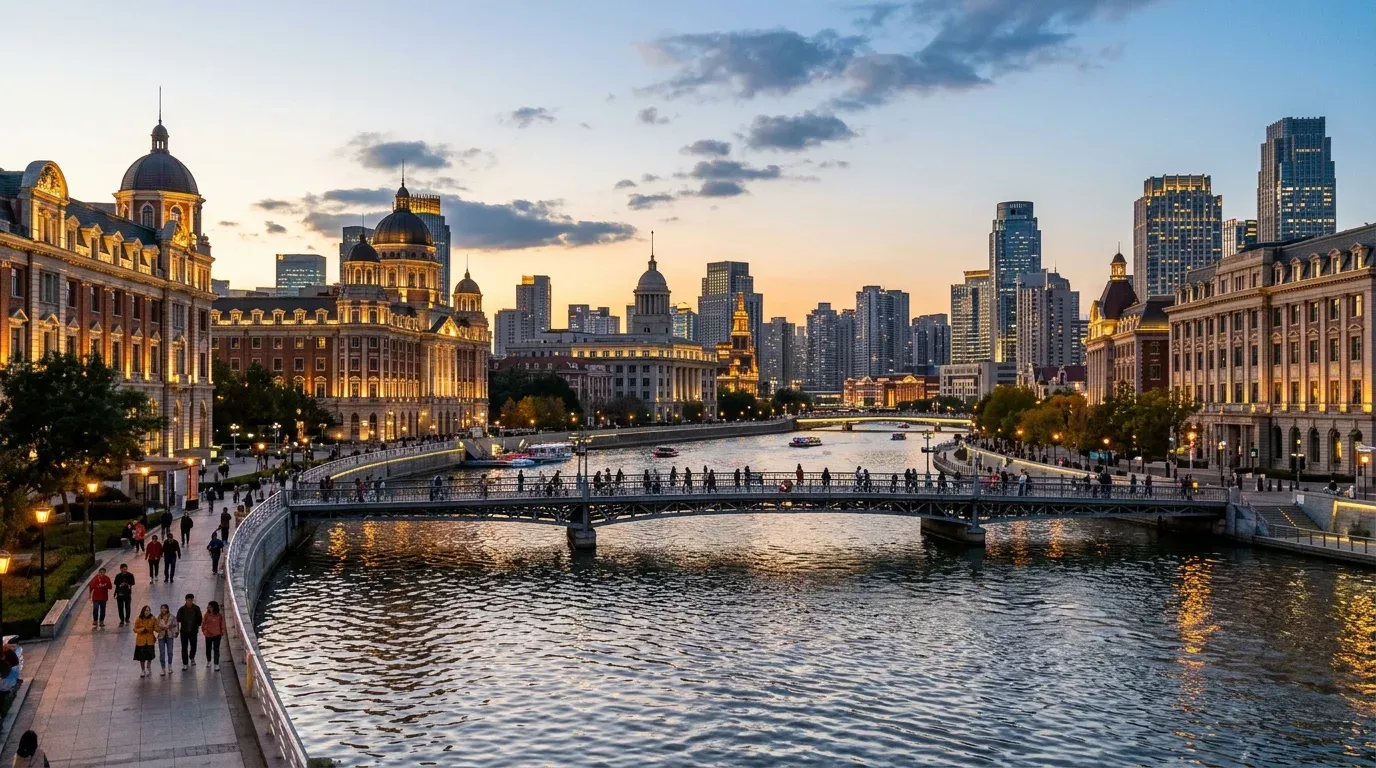
Tianjin, China sits on the eastern North China Plain by the Bohai Sea, with the Haihe River running through the city into the sea. In 1404, the Yongle Emperor of the Ming Dynasty named the city Tianjin, meaning the emperor's ford, and built a garrison wall. The city preserves modern historic architecture alongside traditional urban folk customs, making it suitable for travelers who enjoy cultural history and historic neighborhoods. Usually, spending 1 to 2 days is suggested for exploring downtown Tianjin. If you plan to extend your trip north to the Jizhou Great Wall fortress, a stay of 2 to 3 days is recommended.
Key points
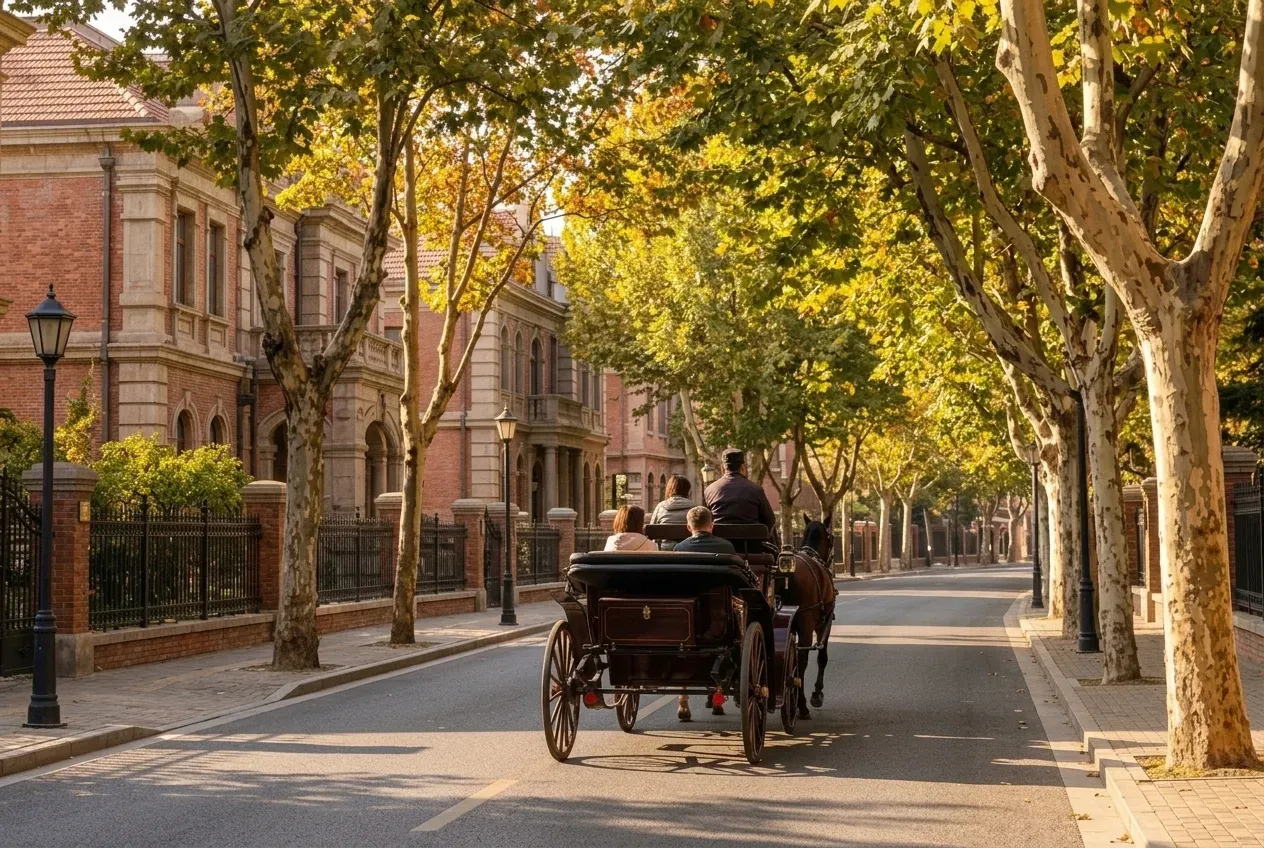
Traveling from Beijing to Tianjin, China takes just 30 minutes via intercity high-speed train, with 1 to 2 days recommended for touring the central downtown area and 2 to 3 days if adding the northern Huangyaguan Great Wall in Jizhou. You can explore the Five Great Avenues by bicycle or horse carriage to see over 2,000 historic houses, or travel across districts with your driver.
Tianjin, China sits on the eastern North China Plain by the Bohai Sea, with the Haihe River running through the city into the sea. In 1404, the Yongle Emperor of the Ming Dynasty named the city Tianjin, meaning the emperor's ford, and built a garrison wall. The city preserves modern historic architecture alongside traditional urban folk customs, making it suitable for travelers who enjoy cultural history and historic neighborhoods. Usually, spending 1 to 2 days is suggested for exploring downtown Tianjin. If you plan to extend your trip north to the Jizhou Great Wall fortress, a stay of 2 to 3 days is recommended.
When is a good time to visit Tianjin, China?
Tianjin has a warm temperate semi-humid monsoon climate with four distinct seasons, an annual average temperature of 13.1°C, and annual precipitation of 521.3 mm. In January, the average temperature is -3.2°C with colder weather, while the average temperature in July is 27.1°C. Every spring since 2023, the Five Great Avenues Cultural Tourism Area holds a Crabapple Blossom Festival. With crabapple flowers in full bloom across the area, it is pleasant to stroll along the outdoor streets.
How to reach Tianjin and get around the city?
You can take an intercity train from Beijing to Tianjin. The Beijing-Tianjin Intercity Railway opened on August 1, 2008. Running at speeds up to 350 km/h, the high-speed trains shortened travel time between Beijing and Tianjin from 70 minutes to 30 minutes. The trains are numbered with the letter C followed by four digits, with C2001 through C2198 being direct non-stop trains from Beijing South Station to Tianjin Station. Before your trip, you can check the guide to taking high-speed trains in China. Travelers arriving by plane will use Tianjin Binhai International Airport, whose IATA code TSN comes from the historical English spelling Tientsin. The central urban area of Tianjin (the six central districts) lies within the Outer Ring Road and consists of Heping, Hedong, Hexi, Nankai, Hongqiao, and Hebei districts. For sightseeing within the city, you can take the metro or travel in a private vehicle with your driver from Uncle Panda.
What places are worth visiting?
When visiting Tianjin, you can focus on these distinctive landmarks:
• Five Great Avenues Cultural Tourism Area: Formed by six roads including Machang Road, Munan Road, Dali Road, Changde Road, Chongqing Road, and Chengdu Road. It preserves more than 2,000 garden-style houses built in the 1920s and 1930s, featuring British, Italian, and other architectural styles. You can visit Prince Qing's Mansion built in 1922 (No. 55 Chongqing Road, former residence of Zaizhen) or the former residence of Sun Dianying built in 1930 (No. 20 Munan Road). You can also rent a bicycle or take a sightseeing horse-drawn carriage at the visitor service center.
• Italian Style Area: Designated by the Qing government as the Italian Concession in 1901 and taken over by Italy in 1902. Today, it retains historic buildings such as mansions around Marco Polo Square, the Italian Consulate built in 1916, and the former residence of Liang Qichao.
• Tianjin Eye Ferris Wheel: Standing 120 meters tall, it is built over Yongle Bridge across the 73-kilometer main course of the Haihe River. It features 48 capsules, takes about 30 minutes for one rotation, and offers views of both sides of the river.
• Ancient Culture Street: A 687-meter pedestrian shopping street in Nankai District lined with shops imitating Qing Dynasty folk architectural styles. It was rated a National 5A Tourist Attraction in 2007 and gathers specialty shops selling traditional handicrafts such as Yangliuqing woodblock prints and Clay Figurine Zhang.
• Huangyaguan Great Wall in Jizhou: Located about 30 kilometers north of downtown Jizhou. The famous Ming Dynasty general Qi Jiguang was once stationed here to repair the wall, and the pass contains the first Great Wall history museum along the Great Wall.
How to pace your visit?
If you have one day, you can plan a city tour: spend the morning taking a sightseeing carriage or cycling around the Five Great Avenues to view Prince Qing's Mansion and historic architecture; in the afternoon, stroll through the Italian Style Area and Ancient Culture Street to see displays of traditional handicrafts; in the evening, head to Yongle Bridge to ride the Tianjin Eye for river views. If you have two to three days, you can travel to Jizhou District with your driver on the next day to climb the Huangyaguan Great Wall and visit the Great Wall History Museum. If you need to adjust your travel pace, your travel designer at Uncle Panda can always plan a suitable itinerary for you.
Sources
Beijing-Tianjin Intercity Railway - Wikipedia
Five Great Avenues - Wikipedia
Italian Concession of Tianjin - Wikipedia
Tianjin Eye - Wikipedia
Tianjin - Wikipedia
Ancient Culture Street - Wikipedia
Huangyaguan - Wikipedia
The sources above were verified on November 16, 2026.
Related travel tips
Replies 08:30–22:00 your time · Free to ask.