
Shenyang
Shenyang sits north of the Hun River (historically called the Shen River) in Liaoning Province, and takes its name from this location. With an urban history of over 2,300 years, it was established as Shengjing when the Later Jin moved its capital here, and later served as the secondary capital of the Qing dynasty. It is a national historic and cultural city shaped by imperial heritage, modern history, and heavy industry. The city suits travelers interested in cultural history, industrial sites, and lively northeastern street life. A stay of 2 to 3 days is usually recommended.
Key points
Shenyang has more than 2,300 years of urban history and served as the Qing dynasty's Shengjing and secondary capital; a 2 to 3 day stay is usually recommended. Mukden Palace dates to 1625 and closes on Mondays except statutory holidays, while January averages -11.0°C, so pack for cold if you want the northern ice and snow.
Shenyang sits north of the Hun River (historically called the Shen River) in Liaoning Province, and takes its name from this location. With an urban history of over 2,300 years, it was established as Shengjing when the Later Jin moved its capital here, and later served as the secondary capital of the Qing dynasty. It is a national historic and cultural city shaped by imperial heritage, modern history, and heavy industry. The city suits travelers interested in cultural history, industrial sites, and lively northeastern street life. A stay of 2 to 3 days is usually recommended.
When is a good time to visit Shenyang?
Shenyang has a temperate monsoon climate with four distinct seasons and an annual average temperature of 8.4°C. In July, the average summer temperature is 24.7°C, bringing mild weather. In January, the average winter temperature drops to -11.0°C, making it cold and dry. This winter season suits those who want to experience northern ice and snow or enjoy a traditional copper-pot hotpot. You can plan your trip around whether you prefer mild summer days or northern winter snow.
How do you get to Shenyang and get around?
Shenyang Taoxian International Airport is 20 kilometers from the city center, and passengers mainly use Terminal 3. Direct access to Taoxian Airport Station on Shenyang Metro Line 2 is located right below the terminal. Airport buses also run directly to Shenyang North Railway Station (Line 1) and the Shenyang Railway Station transport hub (Line 2), with a one-way fare of 15.5 yuan taking about 60 minutes. If you arrive or depart by China high-speed rail, Shenyang Railway Station, whose east building dates to 1910, is a Major Historical and Cultural Site Protected at the National Level. For getting around the city, as of June 2026, the Shenyang Metro operates 6 lines with 144 stations, connecting Middle Street, Beiling Park, Liaoning Provincial Museum, and the main railway stations. Eligible travelers from 54 countries holding valid international travel documents and onward tickets with confirmed dates and seats can also use the 144-hour visa-free transit policy in Shenyang.
What are the top places to visit in Shenyang?
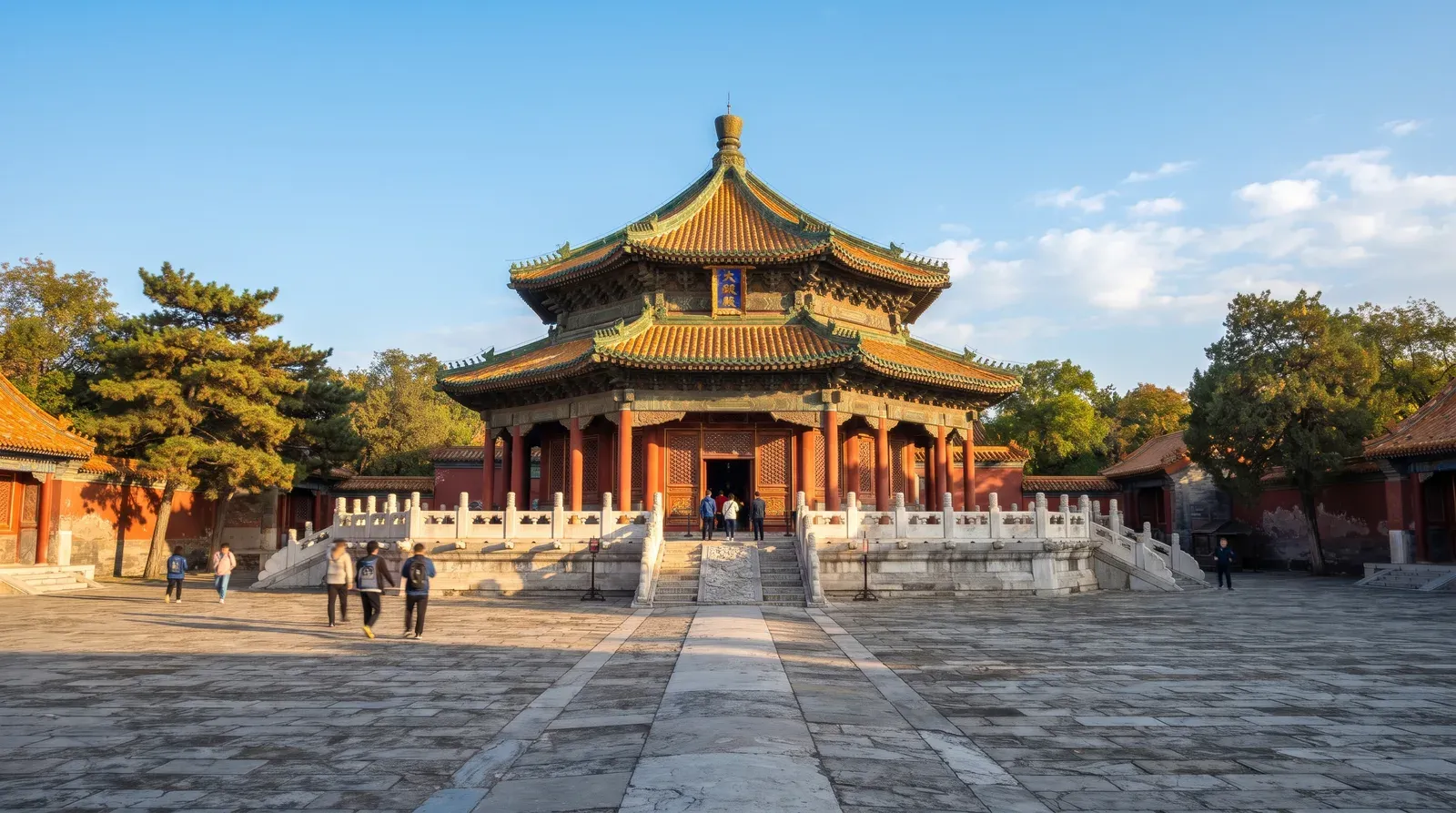
The main historic sights in Shenyang are concentrated across five urban districts: Heping, Shenhe, Dadong, Huanggu, and Tiexi. Mukden Palace (Shenyang Imperial Palace), first built in 1625, is an early Qing imperial palace from before the court moved past the Shanhai Pass and a World Heritage Site. Visitors can tour the Dazheng Hall on the east route, styled after Eight Banners army tents, and the Wensu Pavilion, which once stored the Siku Quanshu (closed on Mondays, except statutory holidays). Zhaoling Tomb (Beiling), the largest of the three Qing tombs outside the pass, preserves a grove of more than 2,000 ancient pines over 300 years old. Fuling Tomb (Dongling) preserves the intact Qing imperial tomb layout that rises from south to north through a front courtyard, square city, and treasure mound city. Marshal Zhang's Mansion consists of a three-entry courtyard compound, the Great Green Building, the Small Green Building, and the Former Residence of Edith Zhao, showcasing modern architecture. Located on Wanghua South Street in Dadong District, the Shenyang "9.18" Historical Museum was expanded around the Calendar Stone Monument to record modern history. In Hunnan District, Liaoning Provincial Museum is free to the public, known for ancient calligraphy and painting, Liao dynasty relics, and Hongshan jade artifacts. In Tiexi District, the China Industrial Museum, converted from the former Shenyang Foundry workshop, displays more than 20,000 items (real-name reservation required) and traces the history of this industrial hub.
What local dishes and snacks should you try in Shenyang?
Because the northern climate is well suited to growing grains, flour-based foods are everyday staples in Shenyang, and cooking techniques are heavily influenced by Shandong cuisine. Shenyang cuisine excels at braising and stewing. Pork stew with glass noodles, chicken stew with hazel mushrooms, catfish stew with eggplant, and pork ribs stew with green beans are known as the four classic Northeast stews. Crispy golden guobaorou (sweet and sour pork) and disanxian (stir-fried potato, eggplant, and green pepper) are also regional staples. In winter, pickled cabbage cured in large ceramic jars is often used for copper-pot hotpot with pork belly. Along the 1,500-meter Middle Street pedestrian mall, you can taste dumplings from Laobian Dumpling, a time-honored brand founded in 1829, as well as Majia Shaomai. You can also visit Xita to sample Korean ethnic dishes, or wander through the Xiaoheyan morning market to experience local breakfast flavors.
How should you pace your visit to Shenyang?
A good itinerary connects early Qing sites, modern history, and distinctive street markets. On day one, visit Mukden Palace and Marshal Zhang's Mansion in the morning, then spend the afternoon walking Middle Street and tasting Laobian dumplings. On day two, head to Zhaoling Tomb in Huanggu District to walk among the ancient pines, spend the afternoon at Liaoning Provincial Museum or the China Industrial Museum, and have authentic northeastern stew for dinner. On day three, visit the Xiaoheyan morning market, then tour the Shenyang "9.18" Historical Museum or Hongmei Cultural and Creative Park, ending your evening with ethnic specialties in the Xita neighborhood. During your trip, you can ask your travel designer to coordinate bookings and routes, or have your driver take you between stops for an easy journey.
Sources
Chinese cuisine - Wikipedia
Shandong cuisine - Wikipedia
Jiaozi - Wikipedia
Northeastern Chinese cuisine - Wikipedia
Mukden Palace - Wikipedia
Shenyang Palace Museum
Zhaoling (Qing dynasty) - Wikipedia
Fuling Tomb - Wikipedia
Marshal Zhang's Mansion - Wikipedia
Shenyang "9.18" Historical Museum - Wikipedia
Liaoning Provincial Museum - Wikipedia
Middle Street - Wikipedia
Shenyang Metro - Wikipedia
Shenyang - Wikipedia
China Expands 72/144-Hour Visa-Free Transit to 54 Countries - National Immigration Administration
China Industrial Museum - Wikipedia
Shenyang Taoxian International Airport - Wikipedia
Shenyang Railway Station - Wikipedia
Laobian Dumpling - Wikipedia
Top Tourist Itinerary: 5 Days and 4 Nights - Liaoning Department of Culture and Tourism
The sources above were verified on November 8, 2026.
Related travel tips
Replies 08:30–22:00 your time · Free to ask.