
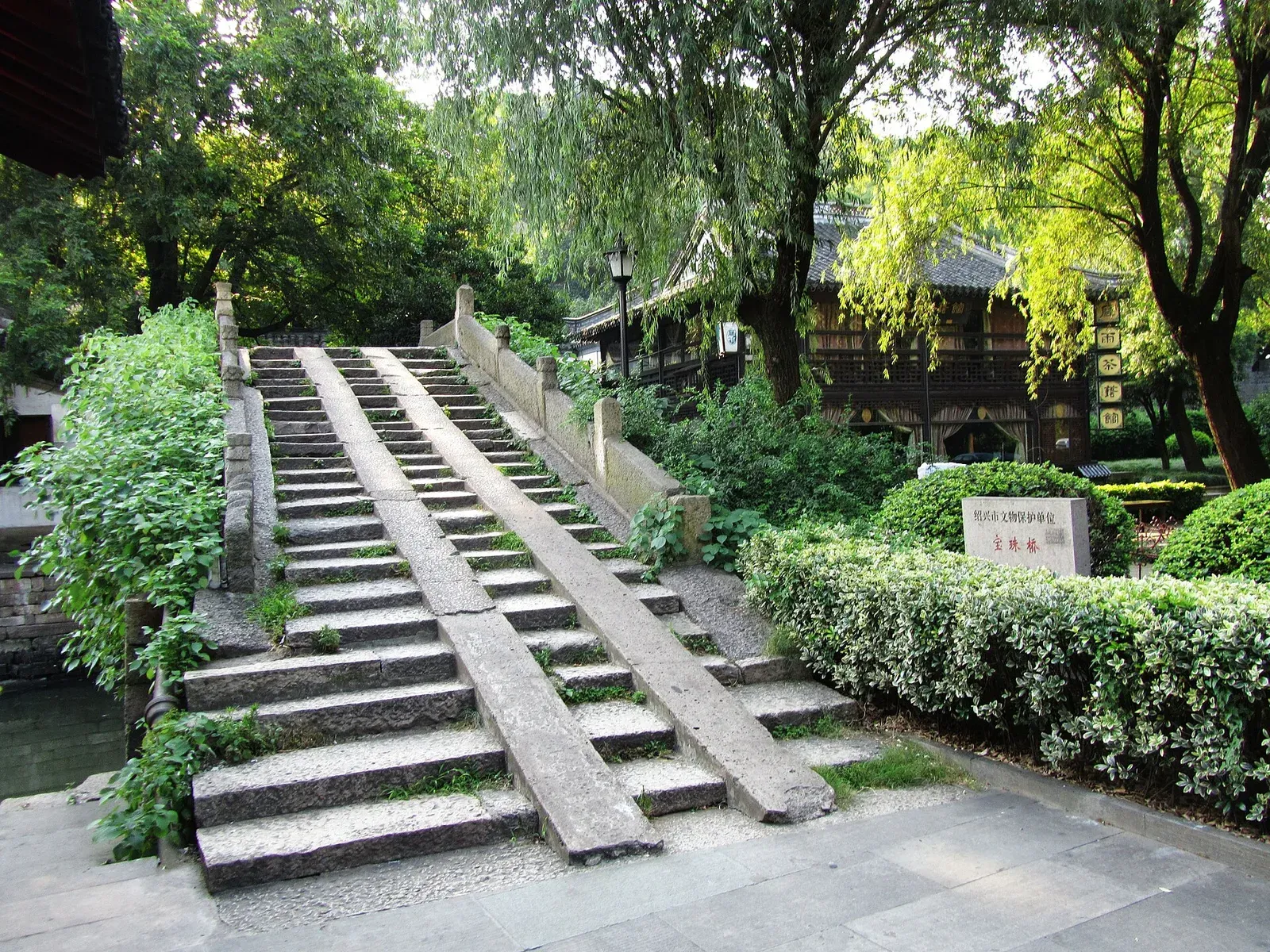
Shaoxing
Photo: 猫猫的日记本 / Wikimedia Commons, CC BY-SA 3.0
Shaoxing is in north-central Zhejiang Province, 67 kilometers southeast of Hangzhou and 108 kilometers west of Ningbo. The city has over 2,500 years of history and served as the capital of the State of Yue during the Spring and Autumn Period. It suits canal strolls and historical exploration, with a recommended stay of 2 to 3 days to see the old town and major nearby sights.
Key points
A trip to Shaoxing requires 2 to 3 days, taking about 16 minutes by high-speed train from Hangzhou and 45 minutes from Shanghai Hongqiao. Spring and autumn are the best seasons, though you should avoid the plum rain season from mid-June to early July. Lu Xun Native Place requires advance real-name WeChat booking and closes at 17:00 on Mondays.
Shaoxing is in north-central Zhejiang Province, 67 kilometers southeast of Hangzhou and 108 kilometers west of Ningbo. The city has over 2,500 years of history and served as the capital of the State of Yue during the Spring and Autumn Period. It suits canal strolls and historical exploration, with a recommended stay of 2 to 3 days to see the old town and major nearby sights.
| Item | Details |
|---|---|
| Recommended stay | 2 to 3 days |
| Total municipal area | 8,274.79 square kilometers |
| 2020 permanent population | 5,270,977 people |
| Recommended travel months | October to November in autumn, March to May in spring |
| Shared commercial airport | Hangzhou Xiaoshan International Airport (45 km from Shaoxing or about 30 km west of the urban area) |
| Yuecheng District reference hotel rate | Around 300 to 600 yuan per night |
Travel guides note that when exploring the Lu Xun Native Place neighborhood, you can step into Xianheng Hotel, take a photo with the bronze statue of Kong Yiji at the entrance, order a plate of spiced fennel beans, and warm a bowl of yellow wine. Along the street, you can also eat stinky tofu or ride a black-awning boat as a boatman sculls through the water lanes.
When Is the Most Comfortable Season to Visit Shaoxing?
Shaoxing has a subtropical monsoon climate with an average annual temperature of 16 to 17°C, dropping to 4 to 5°C in January, and annual rainfall of 1,400 millimeters. The July high averages 28 to 29°C, while summer from June to August is hot, reaching around 35°C with frequent showers.
According to Wikivoyage, the pleasant weather runs during the golden autumn of October and November, while the spring from March to May also suits sightseeing. A Jianshu travel guide suggests avoiding the plum rain season from mid-June to early July to prevent rain from disrupting outdoor plans. In addition, the Shaoxing Yellow Wine Festival usually takes place in October; hotel rooms during the festival and peak seasons like Spring Festival are harder to book and more expensive.
Tip: If you plan to visit during the October Yellow Wine Festival or Spring Festival, book your room in Yuecheng District early to avoid tight availability and peak rate increases.
How Do You Reach Shaoxing from Hangzhou, Shanghai, or Nearby Airports?
Taking high-speed rail to Shaoxing is fast. According to Chinese Wikipedia, trains from Shaoxing take about 16 minutes to Hangzhou, about 25 minutes to Ningbo, and 1 hour to Shanghai. According to a Jianshu travel guide, Hangzhou East Railway Station to Shaoxing North takes about 20 minutes, the fastest train from Shanghai Hongqiao takes about 45 minutes, and high-speed rail from Shaoxing to Wenzhou takes about 1.5 hours. The main high-speed station, Shaoxing North Railway Station (绍兴北站), sees over 150 train stops per day.
Shaoxing has no commercial airport of its own and shares Hangzhou Xiaoshan International Airport with Hangzhou. Chinese Wikipedia notes the airport is 45 kilometers from Shaoxing, while Wikivoyage places it about 30 kilometers west of the city. Nearby alternatives include Ningbo Lishe International Airport (about 120 kilometers southeast) and Yiwu Airport (about 100 kilometers southwest). The local metro network operates on a single-ticket transfer system with Hangzhou Metro and the Hangzhou to Haining Intercity Rail, sharing the same fare scheme as Hangzhou Metro.
Tip: Pay attention to station names when booking train tickets: Shaoxing North Railway Station (绍兴北站) is the primary high-speed hub, located about 10 kilometers north of downtown; Shaoxing Railway Station (绍兴站) sits about 5 kilometers southeast of the city center, just a short bus or taxi ride away.
How Do You Get Around on Local Transit, and How Much Does It Cost?
Shaoxing Metro operates several lines: the Keqiao section of Line 1 (Guniangqiao to China Light & Textile City) opened on June 28, 2021, the main section of Line 1 opened on April 29, 2022, Line 2 opened on July 26, 2023, and the branch of Line 1 (Shaoxing North Railway Station to Exhibition Center Station) began passenger operations on June 30, 2025. A Shaoxing Metro 1-day pass allows unlimited rides for 24 hours after your first gate tap, and a 3-day pass covers 72 hours of unlimited rides.
According to the Jianshu guide, local city buses reach major attractions, costing 1 to 2 yuan and accepting Alipay QR code payments. Taxis start at a base fare of 10 yuan, which covers the first 3 kilometers. From Shaoxing Railway Station, you can take Bus 30 or Bus 60 to Lu Xun Native Place. From Shaoxing North Railway Station, you can ride the BRT bus to Renmin Lukou or Eryuan Station, then walk the rest of the way.
The following transit and accommodation prices come from Jianshu travel guides and official distance-based fare rules:
| Item | Price | Details |
|---|---|---|
| Metro base fare | 2 yuan | Covers up to 4 km |
| Metro 4 to 12 km | 1 yuan added | Covers each additional 4 km |
| Metro 12 to 24 km | 1 yuan added | Covers each additional 6 km |
| Metro over 24 km | 1 yuan added | Covers each additional 8 km |
| Regular city buses | 1 to 2 yuan | Reaches major sights, accepts Alipay QR codes |
| Taxi base fare | 10 yuan | Covers up to 3 km |
| Yuecheng District reference hotel rate | Around 300 to 600 yuan per night | Jianshu guide notes convenient access to Lu Xun Native Place and Shen Garden |
What Are the Main Sights to See in Shaoxing?
Lu Xun Native Place is located at 241 Luxun Middle Road in Yuecheng District, with travel guides suggesting a visit of 3 to 5 hours. Xianheng Hotel within the quarter was founded in 1894 and featured in stories by Lu Xun, with a bronze statue of the fictional character Kong Yiji standing by the entrance.
The Orchid Pavilion scenic area sits in the Lanting Scenic Area of Keqiao District, 13 kilometers southwest of the city at the foot of Mount Lanzhu, covering 250 mu. The inquiry phone number is 0575-84600896. King Goujian of Yue planted orchids here during the Spring and Autumn Period, and a courier station pavilion was built during the Han Dynasty. In 353 AD (the ninth year of Yonghe in the Eastern Jin Dynasty), Wang Xizhi invited 41 scholars here for a winding stream drinking party and composed the Preface to the Poems Collected from the Orchid Pavilion, establishing the site as a revered home of Chinese calligraphy.
East Lake sits in Gaobu Town east of Yuecheng District, praised as a water and stone bonsai of Jiangnan and ranked alongside West Lake in Hangzhou and South Lake in Jiaxing as one of Zhejiang's three famous lakes. It is a National 4A Tourist Attraction. Originally a green stone mountain, quarrymen chiseled stone here from the Han Dynasty onward, and Yang Su quarried stone extensively during the Sui Dynasty to construct city walls. Centuries of quarrying left behind sheer cliffs and deep pools. Inside the lake, Xiantao Cave, Laba Cave, and Taogong Cave offer the highlights, where riding a small boat into the caverns feels like looking at the sky from the bottom of a well. Shen Garden on Yan'an Road dates back to the Southern Song Dynasty and links to the story of Southern Song poet Lu You and his former wife Tang Wan. Cangqiao Straight Street is a preserved historic street showcasing typical Shaoxing canal town scenery.
| Location | Opening or Entry Hours | Reservation Rules |
|---|---|---|
| Lu Xun Native Place | Monday 8:30 to 17:00; Tuesday to Sunday 8:30 to 21:00; Golden Weeks and public holidays 8:30 to 22:30 | Book time slots in advance on the official WeChat account, limited to once per day for up to 5 people per verified mobile number |
| Orchid Pavilion Scenic Area | Entry hours 8:00 to 16:40 | Online ticket booking window 8:00 to 16:30 |
How Can You Plan a Day-by-Day Itinerary?
Day 1: Old town culture and canal streets. From morning to afternoon, visit Lu Xun Native Place at 241 Luxun Middle Road in Yuecheng District, spending a recommended 3 to 5 hours, and taste spiced fennel beans and warm yellow wine at Xianheng Hotel. Then head to Yan'an Road to visit Southern Song-era Shen Garden. In the evening, stroll along Cangqiao Straight Street to experience the preserved canal streetscapes, and take a black-awning boat along the waterways.
Day 2: Outskirts heritage, sheer cliffs, and emerald waters. In the morning, travel 13 kilometers southwest to the Orchid Pavilion scenic area to explore the historic site of the winding stream gathering at the foot of Mount Lanzhu and its calligraphy relics (entry closes at 16:40). In the afternoon, head to East Lake in Gaobu Town, Yuecheng District, taking a small boat through Xiantao Cave, Laba Cave, and Taogong Cave to view the quarry-carved cliffs and deep pools.
Tip: If you have only one day, focus on Lu Xun Native Place, Shen Garden, and Cangqiao Straight Street in the old town, connecting these key sights on foot or with short bus rides.
What Should You Eat and Drink in Shaoxing?
Shaoxing is known for its yellow wine, dried mustard greens, and stinky tofu, featured on the documentary A Bite of China. According to the Jianshu guide, Shaoxing cuisine balances salty and savory flavors, with signature dishes such as braised pork belly with dried mustard greens, drunken chicken, and wine-lees marinated fish. Yellow wine brewing technique is recognized as a National Intangible Cultural Heritage, with Guyue Longshan and Kuaijishan among the prominent brands.
Shaoxing stinky tofu is crisp on the outside and tender inside, served with chili sauce or sweet bean sauce. Other local snacks include spiced fennel beans, cream puffs (naiyou xiaopan), and fermented rice steamed buns. Ciwu hand-thumped noodles from Zhuji are kneaded and beaten by hand, served in broth simmered with old hen and Chinese ham. The cured meat street in Anchang Ancient Town hangs sausages and soy sauce duck to dry year-round, available to purchase or taste on the spot. According to Chinese Wikipedia, Shaoxing specialties include Shaoxing wine, black felt hats, spiced fennel beans, stinky tofu, Jinghu dried mustard greens, Pingshui gunpowder tea, Shaoxing spotted ducks, and Wangtan bayberries. Shaoxing Yue opera is sung in the local dialect and ranks second only to Peking opera in national popularity.
Tip: When dining at old street restaurants, try pairing classic braised pork belly with dried mustard greens with a pot of warm Shaoxing yellow wine to taste the savory style of local cuisine.
What Practical Mistakes Do First-Time Visitors Make?
When visiting Shaoxing for the first time, admission rules, booking channels, and railway station locations can easily cause confusion. Check these details before your trip:
| Common Confusion | What to Do |
|---|---|
| Shorter hours at Lu Xun Native Place on Mondays | Under rules effective Nov 11, 2025, the area closes at 17:00 on Mondays (reservations end at 16:30, entry closes at 16:45), staying open until 21:00 only Tuesday through Sunday (22:30 on holidays) |
| Partial evening closures at Lu Xun Native Place | After 17:00, sections with rockeries and water bodies close for visitor safety; explore during the daytime to see the complete grounds |
| Reservation channel and quota for Lu Xun Native Place | Reserve timed slots on the official WeChat accounts of Shaoxing Cultural Tourism Group or Shaoxing Lu Xun Memorial Museum, entering with an ID card or facial recognition; limit of 1 booking per day for up to 5 people per mobile number |
| Early entry cutoff at Orchid Pavilion | Online ticket booking runs from 8:00 to 16:30, with entry closing at 16:40; plan your arrival time carefully if visiting in the afternoon |
| Main high-speed rail station is outside the city center | Shaoxing North Railway Station sits about 10 km north of downtown, while Shaoxing Railway Station is about 5 km southeast of the center, requiring different transit routes and travel times |
| Language barriers when communicating | Wikivoyage notes English is not widely spoken in Shaoxing, so carry a hotel business card and keep Chinese destination names ready |
Sources
Latest Announcement: Shaoxing Lu Xun Native Place Opening Hours Adjusted - Shaoxing Net
Lanting Calligraphy Museum - Shaoxing Orchid Pavilion Official Site
Shaoxing City - Wikipedia
Shaoxing Metro - Wikipedia
Shaoxing - Wikipedia
East Lake (Shaoxing) - Wikipedia
Sources verified on Nov 18, 2026
Related travel tips
Replies 08:30–22:00 your time · Free to ask.