
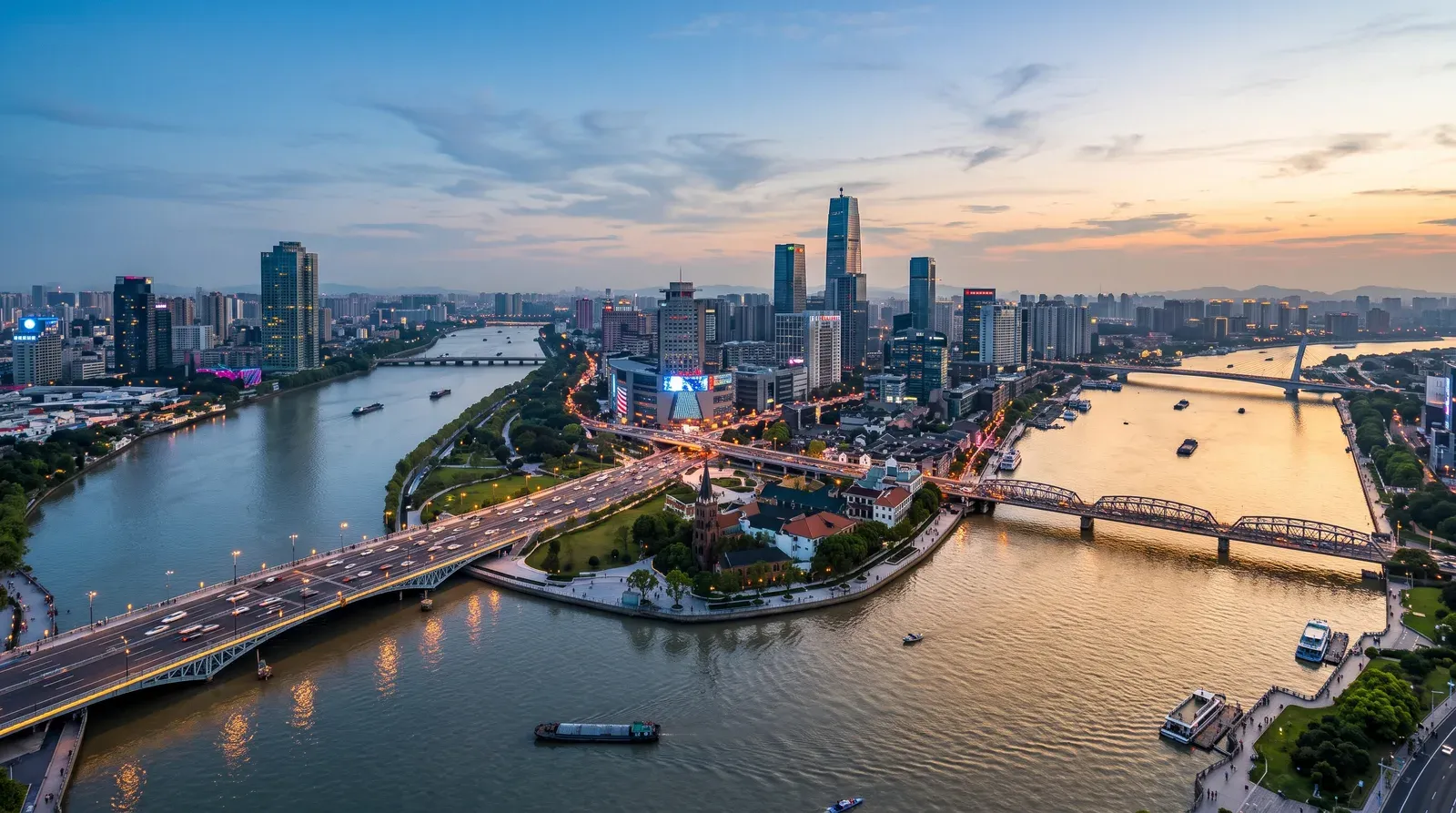
Ningbo
Ningbo is located in northeastern Zhejiang Province, across Hangzhou Bay from Shanghai. It is a sub-provincial city and a city specifically designated in the state plan. The coastal city has a strong economy. In 2022, its gross domestic product reached 15,704.3 hundred million yuan, ranking 12th nationwide, and it is home to the Port of Ningbo-Zhoushan, which ranks first in the world in cargo throughput. The city features the 7,000-year-old Hemudu rice-farming civilization, historic book libraries, and modern treaty port architecture. It suits travelers who enjoy history, culture, modern architecture, and lake and mountain scenery. A stay of 2 to 3 days is usually recommended to explore the central city and nearby suburban attractions.
Key points
A stay of 2 to 3 days is recommended to explore Ningbo, with direct high-speed trains taking about 50 minutes from Hangzhou East and 99 minutes from Shanghai Hongqiao. Tianyi Ge is closed on Monday mornings (opening at 13:30, except on holidays), while Ningbo Museum's permanent exhibitions are free. You can also have a travel designer plan connected trips with your driver.
Ningbo is located in northeastern Zhejiang Province, across Hangzhou Bay from Shanghai. It is a sub-provincial city and a city specifically designated in the state plan. The coastal city has a strong economy. In 2022, its gross domestic product reached 15,704.3 hundred million yuan, ranking 12th nationwide, and it is home to the Port of Ningbo-Zhoushan, which ranks first in the world in cargo throughput. The city features the 7,000-year-old Hemudu rice-farming civilization, historic book libraries, and modern treaty port architecture. It suits travelers who enjoy history, culture, modern architecture, and lake and mountain scenery. A stay of 2 to 3 days is usually recommended to explore the central city and nearby suburban attractions.
How to Get to Ningbo and Travel Around the City?
Traveling to Ningbo from major cities in the Yangtze River Delta is quick. Ningbo Railway Station (Ningbo South Railway Station) is the main high-speed rail hub of the city. High-speed bullet trains on the Hangzhou-Ningbo Passenger Dedicated Line connect directly to Hangzhou East Railway Station in as little as about 50 minutes, and to Shanghai Hongqiao Railway Station in as little as about 99 minutes (for details on boarding and luggage, see the China High-Speed Train Travel Guide). For air travel, Ningbo Lishe International Airport connects seamlessly with Ningbo Railway Station and Ningbo Passenger Transport Center via Ningbo Rail Transit Line 2. After landing, you can walk directly into the metro station from the airport's underground transportation center, making trips into and out of the city smooth.
What Places Are Worth a Dedicated Visit in Ningbo?
Ningbo's cultural and natural highlights combine deep heritage with scenic landscapes, making them worthy of your attention:
Tianyi Ge is located on the west side of Moon Lake in the old city. Built during the Jiajing reign of the Ming Dynasty under the direction of Fan Qin, the Right Vice Minister of the Ministry of War, it is one of the oldest surviving private libraries in China, housing more than 70,000 volumes at its peak. Opening hours are Tuesday to Sunday from 8:30 to 17:00 (admission stops half an hour before closing); it is closed on Monday mornings (except on statutory public holidays, opening at 13:30 on Monday afternoons). Ningbo Old Bund, adjacent to Sanjiangkou, officially opened as a port in 1844, more than 20 years earlier than the Shanghai Bund. As one of the oldest bunds in China, it fully preserves modern historic buildings such as Jiangbei Catholic Church.
Located in Yinzhou District, Ningbo Museum was designed by Wang Shu, the first Chinese citizen to win the Pritzker Architecture Prize. Its facade creatively uses 'wapan walls' made of recycled folk bricks and tiles, alongside bamboo formwork concrete techniques. It is a national first-grade museum, and its permanent exhibitions are open for free. Dongqian Lake, with a water area of 19.14 square kilometers, is the largest natural lake in Zhejiang Province, surrounded by sites such as Southern Song Dynasty stone carvings. At the foot of nearby Mount Taibai stands Tiantong Temple, founded in the Western Jin Dynasty. Its Grand Hall of the Great Sage was built in the fourth year of the Chongzhen reign of the Ming Dynasty (1631), and during the Southern Song Dynasty, it was ranked third among the Five Mountain Chan Temples.
In addition, Xikou Town in Fenghua District is a national 5A-level scenic area, preserving the Former Residence of the Chiang Family and Qianzhangyan Waterfall. Mount Xuedou within its borders is one of China's famous Buddhist mountains. The Hemudu Site in Yuyao dates back about 5,000 to 7,000 years, where extensive stilt-style wooden structures and large amounts of cultivated rice remains were excavated, confirming the ancient, advanced rice-farming civilization of the lower Yangtze River.
How Should You Pace Your Trip to Ningbo?
If you plan to stay in Ningbo for 2 to 3 days, it is recommended to combine urban cultural sites with suburban lakes and mountains. On the first day, stroll through the urban area: visit Tianyi Ge and Moon Lake in the morning, explore the architecture and history at Ningbo Museum in the afternoon, and walk around the Old Bund in the evening. On the second day, head to Yinzhou District to relax by Dongqian Lake and visit the ancient mountain temple Tiantong Temple. On the third day, you can travel to Xikou in Fenghua to see the Former Residence of the Chiang Family and Mount Xuedou, or visit Hemudu in Yuyao to experience the ancient rice-farming civilization. If you want to connect Ningbo with Jiangnan cities like Shanghai, Suzhou, and Hangzhou, you can ask a travel designer to plan a combined route, with your driver providing private transfers for a more comfortable journey.
Sources
Zhejiang - Wikipedia
Tianyi Ge - Wikipedia
Ningbo - Wikipedia
Port of Ningbo-Zhoushan - Wikipedia
Hemudu Site - Wikipedia
Ningbo Museum - Wikipedia
Jiangbei Bank - Wikipedia
Dongqian Lake - Wikipedia
Xikou Town (Ningbo) - Wikipedia
Tiantong Temple - Wikipedia
Ningbo Railway Station - Wikipedia
Ningbo Lishe International Airport - Wikipedia
These sources were verified on Nov 16, 2026.
Related travel tips
Replies 08:30–22:00 your time · Free to ask.