
Mohe
Photo: HCCB3947 / Wikimedia Commons, CC BY-SA 4.0
Mohe is located in the Daxing'anling Prefecture of Heilongjiang Province and is the northernmost city in the People's Republic of China, with a border of 242 kilometers and a total area of 18,427 square kilometers. It suits travelers who want to experience the extreme cold of snow-covered forests, explore border river scenery, and visit remote northern villages and reindeer culture. Exploring the main sights of Mohe and its surrounding villages usually takes about 3 days.
Key points
Exploring Mohe, China's northernmost city, and its surrounding villages typically requires a 3-day itinerary. Around the summer solstice, you can experience white nights in Beiji Village for about a month, though naked-eye aurora sightings remain extremely rare. In winter, icy forest roads make traveling with your driver advisable, and visitors along the border river must strictly avoid crossing the boundary line.
Mohe is located in the Daxing'anling Prefecture of Heilongjiang Province and is the northernmost city in the People's Republic of China, with a border of 242 kilometers and a total area of 18,427 square kilometers. It suits travelers who want to experience the extreme cold of snow-covered forests, explore border river scenery, and visit remote northern villages and reindeer culture. Exploring the main sights of Mohe and its surrounding villages usually takes about 3 days.
| Item | Details |
|---|---|
| Geographic location | Northernmost city in the People's Republic of China, with municipal government in Xilinji Town |
| Climate features | Subarctic taiga climate, annual average temperature of -3.9°C, temperatures below 0°C last up to 8 months |
| Key transit hubs | Mohe Gulian Airport (9 kilometers southwest of Xilinji Town), Mohe Railway Station (passenger station on Fuxi Railway) |
| Core attractions | Beiji Village (National 5A-level tourist attraction), Beihong Village, Wusuli Shoal, Nine Bends and Eighteen Turns of Emur River |
| Suggested duration | 3 days recommended to explore the urban area, Beiji Village, and riverside villages |
When is the best time to visit Mohe? White nights and extreme cold
The summer solstice brings unique conditions to Mohe. In Beiji Village, the white nights phenomenon can be observed for about a month around the summer solstice (June 21), with twilight visible throughout the night, reaching its darkest at 23:52 Beijing Time, with the glow centered due north. Many travelers hope to spot the northern lights during the summer solstice, but the Mohe Meteorological Station recorded only 58 occurrences of auroras between its founding in 1957 and 2010. The chances of seeing them with the naked eye are very low, and during the summer solstice, the short nights and bright sky actually make aurora watching difficult.
Winters in Mohe are long and bitter, with an average January temperature of -28.2°C. At 7:00 on January 22, 2023, the local temperature dropped to -53°C, breaking the previous record low of -52.3°C. In winter, heavy snow blankets the Daxing'anling forests, and rivers freeze solid, creating a classic cold-temperate winter landscape.
Tip: The temperature difference between indoors and outdoors is large in winter, so bring windproof, insulated clothing and thick-soled snow boots. If you plan to visit Beiji Village around the summer solstice to experience white nights, bring a sleep mask to rest comfortably under the twilight.
How do you get to Mohe and travel around?
For air travel, Mohe Gulian Airport (IATA: OHE), located 9 kilometers southwest of Xilinji Town, is China's northernmost and highest-latitude civil airport, as well as the first civil airport in China built on permafrost. After expansion, its runway was extended to 2,800 meters, with a new 6,300-square-meter terminal and 2 jet bridges. It reopened on January 27, 2023, and can handle aircraft such as the Airbus A321 and Boeing 737-800.
By rail, Mohe Railway Station on the Fuxi Railway is the northernmost passenger railway station in China, managed by China Railway Harbin Group, with 6 trains stopping daily. The station building covers 1,000 square meters, featuring European-style silver-gray curved roofs with glass curtain walls, and has 310 seats in the waiting room. Many travelers take trains north from Harbin; for detailed boarding rules, check our guide to traveling by train in China. If you are also planning a stop in Harbin, read our Harbin winter travel guide.
Tip: The Mohe municipal government sits in Xilinji Town, which serves as the local transport hub and administrative center. Distances from town to Beiji Village, Beihong Village, and river bend viewpoints are quite long, and forest roads tend to have snow and ice in winter. For getting around the area and traveling between villages, riding with an experienced local driver is recommended.
What are the main places to visit in Mohe?
Beiji Village, originally called Mohe Village, belongs to Beiji Town and is now a national 5A-level tourist attraction. It hosts the Beiji Outpost, known as China's First Northern Outpost, and the landmark Shenzhou Beiji Monument at coordinates 53°28′45.61″ N, 122°21′36.88″ E. With relatively established travel facilities, it is the primary stop for experiencing northern border village life.
Beiji Town oversees three administrative villages: Beiji, Beihong, and Luoguhe. Located at 53°30′00″ N, Beihong Village sits farther north than Beiji Village (53°28′01″ N), making it China's northernmost geographic village, retaining a rustic forest village character. The true geographic northernmost point of China lies in the main navigation channel of the Heilongjiang River near Wusuli Shoal at the northern end of Tuqiang Town (coordinates 53°33′37″ N, 123°16′12″ E), about 61 kilometers east-northeast of Beiji Village, with sweeping forested hills directly across the river.
The 469-kilometer Emur River meanders through the landscape with a sinuosity index of 10.8, forming numerous oxbow lakes and sandbar floodplains along its banks. This area is home to the Nine Bends and Eighteen Turns scenic area, where an observation platform overlooks the winding forest wetlands and waterways.
| Location | Administrative location or coordinates | Features and highlights |
|---|---|---|
| Beiji Village | Beiji Town (Shenzhou Beiji Monument at 53°28′45.61″ N, 122°21′36.88″ E) | National 5A-level tourist attraction, formerly Mohe Village, home to Beiji Outpost and border river facilities |
| Beihong Village | Beiji Town (53°30′00″ N) | China's northernmost geographic village, located farther north than Beiji Village |
| Wusuli Shoal | Main navigation channel of Heilongjiang River at northern Tuqiang Town (53°33′37″ N, 123°16′12″ E) | China's true geographic northernmost point, about 61 kilometers east-northeast of Beiji Village |
| Nine Bends and Eighteen Turns of Emur River | Emur River basin | 469 kilometers long, sinuosity index of 10.8, with oxbow lakes and sandbar floodplains |
Tip: If you prefer developed visitor facilities, restaurants, and hotels, spend more time in Beiji Village. If you seek a quiet, rustic border village and China's northernmost coordinates on the river, include Beihong Village and Wusuli Shoal in your plans.
Local history and forest culture of Daxing'anling
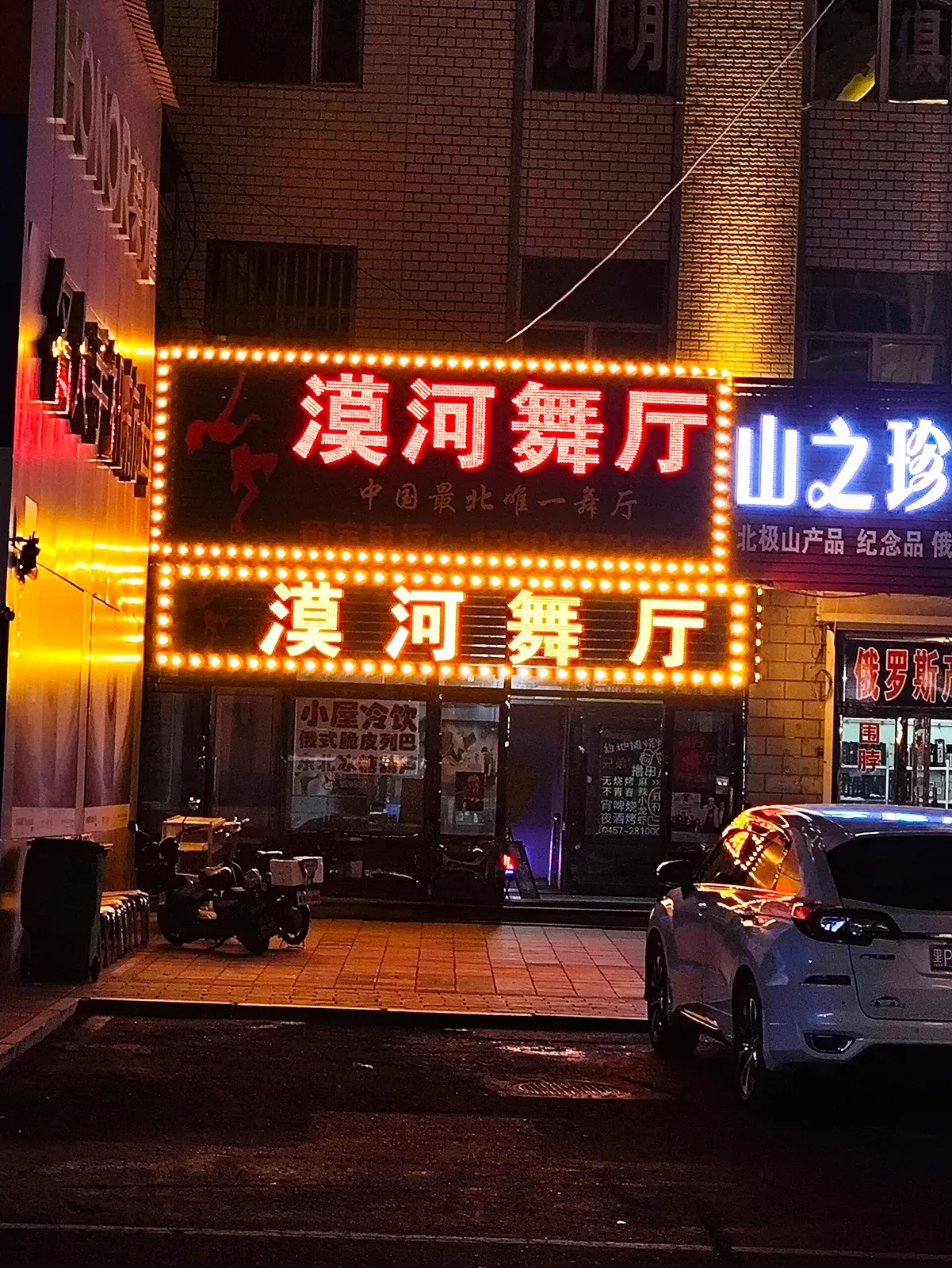
In Xilinji Town, the urban center of Mohe, the Daxing'anling May 6 Fire Memorial Hall showcases the history of fighting the catastrophic 1987 forest fire and reflections on forest conservation. The Mohe Ballroom, destroyed during that fire and later rebuilt, became a widely known cultural landmark after singer Liu Shuang wrote a popular song of the same name, preserving the town's historical memories and emotional stories. According to the seventh national population census, as of midnight on November 1, 2020, Mohe had a permanent resident population of 54,036, maintaining a calm and unhurried pace of life.
Mohe's historical development is tied closely to gold. In April 1887, Qing Dynasty official Li Jinyong organized the Mohe gold mine in Heilongjiang, and after his death, the Qing court permitted a memorial shrine built in Laogou (Rouge Valley). In the reindeer-herding forest areas of Daxing'anling, traditional cuoluozi dwellings are still preserved. These conical wooden frames are covered with birch bark in summer and animal hides in winter, representing the reindeer-hunting culture of the forest. In addition, locally harvested "China Arctic Blueberries" hold a Chinese Geographical Indication certification, serving as the region's best-known wild berry specialty.
Tip: The fire memorial hall and Mohe Ballroom in Xilinji Town are reasonably close together, making them easy to visit on your arrival afternoon or before heading home to take in the town's local history.
How to plan a 3-day, 2-night Mohe itinerary?
Based on the layout of Mohe's main sights, here is a recommended 3-day, 2-night loop route:
Day 1: Arrive in Xilinji Town (picked up at Mohe Gulian Airport or the train station), drive to the Nine Bends and Eighteen Turns of the Emur River to view the winding wetland, then continue north to Wusuli Shoal to visit the geographic northernmost point, staying overnight in Beihong Village.
Day 2: Take in the morning scenery in Beihong Village, visit the reindeer forest to see traditional cuoluozi and learn about reindeer culture, head to Beiji Village in the afternoon to visit the Shenzhou Beiji Monument and surrounding area near Beiji Outpost, and spend the night in Beiji Village.
Day 3: Look across the border river from Beiji Village in the morning, drive back to Xilinji Town to visit the Daxing'anling May 6 Fire Memorial Hall and Mohe Ballroom, taste local Arctic blueberry treats, and head to the airport or train station for departure.
Tip: Roads often have thick snow in winter, so leave plenty of time for driving and transfers; before departure, check our China travel checklist to pack warm clothing and cold-weather essentials.
What common mistakes do first-time visitors make in Mohe?
| Common misconceptions | Facts and recommendations |
|---|---|
| Assuming Beiji Village is China's northernmost point | Beiji Village is at 53°28′01″ N. China's northernmost geographic village is Beihong Village (53°30′00″ N), and the true geographic northernmost point is in the Heilongjiang River channel near Wusuli Shoal in Tuqiang Town (53°33′37″ N). Keep these three distinct when planning. |
| Assuming you will see northern lights on the summer solstice | Over 53 years (1957 to 2010), the Mohe Meteorological Station recorded auroras only 58 times. Short summer nights and bright skies hinder viewing; visit during the solstice primarily for the white nights experience. |
| Assuming Mohe town center and Beiji Village are in the same location | The Mohe municipal government and transport hub are in Xilinji Town, where the airport and train station are located, while Beiji Village is dozens of kilometers away. Confirm your exact lodging base when booking. |
Tip: The main navigation channel of the Heilongjiang River forms the national border. When visiting Wusuli Shoal and border river areas, follow all border regulations strictly and do not cross the river boundary line.
Sources
Mohe City - Wikipedia
Beiji Village - Wikipedia
Daxing'anling Prefecture - Wikipedia
Mohe Gulian Airport - Wikipedia
Mohe Railway Station - Wikipedia
Emur River - Wikipedia
1987 Daxing'anling Wildfire - Wikipedia
Mohe City - Wikipedia
Former Residence of Li Jinyong - Wikipedia
Xilinji Town - Wikipedia
Beiji, Heilongjiang - Wikipedia
Evenki - Wikipedia
Sources verified on November 19, 2026.
Related travel tips
Replies 08:30–22:00 your time · Free to ask.