
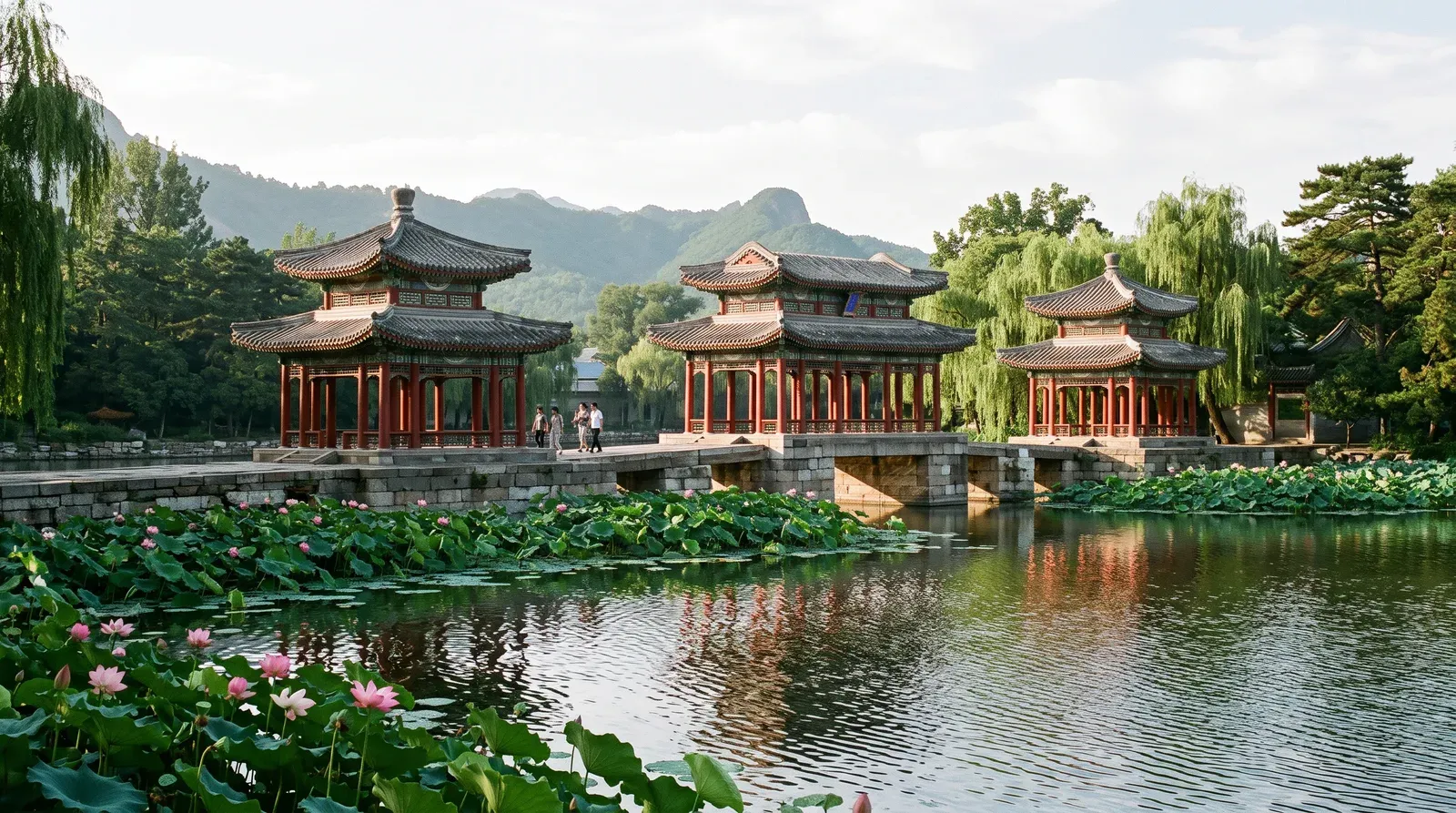
Chengde
Chengde sits in northeastern Hebei Province, right next to Beijing. It is famous for its Qing Dynasty imperial garden and multiethnic historic architecture. The city suits travelers interested in history, culture, and nature, with two to three days usually recommended to explore the main downtown sights.
Key points
A trip to urban Chengde typically takes two to three days, with high-speed trains from Beijing Chaoyang Station reaching Chengde South Station in as little as 52 minutes. During peak season, the Mountain Resort stops ticket sales at 17:00 and closes entry at 17:10, while visitors aged 60 and older enter free with original ID. If you plan to hike Jinshanling Great Wall, add a third day.
Chengde sits in northeastern Hebei Province, right next to Beijing. It is famous for its Qing Dynasty imperial garden and multiethnic historic architecture. The city suits travelers interested in history, culture, and nature, with two to three days usually recommended to explore the main downtown sights.
What is the fastest way from Beijing to Chengde?
Following the opening of the Beijing-Chengde section of the Beijing-Harbin High-Speed Railway, a high-speed train from Beijing Chaoyang Station to Chengde South Station takes as little as 52 minutes. A second-class ticket costs 85 yuan or 95 yuan, making train travel a quick round trip.
Tip: If you plan a same-day return, check the train schedules between both stations in advance and allow enough time for local transfers.
What is the weather like, and when should you visit?
Due to its elevation, urban Chengde is noticeably cooler than Beijing in summer. The average July temperature is 24.2 degrees Celsius, while January averages minus 9.3 degrees Celsius. Summer stays cool around the forested hills and lakes, while winter is fairly cold.
If you want to escape the summer heat, visit the Mountain Resort around July. For winter trips, bring warm clothes to handle the cold.
Which sights in Chengde should you visit?
The Chengde Mountain Resort was built between 1703 and 1792, covering a total area of 611.2 hectares. It is the largest existing imperial garden and temple complex in China. The resort features seventy-two scenic spots named by the Kangxi and Qianlong emperors, and the Misty Rain Tower (Yanyu Lou) in the lake area is modeled after the one at South Lake in Jiaxing, Zhejiang. Tip: You can enter through the Lizheng Gate, Dehui Gate, or Wanshuyuan Gate on the south side, and exit via Chengguan Gate or Wanshuyuan Gate.
Built in 1755, Puning Temple is one of the twelve imperial temples of the Outer Eight Temples. Its architecture blends Han, Mongolian, and Tibetan styles. Inside the Dacheng Pavilion stands the world's tallest wooden statue of the Thousand-Armed and Thousand-Eyed Avalokitesvara Bodhisattva (Guanyin). Tip: These temples sit on the hills east and north of the resort, making it easy to visit neighboring temples together.
Chengde's Qingchui Peak is a classic Danxia landform, named for its upright rock pillar that looks like an inverted wooden mallet. Tip: The ticket office beside the cable car at Qingchuifeng National Forest Park stops selling tickets at 16:30, so start your hike early.
| Place | Description | Route Overview |
|---|---|---|
| Jinshanling Great Wall | Great Wall section on the border of Luanping and Miyun (total length 10.5 km, with 5 passes, 67 watchtowers, and 3 beacon towers) | Runs from Gubeikou in the west to Wangjing Tower in the east, with direct tourist buses to Beijing Dongzhimen on weekends from April to October |
What do first-time visitors often overlook?
During peak season, Lizheng Gate and Dehui Gate at the Mountain Resort open at 07:00, stop ticket sales at 17:00, and close entry at 17:10. Operating hours at the Potala Palace scenic area and Qingchui Peak differ from the resort, so times vary across sites.
The Potala Palace scenic area opens at 08:00 and closes at 18:00, with last entry at 17:10. The ticket booth beside the cable car at Qingchuifeng National Forest Park stops selling tickets at 16:30. Because entry cutoffs at both sites are earlier than park closing times, allow plenty of transit time before tickets close.
Tip: Seniors aged 60 and older receive free admission at the Mountain Resort and surrounding temples with an original ID card, passport, or travel permit. If you are traveling with seniors, remember to carry original documents.
How should you pace your Chengde trip?
On day one, explore the palace area and lakes inside the Mountain Resort. On the morning of day two, visit Puning Temple, then head to Qingchui Peak in the afternoon to see the Danxia rock formation.
If you have a third day, you can hike from Gubeikou to Jinshanling Great Wall. The route spans about 10 kilometers and usually takes 4 to 5 hours at a moderate pace. To catch the last train back to Beijing from Gubeikou Station at 5:20 PM after the hike, take a taxi from the wall exit for about 30 minutes (fares run about 80 to 100 yuan, agreed in advance). Plan to leave the Great Wall by 4:00 PM at the latest.
Tip: From April to October on weekends, a direct tourist bus returns from Jinshanling to Beijing Dongzhimen Station at 4:00 PM for 50 yuan without advance booking. If you only have two days over the weekend, focus on the resort and temples in town.
Sources
Jinshanling Great Wall - Wikipedia
Mountain Resort and its Outlying Temples, Chengde - UNESCO World Heritage Centre
Chengde Mountain Resort - Wikipedia
Chengde - Wikipedia
Mountain Resort and Outlying Temples Ticket Prices and Discount Policies - Tencent News
Chengde Municipal People's Government: Mountain Resort and Potala Palace Area Resume Peak-Season Hours
Sources verified on November 17, 2026.
Related travel tips
Replies 08:30–22:00 your time · Free to ask.