
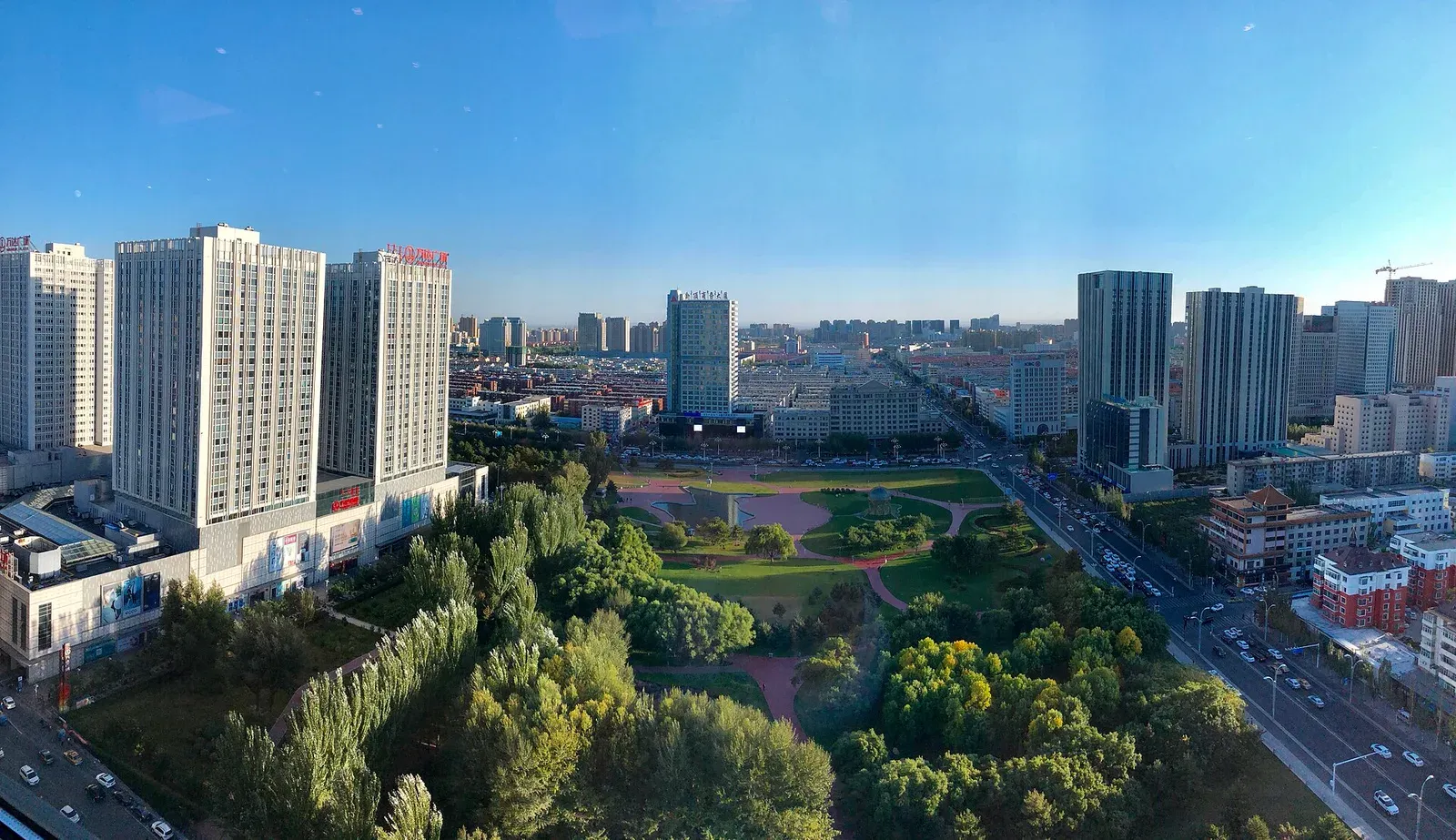
Baotou
Photo: Nickm57 / Wikimedia Commons, CC BY-SA 4.0
Baotou City sits on the northern edge of the Hetao Plain, bordered by the Yellow River to the south and the China-Mongolia border to the north. As a key industrial and cultural center in the Inner Mongolia Autonomous Region, it is known as the "Deer City" and the "Steel City on the Grassland." Here you will find an expansive urban grassland alongside Inner Mongolia's largest Tibetan Buddhist monastery and a Ming-dynasty fortress temple, making the region a rewarding stop if you enjoy historic monuments and frontier landscapes. Travelers usually plan 2 to 3 days to explore the area.
Key points
A trip to Baotou typically takes 2 to 3 days to explore highlights like Wudangzhao, located 54 km from the city center, and Meidaizhao with its 1,650 square meters of Ming-dynasty murals. Because these two monasteries are far apart, plan them on separate days. While summers are cool and mild, pack a lightweight windbreaker for wide day-to-night temperature swings.
Baotou City sits on the northern edge of the Hetao Plain, bordered by the Yellow River to the south and the China-Mongolia border to the north. As a key industrial and cultural center in the Inner Mongolia Autonomous Region, it is known as the "Deer City" and the "Steel City on the Grassland." Here you will find an expansive urban grassland alongside Inner Mongolia's largest Tibetan Buddhist monastery and a Ming-dynasty fortress temple, making the region a rewarding stop if you enjoy historic monuments and frontier landscapes. Travelers usually plan 2 to 3 days to explore the area.
| Item | Details |
|---|---|
| Location | Front edge of the Hetao Plain, bordering the Yellow River to the south and the China-Mongolia border to the north |
| Climate | Semi-arid continental temperate monsoon climate, annual average temperature 8.5°C |
| Precipitation | Average annual precipitation of about 300 mm, with over half falling in July and August |
| Major transit hubs | Donghe International Airport, central railway station on the Beijing-Baotou Passenger Dedicated Line |
| Intercity transit | Regional EMUs in the network connecting Hohhot, Ordos, and Ulanqab support "Railway e-Card" QR code boarding |
| Recommended stay | 2 to 3 days |
When should you plan your trip?
The city has a semi-arid continental temperate monsoon climate with 2,806 hours of annual sunshine and an average annual temperature of 8.5°C. Winters are severe, while summers are cool and mild.
Annual precipitation averages around 300 mm, with more than half falling in July and August. Due to the arid climate and elevation, temperatures fluctuate widely between day and night.
If you prefer cooler and milder weather, summer is a suitable time to visit. Bringing a lightweight windbreaker is recommended to handle the day-to-night temperature swings.
How do you get to Baotou and travel around?
For air travel, Donghe International Airport (IATA: BAV), originally built in 1934 and formerly called Erliban Airport, is the primary gateway to the area. Terminal 2 opened on December 29, 2014. In October 2024, the Civil Aviation Administration of China approved its official renaming to Baotou Donghe International Airport.
For rail travel, the Beijing-Baotou Passenger Dedicated Line runs 659.9 km from Beijing North Railway Station to the city's main terminal, opening to full service on December 30, 2019. If you plan to travel by high-speed rail, you can refer to our guide to taking high-speed trains in China.
Tip: On regional EMU trains connecting Hohhot, Ordos, and Ulanqab with the local stations, you can use the "Railway e-Card" to scan and board directly, without printing paper tickets before entering or leaving the stations.
What are the main sights to see in the region?
Wudangzhao is located in Shiguai District, 54 km northeast of the city center. It is the largest Tibetan Buddhist monastery in Inner Mongolia, the region's only purely Tibetan-style architectural complex, and a Major Historical and Cultural Site Protected at the National Level, often honored as "Eastern Tibet." Built along the hillsides, the monastery complex contains 2,538 rooms across six main halls (including the Sugchin Hall), three Living Buddha residences, and the Suborgai Mausoleum, all designed as Tibetan flat-roofed square buildings. Inside Sugchin Hall, murals depict the Four Heavenly Kings, 64 pillars support the hall, and over 1,000 people can gather for prayer.
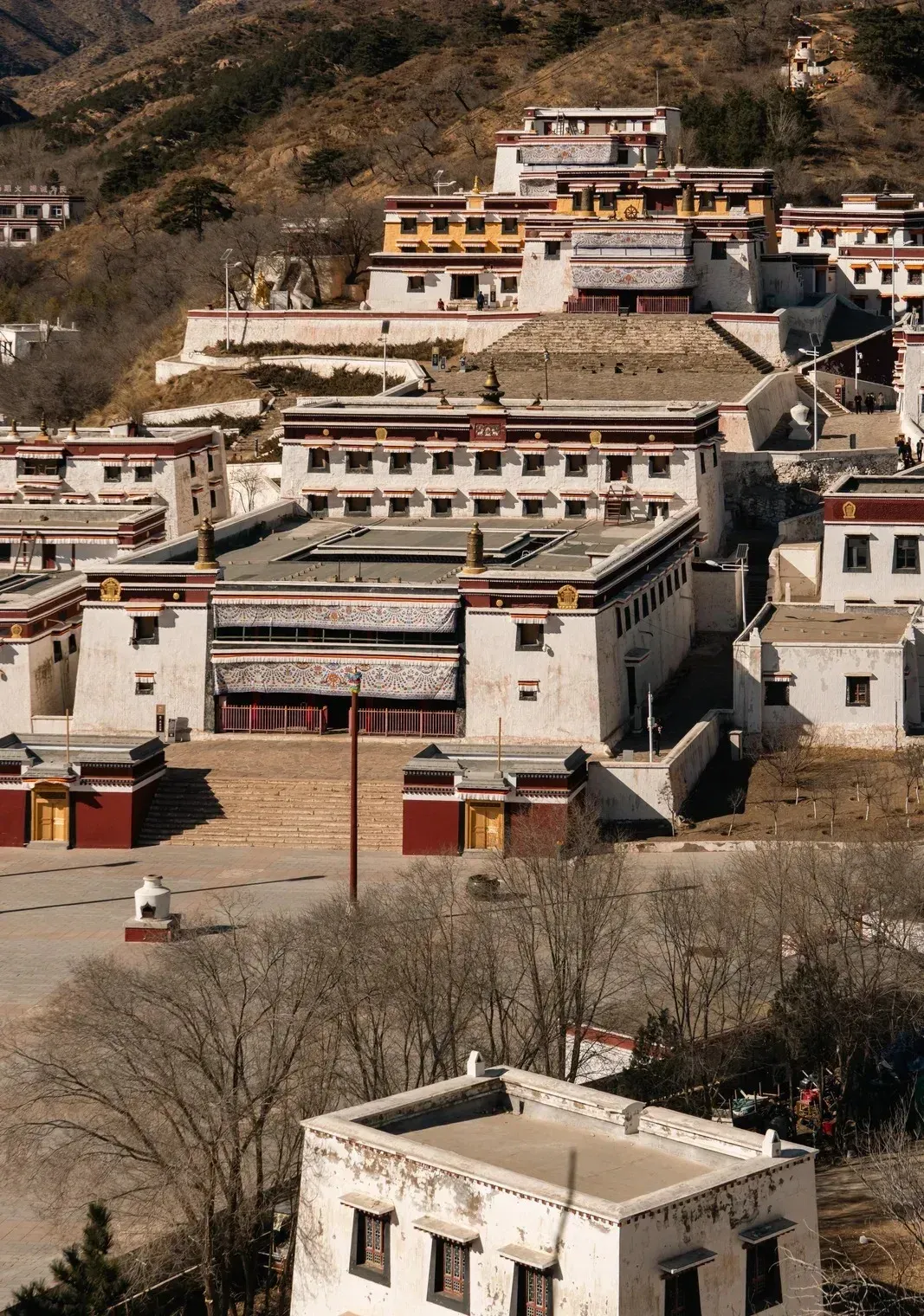
Meidaizhao is located in Tumd Right Banner. Originally built during the Ming dynasty by Altan Khan, leader of the Tümed Mongols, it is a Major Historical and Cultural Site Protected at the National Level that blends Han, Mongolian, and Tibetan architectural styles. Surrounded by square earthen ramparts, it features a distinctive layout integrating a fortified city with a monastery where secular residents and religious figures lived side by side. It preserves 1,650 square meters of Ming-dynasty murals depicting Mongolian historical life, religious gatherings, and traditional Ming- and Qing-dynasty Mongolian attire, earning it a reputation as a "museum of murals."
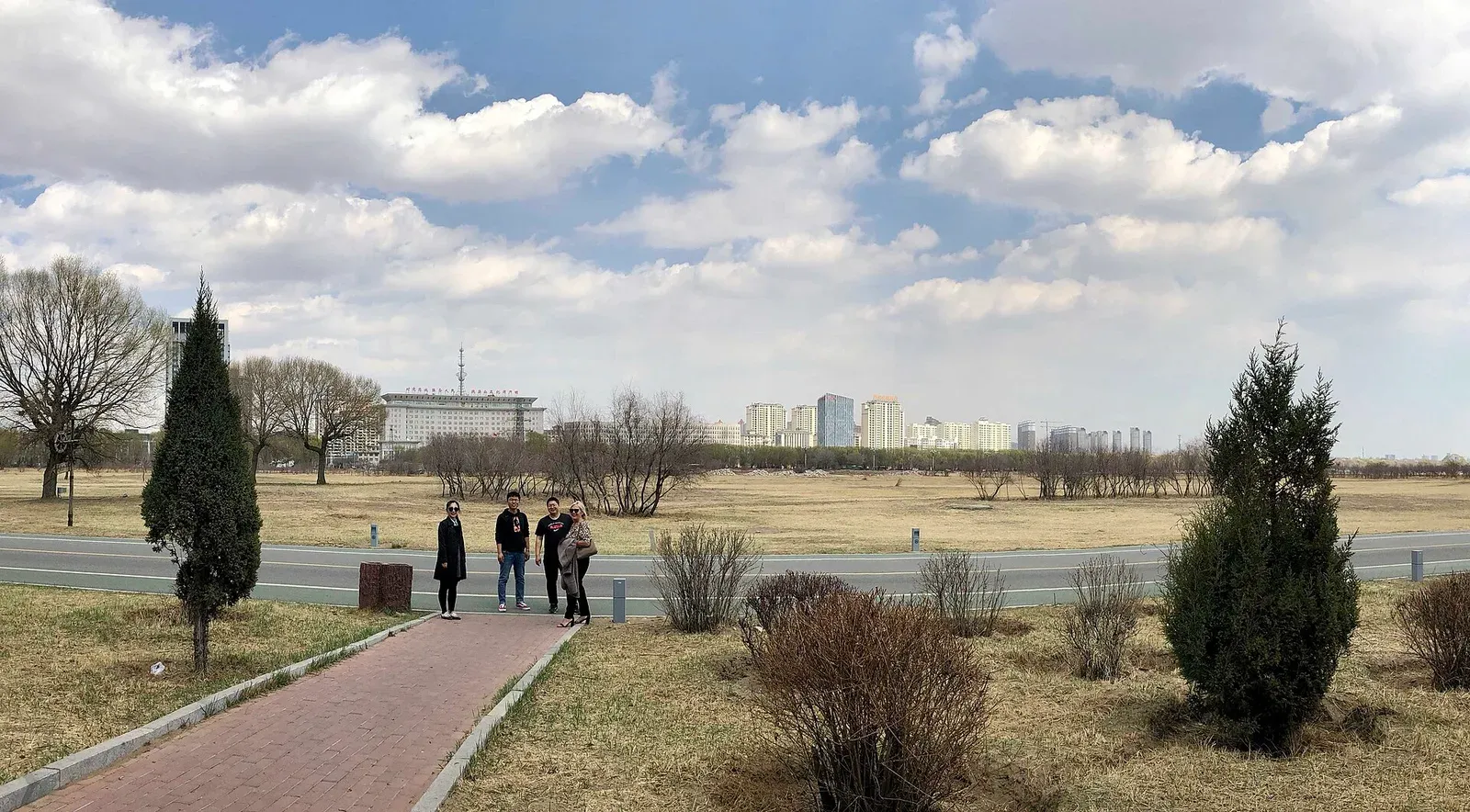
Saihantala Urban Grassland, located in Qingshan District, covers an area of 5.5 square km. It is home to 30 species of wild animals and birds and attracts about 2 million visitors each year. As an expansive natural grassland located right inside the city, it allows you to experience northern prairie scenery and greenery without leaving the urban area.
| Attraction | Official Scenic Area Classification |
|---|---|
| Baogang Industrial Tourism Zone | One of the officially recommended key scenic areas |
| Northern Weapons City | One of the officially recommended key scenic areas |
| Nanhai Wetland Scenic Area | One of the officially recommended key scenic areas |
| Meiligeng Natural Ecological Scenic Area | One of the officially recommended key scenic areas |
What local specialties should you try?
Mutton hot pot (shuan yangrou) is a quintessential local specialty, featuring paper-thin mutton slices swirled briefly in simmering broth. Well-known hot pot chains such as Little Sheep and Xiao Wei Yang both originated in the city. Sitting down at a local restaurant to enjoy sliced mutton is a classic way to experience the area's food culture.
In Mongolian culinary tradition, meat dishes are called "red food" (ulan ide). The staple of daily life is "hand-stripped meat" (shouparou, or boiled mutton eaten with the hands), which has nourished grassland herders for centuries. To welcome honored guests or celebrate major occasions, a whole roast lamb is prepared. A sheep with skin weighing about 40 jin is carefully selected and roasted whole with seasonings, then served kneeling on a square platter with a golden-red color, crisp skin, and tender meat.
For flour-based dishes, the signature breakfast is "shaomei" (steamed dumplings, also called shaomai). Made with a hot-water dough wrapper crimped into flower-like folds at the top, they are filled with seasoned meat and steamed. Other local specialties include warming sheep offal soup, iron-pot braised noodles with ribs, sheep shank bones, wild onion (shacong) steamed buns, and fried broomcorn millet cakes. For local dining customs, you can check our guide to dining etiquette and ordering food in China.
Practical tips for your first visit
Every year on the 13th day of the fifth lunar month, Meidaizhao holds a week-long traditional temple fair alongside the Sanniangzi Tourism and Cultural Festival. The event features trade markets and regional folk opera performances such as Errentai. If your visit falls during this period, you can take in the local opera and bustling gatherings.
Tip: Wudangzhao is in Shiguai District, while Meidaizhao sits in Tumd Right Banner. Because these two major historic sites are located in different banners and districts quite far apart, plan them on separate days to avoid rushing back and forth in a single day.
Sources
City Overview - Wikipedia (Chinese)
City Entry - Wikipedia
Wudangzhao - Wikipedia
Meidaizhao - Wikipedia
City Impressions - Municipal People's Government
Donghe International Airport - Wikipedia
Beijing-Baotou Passenger Dedicated Line - Wikipedia
Sources verified on November 18, 2026.
Related travel tips
Replies 08:30–22:00 your time · Free to ask.