
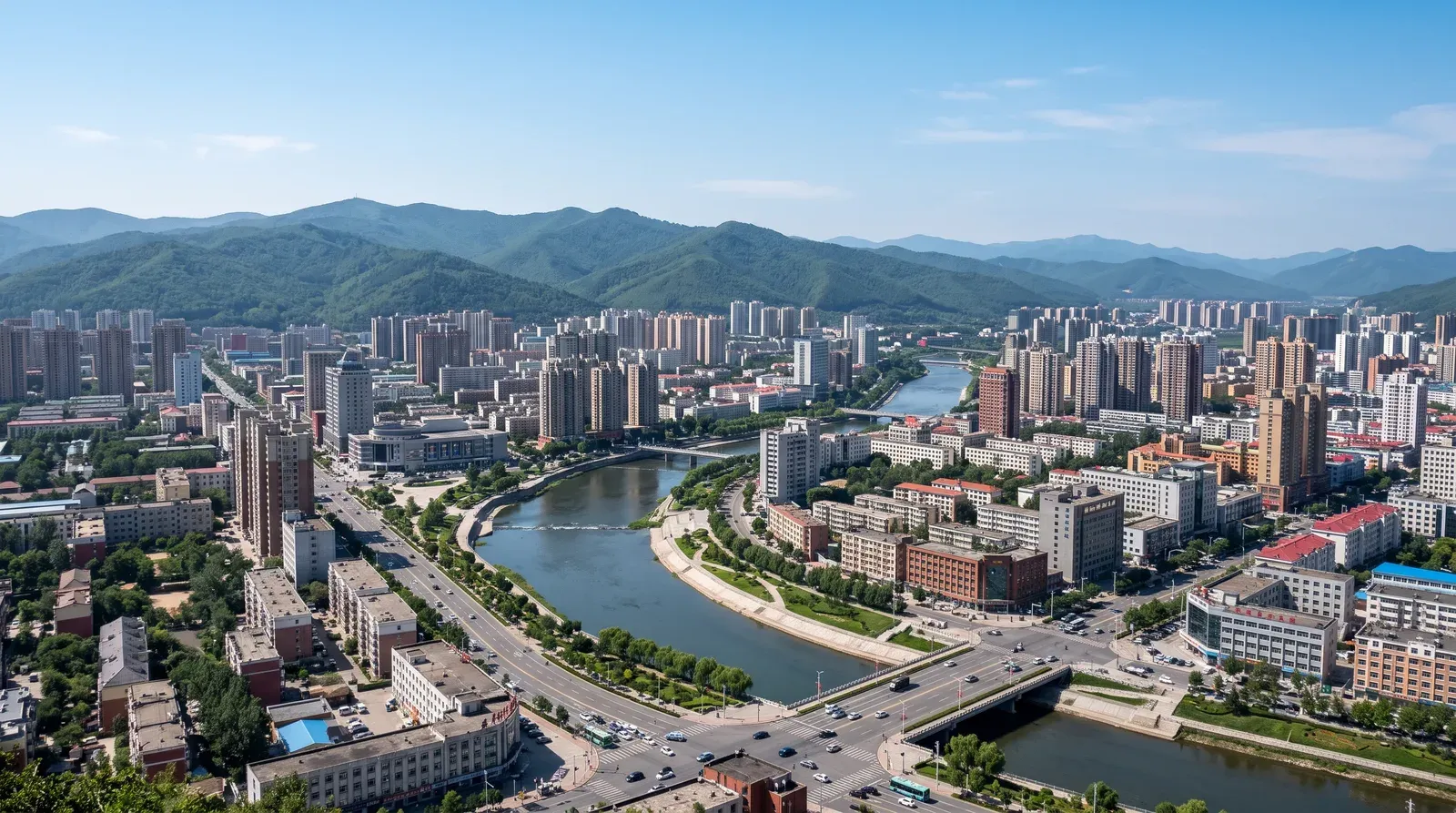
Baishan
Baishan, formerly named Hunjiang, is located in southeastern Jilin Province on the western side of Changbai Mountain, facing North Korea across the Yalu River to the south. The area brings together the forests, Tianchi (Heaven Lake) on Changbai's western slopes, and fluffy powder snow, along with Yalu River border culture and historic heritage. It suits travelers who enjoy nature, ski getaways, and exploring border regions. A visit to the main sights of Baishan usually takes 3 to 4 days.
Key points
Visiting the core sights of Baishan usually requires 3 to 4 days, covering the western slope of Changbai Mountain, Mount Wangtiane, and the Yalu River border. The winter snow season lasts 6 months from November to April with snow depths over 1 meter. Since regional attractions are widely dispersed, having your travel designer arrange private transport with your driver is recommended.
Baishan, formerly named Hunjiang, is located in southeastern Jilin Province on the western side of Changbai Mountain, facing North Korea across the Yalu River to the south. The area brings together the forests, Tianchi (Heaven Lake) on Changbai's western slopes, and fluffy powder snow, along with Yalu River border culture and historic heritage. It suits travelers who enjoy nature, ski getaways, and exploring border regions. A visit to the main sights of Baishan usually takes 3 to 4 days.
What Are the Main Places to Visit in Baishan?
In Fusong County, you can visit the western slope of Changbai Mountain to see volcanic landscapes and look down upon Tianchi, the deepest lake in China, with a water surface elevation of 2,257 meters and an average depth of 213.43 meters. Fusong County also has more than 440 years of ginseng cultivation history, ranking first in China for both planting area and output, earning its reputation as the home of ginseng. To the south, Changbai Korean Autonomous County is the only Korean autonomous county in China, facing North Korea across the river to the southeast along a 260.5-kilometer border. Mount Wangtiane, with its main peak reaching an elevation of 2,051.4 meters, is the second highest peak in Northeast China. Northwest of the county seat stands the well-preserved Lingguang Pagoda, a 13-meter-tall, five-story square brick pagoda built during the Bohai Kingdom period of the Tang Dynasty. In addition, Jingyu County was originally named Mengjiang County and was renamed in 1946 to honor the anti-Japanese hero Yang Jingyu, preserving significant historic memory.
When Should You Visit Baishan?
Baishan has distinct seasons, offering cool summers and quality powder snow in winter. Taking Linjiang, a county-level city administered by Baishan, as an example, it has a temperate monsoon climate with an annual average temperature of 5.3°C. The July average temperature is 22.4°C, bringing lush green forests and pleasant weather, while the January average temperature is -15.6°C. In winter, Wanda Changbaishan International Resort enjoys a snow season that lasts 6 months from November to April of the following year. Snow depths reach over 1 meter with fluffy powder snow. With ski slopes and hot spring hotels, it works well for a snow vacation. If you plan a combined winter tour in Northeast China, you can also consult our Harbin Winter Travel Guide for broader regional routes.
How to Get to and Around Baishan?
You can reach Baishan by air or high-speed rail depending on where you depart. For flights, Baishan Changbaishan Airport in Songjianghe Town, Fusong County, is mainland China's first forest tourism airport. It is 18 kilometers from the west slope gate of Changbai Mountain and 97 kilometers from the south scenic area gate in Changbai County; you can read our China Airports Guide for boarding details. For rail, the Shenbai High-Speed Railway includes Baishan East, Jiangyuan East, and Changbaishan West stations within the city area, and you can consult our China High-Speed Rail Guide for train tips. Baishan administers Hunjiang District, Jiangyuan District, Fusong County, Jingyu County, Changbai County, and Linjiang City. Since attractions are spread apart, having your travel designer arrange a private car with your driver helps keep your trip smooth and unhurried.
How Should You Pace a Trip to Baishan?
Because distances between sights in Baishan are wide, a relaxed and moderate pace is recommended. A 3 to 4 day plan usually works well. Spend the first two days around Fusong County, focusing on the western slope of Changbai Mountain and the resort area to see the panoramic view of Tianchi, enjoy powder skiing and hot springs, and experience the forest ginseng culture. For the next two days, your driver can take you to Changbai Korean Autonomous County to explore Mount Wangtiane, the second highest peak in Northeast China, visit the Tang Dynasty Lingguang Pagoda, and take in the Yalu River border scenery. You can also explore our China Destination Guides and let your travel designer arrange transfers tailored to the season and your travel pace.
Sources
Jilin Province - Wikipedia
Changbai Mountain - Wikipedia
Baishan (Jilin) - Wikipedia
Changbaishan Airport - Wikipedia
Fusong County - Wikipedia
Mount Wangtiane - Wikipedia
Changbai Korean Autonomous County - Wikipedia
Lingguang Pagoda - Wikipedia
Jingyu County - Wikipedia
Linjiang, Jilin - Wikipedia
Shenyang-Changbai High-Speed Railway - Wikipedia
Sources verified on November 17, 2026.
Related travel tips
Replies 08:30–22:00 your time · Free to ask.