
Vegan in China: Dining Tips and Restaurant Guide
Key points
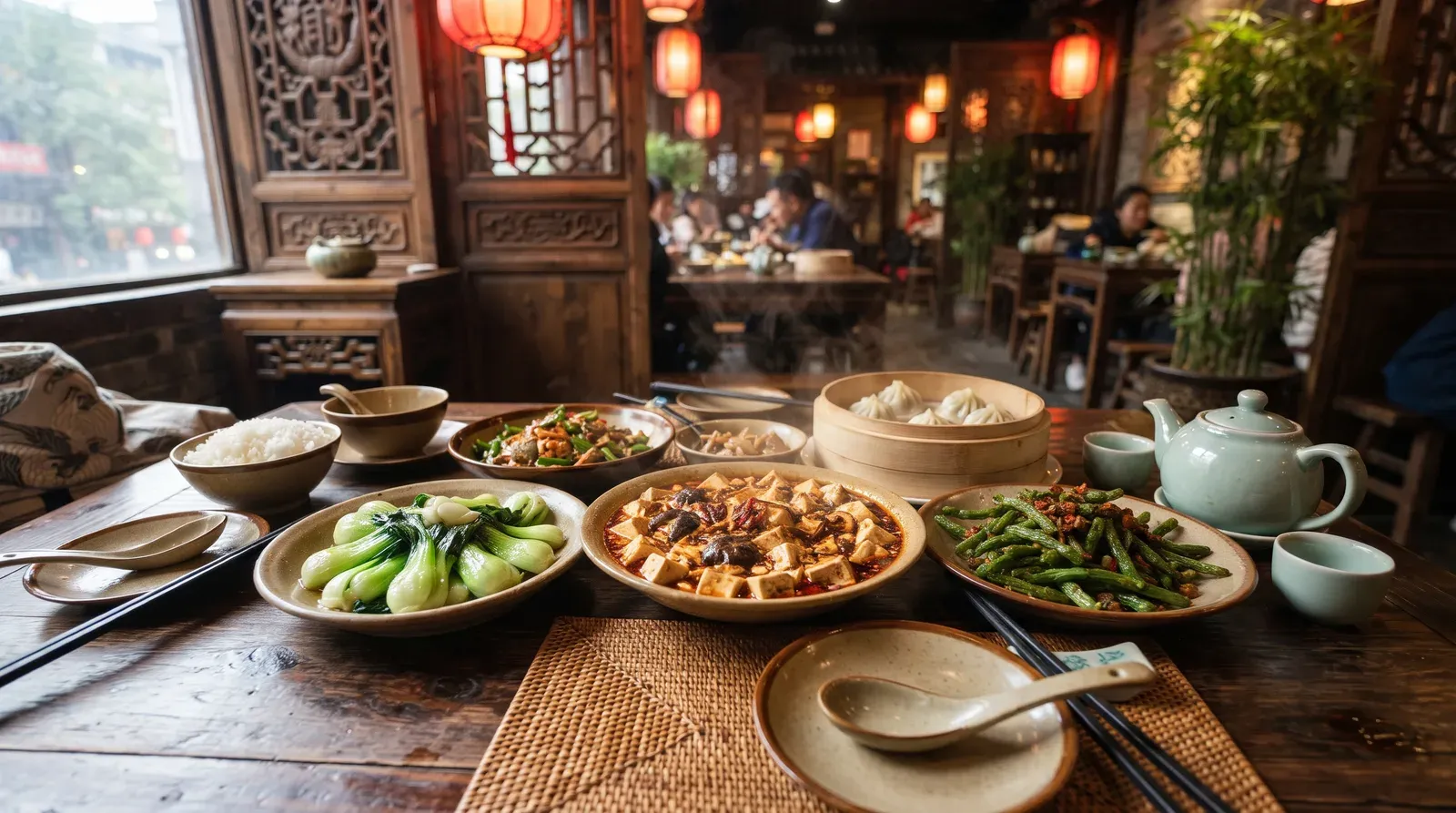
As a vegan in China, you can find over 1,820 vegetarian and vegan-friendly restaurants nationwide, with more than 50 spots within a 10-kilometer radius of downtown Beijing and Shanghai. When ordering at standard eateries, clarify that you are strictly vegan to avoid bone broth and lard, and remember to order station meals on 12306 at least 60 minutes before departure.
Eating as a vegan in China is entirely manageable. The global directory HappyCow lists over 1,820 vegetarian and vegan-friendly spots across mainland China, while the domestic app Shushi Leida lists more than 2,000 nationwide. When you dine at regular restaurants, explaining your dietary restrictions or picking specific regional cuisines can also get you plant-based dishes.
Why saying "I eat vegetarian" can lead to hidden meat in standard restaurants
In everyday Chinese restaurants, "su" (vegetarian) is often understood as containing no visible meat chunks. Cooks may still use bone broth for soups or lard for stir-frying vegetable dishes and noodles. In Chinese, "chunsu" (pure vegetarian) specifically refers to a strict vegan diet with zero animal ingredients. Vegetarian dumplings and wontons at standard spots often include eggs or minced pork to enhance flavor, while soup dumplings (xiaolongbao) usually contain pork skin gelatin or broth.
Tip: Do not just say you eat vegetarian. Tell the server clearly that you are strictly vegan and do not eat meat, eggs, seafood, bone broths, or animal fats.
Which hidden animal ingredients are easy to miss in everyday dishes?
Broths for noodle soups, wontons, and malatang are mostly simmered from animal bones or seasoned with chicken powder. Authentic Sichuan spicy hot pot bases commonly use beef tallow. Cold dishes, jellied tofu (doufunao), and noodle soups are often topped with dried shrimp, pork floss, minced meat, or egg shreds. Sauces and stir-fries can also conceal lard, minced pork sauce, or oyster sauce. Traditional flaky pastries like mooncakes and sweetheart cakes are often layered with lard, while modern pastries may contain butter and other dairy products.
Not every dish with tofu in its name is vegan. Egg tofu is set with egg whites, and fish tofu contains fish paste. See the table below for a full breakdown of hidden ingredients and ordering tips.
| Dish Category | Common Hidden Animal Ingredients | How to Order and Choose |
|---|---|---|
| Noodle soups and wontons | Bone broth, chicken powder, or lard | Check if the soup base contains meat broth and request vegetable oil |
| Sichuan spicy hot pot | Red oil broth often uses beef tallow | Skip beef tallow bases and choose a vegetable oil base |
| Cold dishes and jellied tofu | Dried shrimp, pork floss, minced meat, or oyster sauce | Ask to omit meat toppings, dried shrimp, and oyster sauce |
| Egg tofu and fish tofu | Egg whites or minced fish paste | Avoid these processed items and choose traditional bean curd |
| Traditional Chinese flaky pastries | Lard shortening or butter and dairy | Check the fat and dairy ingredients with staff before buying |
Which regional cuisines and cities are easiest for a vegan in China?
Beijing, Shanghai, Guangzhou, and Shenzhen have the highest concentration of dedicated vegetarian and vegan restaurants. Among regular non-vegetarian eateries, dishes from southwestern cuisines, such as Sichuan, Guizhou, and Yunnan, are easier to adapt into vegan versions.
If you order at places that cook with lard, tell the staff in Chinese: "Bu yao zhu you, qing yong zhi wu you" (No lard, please use vegetable oil). At regular eateries across southwestern China, dishes are generally easier for kitchen staff to adjust on the spot to a plant-based version.
After looking at regular restaurants, here is where to find dedicated vegetarian venues and Buddhist temple food.
Where to find temple dining and modern plant-based restaurants
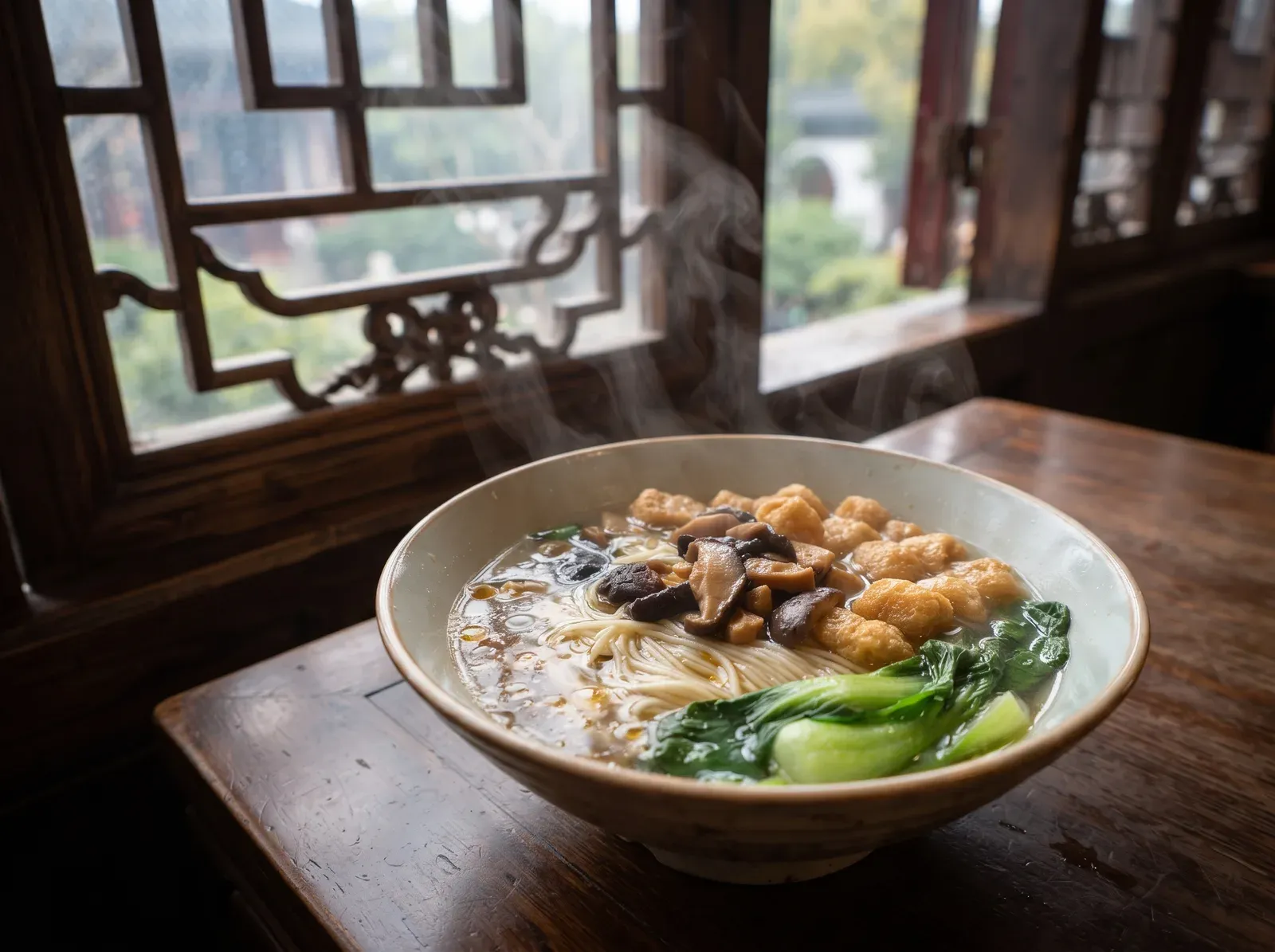
For an authentic temple meal, try an affordable temple noodle shop. Noodle houses at famous temples like Jiming Temple in Nanjing serve plant-based bowls such as vegetarian chicken noodles, double-mushroom noodles, and assorted vegetable noodles. In addition to excluding meat and seafood, Chinese Han Buddhist temple food avoids five pungent vegetables: scallions, garlic, chives, onions, and Chinese allium.
China's history of mock meats dates back to the Song dynasty, when the first dedicated vegetarian restaurants opened, cookbooks appeared, and faux chicken rolls made from tofu skin were invented. Today, within a 10-kilometer radius of downtown Beijing and downtown Shanghai, each city has over 50 vegetarian and vegan restaurants.
Tip: The China Vegan Society recommends that vegan travelers who do not speak Chinese carry an explanation card: "Hello, I am vegan. I do not eat meat, seafood, eggs, dairy, or any animal products. What dishes do you have that suit me?"
How to get vegan meals on China high-speed trains
When riding high-speed trains in China, travelers can use the 12306 app to pre-order vegetarian takeaway from stations along the route or buy the train's own plant-based meal sets. Station meal deliveries must be ordered at least 60 minutes before the train departs the delivery station, and staff will bring the meal right to your seat after departure.
Sources
Vegetarianism and veganism in China - Wikipedia
China Railway 12306
Sources verified on Nov 17, 2026
FAQ
How can I order vegan dishes at regular restaurants without speaking Chinese?
You can show an explanation card recommended by the China Vegan Society: "Hello, I am vegan. I do not eat meat, seafood, eggs, dairy, or any animal products. What dishes do you have that suit me?"
What dietary rules apply to Chinese Han Buddhist temple food?
In addition to strictly excluding meat and seafood, Chinese Han Buddhist temple food forbids five pungent vegetables: scallions, garlic, chives, onions, and Chinese allium.
How can I avoid animal fat in stir-fries at regular restaurants?
When ordering at restaurants accustomed to cooking with lard, you can say directly in Chinese: "Bu yao zhu you, qing yong zhi wu you" (No lard, please use vegetable oil).
How do I pre-order station vegetarian food when traveling on high-speed trains?
Travelers can pre-order station takeaway via the 12306 app. Delivery orders must be placed at least 60 minutes before the train leaves the delivery station, and staff will bring the meal to your seat after departure.