
Using Chinese Toilets: Tips for Foreign Travelers

Key points
Public restrooms across China are completely free to use and predominantly feature flush ceramic squat toilets, where used paper must go into stall trash bins to avoid plumbing clogs. Most Chinese toilets do not supply toilet paper inside stalls, so carry pocket tissues. Travelers unable to squat can find Western seated toilets in accessible restrooms across scenic areas and malls.
Public toilets in China are widespread and completely free to the public. According to field surveys, there are at least 12 public restrooms within a 500-meter radius around an urban university campus. While Western seated toilets have become common in star-rated hotels and modern commercial buildings in major cities, public restrooms at many scenic spots still feature flush ceramic squat toilets. Foreign visitors traveling in China need to understand how to use Chinese toilets, and bring their own pocket tissues and personal hand-cleaning supplies.
| Facility or feature | Current situation and travel advice |
|---|---|
| Toilet type | Most public venues in cities mainly have flush ceramic squat toilets |
| Toilet paper availability | Rarely provided inside stalls; always carry pocket tissues on outings |
| Disposal of used paper | Throw into the stall trash bin or wastebasket; never flush down the toilet to avoid clogging pipes |
| Handwashing facilities | Running water sinks are standard; hand soap and paper towels are rarely provided |
| Seated toilet needs | If you cannot use a squat toilet, look for accessible restrooms in malls or scenic areas, which come standard with seated toilets |
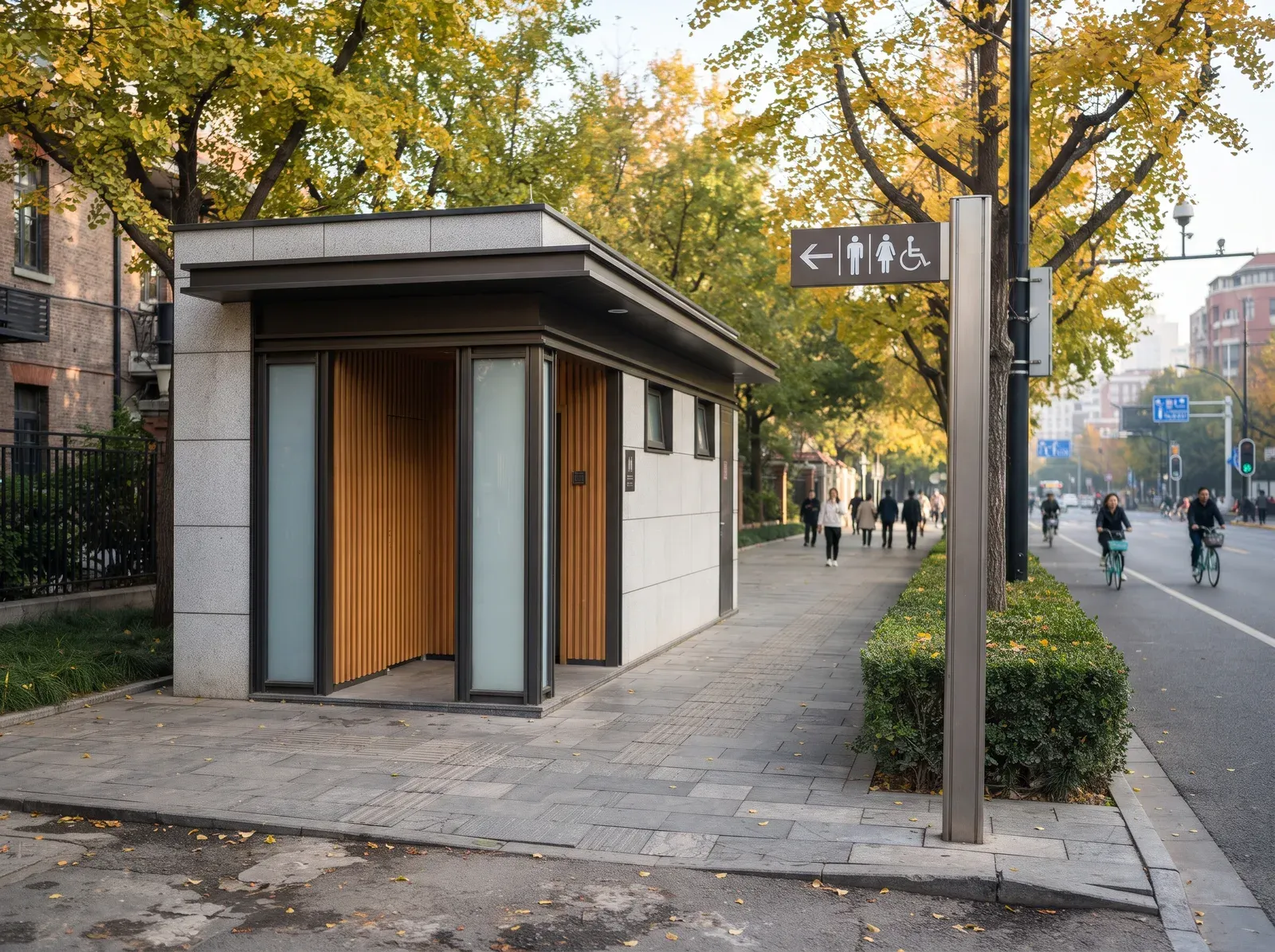
Why do Chinese public restrooms rely so heavily on squat toilets?
Most public restrooms in China use squat toilets primarily because they cost less to build and maintain, and they are widely considered more hygienic since your body never touches a toilet seat. In busy scenic spots with heavy foot traffic, people spend significantly less time on a squat toilet than on a seated one, which speeds up lines considerably.
Medical and physiological research shows that squatting relaxes the puborectalis muscle and straightens the anorectal angle, promoting faster and smoother bowel movements.
Modern seated toilets are commonly called matong in Chinese. For a long time, traditional homes in southern Chinese cities lacked private plumbing and relied on wooden commodes that residents emptied into neighborhood public latrines and washed each morning. That historical name stuck and remains the standard Chinese term for modern seated toilets today.
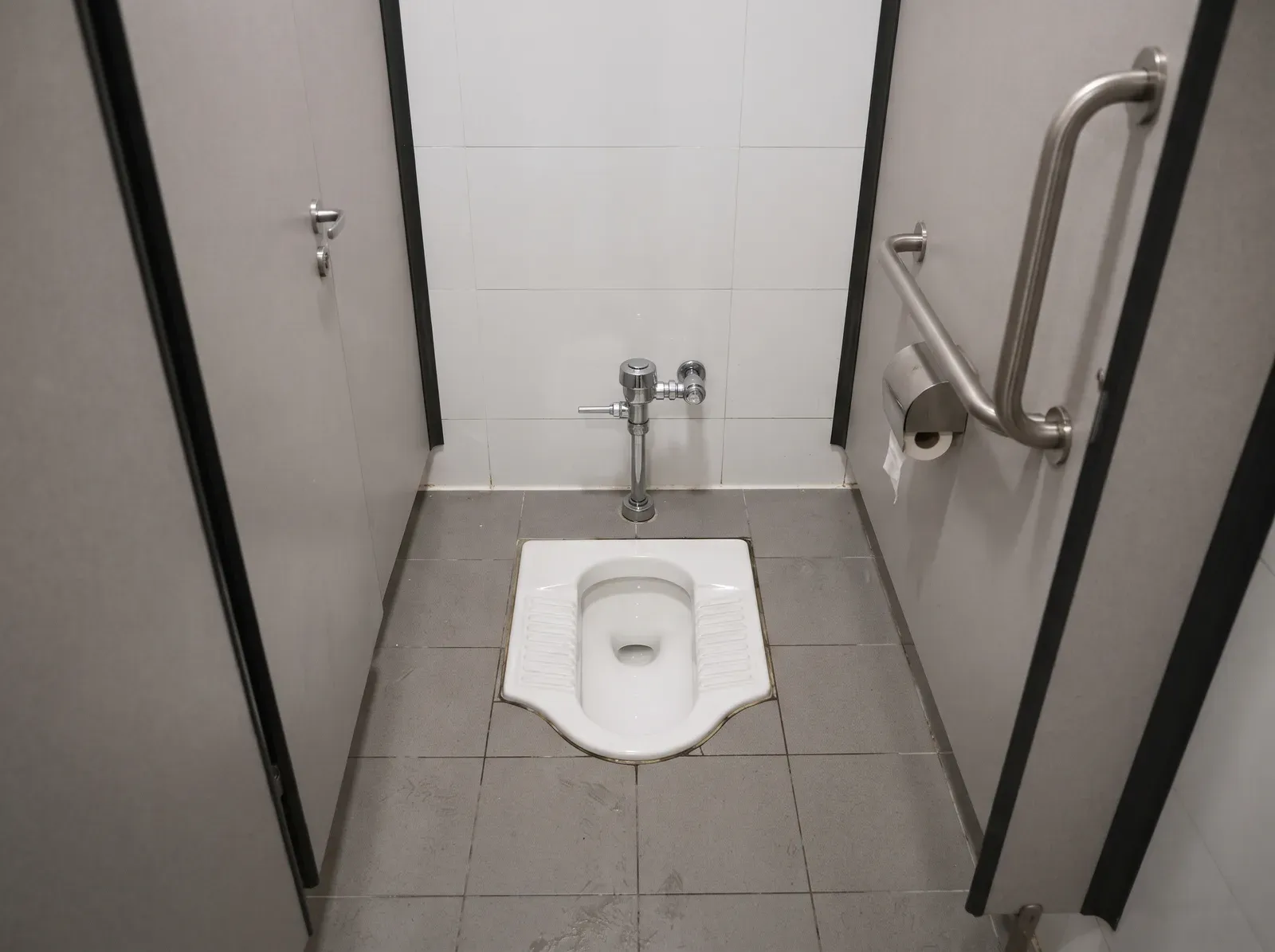
Which way should you face when using a squat toilet?
Your orientation depends on the shape of the fixture. When using a Chinese toilet with a hemispherical hood, place your feet flat on the grooved footrests on either side and face the hood. When using a plain squat pit without a hood, you usually squat facing the stall door.
Lower your clothes to your knees and squat as far forward as comfortable over the basin to prevent splashes along the back rim. On the inside of many stall doors, right at eye level when squatting, you will often find graphic etiquette guides showing proper posture alongside clear no-smoking signs.
Tip: Empty your back pockets or hold your hand over them before squatting down, so your phone or valuables do not slide out into the pit.
Why does used toilet paper go into the trash bin?
When using public restrooms in China, place used paper into the wastebasket inside the stall rather than flushing it down the toilet. Public restroom stalls throughout China provide a small trash bin in the corner for used tissue to prevent older or delicate plumbing pipes from clogging.
Most public restroom stalls in China do not provide toilet paper. Even when available, dispensers are usually located in the common area outside the stalls or require scanning a QR code with a phone, so travelers should always carry pocket tissue packs. Sinks with running water are standard, but soap, paper towels, and hand dryers are rarely supplied, so bringing hand sanitizer or wet wipes is recommended.
Tip: You can buy small packs of pocket tissue at convenience stores or supermarkets in China for about 1 RMB by asking the clerk for 'zhijin' (纸巾).
How can you find a clean restroom while out and about?
When traveling in China, you can locate public restrooms by searching the Chinese characters 'cesuo' (厕所) on mobile map apps, and street signs along sidewalks frequently point toward nearby facilities around 100 meters away. According to 2024 on-site visits, public restrooms across Chinese urban areas consistently provide handwashing sinks and private stalls, with flush ceramic squat toilets being the predominant fixture.
Cleanliness levels vary considerably by venue. High-end shopping malls in major Chinese cities, such as Deji Plaza in Nanjing, feature lavish public restrooms equipped with hand soap, toilet paper, lounge seating, nursery rooms, and first-aid stations. Inside ticket gates at tourist attractions and museums, restrooms benefit from controlled visitor flow, making their upkeep and hygiene noticeably better than the free public facilities outside the entrance gates.
Traditional courtyard homes in older neighborhoods like Beijing's hutongs lack private plumbing, so local residents rely on neighborhood public latrines every day, making it normal for visitors to cross paths with neighbors in pajamas. Modern public restrooms throughout China feature private stalls with locking doors, but older facilities with low dividing walls and no doors can still be encountered in some historic alleyways or rural towns.
| Venue type | Facilities and cleanliness |
|---|---|
| High-end shopping malls (such as Deji Plaza in Nanjing) | Provide hand soap, toilet paper, lounge seating, nursery rooms, and first-aid rooms |
| 3-star and 4-star-plus hotel guest rooms | Equipped with clean Western seated toilets, with generally good hygiene and maintenance standards |
| Inside ticket gates at tourist attractions or museums | Visitor traffic is relatively controlled; cleaning and sanitary conditions are generally better than free public restrooms outside |
| Dining venues | Western restaurants mostly have Western seated toilets; ordinary Chinese restaurants mostly have squat toilets; higher-end Chinese restaurants usually keep at least one stall marked with a seated toilet |
| Restrooms in older neighborhoods or towns | Some older public restrooms still have low partition walls without stall doors; hutong public toilets are commonly shared daily by nearby residents |
Where can you find seated toilets if you cannot squat?
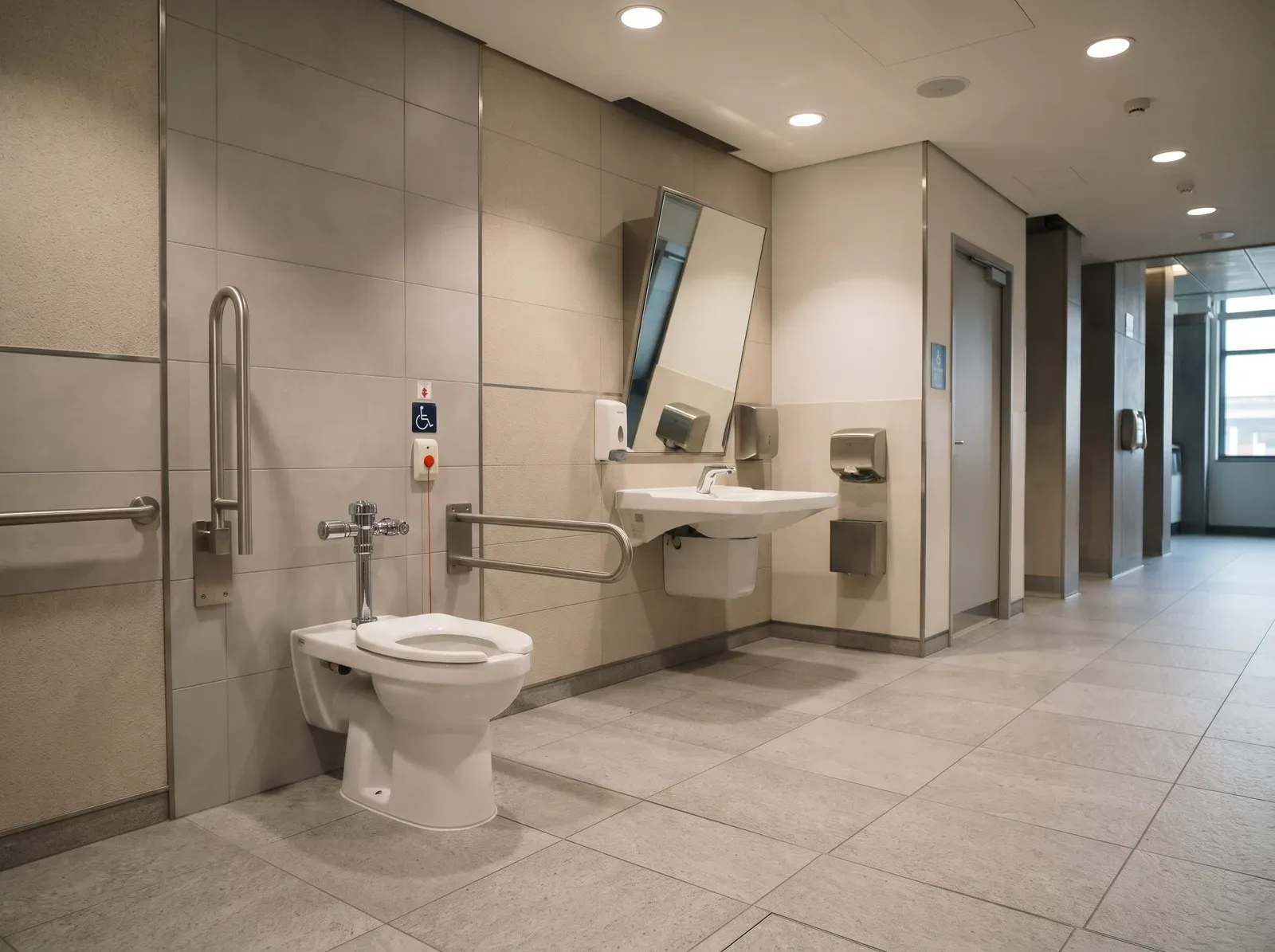
If you cannot use a squat toilet, look for accessible restrooms in shopping malls or scenic attractions. Accessible public restrooms offer wider doorway entrances, ample turning space, lowered sinks, and grab bars, and they come standard with Western seated toilets, making them suitable for seniors, travelers with limited mobility, and wheelchair users.
Among restaurants in China, Western restaurants generally feature seated toilets, while casual Chinese eateries usually have squat stalls. Higher-end Chinese restaurants typically reserve at least one stall with a seated toilet, clearly labeled on the door. Guest rooms in Chinese hotels rated three stars and above are furnished with clean Western seated toilets, maintaining consistently good hygiene and maintenance standards.
Expats living in China recommend packing antibacterial wipes to disinfect toilet seats and carrying hand sanitizer to handle restrooms that lack paper or soap. Whenever you need to use a public seated toilet, wipe down the seat with an antibacterial wipe beforehand.
What are the most common restroom mistakes for first-timers?
Most public restrooms in China are separated by gender and marked with clear pictograms, but it helps to learn the two Chinese characters for male (男) and female (女) in case you encounter basic signs without symbols.
Above urinals in men's public restrooms in China, you will often spot a courtesy reminder reading 'One small step forward, one giant step for civility' (向前一小步,文明一大步).
Tip: Have pocket tissues ready before entering any public restroom, and throw used toilet paper into the stall trash bin.
Sources
Squat toilet - Wikipedia
Seats, Squats, and Leaves: A Brief History of Chinese Toilets
A Tour of Chinese Loos
Public toilet - Wikipedia
Sources verified as of 17 November 2026
FAQ
Do star-rated hotel rooms in China have Western seated toilets?
Yes, guest rooms in three-star, four-star, and higher-tier hotels in China are equipped with clean Western seated toilets that maintain good hygiene and upkeep standards.
Why is there a trash bin inside Chinese public restroom stalls?
Stalls in Chinese public restrooms have trash bins in the corner for used toilet paper to prevent older or delicate plumbing pipes from clogging, so you should never flush paper down the toilet.
How can travelers who cannot squat use the restroom at scenic spots?
Visitors who cannot use squat toilets can look for accessible restrooms in shopping malls or scenic areas. Accessible restrooms come standard with Western seated toilets, safety grab bars, lowered sinks, and wider stall doors.
What items should you carry in a personal restroom kit?
Foreign travelers should carry pocket packs of tissues, hand sanitizer, and antibacterial wipes. Tissues cover stalls that lack paper, while antibacterial wipes can be used to disinfect public toilet seats.