
What China Plug to Use: Outlet Types and Adapters
Key points
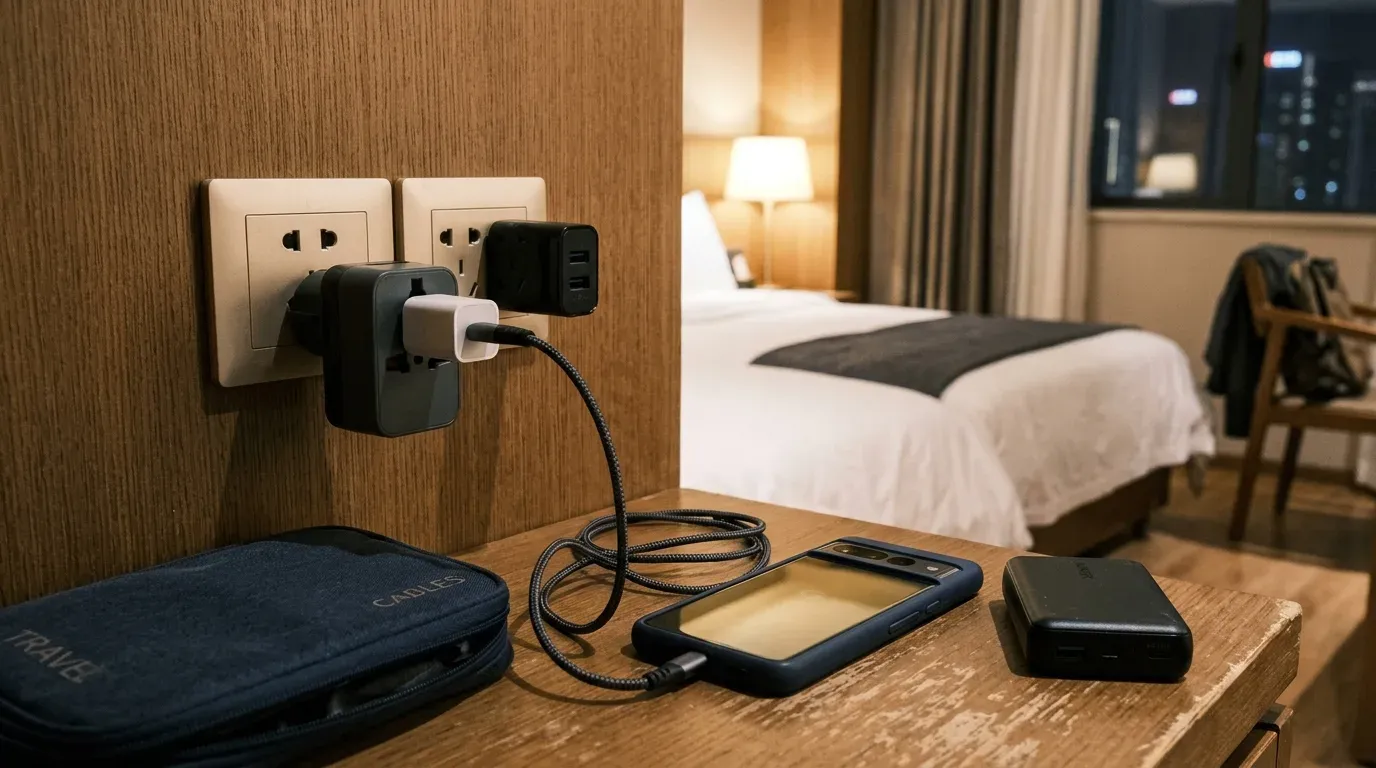
Standard wall outlets in mainland China supply 220 volts through two-pin slots and Type I three-pin sockets, which directly fit equal-width flat two-prong plugs and Australian three-prong plugs. Polarized Type A plugs and European round plugs require a China plug adapter. While dual-voltage devices rated 100 to 240 volts require no transformer, single-voltage 110-volt appliances need one rated 2 to 3 times their wattage.
Whether you need an adapter for travel to China depends on your device plug shape and voltage rating. Mainland China supplies electricity at 220 volts and an alternating current frequency of 50 hertz. Most modern phone, laptop, and camera chargers support a wide dual-voltage range from 100 volts to 240 volts. In most cases, you only need to confirm if your plug fits into a china power outlet, without needing an extra transformer.
What Are the Specifications of China Outlets?
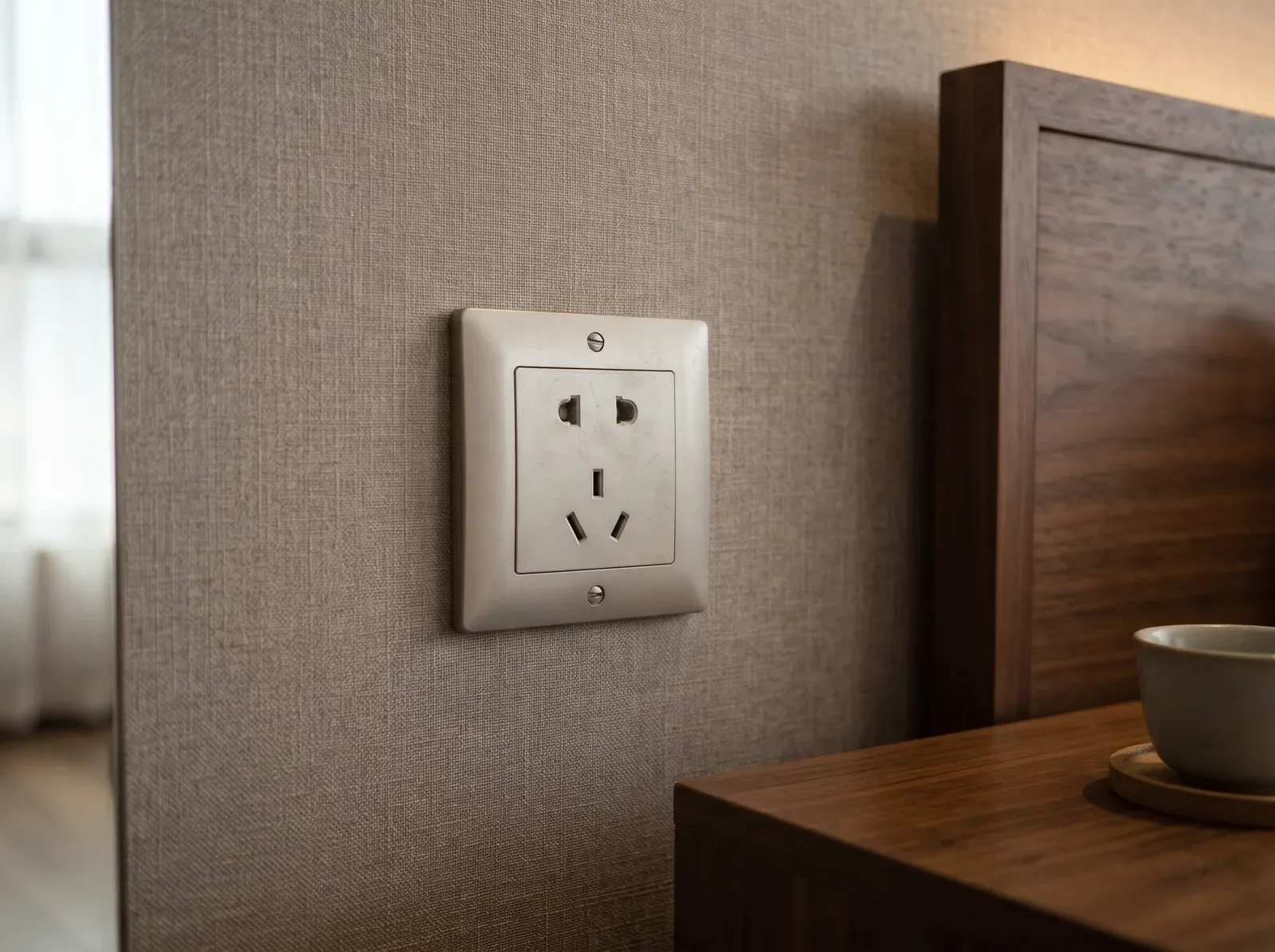
A standard China power outlet usually features a five-hole combination panel with two holes on top and three below. Under Chinese National Standard GB 1002, a regular domestic Chinese power plug and socket carries a rated current of 10 amperes and a rated voltage of 250 volts, while high-power appliances such as air conditioners use 16 amperes. The upper part of the socket has ungrounded two-pin slots, and the lower part has grounded three-pin slots designed for angled flat three-prong plugs (Type I).
Since the implementation of national standard GB/T 1002-2021, Type C sockets no longer meet Chinese national standards, and manufacturers have stopped producing and selling Type C and hybrid A/C sockets, though hybrid A/C sockets still exist in older buildings. In addition, national standard GB 1002-2024 adds a mandatory requirement for partial insulation sleeves on plug pins, which will formally take effect in 2027.
Can Foreign Plugs Fit Directly into Sockets in China?
Compatibility with sockets in China varies depending on the country or region of the plug. The upper part of a standard wall socket is an ungrounded two-prong slot that accepts two-flat-pin plugs (Type A) common in North America and Japan, and some older sockets can also accept European two-round-pin plugs (Type C). The lower three-prong slot is dedicated to angled flat three-prong plugs (Type I).
Two-hole sockets in China are unpolarized with slots of equal width, so North American Type A plugs with polarized designs (one wide blade and one narrow blade) cannot plug directly into standard Chinese two-hole sockets. Although Australian and New Zealand Type I three-prong flat plugs have pins that are 1 millimeter shorter than the Chinese standard and the socket orientation is inverted, they physically fit directly into three-hole sockets in mainland China. However, mainland Type I sockets with ground safety shutters cannot directly accept Australian ungrounded two-prong Type I plugs.
Argentine Type I plugs look similar to Chinese and Australian plugs, but their live and neutral wiring polarity is reversed compared to the Chinese standard. While older Chinese two-hole sockets can technically receive French Type E and German Type F round-pin plugs with some effort, they cannot establish a ground connection and exposed pins pose an electric shock hazard. In addition, seats on Hong Kong high-speed trains provide both British Type G and mainland Chinese Type I power sockets to let passengers from both regions charge their devices.
| Plug type | Common countries or regions | Can it plug directly into Chinese sockets? | Is a plug adapter needed? |
|---|---|---|---|
| Two-pin flat plug (Type A, equal-width pins) | North America, Japan | Plugs directly into the upper two-hole slot | No |
| Two-pin flat plug (Type A, polarized wide and narrow pins) | North America | No, Chinese sockets have equal-width holes | Yes |
| Three-pin flat plug (Type I, with ground pin) | Australia, New Zealand | Physically plugs directly into the lower three-hole slot | No |
| Two-pin angled flat plug (Type I, without ground pin) | Australia | No, cannot plug directly into sockets with safety shutters | Yes |
| Three-pin flat plug (Type I, reversed wiring polarity) | Argentina | Similar appearance but opposite polarity | Recommended to use an adapter |
| Two-pin slim round plug (Type C) | Parts of Europe | Usable in some older sockets, discontinued under new national standards | Recommended to prepare an adapter |
| Thick round-pin plug (Type E, Type F) | France, Germany | Can fit into older sockets with effort but cannot ground | Yes |
Do You Need a Transformer or a Plug Adapter for China?
A plug adapter only changes the physical shape of the pins to fit the socket and does not alter the voltage. Single-voltage 110-volt appliances must use an additional transformer on China's 220-volt electrical grid. Most modern mobile phone, laptop, and camera chargers support a wide dual-voltage input of 100 volts to 240 volts, so charging them in China usually requires only a plug adapter and no transformer.
High-power heating appliances such as hair dryers and curling irons (usually rated at 600 watts to 1200 watts) that do not support 220 volts can easily overheat, suffer damage, or cause a fire if plugged directly into the Chinese power grid, requiring a transformer rated at 2 to 3 times their wattage. For high-power single-voltage American appliances, it is advisable to bring a dual-voltage travel model that supports 220 volts or simply use the hair dryer provided in your Chinese hotel room to avoid carrying a heavy transformer.
Sources
Mains electricity by country - Wikipedia
AC power plugs and sockets - Wikipedia
AC power plugs and sockets - Wikipedia
Sources verified on November 8, 2026
FAQ
Why can't some two-prong chargers bought in North America plug into Chinese sockets?
Standard Chinese two-hole sockets are unpolarized and have slots of equal width. North American Type A plugs with polarized designs (one wide pin and one narrow pin) cannot fit directly into standard Chinese two-hole sockets and require a plug adapter.
Can Australian three-prong plugs be used directly in mainland China?
Yes. Although Australian and New Zealand Type I flat three-prong plugs have pins that are 1 millimeter shorter than Chinese standards and socket orientation is inverted, they physically fit directly into three-hole sockets in mainland China. However, ungrounded two-prong Type I plugs from Australia cannot plug directly into mainland sockets fitted with ground safety shutters.
Can I charge devices with a British plug on Hong Kong high-speed trains?
Yes. Hong Kong high-speed trains feature both British Type G and mainland Chinese Type I power sockets under the seats, making it convenient for cross-border passengers to charge their electronic devices.
Can I directly use a single-voltage American hair dryer in China?
No. If the appliance only supports 110 volts, plugging it directly into China's 220-volt grid can cause overheating, damage, or fire, and it requires a transformer rated at 2 to 3 times its wattage. It is advisable to use the hair dryer provided in your Chinese hotel room instead.