
China High Speed Train Map: Top Routes and Booking Guide
Key points
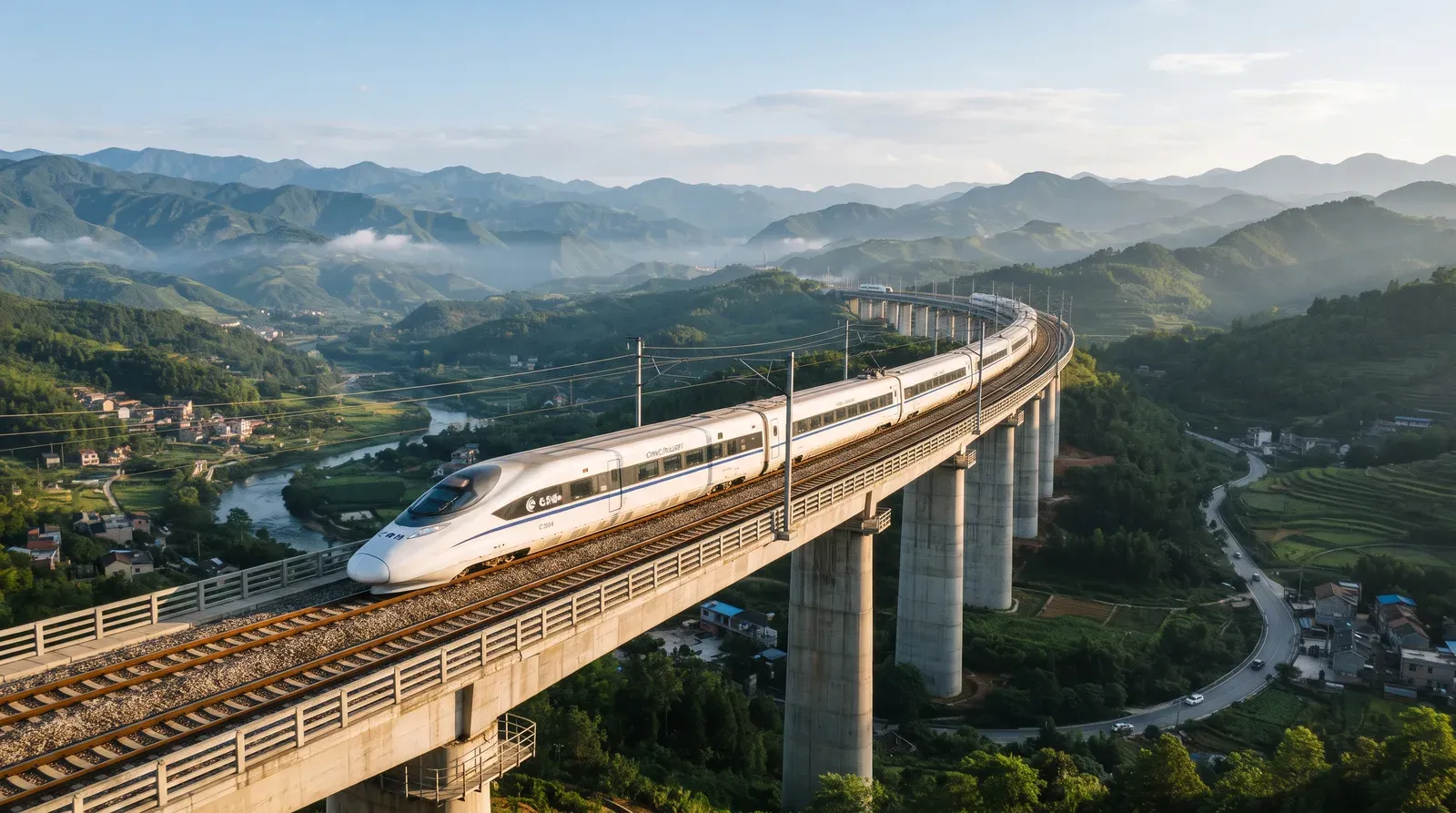
A China high speed train map covers over 50,000 kilometers, with express journeys taking about 4 hours 28 minutes from Beijing to Shanghai and 7 hours 17 minutes to Guangzhou. Foreign visitors can book tickets on 12306 using a passport, but tickets allow only 1 change with no refunds after departure, and carry-on luggage cannot exceed 130 cm or 20 kg.
By the end of 2025, China's high-speed rail network exceeded 50,000 kilometers, ranking first in the world in operating mileage. Across the national network, rail services running over 200 km/h cover 31 provincial-level administrative regions including Hong Kong, serving 96% of cities with a population above 500,000. Currently, only the Macao Special Administrative Region and the Tibet Autonomous Region have no rail operations exceeding 200 km/h. Checking a China high speed train map helps you quickly understand the express passenger corridors and transfer hubs between major regional centers.
| Metric or Topic | Official Figures and Rules |
|---|---|
| Total high-speed rail mileage | Exceeded 50,000 km by the end of 2025, ranking first globally in operating mileage |
| Annual high-speed rail passenger trips | Reached 3.272 billion in 2024 (75.9% of national rail passenger traffic) |
| Train categories | G trains (dedicated high-speed lines up to about 350 km/h), D trains (200 to 250 km/h), C trains (short-distance intercity) |
| Valid travel credentials | Valid ID document used at booking (passports can be used by international travelers on 12306) |
| Free baggage allowance on EMUs | Sum of length, width, and height per item within 130 cm, weight up to 20 kg per item |
Reading Trunk Lines and Train Types on the China High Speed Train Map
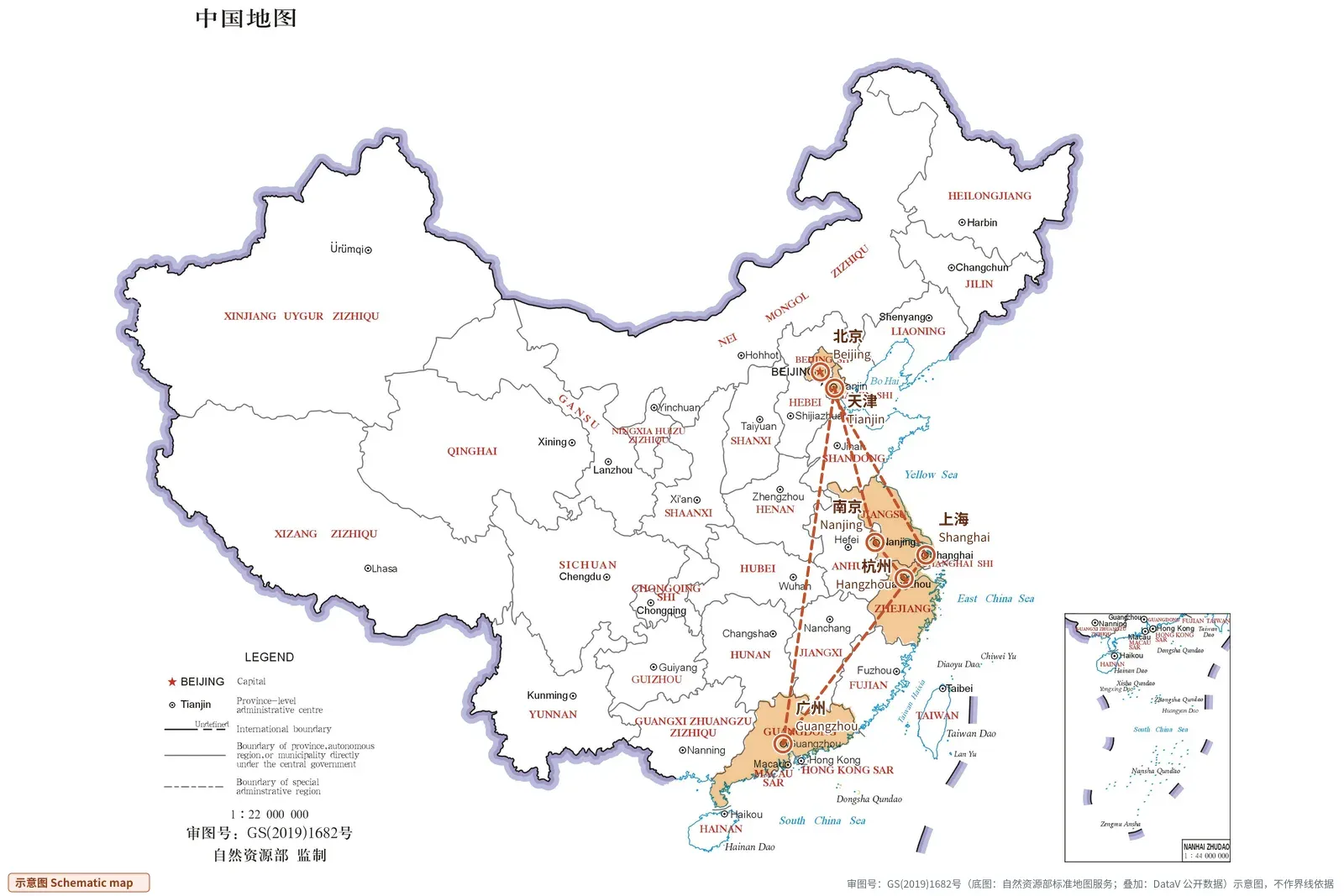
According to the Mid-to-Long-Term Railway Network Plan approved by the State Council in July 2016, the national rail network planned the Eight Vertical and Eight Horizontal high-speed corridors. High-speed passenger lines designed for 300 to 380 km/h include the Beijing-Tianjin Intercity, Beijing-Shanghai, Beijing-Harbin, Beijing-Guangzhou, Shanghai-Kunming, Ningbo-Guangzhou, and Guangzhou-Shenzhen-Hong Kong express lines. Trains are categorized by letter: G trains run at maximum speeds of around 350 km/h; D trains generally run at 200 to 250 km/h, with some operating as overnight sleeper trains; C trains serve short-distance intercity trips.
If you want shorter travel times on long-distance interprovincial trunk routes, you can prioritize G-category high-speed trains. If you are traveling short distances between neighboring cities, you can choose intercity C trains with shorter station-to-station runs, such as the Beijing-Tianjin Intercity, which takes about 30 minutes end to end.
Popular Intercity High-Speed Routes: Travel Times and Fares
The Beijing-Shanghai and Beijing-Guangzhou lines carry the heaviest north-south passenger traffic in China. On these routes, the fastest train between Beijing South and Shanghai Hongqiao takes about 4 hours and 28 minutes, while the fastest service from Beijing West to Guangzhou South takes 7 hours and 17 minutes. For shorter intercity trips, the fastest non-stop run on the Shanghai-Hangzhou line from Hangzhou East to Shanghai Hongqiao takes 45 minutes, and direct express services on the Shanghai-Nanjing Intercity run from Shanghai Station to Nanjing Station in 99 minutes.
| Route Section | Route Distance and Stations | Fastest Travel Time | Reference Fares by Class and Boarding Method | Service Frequency and Features |
|---|---|---|---|---|
| Beijing-Shanghai High-Speed Rail (Beijing South to Shanghai Hongqiao) | 1,318 km total length | About 4 hours 28 minutes | Second class about 553 to 673 RMB, first class about 969 to 1,076 RMB | Over 90 trains run between 7:00 and 18:00 daily |
| Beijing-Guangzhou High-Speed Rail (Beijing West to Guangzhou South) | 2,118 km total length | 7 hours 17 minutes | Second class 1,033 RMB, first class 1,653 RMB, business class 3,250 RMB | Train G79 has the shortest travel time (June 2024 data) |
| Shanghai-Hangzhou High-Speed Rail (Hangzhou East to Shanghai Hongqiao) | Hangzhou East to Shanghai Hongqiao section | 45 minutes | Second class 87 RMB, first class 140 RMB | Floating fares applied (announced starting June 15, 2024), with no intermediate stops |
| Shanghai-Nanjing Intercity (Shanghai Station to Nanjing Station) | 33 stations along the line | 99 minutes | Board by scanning Railway e-Card without buying tickets in advance | Direct express trains G7001 to G7030 stop only at Changzhou, Wuxi, and Suzhou |
Tip: Since July 28, 2020, passengers taking local trains on the Shanghai-Nanjing Intercity line can scan the Railway e-Card to board without buying a ticket in advance.
What to Know When Boarding at Beijing South and Shanghai Hongqiao Stations
Beijing South Station and Shanghai Hongqiao Station are key departure hubs at either end of the Beijing-Shanghai line, and both mega-stations connect directly to urban rail transit underground. Beijing South Station serves as the departure point for the Beijing-Shanghai and Beijing-Tianjin lines, with 13 platforms and 24 tracks. The station uses an upper-in, lower-out layout, and its underground arrivals floor links directly to Beijing Subway Lines 4 and 14. Shanghai Hongqiao Station has 16 platforms and 30 tracks, serving routes including Beijing-Shanghai, Shanghai-Nanjing, Shanghai-Kunming, Shanghai-Suzhou-Nantong, and Shanghai-Suzhou-Huzhou high-speed lines.
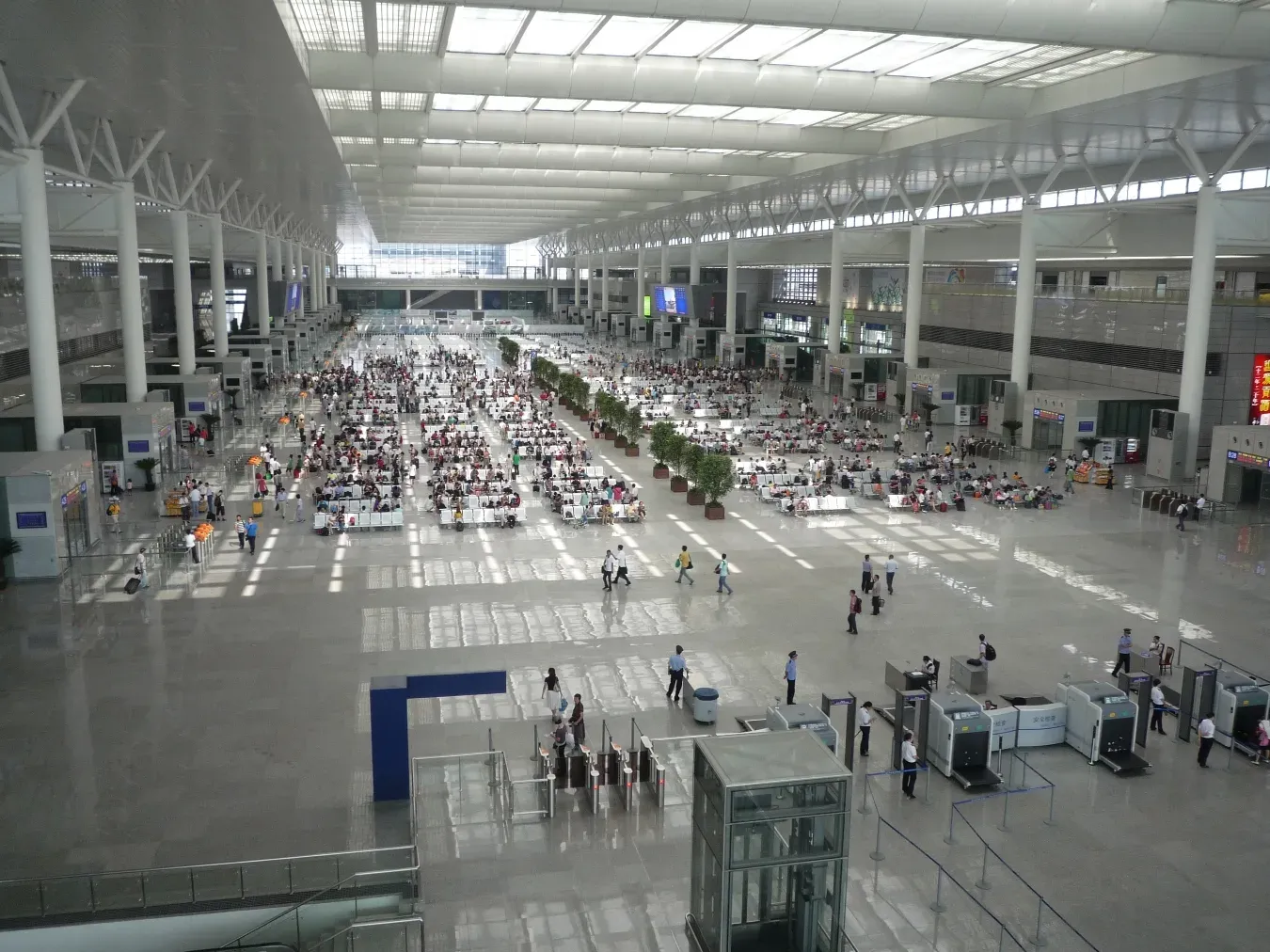
Travelers transferring at Shanghai Hongqiao Station can take advantage of convenient transfer arrangements: reverse ticket gates are installed at the waiting hall gates, allowing transferring passengers to take elevators from the platform directly into the departure hall through the gates without leaving the station or repeating security checks. As of January 2021, Beijing South handled over 400 arriving and departing trains daily, while Shanghai Hongqiao saw a train depart every 84 seconds on average.
Tip: Around midnight, most public transit services have finished operations, making it harder to leave Beijing South Station, so arrange your onward ride in advance if arriving late.
How Do Foreign Visitors Buy Train Tickets, Changes, and Refunds?
According to the Railway Passenger Transport Regulations of China State Railway Group, tickets can be purchased at station ticket windows, ticket vending machines, the official 12306 website, booking hotlines, or authorized railway ticket agent counters, and international passports can be used to purchase tickets on the 12306 website. Your valid travel credential is the original valid ID document used at booking; the itinerary receipt cannot be used as a travel credential. In-person counter services are available at Beijing South Station, which has 8 staffed ticket counters and 76 automated machines across its elevated and B1 levels, and Shanghai Hongqiao Station, which has 154 staffed windows and 80 self-service machines.
| Transaction Type | Time Window | Fee and Processing Rules | Restrictions |
|---|---|---|---|
| Ticket change | More than 48 hours before departure | Change to other trains within the presale window for free | Only 1 change allowed per ticket |
| Ticket change | Less than 48 hours before departure | Change to trains on or before the travel date for free; changing to trains after the travel date within the presale window incurs a change fee | Only 1 change allowed per ticket |
| Ticket change | After departure until 24:00 on the same day | Change to other trains on the same day for free | Only 1 change allowed per ticket |
| Ticket refund | Before the date and train departure time stated on the ticket | Must be handled before the date and train departure time stated on the ticket | No refunds once the train departs the origin station or for tickets changed after departure |
Common Mistakes to Avoid on Your First High-Speed Train Ride
Many first-time high-speed train passengers mix up baggage rules between regular trains and EMU bullet trains. Under railway regulations, the free carry-on allowance for adults is 20 kg; on EMU trains, the sum of length, width, and height of each item is within 130 cm, and each item weighs no more than 20 kg. Families traveling with minors should note the age cutoffs: children who are at least 6 years old and under 14 should buy discounted child tickets, and those aged 14 and above buy full-price tickets. Each adult holding a valid ticket may bring 1 child under 6 years old for free without a separate seat; additional children under 6 need discounted child tickets.
For ground transportation connections, the taxi waiting area at Shanghai Hongqiao Station has only 2 lanes and can move around 1,000 passengers per hour, with average wait times for passengers and drivers hovering around 40 minutes. If you are in a rush, head directly from the B1 arrival hall to connect to Metro Lines 2, 10, or 17. Additionally, stations close ticket gates ahead of departure time; the exact cutoff time is posted on site, so check local station announcements upon arrival.
Key Considerations for Timetables and Fares
The intercity travel times listed in this article reflect the fastest benchmark trains on each line; services with more intermediate stops take longer. The Beijing-Shanghai, Beijing-Guangzhou, and Shanghai-Hangzhou routes use market-adjusted or floating fare mechanisms, and actual ticket prices depend on the specific rates shown on 12306 when booking. Train schedules, change and refund handling, and exact gate closure times are subject to current regulations of China State Railway Group and the latest on-site announcements at passenger stations.
Sources
High-speed rail in China - Wikipedia
High-speed rail in China - Wikipedia
Beijing-Shanghai high-speed railway - Wikipedia
Beijing-Guangzhou high-speed railway - Wikipedia
Shanghai-Hangzhou passenger railway - Wikipedia
Shanghai-Nanjing intercity railway - Wikipedia
Beijing South railway station - Wikipedia
Shanghai Hongqiao railway station - Wikipedia
China Railway 12306 - Railway Passenger Transport Regulations
Sources verified on Nov 19, 2026
FAQ
Can foreign travelers use a passport to book tickets on the 12306 website?
Yes. According to railway regulations, international visitors can use a foreign passport to purchase tickets on the official 12306 website, and the original passport used at booking is presented for verification when entering the station and boarding.
Do you need to print a paper ticket before boarding?
No. According to the Railway Passenger Transport Regulations, your boarding credential is the original valid ID document used during ticket booking, and the printed itinerary receipt cannot be used as a travel credential.
What size baggage can you bring on an EMU high-speed train?
Under railway regulations, the free carry-on allowance for adults is up to 20 kg. On EMU trains, the sum of the length, width, and height of each item is within 130 cm, and each item weighs up to 20 kg.
Can you get a ticket refund after the high-speed train departs?
No. By rule, refunds are handled before the departure time stated on the ticket. Refunds are not allowed once the train has departed from the origin station, nor for tickets that were changed after departure.
How do you transfer directly between high-speed trains at Shanghai Hongqiao Station?
Shanghai Hongqiao Station has reverse gates at the waiting hall ticket barriers. Transfer passengers can take elevators from the platform level directly into the departure hall through the gates, without having to exit the station and go through security again.