
How to Check the Beijing Air Pollution Index
Key points
To track the Beijing air pollution index, check the live AQI on phone weather apps or the official monitoring website, where readings at or below 100 meet national air standards and 50 or below indicates good air. September and October offer the cleanest conditions for visiting. During moderate pollution with an AQI of 151 to 200, sensitive individuals should limit prolonged heavy outdoor exertion and wear particulate respirators.
Checking the air quality index in Beijing, China mainly relies on the Air Quality Index (AQI), where a reading of 100 or below meets standards and 50 or below indicates good air quality. In 2023, the annual average PM2.5 concentration in Beijing fell to 39 micrograms per cubic meter, showing substantial improvement compared to 2013. Before heading out, travelers can check the Beijing air pollution index in real time on their phone's built-in weather app or official monitoring networks to see if conditions suit outdoor activities.
| Monitoring and reference item | Details |
|---|---|
| Official monitoring agency | Beijing Municipal Ecological and Environmental Monitoring Center (formerly Beijing Municipal Environmental Monitoring Center, bjmemc.com.cn) |
| Common web and mobile tools | Web portal (aqicn.org/city/beijing/), desktop widgets, and built-in phone weather apps |
| Most favorable travel months | September to October (crisp autumn weather with better air quality) |
| Standard compliance threshold | AQI at or below 100 (50 and below represents good air quality) |
| National monitoring pollutants | Six atmospheric pollutants: SO2, NO2, PM10, PM2.5, CO, and O3 |
Where can you check the Beijing air pollution index and air quality?
Official data for the Beijing air pollution index is released by the Beijing Municipal Ecological and Environmental Monitoring Center (formerly the Beijing Municipal Environmental Monitoring Center, official website bjmemc.com.cn), which shares live monitoring network data globally. If you need detailed official network data on the air quality index in Beijing, China, you can visit its website directly; if you need a quick check while traveling, you can also use mobile apps or desktop widgets.
For travelers visiting the city, checking air readings is simple through the web page (aqicn.org/city/beijing/), iPhone and iPad desktop widgets (ios.aqicn.org), Android app stores, and the built-in weather apps on iOS and Android devices. Opening your weather app in the morning quickly shows conditions in your immediate area. For more pre-trip advice, you can also explore our Beijing City Guide.

How are AQI levels and calculations structured?
The Air Quality Index (AQI) uses a six-tier color scale to measure air pollution and health risks, where higher numbers indicate greater risk. Monitored pollutants include fine particulate matter (PM2.5), inhalable particulate matter (PM10), ground-level ozone (O3), sulfur dioxide (SO2), nitrogen dioxide (NO2), and carbon monoxide (CO). If the AQI you see is at or below 100, it usually means the air meets standards and is satisfactory; if the reading exceeds 100, it indicates that it starts to have unhealthy effects on sensitive groups.
The AQI is determined by calculating an individual air quality index (IAQI) for each pollutant and taking the highest value among them. When the index exceeds 50, the pollutant with the highest score is designated as the primary pollutant. Any pollutant with a sub-index over 100 exceeds the national standard. Because both the overall index and individual sub-indices use non-linear stepwise calculations, an AQI of 300 does not mean pollution concentration or health impact is exactly twice that of an AQI of 150.
| AQI Range | Air Quality and Health Risk Level | Standard and Health Guidelines |
|---|---|---|
| 50 and below | Good air quality | Represents good air, and air quality is satisfactory |
| 100 and below | Compliant and satisfactory | Usually corresponds to national short-term ambient air quality standards set to protect public health |
| Over 100 | Above standard with notice for sensitive groups | Begins to cause unhealthy effects for sensitive groups, and indicators with sub-indices over 100 exceed standards |
| 151 to 200 | Moderate pollution | Sensitive groups should avoid prolonged heavy outdoor exertion, and other people, especially children, should also limit prolonged heavy outdoor exertion |
| Over 300 | Severe pollution and serious harm | Represents serious harm, and everyone is advised to avoid all heavy outdoor exertion, remain indoors, and close windows and doors |
Which months have the cleanest air in Beijing?
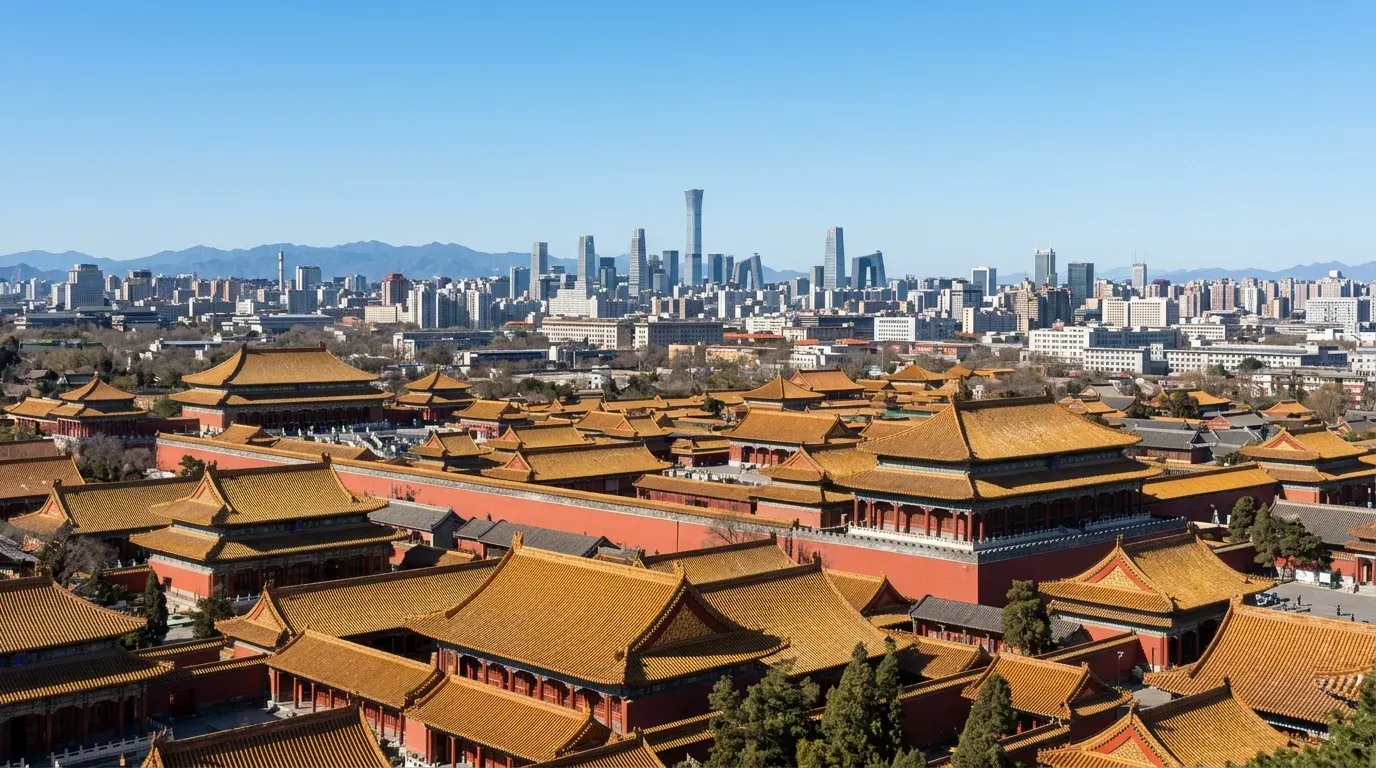
Climate analysis from Weather China notes that September and October bring crisp autumn breezes, comfortable temperatures, and clearer air, making autumn the most pleasant season for visiting the city. Whether walking through the Forbidden City or looking out from the Great Wall, visitors usually enjoy open, clear vistas during this period.
Surrounded by mountains on three sides, Beijing sits in a semi-enclosed basin shaped like a crescent. Weather in summer and autumn is shaped by monsoon patterns, while winter is governed by cold Siberian high-pressure systems. Calm winter weather often causes temperature inversions that block the vertical dispersal of pollutants, leading to higher pollution concentrations. In earlier years, winter coal-fired heating combined with stagnant air frequently led to smoggy days. In spring, northerly winds can blow dust and sand from the deserts of Mongolia into the city, creating dusty conditions.
Tip: If you plan extensive outdoor hiking or a trip to the Great Wall, aim for autumn in September and October. If you visit in spring and encounter strong northern winds carrying sand, wear a mask outdoors and protect yourself from the wind.
How has Beijing improved its air quality over time?
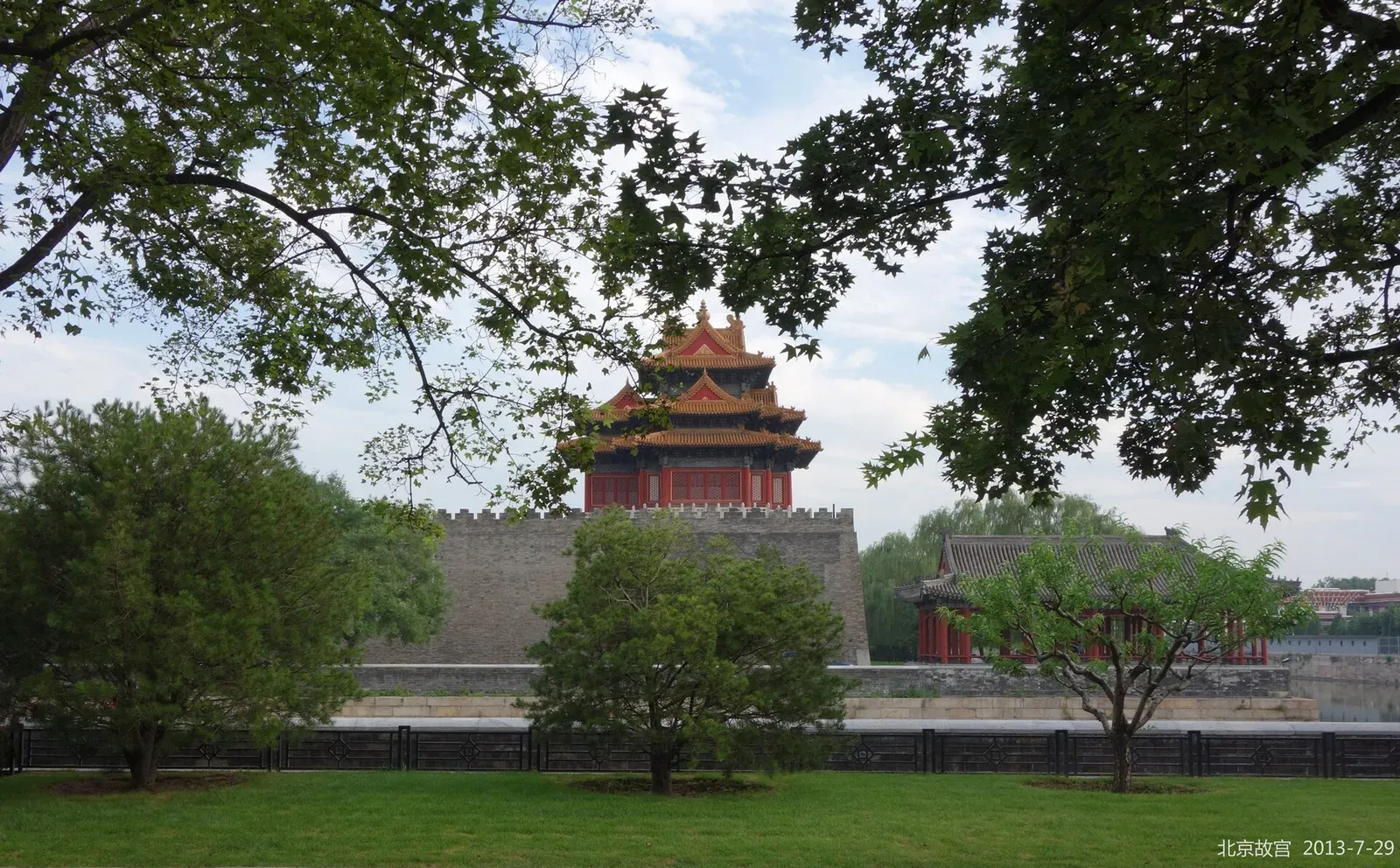
If you look back at historical pollution peaks, the concentration of PM2.5 fine particles in Beijing reached 993 micrograms per cubic meter in January 2013, compared with the World Health Organization guideline of no more than 25 micrograms per cubic meter. If you look at cleanup progress in recent years, multiple environmental protection measures have significantly reduced the once-common spring dust storms.
According to a report by the United Nations Environment Programme (UNEP), Beijing launched an intensified air pollution control program in 1998, and between 2013 and 2017, PM2.5 concentrations in Beijing dropped by 35%, while neighboring areas saw a 25% decrease. Thanks to shelterbelt forestry projects along the northern border, vehicle license plate lottery quotas, restrictions on heavy trucks entering the city, closures of high-polluting industries, and switching heating systems to clean energy, once-frequent spring dust storms in Beijing have dropped sharply.
How should you protect your health during hazy or dusty days?
On days when pollution levels rise or fine particulate matter is elevated, public health agencies recommend wearing particulate respirators outdoors and running air purifiers indoors to keep fine particles out of your lungs. Basic cotton or thin surgical masks provide little filtration against microscopic particles, whereas dedicated particulate masks offer reliable protection.
When air quality reaches moderate pollution (AQI 151 to 200), sensitive groups such as people with respiratory conditions should avoid prolonged heavy outdoor exertion, and others, especially children, should limit strenuous activity outdoors. In severe pollution, health guidelines advise everyone to avoid all outdoor physical activity, stay indoors, and keep doors and windows shut. On those days, you can shift your plans toward indoor galleries and museums.
Tip: When outdoor pollution numbers are elevated, turn on the air purifier as soon as you return to your hotel or indoors, and wash your face and nasal passages to relieve irritation from inhaled particles.
Sources
Beijing Meteorological Data - Weather China
Geography of Beijing - Wikipedia
A Review of 20 Years' Air Pollution Control in Beijing
Air quality index - Wikipedia
Air Quality Index - Wikipedia
Sources verified on November 18, 2026
FAQ
Are the air quality readings on built-in phone weather apps reliable?
Built-in weather apps on Apple and Android devices connect to recognized meteorological and environmental monitoring feeds. They reflect local AQI scores and primary pollutants in real time, keeping pace with official releases and working well for daily checks.
Why doesn't the AQI scale scale up by simple multiples in higher tiers?
Because the AQI and individual pollutant sub-indices rely on non-linear segmented calculations. The scale indicates tiers of combined health risk rather than a direct linear multiplier of raw pollutant concentrations.
Are dust storms guaranteed if you travel to Beijing in spring?
Thanks to shelterbelt afforestation and related environmental programs, spring dust storms in Beijing have become far less frequent. Only on occasional dry spring days with strong northerly winds can desert dust from Mongolia reach the city, so it is not an everyday occurrence.
Which masks are effective on polluted days?
Public health authorities advise wearing certified particulate respirators. These masks feature dense filter layers and a snug facial seal that prevent microscopic particles from penetrating deep into the lungs.