
Who Was Yuan Shikai: Life and Historical Sites
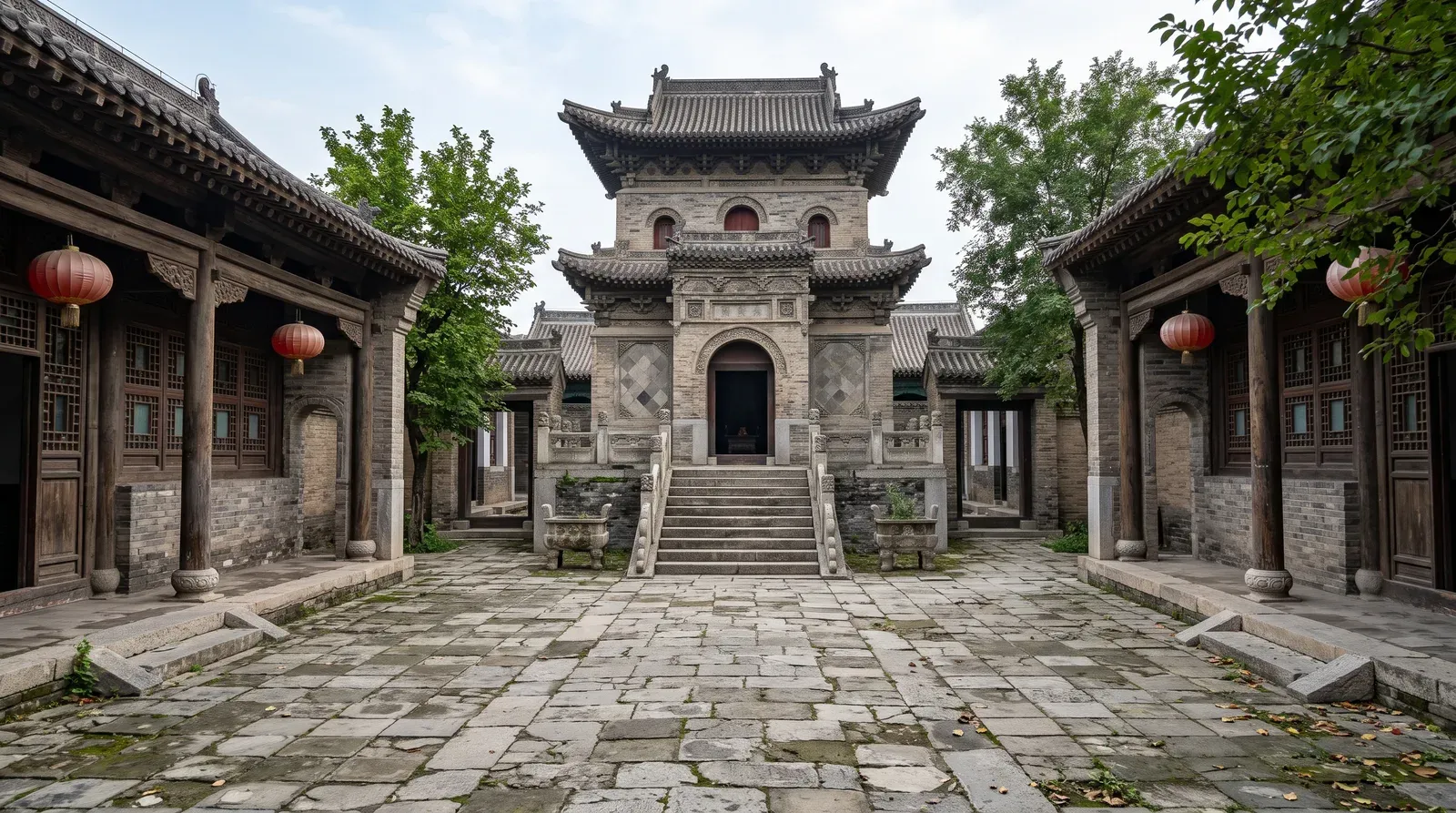
Yuan Shi Kai was a key political and military figure during China's transition from empire to republic. After the Wuchang Uprising in October 1911, he negotiated with the revolutionaries to secure the abdication of the Qing emperor and became president of the Republic of China. Earlier in his career, he trained the New Army, and in his final months, he prepared to restore the monarchy. After his death, he left behind mausoleums, residences, and government gates across North China and the Central Plains. If you plan to visit surviving sites connected with him, the main locations are in Anyang and Zhoukou Xiangcheng in Henan, along the Haihe River in Tianjin, and in Beijing.
| Location | Historic Site | Key Highlights |
|---|---|---|
| Anyang, Henan | Yuanlin (Tomb of Yuan Shi Kai) | A 139-mu cemetery blending Chinese and Western styles, featuring a towering cement paifang, stone statues, and a circular bluestone burial mound |
| Xiangcheng, Zhoukou, Henan | Yuanzhai Ancient Residence (Former Residence of Yuan Shikai) | Yuan Shikai's childhood home, featuring three three-courtyard compounds on the left, center, and right, along with a garden with rockeries and a pavilion |
| No. 39 Haihe East Road, Tianjin | Former Yuan Family Residence (Yuan Residence Museum) | European-style building supervised by his clan nephew Yuan Naikuan, with an indoor shelter leading to the basement and the rear garden |
| Zhongnanhai, Beijing | Xinhua Gate | The main entrance to the Presidential Palace remodeled from Baoyuelou in 1913, with surrounding streets named Fuqian Street and Fuyou Street |
What Were the Key Turning Points in the Life of Yuan Shi Kai?
In October 1895, Yuan took command of the Dingwu Army at Xiaozhan in Tianjin and renamed it the Newly Created Army. He expanded the force to over 7,000 soldiers, structured military branches based on the German army system, and mentored Beiyang generals such as Wang Shizhen, Duan Qirui, and Feng Guozhang. When the Wuchang Uprising broke out, the Qing court appointed him prime minister of the imperial cabinet. He then brokered the abdication of Emperor Xuantong, was elected provisional president of the Republic of China, and later became formal president.
Between December 12, 1915, and March 22, 1916, he prepared to establish a constitutional monarchy under the era name Hongxian. Strong opposition from Cai E's National Protection Army and other factions forced him to abandon the monarchy, during which the nation was still referred to internationally as the Republic of China. The entire attempt lasted 102 days. He announced the cancellation of the monarchy on March 22, 1916, and abolished the Hongxian era name on March 23. Weakened by the National Protection War and mounting domestic and foreign pressure, Yuan died of illness on June 6, 1916, at 10:15 am.
Tip: If you are interested in modern military history, visit Xiaozhan in Tianjin, the birthplace of the Newly Created Army. If you want to study early Republican political transitions and funerary architecture, Yuanlin in Anyang is the best-preserved surviving site.
Why Is the Tomb Named Yuanlin, and What Can You See in Anyang?
The Beiyang government built Yuanlin on the north bank of the Huan River in Anyang to fulfill Yuan's dying wish to be buried on the Huan. Construction took nearly two years, cost more than 700,000 silver dollars, and covered 139 mu. His eldest son, Yuan Keding, wanted to name the site Yuanling (Yuan Mausoleum), using a title reserved for emperors. President Xu Shichang objected because Yuan had never formally ascended the throne and had canceled the empire, suggesting the title Yuanlin instead.
A museum was later established at Yuanlin under local cultural heritage administration. Anyang carried out its largest restoration project in a century, fully repairing the paifang, stele pavilion, triple gates, and Jingren Hall before reopening to the public.
Entering the grounds, the central spirit way extends about two kilometers from south to north. The stone statues show civil officials wearing flat-topped ritual crowns and imperial robes, while military officers wear Beiyang military uniforms and hold sabers. The spirit columns feature the Twelve Symbols of Imperial Authority from the Grand Order of the Republic of China, weaving Chinese and Western elements together.
What Architectural Details Mix Chinese and Western Styles at Anyang Yuanlin?
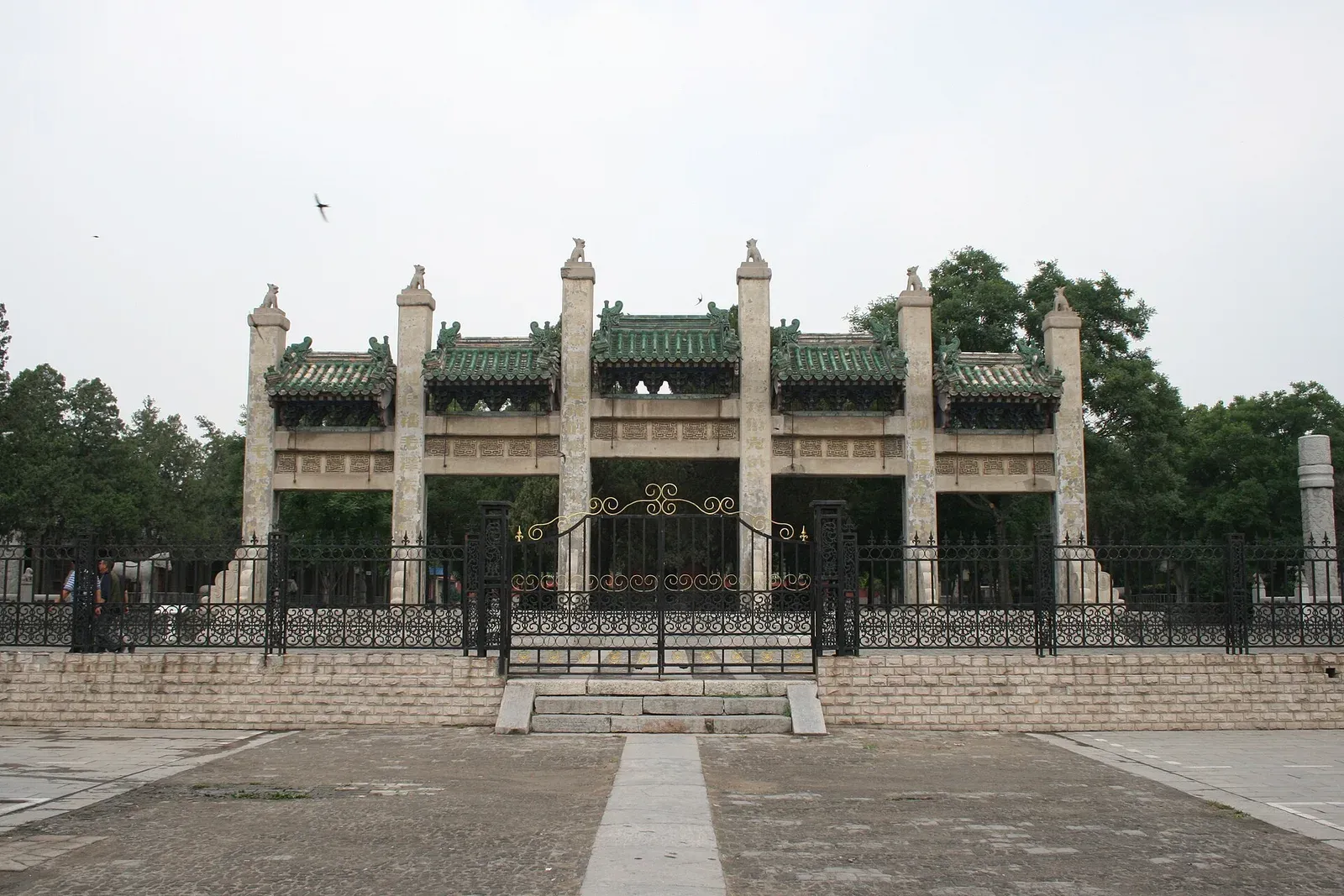
At the southernmost end of Yuanlin, a grand screen wall stretches more than 60 meters. Built in traditional flush-gable style with green glazed tiles, its inner face is covered in brick carvings, making it the largest surviving brick-carved screen wall in China. Along the spirit way, a six-pillar, five-roof archway was cast from reinforced concrete and aggregate, an unusual material in traditional Chinese mausoleum design.
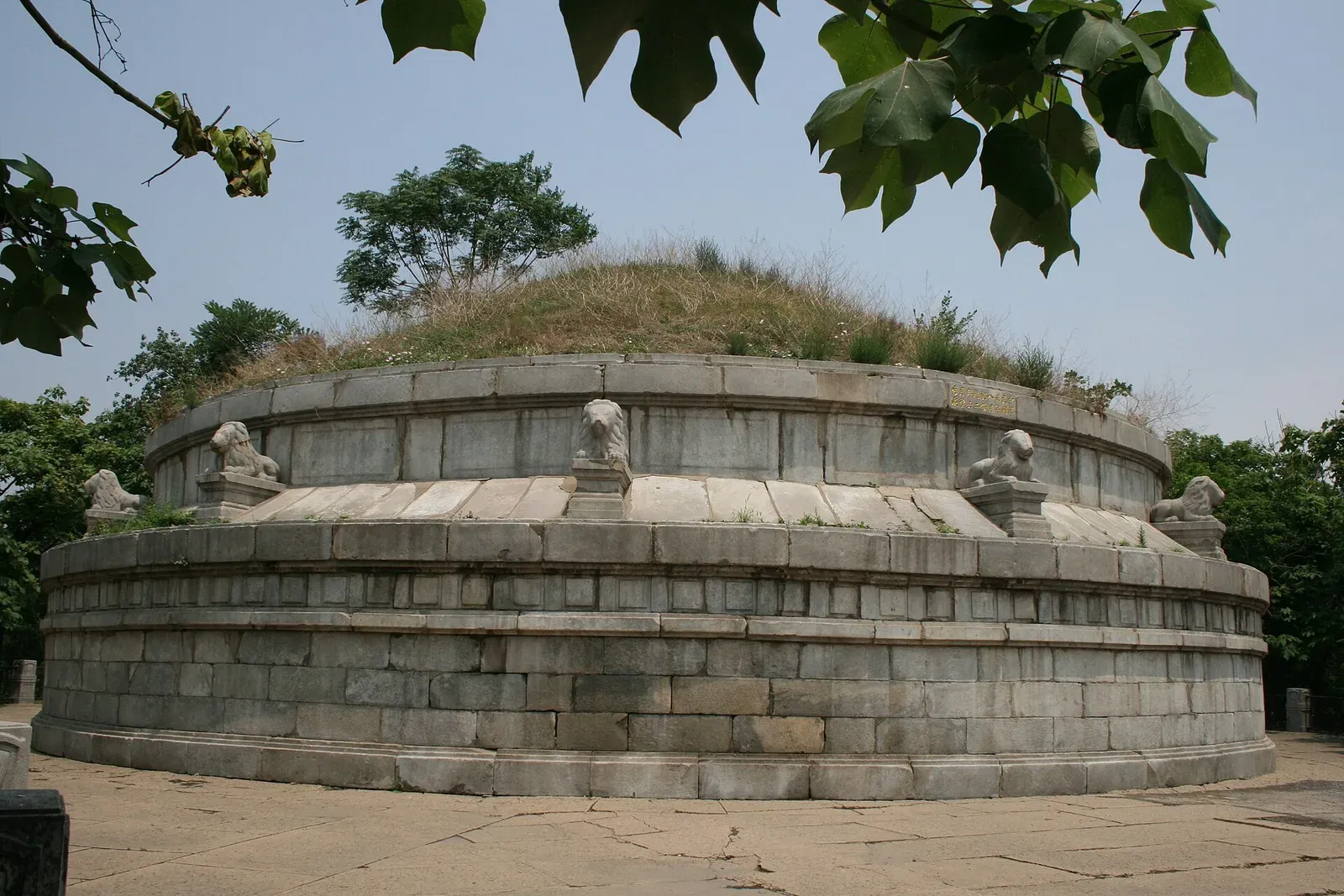
In front of the tomb enclosure stand Roman-style white stone pillars and a mountain-shaped iron gate. The circular burial mound is built of bluestone, standing 8 meters high with a circumference of over 60 meters, surrounded by twelve stone lions. Combining a Chinese-style sacrificial hall with a Western-style bluestone burial mound created an eclectic cemetery style unique to the early Republic.
Tip: Ticket admission closes half an hour before the park shuts (at 17:30), so plan your arrival early. If you visit during Chinese New Year, nearby traditional temple fairs take place, and locals break off cypress twigs in the grounds to pray for a year free of illness.
Which Historic Residences Remain in Zhoukou Xiangcheng, Tianjin, and Beijing?
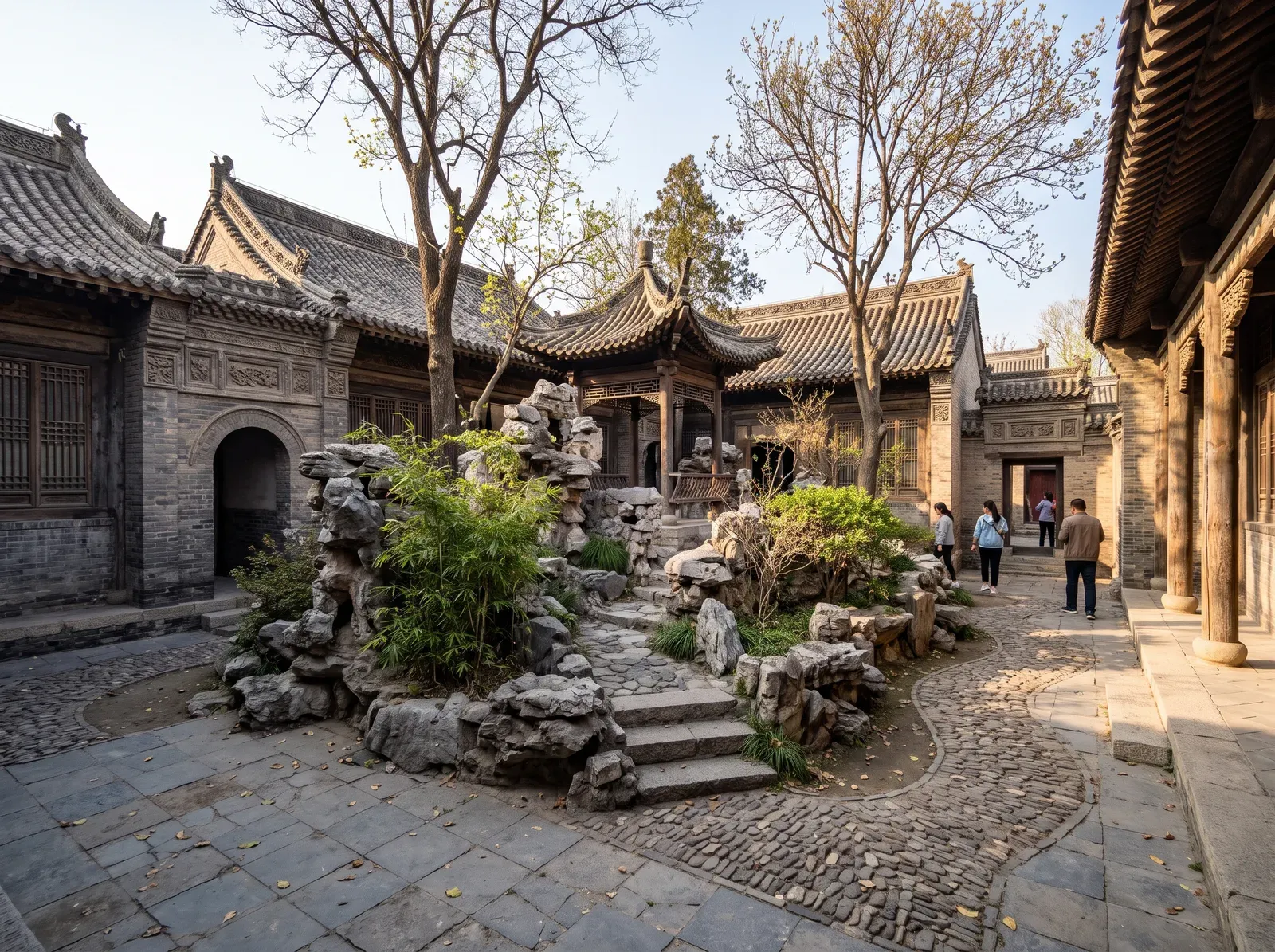
Located in Yuanzhai Village in Wangmingkou Town, Xiangcheng, Zhoukou, Henan, the Yuanzhai Ancient Residence is commonly known as the former residence of Yuan Shikai. He lived here during his childhood. Built after 1857, the complex is divided into left, central, and right sections, each with three courtyards. The left courtyard was built by his father Yuan Baozhong and uncle Yuan Chongshan, while the west gate of the right courtyard opens into a garden with rockeries and a pavilion.
At 39 Haihe East Road in Tianjin, the Former Yuan Family Residence is a European-style building constructed on land Yuan bought in 1908. Supervised by his clan nephew Yuan Naikuan and completed between 1917 and 1918, it now serves as the Yuan Residence Museum. The interior featured a hiding spot and an escape route: a hidden door with iron stairs leading down to the basement, and another iron staircase running from the third-floor pavilion directly to a back-garden gate.
In Beijing, the Yuan government remodeled Baoyuelou in Zhongnanhai into the main entrance of the Presidential Palace in 1913, naming it Xinhua Gate (新华门). Surrounding roads were named Fuqian Street and Fuyou Street. Xinhua Gate remains a prominent landmark on Chang'an Avenue today.
If you are traveling in Henan, keep in mind that Yuanzhai Ancient Residence sits in Zhoukou in eastern Henan, while Anyang Yuanlin lies along the Huan River in northern Henan. Because of the long distance between them, plan them on separate itineraries: one for eastern Henan heritage and another for northern Henan cultural history.
Common Misconceptions When Visiting Sites Connected to Yuan Shikai
| Common Question | The Facts |
|---|---|
| Is the tomb of Yuan Shikai in Xiangcheng, Zhoukou, or Anyang? | Yuanzhai Ancient Residence in Xiangcheng, Zhoukou, Henan was Yuan Shikai's childhood home, while his tomb is Yuanlin, built by the Beiyang government on the north bank of the Huan River in Anyang, Henan, in accordance with his dying wish to "be buried by the Huan." |
| Does Yuanlin follow the specifications of an imperial mausoleum? | Xu Shichang suggested naming it "Yuanlin" on the grounds that Yuan Shikai never formally took the imperial throne and had already abolished the monarchy; the architecture blends Chinese and Western styles, featuring a cement paifang and Roman-style white stone pillars. |
| Did Yuan Shikai live regularly in the Tianjin residence during his lifetime? | The European-style residence at No. 39 Haihe East Road in Tianjin was built between 1917 and 1918, whereas Yuan Shikai had died of illness in 1916; it now serves as the Yuan Residence Museum. |
Tip: A standard visit to Anyang Yuanlin takes 1 to 2 hours. Arrive by 16:00 at the latest so you have enough time to walk along the spirit way screen wall, concrete paifang, Jingren Hall, and bluestone burial mound.
Sources
Yuan Shikai - Wikipedia
Dingwu Army - Wikipedia
Empire of China (1915-1916) - Wikipedia
Yuanlin - Wikipedia
Yuanzhai Ancient Residence - Wikipedia
Former Residence of Yuan Naikuan - Wikipedia
Xinhua Gate - Wikipedia
Yuanlin Reopens After Its First Major Renovation in a Century with Unchanged Ticket Prices - Anyang Municipal People's Government
Sources verified on November 17, 2026.
FAQ
Why was Yuan Shikai's tomb named Yuanlin instead of Yuanling?
During the Beiyang government era, Yuan's eldest son, Yuan Keding, wanted to name the cemetery Yuanling. However, President Xu Shichang opposed this because Yuan had never formally ascended the throne and had canceled the empire, proposing the name Yuanlin instead based on historical naming conventions.
What are the opening hours for Anyang Yuanlin?
Anyang Yuanlin is open year-round daily from 08:30 to 18:00, with last entry at 17:30. A standard visit usually takes 1 to 2 hours.
What escape features exist inside the former Yuan residence on Haihe East Road in Tianjin?
The residence at 39 Haihe East Road includes an indoor hiding place and an escape route: an iron staircase accessed through a hidden door leads to the basement, while another iron staircase leads from the third-floor pavilion directly to a back-garden gate.
Where is the former residence where Yuan Shikai lived in his childhood?
Yuan spent his childhood at the Yuanzhai Ancient Residence in Yuanzhai Village, Wangmingkou Town, Xiangcheng, Zhoukou, Henan. The complex contains three sections on the left, center, and right, each with three courtyards. The left courtyard was built after 1857 by his father Yuan Baozhong and his uncle Yuan Chongshan.