
Where to Visit a Taoist Temple in China
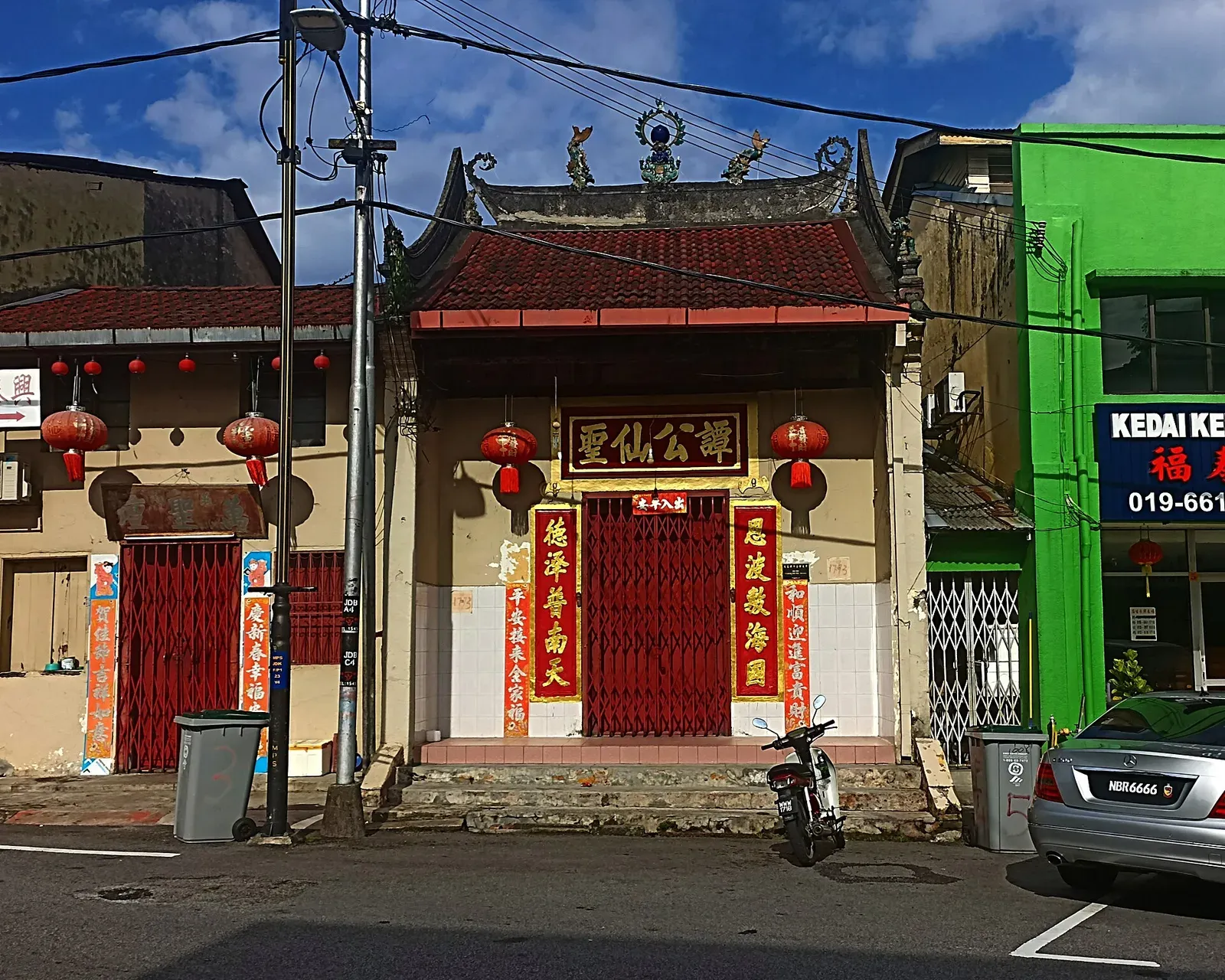
Photo: AyyanD / Wikimedia Commons, CC BY-SA 4.0
To visit a Taoist temple in China, travelers usually head to sacred mountains or historic capitals. Mount Wudang in Hubei, Mount Qingcheng in Sichuan, Mount Longhu in Jiangxi, and Mount Qiyun in Anhui rank as the four sacred Taoist mountains of China. For the headquarters of the Chinese Taoist Association and the earliest recorded temple in Beijing, you can visit White Cloud Temple (Baiyun Guan), founded in 741. If you want to see the ancestral home of Zhengyi Taoism, visit the Celestial Master Mansion (Tianshi Fu) and Shangqing Temple at Mount Longhu in Yingtan, Jiangxi.
| Taoist Temple or Sacred Mountain | Location | Sect and Status | Key Buildings and Highlights |
|---|---|---|---|
| White Cloud Temple (Beijing) | No. 9 Baiyunguan Street, Xicheng District, Beijing | One of three ancestral courts of Quanzhen Taoism and ancestral court of the Longmen sect | Root-carved gall bowl in Hall of Master Qiu, 60 Tai Sui statues in Yuanchen Hall, three stone monkey carvings |
| Beijing Dongyue Temple | No. 141 Chaoyangmenwai Street, Chaoyang District, Beijing | Largest Zhengyi Taoist temple in Beijing and home of Beijing Folk Museum | Sculptures of the 76 Departments |
| Mount Wudang (Hubei) | Shiyan, Hubei Province | Foremost of China's four sacred Taoist mountains (UNESCO World Cultural Heritage site since 1994) | Total area of 312 square kilometers, cast-bronze Golden Hall, Zixiao Palace, Nine-Bend Yellow River Wall at Prince Slope |
| Mount Qingcheng (Sichuan) | 10 kilometers southwest of Dujiangyan, 68 kilometers west of Chengdu | Listed as a UNESCO World Cultural Heritage site in 2000 | Jianfu Palace, Tianshi Cave, Zushi Hall, Yuanming Palace, upper Shangqing Palace |
| Mount Longhu (Jiangxi) | Yingtan, Jiangxi Province | Ancestral court of Zhengyi Taoism and one of China's four sacred Taoist mountains | Celestial Master Mansion, Shangqing Palace |
| Dai Temple at Mount Tai (Shandong) | Base of Mount Tai, Tai'an, Shandong Province | One of China's three major palace-style complexes, dedicated to the Great Emperor of Mount Tai | Covers about 96,000 square meters, 62-meter Song Dynasty mural in Tiankuang Hall |
| Louguantai at Mount Zhongnan (Shaanxi) | Foot of Mount Zhongnan, Zhouzhi County, Xi'an, Shaanxi Province | First Blessed Land under Heaven and Taoist ancestral court | Platform where Laozi preached scriptures on a 580-meter ridge |
| Mount Qiyun (Anhui) | Xiuning County, Anhui Province | One of China's four sacred Taoist mountains and sanctuary of the Perfect Warrior | 305 cliff inscriptions, 232 stone steles, stele inscription by Tang Yin |
Which Sacred Mountain Taoist Temple Should You Visit?
The four sacred Taoist mountains of China include Mount Wudang in Shiyan, Hubei; Mount Qingcheng in Sichuan; Mount Longhu in Yingtan, Jiangxi; and Mount Qiyun in Xiuning, Anhui. Each features distinct temple architecture and natural terrain.
Covering a total area of 312 square kilometers, Mount Wudang ranks foremost among China's four sacred Taoist mountains. Its ancient architectural complex became a UNESCO World Cultural Heritage site in 1994. Construction spanned 14 years during the Yongle era of the Ming Dynasty, giving rise to the saying, "Build the Forbidden City in the north, build Wudang in the south."
Tianzhu Peak, the main summit of Mount Wudang, rises to 1,612 meters. At the summit stands the Golden Hall of Taihe Palace, built in 1416 (the 14th year of Yongle), featuring a cast-bronze structure styled after timber framing. Zixiao Palace at the foot of Zhanqi Peak is the best-preserved royal palace-style complex on the mountain and the headquarters of the Mount Wudang Taoist Association. Prince Slope (Taizipo) preserves a timber structure with twelve beams on a single pillar and the Nine-Bend Yellow River Wall built along the ridge.
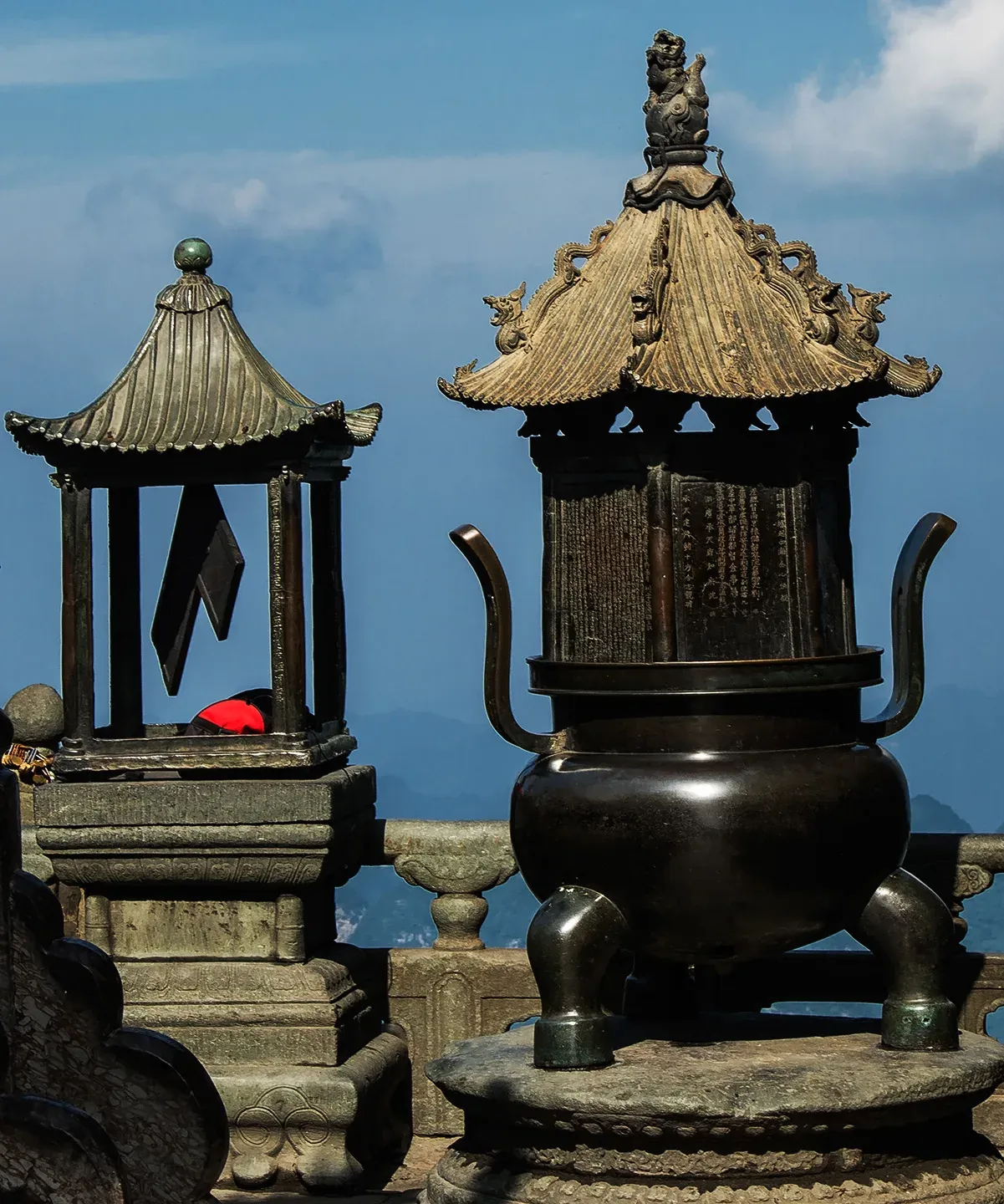
Mount Qingcheng in Sichuan lies 10 kilometers southwest of Dujiangyan and 68 kilometers west of Chengdu. Its main peak, Laoxiaoding, reaches 1,600 meters, and the mountain was designated a UNESCO World Cultural Heritage site in 2000. Key Taoist temples on the front mountain include Jianfu Palace at the mountain base, central Tianshi Cave, and higher Zushi Hall and Yuanming Palace.
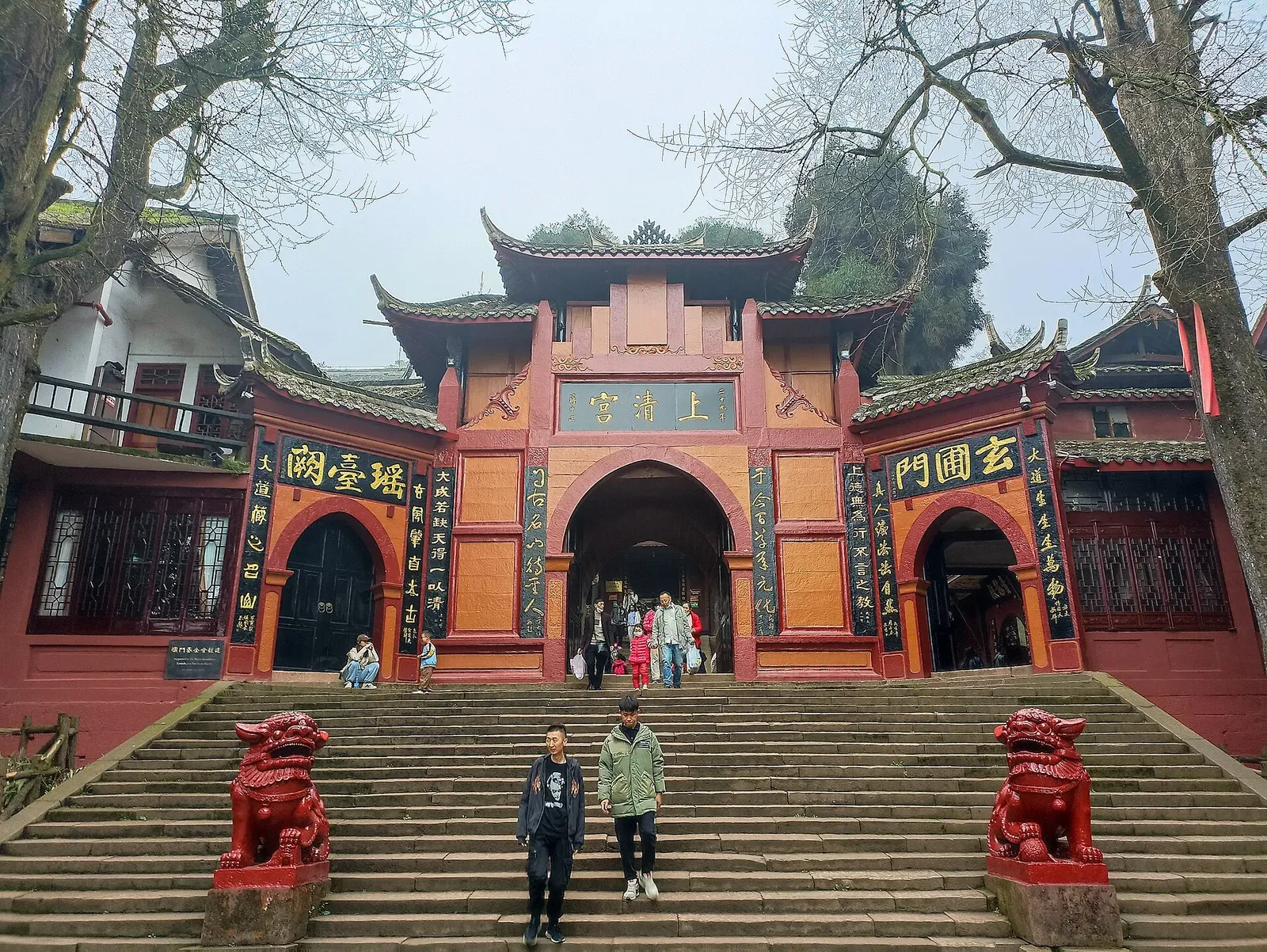
Shangqing Palace on Mount Qingcheng dates back to the Jin Dynasty and stands higher up the front mountain, above 1,500 meters. The complex contains Laojun Hall, Sanqing Hall, Wenwu Hall, and the Dao De Jing Lecture Hall.
Mount Longhu in Jiangxi is the ancestral court of Zhengyi Taoism, home to the Celestial Master Mansion and Shangqing Palace, and ranks among China's four sacred Taoist mountains. Mount Qiyun in Xiuning County, Anhui, anciently called Baiyue, is known for its Danxia landforms and as a sanctuary of the Perfect Warrior. Below Zixiao Cliff at Yuxu Palace stands a stele inscription by Ming Dynasty artist Tang Yin. Today, 305 cliff inscriptions and 232 stone steles remain.
If you want to view grand royal palace complexes and cast-bronze architecture styled after timber framing, Mount Wudang brings together the Golden Hall and Zixiao Palace. If you prefer quiet hiking through shaded mountain forests, head to Mount Qingcheng near Chengdu to explore Tianshi Cave and Shangqing Palace along the front mountain.
Which Taoist Temples Stand Out in Urban Beijing?
Representative temples in urban Beijing include White Cloud Temple, the ancestral court of the Quanzhen Longmen sect, and Dongyue Temple, the largest Zhengyi temple in northern China.
Located at No. 9 Baiyunguan Street outside Xibianmen in Xicheng District, White Cloud Temple is one of the three ancestral courts of Quanzhen Taoism, the ancestral court of the Longmen sect, and the home of the Chinese Taoist Association. Five main halls line its central axis from south to north: the Mountain Gate, Jade Emperor Hall, Laolü Hall, Hall of Master Qiu, and Sanqing Pavilion. Its origins trace back to Tianchang Temple of Youzhou, built in the 29th year of the Kaiyuan era under Emperor Xuanzong of the Tang Dynasty, making it the earliest recorded Taoist temple in Beijing's history.
The Hall of Master Qiu at White Cloud Temple honors Qiu Chuji (Master Changchun). In the center of the hall rests a Qing Dynasty gall bowl carved from an ancient tree root, beneath which Qiu Chuji's remains are buried. On the western route, Yuanchen Hall houses statues of the sixty Tai Sui deities and Doumu Yuanjun, serving as the primary hall where worshipers and visitors pray to their presiding year deities.
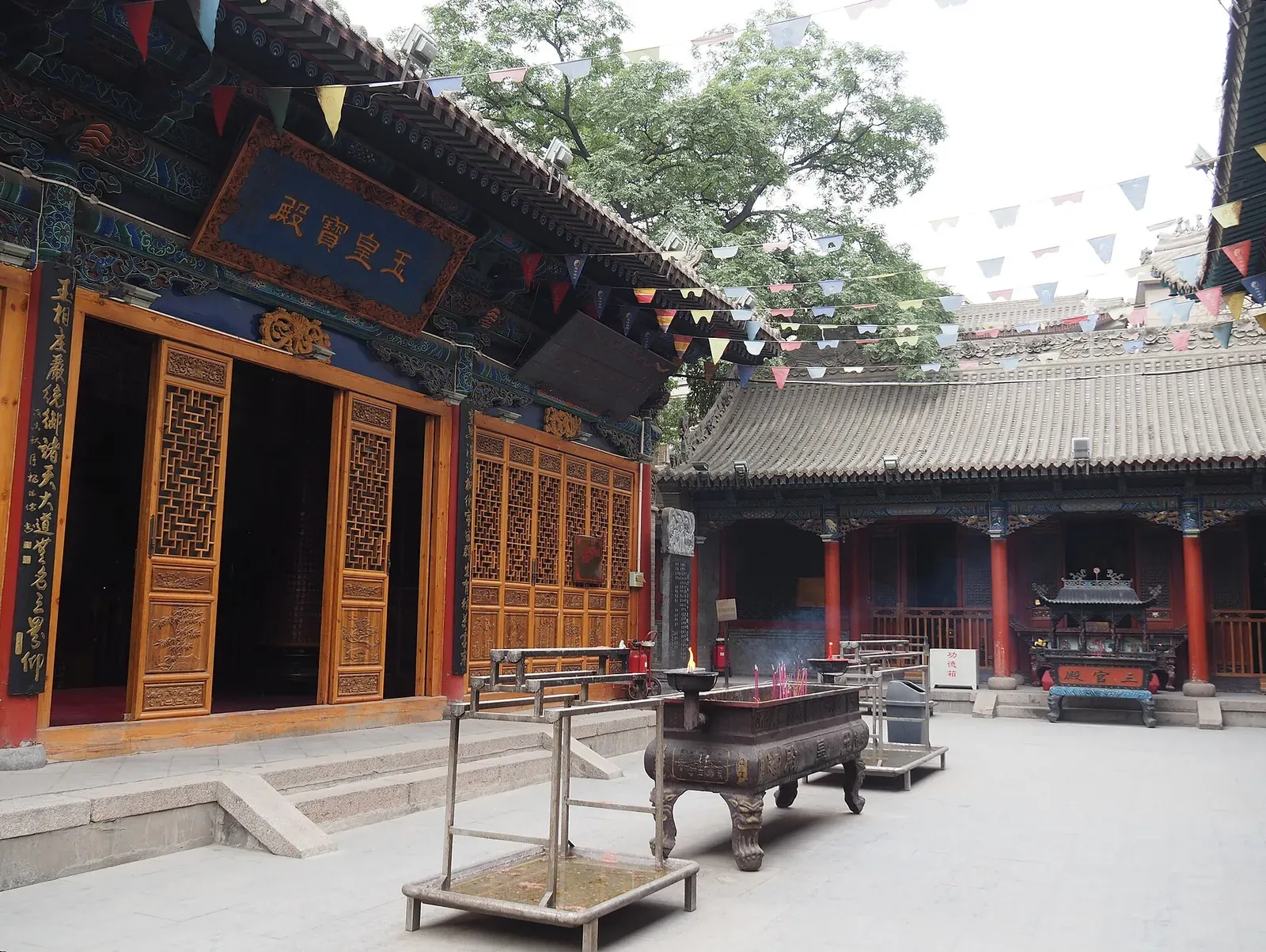
Founded in the Yuan Dynasty, Beijing Dongyue Temple is the largest Zhengyi temple in Beijing and houses the Beijing Folk Museum. Covered corridors in the central courtyard encircle side halls filled with painted statues of the 76 Departments, representing the division of roles across the Taoist pantheon.
Tip: Beijing Dongyue Temple is located at No. 141 Chaoyangmenwai Street in Chaoyang District, about 500 meters east of Chaoyangmen subway station, making it convenient for a half-day city excursion.
Where Can You Find Laozi's Lecturing Site and Mount Tai's Major Temple?
To visit the ancestral site where Laozi taught the Dao De Jing and the center of historical Mount Tai worship, head to Louguantai at the base of Mount Zhongnan in Zhouzhi, Shaanxi, and Dai Temple at the foot of Mount Tai in Tai'an, Shandong.
Louguantai at the foot of Mount Zhongnan in Zhouzhi County, Xi'an, is traditionally regarded as the place where Laozi delivered the Dao De Jing to Yin Xi. It is revered as the First Blessed Land under Heaven and an ancestral court of Taoism. Laozi's scripture lecturing platform sits on a ridge at an elevation of 580 meters, roughly 70 kilometers west of central Xi'an.
Covering about 96,000 square meters at the foot of Mount Tai in Tai'an, Shandong, Dai Temple is one of China's three major palace-style complexes, dedicated to the Great Emperor of Mount Tai. Tiankuang Hall inside the temple preserves a massive 62-meter Song Dynasty mural, Departure and Return of the God of Mount Tai, depicting a procession of more than 1,000 deities and officials.
Inside Tiankuang Hall, this tens-of-meters-long scroll mural unfolds along the walls, presenting more than 1,000 marching divine officials in orderly ceremonial formations with billowing robes.
What Folk Traditions Can You Experience on Your First Visit?
Beyond admiring architecture and painted statues, visiting historic temples allows you to witness traditional customs such as blessings and praying to Tai Sui at sites like White Cloud Temple in Beijing.
Beijing's White Cloud Temple features the folk custom of touching the stone monkeys. Three monkey carvings are hidden in separate corners, an arrangement known locally as the three monkeys that never meet. On either side of the arch beneath Wofeng Bridge hang large copper cash coins inscribed with blessings. Visitors can toss coins through the coin hole to strike a small bell inside for good fortune, a practice known as hitting the money eye.
On the eighth day of the first lunar month, worshipers visit Yuanchen Hall at White Cloud Temple to burn incense before their natal star deity in a blessing ritual known as Shunxing. With sixty distinct Tai Sui statues lining the hall, devotees and visitors often search for the specific deity corresponding to their birth year to pay respects.
Tip: The three stone monkeys at White Cloud Temple are scattered across three separate spots, so watch closely as you walk through each courtyard. If you plan to try hitting the money eye, bring a few coins with you before you go.
Sources
White Cloud Temple - Wikipedia
White Cloud Temple - Wikipedia
Beijing Dongyue Temple - Wikipedia
Mount Wudang - Wikipedia
Mount Qingcheng - Wikipedia
Mount Qingcheng - Wikipedia
Mount Longhu - Wikipedia
Dai Temple - Wikipedia
Louguantai - Wikipedia
Mount Qiyun (Huangshan Mountains) - Wikipedia
Sources verified on November 18, 2026
FAQ
What are the main architectural and landscape differences between Mount Wudang and Mount Qingcheng?
Mount Wudang features grand imperial palace-style architecture, including Zixiao Palace beneath Zhanqi Peak and the cast-bronze Golden Hall atop the summit. In contrast, Mount Qingcheng is celebrated for its lush mountain greenery, with temples like Tianshi Cave and upper Shangqing Palace built along natural contours to create a secluded, harmonious layout.
Which Taoist master is honored in the Hall of Master Qiu at White Cloud Temple?
The Hall of Master Qiu at White Cloud Temple honors Qiu Chuji (Master Changchun). A Qing Dynasty gall bowl carved from an ancient tree root stands in the center of the hall, and Qiu Chuji's remains are buried beneath it.
What are the 76 Departments at Beijing Dongyue Temple?
The 76 Departments are painted clay statues housed in the side halls around the central courtyard of Beijing Dongyue Temple. They represent the specialized offices and duties within the Taoist pantheon, illustrating traditional administrative order in the divine realm.
Where is Laozi's scripture lecturing platform located?
Laozi's scripture lecturing platform is located at Louguantai at the foot of Mount Zhongnan in Zhouzhi County, Xi'an, Shaanxi. It is traditionally considered the place where Laozi taught the Dao De Jing to Yin Xi, with its core historic structures standing on a ridge of Mount Zhongnan.