
Where to Buy Souvenirs in Beijing: Specialty Gifts and Historic Shopping Districts
If you are deciding where to buy souvenirs in Beijing, traditional specialties and heritage crafts cluster around Qianmen Street, Dashilar, and the Wangfujing commercial area, with Qianmen Street alone hosting 16 China Time-Honored Brands. For vintage flea items, antiques, and calligraphy supplies, the 48,500-square-meter Panjiayuan Antique Market and historic Liulichang Cultural Street are the primary hubs. If you prefer creative hutong-themed gifts, the roughly 800-meter-long Nanluoguxiang is another popular destination.
Which traditional crafts and local gifts represent Beijing?
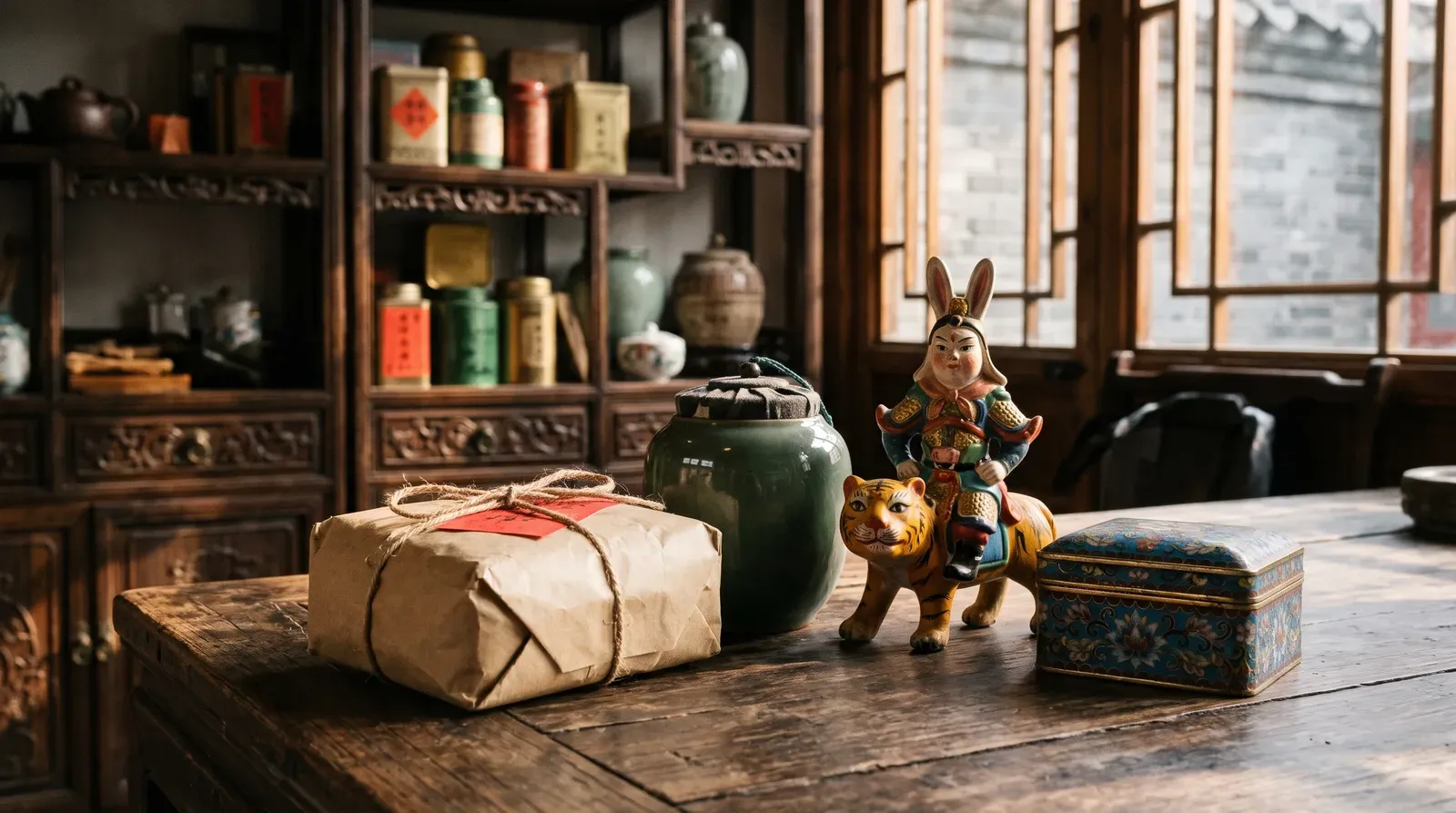
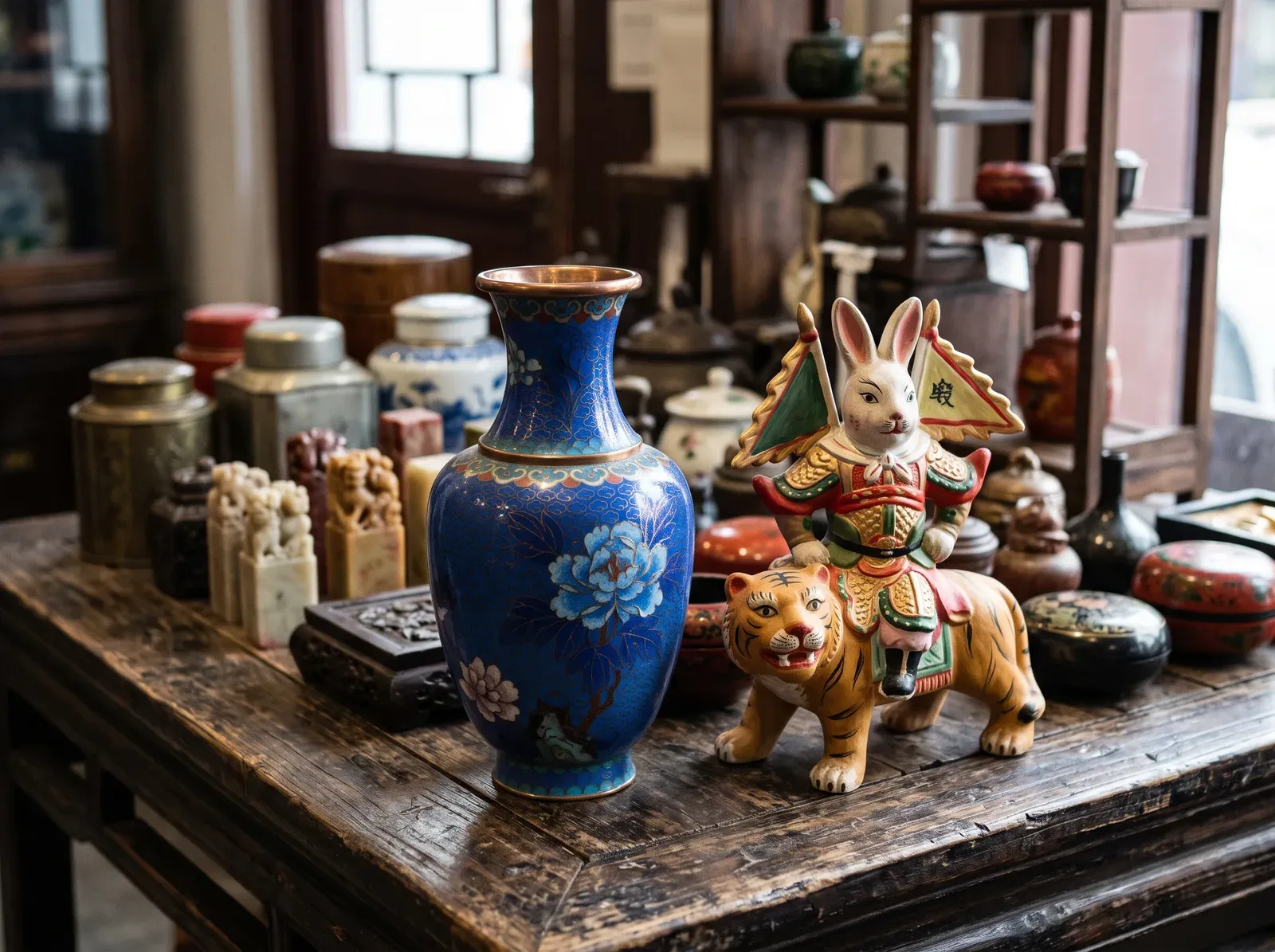
Representative traditional gifts from Beijing include intangible cultural heritage crafts like cloisonné enamel, clay Lord Rabbit (Tu'er Ye) figurines, traditional teas and pastries, and handmade cloth shoes. Chinese cloisonné pieces mostly feature a blue base tone, and the Chinese name jingtailan comes from the Jingtai reign era of the Ming Dynasty combined with its blue enamel glaze. Clay Lord Rabbit figurines are folk handicrafts unique to Beijing, originating from Mid-Autumn Moon worship customs and viewed as the incarnation of the Jade Rabbit beside the moon goddess Chang'e.
In apparel and daily goods, the time-honored brand Neiliansheng, founded in 1853, is known for handmade multi-layered cloth shoes, where each square inch of the sole requires 81 to 100 hand-sewn hemp stitches. Ruifuxiang in Dashilar, established during the Qing Dynasty, specializes in silks, ethnic garments, tailored qipao, and silk accessories. For tea and pastries, the jasmine tea crafting techniques of Zhang Yiyuan and Wu Yutai were listed as national intangible cultural heritage in 2008 and 2011 respectively, while Beijing Daoxiangcun, founded in 1895, is a hallmark traditional pastry shop.
| Category | Brand or Craft | Founding Year or Background | Craftsmanship and Features |
|---|---|---|---|
| Jasmine Tea | Zhang Yiyuan | 1900 | Crafting technique listed as national intangible cultural heritage in 2008 |
| Jasmine Tea | Wu Yutai | 1887 | Crafting technique listed as national intangible cultural heritage in 2011 |
| Cloth Shoes | Neiliansheng | 1853 | Handmade cloth shoes with 81 to 100 hand-sewn hemp stitches per square inch of sole |
| Traditional Silks and Qipao | Ruifuxiang | Qing Dynasty heritage brand | Specializes in silk fabrics, ethnic clothing, custom qipao, and silk goods |
| Beijing Pastries | Beijing Daoxiangcun | 1895 | Beijing's first southern-style specialty bakery, recognized by the Sanhe logo |
| Four Treasures of the Study | Rongbaozhai | 1672 | Originally named Songzhuzhai, a famous heritage shop for scholar tools and calligraphy art |
| Folk Clay Figurines | Clay Lord Rabbit | Traditional folk craft | Originates from Mid-Autumn Moon worship customs, seen as the incarnation of the Jade Rabbit |
If you want practical gifts to wear or drink for elder family members, you can choose Neiliansheng cloth shoes or jasmine tea from Zhang Yiyuan and Wu Yutai. If you prefer decorative folk art for display, consider cloisonné vessels or hand-painted clay Lord Rabbit figurines. For detailed transit and neighborhood information, you can also refer to the Beijing City Guide.
How can you explore Qianmen and Dashilar for heritage brand specialties?
For picking up traditional Beijing specialties and heritage brand souvenirs in one area, Qianmen Street and the adjoining Dashilar historical commercial street form the most concentrated pedestrian district. Qianmen Street hosts 16 China Time-Honored Brands, including venerable shops such as Liubiju Pickle Shop, Tongrentang Pharmacy, Ruifuxiang Silk Shop, Changchuntang, Neiliansheng Shoes, Zhang Yiyuan Tea Shop, Yueshengzhai, and Duyichu. As a comprehensive historic commercial street branching off Qianmen, Dashilar also brings together Zhang Yiyuan Tea Shop, Tongrentang Pharmacy, Liubiju Pickle Shop, and Ruifuxiang Silk Shop.
To reach the Qianmen pedestrian street, take Subway Line 2 or Line 8 and exit at Qianmen Station. Qianmen Street still operates vintage dangdang trams with a century of history, allowing visitors to ride slowly along the street and experience old Beijing streetscapes.

Tip: Take Subway Line 2 or Line 8 to Qianmen Station for direct-operated stores, and walk straight from the main street into Dashilar to buy cloth shoes and tea.
Where can you hunt for vintage flea goods, carved seals, and calligraphy art?
To browse vintage curios and second-hand goods, head to Panjiayuan Antique Market, while the Four Treasures of the Study, seals, and calligraphy paintings are best found along Liulichang Cultural Street outside Hepingmen. Covering 48,500 square meters with an operating area of 26,000 square meters and around 4,000 stalls, Panjiayuan is Beijing's largest flea and antique market. During the Ming and Qing dynasties, Liulichang served as a core cultural street where scholars, painters, and calligraphers gathered to buy books, paint, and compose poetry.
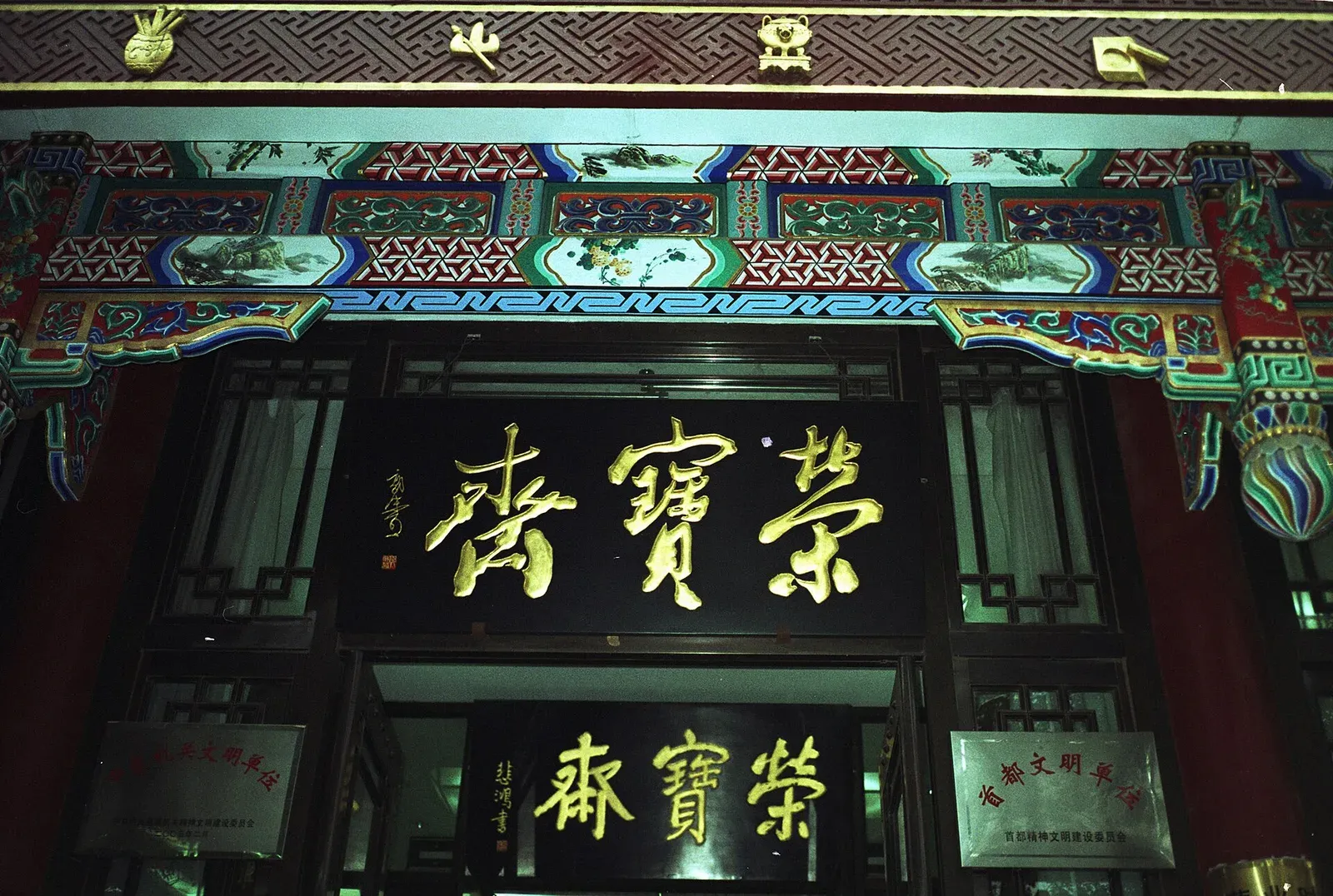
Located on West Liulichang Street outside Hepingmen, Rongbaozhai was founded in 1672 during the Kangxi reign of the Qing Dynasty (originally named Songzhuzhai) and is a renowned heritage shop for scholar tools and calligraphy art. Today, Liulichang gathers both state-run and private shops, and visitors shopping for folk crafts and curios should bargain appropriately.
The central section of Panjiayuan Antique Market is a semi-open main trading area open only on weekends. If you plan to browse vintage curios and handicrafts on Saturday or Sunday, you can explore the stalls in this central section. If you want reliably sourced Xuan paper, Hui inksticks, and carved seals, visit specialized historic shops such as Rongbaozhai in Liulichang.
Tip: Stalls at Panjiayuan Antique Market carry many replicas, so examine items carefully, and remember to bargain appropriately for folk handicrafts and curios in Liulichang.
Modern malls and creative streets: How do you visit Wangfujing, Silk Street, and Nanluoguxiang?
For contemporary gifts, export apparel, and youth creative products, Wangfujing Commercial Street, Silk Street, and Nanluoguxiang each offer distinct shopping styles. Wangfujing Street in Dongcheng District runs from Wangfujing Nankou in the south, where Oriental Plaza, the Beijing Hotel, and Wangfujing Subway Station stand, north past the Wangfujing Bookstore, Beijing Department Store, and Beijing Foreign Languages Bookstore, ending near Beijing apm and St. Joseph's Church. The area currently features about 280 shops, with major shopping complexes including Beijing Department Store, Beijing apm, Beijing New Yansha Mall, The Malls at Oriental Plaza, and WF Central.
Beyond silk and apparel, Silk Street sells traditional Chinese crafts, antique-style cultural goods, calligraphy, brocade embroidery, and jewelry accessories. You can reach Silk Street by taking Beijing Subway Line 1 to Yonganli Station, where Exit A includes an underground passage leading directly into the building's basement level. Nanluoguxiang runs about 800 meters from Gulou East Street in the north to Di'anmen East Street in the south, lined with creative shops, handicraft boutiques, and hutong cafes.
Tip: To visit Wangfujing, take Subway Line 1 or Line 8 to Wangfujing Station; to visit Nanluoguxiang, take Subway Line 6 or Line 8 to Nanluoguxiang Station.
What are the most common mistakes when buying souvenirs in Beijing for the first time?
First-time buyers often mix up heritage brand trademarks, misunderstand the nature of antique curios, and confuse market opening days. When purchasing traditional pastries, shoppers easily confuse different Daoxiangcun storefronts. Beijing Daoxiangcun, founded in 1895 with its original store on Dashilar West Street outside Qianmen, uses the proprietary Sanhe logo to distinguish itself from other brands sharing the name, so look for this mark on packaging.
When browsing curios and vintage goods, buyers often mistake replicas for genuine antiques. While Panjiayuan attracts collectors and history enthusiasts, stalls hold numerous reproductions, requiring careful scrutiny. In addition, the central semi-open area of Panjiayuan Antique Market opens only on weekends, so visiting on weekdays means missing the large-scale open-air stalls.
Tip: Look for the Sanhe mark on packaging when buying Beijing Daoxiangcun pastries, and plan your visit on Saturday or Sunday to explore the central stalls at Panjiayuan Antique Market.
Sources
Beijing Life on the Subway
Qianmen Street - Baidu Baike
Beijing Qianmen Scenic Area Overview
Popular Sites Series I: A Blend of Tradition and Fashion
Explore Ancient Cultural Streets along Central Axis to Feel Unique Charm of Beijing
Wangfujing - Wikipedia
Panjiayuan antique market - Wikipedia
Liulichang - Wikipedia
Rongbaozhai - Wikipedia
Silk Street - Wikipedia
Cloisonné - Wikipedia
Nanluoguxiang - Wikipedia
Tu'er Ye - Wikipedia
Neiliansheng - Wikipedia
Ruifuxiang - Wikipedia
Beijing Daoxiangcun - Wikipedia
Sources verified on November 17, 2026.
FAQ
What is the history behind Zhang Yiyuan and Wu Yutai for jasmine tea in Beijing?
Heritage tea merchant Wu Yutai was founded in 1887 during the Guangxu reign of the Qing Dynasty, and its production technique was listed as national intangible cultural heritage in 2011. Zhang Yiyuan Tea Shop was founded in 1900 during the Guangxu reign, with its technique added to the national list in 2008. Both brands maintain stores in Qianmen and Dashilar.
Is Panjiayuan Antique Market open only on weekends?
Panjiayuan covers 48,500 square meters, and its central semi-open area operates only on weekends. If you visit Monday through Friday, the central open-air stalls are closed, so choose a weekend visit to experience the full scale of roughly 4,000 stalls.
How do you take the subway to Silk Street for silk and handicrafts?
To reach Silk Street, take Beijing Subway Line 1 to Yonganli Station. Exit A includes an underground passage leading directly into the building's basement level, so you do not need to walk outside at street level.
What is the history behind the traditional roast duck brand Quanjude in Beijing?
The heritage roast duck restaurant Quanjude was founded in 1864 during the Tongzhi reign of the Qing Dynasty, and its hanging-oven roast duck technique was inscribed onto the national intangible cultural heritage list in 2008.