
What Are the Five Chinese Elements?
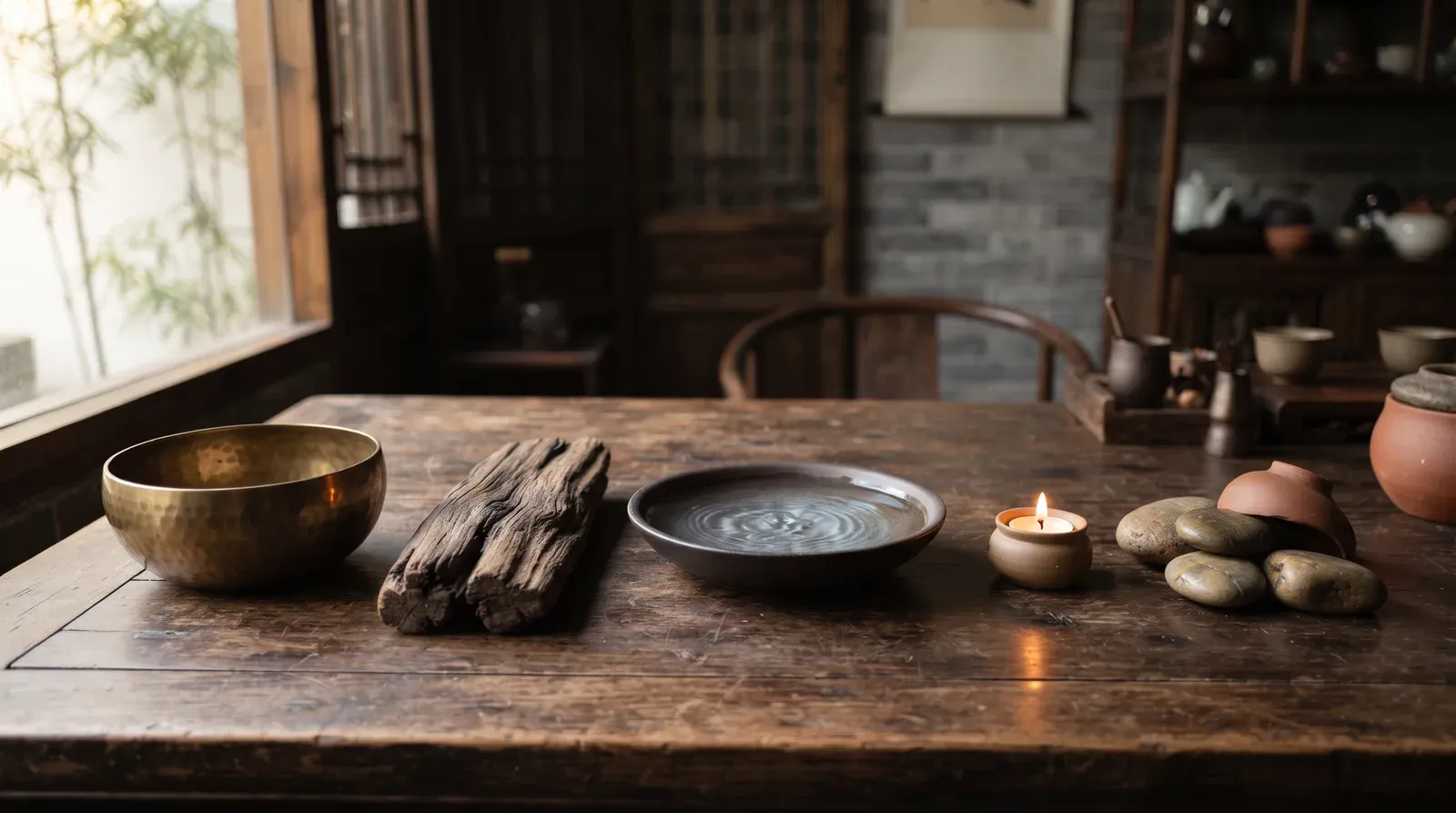
In traditional Chinese culture, the five Chinese elements (Wuxing) refer to Metal, Wood, Water, Fire, and Earth. In ancient astronomy, they originally matched the 5 classical planets visible to the naked eye: Venus, Jupiter, Mercury, Mars, and Saturn. Sinologist Nathan Sivin pointed out that their core concept is not static material substances as in classical Western philosophy, but five phases of change, transformation processes, or active agents, focusing on movement, change, and qualities. In terms of seasonal rhythm, a year was divided into 5 phases of about 73 days each to mirror the repeating cycles of nature.
| Element | Classical Quality | Direction | Color | Season and Climate |
|---|---|---|---|---|
| Wood | Bending and straightening (Quzhi) | East | Azure, green | Spring (sprouting and growth, wind) |
| Fire | Flaming upward (Yanshang) | South | Crimson, red | Summer (flourishing and fruiting, heat) |
| Earth | Sowing and reaping (Jiasi) | Center | Yellow | Late summer or summer transition (stability and harmony, dampness) |
| Metal | Yielding and changing (Congge) | West | White | Autumn (gathering and harvest, dryness) |
| Water | Moistening downward (Runxia) | North | Black, dark | Winter (storing and dormancy, cold) |
The Hongfan chapter of the Book of Documents gives the classic definitions of the five properties: Water is moistening downward, Fire is flaming upward, Wood is bending and straightening, Metal is yielding and changing, and Earth is sowing and reaping. It also matches them with five flavors: salty from moistening downward, bitter from flaming upward, sour from bending and straightening, pungent from yielding and changing, and sweet from sowing and reaping. In the spatial model, Wood in the east pairs with azure or green, Fire in the south with crimson or red, Earth in the center with yellow, Metal in the west with white, and Water in the north with black or dark tones.
How Do the Chinese Elements Generate and Overcome Each Other?
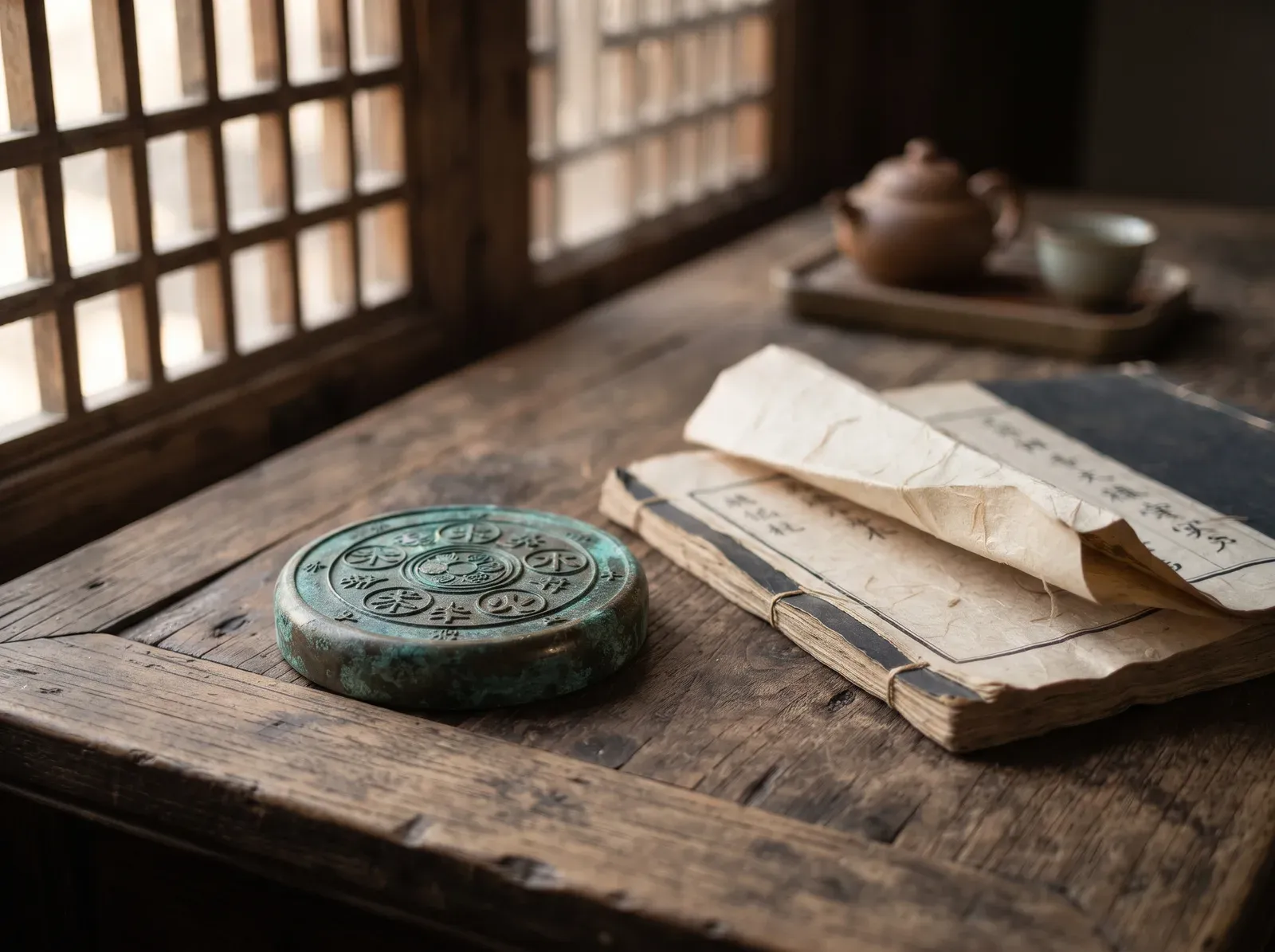
The generating cycle of the Chinese elements follows the order of Wood feeds Fire, Fire creates Earth, Earth bears Metal, Metal enriches Water, and Water nourishes Wood, forming a one-way chain of energy transfer. In nature, this process appears as wood feeding flame, fire leaving behind ash as soil, soil containing metal ores, metal gathering moisture, and water nourishing plants. If you observe things nurturing one another, you can follow the generating chain to trace the transfer of energy; if you explore natural constraints, you can compare how axes felling wood and water extinguishing fire consume each other in the overcoming chain.
The overcoming cycle runs as Metal chops Wood, Wood parts Earth, Earth dams Water, Water puts out Fire, and Fire melts Metal, representing mutual restraint and consumption. This control mirrors axes cutting timber, roots piercing soil, earth dams holding back floods, water extinguishing blazes, and intense heat melting metal. Overcoming acts as a necessary check to keep natural systems balanced.
Beyond the standard cycles of generation and restraint, the theory includes unbalanced states known as overacting (excessive control) and insulting (counter-restriction). Ancient philosophy and traditional medicine use these two irregular dynamics to explain natural disasters and human illness.
How Do the Elements Relate to Organs, Emotions, and Virtues?
Traditional Chinese medicine matches the five elements to internal organ systems: Wood connects to the liver and gallbladder, Fire to the heart and small intestine, Earth to the spleen and stomach, Metal to the lungs and large intestine, and Water to the kidneys and bladder. Han dynasty scholars further brought the elements into ethics, shaping the Five Constants system: benevolence for Wood, propriety for Fire, trust for Earth, righteousness for Metal, and wisdom for Water. If you explore emotional physiology, you can compare relationships between emotions and organs, such as excessive anger harming the liver or excessive grief harming the lungs; if you examine social ethics, you can look to the standard that heaven has five elements and humanity has five constants.
| Element | Organ System | Linked Emotion | Classical Flavor | Confucian Virtue |
|---|---|---|---|---|
| Wood | Liver and gallbladder | Anger (excess anger harms the liver) | Sour | Benevolence (Ren) |
| Fire | Heart and small intestine | Joy (excess excitement harms the heart) | Bitter | Propriety (Li) |
| Earth | Spleen and stomach | Pensiveness (excess worry harms the spleen) | Sweet | Trustworthiness (Xin) |
| Metal | Lungs and large intestine | Grief (excess grief harms the lungs) | Pungent | Righteousness (Yi) |
| Water | Kidneys and bladder | Fear (excess fear harms the kidneys) | Salty | Wisdom (Zhi) |
Chinese medicine holds that the five solid organs closely reflect emotional states: the liver governs anger, and excessive anger injures it; the heart governs joy, and excessive excitement harms it; the spleen governs pensiveness, and obsessive worry hurts it; the lungs govern grief, and severe grief damages them; the kidneys govern fear, and acute fright harms them. Extreme emotional swings can damage the corresponding organ systems.
Scholars in the Han dynasty introduced the theory into Confucian ethics, creating the system of five constant virtues: Wood represents benevolence, Fire represents propriety, Earth represents trustworthiness, Metal represents righteousness, and Water represents wisdom. They proposed that just as Heaven has five phases, humans have five virtues, extending the philosophy into standards of social conduct and personal cultivation.
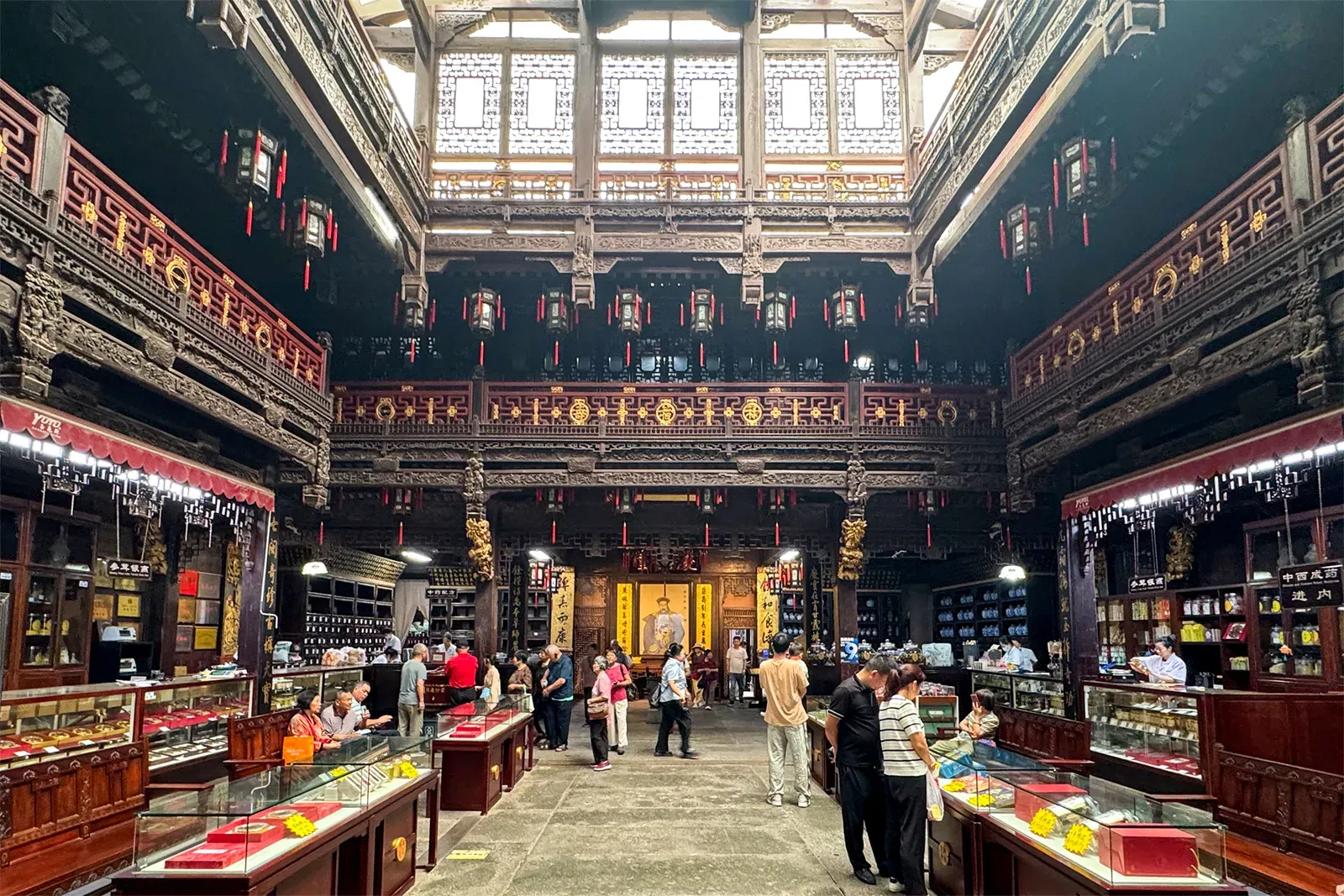
Which Beijing Altars and Forbidden City Buildings Use Element Design?
The Altar of Land and Grain (Shejitan) in Zhongshan Park is the only surviving Ming and Qing imperial altar of its kind. The top terrace of the square altar displays five-colored earth arranged by the five directions. Yellow soil sits in the center, green in the east, red in the south, white in the west, and black in the north, symbolizing imperial authority across all corners of the realm.
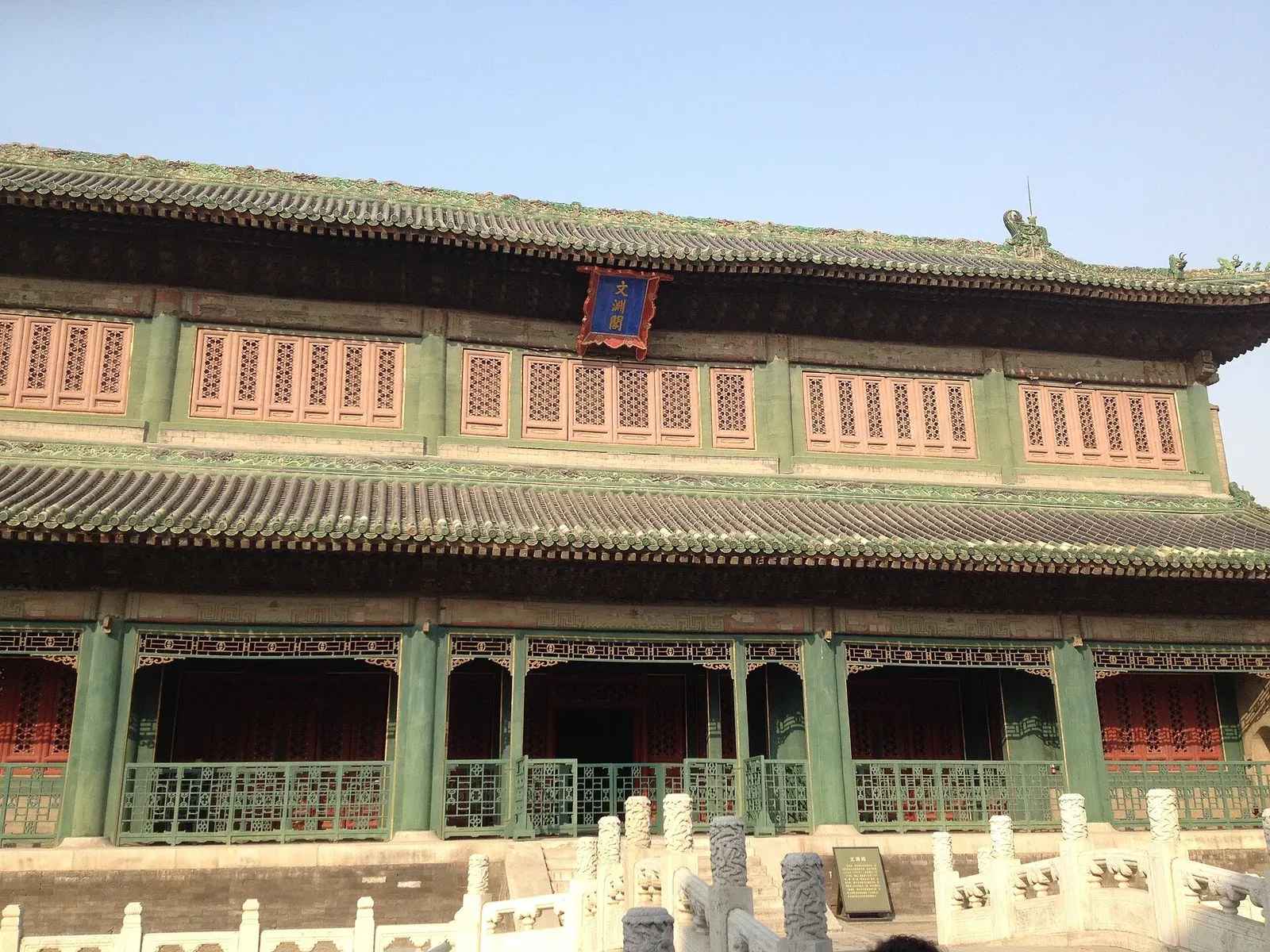
Wenyuan Chamber (Wenyuange) in the Forbidden City was built in 1776 during the Qianlong reign as an imperial library for the Complete Library in Four Sections (Siku Quanshu). Its front facade spans six bays, reflecting the numerological concept that Heaven generates water as one and Earth completes it as six. The roof features black glazed tiles with green edging. In traditional theory, black represents water, expressing the hope that water would conquer fire and protect the library from blazes.
Scene: Wenyuan Chamber opened its exterior grounds to visitors on April 29, 2013, while preserving its interior displays. You can view the distinctive black glazed tile roof, stone bridge, and pool from the perimeter, though walking inside the building is not permitted.
Beijing's Altar of the Sun (Ritan) stands outside Chaoyangmen in the east, which corresponds to Wood. Ming and Qing emperors held ceremonies here at the spring equinox. Its auxiliary buildings feature green glazed tiles and azure glazed walls with green borders to align with the wood element's green hues. The Altar of the Earth (Ditan) sits north of Andingmen. Its main square platform symbolizes the earth; according to Yin-Yang theory, earth is Yin, so its terrace steps number eight, the altar surface measures six square zhang, and all flagstones follow even Yin numbers.
How Did Imperial Dynasties and the Calendar Use the Five Phases?
During the Warring States period, Qi thinker Zou Yan founded the theory of the End and Beginning of the Five Virtues, applying the five elements to dynastic fortunes. The Qin dynasty held that water overcame the fire of Zhou to succeed it, claiming the virtue of Water and favoring black clothing. In the first year of the Taichu era, Emperor Wu of Han adjusted court dress to align with the virtue of Earth and yellow, while toward the end of the Western Han, Liu Xin and others proposed the mutual generation of the five virtues. If you study the shifts in dynastic court clothing colors, you can trace the flow of virtues between Water favoring black and Earth favoring yellow; if you consult the stem-branch calendar, you can refer to Huainanzi to compare how stems and branches are paired, such as Jia, Yi, Yin, and Mao belonging to Wood, and Ren, Gui, Hai, and Zi belonging to Water.
| Element | Generative Numbers | Heavenly Stems | Earthly Branches |
|---|---|---|---|
| Wood | Heaven three generates Wood, Earth eight completes it (3 and 8 in the east) | Jia, Yi | Yin, Mao |
| Fire | Earth two generates Fire, Heaven seven completes it (2 and 7 in the south) | Bing, Ding | Si, Wu |
| Earth | Heaven five generates Earth, Earth ten completes it (5 and 10 in the center) | Wu, Ji | Chen, Xu, Chou, Wei (interseasonal months) |
| Metal | Earth four generates Metal, Heaven nine completes it (4 and 9 in the west) | Geng, Xin | Shen, You |
| Water | Heaven one generates Water, Earth six completes it (1 and 6 in the north) | Ren, Gui | Hai, Zi |
The Huainanzi chapter on astronomy records the distribution of stems and branches: Jia, Yi, Yin, and Mao belong to Wood; Bing, Ding, Si, and Wu belong to Fire; Wu, Ji, and the four seasonal branches (Chen, Xu, Chou, and Wei) belong to Earth; Geng, Xin, Shen, and You belong to Metal; Ren, Gui, Hai, and Zi belong to Water. In traditional generative number theory, Heaven one generates Water and Earth six completes it, Earth two generates Fire and Heaven seven completes it, Heaven three generates Wood and Earth eight completes it, Earth four generates Metal and Heaven nine completes it, and Heaven five generates Earth and Earth ten completes it, aligning mathematics with directions.
How Do Tai Chi and Feng Shui Apply Elemental Balance?
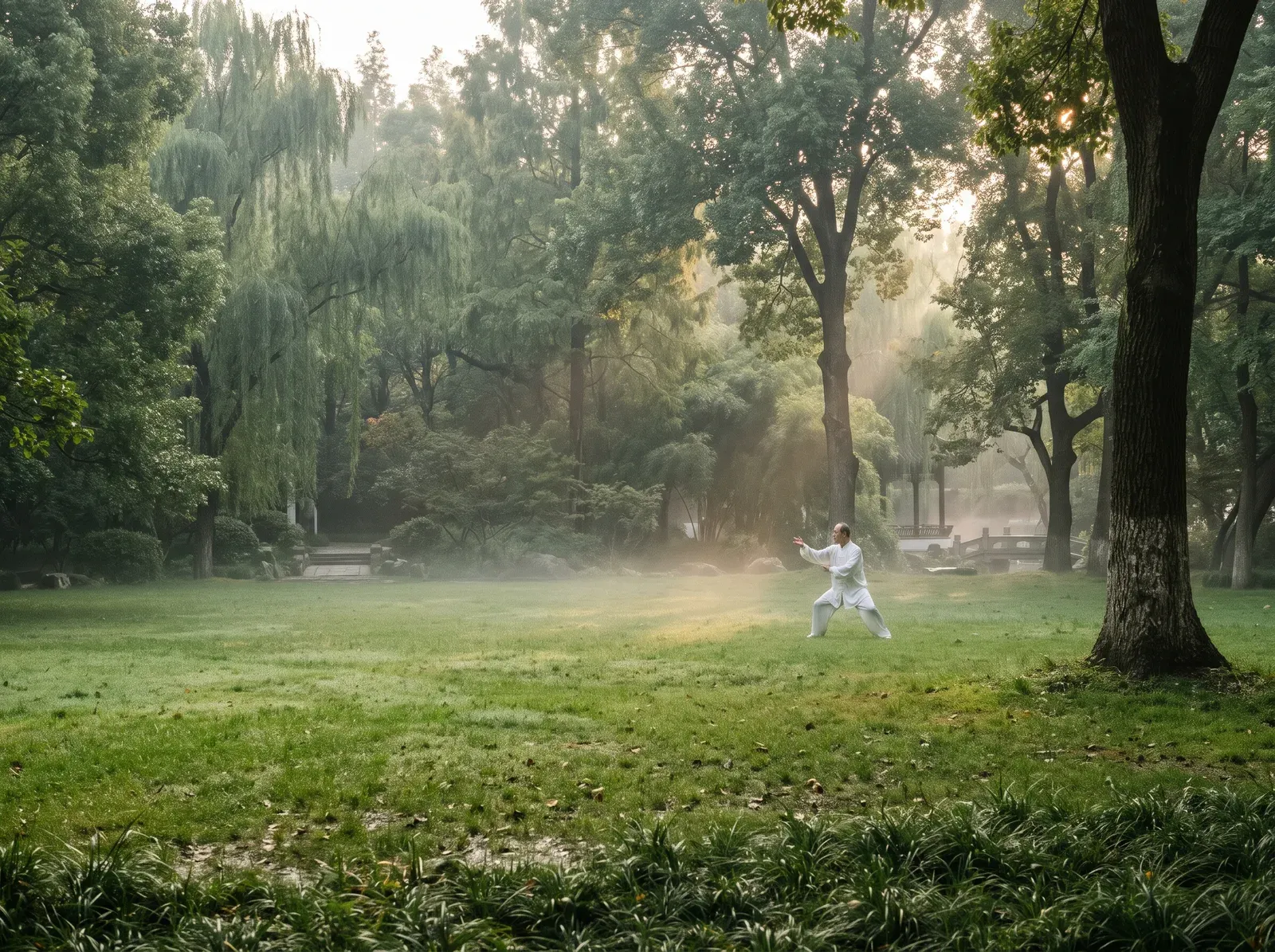
The five steps of Tai Chi incorporate forward advance, backward retreat, looking right, glancing left, and central equilibrium into movement and posture. Central equilibrium represents central Earth and the body's balancing axis, serving as the foundational core for upright alignment throughout the routine.
In traditional Feng Shui, spatial arrangement and environmental design rest on the generating and overcoming interactions. Building orientation, shapes, colors, and building materials are coordinated and balanced according to elemental qualities to harmonize airflow and atmosphere within living spaces.
When you walk through the Forbidden City and inspect Wenyuan Chamber alongside the main halls, you can see how alignments and colors follow elemental orientations. If you practice Tai Chi in the morning, you can also experience how central equilibrium, rooted in Earth, supports a steady posture through the five steps.
What Are the Most Common Misunderstandings for Beginners?
Many beginners mistake these phases for physical elements in classical Western philosophy. Sinologist Nathan Sivin emphasized that the Chinese concept does not describe static matter, but five transformation processes, changing stages, or active agents, focusing on movement and transition.
Another misconception is that generation is inherently good and overcoming is harmful. In traditional theory, too much generation leads to excess, while appropriate overcoming provides a vital restraint to preserve balance. If control goes too far, overacting results; if an element pushes back against its restrainer, insulting occurs.
When visiting the Forbidden City, do not mistake Wenyuan Chamber's black glazed tiles for vernacular building standards or faded aging. Qing imperial architects used this specific design based on the principle of water quenching fire, calling on northern dark water to ward off fires.
Sources
Wuxing (Chinese philosophy) - Wikipedia
Wuxing - Wikipedia
Beijing Shejitan - Wikipedia
Wenyuan Chamber - Wikipedia
Ritan - Wikipedia
Ditan - Wikipedia
Temple of Heaven - Wikipedia
Sources verified on November 17, 2026
FAQ
Why shouldn't the Chinese elements be translated simply as classical elements?
Classical Western elements focus on static physical components of the world. Sinologist Nathan Sivin noted that China's Five Phases (Five Agents) center on stages of change and transformation processes, focusing on active transitions across time and space.
What are the generating and overcoming orders of the five elements?
The generating order is Wood feeds Fire, Fire creates Earth, Earth bears Metal, Metal enriches Water, and Water nourishes Wood, marking continuous energy transfer. The overcoming order is Metal chops Wood, Wood parts Earth, Earth dams Water, Water puts out Fire, and Fire melts Metal, representing restraint and balance.
Why does Wenyuan Chamber in the Forbidden City have a black glazed tile roof?
Built in 1776 to store the Siku Quanshu, Wenyuan Chamber was designed around water symbolism. In directional theory, the north belongs to Water and favors black. The six-bay facade reflects the idea that Heaven generates water as one and Earth completes it as six, using black tiles with green borders so water would suppress fire and guard the library.
What do the five-colored soils at Beijing's Shejitan represent?
The top terrace of Shejitan in Zhongshan Park arranges soil according to the five cardinal directions: yellow in the center, green in the east, red in the south, white in the west, and black in the north. This soil arrangement symbolizes sovereign dominion across all territories of the empire.
How do the elements correspond to organs and emotions in Chinese medicine?
Wood pairs with the liver, gallbladder, and anger; Fire pairs with the heart, small intestine, and joy; Earth pairs with the spleen, stomach, and pensiveness; Metal pairs with the lungs, large intestine, and grief; Water pairs with the kidneys, bladder, and fear. Intense emotional extremes are believed to damage their corresponding organ systems.