
Weather in Hong Kong, China: Year-Round Temperatures

According to Hong Kong Observatory monthly normals from 1991 to 2020, the weather in Hong Kong, China has an annual mean temperature of 23.5°C, with a mean daily maximum of 26.0°C and a mean daily minimum of 21.6°C. Hong Kong sits in the subtropics, and the climate is extremely mild for nearly half the year. Across monthly records, July is the hottest month with a mean temperature of 28.9°C, and January is the coolest at 16.5°C.
How Do Hong Kong's Monthly Temperatures and Rainfall Compare?
Based on Hong Kong Observatory monthly normals from 1991 to 2020, monthly mean temperatures in Hong Kong fluctuate between 16.5°C and 28.9°C, and the annual mean relative humidity is 78%. Relative humidity peaks at an average of 83% in April and May, and drops to its lowest at 70% in December.
In terms of rainfall, about 80% of Hong Kong's annual precipitation falls between May and September. June and August are usually the wettest months, while January and December see the least rain. Ping Chau receives about 1,400 mm of rain annually, while areas near Tai Mo Shan exceed 3,000 mm. See the table below for complete monthly temperatures and climate figures.
| Month | Monthly Mean Temperature | Mean Daily Maximum | Mean Daily Minimum | Humidity and Rainfall Characteristics |
|---|---|---|---|---|
| January | 16.5°C | 18.7°C | 14.6°C | One of the months with the least rainfall |
| February | 17.1°C | 19.4°C | 15.3°C | More cloud cover, with occasional dry northern winds |
| March | 19.5°C | 21.9°C | 17.6°C | Mild but occasionally very humid, often foggy |
| April | 23.0°C | 25.6°C | 21.1°C | Average relative humidity peaks at 83% |
| May | 26.3°C | Not listed separately | Not listed separately | Average relative humidity peaks at 83%, rainy season begins |
| June | 28.3°C | Not listed separately | Not listed separately | One of the wettest months of the year |
| July | 28.9°C | 31.6°C | Not listed separately | Hottest month of the year, usually with 1 to 2 weeks of clear weather |
| August | 28.7°C | Not listed separately | Not listed separately | One of the wettest months of the year, afternoon temperatures often exceed 31°C |
| September | 27.9°C | Not listed separately | Not listed separately | Tail end of the rainy period from May to September |
| October | 25.7°C | Not listed separately | Not listed separately | Temperatures start to drop |
| November | 22.2°C | Not listed separately | Not listed separately | Regarded by many as having the best weather, pleasant and sunny |
| December | 18.2°C | Not listed separately | Not listed separately | Lowest average relative humidity at 70%, one of the months with the least rain |
| Annual | 23.5°C | 26.0°C | 21.6°C | Annual mean relative humidity is 78% |
Tip: Average relative humidity reaches up to 83% in April and May, so pack breathable, quick-drying clothing before your trip.

How Do the Four Seasons in Hong Kong Differ in Weather and Comfort?
Spring in March and April is mild but can be extremely humid. Fog and drizzle reduce visibility, sometimes interrupting flight and ferry services. Summer from May to August is hot and humid, with afternoon temperatures often rising above 31°C and nighttime temperatures staying around 26°C, alongside frequent morning showers and thunderstorms. July usually brings 1 to 2 weeks or more of clear weather.
In autumn and winter, many consider November and December to have the finest weather, with pleasant breezes, sunny skies, and moderate temperatures. January and February bring more cloud cover, with occasional cold fronts carrying dry northern winds. Urban temperatures sometimes drop below 10°C, while the New Territories and high ground can fall below 0°C with frost.
According to Hong Kong Observatory climate records, summer mornings often bring showers and thunderstorms, with afternoon temperatures rising above 31°C. When cold fronts pass in winter, morning vegetation in the New Territories and high ground sometimes sees frost.
If you prefer outdoor walks in mild, sunny weather, plan your visit for November and December. If you want to avoid humid, foggy conditions, steer clear of March and April.
Tip: Bring a warm coat if you visit the New Territories or high ground during winter, as temperatures can drop below 0°C with frost.
How Do Tropical Cyclones and Rainstorm Warnings Affect Your Plans?
Hong Kong can experience tropical cyclones between May and November, with July to September being the most likely months. The rainstorm warning system has three color levels: Amber, Red, and Black. These indicate that heavy rain exceeding 30 mm, 50 mm, and 70 mm per hour has fallen or is expected across wide areas of Hong Kong.
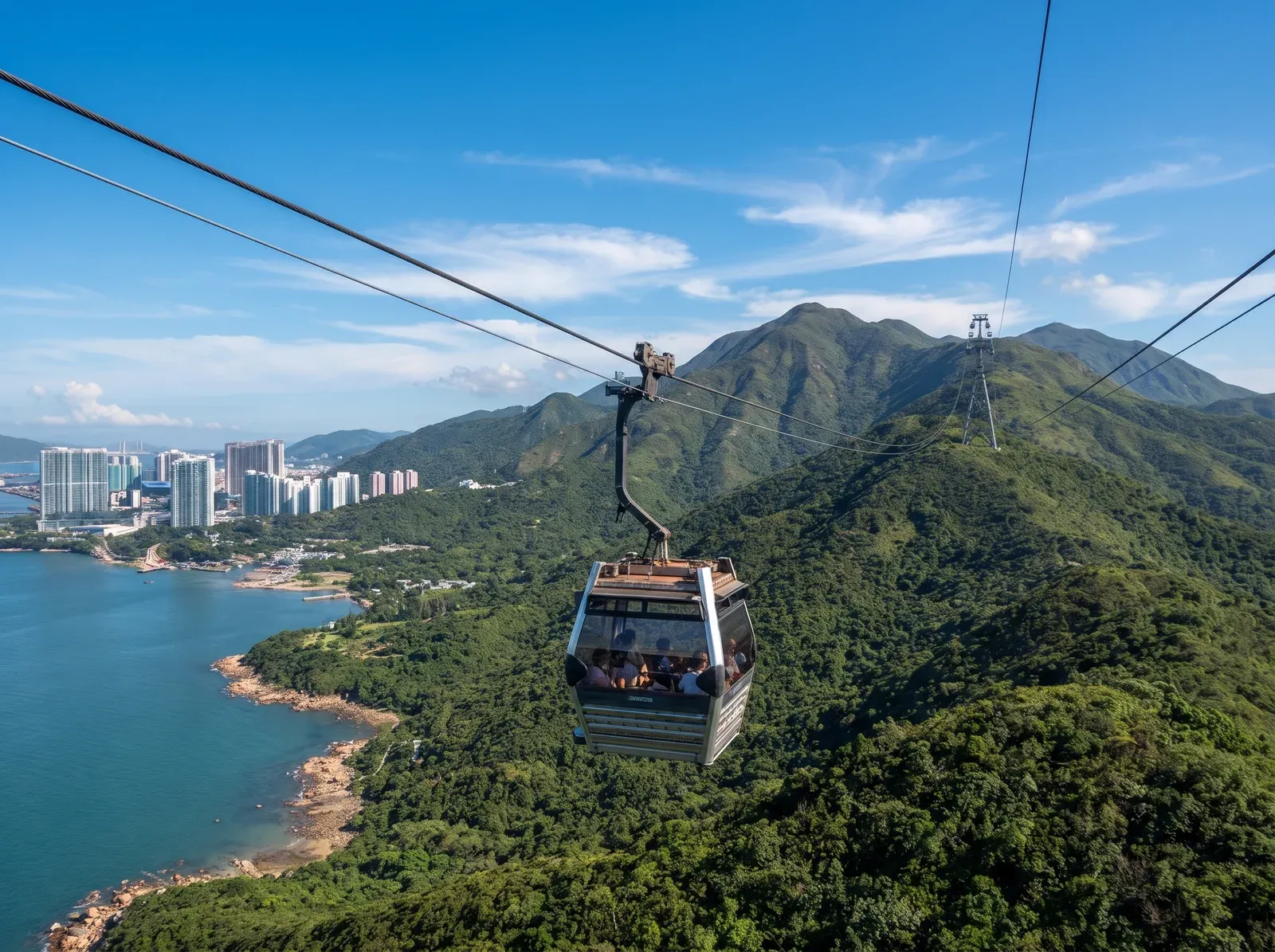
When the Hong Kong Observatory issues the Gale or Storm Signal No. 8, the Ngong Ping 360 cable car closes, all ferries stop running, and almost all buses and minibuses suspend service. The MTR runs limited services, and while the airport remains open, flights may be affected.
When Hong Kong issues Signal No. 9 or No. 10, the MTR suspends almost all open-air and elevated track sections, including the entire Airport Express and Disneyland Resort Line.
Tip: When the Hong Kong Observatory issues Signal No. 8, Ngong Ping 360 and ferry services close down, so stay indoors in a safe area.
First Time in Hong Kong? What Weather and Local Etiquette Should You Know?
Ping Chau receives around 1,400 mm of annual rainfall, whereas the area around Tai Mo Shan gets over 3,000 mm, showing sharp differences between mountain and island areas. Pack rain gear tailored to the specific regions you plan to visit.
According to the Hong Kong Tourism Board, locals stand on the right side of escalators so others can pass on the left, and you should prepare your Octopus card or ticket before reaching transit fare gates. In addition, smoking is strictly prohibited in all indoor public areas and designated outdoor spots, with offenders facing a fixed penalty of HK$3,000.
Tip: Stand on the right on escalators, get your Octopus card or ticket ready before reaching fare gates, and never smoke in indoor or non-smoking outdoor areas.
Sources
Climate of Hong Kong | Hong Kong Observatory (HKO)
Monthly Meteorological Normals for Hong Kong | Hong Kong Observatory (HKO)
Rainstorm Warning System | Hong Kong Observatory (HKO)
Hong Kong Tropical Cyclone Warning Signals | Wikipedia
Practical Guide | Hong Kong Tourism Board
Sources verified on November 17, 2026.
FAQ
Which months offer the best travel weather in Hong Kong?
Many consider November and December to have the finest weather, with clear, sunny skies and moderate temperatures. December has an average temperature of 18.2°C and the year's lowest average relative humidity at 70%.
How high do summer afternoon temperatures usually get in Hong Kong?
Afternoon temperatures from May to August often climb above 31°C, while nighttime temperatures stay around 26°C. In July, the hottest month of the year, the mean daily maximum reaches 31.6°C.
Does it freeze or drop below zero in Hong Kong during winter?
In January and February, urban temperatures sometimes fall below 10°C, though they do not drop below 0°C. In the New Territories and high ground, temperatures occasionally drop below 0°C with frost.
Which months are most prone to typhoons in Hong Kong?
Hong Kong can experience tropical cyclones from May to November, with July to September being the months most likely to be affected.
What rainfall thresholds trigger the three rainstorm warning levels?
Hong Kong's rainstorm warning system uses three color signals: Amber, Red, and Black. They indicate that heavy rain exceeding 30 mm, 50 mm, and 70 mm per hour has been recorded or is expected over wide areas of Hong Kong.