
First Trip to Tibet: Permits and Classic Routes
Foreign travelers visiting Tibet and its autonomous region must obtain an entry permit through a specialized local travel agency in China and travel as part of an organized tour group. Lhasa, the capital, sits at an altitude of about 3,656 meters, making it one of the highest cities in the world and the second most populated city on the plateau after Xining. When planning a first journey here, travelers need to arrange official permits first, then explore regional World Heritage sites and high-altitude railways.
What rules and permits do foreign travelers need to visit Tibet?
Foreign citizens cannot travel independently to the region and must obtain approval from Chinese authorities in advance. Under official rules, foreign tourists are only permitted to enter as members of an organized tour group, and travel permits must be handled through specialized local travel agencies in China.
The core requirement involves group organization and qualification checks. Individual independent travelers cannot apply directly to government offices for these documents, and all travel arrangements must be organized through official tour groups.
What classic World Heritage sites can you visit on a first trip?
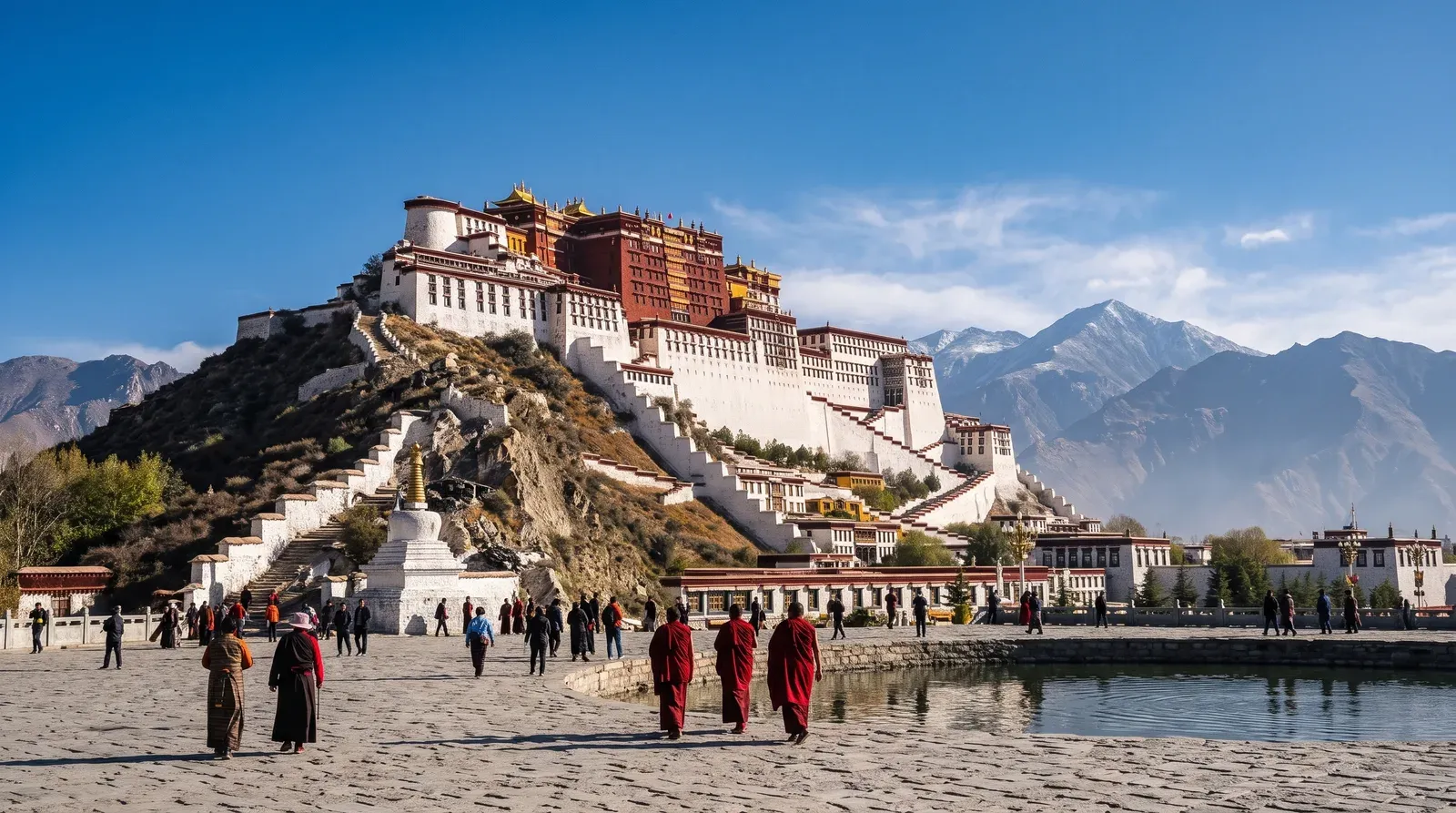
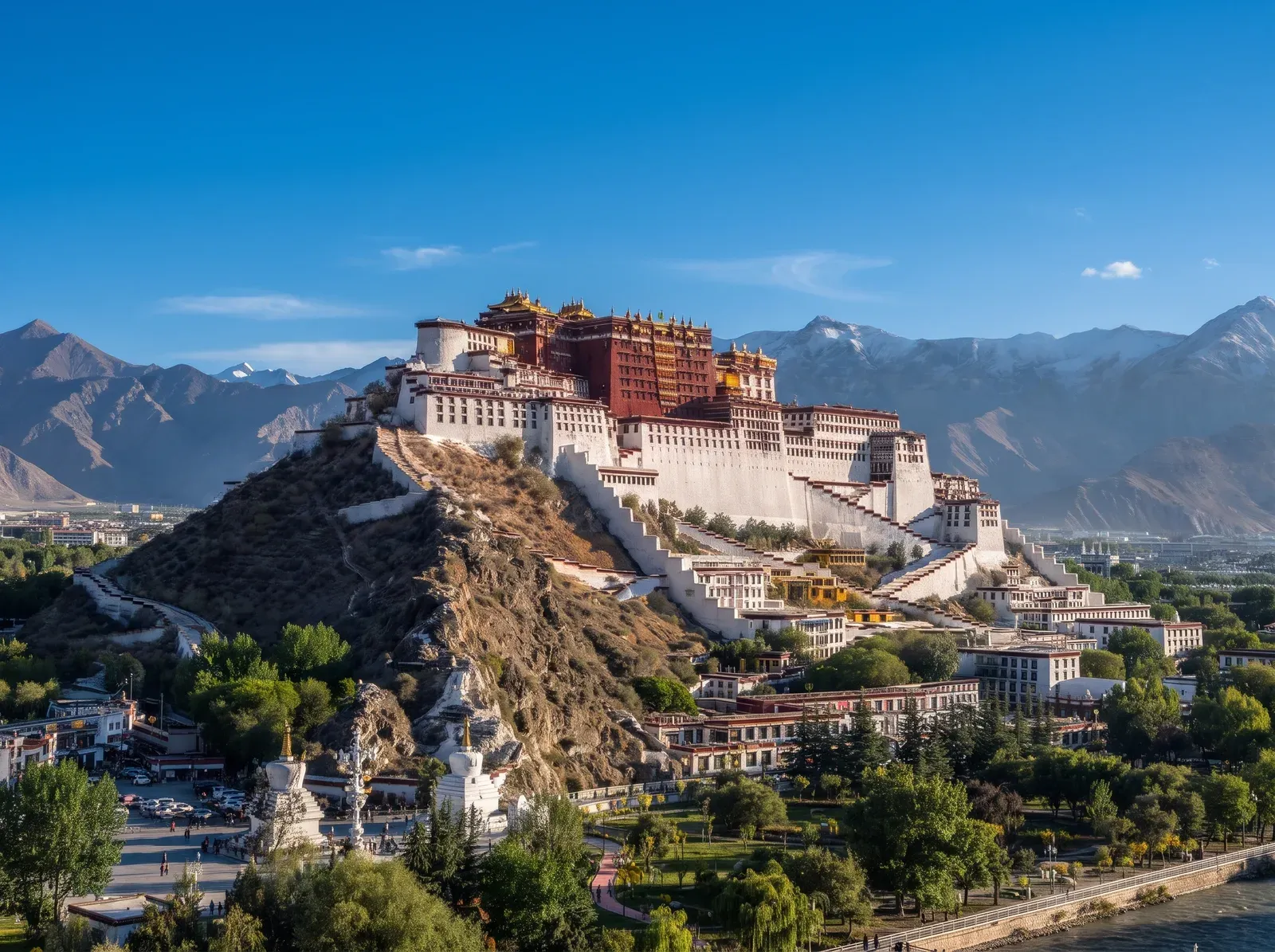
The regional capital Lhasa features a historic cluster of World Heritage properties. The Potala Palace stands atop Red Mountain at an altitude of 3,700 meters in the center of the Lhasa River valley. Thick walls of rammed earth and stone, gates, and corner towers surround the White Palace, the Red Palace, and ancillary buildings, which were inscribed on the UNESCO World Heritage list in 1994.
Jokhang Temple and Norbulingka are extension properties of the Potala Palace heritage site. UNESCO inscribed Jokhang Temple in 2000 and Norbulingka in 2001 as extensions to the listing. Norbulingka was built in the 18th century as the summer palace of successive Dalai Lamas, located along the bank of the Lhasa River about 2 kilometers west of the Potala Palace.
| Heritage Site | Structure and Historical Role | Year Inscribed | Location and Altitude |
|---|---|---|---|
| Potala Palace | Thick walls of rammed earth and stone surrounding the White Palace, Red Palace, and ancillary structures | 1994 | On Red Mountain at an altitude of 3,700 meters in the Lhasa River valley |
| Jokhang Temple | Major Buddhist temple and World Heritage extension site | 2000 | Located in the capital city Lhasa (altitude about 3,656 meters) |
| Norbulingka | 18th-century summer palace of successive Dalai Lamas | 2001 | On the Lhasa River bank about 2 kilometers west of the Potala Palace |
What high-altitude features do plateau railway trains have?
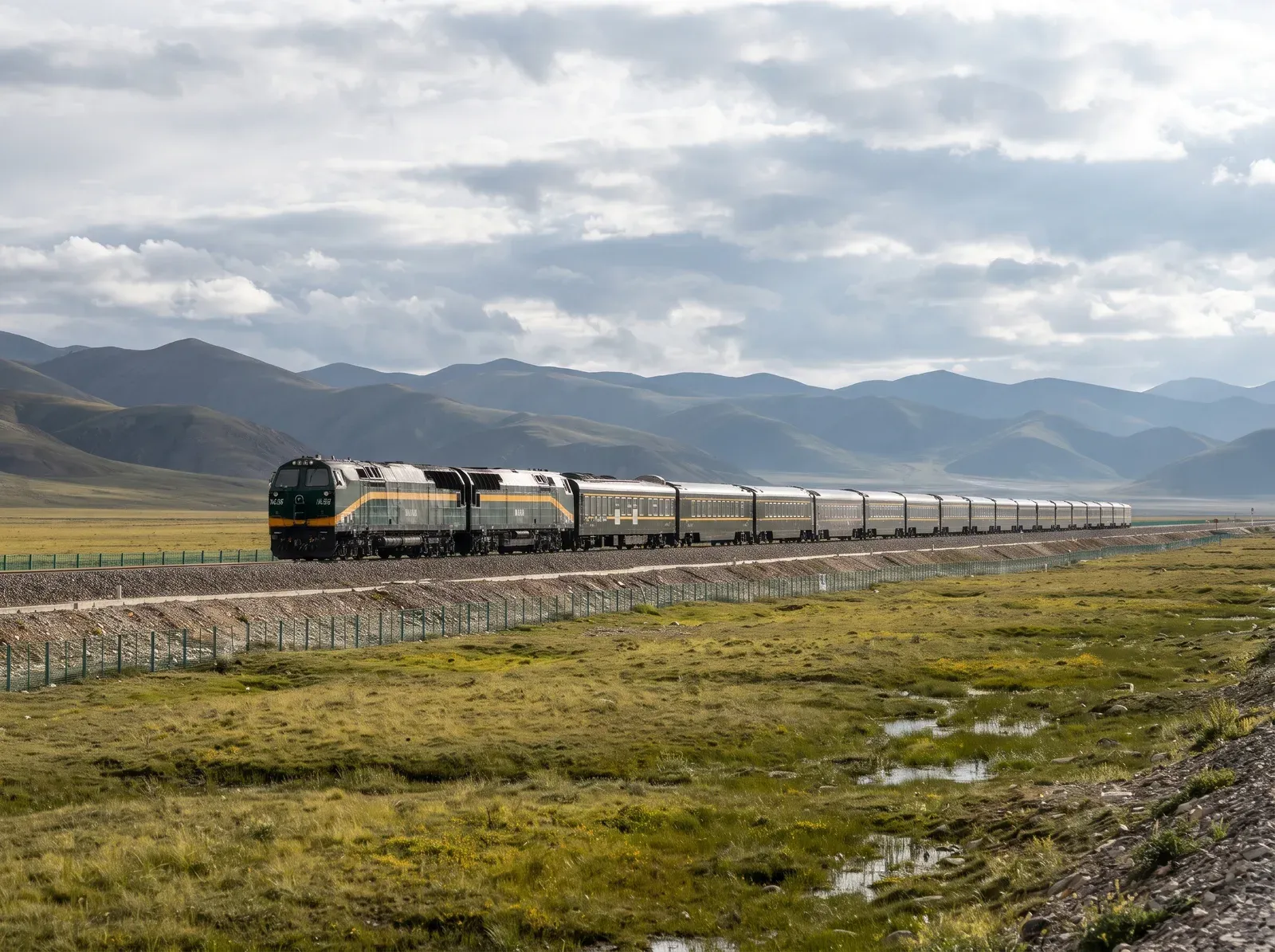
The railway across the plateau is the highest rail line in the world, with over 960 kilometers of track above an altitude of 4,000 meters. Trains pass through the Tanggula Pass at an altitude of 5,072 meters, which is the highest rail point in the world. Tanggula railway station along the line sits at an altitude of 5,068 meters, making it the highest railway station on Earth.
Bombardier built 361 specialized high-altitude passenger railcars for this plateau line. These train cars are equipped with enriched-oxygen diffusion systems and ultraviolet-filtering systems.
Passenger trains to Lhasa run from several cities across China. Travelers can depart from Beijing, Chengdu, Chongqing, Guangzhou, Shanghai, Xining, or Lanzhou. During peak season, passenger capacity on a single train ranges between 800 and 1,000 people.
| Route Section or Facility | Features and Configuration | Key Altitude and Size Figures |
|---|---|---|
| High-altitude rail section | Highest railway in the world | Over 960 kilometers of track above an altitude of 4,000 meters |
| Tanggula Pass section | Highest rail point in the world crossed by the line | Railway track passes at an altitude of 5,072 meters |
| Tanggula Station | Highest railway station in the world | Station sits at an altitude of 5,068 meters |
| Plateau passenger cars | Built by Bombardier, equipped with oxygen diffusion and UV protection | 361 high-altitude railcars built in total |
| Direct passenger trains | Departure cities include Beijing, Chengdu, Chongqing, Guangzhou, Shanghai, Xining, and Lanzhou | Peak-season capacity between 800 and 1,000 passengers per train |
How can you travel beyond Lhasa to Shigatse by rail?
After touring Lhasa, travelers can take the Lhasa-Shigatse railway to Shigatse. This line is an extension of the plateau railway, connecting the two cities.
Construction on the Lhasa-Shigatse railway, an extension of the main line, began on September 26, 2010, and official operations began in August 2014. After sightseeing in Lhasa, travelers can ride trains on this route to visit Shigatse.
What photography rules apply when visiting Buddhist monasteries?
Visiting monasteries across the region requires following site regulations. Under these rules, tourists must obtain permission from monastery staff before taking any photographs inside.
Taking photos inside temple halls requires prior consent from the monastery. Anyone wishing to take pictures should ask first, as unauthorized photography is strictly prohibited inside the buildings.
Sources
Lhasa - Wikipedia
Historic Ensemble of the Potala Palace, Lhasa - UNESCO World Heritage Centre
Plateau railway line - Wikipedia
Sources verified on November 6, 2026
FAQ
Can foreign tourists rent a car and travel independently in the region?
No. Foreign citizens visiting the region must obtain official approval, arrange their travel permits through a qualified local agency in China, and travel as part of an organized tour group.
Which cities have direct trains to Lhasa?
Direct passenger trains run to Lhasa from Beijing, Chengdu, Chongqing, Guangzhou, Shanghai, Xining, and Lanzhou. During peak season, each train carries between 800 and 1,000 passengers.
Do trains on the highland plateau railway have oxygen equipment?
Yes. Bombardier built 361 specialized railcars for the route, each equipped with an oxygen diffusion system and UV-filtering systems.
What are the rules for taking photos inside monasteries?
Visitors must get permission from the monastery before taking photos inside Tibetan Buddhist monasteries, and photography is not allowed in the main halls without that permission.
Is there a direct train between Lhasa and Shigatse?
Yes. The Lhasa-Shigatse railway opened for regular service in August 2014 as an extension of the plateau line, allowing passengers to travel directly between both cities.