
Silk Road Express Train: Routes and Travel Guide
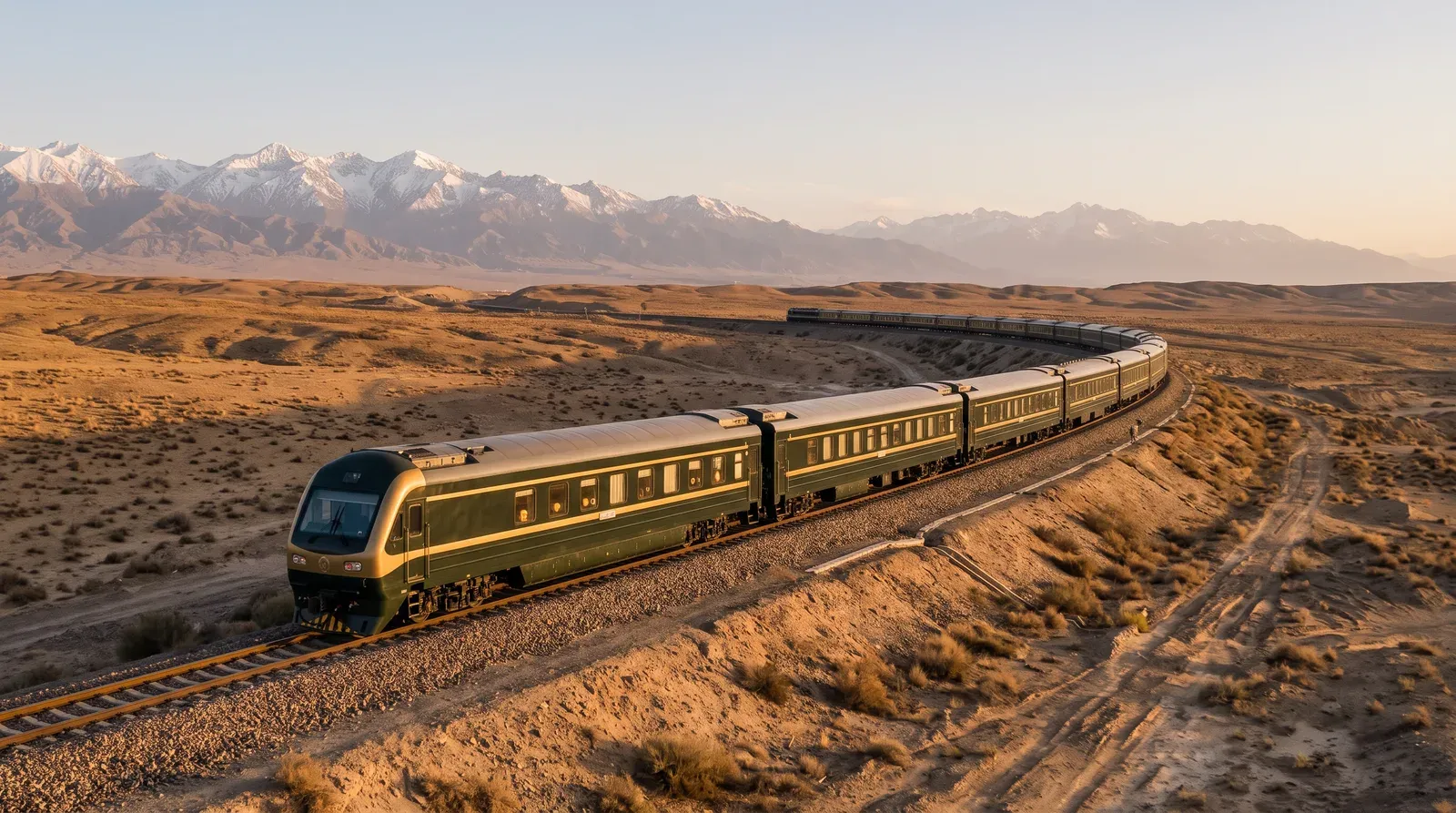
Choosing a Silk Road express train comes down to matching the railway route and cabin facilities to your travel plans. Rail lines in northwest China mainly rely on the 1,786-kilometer Lanzhou-Xinjiang High-Speed Railway, the 2,413-kilometer conventional Lanzhou-Xinjiang Railway, and the Dunhuang-Golmud Railway, connecting key cities across Gansu, Qinghai, and Xinjiang. Special tourist trains operated by the railway department feature multi-function leisure cars and private sleeper compartments for long-distance travel.
Which main railway routes does a Silk Road express train follow?
The trunk rail routes center on the Lanzhou-Xinjiang Railway and the Lanzhou-Xinjiang High-Speed Railway. The conventional Lanzhou-Xinjiang Railway runs from Lanzhou Station (兰州站) to Alashankou Station (阿拉山口站) in Xinjiang, covering 2,413 kilometers. The Lanzhou-Xinjiang High-Speed Railway starts at Lanzhou West Station (兰州西站) and links Zhangye, Jiuquan, and Jiayuguan, stretching 1,786 kilometers with a top designed speed of 250 km/h.
Leaving Lanzhou, the rail line crosses the 3,000-meter-high Wushaoling mountain into the Hexi Corridor. It runs along the northern foothills of the Qilian Mountains through Wuwei, Zhangye, Jiuquan, and Jiayuguan. Past Jiayuguan, it crosses Hongliuhe into Xinjiang, skirts the southern slopes of the Tianshan Mountains through Hami and Turpan, and passes Dabancheng to reach Ürümqi. In 2014, UNESCO inscribed the Silk Roads: the Routes Network of Chang'an-Tianshan Corridor on the World Heritage List.
In addition, the Dunhuang-Golmud Railway connects Dunhuang in Gansu with Golmud in Qinghai. It links to the Qinghai-Tibet Railway via Yinmaxia Station, forming a rail loop between Xining, Golmud, and Dunhuang. This line runs the K1121/1122 trains between Xining and Dunhuang as well as trains between Golmud and Dunhuang, opening a rail passage across the Qaidam Basin that completes the Qinghai-Gansu grand loop.
If you want to focus on historical oasis cities along the Hexi Corridor, you can choose the Lanzhou-Xinjiang rail routes. If you prefer to combine the Qaidam Basin with Dunhuang's grottoes, you can opt for the Qinghai-Gansu loop connected by the Dunhuang-Golmud Railway.
Tip: The Hexi Corridor stretches about 1,100 kilometers from Wushaoling in the east to Yumen Pass in the west, with a width of about 40 to 100 kilometers. Once the train crosses the 3,000-meter-high Wushaoling after leaving Lanzhou, the air turns dry, so keep drinking water handy.
What is the onboard experience like in the private cabins and carriages?
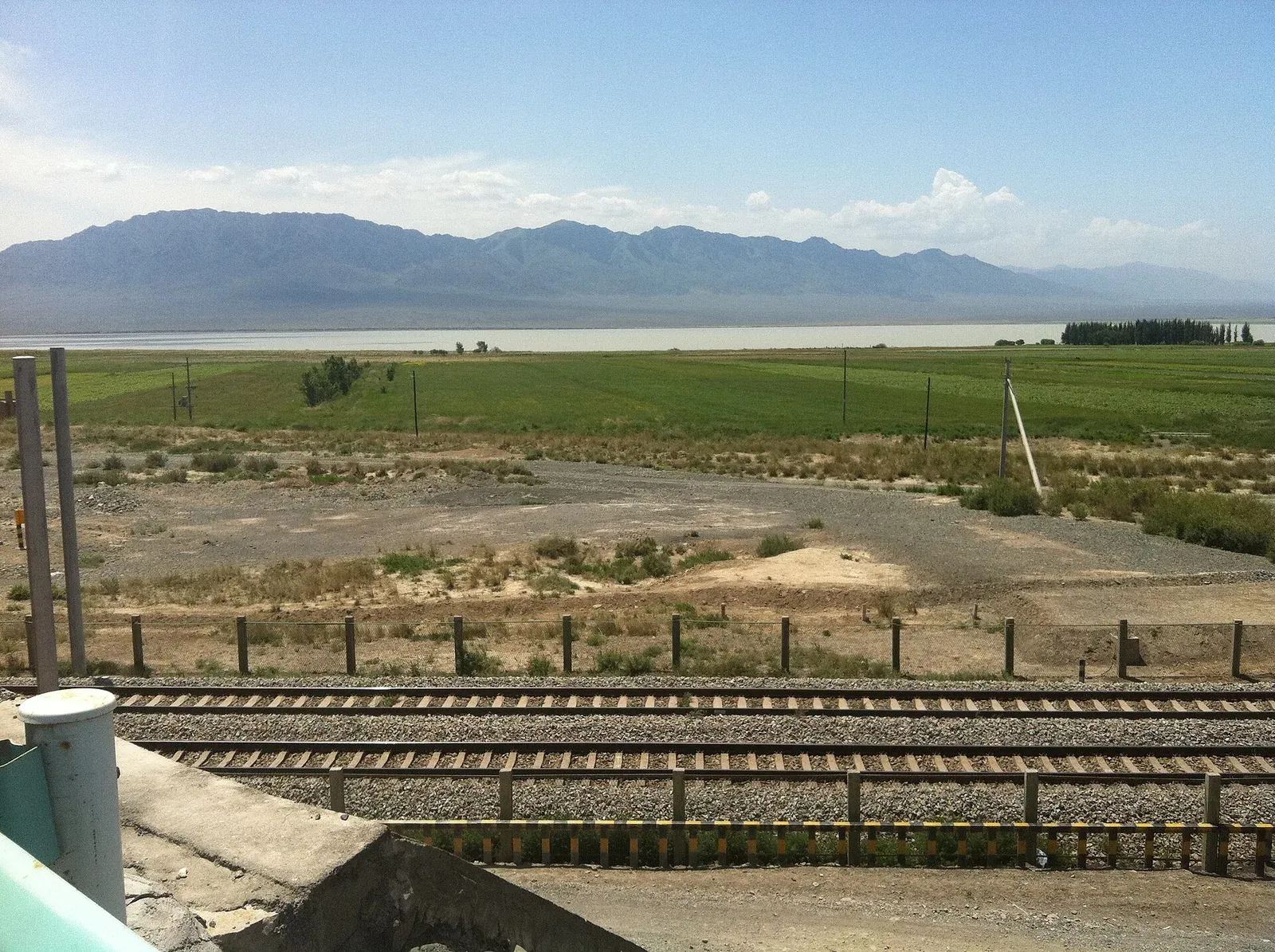
Xinjiang tourist trains continue to upgrade their facilities, offering multi-function lounge cars and dedicated sleeper compartments for travelers touring the northwest. The railway department runs several tourist trains across northern and southern Xinjiang, linking sights around the Taklamakan Desert, Kashgar, and Yili on multi-day rail journeys.
Ürümqi Station (乌鲁木齐站) is located in Saybagh District and serves as a major hub on the Lanzhou-Xinjiang High-Speed Railway. It runs direct trains to major destinations within Xinjiang, including Yining, Kashgar, Aksu, Hami, and Karamay. In traditional Chinese geography, the Northwest region covers Shaanxi, Gansu, Qinghai, Ningxia, and Xinjiang, and the railway showcases this broad transition across landscapes.
About 70% of the land along the Hexi Corridor consists of desert and gravel wasteland. Oases and major settlements follow river systems fed by snowmelt from the Qilian Mountains. From your private compartment or the lounge car, you can watch vast expanses of the Gobi Desert alternate with green oasis valleys.
Tip: Local solar time in Ürümqi runs about 2 hours and 10 minutes behind Beijing Time. Xinjiang uses Beijing Time for transport and official services, but local restaurants and businesses open and close roughly 2 hours later, so factor this difference into your dining schedule when arriving.
How do the main northwest Silk Road railway lines compare?
The rail lines along the Silk Road differ in technical standards, coverage, and connections, as shown in the table below:
| Railway Line | Route Section | Total Length and Standards | Key Stops and Corridor Features |
|---|---|---|---|
| Lanzhou-Xinjiang High-Speed Railway | Lanzhou West Station to Ürümqi Station | Total length of 1,786 km, top designed speed of 250 km/h | Connects Zhangye, Jiuquan, and Jiayuguan; serves as the Lanzhou-Xinjiang passenger corridor |
| Lanzhou-Xinjiang Railway | Lanzhou Station to Alashankou Station | Total length of 2,413 km, major conventional trunk line | Passes Wushaoling, Wuwei, Zhangye, Jiuquan, Jiayuguan, Hongliuhe, Hami, Turpan, Dabancheng, and Ürümqi |
| Dunhuang-Golmud Railway | Dunhuang to Golmud | Connects to the Qinghai-Tibet Railway via Yinmaxia Station | Operates K1121/1122 trains between Xining and Dunhuang and trains between Golmud and Dunhuang, completing the rail loop between Xining, Golmud, and Dunhuang |
What mistakes do travelers often make during station stops like Dunhuang?
During station excursions, visitors most commonly run into issues with the real-name booking rules and prohibited items at Mogao Caves. Dunhuang Railway Station sits near Dunhuang Airport, about 11 kilometers from downtown Dunhuang, 15 kilometers from Mogao Caves, and less than 2 kilometers from the airport.
The Mogao Caves Digital Exhibition Center is your first stop, as there is no ticket office at the cave area itself. Type A tickets cost 238 RMB per person and include two digital films, access to 8 to 10 actual caves, and shuttle bus transfers; they are capped at 6,000 per day and require real-name booking 30 days in advance. Type B tickets cost 100 RMB per person and cover 4 caves without digital films, capped at 12,000 per day.
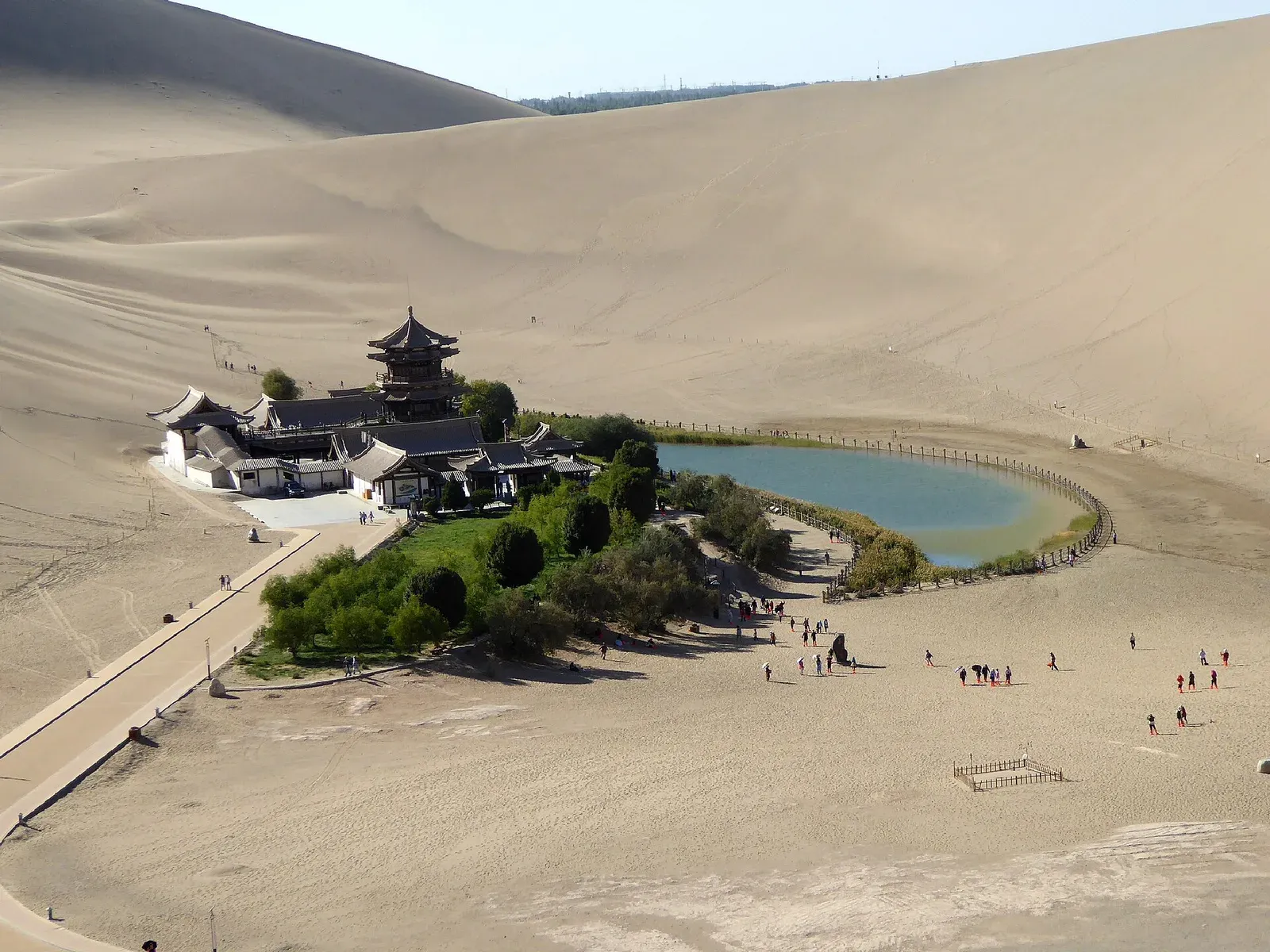
Strict rules apply inside the grotto area. Large luggage, pets, and drones are prohibited, and photography or touching murals and painted statues inside the caves is strictly forbidden. At Singing Sand Dunes and Crescent Spring, admission is about 110 RMB per person. To reach the spring inside the scenic area, you can walk 1 kilometer, take a sightseeing cart for 10 RMB per person, or ride a camel for about 100 RMB per person.
Tip: Dunhuang receives only 42 millimeters of annual precipitation, with average daily humidity below 20%, intense ultraviolet rays, and sharp day-night temperature swings. Pack high-SPF sunscreen, sunglasses, lip balm, and warm layers for mornings and evenings. Sand surface temperatures at Singing Sand Dunes get very high in summer, so enter after 4:00 pm to catch the sunset.
What conditions can disrupt train travel and sightseeing along the route?
Severe weather can lead key cultural sites along the route to close. According to official regulations, Mogao Caves will suspend admissions and issue full refunds during heavy rain or severe sandstorms.
In addition, the Hexi Corridor spans roughly 276,000 square kilometers, making up about 60% of Gansu's total area, with around 70% of the corridor consisting of desert and arid land. When the train passes through windy arid zones during sandstorms, outdoor sights may restrict entry or adjust visiting arrangements.
Sources
Geographical Regions of China - Wikipedia
Ürümqi Railway Station - Wikipedia
Dunhuang - Wikipedia
Mogao Caves - Dunhuang Academy
Ürümqi - Wikipedia
Lanzhou-Xinjiang High-Speed Railway - Wikipedia
Dunhuang-Golmud Railway - Wikipedia
Lanzhou-Xinjiang Railway - Wikipedia
Hexi Corridor - Wikipedia
Silk Road - Wikipedia
China State Railway Group Co., Ltd.
Sources verified on Nov 17, 2026
FAQ
Can I buy Mogao Caves tickets on site upon arrival?
No. The cave area does not have a ticket window, and the Digital Exhibition Center is the mandatory first stop. Type A tickets are capped at 6,000 per day and require real-name booking 30 days in advance, while Type B tickets are capped at 12,000 per day. Arriving without advance booking often leaves you unable to enter.
Can I bring my luggage into the Mogao Caves grotto area?
No. Large luggage, pets, and drones are strictly barred from the grotto area. In addition, photography and touching murals or painted sculptures are forbidden inside the caves. You should leave large luggage on the train or in luggage storage outside the scenic area.
What transport options are available inside Singing Sand Dunes and Crescent Spring?
Inside the scenic area, reaching Crescent Spring involves a 1-kilometer walk, a sightseeing cart for 10 RMB per person, or a camel ride for about 100 RMB per person. Because sand surface temperatures get hot during summer, visiting after 4:00 pm is recommended.
How do train schedules align with local daily routines in Xinjiang?
Railway services and public administration across Xinjiang run on Beijing Time, but local solar time in Ürümqi is about 2 hours and 10 minutes later. Daily routines, dining hours, and shop schedules shift roughly 2 hours later, so keep this time shift in mind when planning meals off the train.