
Shantang Street Guide: Night Views, Boats, and Snacks
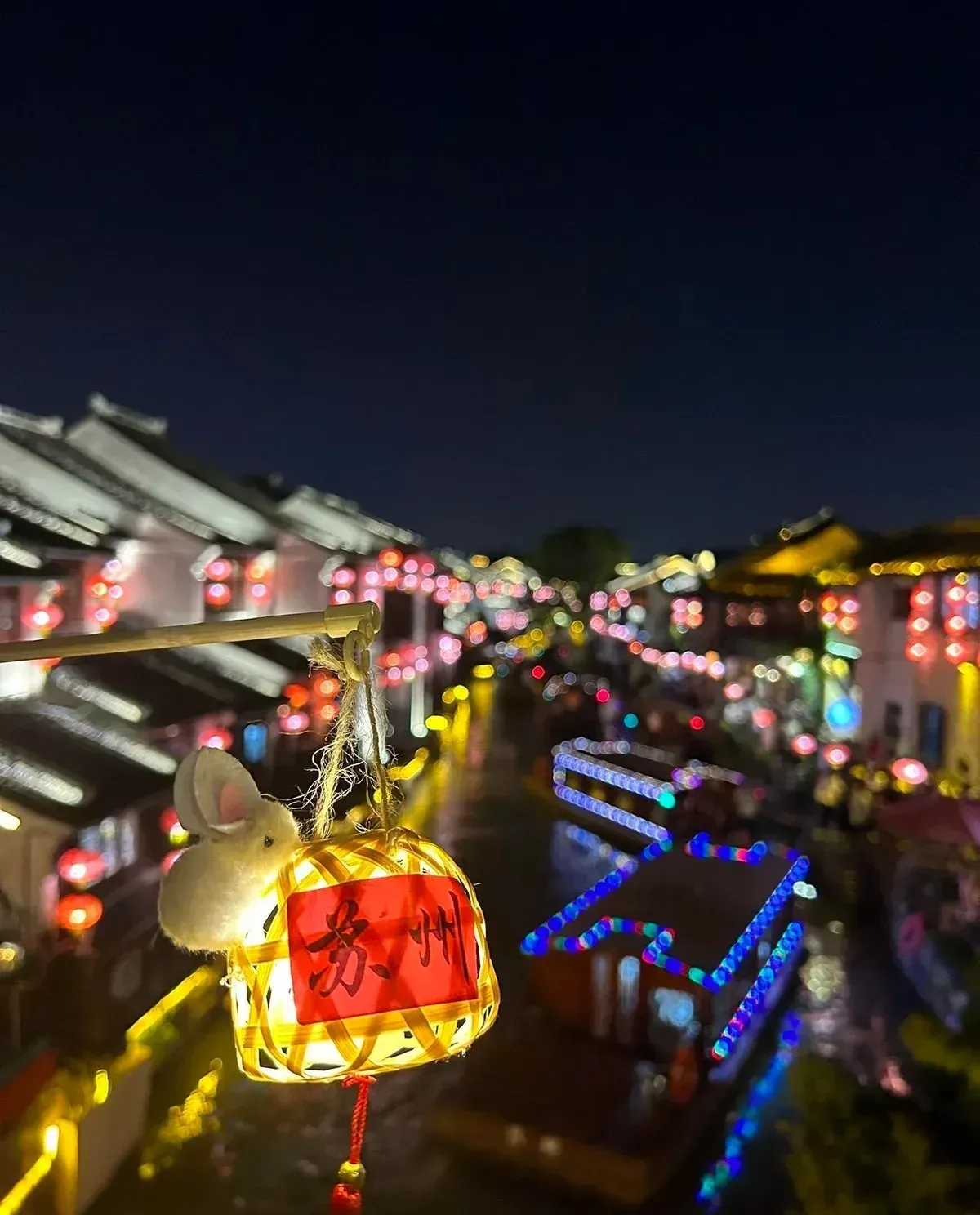
Shantang Street in Suzhou measures 3,829.6 meters (about seven li) in total length. Its architectural layout displays a classic canal-town pattern with streets in front and rivers behind, where small boats shuttle back and forth and shops line the street. According to historical records, in 825 (the second year of the Baoli era in the Tang Dynasty), the renowned poet Bai Juyi served as governor of Suzhou, directed the excavation of the Shantang River, and built the street along its north bank, earning it the longstanding reputation as the premier street of Gusu. Travelers can take Line 2 of Suzhou Rail Transit directly to Shantang Street Station, and leave through Exit 4 to reach the street and scenic area to explore the ancient bridge group and the stone beasts along the route.
What are the history and layout of Shantang Street?
The street and its river showcase the classic style of Jiangnan water towns. According to historical records, buildings here have streets in front and the river at the back, with small boats constantly passing by and shops lining the walkway.
This historic district runs from Xichang Lane at the foot of Tiger Hill in the west to Duseng Bridge over the ancient canal outside Changmen in the east, spanning 3,829.6 meters (about seven li). In 825 (the second year of the Baoli era in the Tang Dynasty), the poet Bai Juyi, serving as governor of Suzhou, directed the excavation of the canal and built the street to the north of the water. Since ancient times, it has been known as the premier street of Gusu.
According to historical records from the Qing Dynasty, when Emperor Qianlong inspected the south in 1762, he visited the area and wrote the calligraphy "Shantang Xun Sheng" (seeking scenic wonders at Shantang). After returning to the capital, he modeled Suzhou Street at the back lake of the Summer Palace after this waterway.
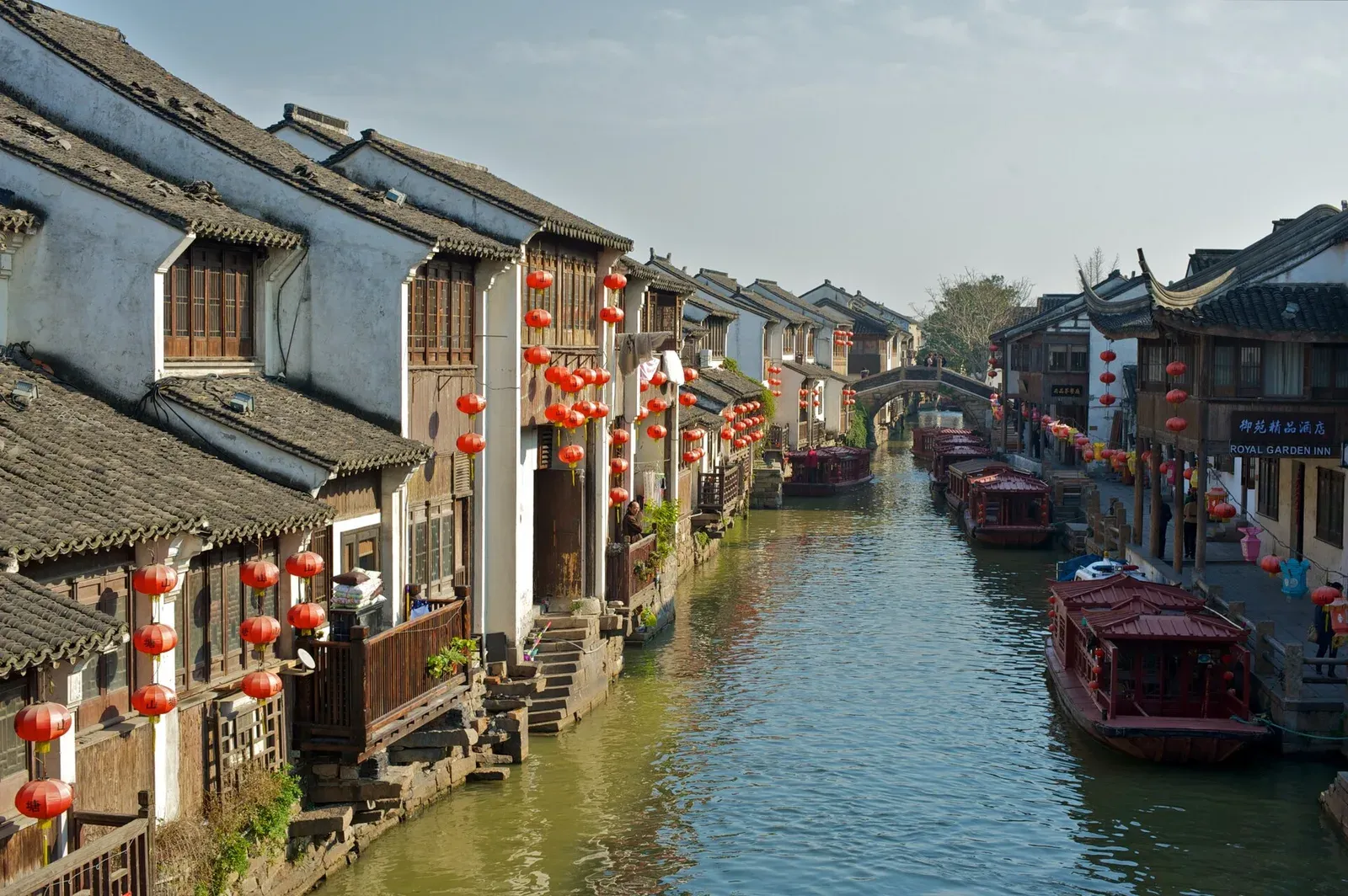
What can you see on a canal boat ride here?
Taking a boat ride allows travelers to see the water town layout from the water. According to records, small boats travel continuously along the waterway, while shops line both banks.
Boats glide along the river between riverside dwellings built right against the water. The view from the boat complements the walk along the street, showing the water transport layout first created when Bai Juyi directed the canal's construction.
The cruise passes key ancient bridges spanning the canal. Passing through the arches lets visitors look closely at stone bridge structures built across different dynasties.
Which bridges make up the ancient bridge group?
Folk tradition refers to the bridges as "seven horizontal and eight vertical." According to historical records, seven ancient bridges cross the main river, and eight ancient bridges cross tributaries on its south bank.
The seven ancient bridges crossing the main canal are Shantang Bridge, Tonggui Bridge, Xing Bridge, Caiyun Bridge, Puji Bridge, Wangshan Bridge, and Xishanmiao Bridge. Among them, Tonggui Bridge was first built early in the Hongzhi reign of the Ming Dynasty as a single-arch stepped stone bridge, also known as Ruiyun Bridge, and stands as one of the central historic bridge sights.
Eight ancient bridges span tributaries along the southern bank. According to records, among this group of bridges, Shantang Bridge, Caiyun Bridge, Bianshan Bridge, and Dong Bridge were built before the Song Dynasty.
| Bridge and Sight | Category and Direction | Construction Period or Structure | Corresponding Stone Beast or Record |
|---|---|---|---|
| Shantang Bridge | Spanning Shantang River (one of 7) | Built before Song Dynasty | Meirenli (1st from east to west) |
| Tonggui Bridge | Spanning Shantang River (one of 7) | First built early Hongzhi era of Ming Dynasty, single-arch stepped stone bridge | Tongguili (also named Ruiyun Bridge) |
| Xing Bridge | Spanning Shantang River (one of 7) | Ancient bridge spanning Shantang River | Wenxingli (3rd from east to west) |
| Caiyun Bridge | Spanning Shantang River (one of 7) | Built before Song Dynasty | Caiyunli (4th from east to west) |
| Puji Bridge | Spanning Shantang River (one of 7) | Ancient bridge spanning Shantang River | Baigongli (5th from east to west) |
| Wangshan Bridge | Spanning Shantang River (one of 7) | Ancient bridge spanning Shantang River | Haiyongli (6th from east to west) |
| Xishanmiao Bridge | Spanning Shantang River (one of 7) | Ancient bridge spanning Shantang River | Fenshuili (7th from east to west) |
| Bianshan Bridge | Across south bank tributary (one of 8) | Built before Song Dynasty | Ancient bridge on south bank tributary |
| Dong Bridge | Across south bank tributary (one of 8) | Built before Song Dynasty | Ancient bridge on south bank tributary |
What are the seven stone beasts along the route called?
Seven carved stone beasts sit along the walkway. According to records, seven stone beasts are placed along the way from east to west in this order: Meirenli, Tongguili, Wenxingli, Caiyunli, Baigongli, Haiyongli, and Fenshuili.
Walking westward from Duseng Bridge outside Changmen toward Xichang Lane at Tiger Hill, travelers can spot each of these seven stone figures in turn. They stand by bridge approaches and riverbanks along the street, linking the walking route together.
Each stone beast corresponds to a different bridge section. Looking for them from east to west offers one of the distinct ways to experience the local street and canal network.
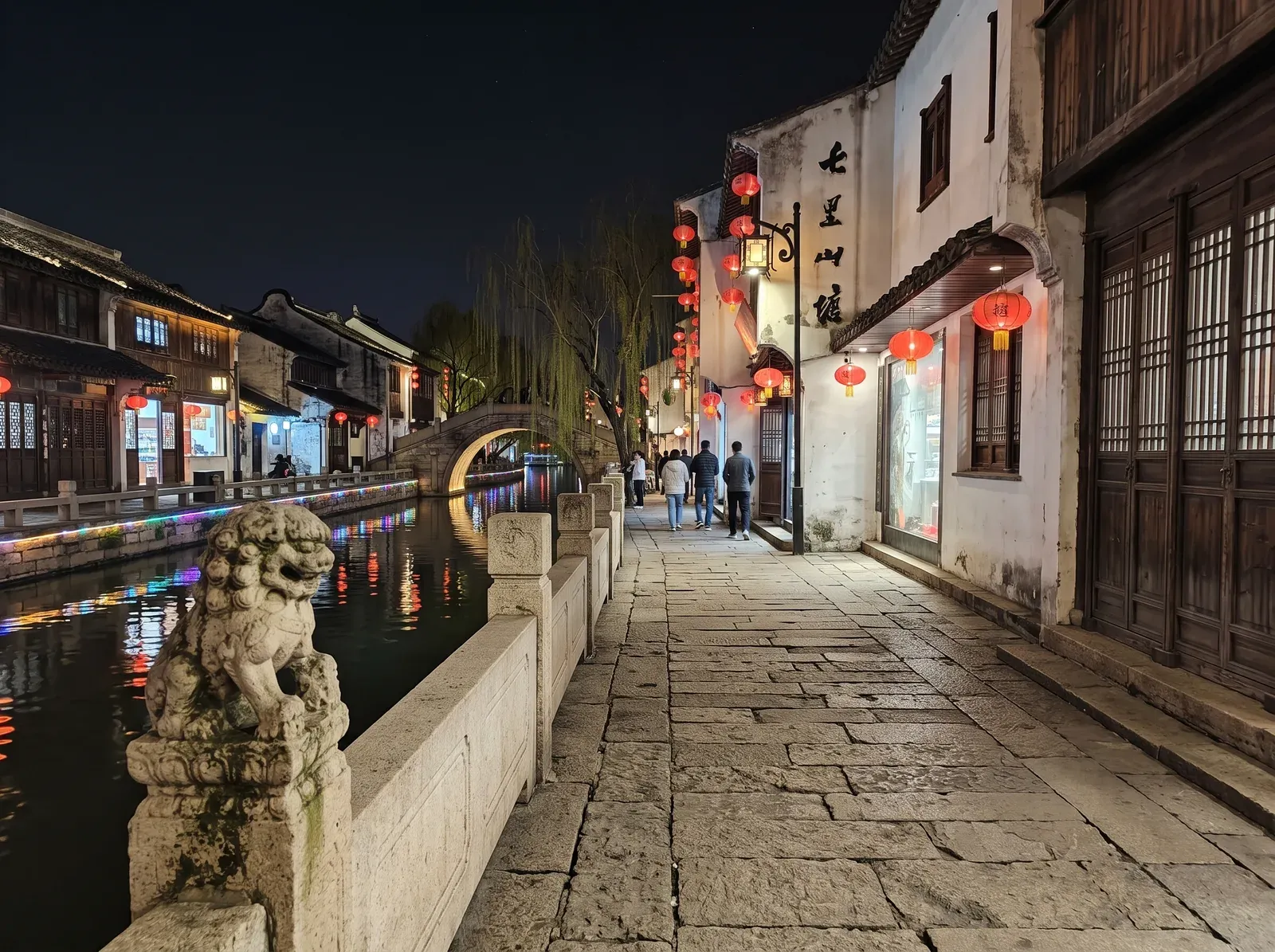
How do you take the metro to Shantang Street?
Taking Suzhou Rail Transit is recommended for reaching the area. According to transit guidance, travelers can take Line 2 directly to Shantang Street Station, and exit through Exit 4 to head straight to the street and its scenic zone.
Exit 4 connects straight to the roads around the area, letting you enter the pedestrian quarters quickly. Using the metro also avoids old town traffic congestion and parking troubles.
If you choose custom private travel, you can also ask your travel designer to arrange a vehicle and your driver for transfers. Driver transfers let you skip transfers on foot, taking you straight to your next destination once your visit wraps up.
What should you know before visiting the street?
The street extends 3,829.6 meters, making the full walk quite long. If you plan to walk the entire route from east to west, it is advisable to save enough energy and wear comfortable walking shoes.
The area maintains its layout of streets backed by water, with many stone-slab paths and stepped stone arch bridges along the canal. Pavements become slippery on rainy days, so watch your footing when climbing stone steps on bridges like Tonggui Bridge or stepping on and off small boats.
Small boats move frequently along the water, and shops line the walkways. When crowds gather on holidays, arranging your schedule ahead of time helps you take in the ancient bridges and street views at an easy pace.
Sources
Shantang Street - Wikipedia
Shantang Street Station - Wikipedia
Sources verified on November 8, 2026
FAQ
How long is Shan Tang Street?
According to historical records, Shantang Street in Suzhou measures 3,829.6 meters (about seven li) in total length, stretching from Xichang Lane at the foot of Tiger Hill in the west to Duseng Bridge over the ancient canal outside Changmen in the east.
Which exit should you take when taking the metro to the street?
Travelers can take Line 2 of Suzhou Rail Transit directly to Shantang Street Station and leave via Exit 4 to head straight to the street and scenic area.
Which of the bridges were built before the Song Dynasty?
According to records, among the ancient bridge group, Shantang Bridge, Caiyun Bridge, Bianshan Bridge, and Dong Bridge were built before the Song Dynasty.
What are the names of the seven stone beasts along the route?
Seven stone beasts are placed along the way, named in sequence from east to west as Meirenli, Tongguili, Wenxingli, Caiyunli, Baigongli, Haiyongli, and Fenshuili.
How is Suzhou Street at Beijing's Summer Palace connected to this area?
In 1762, Emperor Qianlong inspected the south, visited the waterway, and inscribed the calligraphy "Shantang Xun Sheng." After returning to Beijing, he modeled Suzhou Street at the back lake of the Summer Palace after this waterway.