
Lhasa Potala Palace Guide: Tickets, Route, and Photo Spots
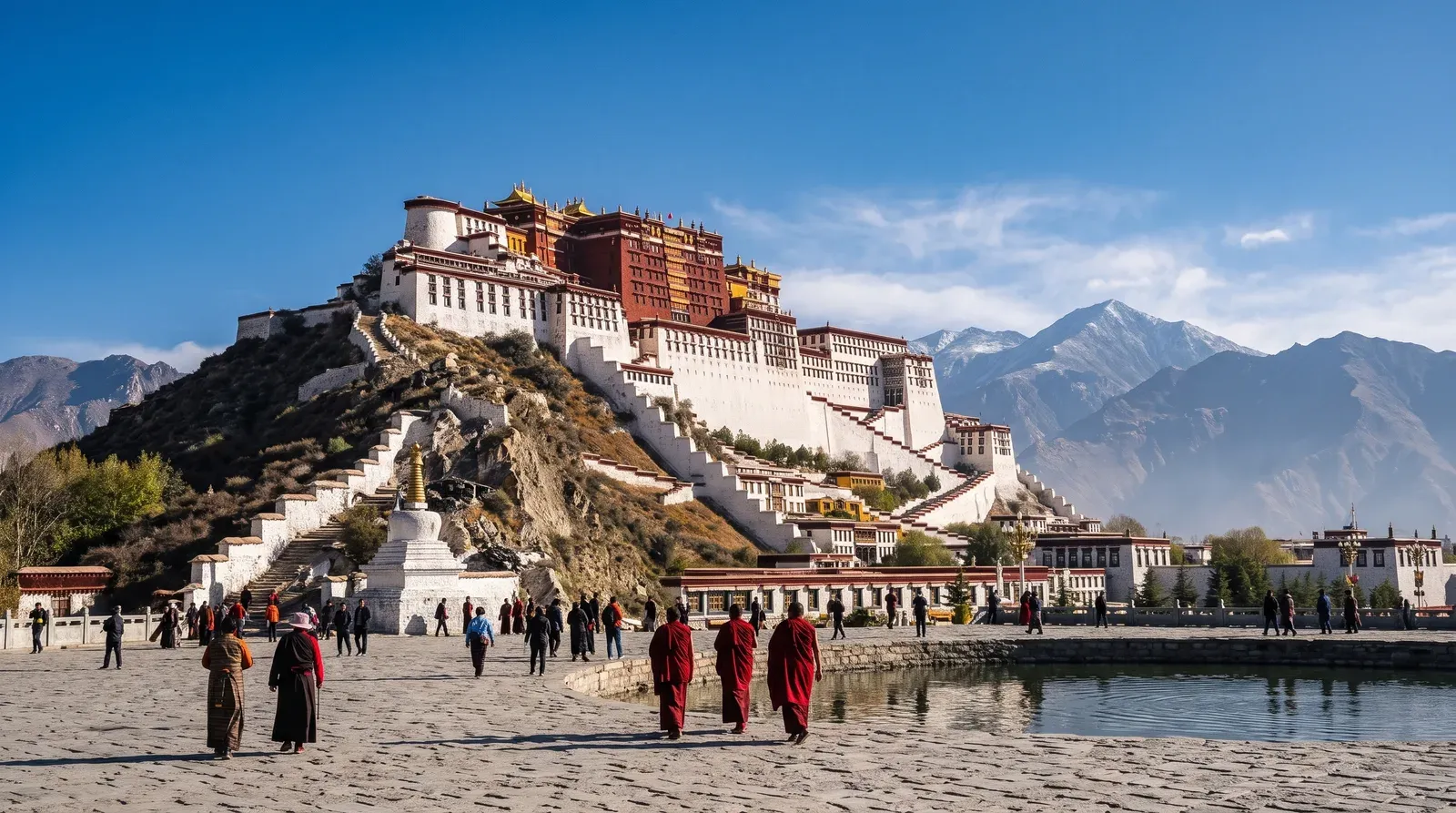
Visiting the Potala Palace in Lhasa requires advance real-name ticket reservation, as same-day tickets are not sold on site. The palace sits atop Red Hill at an altitude of 3,700 meters. The gates open at 09:30 and close at 15:40, with the complex closed every Monday. UNESCO inscribed the complex on the World Heritage List in 1994. Composed of the White Palace, the Red Palace, and ancillary structures, it served as the winter palace of the Dalai Lamas from the 7th century onward.
| Item | Practical Details |
|---|---|
| Opening Hours | Opens at 09:30, closes at 15:40 (closed Mondays) |
| Ticket Reservation | No same-day tickets on site; book 10 days ahead via WeChat mini-program, or 1 day ahead at on-site counter |
| Visiting Time | Interior guided tour usually takes about 1 hour; allow at least 1 hour for climbing steps |
| Location | Atop Red Hill in the center of the Lhasa River valley (No. 35 Beijing Middle Road, Chengguan District, Lhasa) |
| Tibet Travel Rules | Non-Chinese travelers must obtain a Tibet Travel Permit beforehand and be accompanied by a licensed tour agency guide |
| Official Phone | 400-864-9111 |
How to Book Potala Palace Tickets: Rules and ID Requirements
The site enforces strict visitor quotas, real-name booking, and facial recognition, meaning no visitor can buy a ticket on the day of the visit. According to official rules, online booking through the WeChat mini-program opens ten days in advance, while applying at the on-site window requires presenting valid identification one day before your visit to collect a reservation slip. Total daily visitor numbers are strictly controlled, and during the peak season from July to September, daily arrivals often exceed 6,000 visitors.
If you plan to visit during the July to September peak season, submit your real-name details as soon as the booking window opens on day one. If you travel to Lhasa in the low season, you can also go to the on-site reservation window one day in advance with valid identification. Visitors without a confirmed reservation voucher cannot pass security check channels.
Tip: The palace administration office is located at No. 35 Beijing Middle Road, Chengguan District, Lhasa. After booking successfully, enter strictly within your assigned time slot. For ticketing inquiries, call the official consultation hotline at 400-864-9111.
What Is the Layout of the Palace Complex?
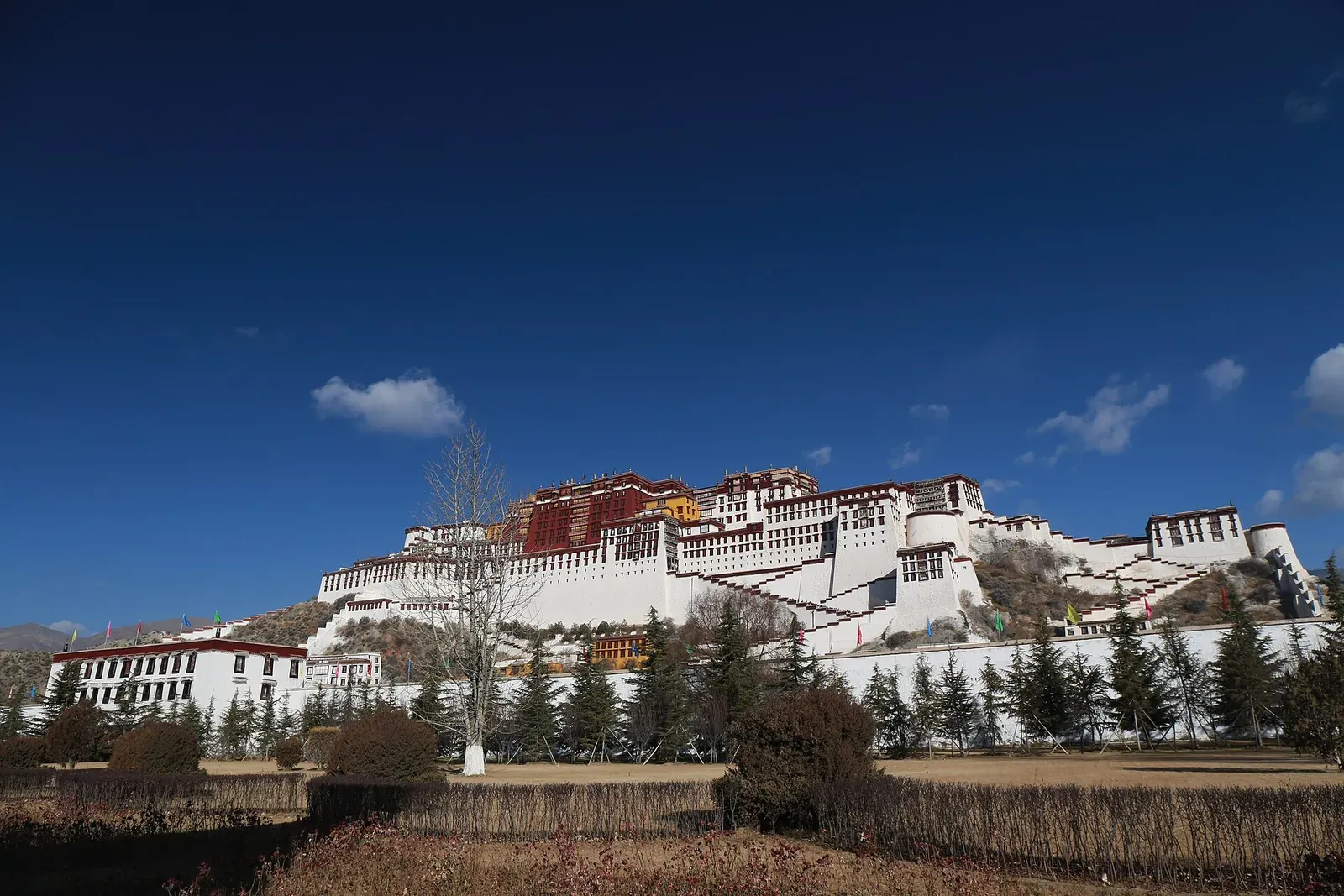
The main building stands 117.2 meters high, measures 360 meters east to west, and runs 140 meters north to south, covering a construction area of about 130,000 square meters while rising 119 meters above the hillside. The complex appears to have 13 stories from the outside but contains 9 stories in reality, with the lower 4 stories formed by stone foundation retaining walls. It contains more than 1,000 rooms, 10,000 shrines, and roughly 200,000 Buddha statues. The outer granite walls reach 2 to 5 meters in thickness, with molten iron poured into sections between stone layers.
The main structure consists of three sections: the central Red Palace, the eastern White Palace, and the western Zhasha quarters. The exterior is painted in red, white, and yellow, symbolizing dignity, tranquility, and perfection. The white-walled Zhasha complex west of the Red Palace provided living quarters for monks serving the palace, housing over 25,000 monks at its peak in history. The whole complex illustrates representative traditional Tibetan palace construction craftsmanship.
Which Route to Follow Inside: Highlights from Shöl to the Red Palace
Visits follow a one-way clockwise touring route throughout. Entering through the south gate, you first step into Shöl, the flat area at the foot of the hill. Historically, Shöl accommodated administrative offices, courts, a printing house, the Tibetan army headquarters, workshops, and prisons, serving as an essential passage before ascending toward the White Palace. Past Shöl, you climb a zigzagging stone stairway to the expansive Deyangshar Courtyard halfway up the hill. This courtyard once hosted Tibetan opera performances and outdoor religious ceremonies attended by the Dalai Lama, with monastic official academies bordering its northern and southern sides.
After ticket verification at Deyangshar Courtyard, you enter the eastern White Palace. The White Palace has seven stories. On the fourth floor, the Great East Hall (Tshomchen Shar) is the largest hall in the White Palace, measuring 27.8 meters long and 25.8 meters wide, with 34 wooden pillars, the throne of the Dalai Lama, and a plaque presented by Emperor Tongzhi reading "Zhen Xi Sui Jiang". Enthronements and political assumption ceremonies of successive Dalai Lamas were held here. The top floor houses the Sunlight Hall, divided into East and West quarters, named because open roof sections allow direct natural light, covered with canvas tarpaulins at night.
Passing through a connecting corridor brings you into the central Red Palace. Built around a mandala layout, it features numerous scripture halls and chapels clustered around the stupa halls of successive Dalai Lamas. The core structures comprise five stupa halls. Among them, the Great West Hall (Sixi Pingtso) stands over 6 meters tall and covers 725.7 square meters, housing a plaque from Emperor Qianlong inscribed "Yong Lian Chu Di" along with 698 murals. Inside, the stupa of the 5th Dalai Lama rises 14.85 meters, adorned with gold leaf and inlays that consumed 1.04 million taels of silver, 110,000 taels of gold, and over 15,000 pearls and gems. The stupa of the 13th Dalai Lama stands 14 meters tall and used 19,000 taels of gold. Directly beneath the Red Palace lies the Dharma King Cave, enshrining clay statues of Songtsen Gampo, Princess Wencheng, and Princess Bhrikuti. Adjacent is the Saint's Hall, enshrining a naturally formed sandalwood statue of Avalokiteshvara. Both halls date back to 7th-century Tubo times. On the roof terrace of the Red Palace sit gilded bronze roof pavilions with single-eave hip-and-gable designs, flanked by parapet walls made of deep purplish-red tamarisk branches and decorated with golden ritual emblems, gilded victory banners, and prayer flags. The traditional Tibetan building material used for maintenance, known as aga clay, exhibits strong resilience and is tamped down in unison by workers chanting rhythmic work songs.
Travelers often write that inside the chapels of the Red Palace, the light remains soft and dim, with the scent of butter lamps lingering in the air. Walking clockwise across smooth aga floors, you can see towering gilded stupas reaching near the ceiling and murals that retain vivid color. At the end of the tour, you exit through the north gate of the Red Palace and wind your way down along the rear hill stairs.
Tip: The interior guided tour usually takes around 1 hour, and you should set aside at least 1 hour for ascending and descending the stairs. Because the tour involves climbing numerous stone steps at high elevation, maintain a steady and calm walking pace on the pathways.
Where to Take the Best Photos: Top Spots and the 50-Yuan View
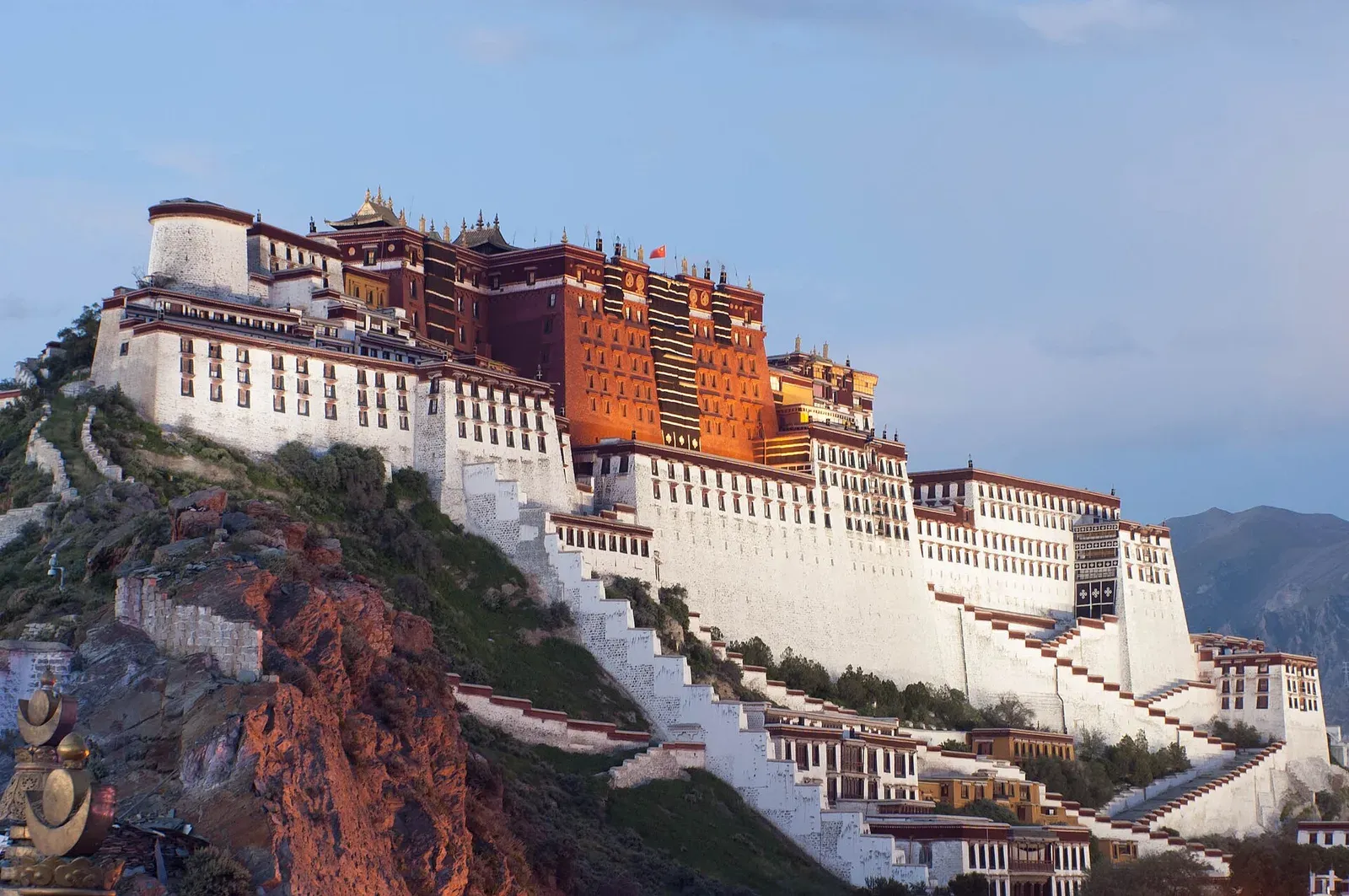
There are two primary viewpoints for photographing the palace facade and reflections. Chakpori Hill sits to the southwest, where a summit observation deck provides the classic angle for looking up at the full front of the complex. The primary scene on the reverse side of the 5th series 50-yuan banknote was captured right from this vantage point. North of the complex lies Zongjiao Lukang Park (popularly known as Dragon King Pool), a pond formed in the 17th century from pit excavations during palace construction. The 6th Dalai Lama added a three-story octagonal pavilion at the center of the lake, making this a favored spot for capturing water reflections of the rear palace walls.
| Location | Relative Position | Features and Photo Highlights |
|---|---|---|
| Chakpori Hill Observation Deck | Southwest of the palace | Frontal low-angle view of the full palace, matching the design on the 50-yuan banknote |
| Zongjiao Lukang Park | Behind the hill north of the palace | Features a three-story octagonal pavilion on the lake, suitable for water reflections of the rear palace |
| Thousand Buddhas Cliff Carvings | West and north side of Chakpori Hill | Thousands of colorful Buddha rock carvings, part of the Lingkhor pilgrimage circuit in Lhasa |
Tip: On the northern slope west of Chakpori Hill, the Thousand Buddhas Cliff features thousands of brightly colored Buddha carvings said to date from the era of Songtsen Gampo. You can easily stop by after taking palace photos.
First Time Visiting? Common Mistakes to Avoid
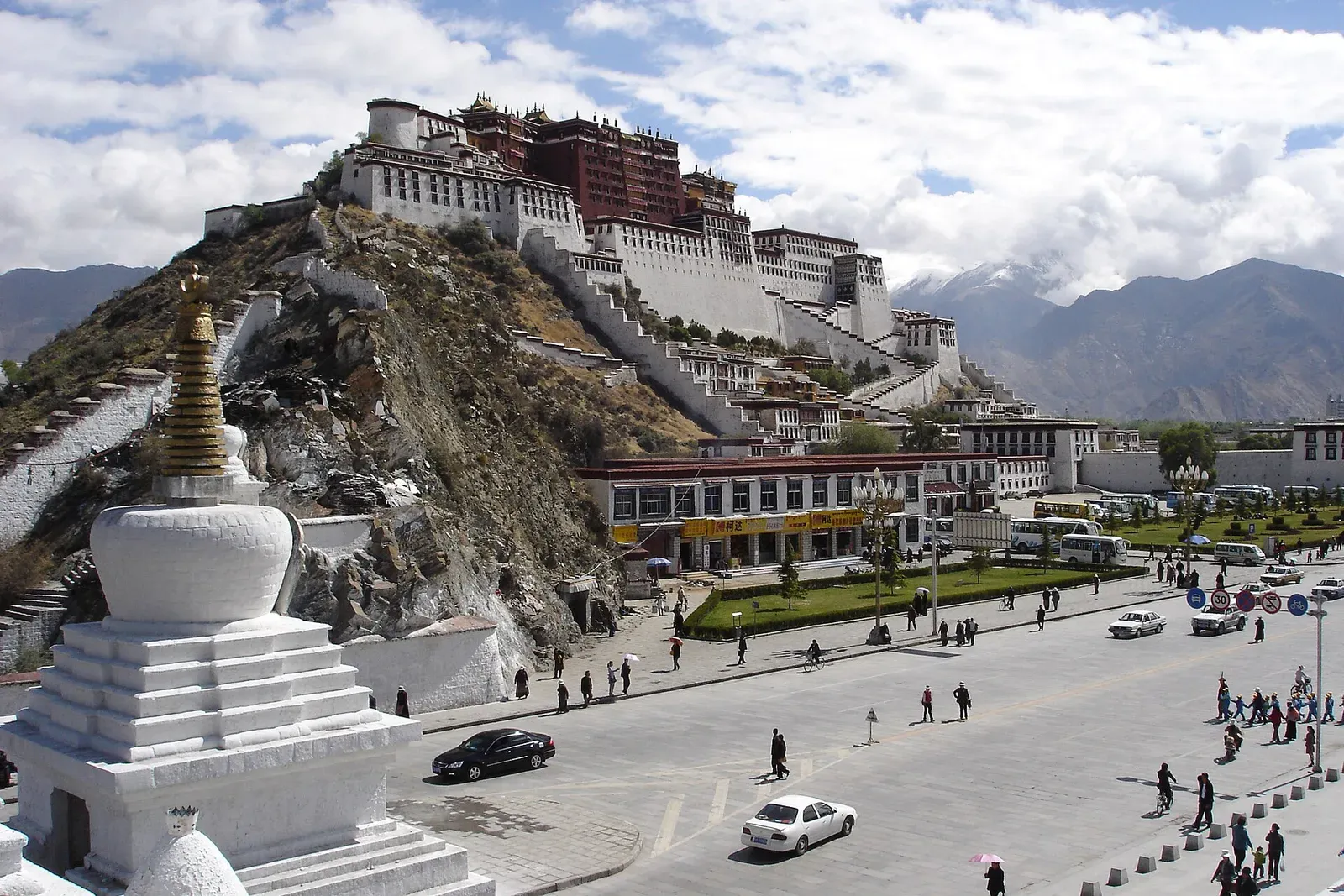
First-time visitors often misjudge physical endurance at high elevation, roof access regulations, and requirements for foreign travelers. Built directly along the mountain slope with significant vertical elevation gain, the tour requires substantial stair climbing at high altitude. Plan your visit only after fully acclimating to the local climate in Lhasa, and avoid rushing up the steps on your arrival day.
To protect the ancient structures and manage crowd density, visitors have been prohibited from stepping onto the golden roofs since restoration work concluded in 2006. In addition, Lhasa enforces a strict 21-meter building height ceiling in surrounding areas to safeguard the historic atmosphere and visual sightlines. Furthermore, non-Chinese travelers traveling in Tibet must obtain a Tibet Travel Permit beforehand and remain accompanied throughout by a licensed guide from a travel agency, who must meet them upon arrival at the airport or train station.
| Misconception | Rule and Practical Advice |
|---|---|
| Assuming you can climb the steps on arrival day | Requires extensive high-altitude stair climbing; visit only after fully acclimatizing to the Lhasa plateau |
| Assuming you can access the golden roofs | Access to the golden roofs has been closed since 2006; view the gilded tiles and tamarisk walls from the terrace |
| Assuming foreign travelers can visit independently | Non-Chinese passport holders must hold a Tibet Travel Permit and travel with a licensed agency guide throughout |
How to Get to the Palace: Local City Transit and Airport Options
The complex is located at No. 35 Beijing Middle Road, Chengguan District, Lhasa. Regular city buses in Lhasa charge a flat fare of 1 yuan. Taxis start at 10 yuan for the first 3 kilometers, then add 2 yuan per kilometer beyond 3 kilometers; one-way trips between 8 and 11 kilometers cost 3 yuan per kilometer, and distances past 11 kilometers add 1 yuan per 500 meters.
Lhasa Gonggar Airport is situated 61 kilometers southwest of downtown Lhasa, taking about 40 to 60 minutes along a 4-lane expressway. Travelers can take an airport shuttle bus for 25 yuan each way. If you prefer door-to-door transportation, your travel designer can also help confirm private transfer services ahead of time.
| Transport Option | Fare | Route Details and Features |
|---|---|---|
| Regular City Bus | 1 yuan fare | Covers urban roads across Lhasa |
| City Taxi | 10 yuan base fare for 3 km | Adds 2 yuan/km over 3 km, 3 yuan/km for 8-11 km, 1 yuan per 500 m beyond 11 km |
| Airport Shuttle Bus | 25 yuan one-way | Operates between Gonggar Airport and Lhasa downtown, 40 to 60 minutes via 4-lane expressway |
Sources
Historic Ensemble of the Potala Palace, Lhasa
The Fifth Series of Renminbi - Wikipedia
Official Website of the Potala Palace
Potala Palace - Wikipedia
Potala Palace - Chinese Wikipedia
Chakpori (Lhasa) - Wikipedia
Zongjiao Lukang Park - Wikipedia
Lhasa - Wikipedia
Sources verified on November 19, 2026
FAQ
Is the Potala Palace open on Mondays, and what time does entry stop?
The palace is closed to visitors every Monday. On operating days, the gates open at 09:30 and close at 15:40. The site strictly limits daily visitor capacity and does not sell same-day tickets at the entrance, so every visitor must complete real-name booking in advance.
Is there a time limit inside the Potala Palace, and how long does a visit take?
According to visiting guidelines, the interior guided tour usually takes around 1 hour, and you should allow at least 1 hour for walking up and down the stairs. Because the route involves climbing many stone steps at high elevation, visit only after fully acclimating to the plateau climate and keep a steady pace along the designated path.
Where is the photo spot that matches the 50-yuan banknote?
The standard viewing location for the image on the reverse of the 5th series 50-yuan note is the Chakpori Hill observation deck, southwest of the palace. The summit viewing deck lets you shoot upward directly at the front of the White Palace and Red Palace atop Red Hill.
What special procedures do foreign tourists need to visit the Potala Palace?
Under current regulations, non-Chinese citizens traveling to Lhasa in Tibet must secure a Tibet Travel Permit beforehand and remain accompanied throughout their stay by a licensed guide from a travel agency. The guide must meet them upon arrival at the airport or train station, and independent self-guided visits are not permitted.
Can visitors still climb up to the golden roofs of the Potala Palace?
No. To protect historical architecture and avoid overcrowding, visitors have been barred from accessing the golden roofs since the 2006 renovation. Visitors can view the single-eave hip-and-gable gilded copper tiles and tamarisk parapet walls from the Red Palace terrace.