
Ordos, Inner Mongolia Travel: Kubuqi Desert and Xiangshawan Route
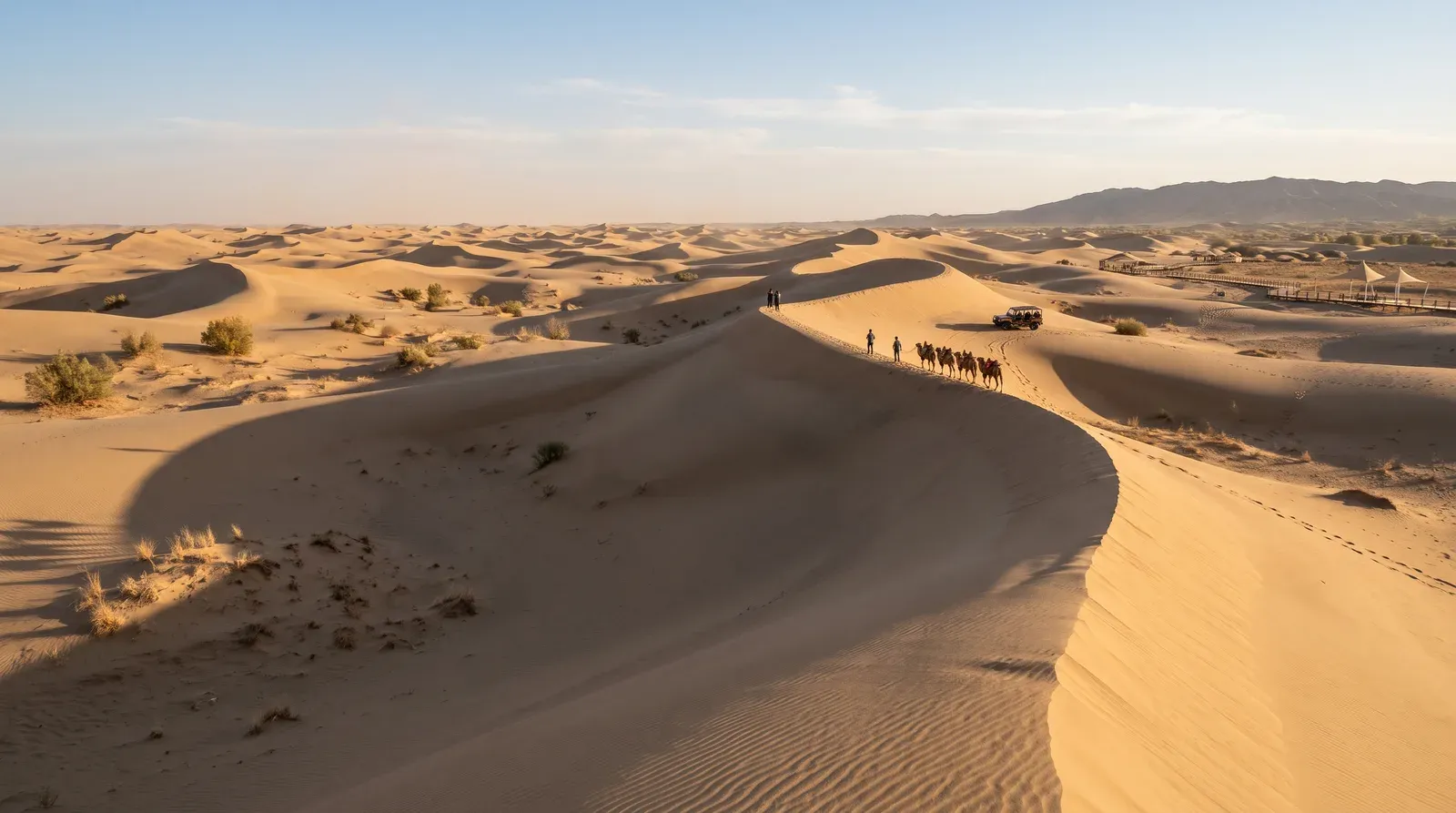
When visiting Ordos, Inner Mongolia, most trips focus on the Kubuqi Desert and Xiangshawan, alongside cultural stops in Kangbashi District and Ejin Horo Banner. The city covers 86,882 square kilometers, wrapped by the Yellow River on its east, north, and west. In the north, the Kubuqi Desert spans about 18,600 square kilometers. It ranks as China's seventh-largest desert and the closest desert to Beijing. A typical itinerary combines sand dunes, desert highways, and Mongolian historical sites.
| Attraction or Service | Details |
|---|---|
| Xiangshawan in Dalad Banner | National 5A tourist attraction, equipped with Cableways No. 1, No. 2, and No. 3 |
| Genghis Khan Mausoleum | Covers 55,000 square meters, main hall stands 24.18 meters high, retains the traditional Eight White Yurts design |
| Xiwu Highway | Total length of 115 kilometers, with 50 kilometers crossing the Kubuqi Desert, known as the Desert-Crossing Highway |
| Kubuqi Desert | About 61% shifting dunes, dune heights between 10 and 60 meters, 50% vegetation coverage achieved |
| Ordos city taxis | Base fare is 7 yuan, then 1.5 yuan per kilometer beyond the base distance |
How should you plan your Ordos, Inner Mongolia route?
The region holds two national 5A attractions, the Genghis Khan Mausoleum in Ejin Horo Banner and Xiangshawan in Dalad Banner, along with 4A sites such as Kangbashi, Engebei, and Seven Star Lakes. Written as Eerduosi in China, the name comes from the Ordos Mongol tribe and means 'many palaces'. The municipal administrative center is in Kangbashi District. Across the territory, the terrain divides into five main types: rolling plateau (28.81%), the Mu Us Sandy Land (28.78%), the Kubuqi Desert (19.17%), and hilly mountain areas.
If you want desert activities and resort stays, focus on Dalad Banner and Hanggin Banner in the north, spending time at Xiangshawan and driving the desert highway. If you care more about urban design and history, spend your days in Kangbashi District and Ejin Horo Banner. For a slower pace, you can ask your travel designer to set up a private itinerary that balances both desert and city stops. You can also read more details in our Ordos City Guide.
What can you see and do at Xiangshawan?
Xiangshawan in Dalad Banner is a national 5A scenic area. Its Mongolian name, Buremangha, translates to 'sand dunes with horns'. The area is known for singing sand dunes and varied recreation facilities, making it well suited for a full-day visit.
After entering the gate, you ride a cable car into the desert core. The scenic area runs a desert tourist tram between Xiangshawan Port and Yuesha Island, alongside Cableways No. 1, No. 2, and No. 3. From the tram, wide views open up across rolling sand ridges and open dunes on both sides of the tracks.

How do you visit the Kubuqi Desert Highway and ecological projects?
Shifting dunes make up about 61% of the Kubuqi Desert, with heights ranging between 10 and 60 meters, mostly forming dune chains and grid dunes. Today, the desert stabilization rate has reached 50%. In the interior, a large solar control project spans 14 kilometers east to west and 2 kilometers north to south, creating orderly arrays across the sand.
The Xiwu Highway connects Xini Town in Hanggin Banner with Wulashan Town in Bayan Nur over a length of 115 kilometers. A 50-kilometer section cuts straight across the Kubuqi Desert, earning it the name Desert-Crossing Highway, built under harsh desert conditions. Driving along this route brings you past shifting golden ridges side by side with sand-control grids. Scenic spots such as Engebei and Seven Star Lakes also lie along the way.

To learn more about desert ecology, you can add the Desert Museum and the Kubuqi Desert Botanical Museum to your stop list to see how native plants grow in arid conditions.
How should you tour Kangbashi and Genghis Khan Mausoleum?
Kangbashi Scenic Area is China's first national 4A tourist attraction centered on an urban landscape. Wide boulevards and modern architecture define the area, including the distinctive Ordos Museum and the Bronze Museum, making it an easy place to spend a relaxed half day walking through plazas and visiting galleries.
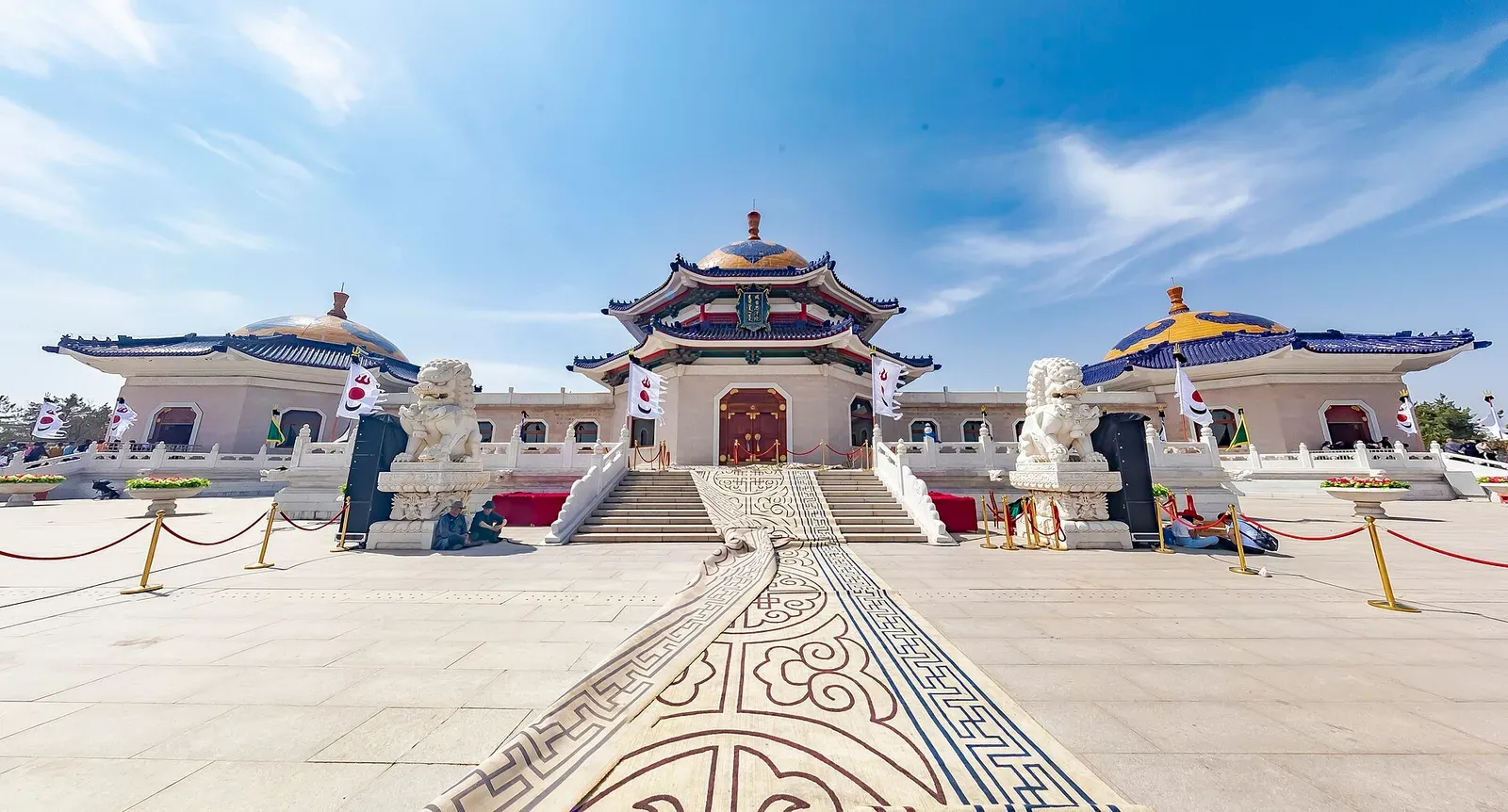
Genghis Khan Mausoleum is located in Ejin Horo Banner across 55,000 square meters. Its main hall rises 24.18 meters, shaped like three connected yurt-style structures with white walls and red-framed windows, preserving the traditional Eight White Yurts design. The complex holds a dignified presence and provides a direct look into Mongolian traditions.
Beyond the sights, shoubarou (mutton eaten with your hands) is a traditional welcoming dish on the grasslands of Inner Mongolia. In Ordos, cooks boil bone-in mutton in water with green onions until just cooked, cut it into chunks, and serve it to eat by hand, usually with mashed garlic, vinegar, or seasoned salt.
What should you know about transport in Inner Mongolia's Ordos?
Ordos Ejin Horo International Airport operates as a 4D regional hub with two terminals and flights connecting to more than 30 cities. The airport sits 45 kilometers south of Dongsheng District and 18 kilometers south of Kangbashi District. For rail travel, Dongsheng Station and Ordos Station handle most passenger services along routes including the Baotou-Xi'an Railway, Hohhot-Jungar-Ordos Railway, and Baotou-Ordos Intercity Railway.
The annual average temperature in Ordos is 6.2 degrees Celsius, with an average annual precipitation of 348.3 millimeters. About 70% of that rain falls in July, August, and September. Summers are relatively mild and humid, while spring and autumn bring more wind and blowing sand, so pack wind goggles and a sand scarf.
Tip: City taxis in Ordos start at 7 yuan, charging 1.5 yuan per kilometer beyond the base distance. One-way trips over 20 kilometers without return passengers incur an empty-return fee according to regulations, so confirm the route in advance with your driver if traveling long distances across banners.
Sources
Ordos City - Wikipedia
Mausoleum of Genghis Khan - Wikipedia
Kubuqi Desert - Wikipedia
Shoubarou - Wikipedia
Ordos home to China's longest desert-crossing highway
How Ordos is winning the war against the desert - China.org.cn
Ordos Tourist Rail Transit - Wikipedia
Sources verified on November 20, 2026
FAQ
What is the connection between the Kubuqi Desert and Xiangshawan?
Xiangshawan is a national 5A scenic area in Dalad Banner on the eastern edge of the Kubuqi Desert. Built with cable cars and a sightseeing tram, it is the main resort area with developed visitor facilities in the desert.
Can standard cars drive along the Desert-Crossing Highway?
The 115-kilometer Xiwu Highway through the Kubuqi Desert is an entirely paved, standard roadway with smooth conditions. Regular passenger cars can drive it comfortably without any special vehicle modifications to see the desert landscape.
What defines the architecture of the Genghis Khan Mausoleum?
The Genghis Khan Mausoleum covers 55,000 square meters, with a main hall standing 24.18 meters high. Its main structure consists of three connected yurt-style buildings with white walls and red-trimmed windows, fully continuing the architectural layout of the traditional Eight White Yurts.
When does most rainfall occur in Ordos?
The annual average precipitation in Ordos is 348.3 millimeters, with around 70% concentrated across July, August, and September, giving the summer season relatively mild, humid conditions.