
How to Visit Nantong, Jiangsu, China: Highlights and Routes
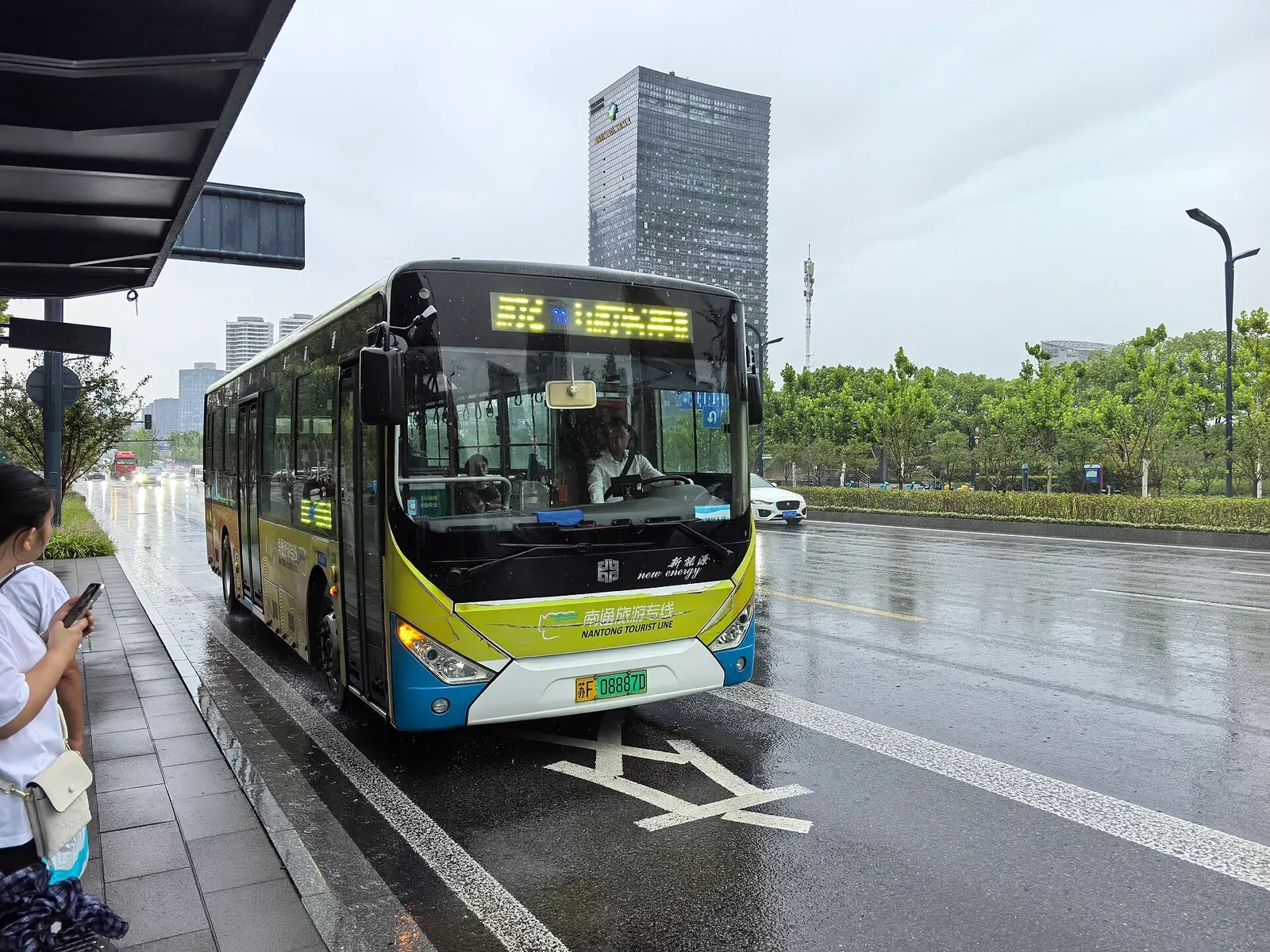
Photo: 4084470 0.smil / Wikimedia Commons, CC BY 4.0
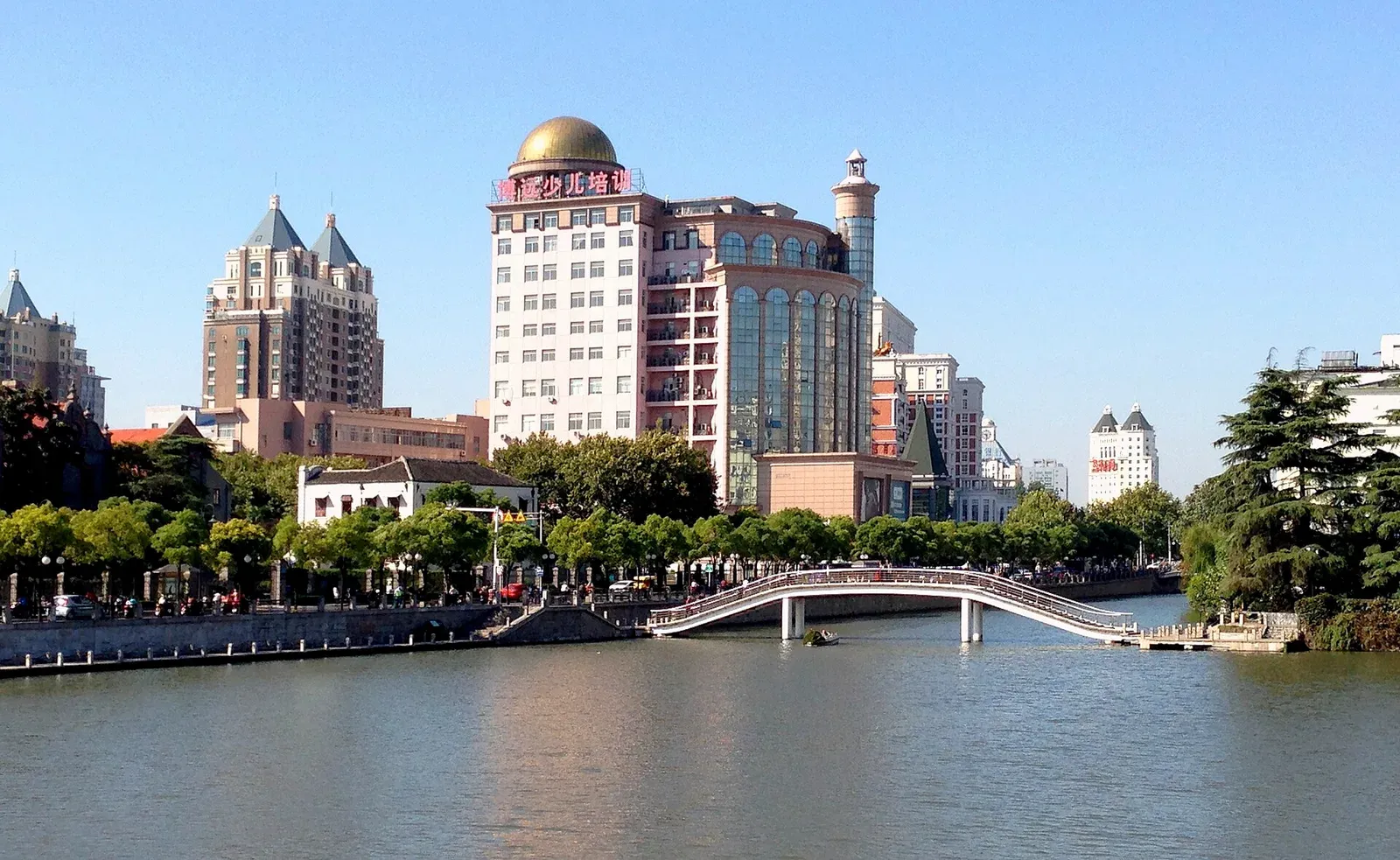
When planning a trip to Nantong, Jiangsu, China, spending 1 to 2 days is usually recommended. In eastern China, Nantong centers its historic old town around the Haohe River, an ancient moat about 15 kilometers long. Along its banks sit Nantong Museum, China's first public museum founded in 1905, and numerous historic sites. High-speed trains on the Shanghai-Suzhou-Nantong Railway run directly from Shanghai to Nantong West Station. Depending on how many days you stay, you can easily pair the city center with Guangjiao Temple on Mount Langshan or Shuihui Garden in Rugao.
| Item | Planning Highlights and Reference Info |
|---|---|
| Recommended stay | 1 to 2 days |
| Core scenery | Haohe River scenic waterfront, Zhang Jian's modern industrial heritage museums, and Buddhist heritage on Mount Langshan |
| Intercity transit | Shanghai-Suzhou-Nantong Railway bullet trains connect to Nantong West Station; Xingdong International Airport serves flights to Nantong, CN from many cities |
| City public transit | Rail transit lines 1 and 2 in operation; discounts apply when transferring between city buses and the metro |
| Weather and travel tips | Humid northern subtropical monsoon climate, with a typical plum rain season every year from June to July |
How should you plan a 1 to 2 day itinerary in Nantong, Jiangsu, China?
Your itinerary can be tailored to the length of your stay. If you only have one day, focus on the classic cultural waterfront in the old town: in the morning, head to Nantong Museum at No. 19 Haonan Road in Chongchuan District, where you can tour century-old exhibition halls and the new museum set in a traditional garden compound. At midday, stroll along the banks of the Haohe River encircling the old town, viewing Guangxiao Pagoda, Tianning Temple, and Wenfeng Pagoda along the water. In the afternoon, head to Mount Langshan by the Yangtze River to visit Guangjiao Temple, built in the Tang Dynasty, and climb to the summit to see the Zhiyun Pagoda.
If you have two days, your second day can branch out based on your interests: if you enjoy modern industrial heritage, travel to Tangzha Town in Chongchuan District to explore the former site of the Dasheng Cotton Mill founded in 1895, where you can see the clock tower, the cotton clearing workshop, and the original office building converted into an exhibition hall. If you prefer classic Jiangnan gardens, head to Shuihui Garden at No. 299 Bixia Road in Rugao, where you can admire Shuiming Tower, a two-story painted-boat style structure beside Xibo Pond.
Tip: Nantong Museum is closed on Mondays, so try to avoid scheduling your visit to No. 19 Haonan Road on a Monday when planning a 1 to 2 day itinerary.
What are the main sights and opening rules for Nantong's attractions?
| Attraction | Historical Background and Architecture | Core Highlights |
|---|---|---|
| Nantong Museum | Founded on January 14, 1905, designated among the first National First-Class Museums in 2008 | Combined museum and garden layout, East Wisteria Waterside Pavilion, Guoxiu Altar, two-story brick-and-wood South Building, and new hall designed by Wu Liangyong |
| Haohe River Scenic Area | First built in 958 AD, now a National 5A-level Scenic Area | Ancient moat scenery encircling the old city, flanked by Guangxiao Pagoda, Tianning Temple, Wenfeng Pagoda, and Nantong Museum |
| Guangjiao Temple on Mount Langshan | Founded in 669 AD (the second year of the Zongzhang era, Tang Dynasty), National Key Buddhist Temple in the Han Chinese Area | Bodhimanda of Mahasthamaprapta, Northern Song wooden square Zhiyun Pagoda, Luo Binwang's tomb, Wangjiang Pavilion, Imperial Pavilion, and Hanyu Spring |
| Former Site of Dasheng Cotton Mill | Founded in 1895, now a Major Historical and Cultural Site Protected at the National Level | Located in Tangzha Town, Chongchuan District, preserving the clock tower, cotton clearing workshop, Dasheng Wharf, and mill history exhibition hall |
| Rugao Shuihui Garden | First built during the Wanli era of the Ming Dynasty, listed as a Major Historical and Cultural Site Protected at the National Level in 2001 | Former residence of Mao Xiang and Dong Xiaowan, with the landmark Shuiming Tower built along Xibo Pond |
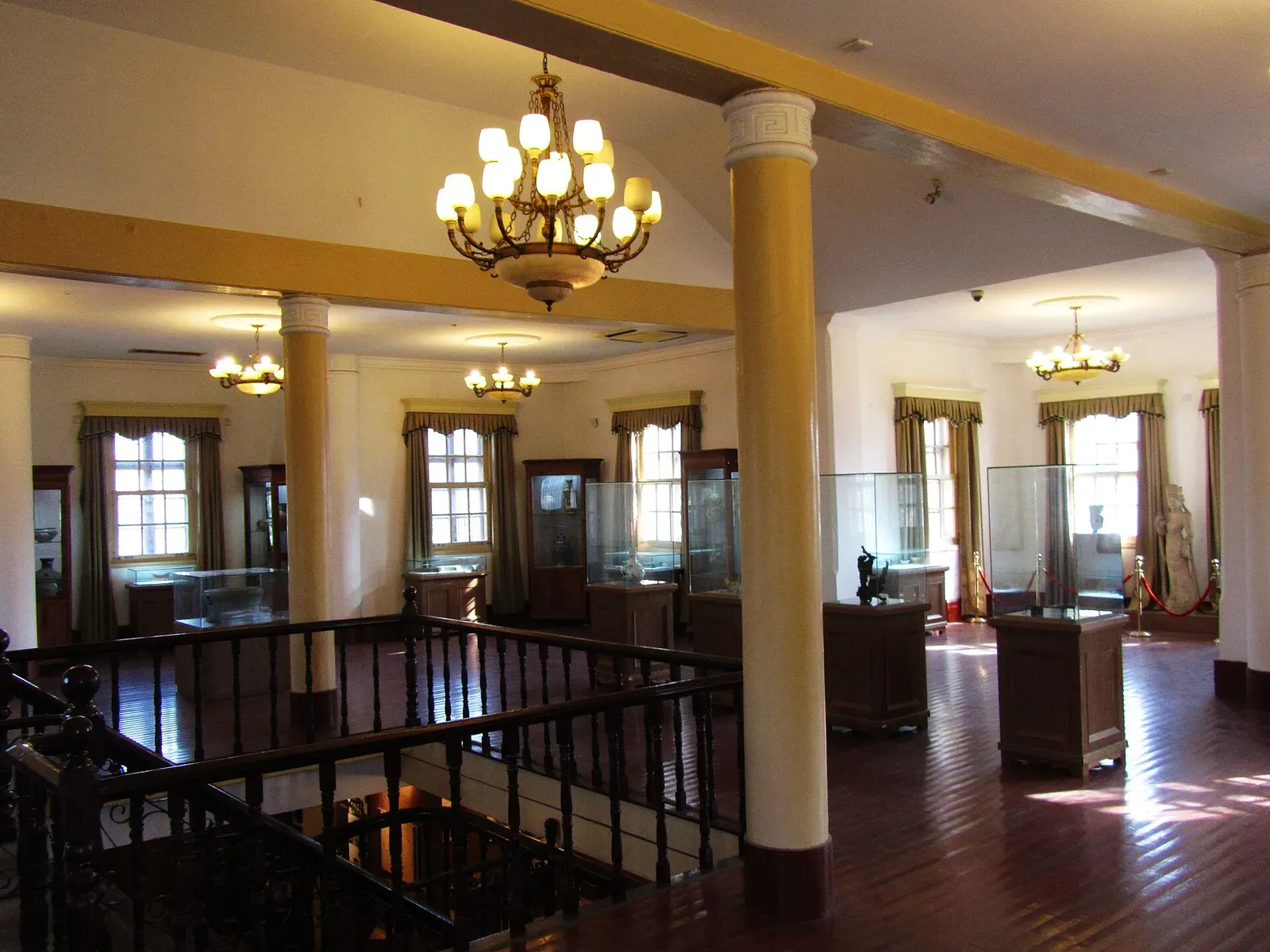
Nantong Museum was the first public museum founded independently by Chinese people. Established by industrialist Zhang Jian, it adopted an integrated design of museum and garden, naturally blending exhibition halls with garden rockeries, ponds, Guoxiu Altar, and the East Wisteria Waterside Pavilion. Built in 1906, the South Building is a two-story brick-and-wood structure with Western architectural elements and served as the primary early exhibition hall, surrounded by large stone carvings and pavilions housing ancient statues. The new museum was designed by Wu Liangyong and completed in 2005. The entire museum complex offers free admission.
The Haohe River is the moat of Nantong's old town. First dug in 958 AD (the fifth year of the Xiande era in the Later Zhou Dynasty), it is praised as the city's jade necklace and is now designated a National 5A-level Scenic Area. As one of China's best-preserved ancient city moats, its waterfront connects Nantong Museum with historic landmarks including Guangxiao Pagoda, Tianning Temple, and Wenfeng Pagoda, showcasing the cultural depth of this river-and-sea water city.
Guangjiao Temple on Mount Langshan by the Yangtze River is the dedicated bodhimanda of Mahasthamaprapta. Its founding master was Monk Sangha, and during the Taiping Xingguo era of the Northern Song Dynasty, the Dasheng Hall and Zhiyun Pagoda were constructed. Standing on the summit of Mount Langshan, Zhiyun Pagoda is 35 meters high, structured as a square wooden tower with five exterior levels and four interior stories. Around the mountain, well-preserved natural and cultural sites include the tomb of Tang Dynasty poet Luo Binwang, Wangjiang Pavilion, Imperial Pavilion, the Monument Pavilion Commemorating the Defeat of Japanese Pirates, the tomb of Bai Yayu, and Hanyu Spring.
How do you get to Nantong and travel around the city?
For intercity travel, phase one of the Shanghai-Suzhou-Nantong Railway opened for service on July 1, 2020, with a passenger design speed of 200 kilometers per hour. The line includes stations such as Anting, Taicang, Changshu, Zhangjiagang, and Nantong West, providing direct high-speed rail connections between Shanghai and Nantong. In air travel, the city's aviation hub is Nantong Xingdong International Airport, which opened for commercial flights in August 1993 and officially put a new terminal into operation in August 2019.
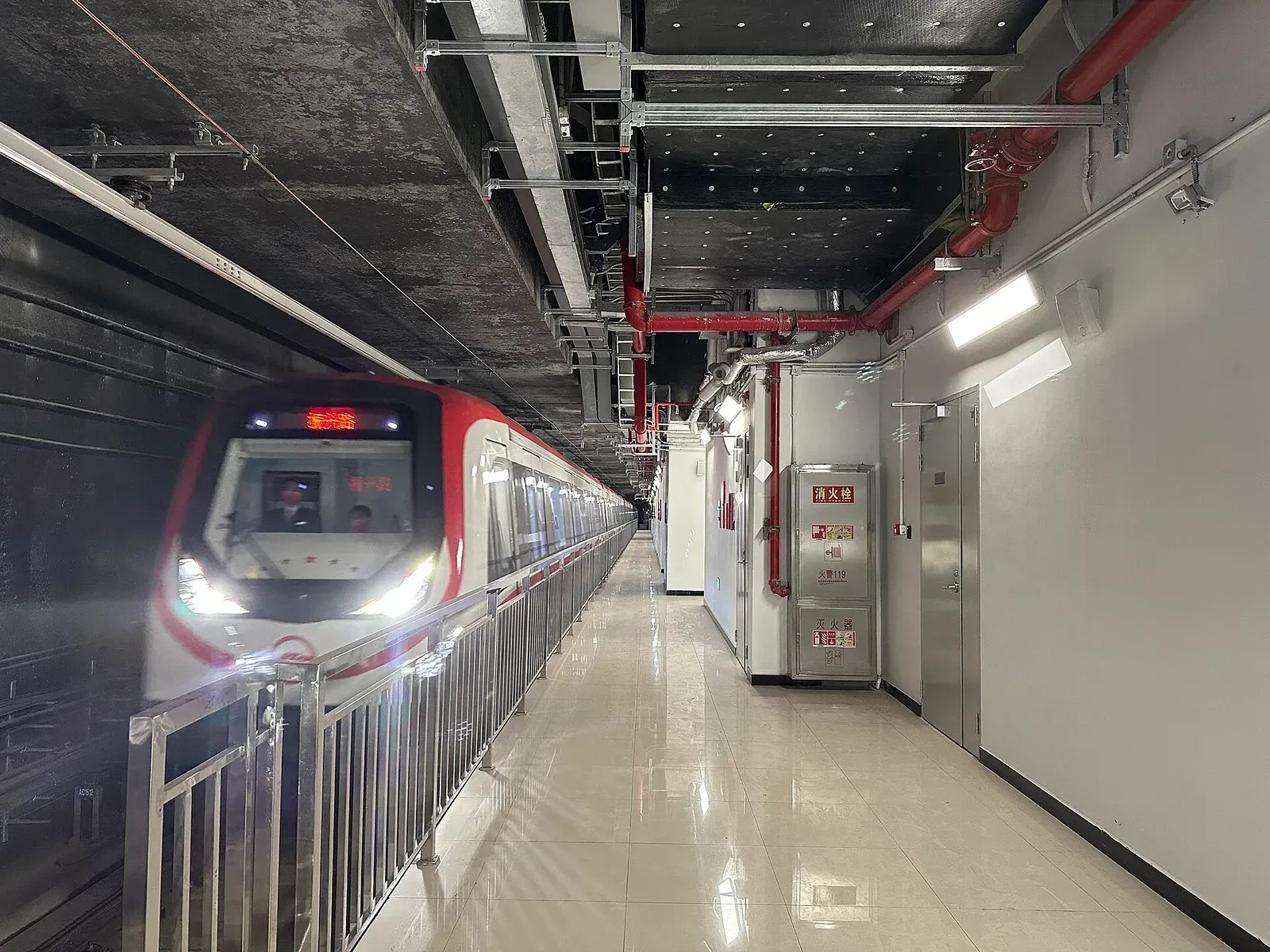
For getting around town, Nantong Rail Transit officially opened on November 10, 2022, and currently operates two trunk lines, Line 1 and Line 2. Metro fares follow a tiered distance system: a base fare of 2 RMB covers up to 6 kilometers; 1 extra RMB is added for every 5 kilometers from 6 to 16 kilometers; and 1 extra RMB is added for every 7 kilometers from 16 to 30 kilometers. You do not need to buy a separate physical card. All ticket gates across the network support QR code entry via the Alipay transit code, the WeChat mini-program Changxing Nantong, and the Nantong Metro app. Ticket vending machines in station concourses also accept cash and mobile electronic payments for single-ride tickets.
| Transit Type | Hubs and Line Coverage | Operational Features and Fare Rules |
|---|---|---|
| Shanghai-Suzhou-Nantong Railway | Stations along the line include Nantong West, Zhangjiagang, Changshu, Taicang, and Anting | Passenger design speed target of 200 kilometers per hour, providing direct connection between Shanghai and Nantong |
| Nantong Xingdong International Airport | New terminal opened in August 2019 | Civil aviation hub completed and opened to air traffic in August 1993 |
| Nantong Rail Transit | Operates two trunk lines, Line 1 and Line 2 | Tiered pricing with a base fare of 2 RMB for 6 kilometers, supporting gate entry via transit QR codes and ticket purchases at automated machines |
| Metro and bus transfer | Transfer between metro and bus | A 1 RMB discount off the base fare applies to transfers made within 60 minutes after timing begins on the first card tap |
Tip: When transferring between the metro and city buses using a transit card or designated transit QR code, tap to transfer within 60 minutes of your first tap to receive a 1 RMB discount off the base fare.
What do first-time visitors often overlook in Nantong?
First-time visitors most often overlook regular museum closing days and seasonal rainfall patterns. Nantong has a humid northern subtropical monsoon climate with an average annual temperature around 15°C. Rain falls on roughly 120 days a year on average, and the city enters its typical plum rain season every June and July. Knowing these details before you go helps you balance your outdoor and indoor visits each day.
| Common Points of Confusion | Actual Conditions and Regulations |
|---|---|
| Nantong Museum opening hours | Open daily from 9:00 to 17:00 (last entry at 16:30), closed on Mondays |
| Summer plum rain season precipitation | Typical plum rain season arrives every June to July, with an annual average of around 120 rainy days |
| Metro and bus transfer discount | A 1 RMB discount off the base fare applies to transfers completed within 60 minutes after timing begins on the first card tap |
Sources
Nantong Museum - Wikipedia
Haohe River - Wikipedia
Nantong - Wikipedia
Guangjiao Temple - Wikipedia
Shuihui Garden - Wikipedia
Dasheng Cotton Mill - Wikipedia
Nantong Rail Transit - Wikipedia
Shanghai-Suzhou-Nantong Railway - Wikipedia
Nantong City - Wikipedia
Sources verified on November 19, 2026.
FAQ
How much are tickets to Nantong Museum, and is it open on Mondays?
Admission to Nantong Museum is free. It opens daily from 9:00 to 17:00, with last entry at 16:30. Note that the museum is closed on Mondays and does not admit visitors on that day.
How do you take a train from Shanghai to Nantong, and which station does it arrive at?
You can take a direct bullet train along the Shanghai-Suzhou-Nantong Railway from Shanghai to Nantong West Station. The railway has a design speed of 200 kilometers per hour and also stops at stations including Anting, Taicang, Changshu, and Zhangjiagang.
How can international travelers use QR codes to ride the metro in Nantong?
You do not need a physical transit card to ride the Nantong metro. Gates across the entire network let you scan in and out using the Alipay transit code, the Changxing Nantong WeChat mini-program, or the Nantong Metro app. Ticket machines in station halls also accept cash and mobile electronic payments to purchase single-ride tickets.
What are the rules for the transfer discount between Nantong's metro and buses?
When transferring between the metro and city buses using a physical transit card or designated QR code, you need to complete the transfer within 60 minutes of the first card tap to receive a 1 RMB discount off the base fare.