
How to Visit Nannuo Mountain: Tea Villages and Picking
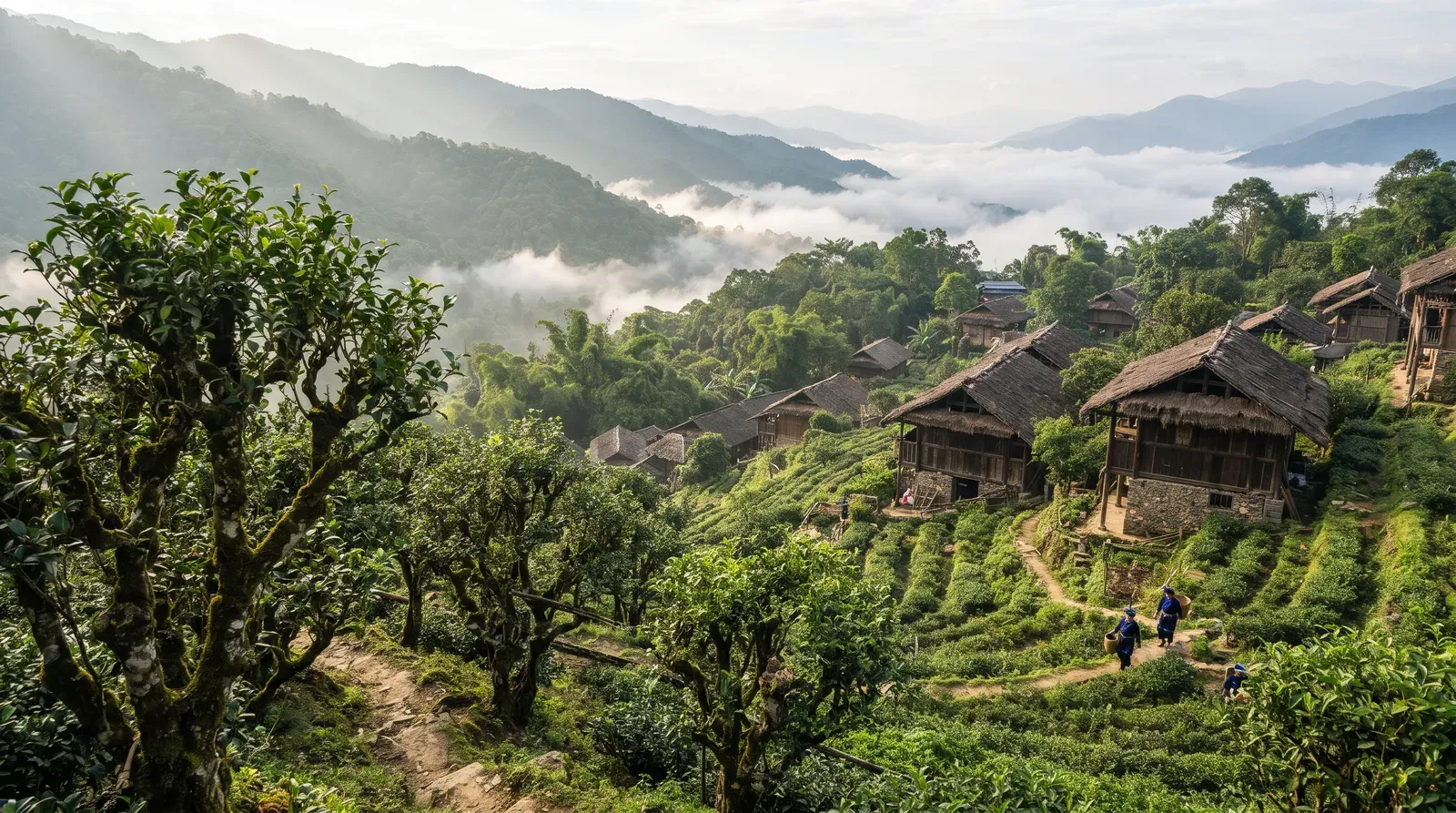
Nannuo Mountain is located in Gelanghe Hani Township, Menghai County, about 24 kilometers from the county town. It is open all day throughout the year with no admission tickets required. The mountain holds large contiguous ancient tea gardens with cultivated tea trees. Visitors can stroll through Hani ethnic villages, look for ancient tea groves, experience tea picking and processing, and taste local Hani specialties.
| Item | Details |
|---|---|
| Admission | Free and open all day year-round, no tickets required |
| Location | Gelanghe Hani Township, Menghai County, along the road from Jinghong to Menghai |
| Elevation and climate | Average elevation around 1,400 meters, average annual temperature around 17.9°C |
| Ancient tea garden size | 12,000 mu of contiguous ancient tea gardens |
| Highlights | Visiting the King of Tea Trees, experiencing tea picking and processing, tasting Hani food |
What Can You See in Nannuo Mountain's Tea Villages?
The ancient tea trees grow mainly across several Hani natural villages, where tea plants intermingle with tall forest trees to form a natural ecosystem. According to local legend, an ancient Dai chieftain inspected the mountain, loved the bamboo shoot paste served by the Hani people, and ordered them to send it as an annual tribute. In the Dai language, Nannuo means bamboo shoot paste. See the table below for the tea garden areas and features of each village.
| Village Name | Ancient Tea Area | Location and Highlights |
|---|---|---|
| Banpo Old Village | 3,700 mu | Located midway up the mountain, with a bluestone path and the new King of Tea Trees |
| Guniang Village | 1,500 mu | A Hani village with a dense concentration of ancient tea trees |
| Zhulin Village | 1,200 mu | Has a forest trail through ancient tea gardens toward Banpo Old Village |
| Shitou New Village | Subject to official announcements | Site of a mechanized tea processing factory built in 1938 |
| Duoyi Village | Subject to official announcements | The highest peak features Heiniu Ancient Tea Garden, offering tea leaf picking and making |
If you plan to explore the historical site of mechanized tea processing in Yunnan, head to Shitou New Village. If you want to try picking and pan-frying fresh tea leaves, go directly to Duoyi Village. For an up-close look at very old tea trees, Banpo Old Village is the main spot.
How Do You Reach the King of Tea Trees in Banpo Old Village?
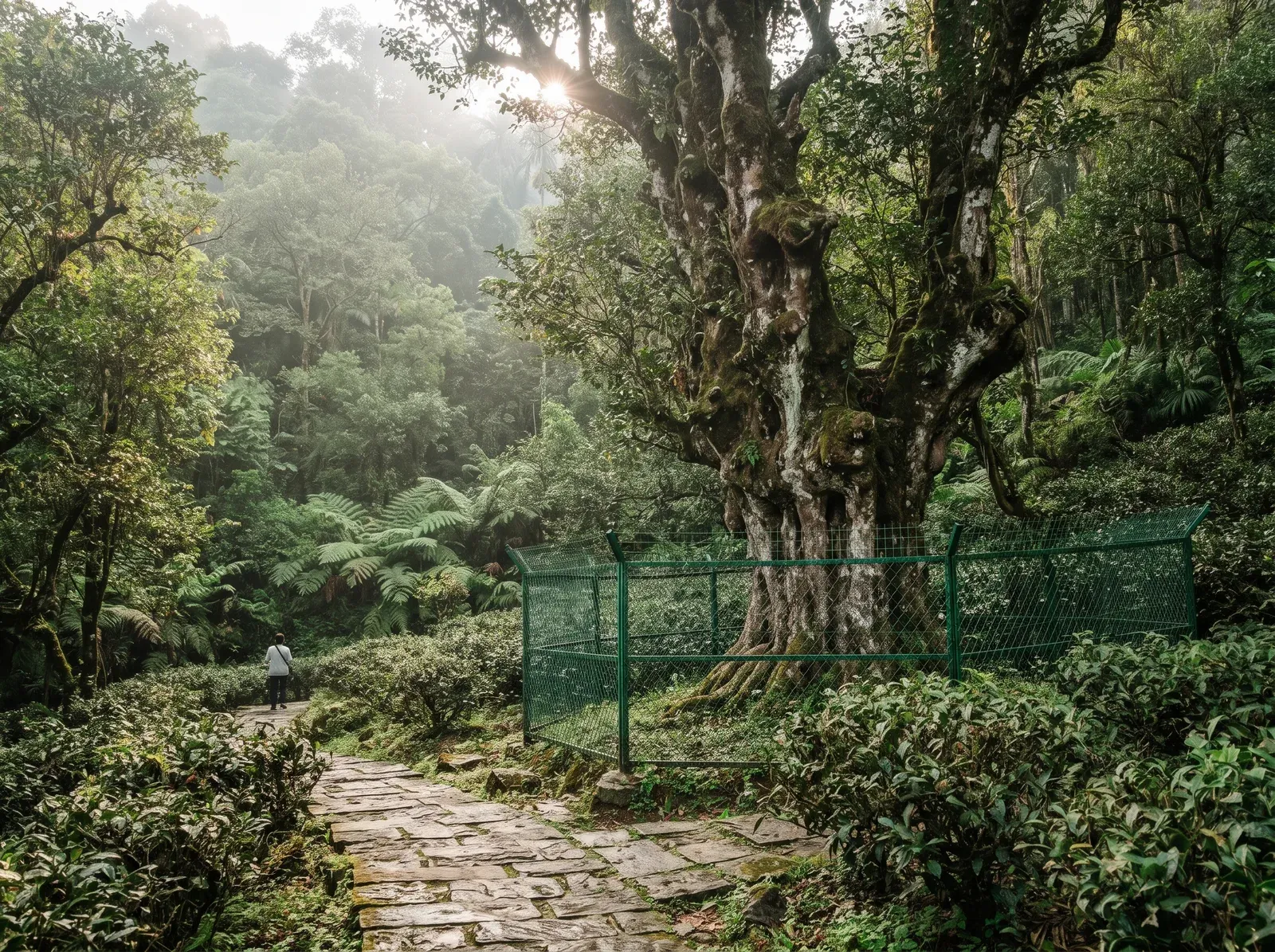
Banpo Old Village sits halfway up the slopes between 1,550 meters and 1,650 meters in elevation. It is an entirely Hani village, known in the Hani language as Chaoxiang, meaning a place where you can hear waterfalls. The route to the King of Tea Trees is paved with bluestone slabs, bordered by tea groves. A pavilion midway up offers a place where visitors can sit with local tea farmers over freshly brewed tea.
The new King of Tea Trees in Banpo Old Village stands 5.3 meters high, with a crown spread of 7.5 to 9.3 meters and a trunk diameter of 76.4 centimeters. Research shows it is a cultivated large-leaf tea tree around 800 years old. Wooden ladders and supporting poles used by local tea farmers to harvest fresh leaves are set against the tall trunk.
Tip: According to Wen Wei Po's tea journal, the King of Tea Trees is surrounded by protective wire fencing and monitored by dedicated staff. Visitors can only view and photograph it from outside the fence, without touching or picking.
Is the Hike Through the Ancient Tea Gardens Difficult?
The hike from Zhulin Village to Banpo Old Village covers about 5 kilometers, following forest trails through large expanses of ancient tea gardens. Along the way, you can see how old tea trees grow mixed among tall canopy trees.
According to traveler reports, the slopes where Banpo Old Village's ancient tea gardens grow are relatively steep and covered with fallen twigs and leaves. Hiking through requires effort, and some steep sections require scrambling on hands and feet.
Tip: Because the tea garden slopes are steep and littered with fallen leaves, watch your footing to avoid slipping, and wear hiking shoes with dependable grip.
When Can You Experience Tea Picking and Processing?
Menghai big-leaf tea, native to the area, is an arbor-type national quality cultivar. Spring tea harvesting begins in early March, reaching peak one-bud-three-leaf picking in mid-March. Old-tree Pu'er tea from the area has tightly twisted, long, straight leaves. When brewed, the liquor turns a bright golden yellow with a full body, delivering a distinct floral honey aroma and wild forest notes, with low bitterness and a lingering sweet aftertaste.
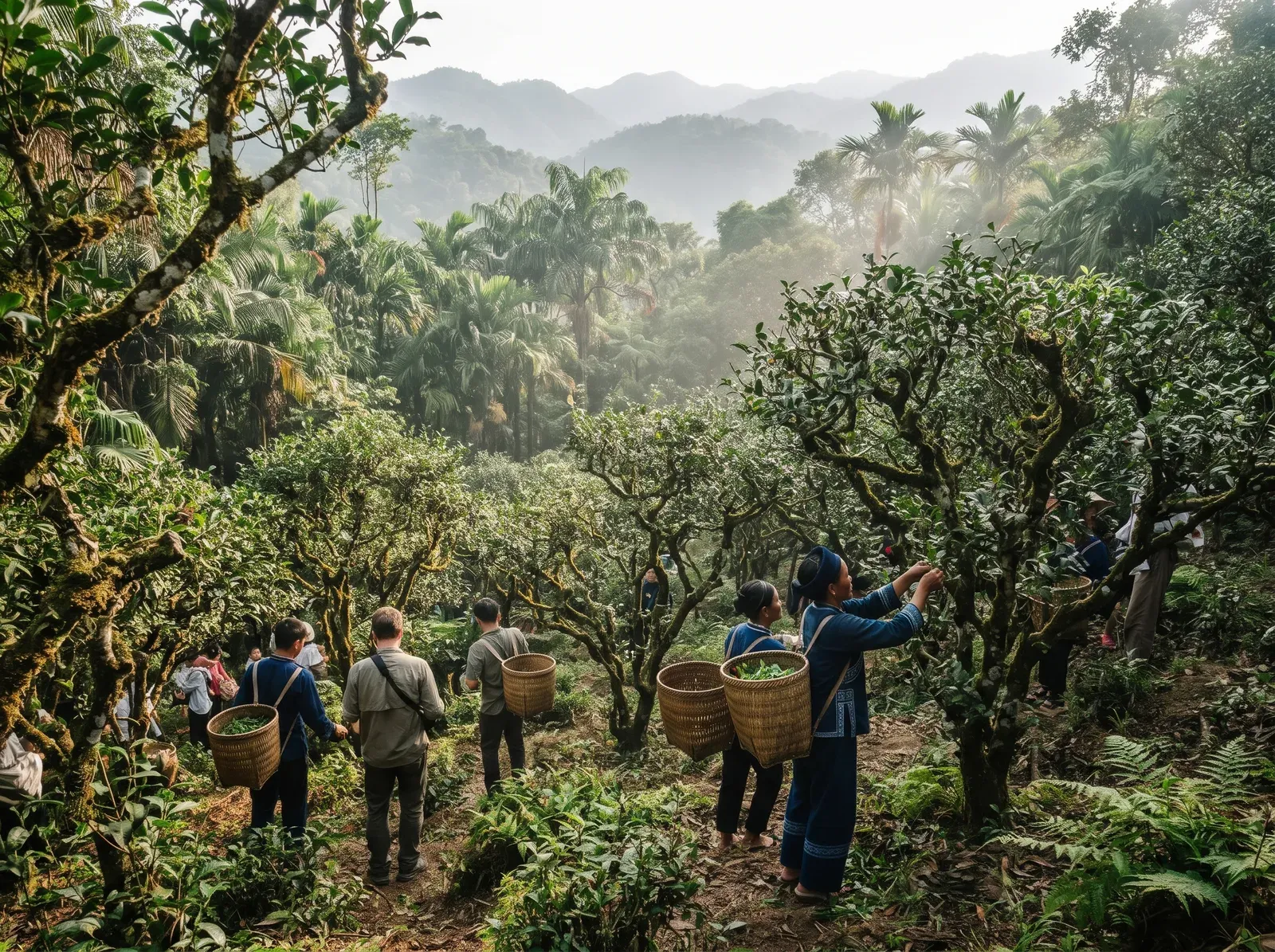
At places like Heiniu Ancient Tea Garden on the highest peak of Duoyi Village, you can carry a woven basket up the mountain alongside Hani villagers to harvest fresh tea leaves, then try your hand at pan-frying and sun-drying the leaves.
Where to Eat Hani Dishes and Stay Overnight?
Village restaurants in Yakou Village and Duoyi Village serve local Hani dishes. Signature items include chicken porridge, smoked dried beef, chili and wild fruit seasoned fish, and scrambled eggs with fresh tea leaves.
Among the tea groves on the mountain slopes, guesthouses like Jianglu and Nanshanyin offer mountain stays where you can watch sunrise over clouds in the morning and chat around the hearth with Hani tea farmers at night. For history, visit Shitou New Village to see the original site of Menghai Tea Factory No. 1, established in 1938 as the first mechanized tea processing factory in Yunnan.
| Category | Name and Location | Highlights |
|---|---|---|
| Hani cuisine | Restaurants in Yakou Village, Duoyi Village, and others | Chicken porridge, smoked dried beef, chili fruit fish, scrambled eggs with tea leaves |
| Mountain guesthouses | Jianglu, Nanshanyin, and other tea forest lodges | Morning sea of clouds and sunrise views, evening fireside chats |
| Industrial heritage | Old site of Menghai Tea Factory No. 1 in Shitou New Village | Built in 1938, the first mechanized tea processing factory in Yunnan |
How Do You Get from Jinghong to the Villages?
The mountain sits along the highway between Jinghong and Menghai. Regular passenger buses running from Jinghong to Menghai County pass through, allowing passengers to get off midway at the mountain. If you carry luggage or want to go straight to higher-elevation settlements like Banpo Old Village, you can also hire a car.
| Option | Route | Arrival Details |
|---|---|---|
| Public bus | Jinghong to Menghai County bus via the mountain | Buy a ticket, board the bus, and alight midway at Nannuo Mountain |
| Hired car | Direct hired car from Jinghong to the mountain | Drives directly up to the individual villages depending on road conditions |
Tip: When boarding the passenger bus between Jinghong and Menghai County, tell the driver or attendant before departure that you are getting off at Nannuo Mountain, then disembark when the bus stops there.
Sources
Nannuo Mountain
Menghai Daye Tea - Wikipedia
Honest Tea Journal: Banpo Old Village King of Tea Trees - Hong Kong Wen Wei Po
Sources verified on November 17, 2026.
FAQ
Do you need an admission ticket for Nannuo Mountain?
Nannuo Mountain is open all day throughout the year for free, and entering requires no scenic area ticket.
When does the spring tea harvest usually begin on Nannuo Mountain?
The spring harvest for Menghai big-leaf tea begins in early March, with peak one-bud-three-leaf picking in mid-March. Visiting places like Heiniu Ancient Tea Garden in Duoyi Village during this time lets you experience tea picking and processing.
Can you touch or pick leaves from the King of Tea Trees in Banpo Old Village?
No. The tree is encircled by a protective wire fence and watched by staff, so visitors can only view and take photos from outside the barrier.
What Hani specialties can you try on Nannuo Mountain?
Restaurants in villages such as Yakou Village and Duoyi Village serve Hani dishes, with signature options including chicken porridge, smoked dried beef, chili fruit fish, and scrambled eggs with tea leaves.