
How to Visit Nanning: Mount Qingxiu, Two Museums, and Travel Guide
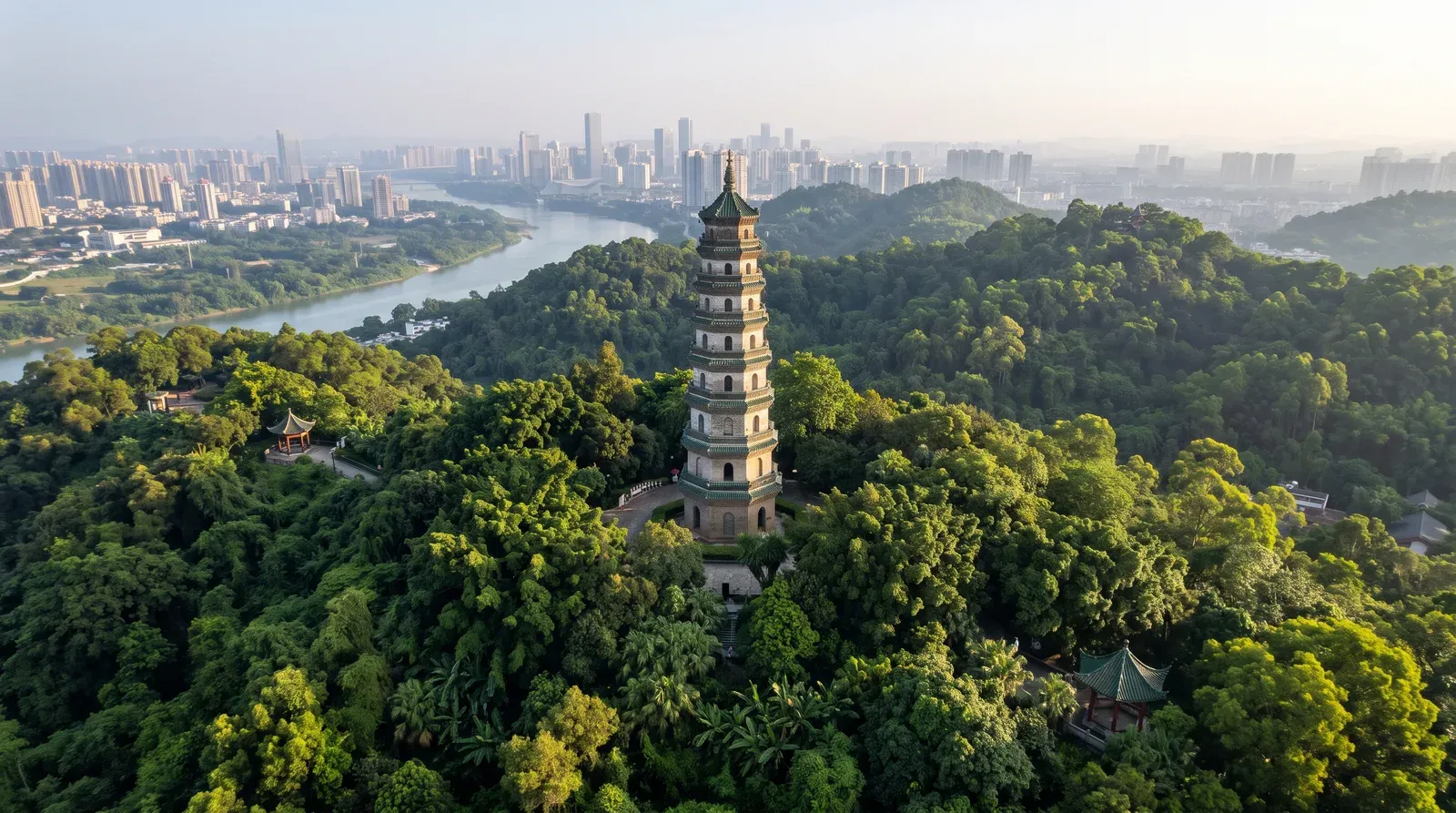
When planning a trip to Nanning, the main highlights center on Mount Qingxiu Scenic Area, two large museums, and local street flavors. According to official data, Mount Qingxiu has a planned conservation area of 13.54 square kilometers across 18 hills. Five metro lines running 132 kilometers connect key spots around the city. With an annual average temperature of 22.3°C, knowing the main sights and transport rules in advance helps you set a comfortable daily pace.
How should you tour Mount Qingxiu, and what are the main sights?
Mount Qingxiu Scenic Area sits beside the Yongjiang River and was rated a National 5A Tourist Attraction on November 28, 2014. According to public scenic area data, its core area spans 6.43 square kilometers and holds 1,116 species of tropical and subtropical plants. Key spots include the Cycad Garden (千年苏铁园), Orchid Garden, Rainforest Garden, Dragon Elephant Pagoda (Longxiang Pagoda), Tianchi Lake, Guanyin Temple, and Shuiyue Nunnery.
Getting there is easy. You can take Metro Line 3 and get off directly at Qingxiu Mountain Station. The park borders the river against the hills, with sights spread across rolling terrain.
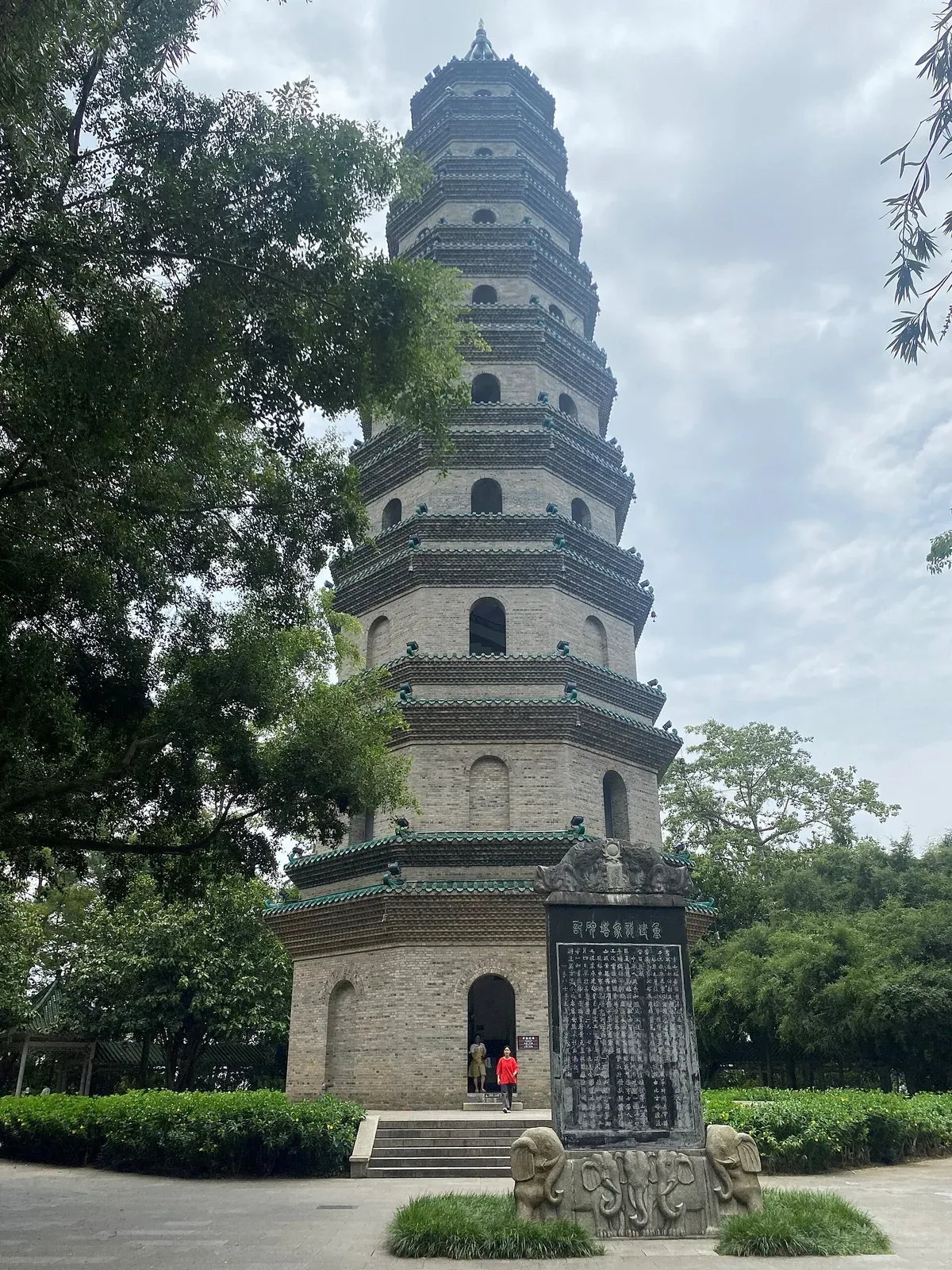
If you care more about nature, head first to the Cycad Garden, Orchid Garden, and Rainforest Garden to view the plant collections. If you prefer historical spots and high viewpoints, prioritize the Dragon Elephant Pagoda, Tianchi Lake, Guanyin Temple, and Shuiyue Nunnery. You can choose either route depending on your energy.
Tip: Mount Qingxiu consists of 18 hills with a core area of 6.43 square kilometers, and the walking trails have noticeable elevation changes, so wear flat walking shoes suitable for hills.
After visiting Mount Qingxiu, you can turn your attention to the cultural venues in the city.
How do you choose between Nanning's two major museums?
The city has two representative cultural venues: Guangxi Museum of Nationalities and Guangxi Museum. The first sits inside Mount Qingxiu Scenic Area along the Yongjiang River, open free to the public since May 1, 2009. According to the museum, the main building is shaped like a bronze drum, featuring the main hall, a traditional folk residence exhibition park, and six permanent exhibitions.
Guangxi Museum sits on the east side of Minzu Square. According to official statistics, it covers a total floor area of around 42,000 square meters with nearly 100,000 cultural relics. Inside, it systematically displays local history and historical artifacts.
If you are already touring Mount Qingxiu, you can easily walk over to the Guangxi Museum of Nationalities inside the park to see ethnic folk exhibits for free. If you are near Minzu Square, visiting Guangxi Museum with its 42,000 square meters of floor space is convenient for exploring historical artifacts.
Tip: Guangxi Museum of Nationalities has offered free admission since May 1, 2009, so keep a valid ID ready for entry checks.
After nature and museums, you can head into the streets to taste local flavors.
What local food should you try, and what makes Laoyou noodles special?
In the city, sour and spicy Laoyou noodles (老友粉) are an affordable street staple eaten for breakfast, lunch, and dinner. According to local food records, the ingredients include flat rice noodles, pickled bamboo shoots, fermented black beans, chili peppers, minced ginger, and minced garlic. Besides Laoyou noodles, the well-known dish lemon duck also originated here.
Traditional Laoyou noodles are cooked without tomatoes, and the tart flavor comes entirely from the pickled bamboo shoots. According to diners, when a steaming hot bowl is served, the aroma of pickled bamboo and fermented beans rises up, with sour and spicy broth coating the smooth noodles.
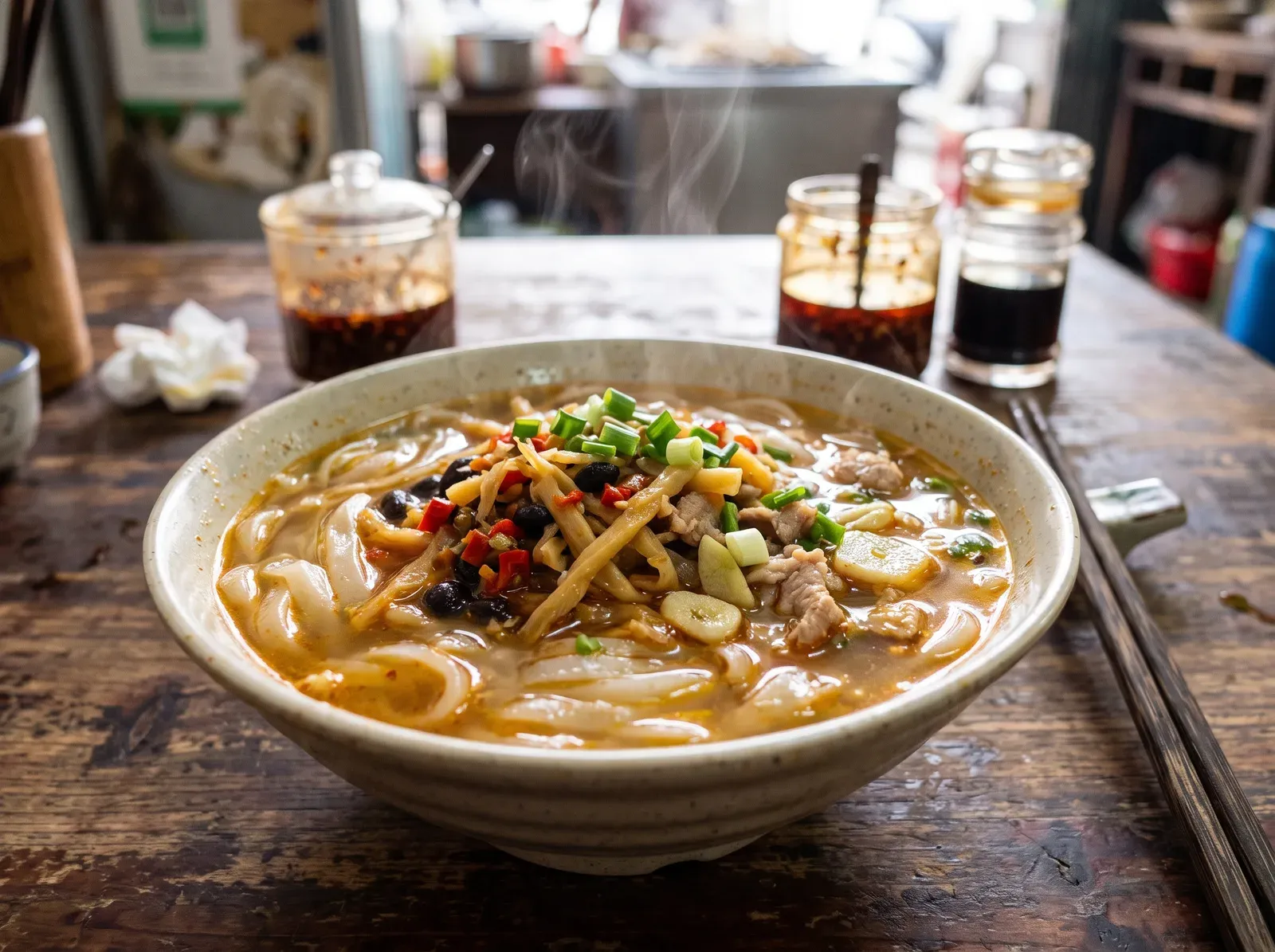
Tip: Traditional Laoyou noodles get their tartness purely from pickled bamboo shoots without tomatoes, so first-time diners can tell the cook your preferred spice level when ordering.
What are the metro and taxi fares, and when do they run?
Getting around the city mainly relies on the metro and taxis. According to official statistics, as of September 2025, the rail transit network runs 5 lines (Line 1 to Line 5) spanning 132 kilometers across 106 stations. Stations support Alipay, WeChat Pay, cash, and China T-Union transport cards for buying tickets and passing fare gates.
| Transport Mode | Base Fare and Distance | Additional Distance and Fare Cap | Operating Hours and Key Rules |
|---|---|---|---|
| Metro (Lines 1 to 5) | 2 yuan (first 6 km) | Distance-based tiered fare, capped at 7 yuan per one-way trip on the network | Monday to Thursday and Sunday 06:30 to 23:00, Friday and Saturday extended to 24:00; 120-minute journey limit |
| Taxi (Daytime) | 9 yuan (first 2 km) | 2 yuan per km after 2 km; stepped empty-return surcharges after 7 km and 18 km | Daytime 06:00 to 23:00 |
| Taxi (Nighttime) | 11 yuan (first 2 km) | 2 yuan per km after 2 km; stepped empty-return surcharges after 7 km and 18 km | Nighttime 23:00 to 06:00 next day |
For intercity travel, the main passenger railway stations are the central railway station and the East Station, with the East Station serving as the newer primary hub for high-speed trains. Taxis charge stepped empty-return surcharges after a one-way trip exceeds 7 kilometers and 18 kilometers.
Tip: A single-journey metro ticket has a validity limit of 120 minutes, so keep an eye on your travel time once inside the gates; exceeding the limit incurs the network maximum fare of 7 yuan.
What is the best season for the weather, and what exceptions should you know?
The annual average temperature is 22.3°C, offering generally mild weather. According to meteorological records, July is the hottest month with an average temperature of 28.5°C, while January is the coolest at 13.3°C. Rainfall is most frequent from May to October, with relative humidity staying above 60% year-round.
If you prefer to avoid the rainiest months, plan your trip during the drier, cooler autumn and winter seasons. If you visit between May and October, keep rain gear on hand and prepare for warm, humid days.
Note that these temperature and rainfall figures reflect long-term averages. Actual conditions during your trip may fluctuate due to short-term weather patterns, so check the live forecast before traveling.
If you plan a longer journey across Guangxi, start with the China Travel Guide: Culture, Food, Festivals & Travel Rules for an overall picture, or have an Uncle Panda travel designer organize a relaxed custom itinerary with private transfers from your driver.
Sources
Mount Qingxiu - Wikipedia
Guangxi Museum of Nationalities - Wikipedia
Guangxi Museum - Wikipedia
Laoyou Rice Noodles - Wikipedia
City Overview - Wikipedia
Urban Rail Transit - Wikipedia
Municipal Profile - Wikipedia
All sources verified on November 17, 2026
FAQ
Which railway station should you choose when taking high-speed rail to the city?
The destination offers two main passenger railway stations: the central railway station and the East Station. The East Station is the newer primary hub for high-speed trains, with convenient connections to local public transit.
What payment methods can you use on the metro?
Metro stations accept Alipay, WeChat Pay, cash, and China T-Union transit cards to buy tickets and enter the fare gates.
Do authentic Laoyou noodles include tomatoes?
Traditional Laoyou noodles are made with flat rice noodles, pickled bamboo shoots, fermented black beans, chili peppers, minced ginger, and minced garlic. The traditional recipe does not add tomatoes, and the sour taste comes entirely from the pickled bamboo shoots.
Do you need a ticket to visit Guangxi Museum of Nationalities?
Guangxi Museum of Nationalities has been free to the public since May 1, 2009. Shaped like a bronze drum, the main building features six permanent exhibitions and a traditional folk residence display area.