
How to Visit the Leshan Giant Buddha: Boat and Cliff Paths
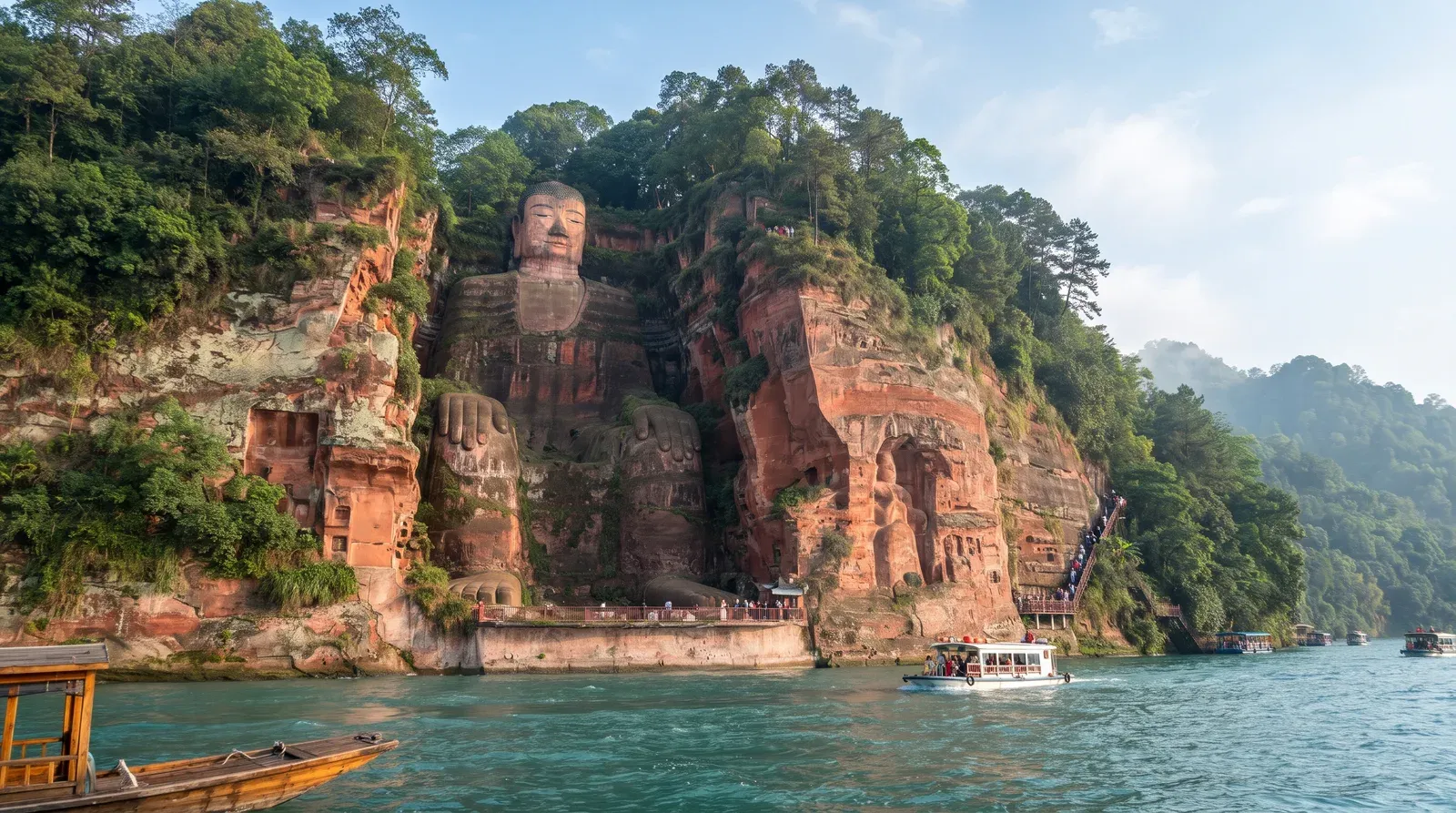
There are two main ways to visit the Leshan Giant Buddha: take a river sightseeing boat to view the 71-meter-tall statue from a distance, or walk down the cliffside Nine-Turn Plank Road to look up close from the feet. If you have enough time, you can first walk into the mountain to see the details of the statue and Tang dynasty niches up close, then take a boat carrying 35 passengers to view the front of the statue from the river. Carved from Cretaceous red sandstone cliffs facing Mount Emei, it is the largest and tallest ancient stone carved Buddha statue in the world.
Sightseeing Boat for Full Views or Hiking the Plank Road?
The two visiting options offer different perspectives and suit travelers with different fitness levels and schedules. Taking a river sightseeing boat requires no mountain climbing. You can view the entire 71-meter-tall seated Maitreya Buddha at eye level on open water. Wikipedia records that each boat carries 35 passengers, with a reference fare of 70 yuan per person. Walking allows you to inspect details of the statue up close, descending from the head to the feet along steep, narrow cliff paths to view the carving from multiple angles.
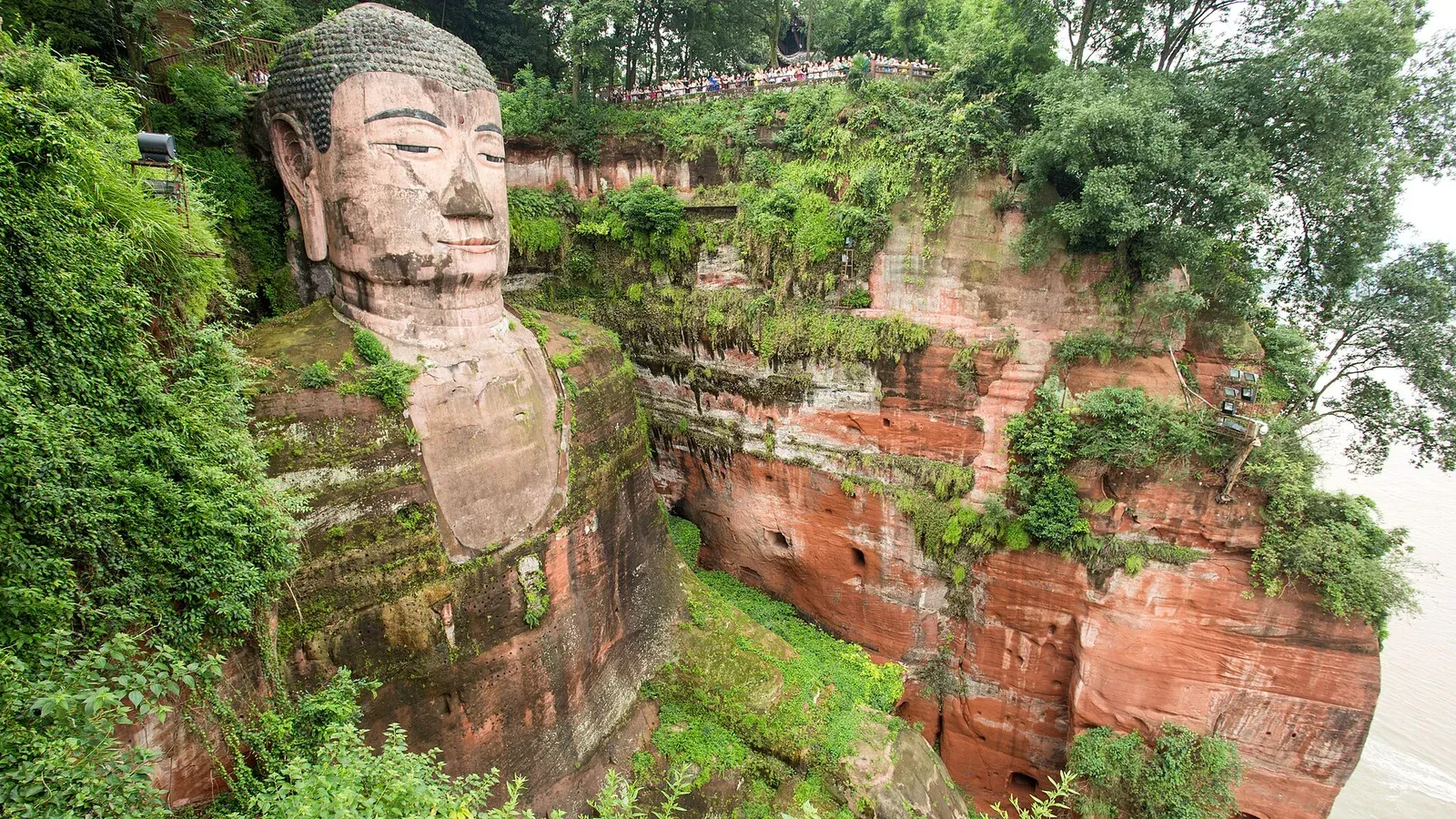
The head of the Buddha is 14.7 meters high and 10 meters wide, with 1,021 coiled buns of hair embedded in it. The ears are 7 meters long, the shoulders are 24 meters wide, and the instep of the feet is about 8.5 meters wide, which can hold a hundred people standing. Concealed drainage grooves are built into the hair buns, collar, and chest, while drainage caves behind both ears and beside the chest channel rainwater away, forming an internal drainage system that protects the statue from weathering and erosion. As you walk down, you can look up at these ancient engineering details from various spots on the plank road.
Ticket Prices for the Leshan Giant Buddha and River Boat
Walking in the scenic area and taking the sightseeing boat are two separately charged experiences. According to Wikipedia, the walking ticket for the scenic area is 90 RMB per person, which covers Wuyou Temple and the Mahao Cliff Tombs. The reference price for the river sightseeing boat is 70 RMB per person. Another record of scenic area fees lists the walking ticket at 80 RMB per person and the boat ticket at 70 RMB per person, with actual prices subject to on-site implementation.
Opening hours for the walking area adjust with the seasons: from April to October, the opening hours are 7:30 to 18:30, and from October to the following March, they change to 8:00 to 17:30. Travelers planning to walk the plank road should consider entering early in the morning or in the afternoon to leave enough time for walking down the path and visiting surrounding historic sites.
| Activity | Reference Price (RMB) | Operating Hours or Capacity | Coverage |
|---|---|---|---|
| Walking ticket | 90 yuan per person (another record lists 80 yuan) | April to October: 7:30 to 18:30; October to following March: 8:00 to 17:30 | Leshan Giant Buddha, Wuyou Temple, and Mahao Cliff Tombs |
| River sightseeing boat | 70 yuan per person | Certified capacity of 35 passengers per boat | River sightseeing at the confluence of the three rivers |
What Are the Highlights Along the Nine-Turn Plank Road?
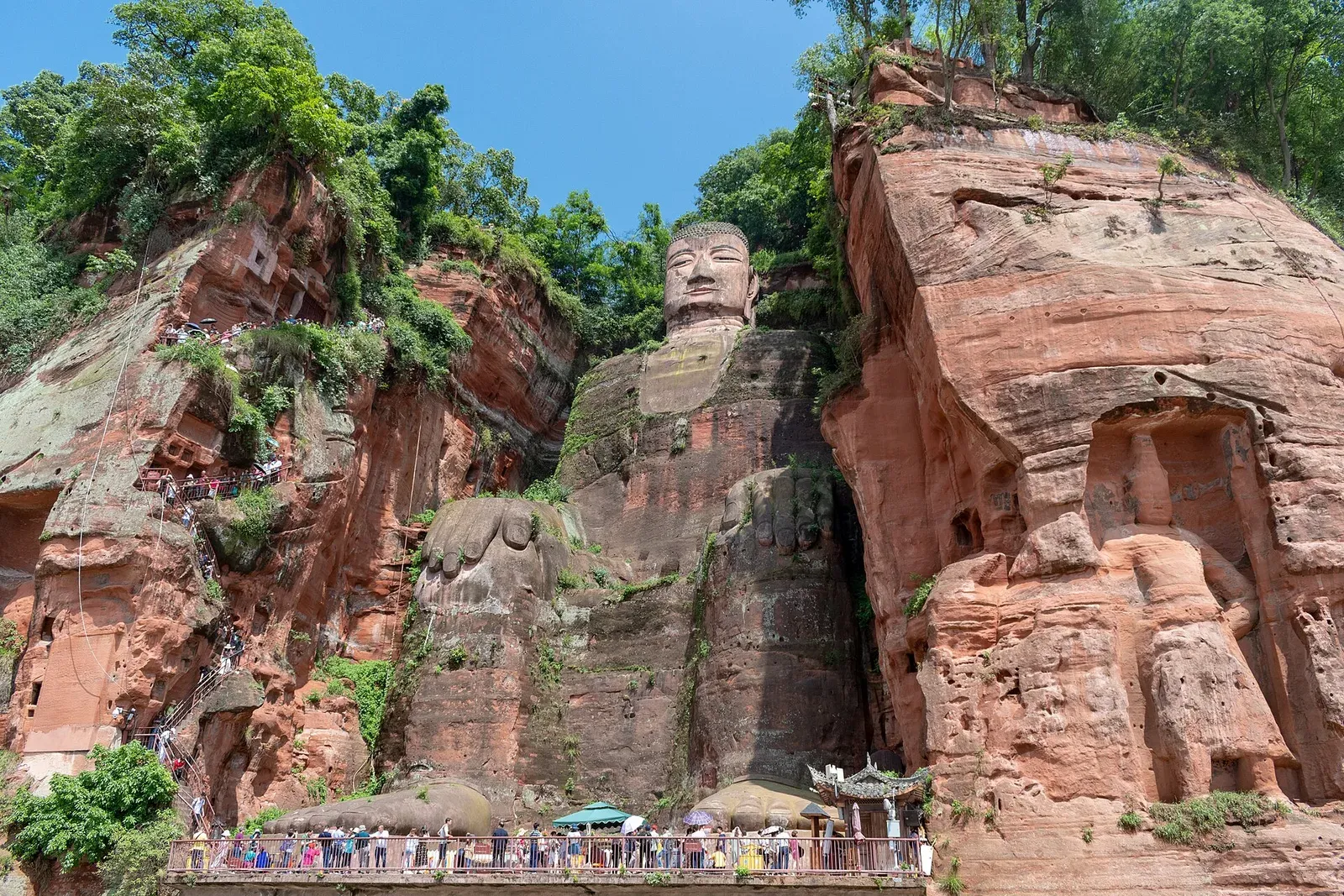
On the cliff to the right of the Buddha, the Nine-Turn Plank Road is carved into the rock, leading directly to the viewing platform at the feet. Built along the cliff beside the river, the path is steep and narrow, with well-preserved Tang dynasty Buddhist niches remaining on the rock face. At the first turn from top to bottom, an intricate Western Paradise relief is carved into the stone.
In April 2019, emergency conservation survey and repair work on the chest and abdomen of the statue concluded, and the Nine-Turn Plank Road and the foot viewing platform officially reopened. Walking down the path step by step to the platform where the instep is about 8.5 meters wide, visitors can look up close at the 71-meter-tall ancient stone carved Buddha.
When Was the Giant Buddha Built?
The giant Buddha was built during the Tang dynasty between 712 and 804, prompted by the treacherous waters at the confluence of the Min River, Dadu River, and Qingyi River. Monk Haitong from Guizhou initiated the carving during the Kaiyuan era of the Tang dynasty. Sculpting a seated Maitreya Buddha was intended to calm the turbulent currents and subdue boat accidents at the river junction. The project was carried out in relays across three generations by Monk Haitong, Zhangchou Jianqiong, and Wei Gao, and was completed in 803 during the nineteenth year of the Zhenyuan era under Emperor Dezong of Tang, taking about 90 years.
On the cliff wall to the right of the Buddha, the Record of the Colossal Stone Maitreya Image of Lingyun Temple in Jiazhou composed by Wei Gao is carved. On Mount Lingyun to the right of the statue sits Lingyun Temple, also built during the Kaiyuan era of Emperor Xuanzong of Tang. Also known as the Dafo Temple (Grand Buddha Temple), it houses the Hall of Heavenly Kings, Daxiong Hall (Grand Hall of the Great Sage), and a Sutra Library.
How to Visit Nearby Sites Like Wuyou Temple and Mahao Cliff Tombs
The area around the Buddha features a cluster of historic monuments inscribed on the UNESCO World Heritage List. Related sites recognized by UNESCO include the 9th-century Lingbao Pagoda, the early Qing dynasty Dafo Temple, Wuyou Temple housing Song dynasty gilded cast-iron Buddha statues, and more than 500 Han dynasty cliff tombs on the Mahao cliff face. Visitors who purchase the 90-yuan walking ticket can visit these historic sites along the way after touring the Buddha.
Built during the Tang dynasty, Wuyou Temple sits atop Mount Wuyou at the confluence of the three rivers, right next to the giant Buddha. Wuyou Temple is a National Key Buddhist Temple in the Han Chinese Area designated by the State Council, and it houses gilded cast-iron Buddha statues from the Song dynasty.
Transportation Options from Chengdu to the Giant Buddha
There are two main ways to travel from Chengdu: high-speed rail and private vehicle. When the Chengdu-Guiyang High-Speed Railway opened, the second-class ticket benchmark from Chengdu East Railway Station to Leshan Railway Station was 54 RMB. After arriving at Leshan Railway Station, you can take public bus No. 13 directly to the scenic area. If you drive or take a private vehicle from downtown Chengdu, the one-way distance is about 200 kilometers, taking around 2 hours.
For foreign travelers entering under the transit visa exemption policy, Sichuan Province permits transit activities across 11 cities: Chengdu, Zigong, Luzhou, Deyang, Suining, Neijiang, Leshan, Yibin, Ya'an, Meishan, and Ziyang. Both Chengdu and Leshan fall within the permitted area, making round trips between the two cities fully compliant with regulations. For a more relaxed trip, you can ask a travel designer to arrange a private car with your driver to pick you up and drop you off directly at the entrance of the scenic area.
Practical Tips and Things to Know Before You Go
Visiting requires attention to weather conditions and site rules. The Nine-Turn Plank Road is chiseled into the cliff face with steep, narrow steps. Walking requires extra caution when surfaces are wet and slippery in the rain, so wearing non-slip flat shoes and holding firmly to the handrails is recommended. Sightseeing boats on the river are affected by hydrological conditions at the confluence of the three rivers, and departures may change temporarily during extreme severe weather or flood control operations.
In addition, ticket prices are recorded on Wikipedia as 90 yuan per person (including Wuyou Temple and Mahao Cliff Tombs), while another fee record shows 80 yuan for the walking area plus 70 yuan for the boat. Please refer to on-site announcements for exact prices and opening hours. In winter (from October to the following March), the closing time for walking areas moves earlier to 17:30, so planning your arrival time accordingly is advisable.
Sources
FAQs on 240-Hour Transit Visa Exemption for Foreigners
Chengdu & Chongqing 15-Day Private Tour: Jiuzhaigou & Wulong
Leshan Giant Buddha - Wikipedia
Leshan Giant Buddha - Chinese Wikipedia
Mount Emei Scenic Area, including Leshan Giant Buddha Scenic Area
Wuyou Temple - Chinese Wikipedia
Lingyun Temple (Leshan) - Chinese Wikipedia
Chengdu-Guiyang Passenger Dedicated Line - Chinese Wikipedia
The sources above were verified on November 17, 2026.
FAQ
What is the difference between taking a boat and walking the plank road?
Taking a river boat allows you to view the entire front of the 71-meter-tall statue from the water at eye level. Each boat carries up to 35 passengers, which suits travelers seeking a panoramic view. Walking the Nine-Turn Plank Road takes you down steep stone steps from the head to the feet, letting you see the 1,021 coiled hair buns and Tang dynasty stone niches up close.
Does the ticket include Wuyou Temple and the Mahao Cliff Tombs?
According to Wikipedia, the walking ticket is 90 RMB per person, which covers both Wuyou Temple and the Mahao Cliff Tombs. Tickets for the river sightseeing boat must be purchased separately, with Wikipedia recording a reference fare of 70 RMB per person.
Is a day trip from Chengdu convenient?
On the Chengdu-Guiyang High-Speed Railway, the benchmark second-class fare from Chengdu East Railway Station to Leshan Railway Station is 54 RMB. From the station, bus No. 13 goes directly to the scenic area. Driving or taking a private vehicle from downtown Chengdu takes about 2 hours for a one-way distance of around 200 kilometers, making a same-day return straightforward.
Can transit visa-exempt travelers visit Leshan?
Yes. The permitted transit area in Sichuan Province includes 11 cities, among them Chengdu and Leshan. Foreign travelers arriving in Chengdu can visit Leshan in full compliance with the transit visa exemption policy.