Kunshan Travel Guide: Water Towns and Hairy Crabs
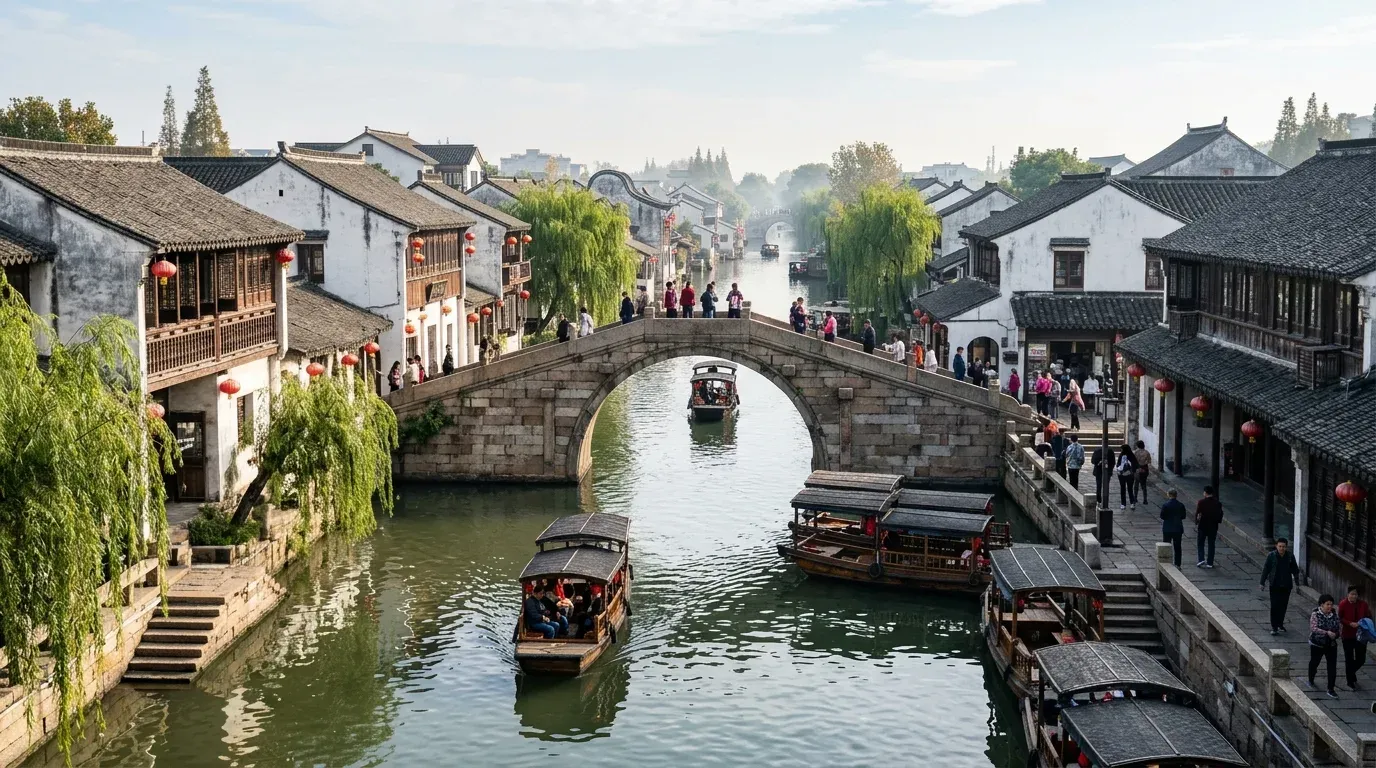
When planning a trip to Kunshan, CN, 1 to 2 days are usually recommended. Taking the Shanghai-Nanjing intercity high-speed train from Kunshan South Railway Station to Shanghai takes only about 20 minutes. Kunshan City, Jiangsu is home to 4 famous Chinese historical and cultural towns: Zhouzhuang, Qiandeng, Jinxi, and Bacheng. In autumn, you can head to Bacheng by Yangcheng Lake to sample authentic hairy crabs.
| Item | Key Information |
|---|---|
| Recommended duration | 1 to 2 days |
| Core water towns | Zhouzhuang Town, Jinxi Town, Qiandeng Town, Bacheng Town |
| Local specialties | Yangcheng Lake hairy crabs, Aozao noodles, Three Treasures of Kunshan |
| External rail transit | Kunshan South Railway Station (high-speed rail), Yangchenghu Railway Station (high-speed rail), Huaqiao Station (metro) |
Which Water Towns Are Worth Visiting in Kunshan, CN?
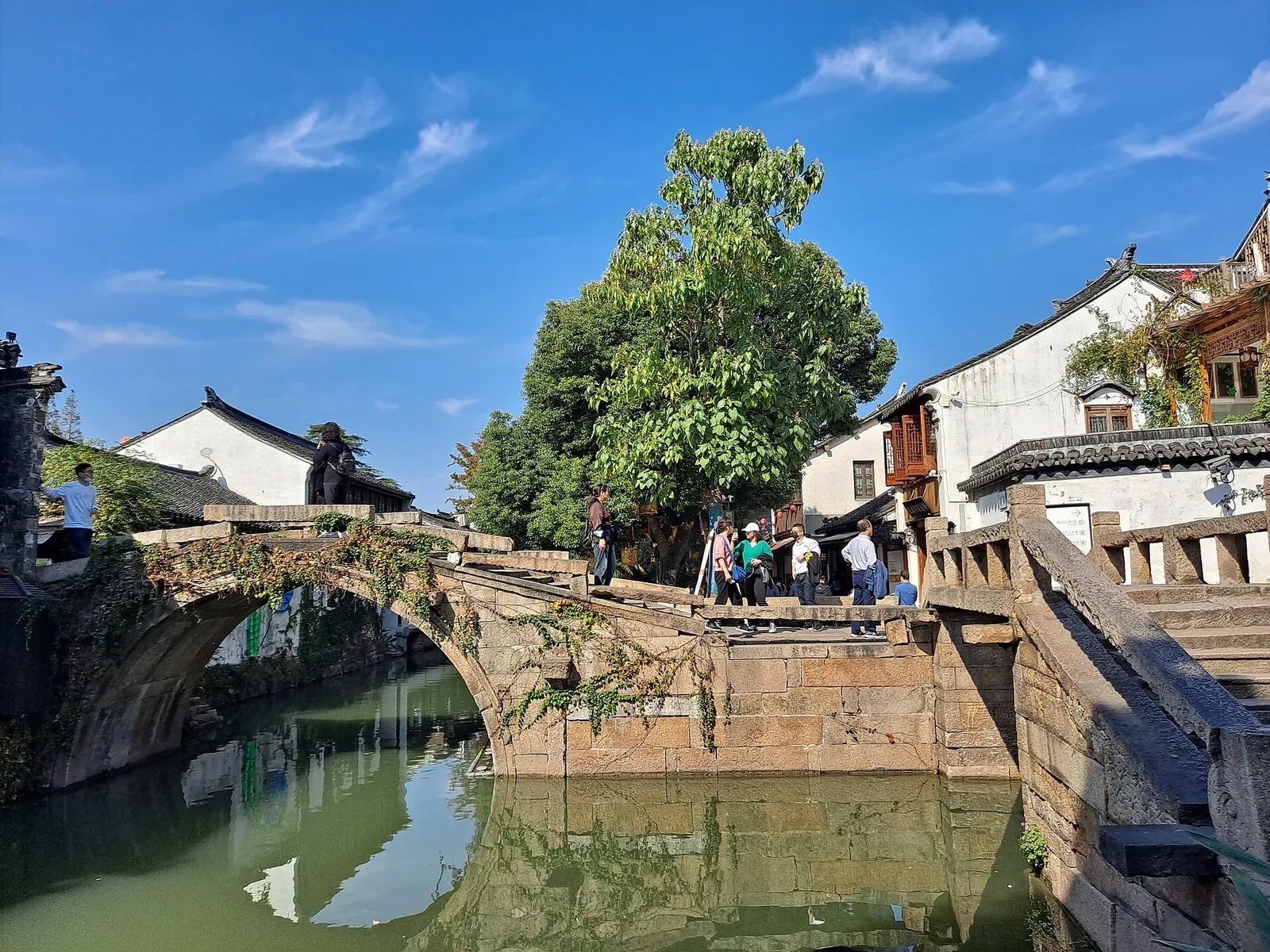
Kunshan City, Jiangsu, China covers a total area of 931.5 square kilometers and is administered by Suzhou City. Surrounded by lakes and crisscrossed by rivers, it preserves the authentic layout of a Jiangnan water town. Zhouzhuang Town is celebrated as the "No. 1 Water Town in China." Its landmark Twin Bridges (Shuangqiao), built during the Wanli reign of the Ming dynasty and rebuilt in the 23rd year of Daoguang in the Qing dynasty (1843), connect at right angles and are colloquially called the Key Bridge. Painter Chen Yifei featured the Twin Bridges in his oil painting Memory of Hometown, making Zhouzhuang widely known. Zhang Hall (Yuyan Hall) in town was first built during the Zhengtong reign of the Ming dynasty. It has 70 rooms across five courtyards, and the Zhujing River runs through the residence and rear garden, creating the classic water town architectural scene where bridges lie before front doors and boats sail right through homes.
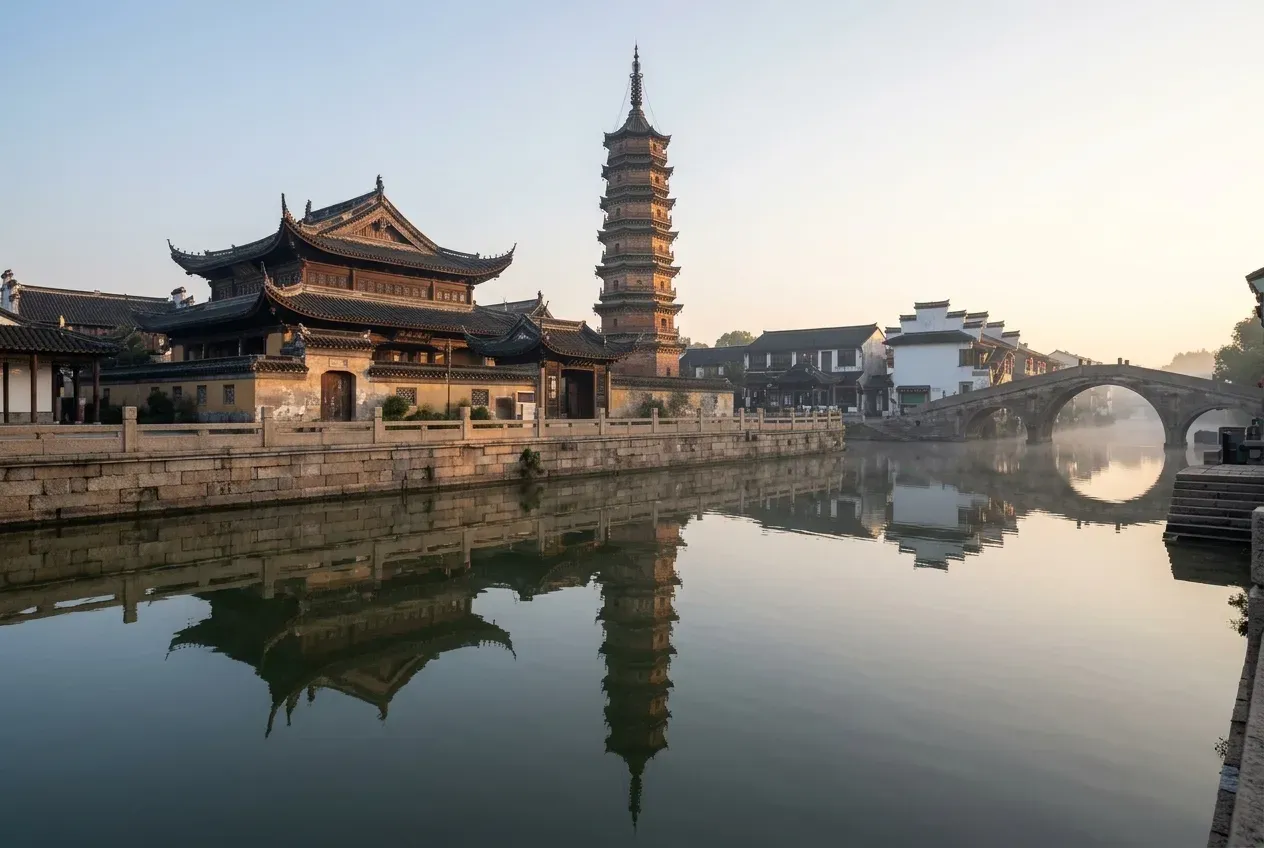
Qiandeng Ancient Town lies about 15 kilometers south of downtown Kunshan, directly bordering Qingpu District of Shanghai to the east, and is a national 4A-level tourist attraction. It is the hometown of thinker Gu Yanwu. The Former Residence of Gu Yanwu covers nearly 40,000 square meters, including a five-courtyard Ming and Qing residence, the Tinglin Shrine and tomb, and Gu Garden, with an ancient flagstone street running right outside the front door. Yanfu Temple and Qinfeng Pagoda in town were founded in the 3rd year of the Tianjian era of the Liang dynasty during the Southern dynasties (503), serving as ancient Buddhist landmarks. The town also houses the Gu Jian Memorial Hall, honoring the Kunqu pioneer skilled in southern songs. Jinxi Ancient Town sits in southern Kunshan, where Princess Chen Water Tomb rests on Wubao Lake as the water burial site of Consort Chen from the reign of Emperor Xiaozong of the Southern Song dynasty. Known for its concentration of folk exhibition halls, it is honored as the "Hometown of Chinese Folk Museums." Bacheng Town has a recorded administrative history of 2,500 years, serving both as the birthplace of Kunqu Opera and as a renowned Yangcheng Lake hairy crab production area.
| Town Name | Landmark Sights and Historic Sites | History and Cultural Heritage |
|---|---|---|
| Zhouzhuang Town | Twin Bridges (Shide Bridge and Yong'an Bridge), Zhang Hall (Yuyan Hall) | Known as the "No. 1 Water Town in China" |
| Qiandeng Town | Yanfu Temple and Qinfeng Pagoda, Former Residence of Gu Yanwu, Gu Jian Memorial Hall | Hometown of thinker Gu Yanwu, National 4A-level Tourist Attraction |
| Jinxi Town | Princess Chen Water Tomb, Wubao Lake, folk museums | Known as the "Hometown of Chinese Folk Museums" |
| Bacheng Town | Birthplace of Kunqu Opera, origin of Yangcheng Lake hairy crabs | Over 2,500 years of administrative history |
Tip: Zhouzhuang Ancient Town opens daily at 8:00, with an official ticket counter price of 100 yuan, while regular online booking channels usually start from 72 yuan. If you prefer a quieter travel environment, Qiandeng Ancient Town and Jinxi Ancient Town retain well-preserved historic architecture and make good alternatives for avoiding large crowds.
Which Months Are Yangcheng Lake Hairy Crabs at Their Prime, and How Do You Tell Male from Female?
Enjoying Yangcheng Lake hairy crabs from Bacheng follows the seasonal tradition of "round belly in the ninth month, pointed belly in the tenth." The Chinese mitten crab (hairy crab) here is known for four key visual features: a greenish back, white belly, yellow hair, and golden claws. In the sixth lunar month, you can sample tender young "June yellow" crabs, but the peak maturity season arrives in autumn. In the ninth lunar month, round-bellied female crabs are full of roe and suitable for tasting crab roe; in the tenth lunar month, pointed-bellied male crabs are rich in fat and suitable for tasting crab fat.
| Season | Crab to Taste | Dining Highlights and Features |
|---|---|---|
| Ninth lunar month | Round-bellied female crab | Crab roe |
| Tenth lunar month | Pointed-bellied male crab | Crab fat |
| Sixth lunar month | "June Yellow" young crab | Taste fresh seasonal crabs |
| Visual features | Chinese mitten crab | Four main visual features: greenish back, white belly, yellow hair, and golden claws |
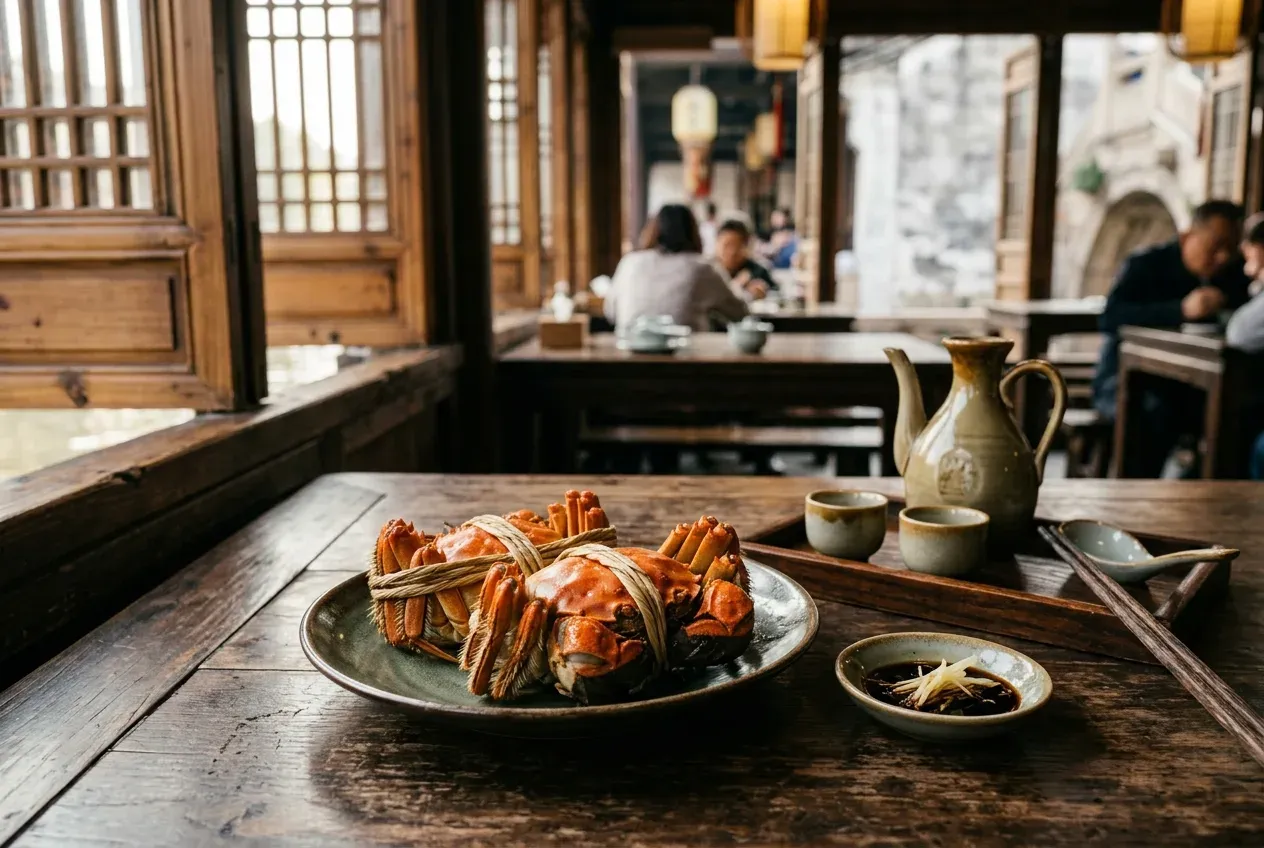
Tip: To tell male and female hairy crabs apart, look at the abdominal flap under the belly: a rounded flap indicates a female crab, while a pointed triangular flap marks a male crab. Bacheng Town sits near the eastern shore of Yangcheng Lake, so if you make a dedicated trip for crabs in autumn, check restaurant availability and seasonal harvest timing in advance.
Which Traditional Operas and Local Flavors Shouldn't You Miss in Kunshan?
Kunqu Opera originated in Kunshan and dates back more than 600 years. Originating from Kunshan Qiang, it is famous for its delicate and melodic Shuimodiao singing style, earning the title "ancestor of all Chinese operas." In 2001, UNESCO proclaimed Kunqu among the first Masterpieces of the Oral and Intangible Heritage of Humanity, and in 2008, inscribed it on the Representative List of the Intangible Cultural Heritage of Humanity. Walking through Bacheng and Qiandeng, you can clearly trace the evolution of Kunqu and the legacy of its founder, Gu Jian.
When exploring local specialties, don't miss traditional Kunshan Aozao noodles, whose culinary craftsmanship was added to Jiangsu's provincial intangible cultural heritage list in 2009. Aozao noodles come with either red or white broth: the red broth is simmered with black carp, eel bones, and river snails for a rich, hearty flavor; the white broth is slow-simmered with stewing chicken, duck, and pork bones for a clear, savory taste. Both broths are served with fine, springy Longxu noodles. Kunshan also celebrates its unique specialty culture known as the "Three Treasures of Kunshan": Kun stone (sourced from Yufeng Mountain, also called Ma'anshan, and known for its pure white, porous texture), the Chinese snowball viburnum (Qionghua), and the twin-lotus flower.
How Do You Travel and Transfer by Train or Metro from Shanghai or Suzhou to Kunshan?
Traveling between Kunshan City, China and downtown Shanghai or Suzhou is very convenient. The Beijing-Shanghai Railway and the Shanghai-Nanjing intercity high-speed railway run across Kunshan, serving Kunshan South Railway Station and Yangchenghu Railway Station. Suzhou was China's first prefecture-level city to operate its own independent metro system, with an operating network of 323 kilometers and 276 stations. Suzhou Rail Transit Line 11, which cuts across Kunshan, meets Shanghai Metro Line 11 at Huaqiao Station, providing a direct interprovincial connection between Shanghai and Jiangsu. Using the "Su E Xing" or "Metro Daduhui" mobile app, passengers can transfer smoothly through a dedicated passage without undergoing a second security check. Suzhou Line 11 and Suzhou Line 3 also run through-train service, allowing off-peak trains to travel straight from Huaqiao in Kunshan into downtown Suzhou.
| Travel Method | Stations Involved | Operating and Travel Details |
|---|---|---|
| Shanghai-Nanjing intercity high-speed rail | Includes Kunshan South Station, Yangchenghu Station, and others | Taking the high-speed train from Kunshan South Station to Shanghai takes only about 20 minutes |
| Interprovincial rail transit | Huaqiao Station (transfer between Shanghai Metro Line 11 and Suzhou Metro Line 11) | First train departs Huaqiao Station at 5:40, standard last trains depart in both directions at 22:30, off-peak intervals are about 8 minutes, and passengers can use the "Su E Xing" or "Metro Daduhui" app through dedicated channels without a second security check |
Tip: Earlier standalone Kunshan citizen cards and Kuntong cards cannot be swiped on Suzhou Rail Transit Line 11. When riding the metro, use a China T-Union card, a mobile transit QR code app, or buy single-journey tickets from station ticket vending machines.
Sources
Zhouzhuang - Wikipedia
Suzhou - Wikipedia
Jiangsu - Wikipedia
Kunqu - Wikipedia
Kunshan - Wikipedia
Zhouzhuang Town (Kunshan) - Wikipedia
Yuyan Hall - Wikipedia
Jinxi Town (Kunshan) - Wikipedia
Qiandeng Town - Wikipedia
Former Residence of Gu Yanwu - Wikipedia
Bacheng Town - Wikipedia
Chinese Mitten Crab - Wikipedia
Aozao Noodles - Wikipedia
Kun Stone - Wikipedia
Suzhou Rail Transit Line 11 - Wikipedia
Sources verified on November 19, 2026.
FAQ
How do you get from Shanghai to Zhouzhuang Ancient Town in Kunshan by metro?
You can take Shanghai Metro Line 11 to Huaqiao Station in Kunshan, then use the "Su E Xing" or "Metro Daduhui" app to transfer smoothly to Suzhou Rail Transit Line 11 via the dedicated channel without a second security check. Zhouzhuang sits about 30 kilometers southeast of downtown Suzhou, so after exiting the metro station, you will need to transfer to a local bus line or hail a ride to reach the water town.
What is the difference between eating Yangcheng Lake hairy crabs in the ninth versus tenth lunar month?
Local tradition says "round belly in the ninth month, pointed belly in the tenth." In the ninth lunar month, choose round-bellied female crabs for their rich roe. In the tenth lunar month, choose pointed-bellied male crabs for their rich crab fat. High-quality hairy crabs feature a greenish back, white belly, yellow hair, and golden claws.
Can older Kunshan citizen cards be used at the turnstiles on Suzhou Rail Transit Line 11?
No. Standalone older Kunshan citizen cards and Kuntong cards cannot be swiped directly at Suzhou Line 11 turnstiles. Passengers must use a China T-Union card, a mobile transit app, or purchase single-journey tokens at station vending machines.
What is the difference between the red and white broths of authentic Kunshan Aozao noodles?
Red broth is simmered over low heat with black carp, eel bones, and river snails for a deep, savory flavor. White broth is slow-simmered with stewing chicken, duck, and pork bones for a clear, delicate taste. Both broths are paired with fine Longxu noodles. The preparation craft is inscribed on Jiangsu's provincial intangible cultural heritage list.