
How to Visit Jingshan Park: Forbidden City Views and Route
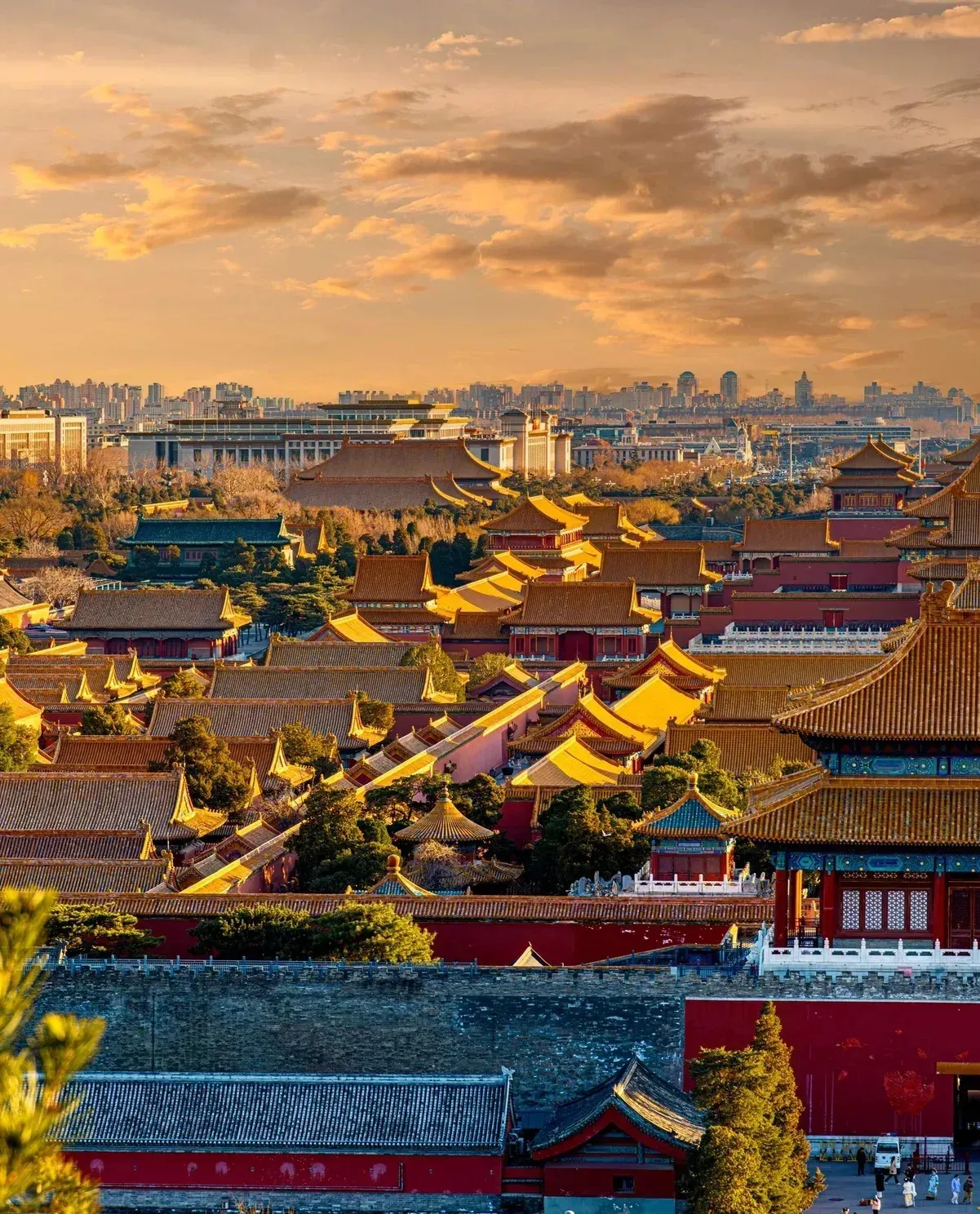
To see a panoramic view of the Forbidden City, you can climb to Wanchun Pavilion at the central peak of Jingshan Park. This artificial hill has a relative height of 45.7 meters and sits on the central axis of Ming and Qing Beijing. Standing at the highest point of the Beijing Central Axis, Wanchun Pavilion looks south over the Forbidden City complex, north toward the Bell and Drum Towers, and west toward the White Pagoda in Beihai Park. After finishing a visit to the Forbidden City, cross Jingshan Front Street to reach the south gate of the park and start the climb.
How do you walk from the Forbidden City to Jingshan Park?
The Gate of Divine Prowess (Shenwumen), the exit of the Forbidden City, faces the south gate of the park across Jingshan Front Street. According to Palace Museum rules, a one-way south-to-north tour route has been in place since July 2, 2011. All visitors enter through the Meridian Gate (Wumen) and leave through either the Gate of Divine Prowess or the East Prosperity Gate (Donghuamen). After stepping out of the Gate of Divine Prowess, cross Jingshan Front Street to enter directly through the south gate.
Facing the south gate at the foot of the hill stands Qiwang Tower (Qiwanglou). Built in the Qing Dynasty, it was originally used by students of the Jingshan Official School to worship Confucius and his disciples. Visitors can see these historic buildings immediately after entering the south gate.
Where can you photograph the Forbidden City panorama?
Climbing to Wanchun Pavilion gives visitors a full panorama of the Forbidden City, views along the Beijing Central Axis, and sights of imperial courtyard architecture. Jingshan is an artificial hill with an elevation of 89.2 meters and a relative height of 45.7 meters. It was built in 1420 during the 18th year of the Yongle reign in the Ming Dynasty, using earth excavated from the Forbidden City moat and debris from demolished Yuan Dynasty palaces. Five peaks run east to west along the ridge. From east to west, they hold Zhoushang Pavilion, Guanmiao Pavilion, Wanchun Pavilion, Jifang Pavilion, and Fulan Pavilion, which originally enshrined statues of the Five Dhyani Buddhas.
Wanchun Pavilion stands on the highest central peak along the ancient Beijing central axis. It features a triple-eaved, square pyramidal roof with yellow glazed tiles trimmed with green glazed borders. From the pavilion, looking south offers views of the Forbidden City complex, looking north overlooks the Bell and Drum Towers on the central axis, and looking west looks out toward the White Pagoda in Beihai Park. Two bronze plaques are embedded in the ground on its north and south sides. The southern plaque reads "Center Point of Beijing City," while the northern plaque reads "North-South Central Axis of Beijing City."
Once the highest point in the city, the site opened officially as a public park in 1928, became a Major Historical and Cultural Site Protected at the National Level in 2001, and is now a National 4A-level tourist attraction covering 23 hectares. In 2024, the Beijing Central Axis was inscribed on the UNESCO World Heritage List, with Jingshan serving as one of its key components while preserving its historical layout and appearance from the Ming and Qing dynasties.
What is the recommended walking route in the park?
The first official route recommended by Beijing passes through the south gate, the site where the Ming Emperor Chongzhen died, the back hill junction, Zhoushang Pavilion, Guanmiao Pavilion, Wanchun Pavilion, Jifang Pavilion, Fulan Pavilion, the downhill junction, and Shouhuang Hall, before exiting through the east gate. This route links the major historical sites and viewpoints in the park.
Along the eastern slope lies a notable historical site. In March 1644, during the 17th year of the Chongzhen reign, after the army of Li Zicheng entered Beijing, Emperor Chongzhen hanged himself on an old scholar tree at the eastern foot of the hill. During the Qing Dynasty, this tree was referred to as the "Guilty Scholar Tree."
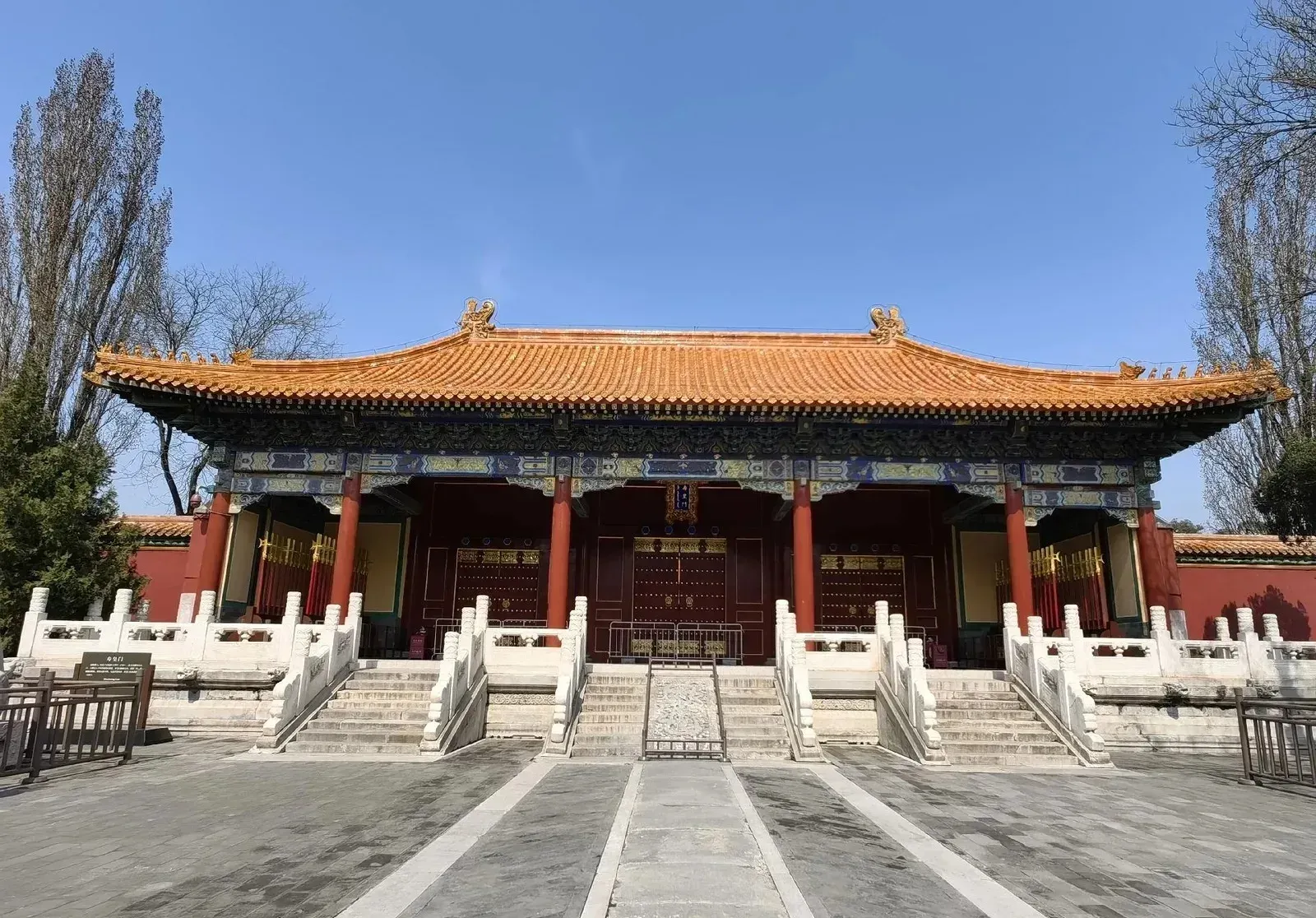
In the second half of the route, the Shouhuang Hall complex sits on the Beijing Central Axis on the north side of the grounds and requires an advance reservation. It served as an ancestral hall for the Qing imperial family, once enshrining portraits and spirit tablets of eight emperors and their empresses from the Kangxi to Guangxu reigns.
How do foreign visitors book tickets and what are the opening hours?
Foreign visitors have specific advance booking rules. According to official Beijing regulations, foreign visitors must call (010)66055431 at least one day in advance between 9:00 and 16:00 to reserve. On the day of your visit, show your original passport or other valid ID at the inquiry desk by the south gate to buy a ticket and enter. Foreign visitors without a prior reservation cannot purchase tickets on-site.
| Season | Applicable Dates | Opening Hours | Last Entry |
|---|---|---|---|
| Peak Season | April 1 to October 31 | 6:00 to 21:00 | 20:30 |
| Off-Peak Season | November 1 to March 31 of the following year | 6:30 to 20:00 | 19:30 |
What guide services and public transit options are available?
Across the three entrance gates and the visitor center, four foreign-language electronic translators are available to help visitors with questions. The park has also introduced an electronic audio tour covering 15 scenic spots across 33 audio commentaries.
Visitors arriving in spring will find an annual peony festival. Over 20,000 peonies across 569 varieties grow in the park. The east gate plaza hosts a peony cultural and creative market, while the western area features a domestic and international food market.
| Gate | Trolleybus Routes | Bus Routes and Stops |
|---|---|---|
| South Gate | Trolleybuses 101, 103, 109, and 124 | Bus 58 |
| East Gate | Trolleybuses 111 and 124 | Bus 58 |
| West Gate | None | Bus 5 and Bus 58 (get off at Xibanqiao stop) |
If you plan to combine the Forbidden City with Jingshan Park in your itinerary, your travel designer can arrange a smooth climbing route and schedule, while your driver handles transfers along the way.
Sources
Jingshan Park - Wikipedia
Jingshan Park
Visitor Guide - The Palace Museum
Climbing High to Pray for Blessings to Welcome the New Year - Beijing Municipal People's Government
Second Anniversary of Beijing Central Axis World Heritage Inscription - Beijing Municipal People's Government
Opening of the Peony Culture Festival at Jingshan Park - Beijing Municipal Administration Center of Parks
Beijing Central Axis: A Building Ensemble Exhibiting the Ideal Order of the Chinese Capital - UNESCO World Heritage Centre
Jingshan Park - Beijing Municipal Forestry and Parks Bureau
Sources verified on November 7, 2026
FAQ
Can foreign visitors buy tickets on-site on the day of their visit without calling ahead?
No. Official Beijing rules state that foreign visitors must call (010)66055431 at least one day in advance between 9:00 and 16:00 to reserve. Without a prior booking, tickets will not be sold on-site to foreign visitors.
Is an advance reservation required to visit Shouhuang Hall?
Yes. According to official Beijing visitor guidelines, visiting Shouhuang Hall on the central axis at the north side of the grounds requires an advance reservation.
How many pavilions stand along the ridge?
There are five pavilions along the ridge from east to west: Zhoushang Pavilion, Guanmiao Pavilion, Wanchun Pavilion, Jifang Pavilion, and Fulan Pavilion. Wanchun Pavilion stands on the highest central peak.
Are there public transit stops outside the west gate?
Yes. Outside the west gate, you can take Bus 5 or Bus 58 to get on or off at the Xibanqiao stop.