
Visiting Jiaxing, Zhejiang: South Lake, Wuzhen, and Xitang
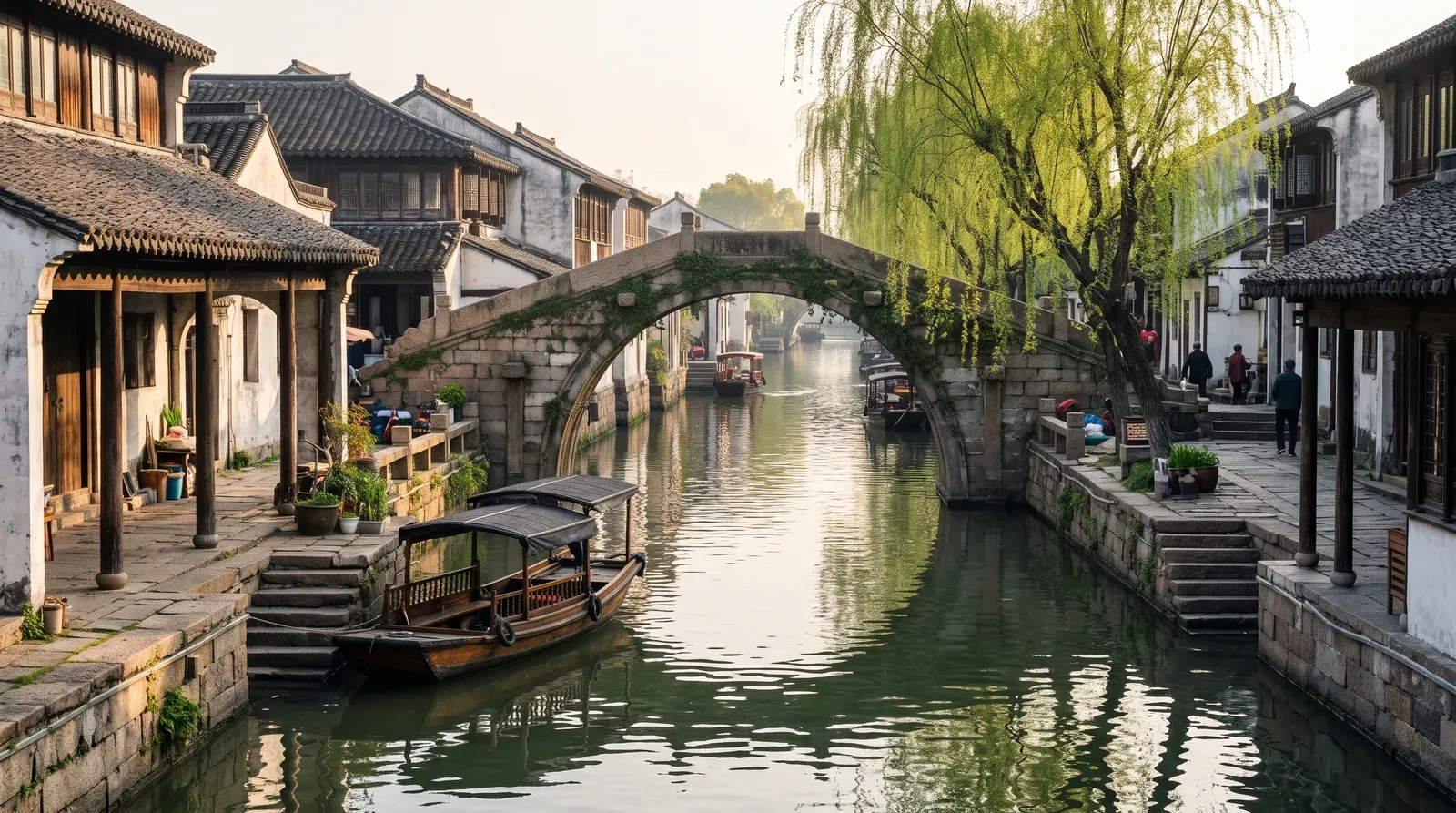
Traveling around Jiaxing, Zhejiang links urban sights like South Lake and Yuehe Historic District with canal towns like Tongxiang Wuzhen and Jiashan Xitang. Custom tourist bus lines run directly between the urban core and major water towns, with fares from 5 to 15 yuan straight to scenic area visitor centers. Whether connecting by high-speed rail or taking dedicated town shuttles, you can combine city history with water town strolls.
| Attraction or Service | Information |
|---|---|
| South Lake Scenic Area | Water area of about 416,000 square meters, with Misty Rain Tower on the central island |
| Wuzhen Scenic Area | National 5A tourist attraction, divided mainly into West Gate and East Gate areas |
| Xitang Ancient Town | Nine intersecting waterways, with a nearly 1,000-meter covered corridor along the river |
| Ancient Town Shuttle Lines | Fares from 5 to 15 yuan, operating with one seat per passenger |
| Wuzhen High-Speed Rail Station | Tongxiang Station on the Shanghai-Kunming High-Speed Railway, the main transfer stop for Wuzhen |
| Jiaxing Urban High-Speed Rail Station | Jiaxing South Station on the Shanghai-Kunming High-Speed Railway, with total building area of nearly 56,000 square meters |
Visiting Jiaxing, Zhejiang: What to See at South Lake and Yuehe Old Street?
South Lake in Jiaxing, historically called Yuanyang Lake, covers a water area of about 416,000 square meters. Alongside Xuanwu Lake in Nanjing and West Lake in Hangzhou, it ranks among the three famous lakes of Jiangnan, with Misty Rain Tower standing on its central island.
Yuehe Historic District in downtown Jiaxing brings together traditional craft workshops and street food stalls, and was listed as a Zhejiang provincial night culture and tourism consumption zone in January 2022. On the south side of the old city, Meiwan Street preserves traditional residential courtyards along the river from the late Qing Dynasty and early Republic of China era. Time-honored brand Wu Fang Zhai has its headquarters in Jiaxing, tracing its origins to 1921 when Lanxi artisan Zhang Jinquan set up a specialty zongzi stall here.
The new station building of Jiaxing Railway Station on the Shanghai-Kunming Railway opened in 2021. Designed by Ma Yansong's MAD Architects, its north plaza blends into People's Park through afforestation, earning it the nickname "train station in the forest." Jiaxing South Station on the Shanghai-Kunming High-Speed Railway opened in October 2010 alongside the Shanghai-Hangzhou High-Speed Railway, serving as the highest-grade intermediate and second-class station on the Shanghai-Hangzhou section. The demonstration section of Jiaxing Tram Line 1 runs 10.6 kilometers from Fangong Road Binhe Road Station to Jiaxing South Station, opening on June 25, 2021.
Strolling along the bluestone alleys of Yuehe Historic District in the evening, workshop lanterns light up along the street, and you can try freshly steamed Wu Fang Zhai zongzi at a riverside food stall. If you want to experience the urban water town atmosphere, you can walk along the river from Meiwan Street to Yuehe; if you arrive by high-speed train at Jiaxing South Station, taking Tram Line 1 brings you directly into the downtown transit network.
Tip: The north plaza of the new Jiaxing Station connects to People's Park, so you step directly into tree-filled parkland upon exiting. If you plan to visit Misty Rain Tower on South Lake's central island, you need to board a ferry boat at the lakeside pier.
Visiting Tongxiang Wuzhen: How Do West Gate and East Gate Differ?
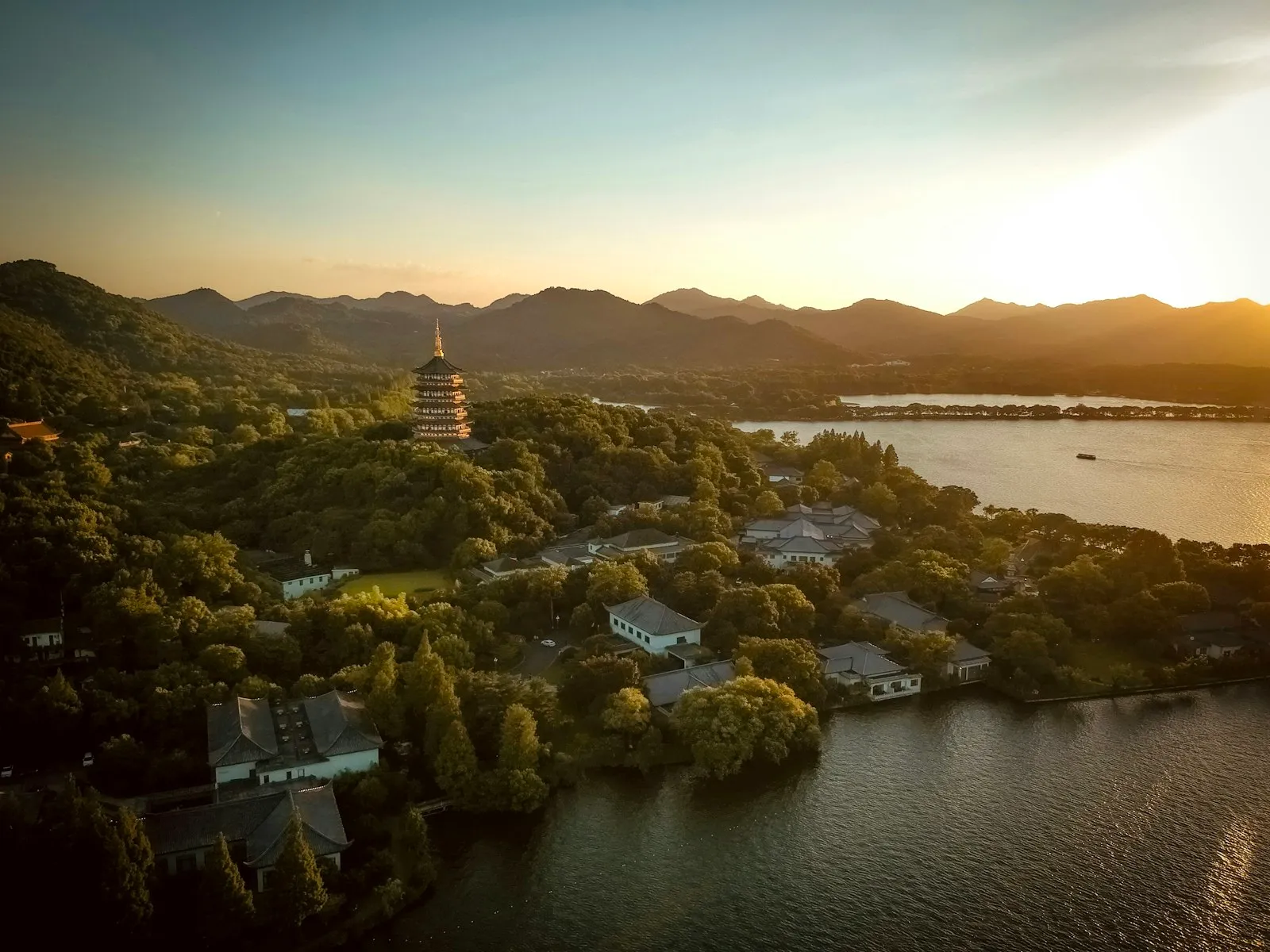
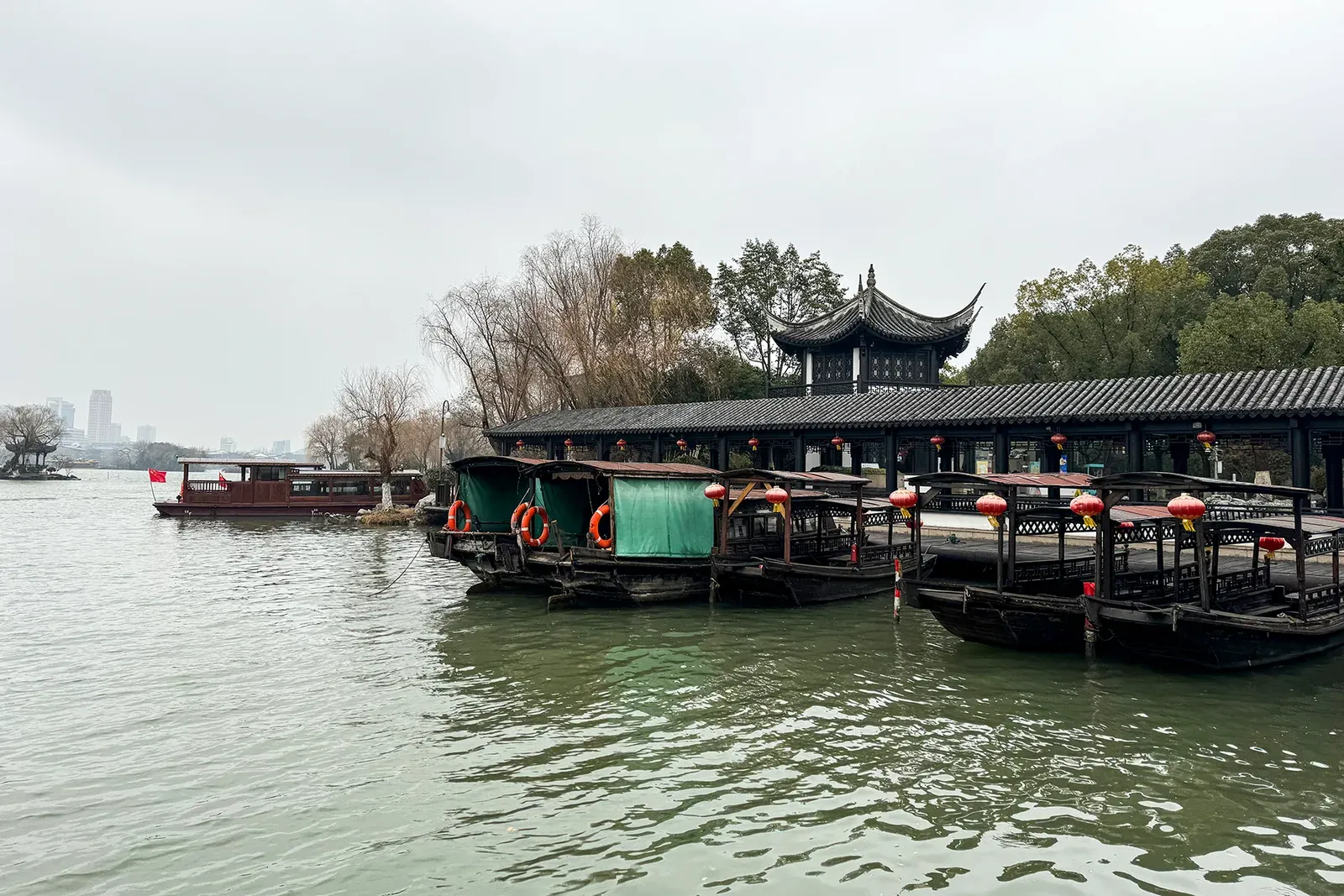
Wuzhen in Tongxiang is rated as a National 5A tourist attraction and is managed by CYTS. The town is divided into four zones, with West Gate (Xizha) and East Gate (Dongzha) as the primary sightseeing areas. Inside, six functional zones cover traditional workshops, historic residences, and water town life, forming a smooth walking loop. Since the inaugural World Internet Conference in 2014, Tongxiang Wuzhen has served as the permanent host venue for the summit.
Modern writer Mao Dun and contemporary artist Mu Xin were both born in Wuzhen, and East Gate houses the former residences of both figures. Located at 186 Caishenwan in East Gate, Mu Xin's Former Residence (Wanqing Xiaozhu) opened to the public as a memorial hall on May 25, 2014, displaying his manuscripts and paintings. Across from Xiuzhen Temple, an old riverside stage regularly hosts free public performances of Huagu Opera, Tongxiang's local traditional opera.
The West Gate area features the Mu Xin Art Museum, designed by a team led by disciples of architect I. M. Pei, which opened to the public in November 2015. Wuzhen's "Bridge Within a Bridge" consists of two connected ancient stone arch bridges, Tongji Bridge and Renji Bridge, allowing visitors to view one bridge through the arch of the other. The traditional workshop zone showcases blue calico dyeing and cloth shoe making. Typical local specialties include Gusao pastry, Sanbai liquor, blue calico fabric, and Huzhou goat-hair writing brushes.
If you prefer visiting the courtyard homes of literary and artistic masters and seeing daily canal life, start with East Gate. If you want to admire stone bridges, waterways, artisan crafts, and modern art exhibitions, West Gate offers a more expansive walking loop. You can spend the morning watching indigo blue calico hanging from tall drying poles in the workshop area, and spend the afternoon sitting on the riverside stone steps across from Xiuzhen Temple stage, listening to the melodic tones of local Huagu Opera.
Exploring Xitang in Jiashan: What Makes the Covered Corridor and Shipinong Alley Special?
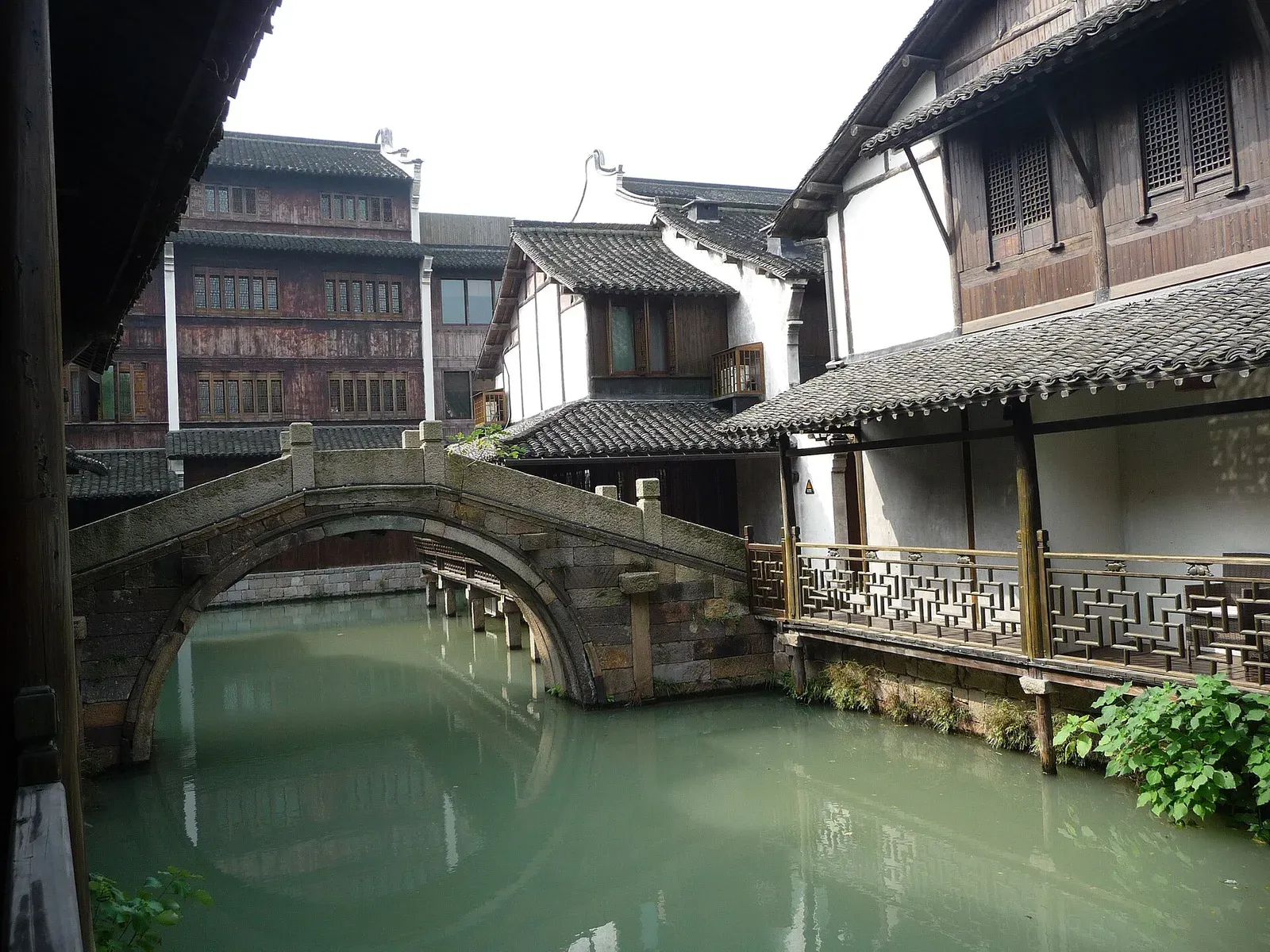
Xitang Ancient Town in Jiashan County is a classic Jiangnan canal town known for its well-preserved riverside residences and crisscrossing waterways, making it a popular water town destination and film shooting location. Nine rivers intersect across the town, which features 122 alleys of varying lengths, including 5 that extend beyond 100 meters.
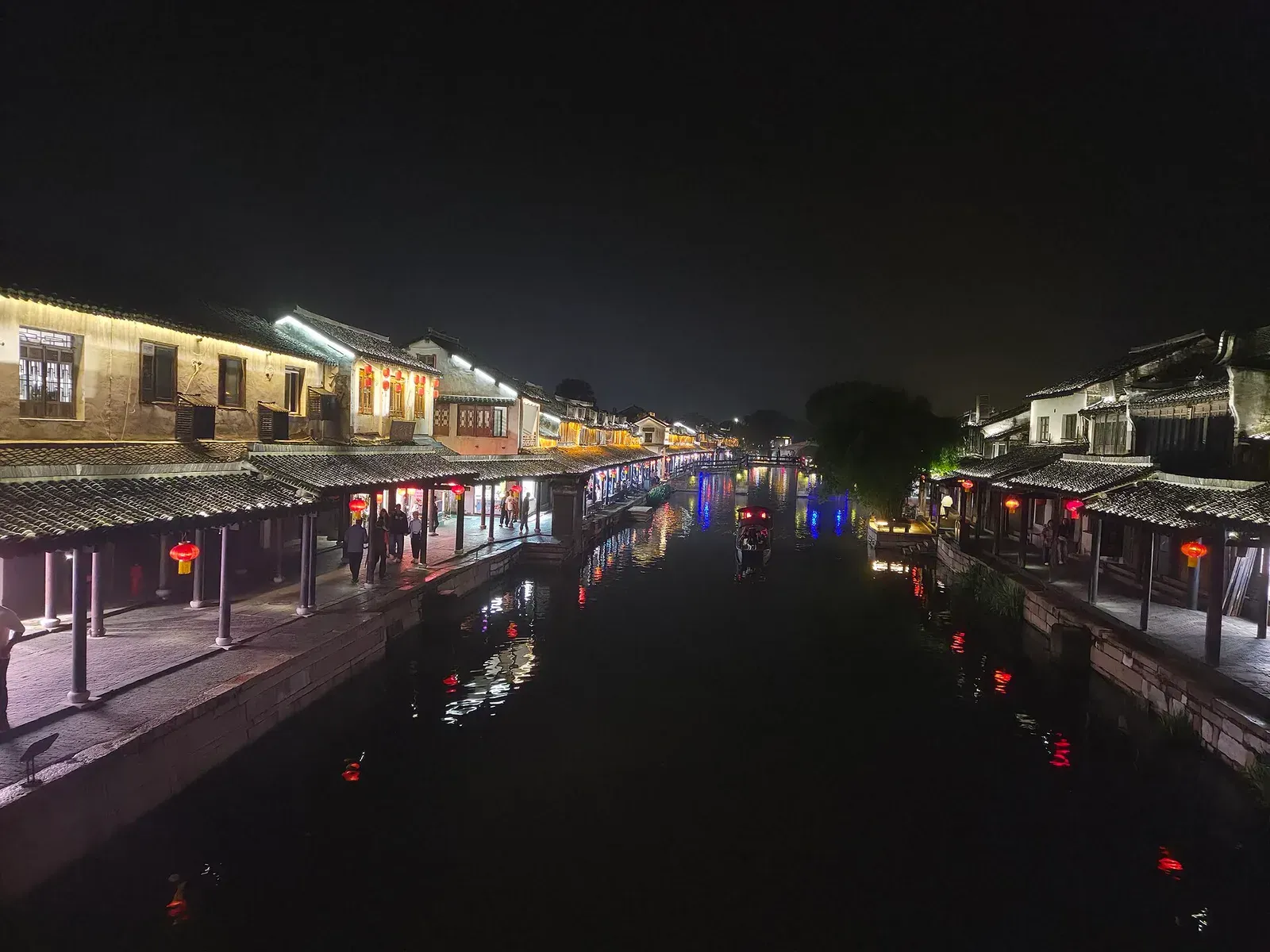
Xitang features a nearly 1,000-meter covered corridor along the river, equipped with riverside railed benches (meirenkao) for resting, shade, and rain shelter. Even during rainy periods, walking along the sheltered corridor keeps you dry as you stroll, letting you take in views and rest by the water without interruption.
The most famous lane in Xitang, Shipinong Alley, dates from the late Ming and early Qing dynasties. It runs 68 meters long and 1 meter wide, narrowing to just 0.8 meters at its entrance, paved with 166 stone slabs between residential courtyard walls reaching 6 to 10 meters high. Located on Tawan Street, Zui Garden was first built in the Ming Dynasty with five courtyards, featuring a miniature brick arch bridge that allows only one person to cross in one direction at a time.
You can stroll by the canal along the covered corridor, pause on a riverside wooden bench when tired, and watch sculling boats drift through narrow waterways with old homes reflected on the surface. Tip: Shipinong Alley is very narrow, allowing only one person through the entrance at a time, so slow down and turn sideways to let oncoming visitors pass.
Transit Between Attractions: How to Choose Custom Tourist Buses and High-Speed Rail Stations?
To connect downtown Jiaxing in Zhejiang with the water towns, combining tickets with dedicated bus routes is recommended: a boat ticket to Yanyu Tower on South Lake is 50 yuan (the Nanhu Revolutionary Memorial Hall is free, but requires booking 1 day in advance and is closed on Mondays), a full-day ticket for Xitang Ancient Town is 95 yuan (50 yuan for night visits after 17:00), and a combo ticket for Dongzha and Xizha in Wuzhen is 190 yuan. On your itinerary, a typical route in Wuzhen is touring the preserved old streets of Dongzha in the morning, heading to Xizha in the afternoon, and taking a rowing boat through the water lanes in the evening. Between scenic areas, you can take custom buses such as G1, G2, and water town connecting line G4, linking South Lake directly with Xitang and Wuzhen.
These custom town buses have no standing room, operating strictly on a one-seat-per-passenger basis, and offer online booking services. Travelers can reserve tickets on the Jiaxing Ancient Town Tourist Line Booking Platform, or pay on site with transit cards or mobile payment. Seats per departure are limited and sold until full.
The primary high-speed rail transfer station for Wuzhen is Tongxiang Station on the Shanghai-Kunming High-Speed Railway, located in Gaoqiao Subdistrict of Tongxiang and opened in October 2010. Wuzhen is 13 kilometers from downtown Tongxiang, 80 kilometers each from Hangzhou and Suzhou, and 140 kilometers from Shanghai. Minibuses depart from Tongxiang to Wuzhen every 15 minutes between 7:00 and 17:00.
| Route or Transfer Option | Terminals and Stops | Schedule and Ticketing | Key Feature |
|---|---|---|---|
| G1 Ancient Town Line | South Lake and Yuehe to Xitang | Online booking platform or on-site payment | Direct to visitor center, one seat per passenger |
| G2 Ancient Town Line | Yuehe, South Lake, Puyuan to Wuzhen | Online booking platform or on-site payment | Connects urban Jiaxing to Wuzhen, no standing room |
| G4 Ancient Town Line | Xitang, Wuzhen to Puyuan | Limited seats sold until full | Direct transfer between towns without looping through downtown |
| Tongxiang Minibus Service | Downtown Tongxiang to Wuzhen | Every 15 minutes from 7:00 to 17:00 | Regular transit over the 13 kilometers from Tongxiang to Wuzhen |
First Time Visiting: What Common Mistakes Do Travelers Make in Jiaxing?
On a first trip to Jiaxing and its water towns, visitors often confuse railway station choices, transit transfers between towns, and the locations of specific exhibition halls. Checking departure booking rules and scenic spot locations in advance helps ensure smoother connections.
| Common Mistake | Recommended Action |
|---|---|
| Booking to Jiaxing South Station for Wuzhen | Book high-speed rail tickets to Tongxiang Station on the Shanghai-Kunming Line, then take a minibus to Wuzhen |
| Relying on walk-up boarding for custom town buses | Lines require one seat per passenger with limited seats, so reserve tickets online in advance |
| Assuming transfers between water towns require returning downtown | Taking the G4 town shuttle allows direct travel between Xitang, Wuzhen, and Puyuan |
| Confusing Mu Xin's art museum with his former residence | Mu Xin Art Museum is inside West Gate, while Mu Xin's Former Residence is at 186 Caishenwan in East Gate |
What Are the Signature Local Specialties and Crafts Around Jiaxing?
Downtown Jiaxing is home to time-honored brand Wu Fang Zhai, while water towns like Wuzhen preserve numerous local specialties and traditional artisan workshops. Wu Fang Zhai is headquartered in Jiaxing, originating from a specialty zongzi stall opened by Lanxi artisan Zhang Jinquan. In Wuzhen's workshop area, displays demonstrate traditional crafts such as blue calico dyeing and cloth shoe making.
| Specialty or craft | Notes |
|---|---|
| Wu Fang Zhai zongzi | A China Time-Honored Brand headquartered in Jiaxing; it traces back to 1921, when Zhang Jinquan set up a zongzi stall in the city |
| Gusao pastry | A signature local specialty of Wuzhen |
| Sanbai liquor | A signature local specialty of Wuzhen |
| Blue calico | A signature local specialty of Wuzhen; the traditional workshop area shows the dyeing craft |
| Huzhou goat-hair writing brush | A signature local specialty of Wuzhen |
Sources
Jiaxing - Wikipedia
South Lake (Jiaxing) - Wikipedia
Wuzhen - Wikipedia
Xitang - Wikipedia
Jiaxing Railway Station - Wikipedia
Jiaxing South Railway Station - Wikipedia
Jiaxing City - Wikipedia
Wu Fang Zhai (Jiaxing) - Wikipedia
Jiaxing Ancient Town Tourist Shuttle Launched! Official Operation on May 1
Wuzhen Town - Wikipedia
Tongxiang Railway Station - Wikipedia
The above sources were verified on November 19, 2026.
FAQ
Is it convenient to travel from urban Jiaxing to Wuzhen and Xitang by bus?
Dedicated tourist bus lines run directly from South Lake and Yuehe in urban Jiaxing to the ancient towns, with fares between 5 and 15 yuan. They feature no standing room and provide one seat per passenger. Visitors can book tickets online via the Jiaxing Ancient Town Tourist Line Booking Platform, and buses drop off directly at scenic area visitor centers.
Which high-speed railway station should you book to visit Wuzhen?
For a dedicated trip to Tongxiang Wuzhen, choose Tongxiang Station on the Shanghai-Kunming High-Speed Railway. Downtown Tongxiang is 13 kilometers from Wuzhen, with minibuses running every 15 minutes between 7:00 and 17:00 during the day, offering a smoother transfer than arriving via Jiaxing South Station.
What is the difference between Wuzhen West Gate and East Gate?
East Gate focuses on traditional residences, everyday canal life, and celebrity homes like Mao Dun's and Mu Xin's former residences, retaining a strong neighborhood atmosphere. West Gate is larger, featuring the Mu Xin Art Museum, an extensive walking loop, richer evening views, and artisan workshop experiences.
Does rainy weather disrupt a visit to Xitang Ancient Town?
Xitang features a nearly 1,000-meter covered corridor along the river that keeps you dry on rainy days, complete with riverside railed benches for resting and sightseeing, making it a classic Jiangnan water town where you can walk comfortably even in the rain.