
Jiangxi Travel Guide: Jingdezhen, Wuyuan, and Mount Sanqingshan
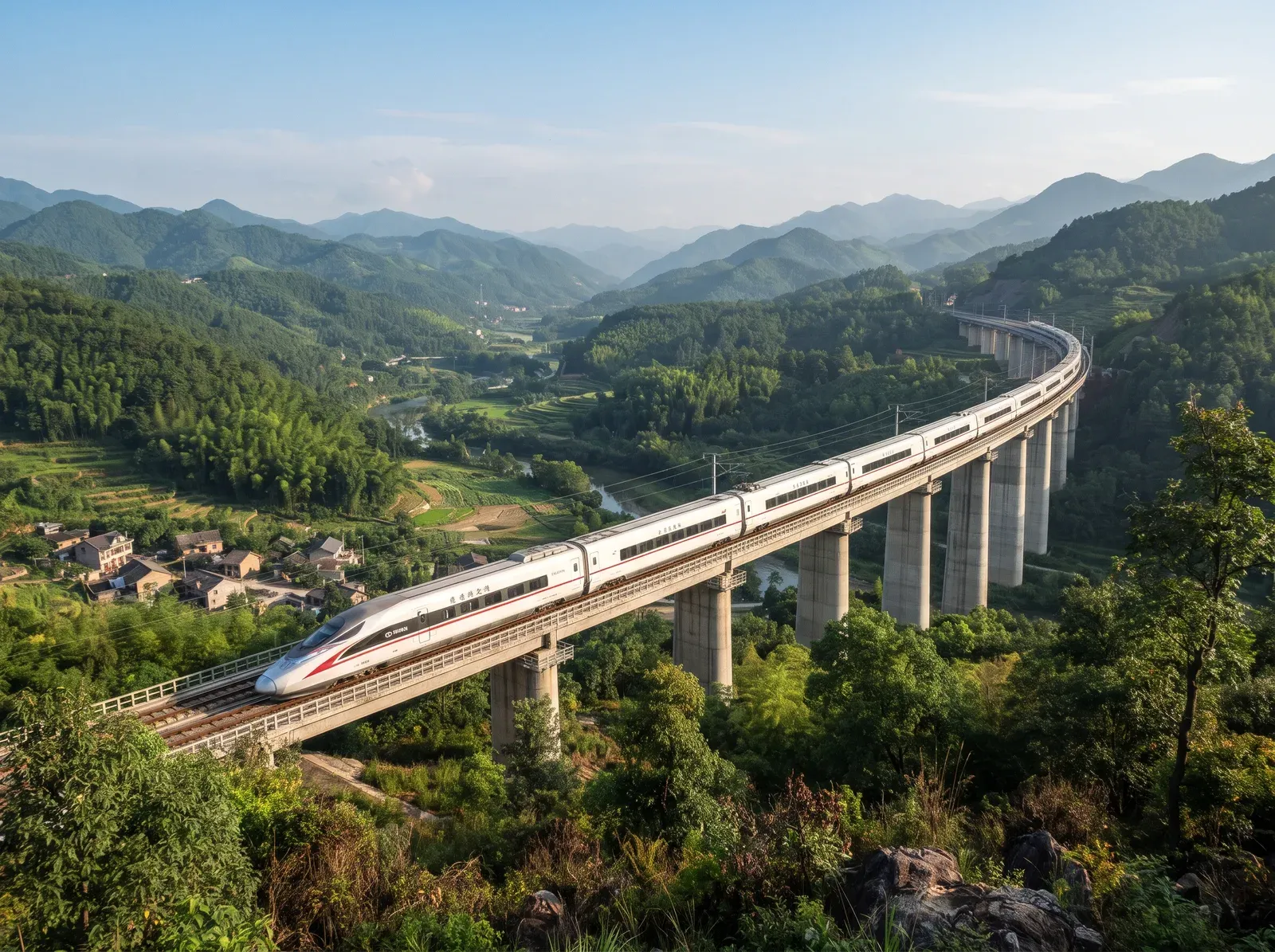
The classic northeast Jiangxi route focuses on Nanchang, Jingdezhen, Wuyuan, and Mount Sanqingshan. According to railway authorities, the Nanchang-Jingdezhen-Huangshan High-Speed Railway opened on December 27, 2023, cutting travel time from Nanchang to Jingdezhen to about 50 minutes at the fastest. This travel corridor connects the provincial hub, the historic porcelain capital, ancient Huizhou villages, and granite peaks, creating a convenient travel combination across the province.
How High-Speed Rail Connects Key Destinations in Northeast Jiangxi
Travel between major scenic areas in northeast Jiangxi relies on two trunk lines: the Nanchang-Jingdezhen-Huangshan High-Speed Railway and the Hefei-Fuzhou High-Speed Railway. According to route plans, the north-south Hefei-Fuzhou line connects Huangshan North, Wuyuan, Dexing, and Shangrao stations, linking key transport hubs across the area. The two high-speed lines intersect in the region, creating a smooth rail transit corridor among Nanchang, Jingdezhen, Wuyuan, and the area around Mount Sanqingshan.
Ceramic History and Local Flavors in Jingdezhen
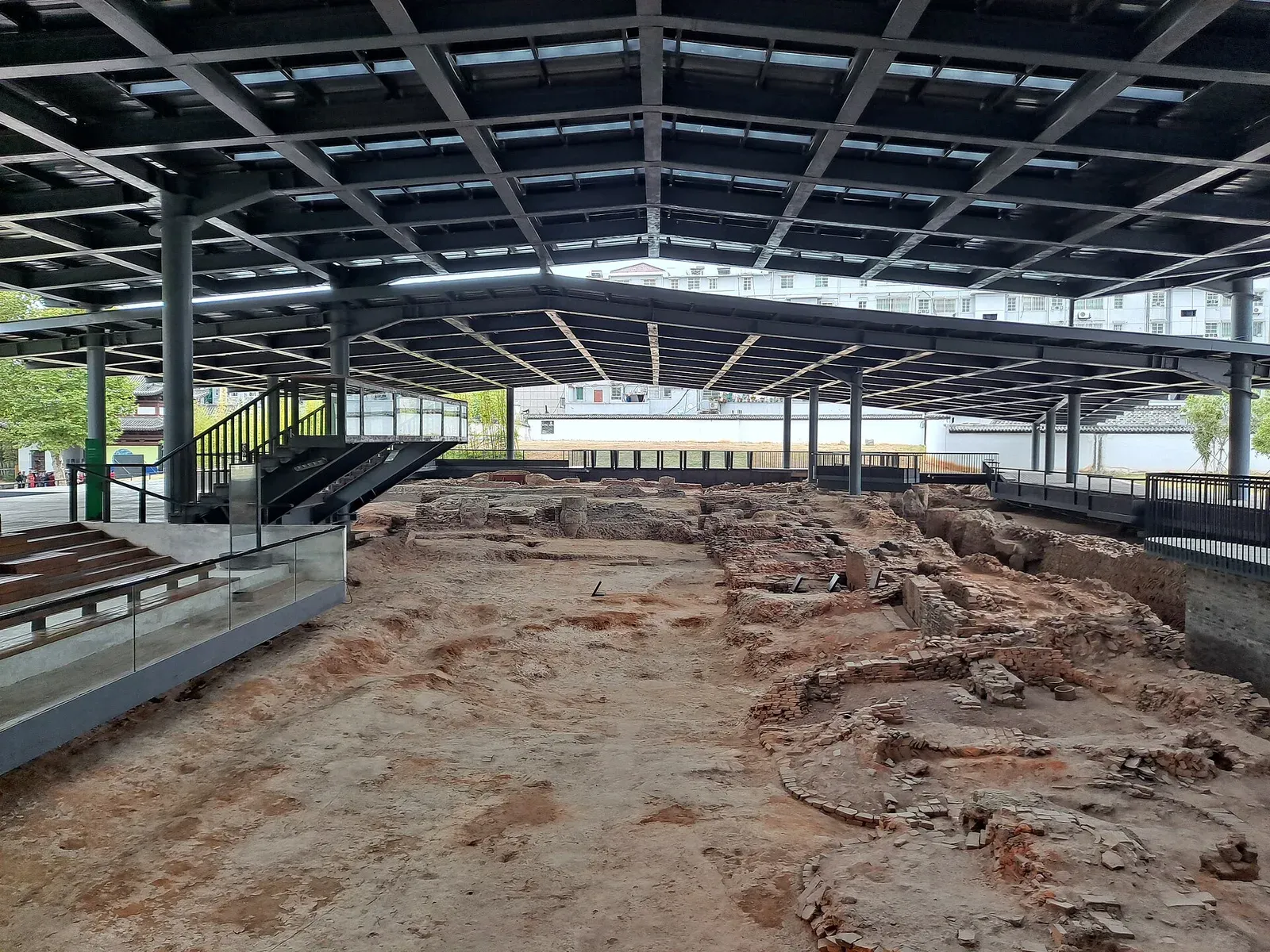
Jingdezhen has a deep porcelain-making tradition and historic town atmosphere. According to official cultural heritage records, the Jingdezhen Imperial Kiln Site was established in the second year of the Hongwu reign during the Ming Dynasty (1369) and operated for more than 400 years. It served as an official kiln site producing porcelain exclusively for the imperial court throughout the Ming and Qing dynasties. The English word for kaolin, an essential mineral in porcelain production, originates from the pinyin transliteration of Gaoling Village in Ehu Town, Fuliang County, Jingdezhen.
Located in Fuliang County, the ancient town of Yaoli dates back to the late Western Han Dynasty. Known as the source of porcelain, the home of tea, and an ocean of forests, it preserves a rustic village setting amid mountains and streams. When it comes to local food, traditional snacks in Jingdezhen include lengfen (cold tossed thick rice noodles), jiaozi ba (stuffed dumplings made of rice dough), and jianshui ba (alkali rice cakes), each offering distinctive local flavors.
Highlights of Ancient Villages in Wuyuan and the Huangling Area
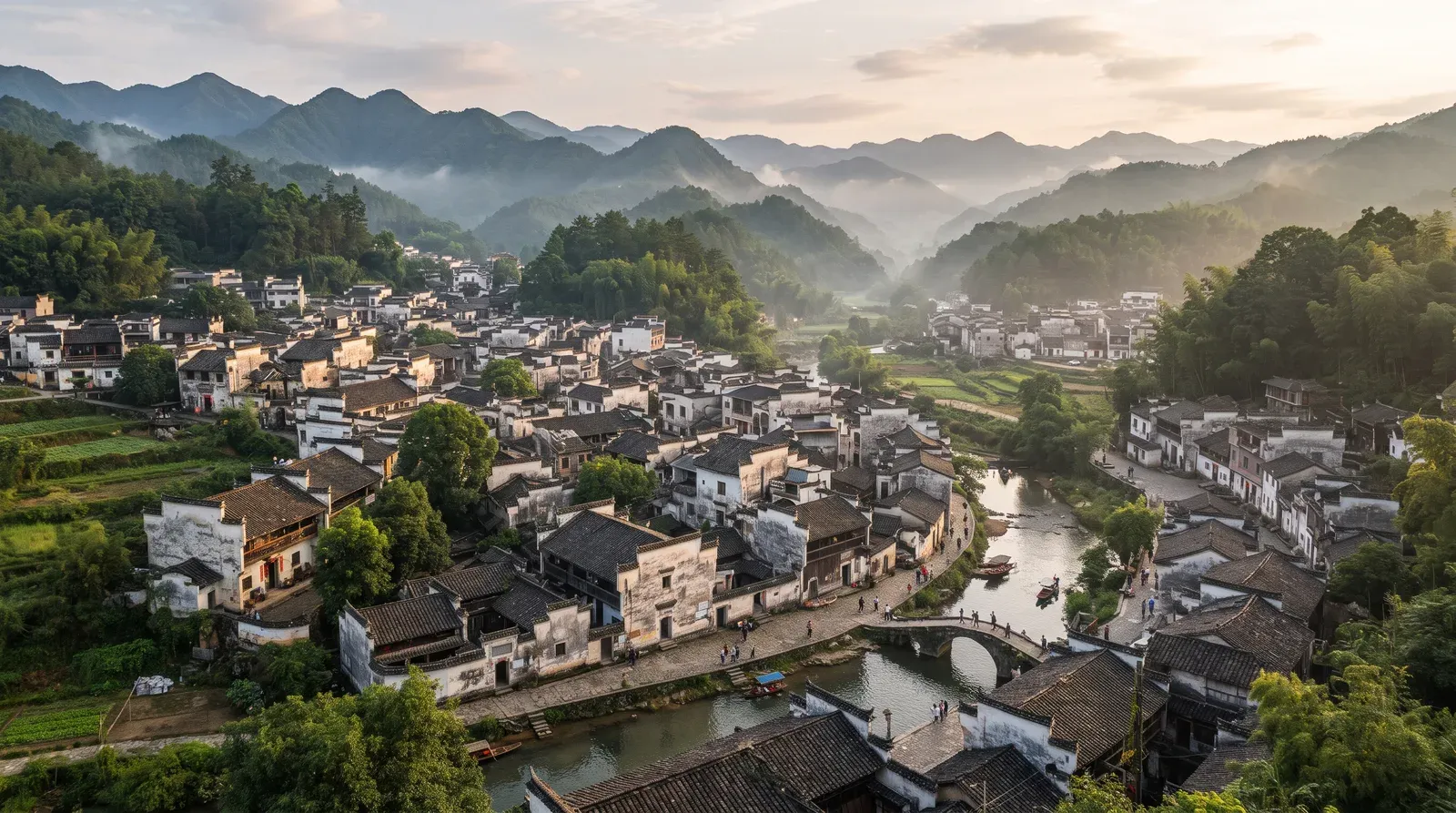
Historically, Wuyuan County was one of the six counties under ancient Huizhou Prefecture and stands as one of the birthplaces of Huizhou culture. According to UN Tourism records, Huangling Village in Wuyuan was listed among the Best Tourism Villages in 2023. The village features a scenic area covering 15 square kilometers, with over 100 restored Ming and Qing dynasty Huizhou-style buildings. Two cable car lines connect the mountain village with the visitor service area at the base.
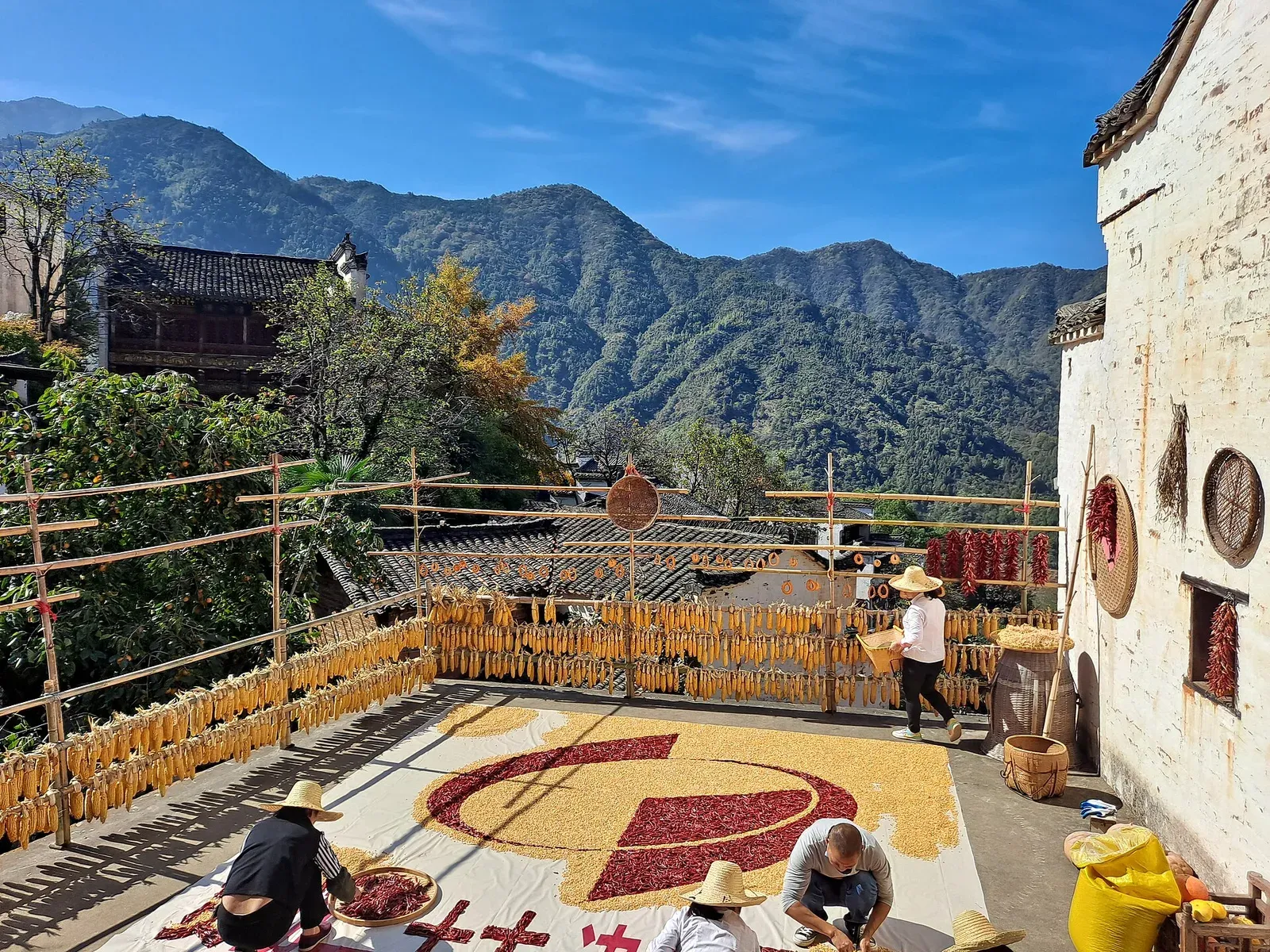
Huangling is renowned for its terraced fields of rapeseed flowers in spring and its shaiqiu (sun-drying harvest) tradition in autumn, where Huizhou-style residences built along the slopes contrast with stepped fields. Beyond Huangling, several other ancient villages and ancestral halls in Wuyuan County, including the Qinghua Rainbow Bridge, traditional residences in Likeng Village, and the Yu Family Ancestral Hall in Wangkou, are designated as Major Historical and Cultural Sites Protected at the National Level.
Granite Peaks and Cable Car Routes at Mount Sanqingshan
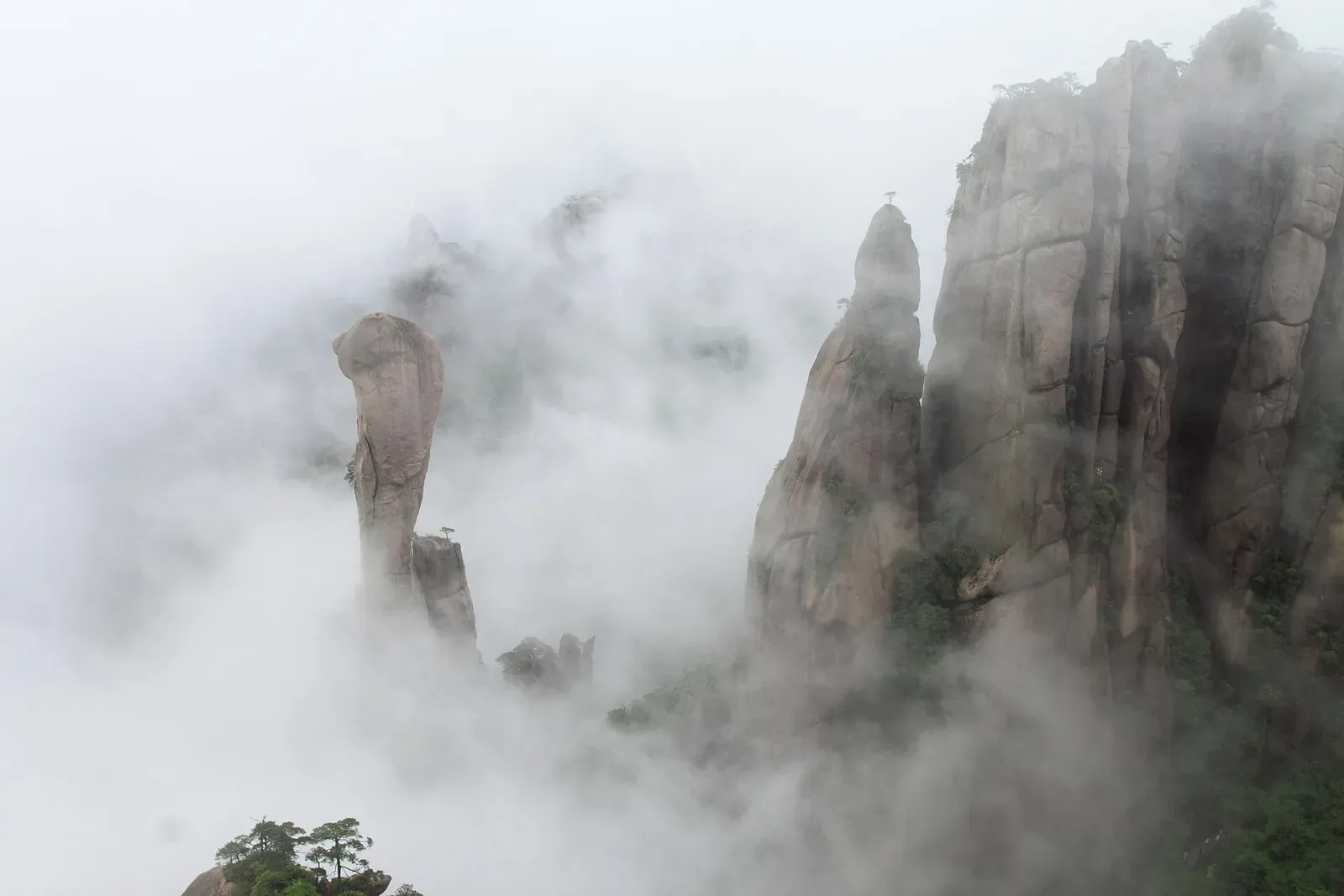
Mount Sanqingshan National Park is a UNESCO World Natural Heritage site. Its core zone concentrates 48 granite peaks and 89 granite pillars. The scenic area features an elevated cliffside walkway system, allowing visitors to view the mountain scenery and granite forest from the paths. Key natural rock formations include the Spring Goddess, the Giant Boa Emerging from the Mountain, the Monkey King Presenting Treasures, and the Taoist Priest Worshipping the Moon.
For cable car facilities, Mount Sanqingshan has two primary passenger cable cars for ascent and descent: the southern Waishuangxi Cable Car and the eastern Jinsha Cable Car. According to survey data, Yujing Peak, the highest summit of Mount Sanqingshan, rises to an elevation of 1,816.9 meters, making it the fifth-tallest peak in the province.
Notable Cultural Landmarks in Central Nanchang
The Pavilion of Prince Teng in Nanchang stands on the east bank of the Gan River. The current building was reconstructed in 1989 in the style of Song Dynasty timber architecture, with a net height of 57.5 meters across nine stories. When taking the Nanchang Metro to visit the pavilion, walking from Wanshou Palace Station to the scenic entrance is shorter than walking from Tengwang Pavilion Station.
Located in downtown Nanchang, the former headquarters of the Nanchang August 1st Uprising was originally the Jiangxi Grand Hotel. Today, it is designated as a Major Historical and Cultural Site Protected at the National Level and is open to the public free of charge.
Key Travel Landmarks and Transport Data Across Jiangxi
| Landmark or Transport Route | Key Historical or Geographic Data | Status and Characteristics |
|---|---|---|
| Nanchang-Jingdezhen-Huangshan High-Speed Railway | Opened on December 27, 2023; about 50 minutes at the fastest | High-speed rail corridor connecting Nanchang and Jingdezhen |
| Jingdezhen Imperial Kiln Site | Founded in 1369; operated for more than 400 years | Official kiln site making imperial porcelain in the Ming and Qing dynasties |
| Huangling Village in Wuyuan | 15-square-kilometer scenic area; listed in 2023 | UN Tourism Best Tourism Village |
| Yujing Peak of Mount Sanqingshan | Elevation of 1,816.9 meters; 48 peaks and 89 pillars in the core area | Fifth-tallest peak in the province; World Natural Heritage site |
| Pavilion of Prince Teng in Nanchang | Rebuilt in 1989; net height of 57.5 meters across nine stories | Song-style timber architecture on the east bank of the Gan River |
Weather and Climate Considerations for Visiting Jiangxi
According to meteorological records, the entire province experiences a subtropical monsoon climate, with average January temperatures between 4 and 9 degrees Celsius, average July temperatures between 27 and 30 degrees Celsius, and annual precipitation between 1,200 and 1,900 millimeters. Summers are warm with abundant rain, while winters are relatively damp and cold.
When planning walking routes through mountain areas and historic villages, visitors need to carry rain gear and warm layers depending on rainfall. In the event of high winds or thunderstorms in the mountains, cable cars may temporarily limit passenger flow or halt operations, so visits should follow on-site announcements by scenic area operators.
Sources
Hangzhou-Nanchang High-Speed Railway - Wikipedia
Hefei-Fuzhou High-Speed Railway - Wikipedia
Mount Sanqingshan National Park
Mount Sanqingshan - Wikipedia
Huangling Village - Wikipedia
Wuyuan County - Wikipedia
Imperial Kiln Site - Wikipedia
Jingdezhen - Wikipedia
Jingdezhen City - Wikipedia
Yaoli Town - Wikipedia
Pavilion of Prince Teng - Wikipedia
Nanchang August 1st Uprising Memorial Museum - Wikipedia
Jiangxi Province - Wikipedia
All sources verified on November 17, 2026
FAQ
How long does the high-speed train take from Nanchang to Jingdezhen?
On the Nanchang-Jingdezhen-Huangshan High-Speed Railway, travel from Nanchang to Jingdezhen takes about 50 minutes at the fastest.
What are the main highlights of Huangling in Wuyuan?
Huangling Village is famous for its terraced fields of rapeseed flowers in spring and its autumn shaiqiu harvest displays, with over 100 restored Ming and Qing dynasty Huizhou-style residences preserved in the village.
What are the main passenger cable cars at Mount Sanqingshan?
Mount Sanqingshan features two main passenger cable car routes: the southern Waishuangxi Cable Car and the eastern Jinsha Cable Car.
What are the traditional local snacks in Jingdezhen?
Traditional local snacks in Jingdezhen include lengfen (cold tossed thick rice noodles), jiaozi ba, and jianshui ba.
Which metro station is closer for walking to the Pavilion of Prince Teng in Nanchang?
When taking the Nanchang Metro to visit the Pavilion of Prince Teng, walking from Wanshou Palace Station is shorter than walking from Tengwang Pavilion Station.