
Humble Administrator's Garden: Visit and Ticket Guide
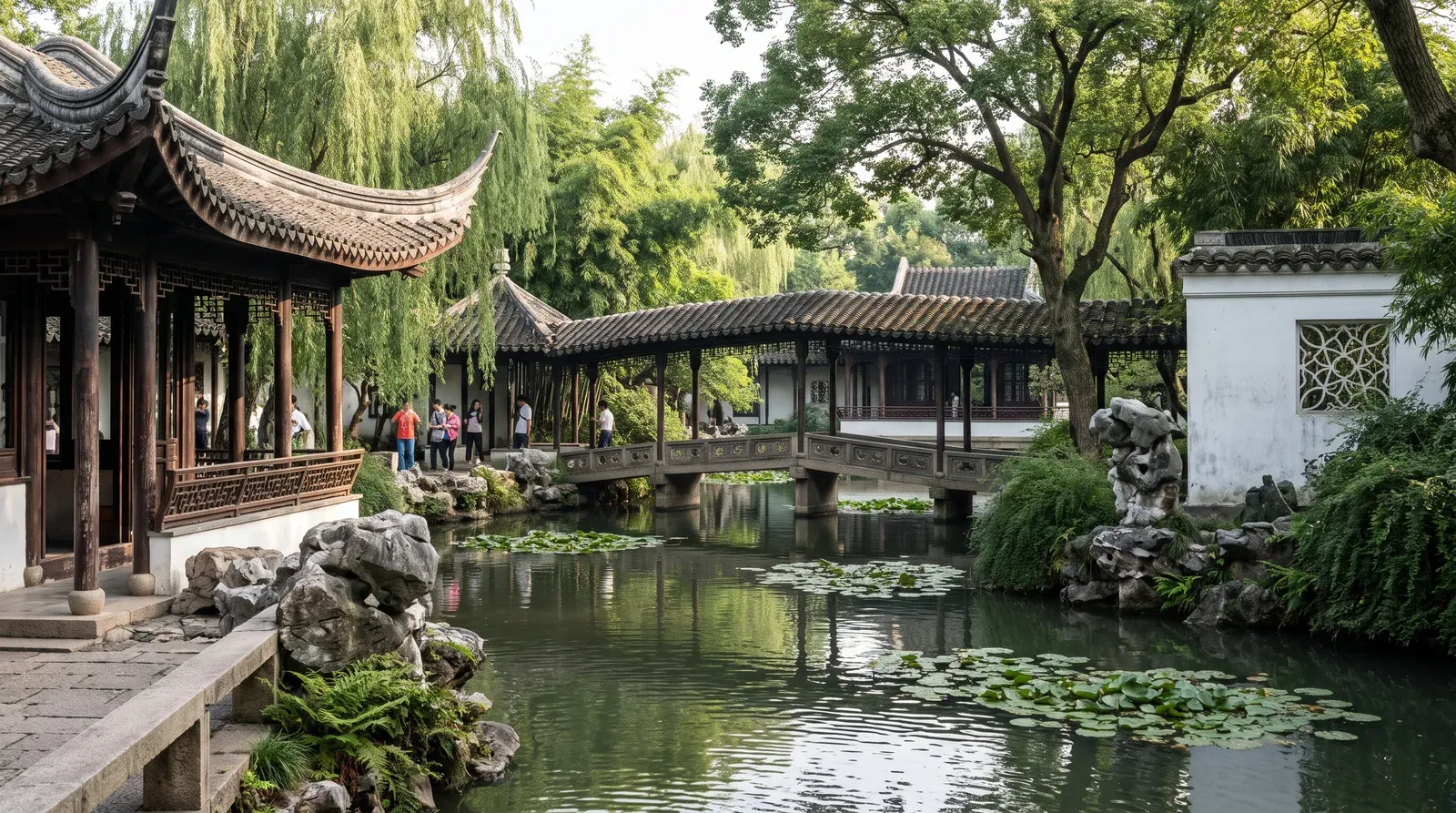
Tickets to the Humble Administrator's Garden cost 80 yuan in peak season and 70 yuan in off-peak season. Every visitor has to book ahead under their real name with a passport or other valid ID. The garden covers 78 mu (about 5.2 hectares) and is the largest classical garden in Suzhou. Its 48 pavilions, halls and towers spread across three main sections: east, central and west. Book your slot in advance, then walk the sections in order and see how water and borrowed views shape a Jiangnan classical garden.
How much are the tickets, and how do you book with your real name?
According to the scenic area's ticket rules, tickets cost 80 yuan in peak season and 70 yuan in off-peak season. Entry runs on real-name booking, so visitors register in advance with passport or other valid ID details. On public holidays the daily slots sell out easily, so it pays to lock in your visit early.
| Ticket type | Price (yuan) | ID needed at entry | Booking notes |
|---|---|---|---|
| Peak season ticket | 80 | Real name with passport or other valid ID | Holiday slots sell out easily, book in advance |
| Off-peak season ticket | 70 | Real name with passport or other valid ID | Bring the original document for checks at the gate |
Before you go in, note that ID checks are strict. If you do not bring the original passport or document you registered with, you cannot pass the ticket check at the gate. Overseas visitors who are not used to booking online can ask their travel designer to handle the real-name registration as part of the overall trip.
What is there to see in the east, central and west sections?
The garden's layout falls into three main sections, east, central and west, over about 5.2 hectares. The central section is the main scenic area and the heart of the whole garden, about 18.5 mu. It is built around a pond, with pavilions and halls standing at the water's edge. The Small Flying Rainbow (Xiaofeihong) in this section is a covered corridor bridge, a rare find in Suzhou's classical gardens.
The east section was once called Return to the Fields (Guitianyuanju) and covers about 31 mu. Its layout is mostly low ridges, distant hills, pine groves and lawns, bamboo stands and winding water. The main buildings are Orchid Snow Hall (Lanxue Tang), Lotus Pavilion (Furong Xie), Heavenly Spring Pavilion (Tianquan Ting) and Cloud-Capped Peak (Zhuiyun Feng).
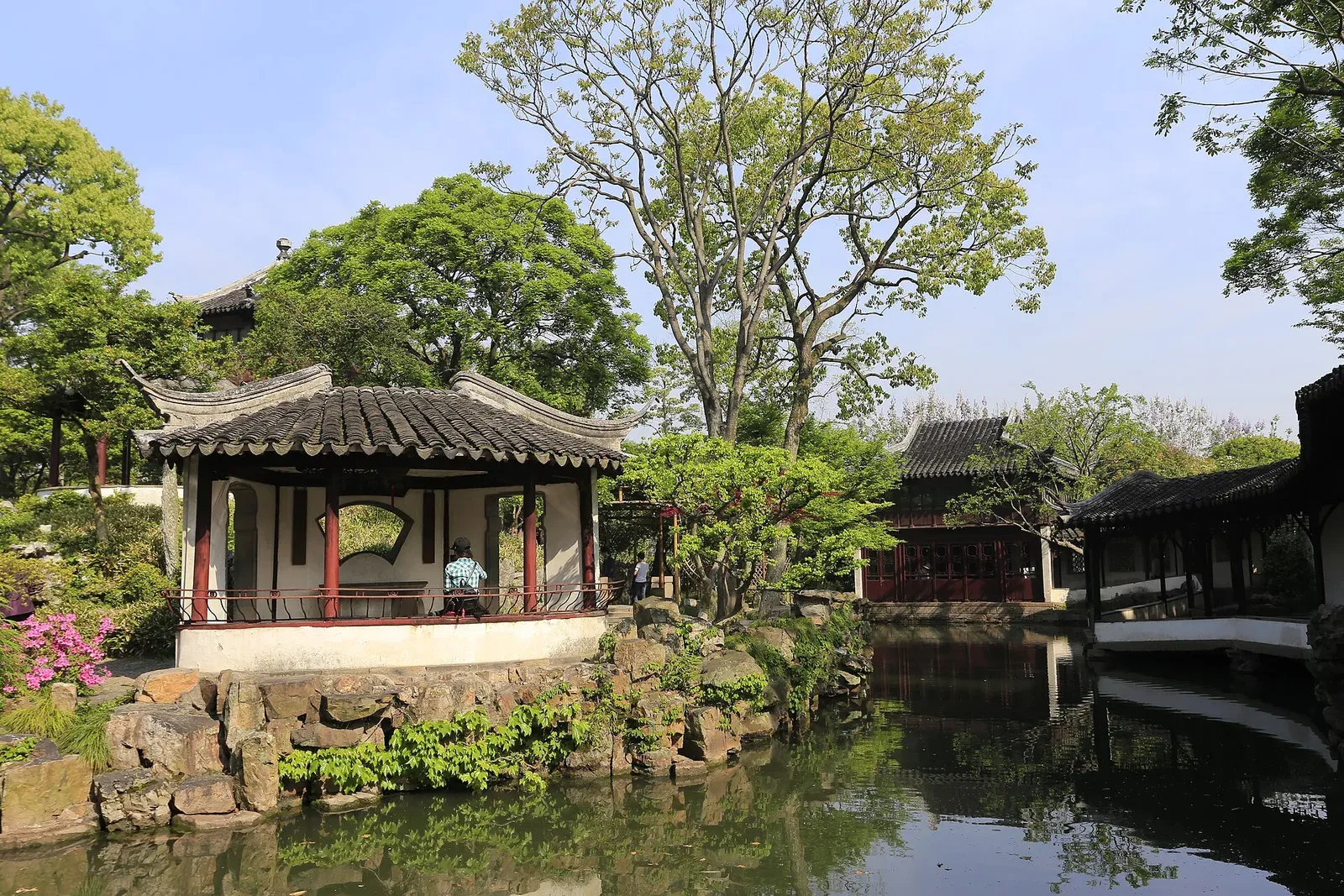
The west section was the Garden of Repair (Buyuan) in the late Qing dynasty and covers about 12.5 mu. It is laid out tightly, with a water corridor that rises and twists. The Thirty-Six Mandarin Ducks Hall was where the owner once hosted guests and listened to Kunqu opera. The fan-shaped Pavilion for Whom to Sit With (Yu Shui Tong Zuo Xuan) takes the roof of a thatched pavilion on the hill behind into its fan-shaped window, so the two together read as one complete folding fan.
| Section | Former name and size | Layout and setting | Key buildings and views |
|---|---|---|---|
| East section | Formerly Return to the Fields, about 31 mu | Low ridges, distant hills, pine groves, lawns, bamboo and winding water | Orchid Snow Hall, Lotus Pavilion, Heavenly Spring Pavilion, Cloud-Capped Peak |
| Central section | Main scenic area and heart of the garden, about 18.5 mu | Built around a pond, pavilions and halls at the water's edge | The rare corridor bridge Small Flying Rainbow, Secluded Pavilion of Phoenix Tree and Bamboo |
| West section | Formerly the late Qing Garden of Repair, about 12.5 mu | Tight layout, a water corridor that rises and twists | Thirty-Six Mandarin Ducks Hall, the fan-shaped Pavilion for Whom to Sit With |
What borrowed views and historic collections does the garden hold?
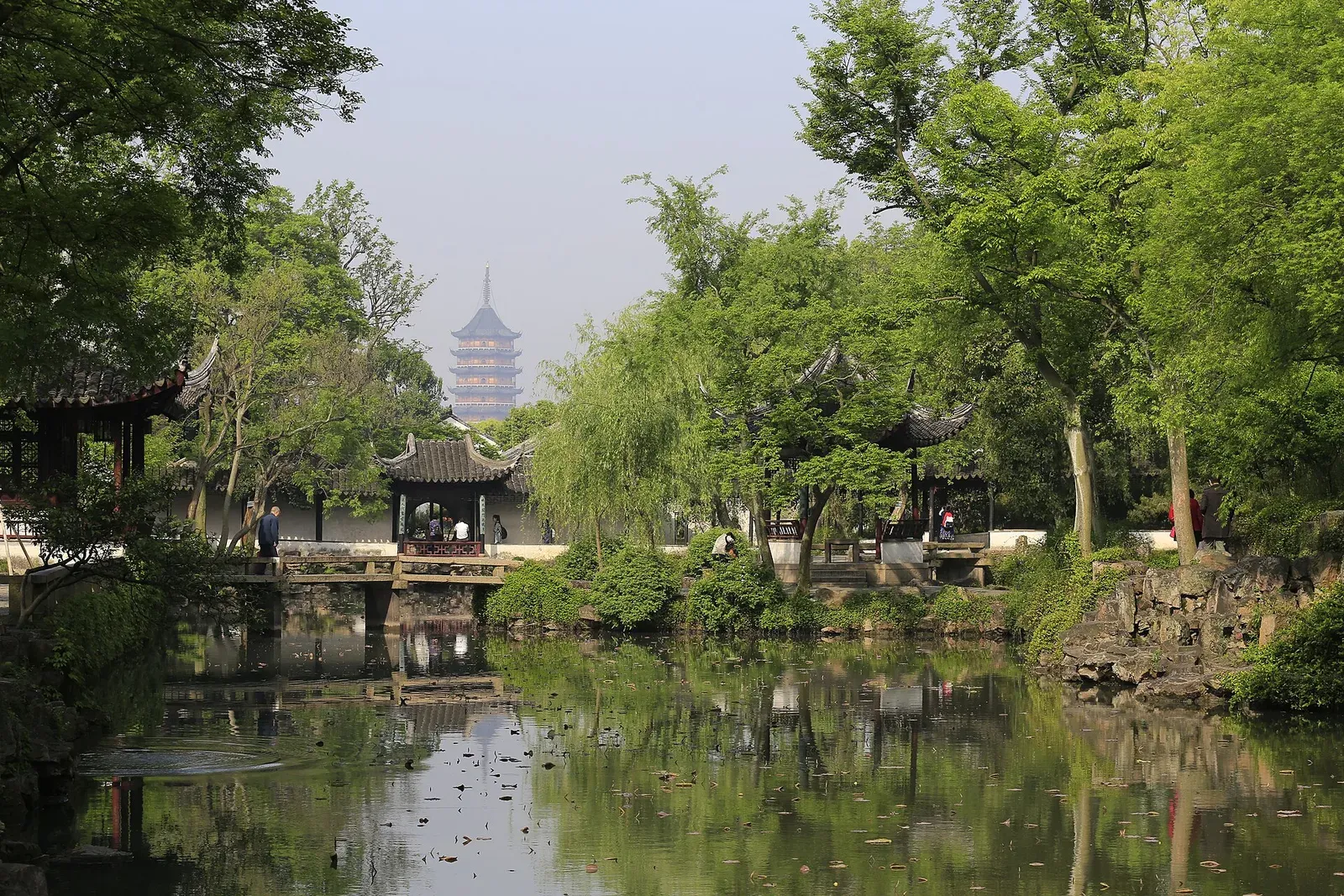
From the Secluded Pavilion of Phoenix Tree and Bamboo (Wuzhu Youju) in the central section, you can look west and see the North Temple Pagoda outside the garden framed like a painting. This is a classic example of borrowed scenery. The North Temple Pagoda (Bao'en Temple Pagoda) is an octagonal, nine-storey brick and wood tower 76 meters tall, and for a long time it was the tallest building in Suzhou.
The garden was first built during the Zhengde era of the Ming dynasty, when the censor Wang Xianchen turned a Buddhist temple site into a garden. Wen Zhengming, a painter of the Ming Wu school, took part in planning it, and in 1533, the 12th year of the Jiajing era, he finished an album of 31 leaves of poems and paintings on the garden.
Along with the 48 old buildings, the garden keeps 101 horizontal plaques and 40 stone inscriptions. It has 21 rare old trees and displays more than 700 pots of Suzhou-style bonsai. In 1961 the State Council listed it in the first group of national key cultural relics, and in 1997 it joined the World Cultural Heritage list as a representative of Suzhou's classical gardens.
How do you put together a day trip around the garden?
The garden is at 178 Dongbei Street, Pingjiang Subdistrict, Gusu District, Suzhou, with the new Suzhou Museum right next to it. The museum was designed by the Chinese-American architect I. M. Pei and opened on October 6, 2006, so you can step in after your garden visit.
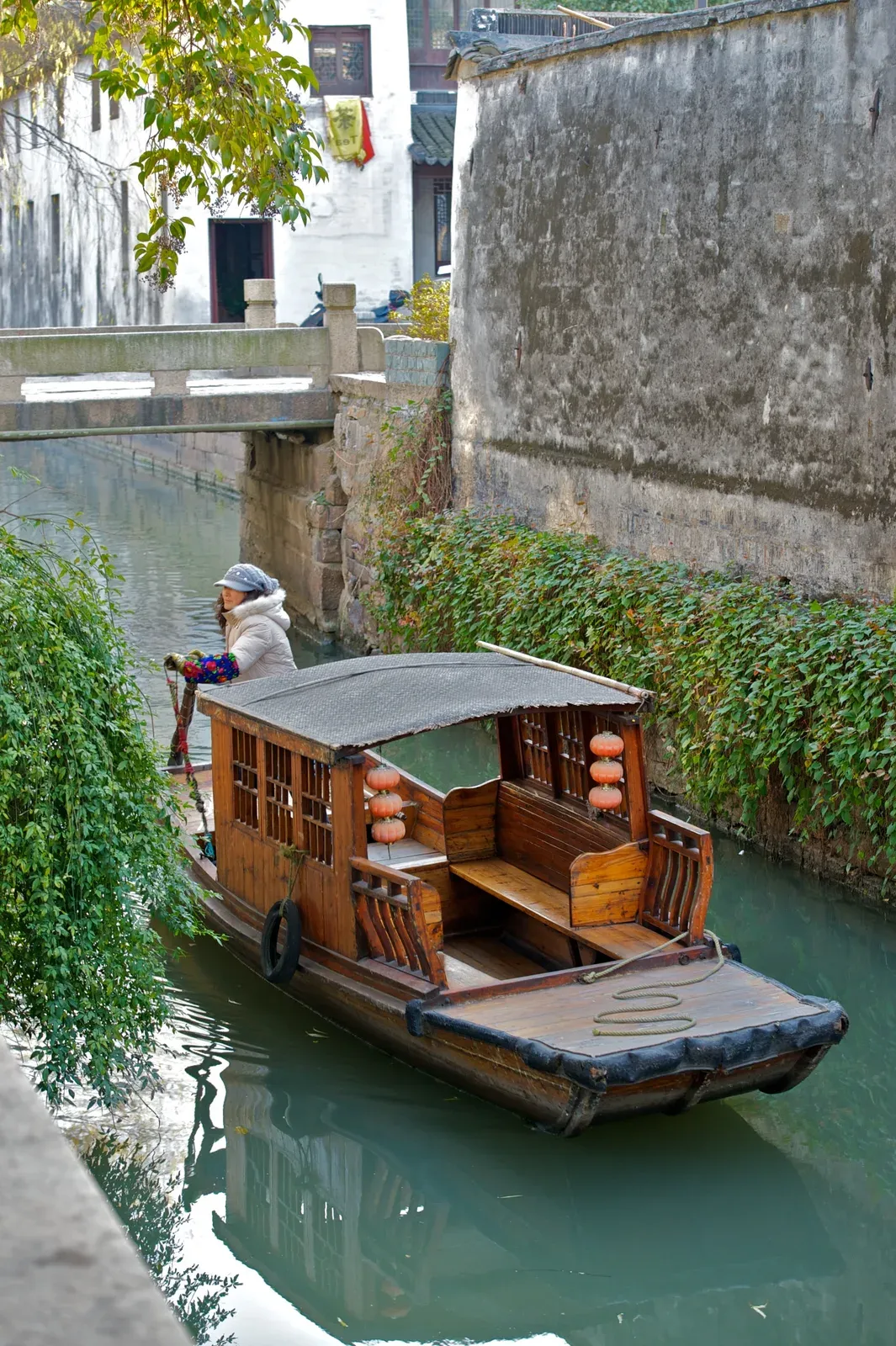
For a wider trip, Suzhou is about 1.5 hours by car from Shanghai. A classic day out runs like this: the garden in the morning, Tiger Hill in the afternoon, then Pingjiang Road and Shantang Street in the evening with a rowboat ride. The Pingjiang Road historic district covers 0.4 square kilometers, and its main street runs 1,606 meters along the Pingjiang River. Inside the district are 18 old stone bridges, 12 of which date back to the Song dynasty Pingjiang Map.
You can plan the trip with our Suzhou travel guide. With your driver along, moving between the garden and the historic streets is smooth.
How do you get to the Humble Administrator's Garden?
Public transport is a convenient way to reach the garden. Suzhou Metro Line 6 opened on June 29, 2024 and runs through the old city straight to the core scenic area in Gusu.
On a private trip, your driver takes you to the area around 178 Dongbei Street. The pick-up and drop-off point can be sorted out ahead of time, which saves you parking and wrong turns in the old city.
Sources
Humble Administrator's Garden - Wikipedia
Suzhou Travel Guide: Classical Gardens, Tiger Hill and Canals
Suzhou Museum - Wikipedia
Pingjiang Road - Wikipedia
Humble Administrator's Garden - Wikipedia (Chinese)
Bao'en Temple Pagoda (Suzhou) - Wikipedia (Chinese)
Line 6, Suzhou Metro - Wikipedia (Chinese)
Sources checked on November 17, 2026.
FAQ
Can I buy a ticket at the gate without booking ahead?
The garden runs on real-name booking, and on holidays slots sell out fast. To avoid being turned away when the day is full, book on the official channel with your passport or other valid ID before you set off.
How do overseas visitors and Hong Kong, Macao and Taiwan residents book tickets?
They register with a passport, a travel permit or another valid document. At the gate the original document is needed for the turnstile or a manual check.
Can I visit the new Suzhou Museum on the same trip?
The new Suzhou Museum sits right next to the garden on its north side. I. M. Pei designed it, and it opened on October 6, 2006. The two are so close that one day covers both.
Which sights inside the garden should I not miss?
The Small Flying Rainbow corridor bridge in the central section, the Secluded Pavilion of Phoenix Tree and Bamboo with its borrowed view of the 76-meter North Temple Pagoda, and in the west the Thirty-Six Mandarin Ducks Hall and the fan-shaped Pavilion for Whom to Sit With are all core sights.