
Top Sights Along the Huang Ho River in China
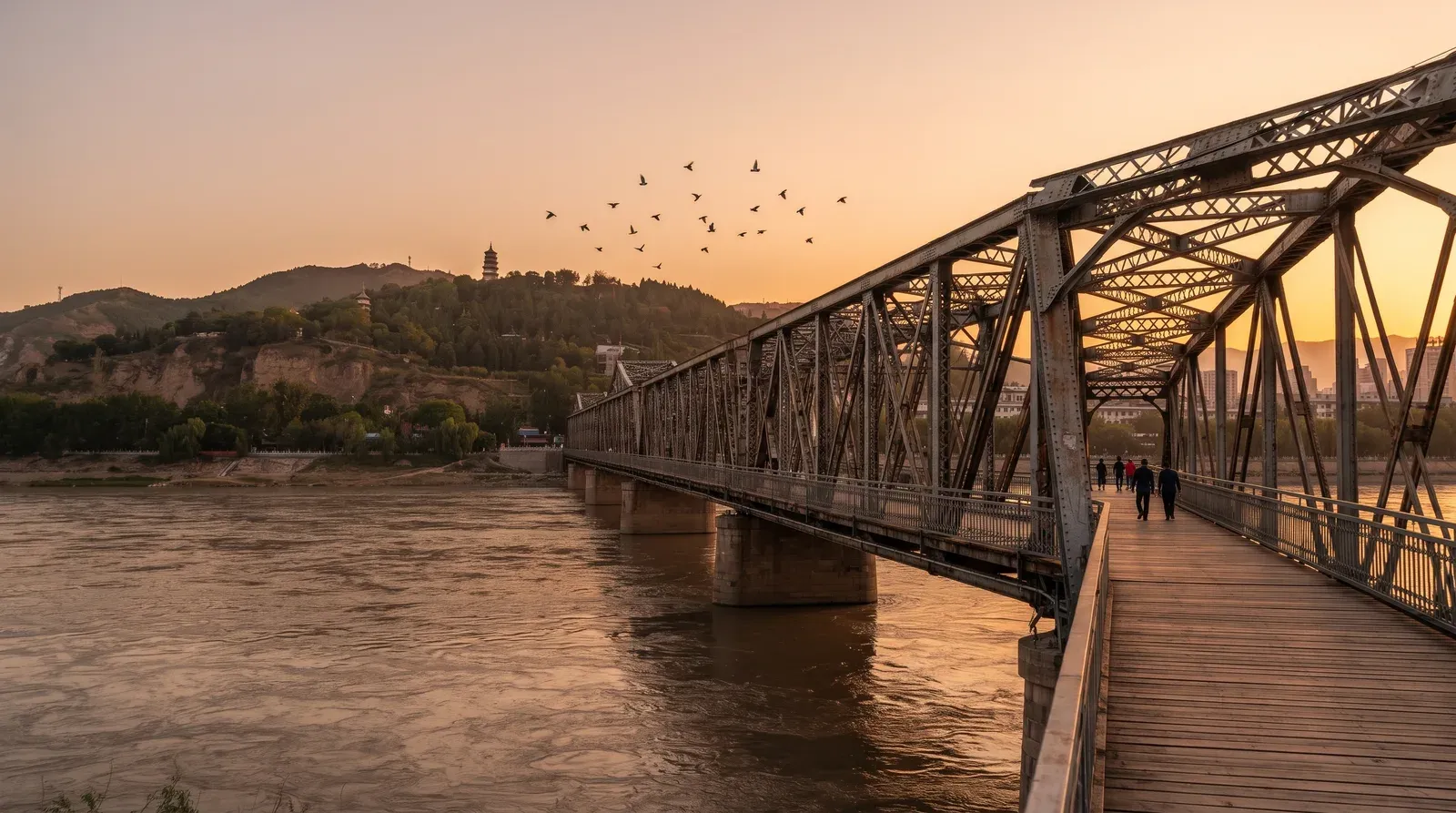
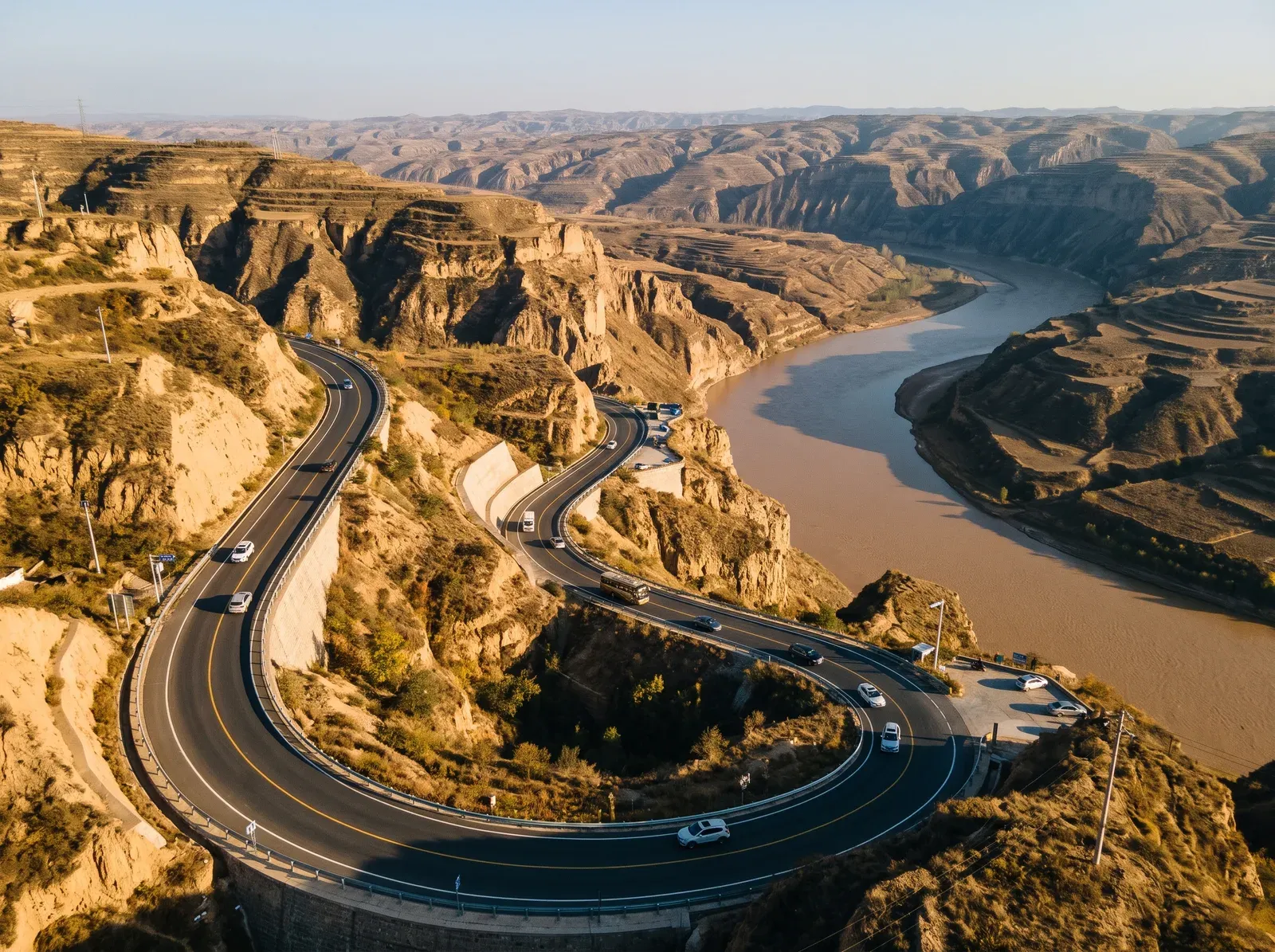
When traveling along the Huang Ho River, major sights stretch from west to east across Gansu, Ningxia, Inner Mongolia, the Jinshan Gorges, Henan, and Shandong, covering urban riverfronts, desert canyons, rushing waterfalls, and estuary wetlands. Lanzhou in upstream Gansu extends about 30 kilometers from east to west and is the only provincial capital where the river runs right through the city. Following the water downstream leads to Shapotou's desert river scenery in Zhongwei, Ningxia, Hukou Waterfall in the Jinshan Gorges, and the delta estuary in Dongying, Shandong.
| Key Stop | Landscape and Location | Tickets and Key Figures |
|---|---|---|
| Lanzhou Yellow River Scenic Byway | Zhongshan Bridge is a permanent pedestrian bridge, right next to Baita Mountain Park and Waterwheel Expo Park | Baita Mountain Park and Waterwheel Expo Park are open to the public for free |
| Shapotou Scenic Area in Zhongwei | Blends the Tengger Desert, the Yellow River, mountains, and oasis landscapes | Admission is 90 yuan; camel rides and Yellow River sheepskin raft drifting require separate tickets |
| Laoniuwan Yellow River Grand Canyon | Located in Qingshuihe County, Inner Mongolia | Welcomed 780,000 visitors in 2024, generating 238 million yuan in tourism revenue |
| Yellow River Hukou Waterfall | Bordering Ji County, Linfen, Shanxi to the east, funneling river torrents over 500 meters wide | Falls reach 30 meters wide and about 50 meters deep, with a maximum water surface of 30,000 square meters |
| Giant Statues of Emperors Yan and Huang | Located in Zhengzhou Yellow River Scenic Area, carved from real Taihang Mountain stone with Emperor Yan taller and Emperor Huang shorter | Total height of 106 meters (mountain 55 meters, statues 51 meters) |
| Dongying Section of the Yellow River | Runs across Dongying and empties into the Bohai Sea in northeastern Kenli | Total length of 138 kilometers |
Upstream Lanzhou: What to See Along the Huang Ho River City Waterfront?
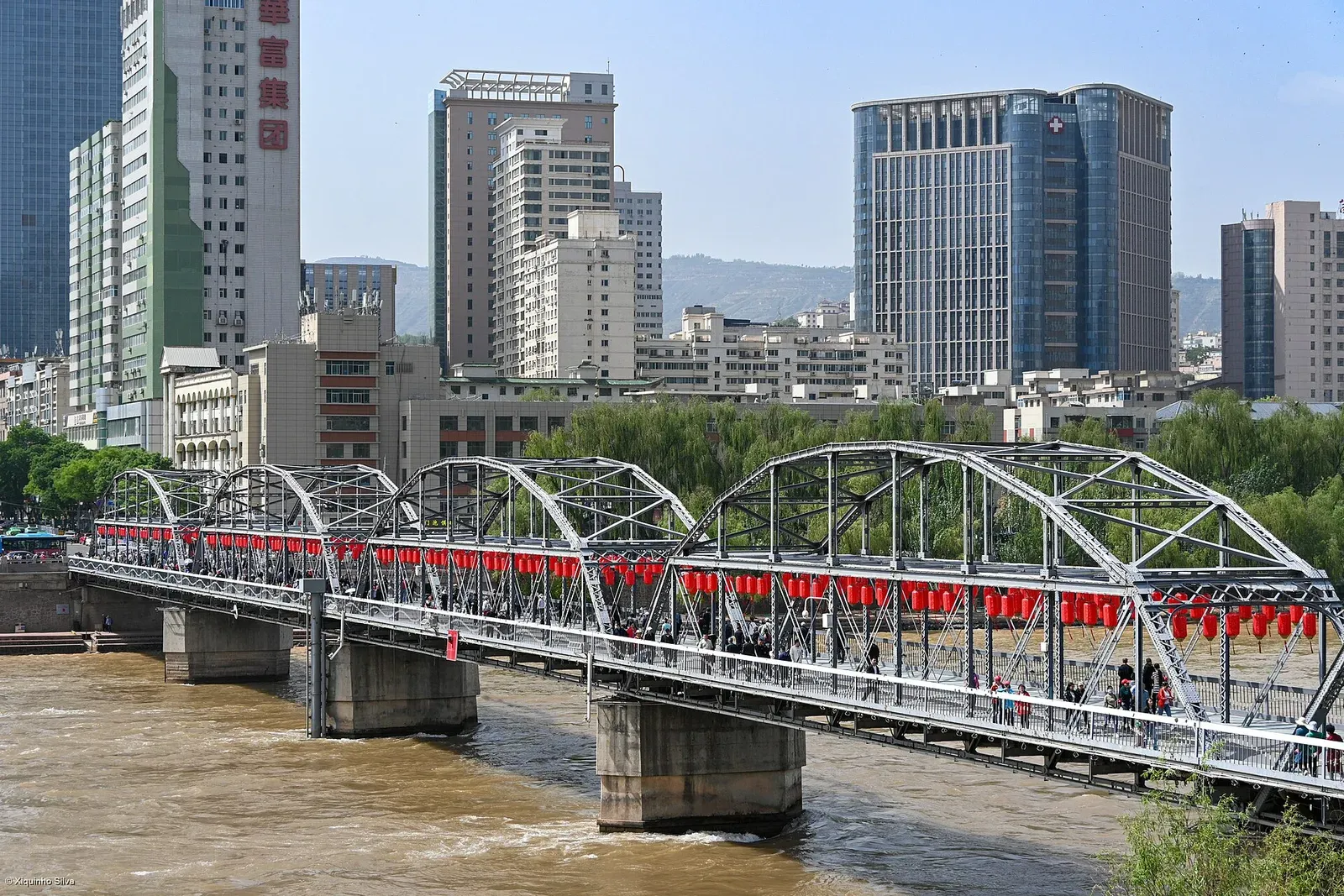
Lanzhou sits at an elevation of around 1,520 meters, squeezed between mountains on the north and south, with its narrowest point spanning only about 1 kilometer. Zhongshan Bridge (中山桥), also called the Yellow River Iron Bridge, stands at the heart of the riverfront. It opened on August 19, 1909, as the first permanent bridge over the river in Lanzhou's history. On October 1, 2004, vehicular traffic ended, converting it into a permanent pedestrian bridge. Just north of the bridge, Baita Mountain Park is free to enter. The white pagoda of Ci'en Temple on the hill stands 17 meters tall, built of brick with a Sumeru pedestal, an inverted bowl-shaped lower body, and a seven-tier octagonal pavilion-style upper structure.
Eastward along South Binhe East Road, the Lanzhou Waterwheel Expo Park displays giant traditional waterwheels once used to irrigate fields, and admission is free. Farther along the riverfront, the Yellow River Mother sculpture by He E depicts a mother and a baby boy. Carved from stone, it measures 6 meters long, 2.2 meters wide, and 2.6 meters high, weighing 40 tons. The sheepskin raft, an ancient ferry tool along the basin, was listed as part of the first batch of Gansu intangible cultural heritage in 2006, and you can still take a raft ride down the river today.
If you want to look out over the city squeezed between two mountains and take in the river panorama, you can ride the cable car across the water from the south bank up to Baita Mountain, or hike up on foot. If you prefer walking on flat ground, stroll along the river path to explore the free Waterwheel Expo Park and cross pedestrian Zhongshan Bridge.
Desert Borders and Inner Mongolia Canyons: What Are Shapotou and Laoniuwan Like?
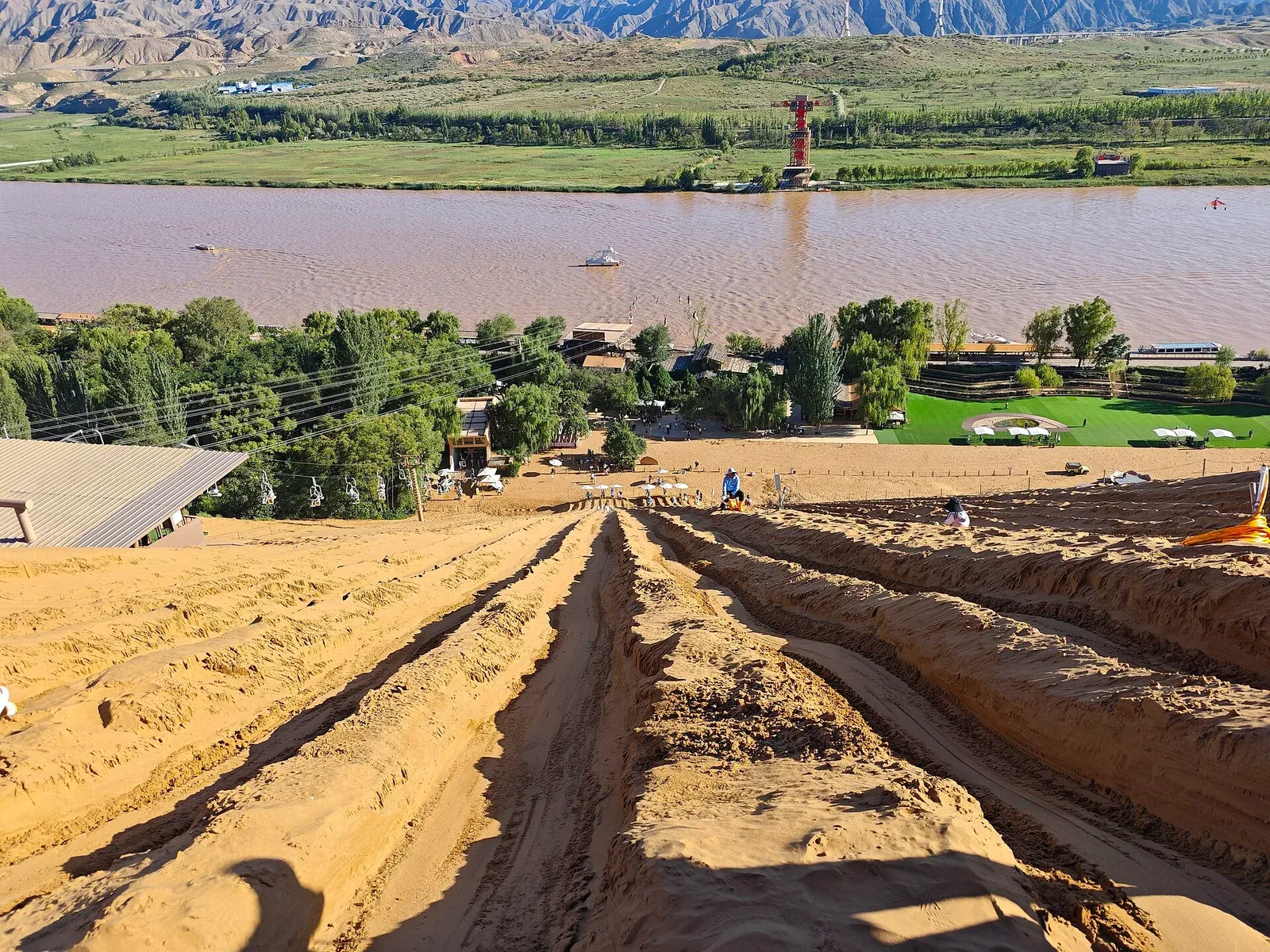
Shapotou Scenic Area in Zhongwei, Ningxia, blends the Tengger Desert, the river, mountains, and oasis scenery, with an entrance ticket of 90 yuan. Visitors can watch dunes meet the water or try activities such as riding camels and drifting on sheepskin rafts.
Laoniuwan Yellow River Grand Canyon in Qingshuihe County, Inner Mongolia, sits along the border of Shanxi and Inner Mongolia, known for sheer canyon cliffs meeting the winding river. In 2024, the area drew 780,000 visitors and generated 238 million yuan in tourism revenue.

Tip: Activities such as camel rides and sheepskin raft drifting inside Zhongwei Shapotou are not included in the admission ticket, so you need to purchase separate tickets inside if you wish to try them.
Jinshan Gorges: What Are the Patterns of Water Flow and Climate at Hukou Waterfall?
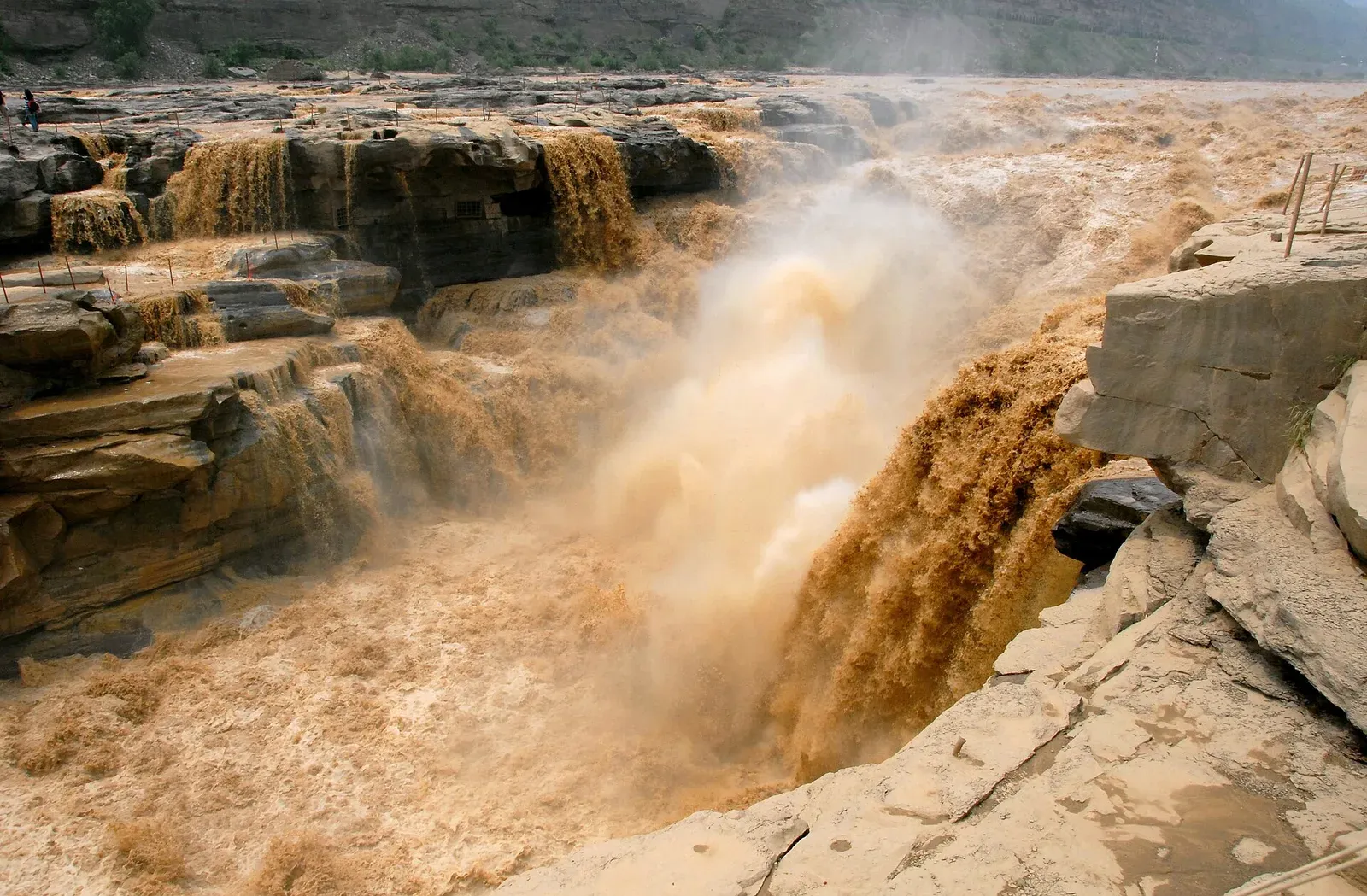
Hukou Waterfall borders Jixian in Linfen, Shanxi, about 25 kilometers southwest of the county town. Here, cliffs constrict a riverbed over 500 meters wide, sending torrents plunging down a drop of about 50 meters. The waterfall spans up to 30 meters wide with a maximum water surface of 30,000 square meters, named for the way the gorge narrows like the mouth of a teapot.
The area around Hukou Waterfall has an average annual temperature of 9.9°C under a typical temperate monsoon climate. Winter begins on October 17 and lasts until spring arrives on April 4, with January being the coldest month at an average low of -11°C.
If you plan to visit in winter, months of subzero temperatures create frozen waterfalls and ice crusts, though you will need heavy down jackets and cold-weather gear. If you visit during spring, summer, or autumn, you will see yellow spray and churning waves as the surging current narrows and plunges.
Downstream Heritage and the Sea: What Can You See in Zhengzhou and Dongying?
Inside the Zhengzhou Yellow River Scenic Area in Henan, the giant statues of Emperors Yan and Huang stand 106 meters tall, with the mountain base measuring 55 meters and the statues 51 meters. Carved from natural stone quarried in the Taihang Mountains, the taller figure depicts Emperor Yan and the shorter one Emperor Huang, looking out over the river plains.
Flowing northeast into Shandong, the river runs for 138 kilometers through Dongying, traversing the whole municipality before emptying into the Bohai Sea in northeast Kenli, creating distinctive estuary wetlands where river meets ocean.
Getting Around Along the River: How Do You Connect Major Cities and Stops?
For exploring upstream Lanzhou, Lanzhou Zhongchuan International Airport sits about 75 kilometers from downtown. To get into the city, you can take an airport shuttle bus (30 yuan one-way, taking over 1 hour) or ride the intercity rail directly to Lanzhou Railway Station (taking about 50 to 55 minutes).
The Taiyuan to Xi'an section of the Datong-Xi'an High-Speed Railway opened on July 1, 2014, cutting travel time between Taiyuan and Xi'an from 10 hours to about 3 hours. If driving to Hukou Waterfall, the route from Taiyuan via the G5 Beijing-Kunming Expressway onto the G22 Qingdao-Lanzhou Expressway to the Hukou exit and visitor center covers about 374.9 kilometers, taking around 4 hours and 40 minutes. From Xi'an, the drive via the G5, Yulin-Lantian Expressway, and G22 to the Hukou exit covers about 294.3 kilometers, taking roughly 3 hours and 34 minutes.
| Route | Transport Mode and Route | Key Figures or Features | Travel Time |
|---|---|---|---|
| Taiyuan to Hukou Waterfall Visitor Center | Driving (via G5 Jingkun Expressway to G22 Qinglan Expressway at Hukou Exit) | Total distance of about 374.9 kilometers | Drive takes about 4 hours 40 minutes |
| Xi'an to Hukou Waterfall Visitor Center | Driving (via G5 Jingkun Expressway and Yulan Expressway to G22 Qinglan Expressway at Hukou Exit) | Total distance of about 294.3 kilometers | Drive takes about 3 hours 34 minutes |
| Taiyuan to Xi'an | Taiyuan-Xi'an section of Datong-Xi'an High-Speed Railway | Opened on July 1, 2014 | Train travel time shortened from 10 hours to about 3 hours |
| Lanzhou Zhongchuan International Airport to Lanzhou Railway Station | Airport intercity train | Airport is about 75 kilometers from downtown | Takes about 50 to 55 minutes |
| Lanzhou Zhongchuan International Airport to downtown | Airport shuttle bus | One-way fare 30 yuan (distance about 75 kilometers) | Takes over 1 hour |
Sources
Zhongshan Bridge (Lanzhou) - Wikipedia
Skin boat - Wikipedia
Baita Mountain Park - Wikipedia
Lanzhou - Wikipedia
Hukou Waterfall - Wikipedia
Datong-Xi'an High-Speed Railway - Wikipedia
Zhengzhou Yellow River Scenic Area - Wikipedia
Yellow River Hukou Waterfall Tourism Area
Dongying - Wikipedia
Laoniuwan Yellow River Grand Canyon gets national 5A rating
Sources verified on November 17, 2026
FAQ
Can motor vehicles still drive across Lanzhou Zhongshan Bridge?
No. Zhongshan Bridge opened to traffic on August 19, 1909, but ended vehicular service on October 1, 2004. Today it functions as a permanent pedestrian bridge reserved for walkers and sightseeing.
When driving to Hukou Waterfall, is it closer from Taiyuan or from Xi'an?
The drive is shorter in both distance and time from Xi'an. Driving from Xi'an to the Hukou Waterfall visitor center covers about 294.3 kilometers and takes around 3 hours and 34 minutes, while driving from Taiyuan covers about 374.9 kilometers and takes around 4 hours and 40 minutes.
Does admission to Zhongwei Shapotou include camel rides and sheepskin rafts?
No. Admission to Shapotou is 90 yuan, while camel rides and sheepskin raft drifting are optional activities that require purchasing separate tickets inside the scenic area.
How long does the train take from Lanzhou Zhongchuan International Airport to downtown?
The airport intercity train from Lanzhou Zhongchuan International Airport to Lanzhou Railway Station takes about 50 to 55 minutes, covering a distance of about 75 kilometers.