
Hotan Travel Guide: Yurungkash River and Silk Road Sites
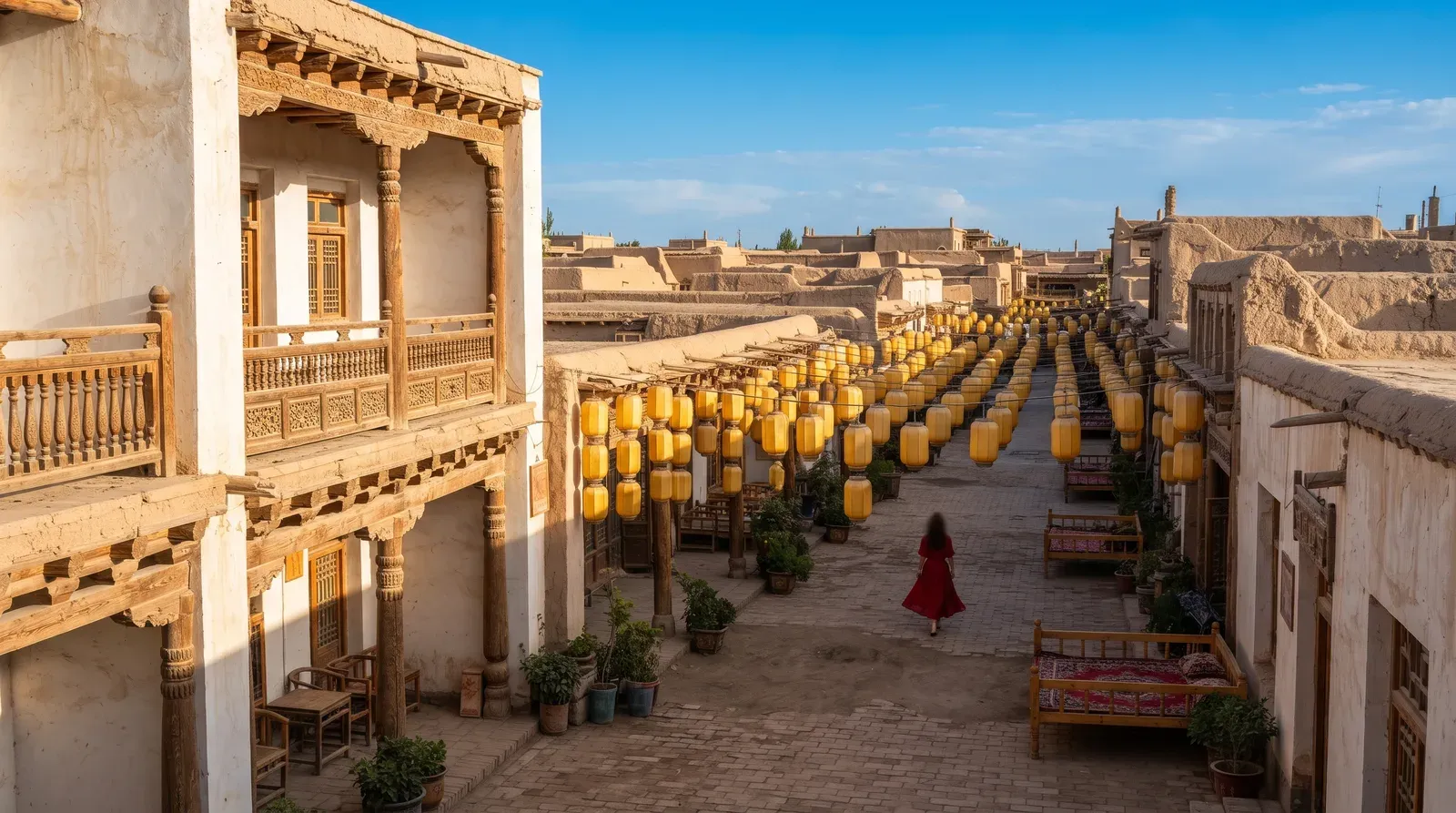
When traveling to Hotan, China, core experiences include visiting the Yurungkash River that produces white jade pebbles, touring the Hotan Museum with over 9,499 cultural relics, and exploring Silk Road ruins such as Rawak Buddhist Temple and Yotkan. Around Hotan City, you can learn about traditional crafts like Hotan jade, carpets, and Atlas silk, and taste roasted whole sheep and roasted goose eggs at the Hotan Night Market. The journey combines desert river landscapes below the Kunlun Mountains with the ancient history of the Kingdom of Khotan.
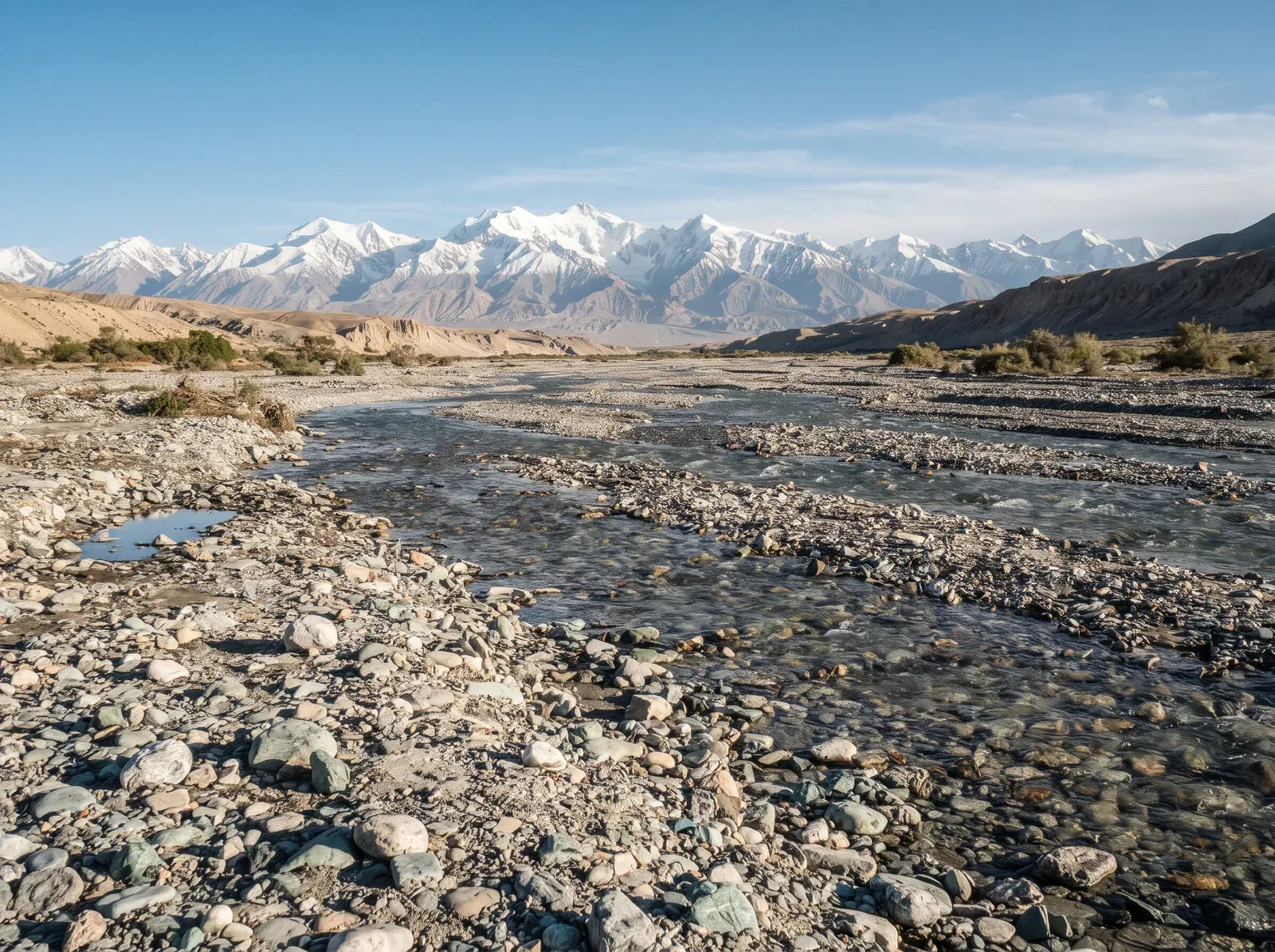
What Are the Features and Jade Sights of the Yurungkash River?
The Yurungkash River, also called the White Jade River, produces famous white jade pebbles along its riverbed. Originating in the Kunlun Mountains, it flows through the Hotan region with a drainage basin of 14,575 square kilometers and an average flow of 72.3 cubic meters per second. North of Hotan, it joins the Karakash River to form the Hotan River, which flows into the Tarim River.
For visitors exploring jade culture, the gravel beaches of the White Jade River offer an important site to observe local nephrite resources. Near the entrance of the Hotan Museum, an exhibition of nephrite eroded by mountain streams displays mutton-fat jade, black jade, jasper, and celadon jade. These stone forms show how Kunlun glacial erosion and river washing shaped the nephrite.
Which Ancient Cities and Temple Ruins Can You Visit in Hotan, Xinjiang?
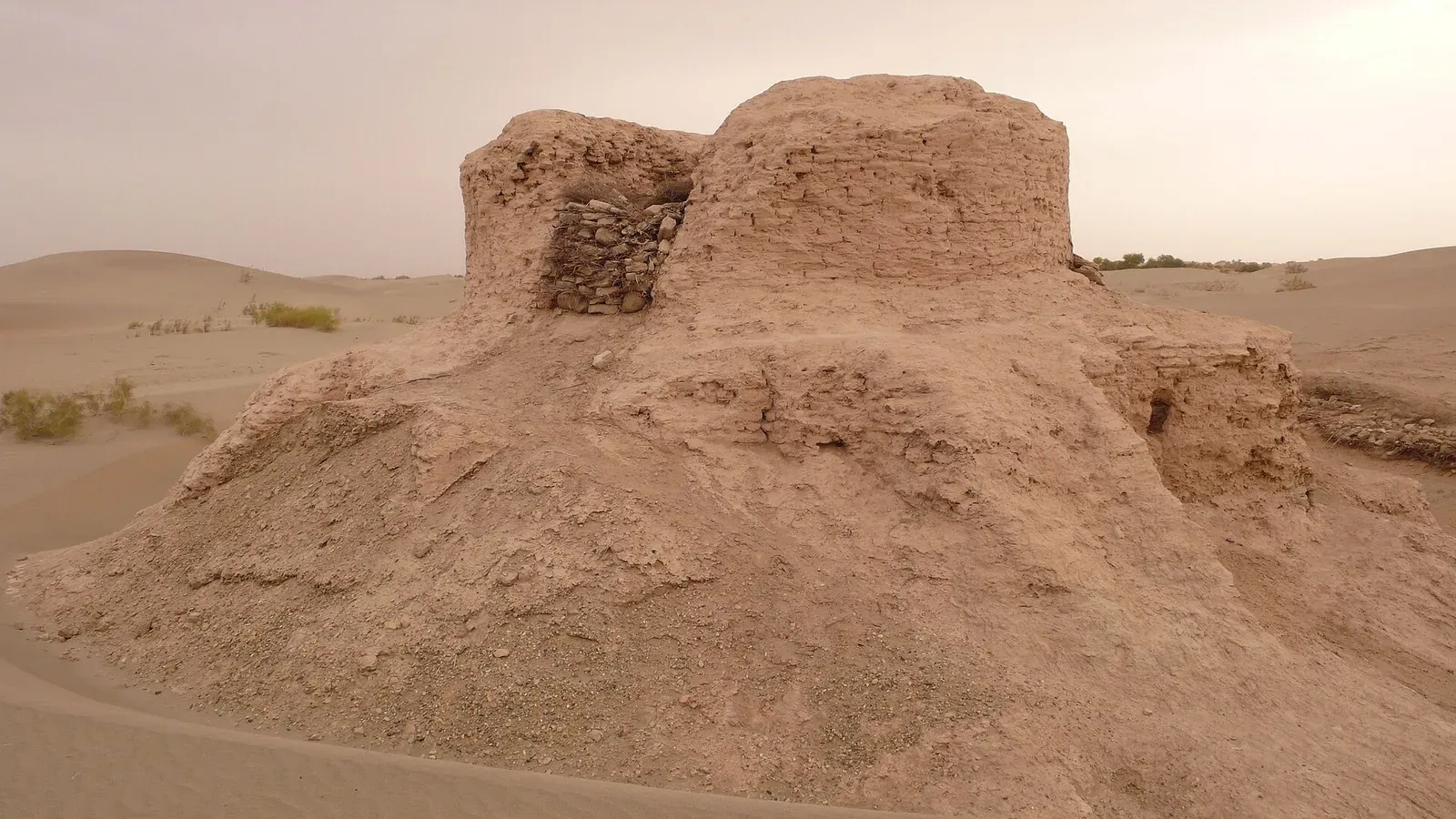
The region preserves important city sites and Buddhist relics from the ancient Kingdom of Khotan, with the Yotkan site, Rawak Buddhist Temple site, and Malikawat ancient city being the most representative. The Yotkan site is in Ailaman Village, Bagchi Town, Hotan County, about 11 kilometers west of downtown Hotan, and scholars widely regard it as the capital of the ancient Kingdom of Khotan. Artifacts unearthed there date from the Han to Song dynasties, mostly ceramic sculptures from the Han to Tang dynasties, along with cast gold figurines, ancient coins, glassware, and pieces of jade.
About 5 kilometers from the Yotkan ruins lies the Yotkan Ancient City scenic area, covering 156 mu with a total investment of 600 million yuan, which opened on July 21, 2022. The scenic area regularly presents the immersive walking performance 'Music of All Lands in Khotan', divided into the daytime street show 'Hundred Plays of the Ten Directions' and the evening epic 'Tales of the Ancient City'. Visitors can experience the street life of the ancient Kingdom of Khotan through these immersive performances.
The Rawak Buddhist Temple ruins in Lop County are the only Khotan Buddhist site in the Hotan area with a classic Gandhara architectural style. Centered on an inverted-bowl stupa built on a cruciform platform, it preserves a stupa about 10 meters high with a base about 23 meters wide. Another site, the ancient city of Malikawat (also known as Mailikawati), sits on the west bank of the Yurungkash River, 25 kilometers south of Hotan County town. Tradition considers it the western city site of the Han Dynasty Khotan capital, which was abandoned during the Northern and Southern Dynasties.
| Attraction or Site | Location | Architectural Scale or Relic Features | Key Highlights |
|---|---|---|---|
| Yotkan Site | About 11 km west of downtown Hotan | Ancient capital settlement from Han to Song dynasties | Pottery figurines from Han to Tang dynasties, cast gold statues, and jade pieces |
| Yotkan Ancient City Scenic Area | 5 km from Yotkan Site | Covers 156 mu, opened on July 21, 2022 | Immersive performance "Music of All Lands in Khotan" (Hundred Plays of the Ten Directions and Tales of the Ancient City) |
| Rawak Buddhist Temple Site | Lop County | Gandhara architectural style on a cruciform platform | Inverted-bowl stupa about 10 meters high with a base about 23 meters wide |
| Malikawat Ancient City | West bank of Yurungkash River, 25 km south of Hotan County town | West city site of Han Dynasty Khotan capital, abandoned during Northern and Southern Dynasties | Ancient city ruins on the edge of desert terraces |
| Hotan Museum | Downtown Hotan | Over 9,499 cultural relics in collection, 54 grade-one national cultural relics | Mutton-fat white jade carved monkey and Eastern Jin Kharosthi wooden tablets |
What Relics Are on Display at the Hotan Museum?
The Hotan Museum houses over 9,499 cultural relics, including 54 first-grade national cultural relics, making it an important place to understand the history of the Southern Silk Road. The museum's star piece is a delicately carved monkey made of fine mutton-fat white jade, unearthed from the Mazartag fort site. The exhibition hall also displays Kharosthi wooden tablets from the Eastern Jin Dynasty, recording the writing and administrative systems of ancient oasis city-states in the Western Regions.
What Are the 'Three Treasures of Hotan' and Night Market Specialties?
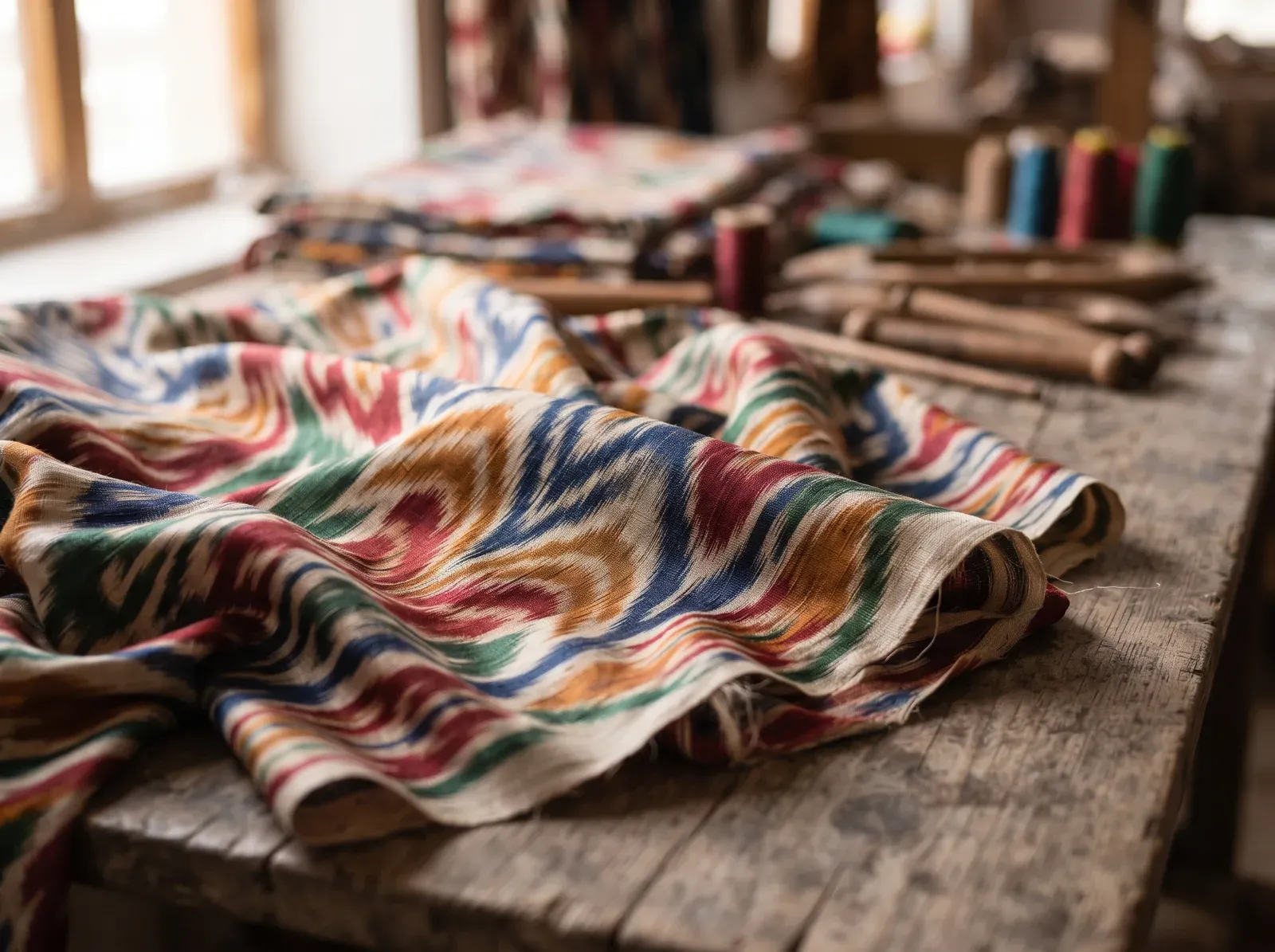
Hotan was an important post on the Southern Silk Road, famous for Hotan jade, Hotan carpets, and Hotan silk (Atlas silk), known together as the 'Three Treasures of Hotan'. Hotan is the largest silk reeling production center in Xinjiang, with local cocoon production accounting for about 70% of Xinjiang's total output. Atlas silk uses traditional hand tie-dyeing techniques, extracting natural dyes from plants such as pomegranate flowers and walnut skins, creating natural ombre wave patterns with fabric widths usually between 40 and 60 centimeters.
Beyond craft experiences, the Hotan Night Market gathers a wide range of authentic southern Xinjiang specialties. At the night market, you can taste roasted whole sheep, roasted goose eggs, baked buns, roasted fish, pigeon soup, and stuffed lung with noodles (mianfeizi). Dining is accompanied by live singing and dancing performances, allowing you to experience the lively local atmosphere.
How to Travel to Hotan City by Desert Highway and Railway Loop?
You can travel to Hotan City by train, highway, or flight. The 825.476-kilometer Hotan-Ruoqiang Railway opened on June 16, 2022, connecting with the Southern Xinjiang Railway and the Golmud-Korla Railway to form a 2,712-kilometer loop, the world's first desert railway loop line. For air travel, Hotan Kungang Airport is located at No. 925 Yingbin Road, Tushalla Township, Hotan City, about 9 kilometers from downtown Hotan.
By road, the 424-kilometer Aral-Hotan Desert Highway opened in 2007, heading south along the Hotan River straight across the Taklamakan Desert to Hotan City. Another 552-kilometer Luntai-Minfeng Desert Highway starts from Luntai in the north and ends in Minfeng County in Hotan Prefecture, with about 446 kilometers crossing uninhabited shifting sand dunes. If you plan to visit temples and ruins around the desert, you can contact our travel designer to plan an itinerary, with your driver who knows the road conditions handling transfers.
What Climate Features Should You Note When Visiting Hotan, China?
Hotan City has an arid desert climate with an annual average temperature of 12.5°C. The local annual average precipitation is about 35 to 38 mm, while the annual evaporation reaches 2,480 mm. With more than 220 days of floating dust each year, it is advisable to prepare sand goggles, protective masks, and moisturizing skincare products before departure.
Sources
Hotan City - Wikipedia
White Jade River - Wikipedia
Yotkan Site - Wikipedia
Rawak Buddhist Temple Site - Wikipedia
Malikawat Ancient City - Wikipedia
Hotan Museum - Wikipedia
Atlas Silk - Wikipedia
An Important Step in Industrial Development: "Hotan Night Market" Welcomes Guests in the Cold Winter - Media Reports - Department of Culture and Tourism of Xinjiang Uygur Autonomous Region
Hotan-Ruoqiang Railway - Wikipedia
Tarim Desert Highway - Wikipedia
Sources verified on November 7, 2026
FAQ
How far is Hotan Kungang Airport from downtown?
Hotan Kungang Airport is located at No. 925 Yingbin Road, Tushalla Township, Hotan City, about 9 kilometers from downtown Hotan.
What is the star piece of the Hotan Museum?
The star piece is a carved monkey made of fine mutton-fat white jade unearthed from the Mazartag fort site. The museum also houses Eastern Jin Dynasty Kharosthi wooden tablets and 54 first-grade national cultural relics.
What are the 'Three Treasures of Hotan'?
The 'Three Treasures of Hotan' refer to Hotan jade, Hotan carpets, and Atlas silk (Hotan silk), representing the region's most characteristic mineral and traditional textile crafts.
What regular performances are staged at Yotkan Ancient City?
The scenic area regularly presents the immersive walking performance 'Music of All Lands in Khotan', divided into the daytime street show 'Hundred Plays of the Ten Directions' and the evening epic 'Tales of the Ancient City'.
What famous highways cross the Taklamakan Desert to Hotan?
The main highways include the 424-kilometer Aral-Hotan Desert Highway and the 552-kilometer Luntai-Minfeng Desert Highway, which runs from Luntai in the north to Minfeng County in the south and crosses 446 kilometers of shifting dunes.