
Hexi Corridor Travel Route: Silk Road Towns and Grottoes
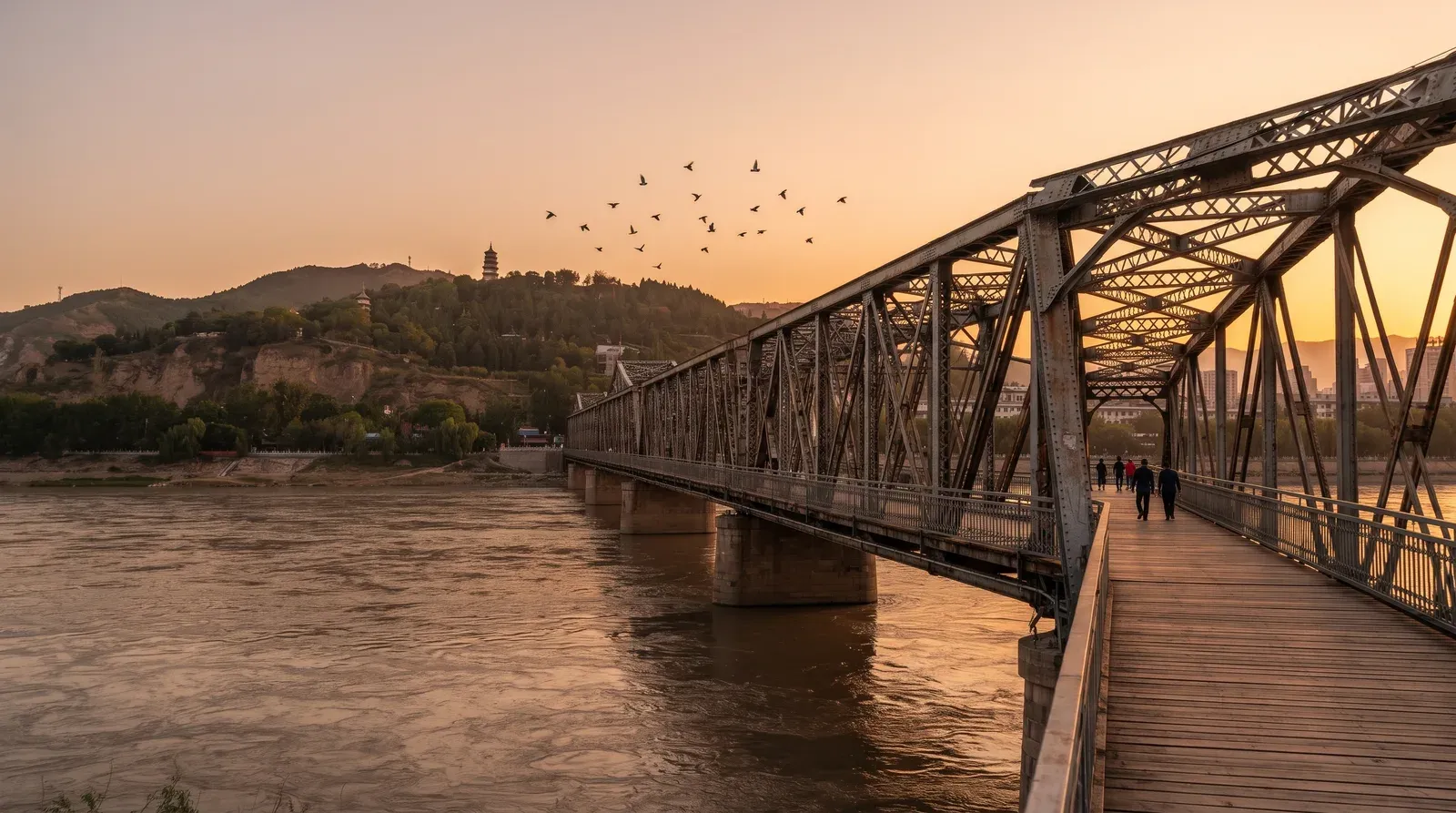
The Hexi Corridor stretches about 1,100 kilometers from Wushao Ridge in the east to Yumen Pass in the west, and a classic trip usually takes 6 to 8 days. Heading west from Lanzhou, it links Silk Road stops like Wuwei, Zhangye, Jiuquan, Jiayuguan, and Dunhuang, following oases along the northern base of the Qilian Mountains by rail and road.
| Item | Practical Details |
|---|---|
| Geographic span | From Wushao Ridge in the east to Yumen Pass in the west, about 1,100 km long |
| Classic trip duration | 6 days and 5 nights to 8 days recommended |
| Best travel season | May to October (mild weather across the northwest) |
| Intercity transport | Lanzhou-Xinjiang high-speed railway, Lanzhou-Wuwei section of Lanzhou-Zhangye high-speed railway, combined with local buses or chartered cars |
| Estimated budget | About 3,000 RMB per person for 6 days and 5 nights from Lanzhou to Dunhuang (estimated from traveler guides) |
| Main attractions | Historic Silk Road cities, grotto art and murals, Yardang and Danxia landforms |
What Are the Best Months and Weather for Visiting the Hexi Corridor?
May to October is a good travel window, when the northwest weather is mild and scenic colors contrast sharply. In Zhangye, the annual average temperature is 6.6°C, with July being the hottest month at an average of 20.4°C and January the coldest at minus 9.1°C. Annual precipitation in Zhangye ranges from about 112.3 to 354.0 mm, while Dunhuang at the western end receives only 42 mm of rain per year, with daily humidity under 20%.
If you travel during midsummer in July and August, midday ultraviolet rays over the Gobi desert are intense and temperatures run high, so plan outdoor visits away from the midday sun. If you go in spring or autumn, such as May or October, mornings and evenings turn chilly, so pack warm layers.
How Do You Travel Between Silk Road Towns by Train and Bus?
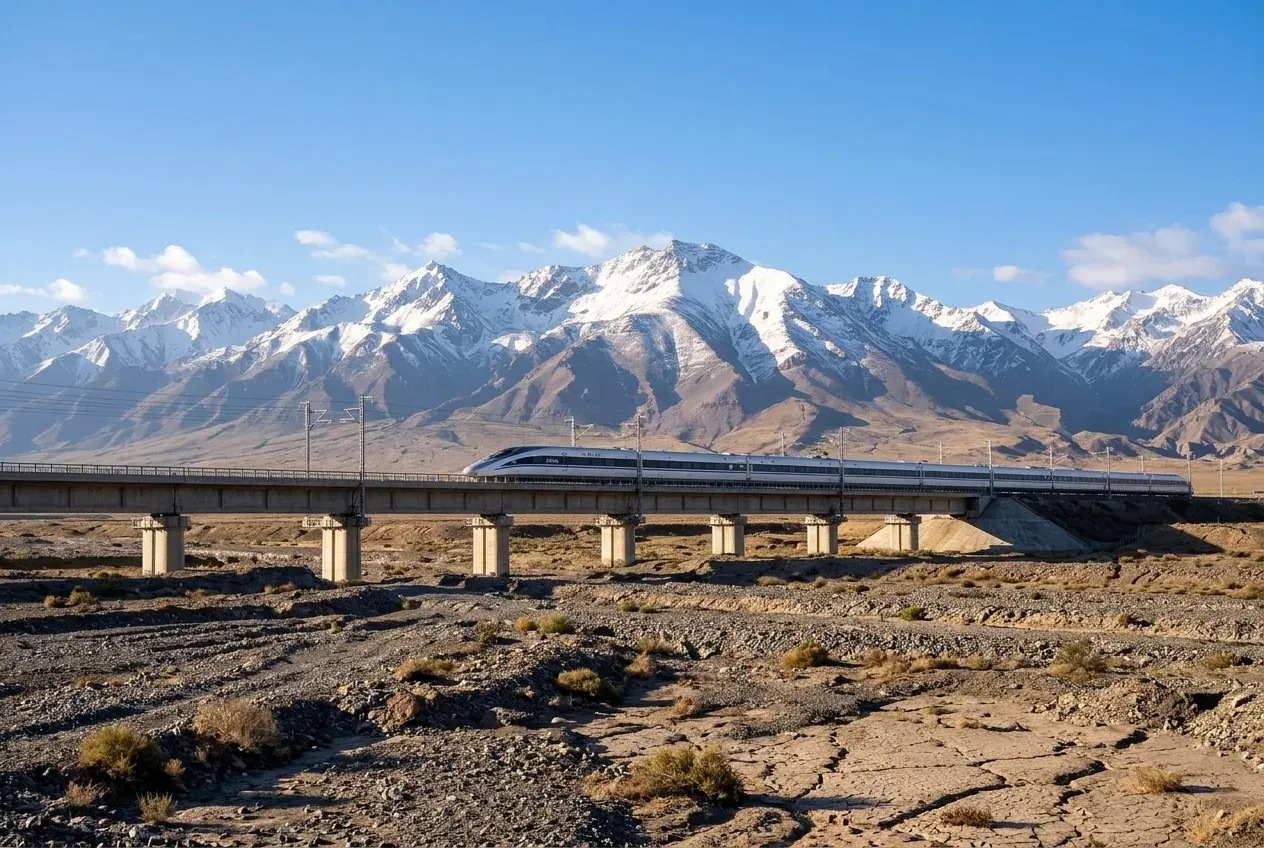
Traveling along the region (also known as the Gansu Corridor) mainly relies on the Lanzhou-Xinjiang high-speed railway and the Lanzhou-Wuwei section of the Lanzhou-Zhangye high-speed railway. Opened on June 29, 2024, with a design speed of 250 km/h, the Lanzhou-Wuwei line connects Wuwei East Station to the high-speed network, letting travelers ride directly from Lanzhou to Wuwei. The Lanzhou-Xinjiang line stops at Zhangye West Station, reaching Lanzhou in about 3 to 3.5 hours and Xining in about 2 hours.
| Route Section | Transport Option | Travel Time and Fare |
|---|---|---|
| Lanzhou to Wuwei East Station | Lanzhou-Wuwei section of Lanzhou-Zhangye high-speed railway | Direct at a design speed of 250 km/h |
| Zhangye West Station to Lanzhou | Lanzhou-Xinjiang high-speed railway | About 3 to 3.5 hours to Lanzhou |
| Zhangye Bus Station to Rainbow Danxia | Bus | Travel time about 45 minutes, one-way fare 15 RMB |
| Zhangye Bus Station to Pingshanhu Grand Canyon | Round-trip bus | Round-trip fare 60 RMB |
| Zhangye Bus Station to Mati Temple | Round-trip bus | Departs 9:00 and returns 14:30, round-trip fare 60 RMB |
From Lanzhou, the Silk Road rail line crosses the 3,000-meter-high Wushao Ridge into the corridor, running along the northern foothills of the Qilian Mountains through Wuwei, Zhangye, Jiuquan, and Jiayuguan before crossing the Hongliu River into Xinjiang. To visit Pingshanhu Grand Canyon or Mati Temple around Zhangye, you can catch round-trip buses at Zhangye Bus Station. For western Dunhuang sights, travelers mainly rely on local chartered cars or shuttle buses.
Which Grottoes to Visit and How Do Ticket Bookings Work?
A series of grotto complexes line the route, led by the Mogao Caves in Dunhuang, each with its own era and artistic style. First carved during the Former Qin dynasty, Mogao contains 735 caves, 45,000 square meters of murals, and 2,415 painted clay sculptures, and became a UNESCO World Heritage Site in 1987. Tiantishan Grottoes in Wuwei began during the Northern Liang dynasty and preserve 19 caves across 3 tiers. Scholar Su Bai used them to establish the Liangzhou Model theory for the origin of Chinese grottoes, earning Tiantishan the title of the progenitor of Chinese grotto temples.
| Grotto Name | Location | Highlights and Scale | Ticket Prices and Rules |
|---|---|---|---|
| Mogao Caves | 25 km southeast of Dunhuang city | 735 caves, mural and painted clay sculpture art | Category A: 238 RMB per person (includes 2 films and 8 to 10 caves); Category B: 100 RMB per person (includes 4 caves) |
| Yulin Caves | About 70 km south of Guazhou County seat | Sister grotto to Mogao, exquisite art murals | Standard caves: domestic visitors 40 RMB per person, foreign visitors 55 RMB per person (includes 15 RMB foreign language guide fee) |
| Tiantishan Grottoes | Wuwei City | Birthplace of Liangzhou Model, progenitor of Chinese grottoes | 19 caves across 3 tiers today |
| Mati Temple Grottoes | Sunan Yugur Autonomous County | Thirty-Three Heavens caves carved into a 42-meter red sandstone cliff | Core section spans five levels connected by interior tunnels |
| Western Thousand Buddha Caves | About 35 km southwest of Dunhuang urban area | Ancient caves near Danghe Reservoir | Full price 30 RMB per person per visit, half price 15 RMB per person per visit |
| Bingling Temple Grottoes | Yellow River canyon about 100 km southwest of Lanzhou | 183 caves, 694 stone sculptures | 27-meter-tall seated Maitreya Buddha on the cliff face |
Mogao Caves tickets are only sold through the official WeChat mini-program, the official WeChat service account "Mogao Caves Visit Booking Network", or the official website, with no third-party booking agents authorized. International visitors and travelers from Hong Kong, Macao, and Taiwan can book through the "Ticket Booking" portal on the WeChat service account. Peak-season Category A tickets open at 7:00 daily and must be booked 30 days in advance, capped at 6,000 per day; Category B tickets are limited to 12,000 per day. Allow 3 to 4 hours for a regular tour, which includes two 20-minute films at the Digital Exhibition Center, "Millennium Mogao" and the dome film "Dreaming of the Buddha Palace", followed by a 20-minute shuttle ride to the cave area for a guided visit.
Tip: The visiting path through the physical Mogao caves is one-way, and the guide locks each cave door upon exiting, so you cannot turn back to revisit earlier caves; stay close to your guide and look carefully as you go. When watching the dome movie Dreaming of the Buddha Palace at the Digital Exhibition Center, choose seats in the center toward the back for a wider viewing angle.
How to Visit Rainbow Danxia, Jiayuguan, and Western Dunhuang
Tickets and sightseeing buses at Zhangye Rainbow Danxia total 92 RMB per person, with three tour routes starting from the north, west, and east gates. Four core viewing platforms serve the area: Platform 1 offers a wide view over the Danxia hills, Platform 2 suits panoramic photography, Platform 3 lets you see colored hill textures up close, and Platform 4 has gentle slopes and open sightlines designed for watching the sunset and evening glow. The hours from 15:30 to 19:00 offer good light away from midday glare, so arriving around 15:30 and setting aside about 3 hours works well.
Tip: The Danxia landforms in Zhangye are fragile and non-renewable, and stepping on the rock layers, climbing over railings, or touching the hills is strictly forbidden. For photography, plain black, white, or simple solid-colored clothing provides a nice visual contrast against the colored landscape.
Jiayuguan Fort sits 6 kilometers southwest of urban Jiayuguan and marks the western terminus of the Ming Great Wall. The trapezoidal fortress has a perimeter of 733 meters, stands 11 meters high, and covers over 33,500 square meters. Heading west from Jiayuguan to Guazhou brings you to the Han and Tang era Suoyang City ruins. Abandoned in 1524 when Jiayu Pass closed, the site preserves ancient city walls, temples, and reclamation fields, and was inscribed as a UNESCO World Heritage Site in 2014 as part of the Silk Roads: the Routes Network of Chang'an-Tianshan Corridor.
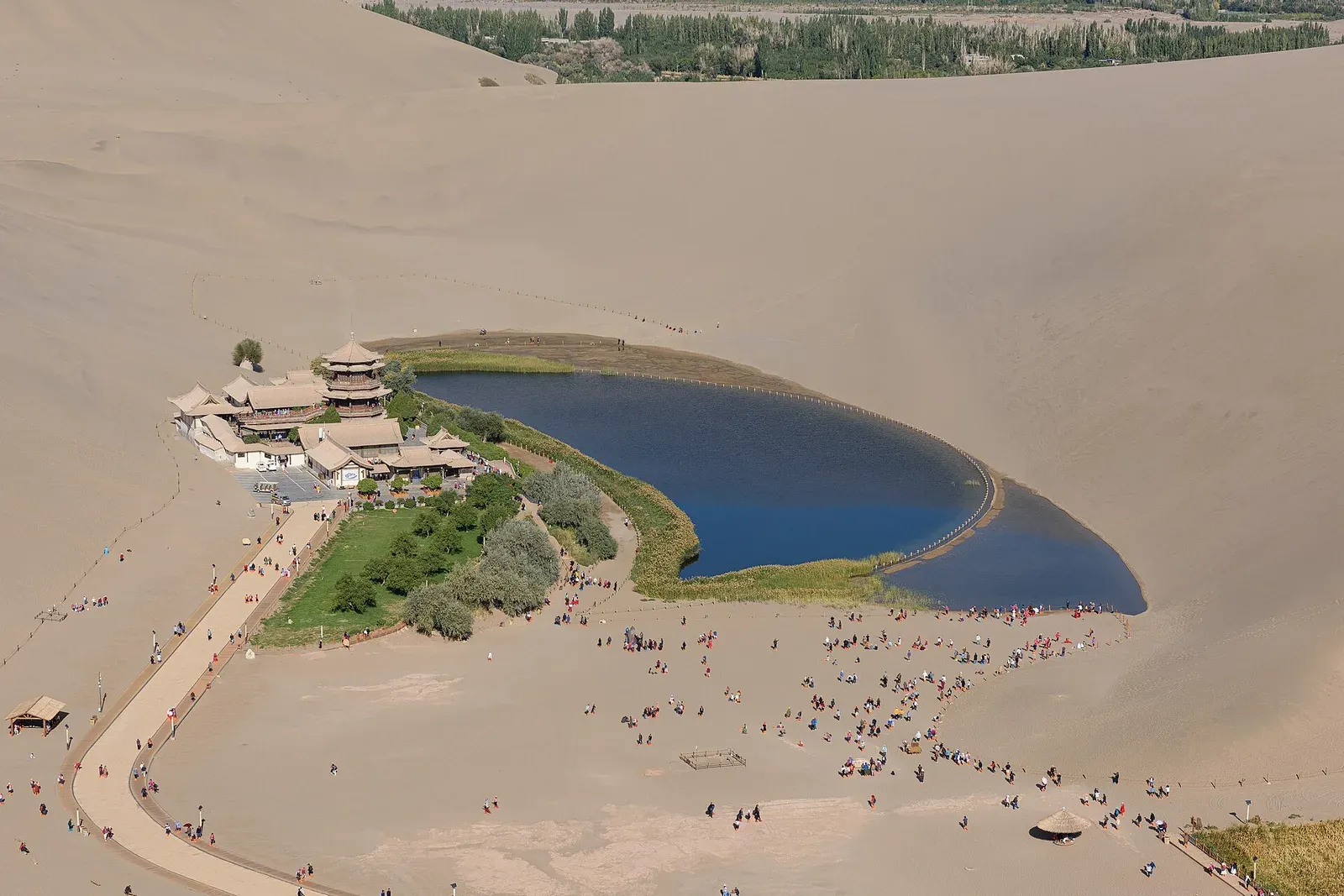
A western Dunhuang day trip runs about 180 kilometers each way, with chartered car costs typically ranging from 400 to 500 RMB per day. A classic pace starts at 8:00 to visit Yumen Pass (commonly known as the Small Square City), which once guarded the northern route to the Western Regions, followed by Yangguan Pass guarding the southern route. In the afternoon, head into the 400-square-kilometer Dunhuang Yardang National Geopark (Ghost City) for a Gobi sunset, touring by park shuttle bus or rented off-road vehicle before returning to the city. Meanwhile, Mingsha Mountain and Crescent Spring Scenic Area, 5 kilometers southwest of downtown Dunhuang, costs about 110 RMB per person. Reaching Crescent Spring requires a 1-kilometer walk, an electric cart ride (10 RMB per person), or a camel ride (about 100 RMB per person). Arriving after 16:00 helps avoid burning hot sand and sets you up for the desert sunset.
How to Structure a Classic 6-Day, 5-Night Route
For the core route from Lanzhou through Zhangye and Jiayuguan to Dunhuang over 6 days and 5 nights, traveler estimates place total spending at around 3,000 RMB per person when pairing high-speed rail with a 4-person chartered car (about 4,000 to 5,000 RMB for 6 days). The trip moves from east to west along the rail line, balancing museums, grotto murals, and natural landscapes.
| Day | Route Section | Sightseeing and Schedule |
|---|---|---|
| Day 1 | Lanzhou | Visit Gansu Provincial Museum (No. 3 West Xijin Road, closed Mondays) and view the Bronze Galloping Horse (Galloping Horse Treading on a Flying Swallow) |
| Day 2 | Wuwei | Arrive at Wuwei East Station via the Lanzhou-Wuwei section of the Lanzhou-Zhangye high-speed railway, and explore the Northern Liang Tiantishan Grottoes and Leitai Han Tomb |
| Day 3 | Zhangye | Visit Zhangye Dafo Temple, founded in year 1 of the Western Xia Yongan era, and enter the park at 15:30 to tour Zhangye Rainbow Danxia |
| Day 4 | Jiayuguan and Guazhou | Visit the Ming Great Wall pass 6 km southwest of Jiayuguan urban area, then head to Guazhou to visit Yulin Caves and Suoyang City ruins |
| Day 5 | Dunhuang | Watch films at the Mogao Caves Digital Exhibition Center and take a vehicle to visit the actual caves, then tour Mingsha Mountain and Crescent Spring after 4:00 PM to watch the sunset |
| Day 6 | Dunhuang West Route | Chartered vehicle about 180 km one way, depart at 8:00 AM to visit Yumen Pass and Yangguan, and arrive at Yardang Ghost City in the afternoon to watch the sunset before returning to the city |
While staying in Zhangye, you can sample local dishes such as cuoyuzi noodles (甘州搓鱼子), rolled into tapered pinches and tossed with diced sauce, or niurou xiaofan (牛肉小饭) for breakfast, featuring tiny pasta squares and diced beef in rich bone broth. At the night markets, look for chao bola (炒拨拉), where fresh lamb offal is stir-fried over high heat on a flat iron griddle.
What Do First-Time Visitors Most Often Get Wrong?
Desert and arid terrain make up about 70% of the corridor landscape, with extreme dryness and large day-night temperature swings. First-time visitors most often overlook sun and sand protection, warm layers, or ticket reservation timings.
| Tour Step | Notes and Reasons |
|---|---|
| Mogao Caves booking | Book only through official channels via WeChat or the official website with no third parties authorized; make real-name reservations 30 days in advance at 7:00 AM during peak season |
| Rainbow Danxia timing and protection | 15:30 to 19:00 is the prime shooting period; stepping on rock formations, climbing over guardrails, and touching the hills are strictly prohibited |
| Sand protection at Mingsha Mountain and Crescent Spring | Sand surface temperatures are high in summer, so entering after 4:00 PM is recommended; rent sand shoe covers in desert scenic areas and protect mobile phones from sand |
| Climate, sun protection, and hydration | Prepare plenty of high-SPF sunscreen (SPF50+), sunglasses, a face mask, and lip balm; Dunhuang averages under 20% daily humidity, so drink plenty of water |
| Temperature swings and clothing | Use onion layering with a jacket in the morning and evening and single-layer clothes at noon; carry a light jacket as Mogao Caves remain cool year-round |
Sources
Bronze Running Horse - Wikipedia
Mogao Caves - Wikipedia
Crescent Spring - Wikipedia
Dunhuang - Wikipedia
Yumen Pass - Wikipedia
Yang Pass - Wikipedia
Dunhuang Yardang National Geopark - Wikipedia
Western Thousand Buddha Caves - Dunhuang Academy
Yulin Caves - Dunhuang Academy
Zhangye Dafo Temple - Wikipedia
Hexi Corridor - Wikipedia
Zhangye - Wikipedia
Mati Temple Grottoes - Wikipedia
Zhangye Municipal People's Government >> Overview of Zhangye
Lanzhou-Xinjiang Railway - Wikipedia
Hexi Corridor - Wikipedia
Silk Road - Wikipedia
Jiayu Pass - Wikipedia
Tiantishan Grottoes - Wikipedia
Suoyang City Ruins - Wikipedia
Dunhuang Academy
Bingling Temple - Wikipedia
Wuwei - Wikipedia
Leitai Han Tomb - Wikipedia
Sources verified on November 19, 2026
FAQ
How many days are needed to travel through the Hexi Corridor?
The corridor stretches about 1,100 kilometers from Wushao Ridge in the east to Yumen Pass in the west. A classic core itinerary starting from Lanzhou and passing through Wuwei, Zhangye, Jiayuguan, and Dunhuang usually takes 6 days and 5 nights to 8 days.
What is the difference between Category A and Category B tickets at Mogao Caves?
Category A tickets cost 238 RMB per person and include 2 digital films, guided tours of 8 to 10 physical caves, and shuttle transport, capped at 6,000 tickets per day with real-name reservations required 30 days ahead. Category B tickets cost 100 RMB per person and cover only 4 caves and shuttles without the digital films, capped at 12,000 per day.
Which months offer the best weather to visit the corridor?
May to October is the most pleasant travel window for Zhangye and the wider region, with mild weather and vivid landscape colors. July averages around 20.4°C, but sunshine is strong and the climate is dry, so schedule desert and Gobi outings away from midday sun.
Are cities along the corridor connected by high-speed trains?
Major cities along the route are connected by high-speed or bullet trains. The Lanzhou-Wuwei section of the Lanzhou-Zhangye line opened in June 2024 to link Lanzhou with Wuwei, and the Lanzhou-Xinjiang line connects Wuwei, Zhangye, Jiuquan, and Jiayuguan, taking about 3 to 3.5 hours from Zhangye West Station to Lanzhou.
What are the main sights on the western Dunhuang day trip?
Covering about 180 kilometers each way, a classic day trip starts at 8:00 to visit Yumen Pass (Small Square City) on the historic northern route to the Western Regions and Yangguan Pass on the southern route, followed by Dunhuang Yardang National Geopark (Ghost City) in the afternoon for a desert sunset before returning to town.