
Gansu Province Travel Guide: Hexi Corridor & Silk Road Routes
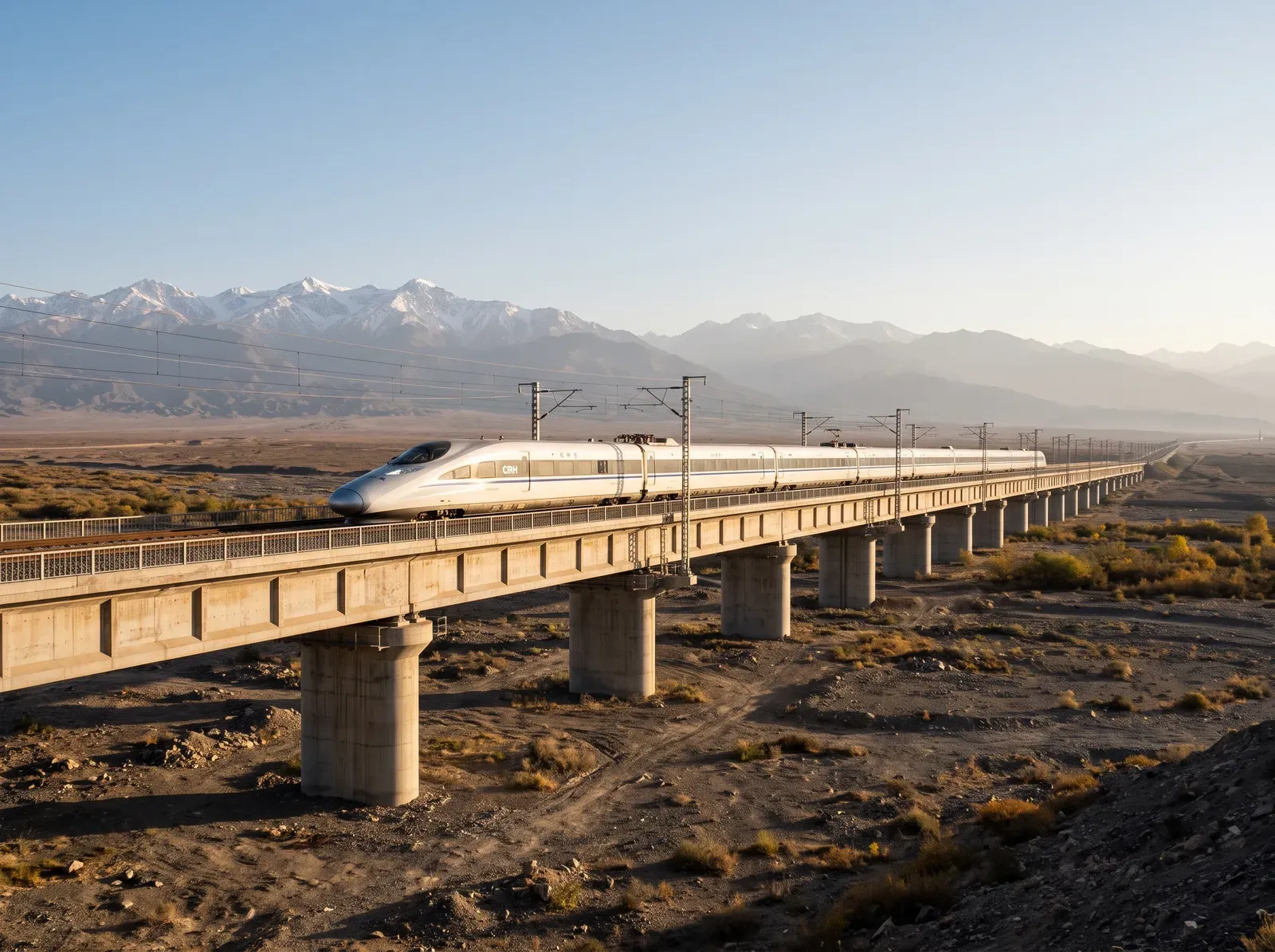
For a trip in Gansu Province, the basic shape is a run west along the Hexi Corridor. The 1,786 km Lanzhou-Xinjiang high-speed rail links Lanzhou, Zhangye, Jiuquan and Jiayuguan. In 121 BC Emperor Wu of Han set up the four Hexi commanderies of Wuwei, Zhangye, Jiuquan and Dunhuang, which fixed this corridor as the throat of the Silk Road. The route works by rail, and it also connects with airports and roads along the way, so the stops can be visited in order.
How should you travel the Hexi Corridor Silk Road route?
The classic direction runs from the capital Lanzhou through Zhangye and Jiayuguan, ending at Dunhuang. The Lanzhou-Xinjiang high-speed rail starts at Lanzhou West Station, has a top design speed of 250 km/h, and links Zhangye and Jiayuguan quickly. To reach Dunhuang at the end, the railway runs north to the Lanzhou-Xinjiang line and south toward Golmud on the Qinghai-Tibet railway; by road, National Highway 215 runs through.
Lanzhou is the main transport hub for a Gansu trip. The Gansu Provincial Museum holds the Bronze Galloping Horse, a national treasure unearthed in 1969 from the Leitai tomb in Wuwei. For Zhongshan Bridge and beef noodles in the city, see this Lanzhou travel guide.
Which cultural and natural sights in Zhangye and Jiayuguan are worth seeing?
Zhangye and Jiayuguan hold some of the heaviest old architecture and pass works on the Silk Road. Zhangye Great Buddha Temple was first built in 1098, and the 34.5 m reclining Buddha in its main hall is the largest indoor reclining Buddha in China. Cave 3 of Mati North Temple, the Thirty-Three Heavens Cave, sits 42 m above the ground at its highest point, with five levels linked by tunnels cut through the rock.
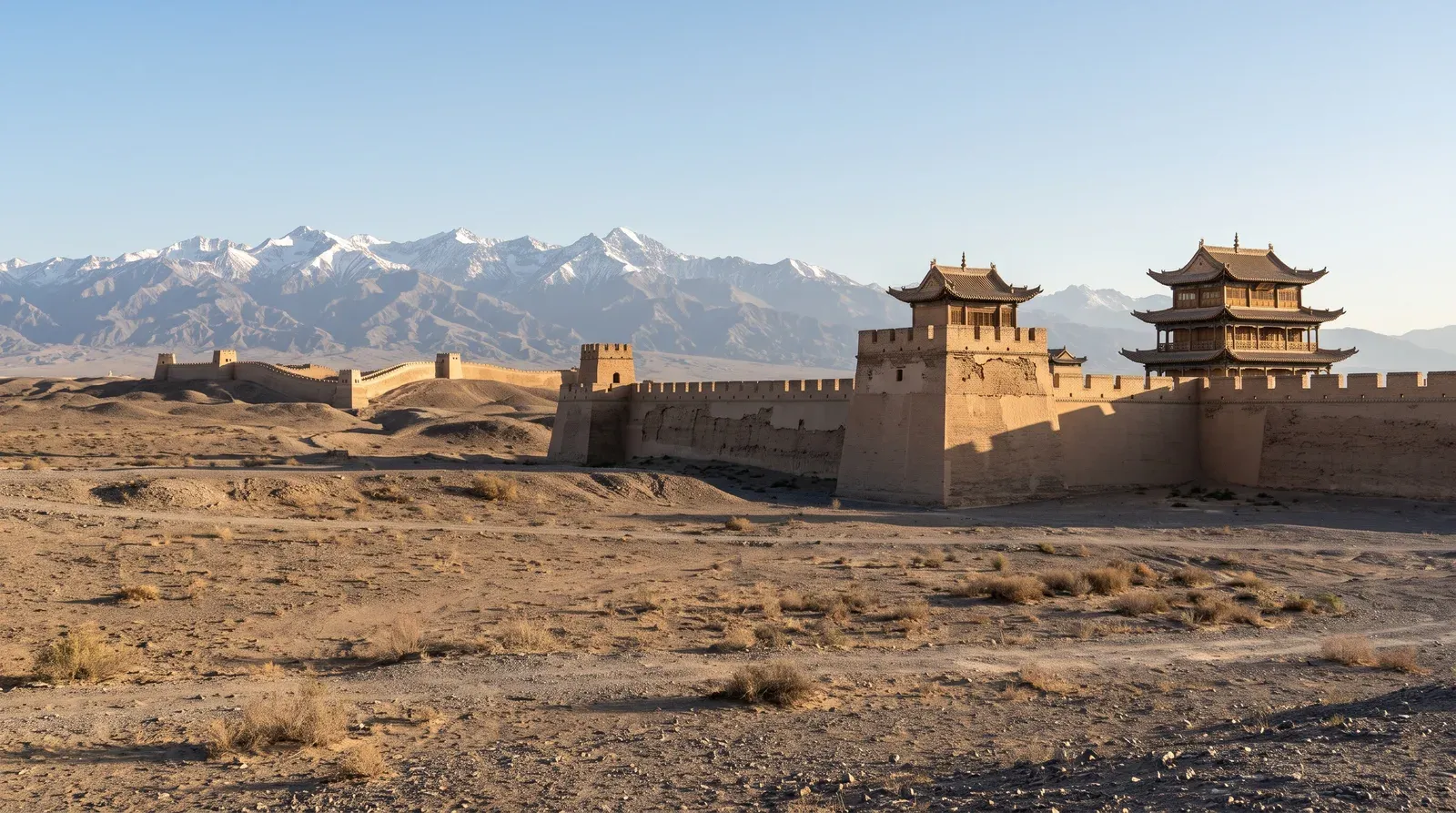
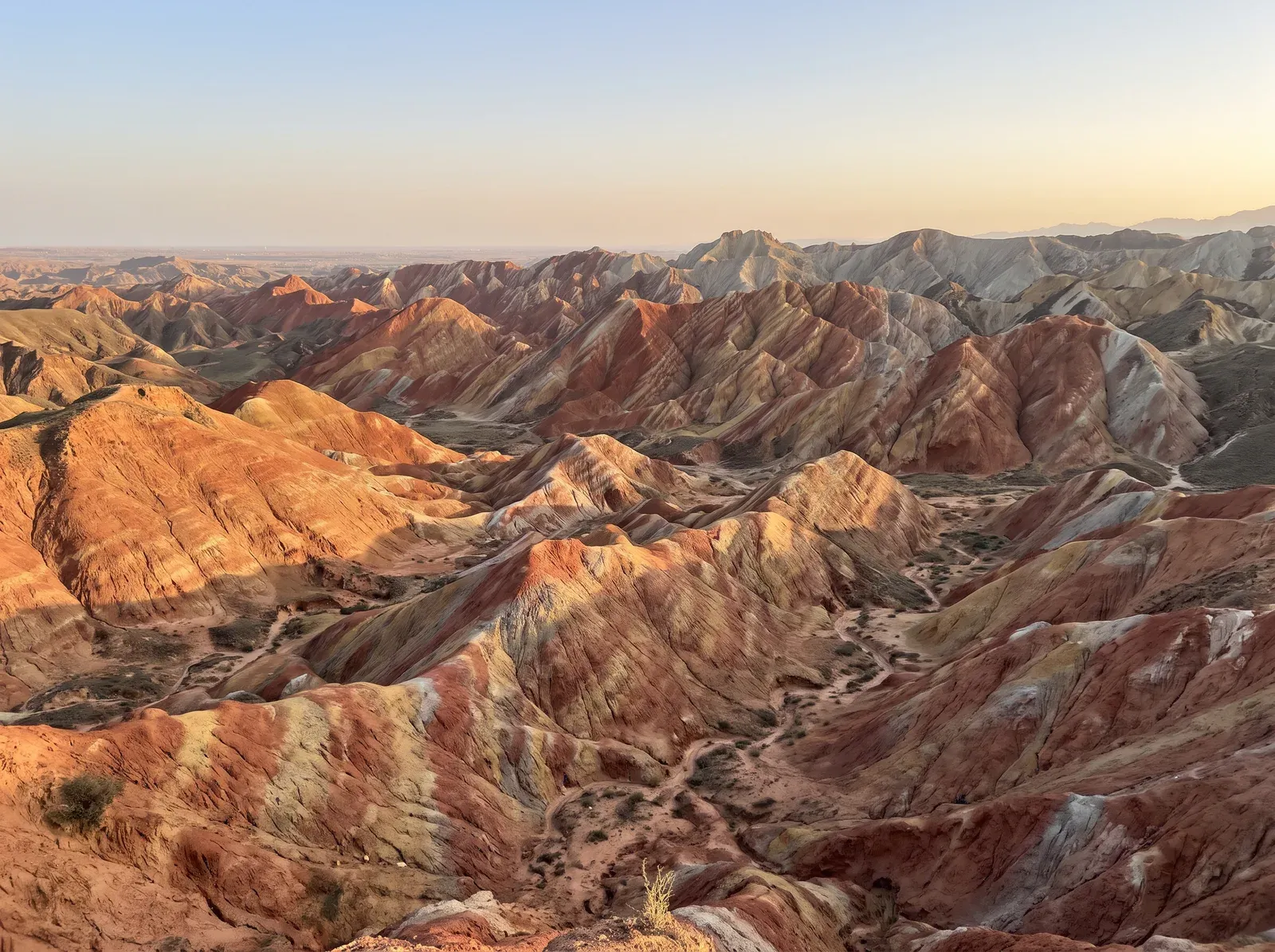
Jiayuguan, the first great pass at the western end of the Ming Great Wall, was built in 1372. Its inner city has a perimeter of 640 m, an area of 25,000 sq m and walls 10.7 m high, with Guanghua Gate on the east, Rouyuan Gate on the west and barbicans outside. For natural scenery, Zhangye Qicai Danxia, planned at 322 sq km, is the only area in China where Danxia landforms and coloured hills are combined on this scale; the Linze Danxia scenic area, 30 km west of Zhangye city, has the most complete facilities.
Which numbers and sights matter at the main Hexi Corridor stops?
| Scenic area | City | Built / historical background | Key size and figures |
|---|---|---|---|
| Zhangye Great Buddha Temple | Zhangye | Western Xia, first year of Yongan (1098) | Indoor reclining Buddha 34.5 m long |
| Mati Temple Thirty-Three Heavens Cave | Zhangye | Historic cave complex | 42 m above ground, five levels joined by tunnels |
| Zhangye Qicai Danxia Scenic Area | Zhangye | National 5A geopark | Planned area 322 sq km; Linze core area 30 km from the city |
| Jiayuguan Pass | Jiayuguan | Ming Hongwu, fifth year (1372) | Inner city perimeter 640 m, area 25,000 sq m, walls 10.7 m high |
| Dunhuang Mogao Caves | Dunhuang | Former Qin period (World Heritage since 1987) | 735 caves, 45,000 sq m of murals, 2,415 clay sculptures |
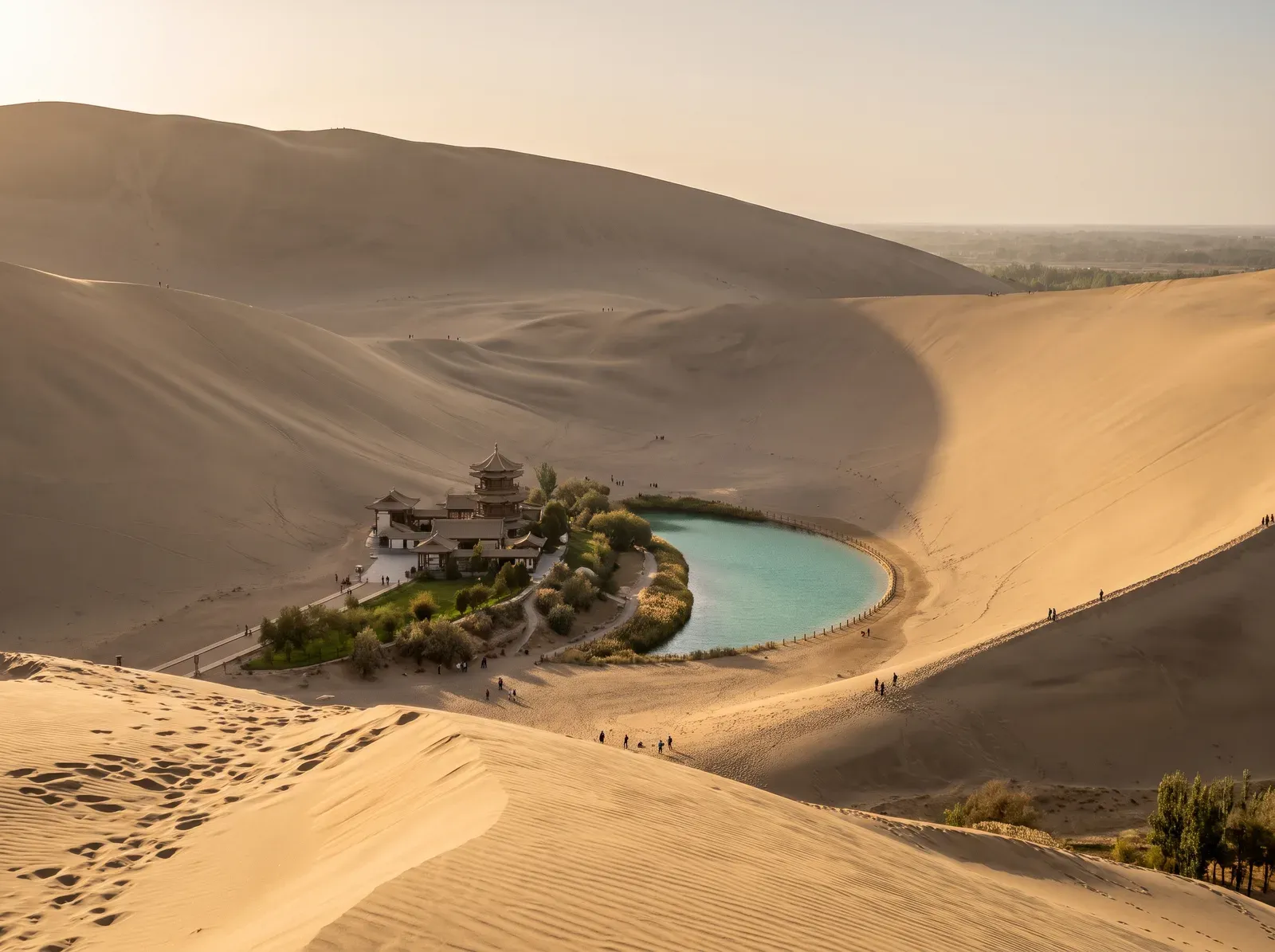
| Mingsha Mountain and Crescent Lake | Dunhuang | Crescent-shaped spring held by dunes | 5 km southwest of the city; walk 1 km, or go by cart or camel |
| Yang Pass ruins | Dunhuang | Han dynasty border fort under Emperor Wu | About 60 km southwest of the city; guarded the southern route to the Western Regions |
| Dunhuang Yadan Devil City | Dunhuang | National geopark | About 180 km from the city; total area over 400 sq km |
How do you choose and book Mogao Caves tickets?
Visiting the Mogao Caves takes ticket planning ahead of time, and booking is in your own name. A-type tickets cost 238 yuan per person and include two digital films, 8 to 10 real caves and the shuttle bus; the daily cap is 6,000 tickets and they need to be booked 30 days ahead. B-type tickets cost 100 yuan per person and include 4 real caves but no films, with a daily cap of 12,000.
The Mogao Caves sit on a cliff on the eastern slope of Mingsha Mountain, 25 km southeast of Dunhuang city, and were listed as a UNESCO World Heritage Site in 1987. Carving began in the Former Qin period; 735 caves, 45,000 sq m of murals and 2,415 clay sculptures survive, a concentrated record of Silk Road art.
How should you visit Mingsha Mountain and the western Gobi route?
The Mingsha Mountain and Crescent Lake scenic area is 5 km southwest of Dunhuang city, with tickets at about 110 yuan per person. To reach the spring you can walk 1 km, take the sightseeing cart (10 yuan per person) or ride a camel (about 100 yuan per person). The sand gets hot in summer, so entering after 4 pm and staying for sunset over the dunes works better.
A one-day trip on the Dunhuang west line runs about 180 km each way, and chartering a car usually costs 400 to 500 yuan per day. Leaving at 8 am, you can visit Yumen Pass (northern route) and Yang Pass (southern route), the Han dynasty gates to the Western Regions, then reach Dunhuang Yadan National Geopark, about 180 km from the city and over 400 sq km in area, for Gobi sunset in the afternoon. Private cars are not allowed inside the Yadan park, so you change to the park bus or hire an off-road vehicle.
What should you know about weather and gear in Gansu Province?
The Hexi Corridor in Gansu Province is dry, with a wide gap between day and night temperatures. Dunhuang gets only 42 mm of rain a year, average daily humidity is under 20%, and UV rays are strong. Pack high-SPF sunscreen, sunglasses, and lip balm, plus warm clothes for mornings and evenings. Lanzhou, the provincial capital, averages 11.2°C a year and 327 mm of rain, mostly from June to September.
For getting in, Lanzhou Zhongchuan International Airport, about 70 km from the city, is linked by a railway that opened on 30 September 2015, and the road trip takes about 1 hour. Jiayuguan Airport was renamed Jiayuguan Jiuquan Airport on 20 March 2023. Dunhuang has Dunhuang Mogao International Airport. After a day of sightseeing you can head to Shazhou Night Market on Dunhuang East Street for donkey meat yellow noodles, jiangshui noodles, pao'er yougao and Li Guang apricots.
Sources
Lanzhou beef noodles - Wikipedia
Zhongshan Bridge (Lanzhou) - Wikipedia
Bronze Galloping Horse - Wikipedia
Lanzhou - Wikipedia
Lanzhou Zhongchuan International Airport - Wikipedia
Mogao Caves - Wikipedia
Crescent Lake - Wikipedia
Dunhuang - Wikipedia
Yumen Pass - Wikipedia
Yang Pass - Wikipedia
Dunhuang Yadan National Geopark - Wikipedia
Dunhuang - Wikipedia
Zhangye National Geopark, Gansu - Wikipedia
Zhangye Great Buddha Temple - Wikipedia
Mati Temple cave complex - Wikipedia
Jiayuguan - Wikipedia
Lanzhou-Xinjiang passenger railway - Wikipedia
Hexi Corridor - Wikipedia
Jiayuguan city - Wikipedia
Sources checked on 17 November 2026
FAQ
Which airports along the Hexi Corridor can you fly into or out of?
The route has Lanzhou Zhongchuan International Airport, Jiayuguan Jiuquan Airport and Dunhuang Mogao International Airport, and they can be combined with the Lanzhou-Xinjiang high-speed rail.
What is the main difference between A-type and B-type Mogao Caves tickets?
A-type tickets cost 238 yuan per person and need booking in your own name 30 days ahead, with two digital films and 8 to 10 real caves; B-type tickets cost 100 yuan per person and include 4 real caves but no films.
What transport options are there inside Mingsha Mountain and Crescent Lake?
You can walk the 1 km to the spring, take the sightseeing cart at 10 yuan per person, or ride a camel at about 100 yuan per person.
What was the geographic link between Yumen Pass and Yang Pass in history?
Yumen Pass, commonly called Xiaofangpan City, and Yang Pass to its southwest were known together as the two passes, both Han dynasty gateways guarding the Western Regions. Going out through Yumen Pass was the northern route, and through Yang Pass the southern route.