Differences Between Ancient Chinese Dragon and Python Robes
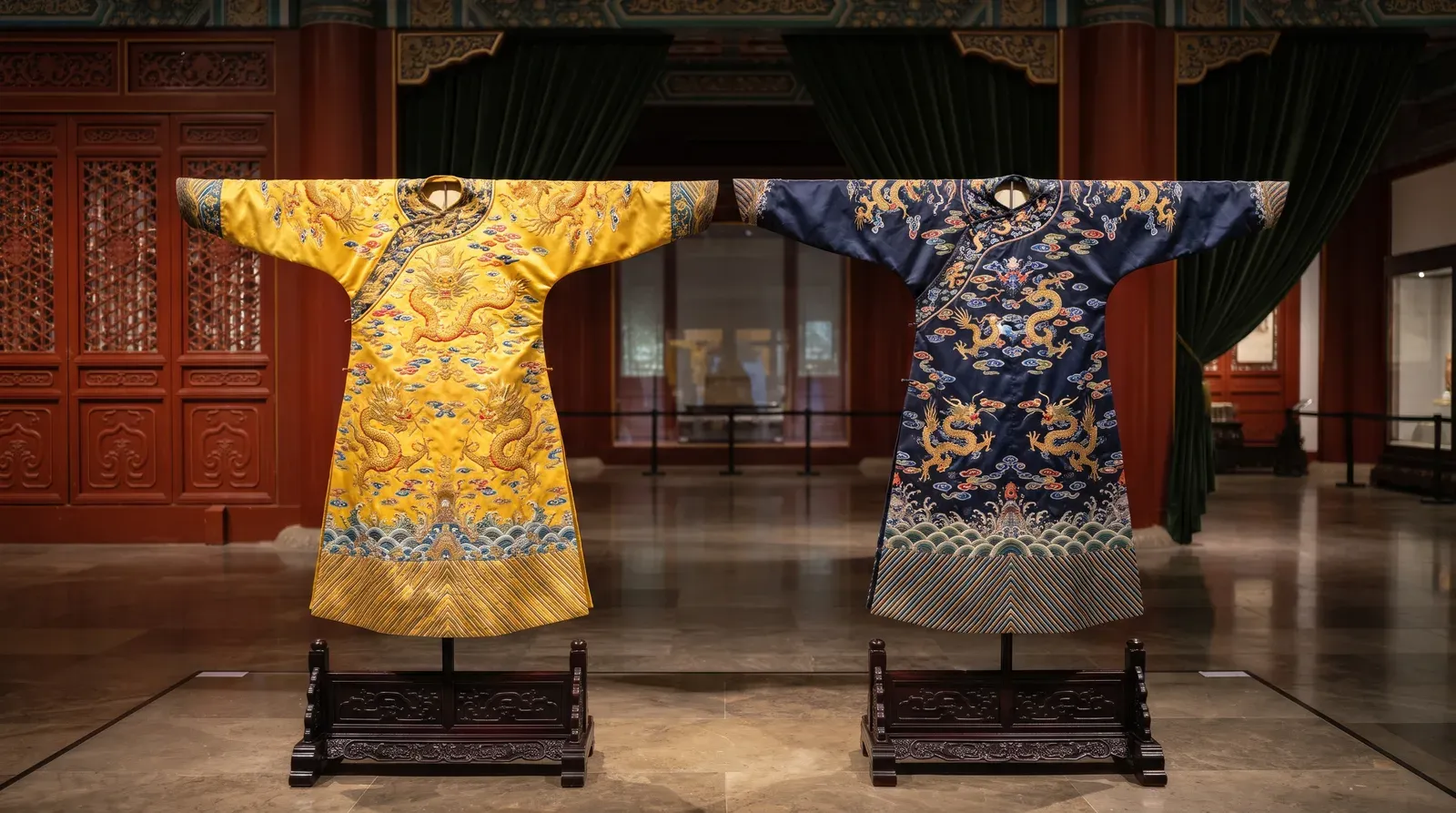
The core differences between ancient Chinese dragon robes and officials' python robes lie in claw counts and motif numbers. A Qing emperor's dragon robe featured 9 dragons, while officials' python robes featured 9, 8, or 5 pythons depending on their rank. Traditional rules and popular sayings separated them by claws: the imperial dragon had 5 claws, and the python on officials' clothing had 4 claws, leading to the saying "five claws make a dragon, four claws make a python." In Qing color ranks, bright yellow, golden yellow, and apricot yellow were reserved for the imperial family. The emperor's dragon robe was mainly bright yellow, while officials' python robes usually came in blue or slate blue.
How Did the Rule of Five Claws for Dragons and Four Claws for Pythons Work in Qing Official Dress?
Traditional rules and popular sayings separated dragons and pythons by their claws. Imperial dragons had five claws, and the pythons on officials' robes had four claws, which gave rise to the saying "five claws make a dragon, four claws make a python." The two had a clear rank distinction in claw numbers.
According to the Collected Statutes of the Qing Dynasty, python robes from beile princes down to civil and military officials of the third rank had nine pythons with four claws. Civil and military officials of the fourth to sixth ranks had eight pythons with four claws. Civil and military officials of the seventh to ninth ranks, as well as unranked officials, had five pythons with four claws.
In the clothing of Qing imperial clan members and nobility, a prince of the first rank (qinwang) wore surcoats with four circular badges of five-clawed golden dragons, and a prince of the second rank (junwang) wore four badges of five-clawed walking dragons. A beile wore two badges of four-clawed front-facing pythons, and a beizi wore two badges of four-clawed walking pythons.
| Status and Rank | Garment Type | Pattern | Pattern Count | Claw Rule | Main Color |
|---|---|---|---|---|---|
| Emperor | Dragon robe (auspicious dress) | Golden dragons, Twelve Ornaments | Nine (eight visible) | Five claws | Mainly bright yellow |
| Prince of the First Rank (Qinwang) | Surcoat (bufu) | Golden dragons | Four roundels | Five claws | As prescribed by regulations |
| Prince of the Second Rank (Junwang) | Surcoat (bufu) | Walking dragons | Four roundels | Five claws | As prescribed by regulations |
| Beile | Surcoat (bufu) | Front-facing pythons | Two roundels | Four claws | As prescribed by regulations |
| Beizi | Surcoat (bufu) | Walking pythons | Two roundels | Four claws | As prescribed by regulations |
| Beile down to civil and military officials of rank 3 | Python robe | Python pattern | Nine pythons | Four claws | Blue or slate blue |
| Civil and military officials of ranks 4 to 6 | Python robe | Python pattern | Eight pythons | Four claws | Blue or slate blue |
| Civil and military officials of ranks 7 to 9 and unranked officials | Python robe | Python pattern | Five pythons | Four claws | Blue or slate blue |
How Were Dragons and Patterns Arranged on Qing Emperor Dragon Robes?
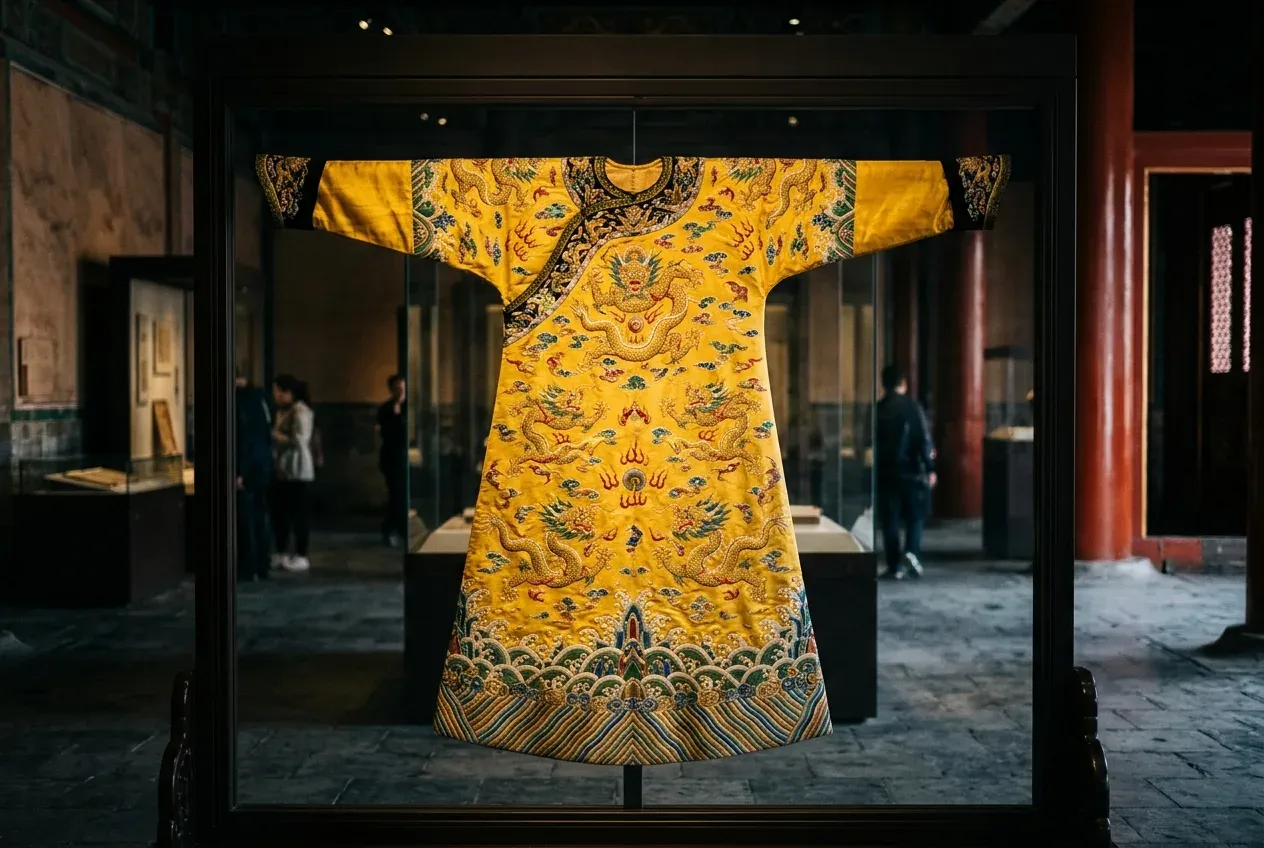
A Qing emperor's dragon robe had nine dragons in total. One was embroidered inside the front flap, leaving eight visible when worn. Seen from either the front or the back, five dragons appeared, matching the symbolic number of supreme imperial dignity.
According to the Draft History of Qing, the emperor's dragon robe was embroidered with nine gold dragons alongside the Twelve Ornaments. There was one front-facing dragon on the front and one on the back of the collar area, one walking dragon on each shoulder and on the inner flap, one front-facing dragon on each sleeve cuff, and standing water with the Eight Treasures along the bottom hem.
Qing imperial attire was divided into three main categories: court dress (lifu), auspicious dress (jifu), and casual dress (bianfu). The dragon robe fell under auspicious dress, worn for banquets, festivals, and audiences with ministers, ranking just below the ceremonial court robe (chaofu) used for major grand ceremonies.
How Did Ming Python Robes Differ from Qing Python Robes?
In the Ming dynasty, python robes were not part of standard official dress. Instead, they were high-status bestowed robes granted by the emperor to trusted senior officials and eunuchs as a special favor, and receiving one was considered an extraordinary political honor.
The twelve-ornament imperial robe of the Wanli Emperor, made of silk tapestry and unearthed from the Dingling Mausoleum, has twelve dragon roundels. They include front-facing dragons on the chest and back, and ascending and descending dragons on the sides.
What Were the Rules for Slits and Hem Patterns on Dragon and Python Robes?
In the Qing dynasty, robe slits followed strict rank rules. Robes with four slits on the front, back, left, and right were reserved exclusively for the imperial clan. Common officials and ordinary people could only wear robes with two slits on the front and back.
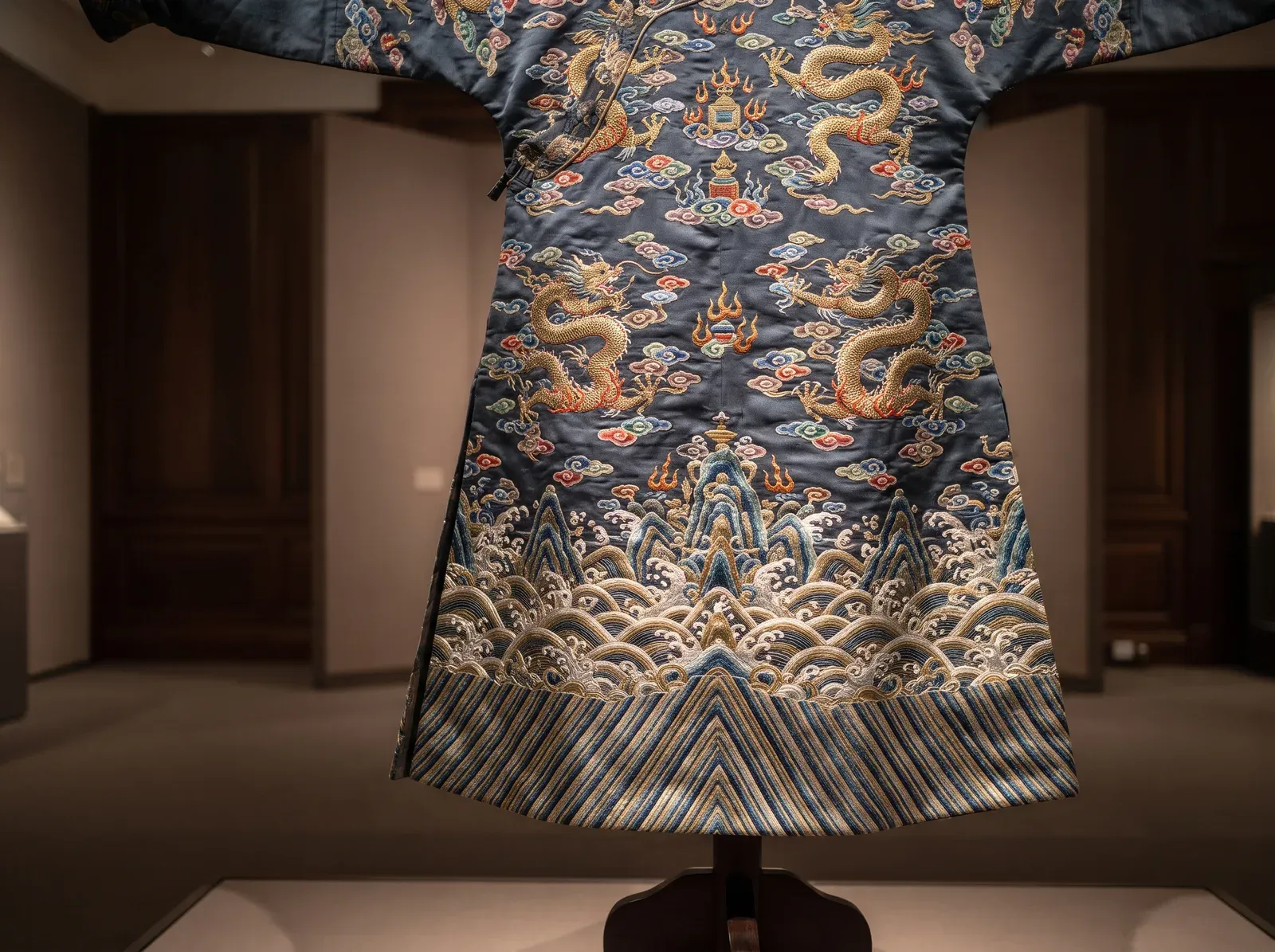
The diagonal lines at the bottom of dragon and python robes were called standing water. The waves and rocks above them were known together as the sea and cliff pattern, where the word for tide sounded like court and the jagged rocks symbolized the lasting stability of the realm and enduring fortune.
Could Qing Consorts Wear Ceremonial Robes Embroidered with Dragons?
In the Qing palace, imperial consorts such as the empress, empress dowager, and imperial noble consorts wore a slate blue dragon surcoat as ceremonial dress. It featured five-clawed front-facing dragons on the chest, back, and both shoulders, five-clawed walking dragons on the front and back lower panels, and the sea and cliff pattern along the bottom.
Sources
Dragon robe - Wikipedia
Python robe (ancient official ceremonial dress) - Baidu Baike
Qing dynasty clothing - Wikipedia
Dragon robe - Baidu Baike
Ming dynasty clothing - Wikipedia
Sources verified on November 7, 2026
FAQ
How many claws did python motifs have on Qing officials' robes?
According to traditional rules and popular sayings, imperial dragons had five claws and pythons on official garments had four claws, which led to the distinction that five claws make a dragon and four claws make a python.
What colors were the python robes of Qing civil and military officials usually?
In the Qing hierarchy of colors, bright yellow, golden yellow, and apricot yellow were reserved for the imperial family. The emperor's dragon robe was mainly bright yellow, while officials' python robes usually used blue or slate blue.
Why do only five dragons show on the front of a Qing emperor's dragon robe?
A Qing emperor's dragon robe had nine embroidered dragons in all, with one placed inside the inner flap. This left eight visible while worn, and looking from either the front or the back showed five dragons, matching the symbolic number of supreme imperial rule.
Were python robes considered standard official attire during the Ming dynasty?
In the Ming dynasty, python robes were not part of standard official dress. Instead, they were high-ranking bestowed robes granted by the emperor as special favors to senior officials and eunuchs, and receiving one was considered an exceptional political honor.
What is the meaning behind the sea and cliff pattern on the robe hem?
The diagonal lines at the bottom of dragon and python robes were called standing water. The waves and rocks above them were known as the sea and cliff pattern, where the word for tide sounded like court and the jagged rocks represented lasting territorial stability and unending good fortune.